
Our alarm rang at 4 am so that we could be on the bus by 5:15 am. The goal for this morning was to first see the sun rise over Angkor Wat and then tour the site.
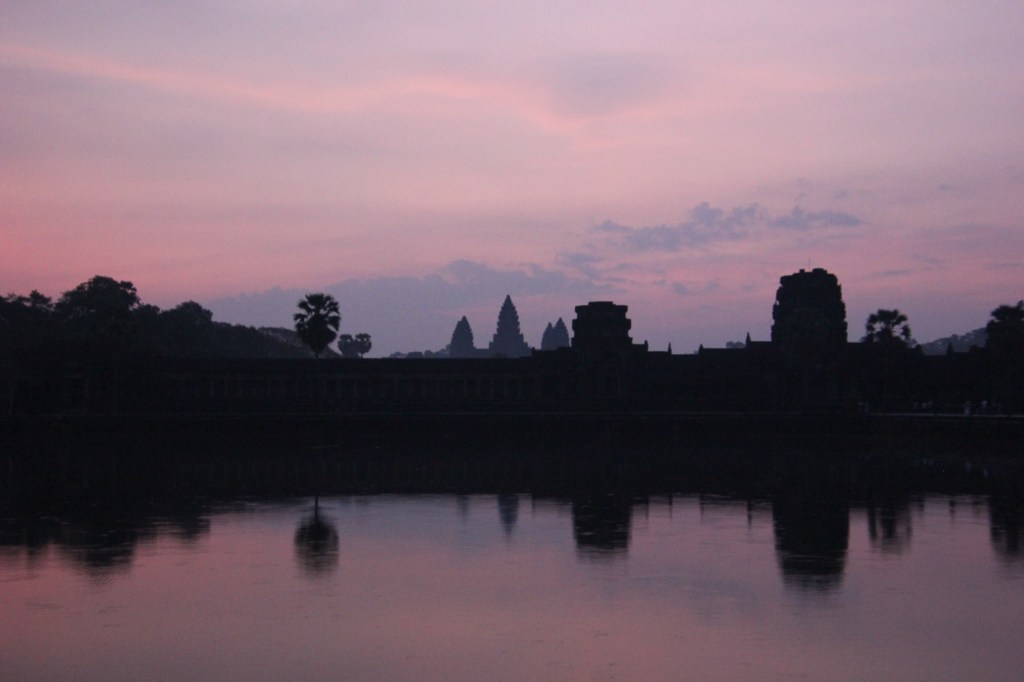
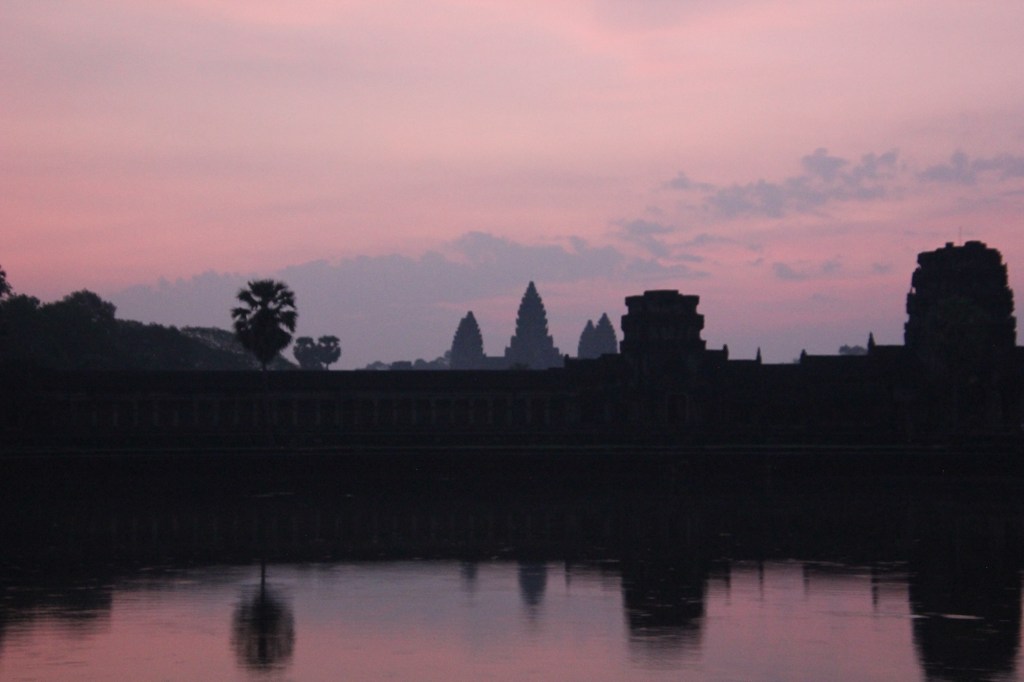
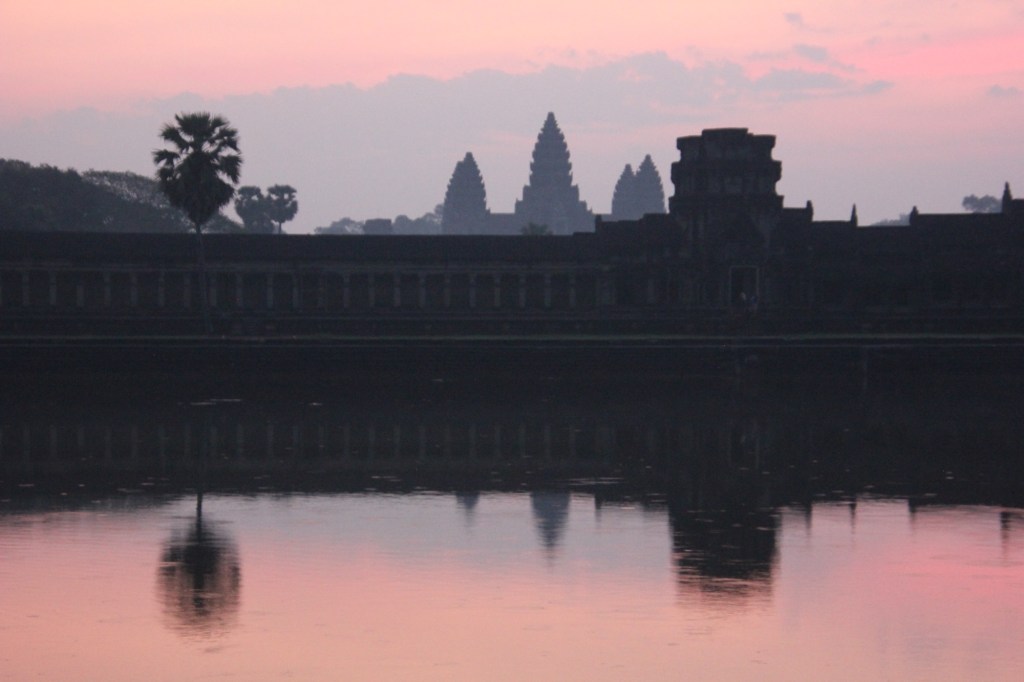
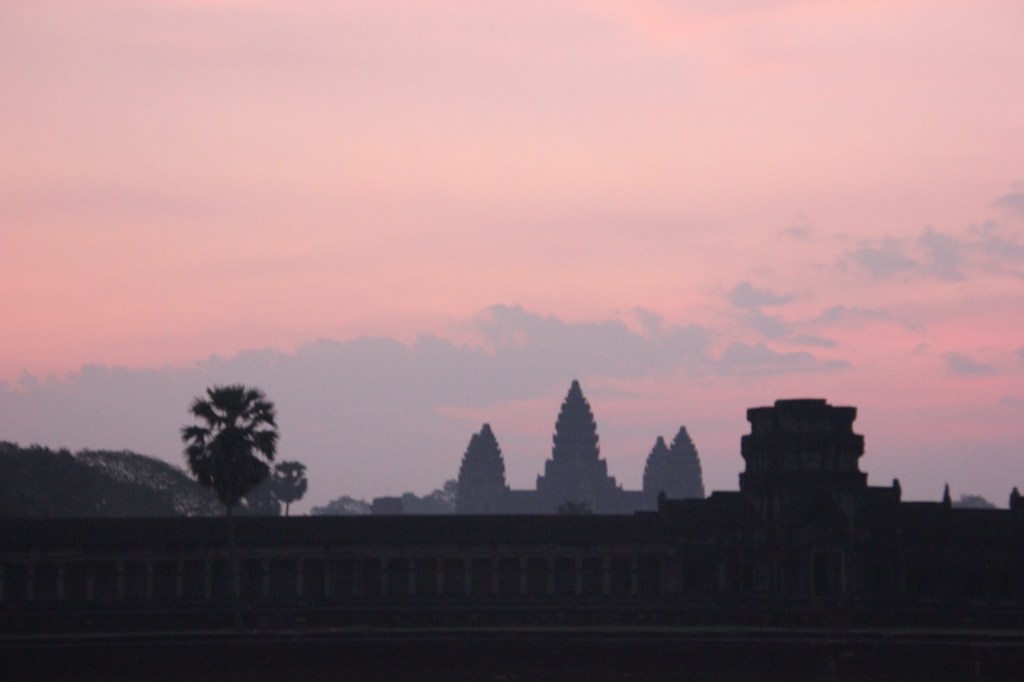
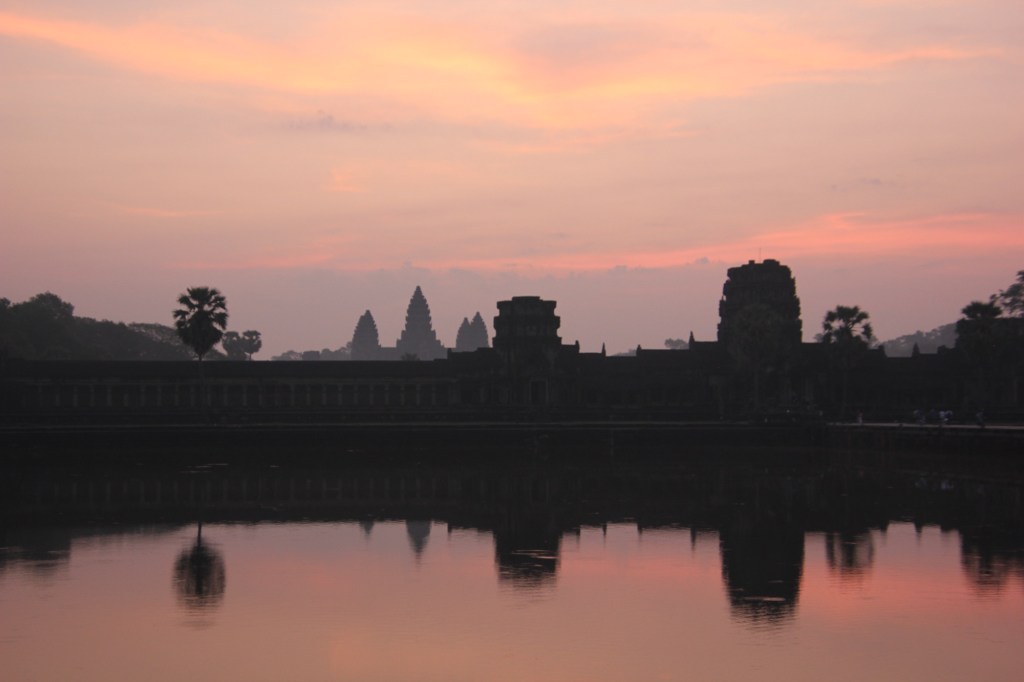
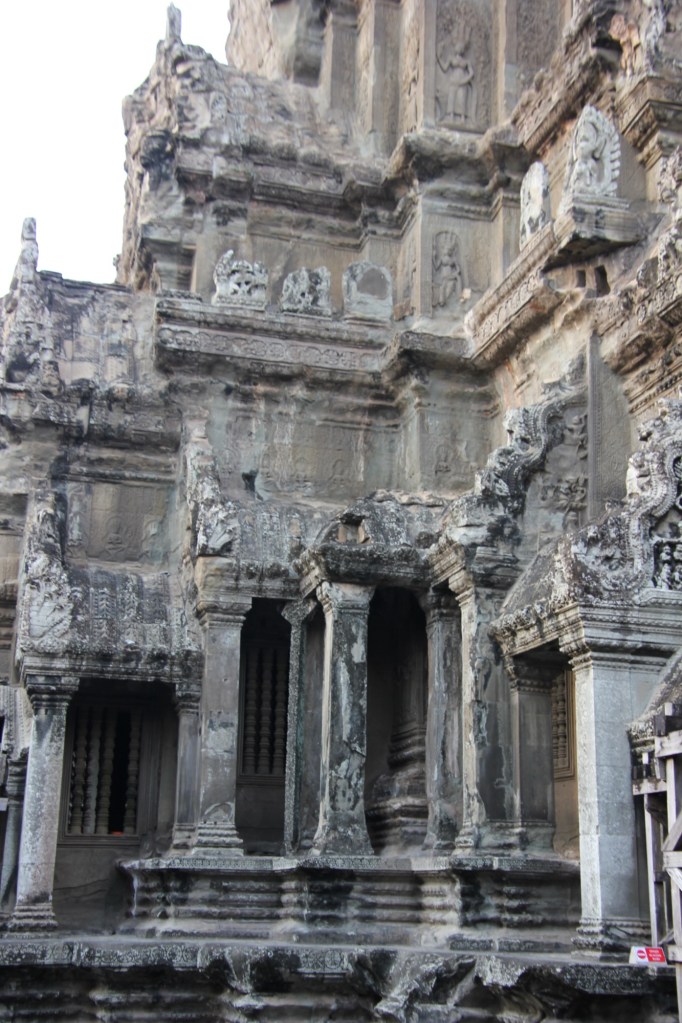
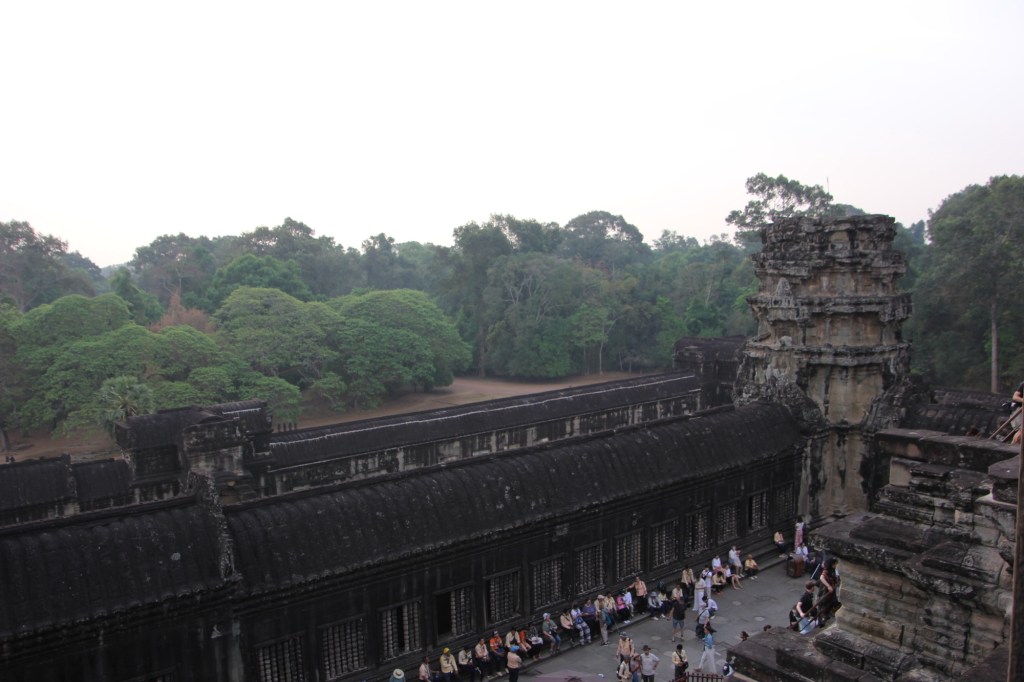
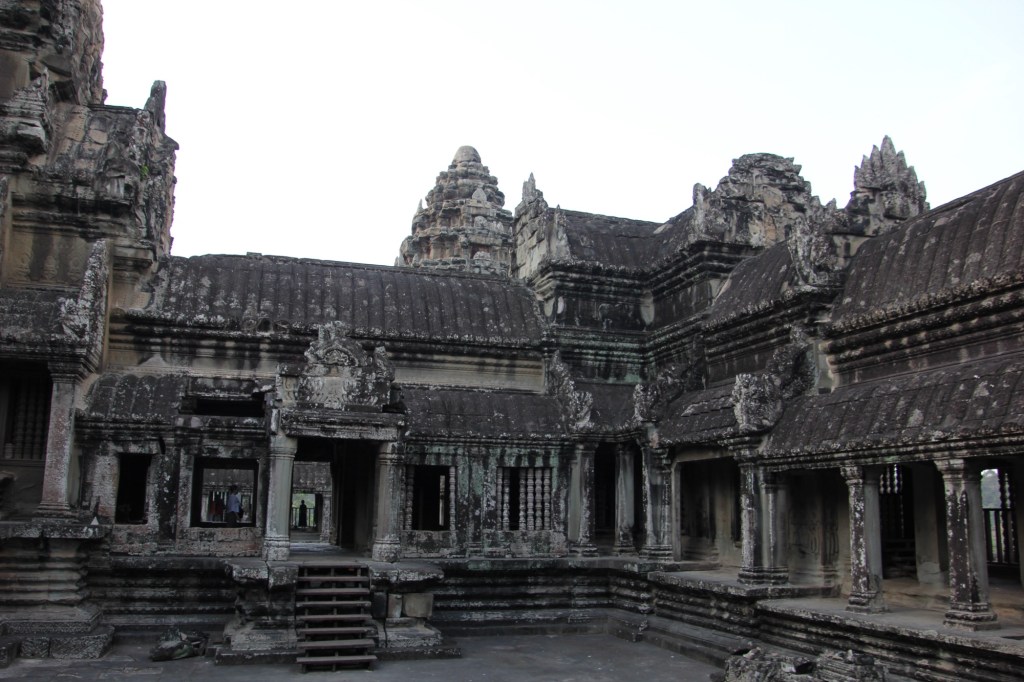
Angkor Wat is the largest religious complex in the world. It was built between 1113 – 1150 CE and covers over 400 acres. This was slightly before Notre Dame in Paris was built (1163). The temples were dedicated to Vishnu and a lot of the carvings reflect Hindu deities and teachings. There are 5 towers in the inner complex which are meant to reflect the 5 central peaks of Mt. Meru (the Hindu dwelling place of the gods) and the 4 directions. The moat around the temple is meant to represent the ocean at the edge of the world. Over time, the temple was rededicated and became a Buddhist temple and by the 15th C it was largely abandoned. However, Theravda Buddhist monks maintained the temple and it remained a pilgrimage site. Europeans “rediscovered” the temple in 1863 and restoration work began. Restoration work stopped during the Khmer Rouge years but has continued since. Angkor Wat was declared a UNESCO Heritage site in 1992. It is now one of the most visited sites in South East Asia.
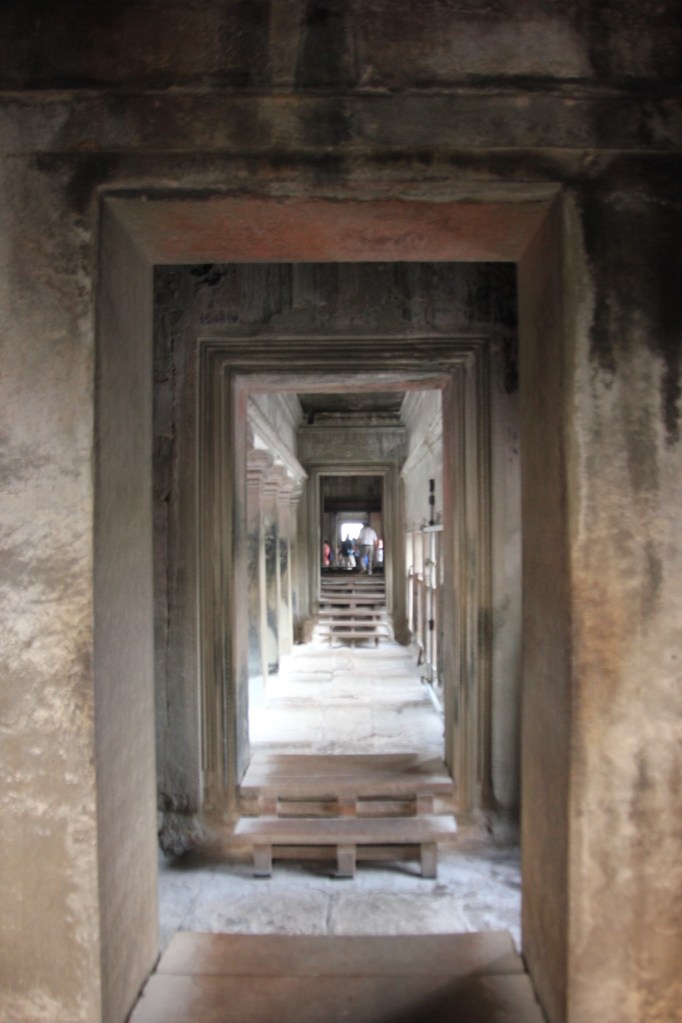
We walked around and into the temple, climbing the steep steps to the central tower. It was worth the effort.
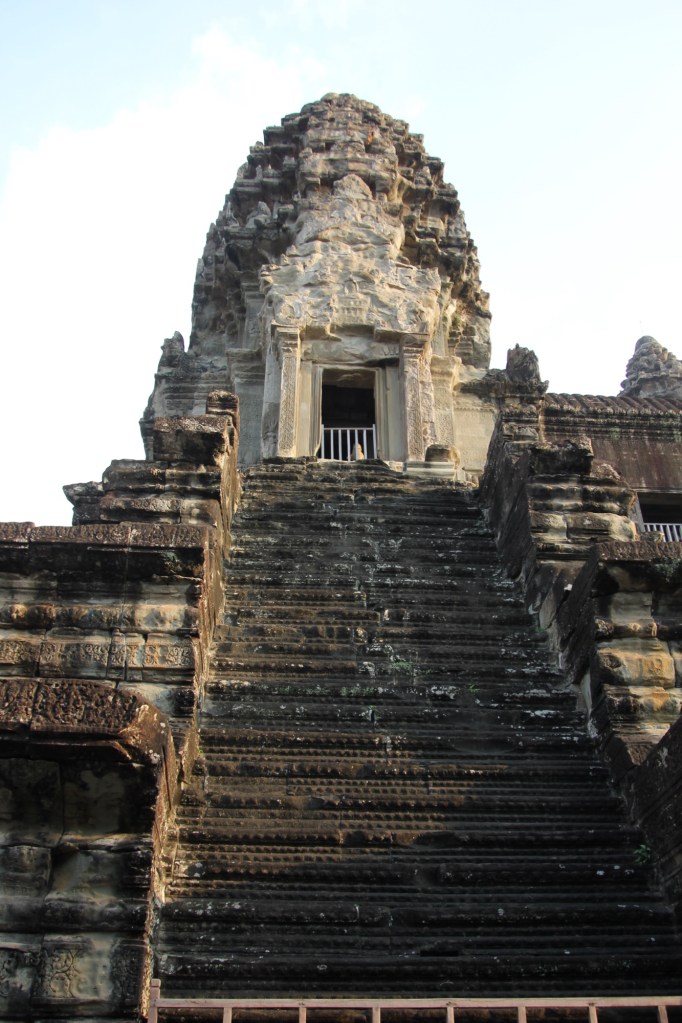
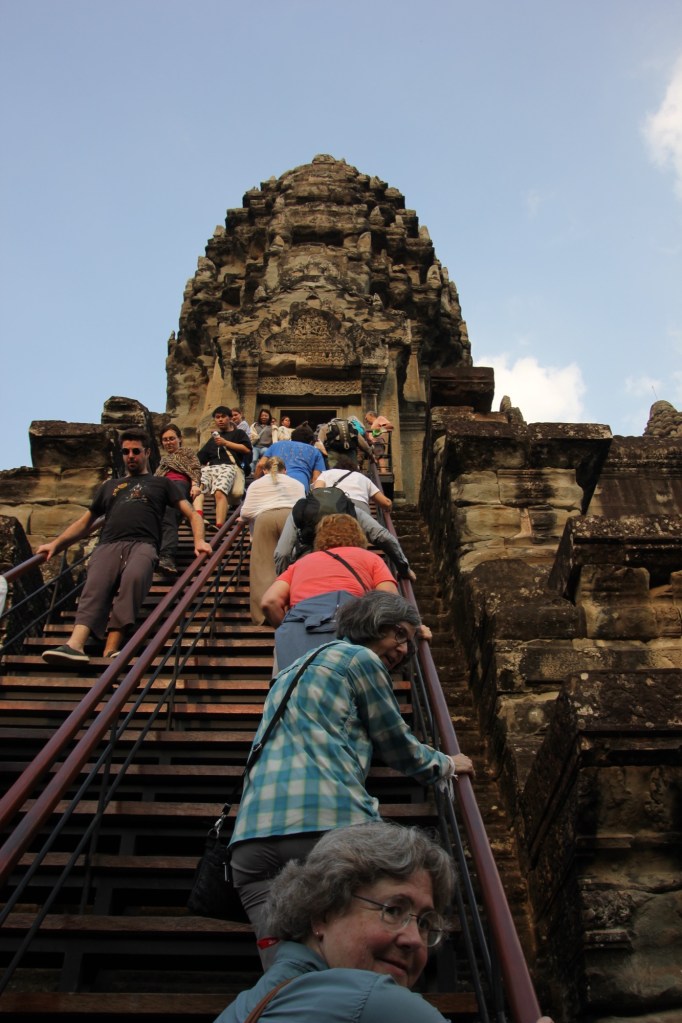
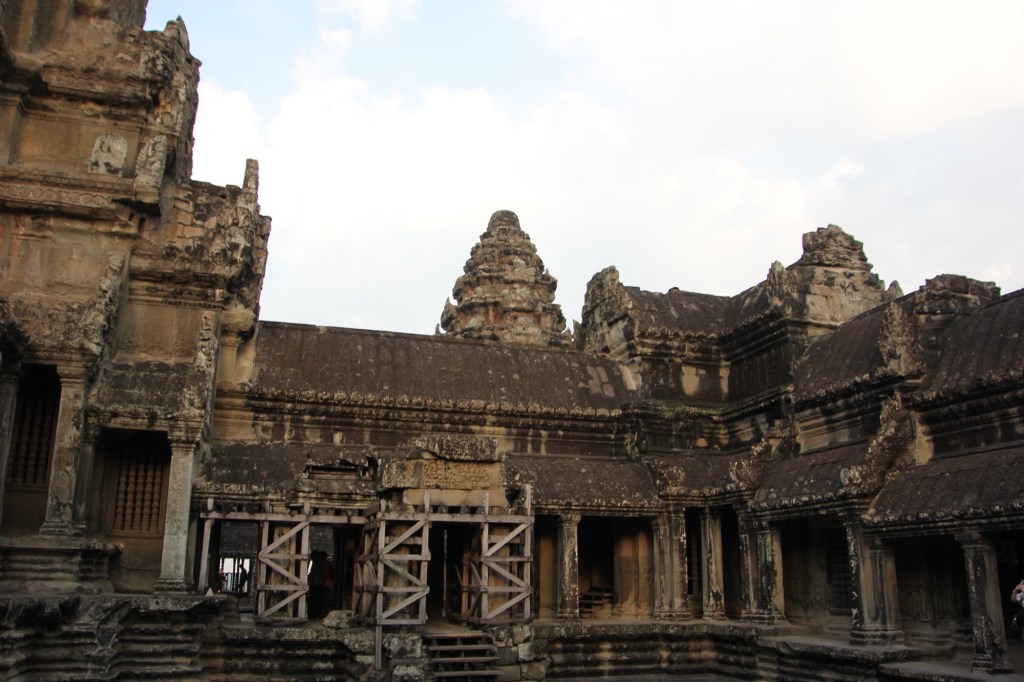
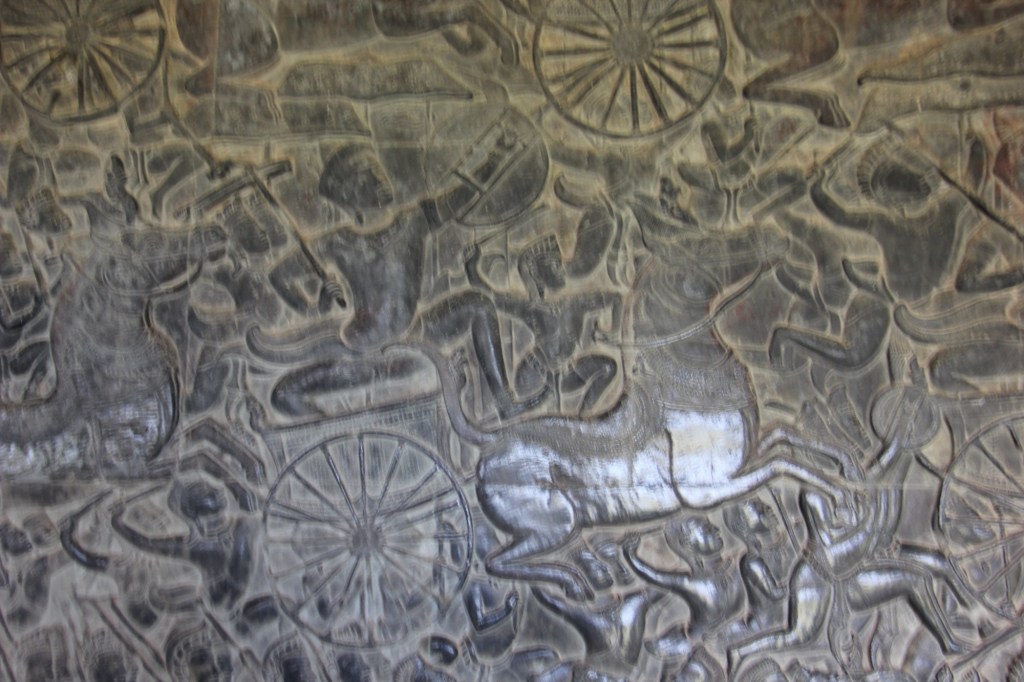
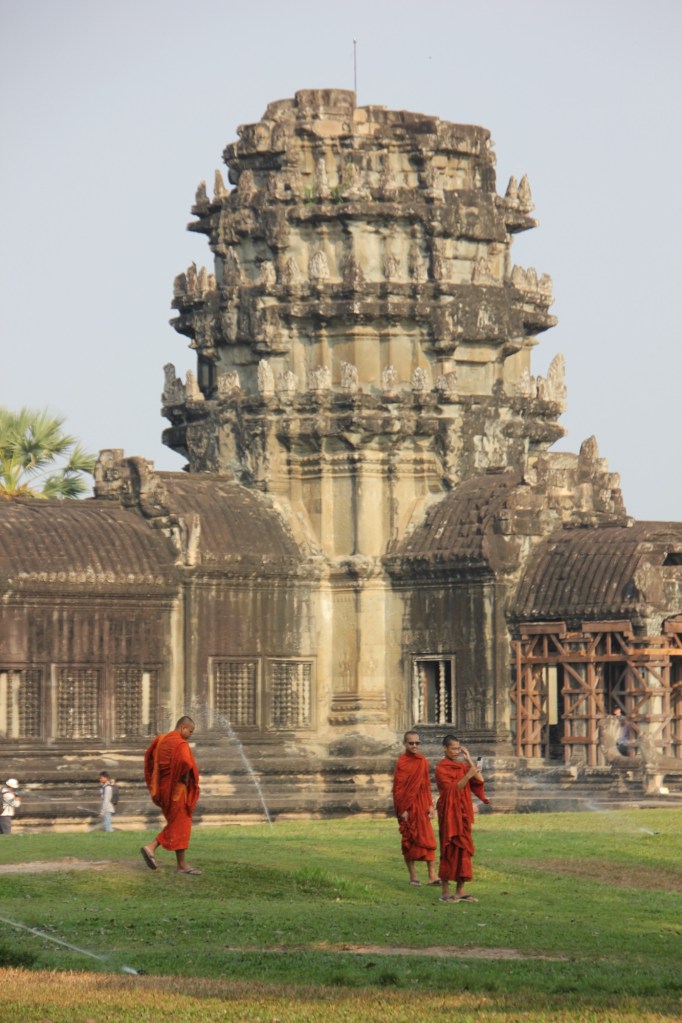
We left Angkor Wat for Angkor Thom, a temple built by the same king. It was smaller but still interesting.
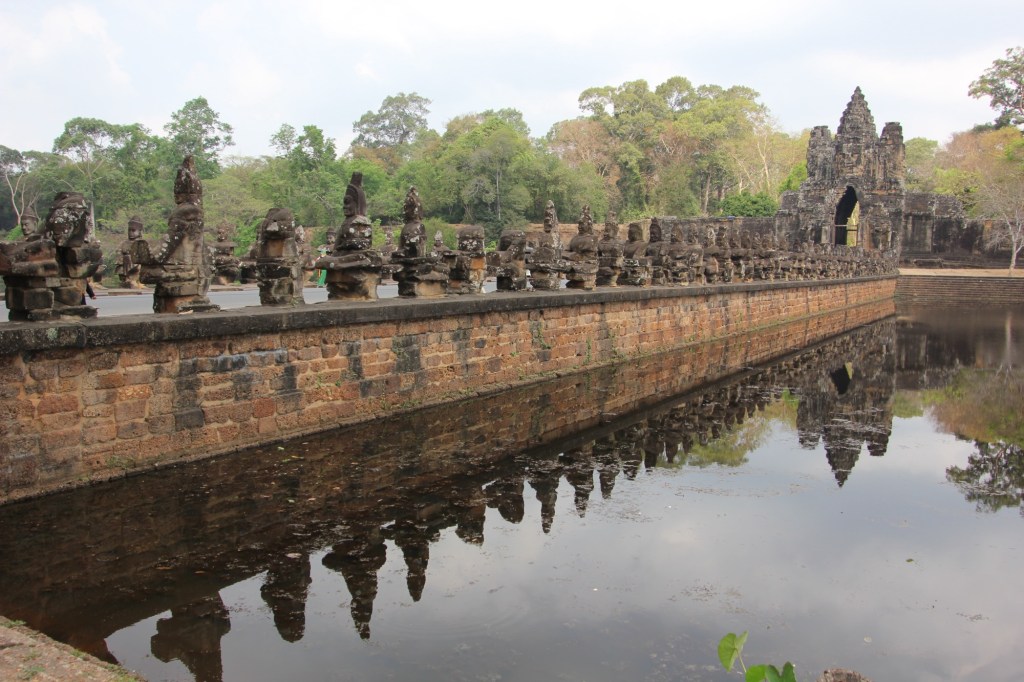
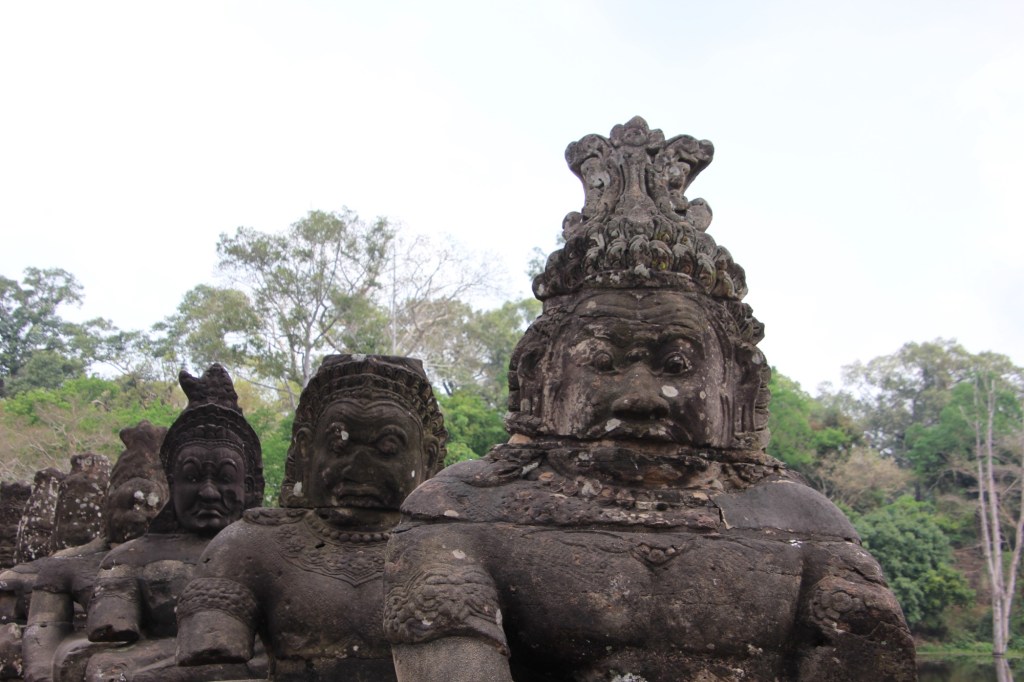
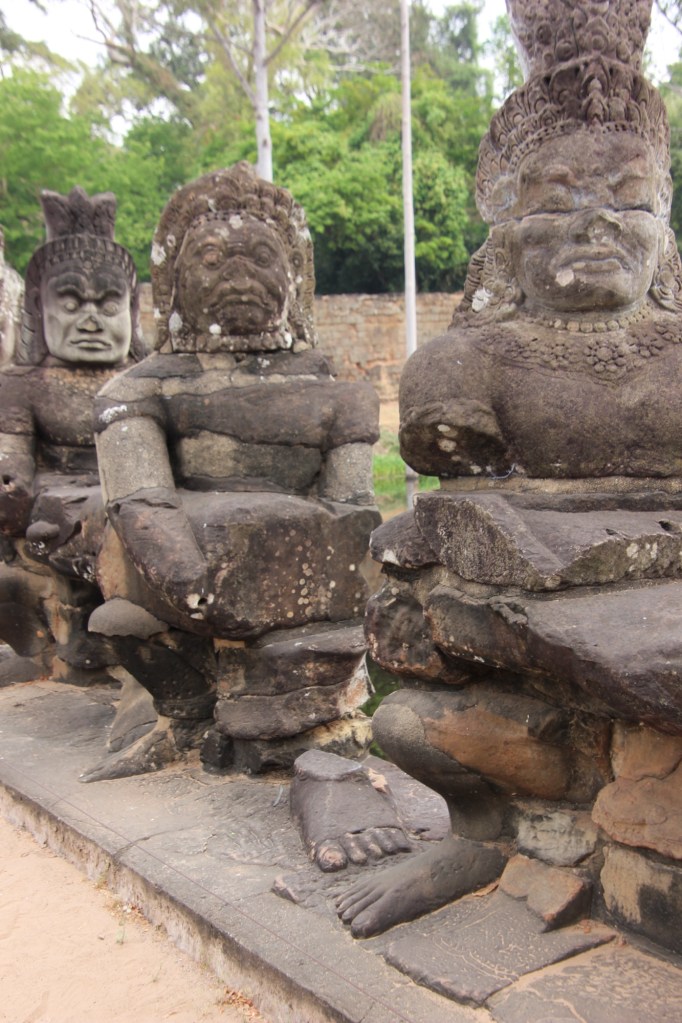
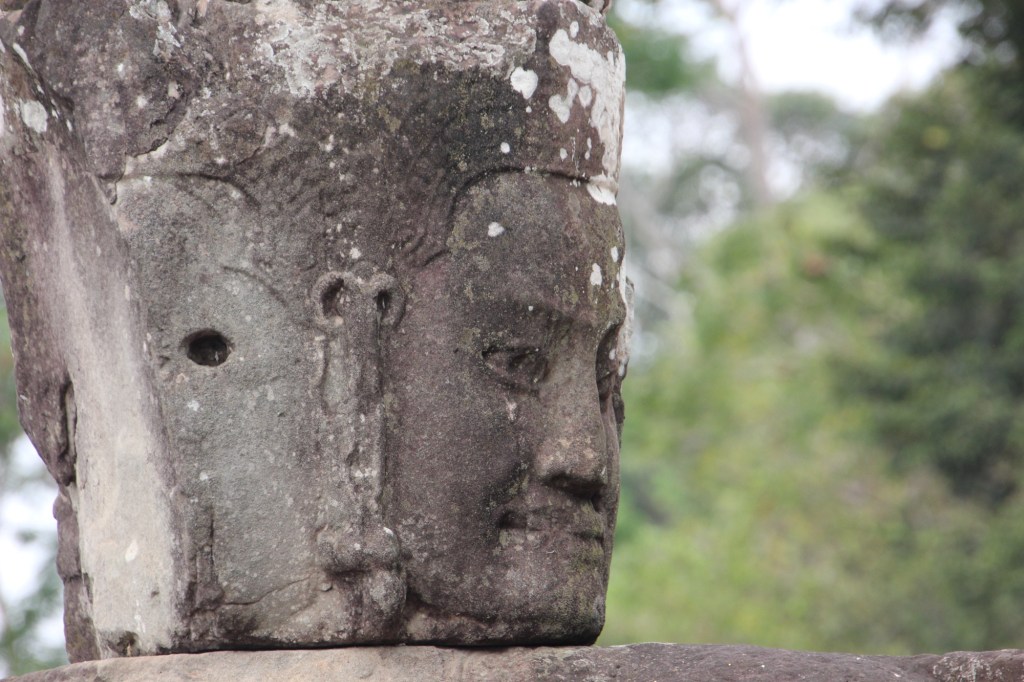
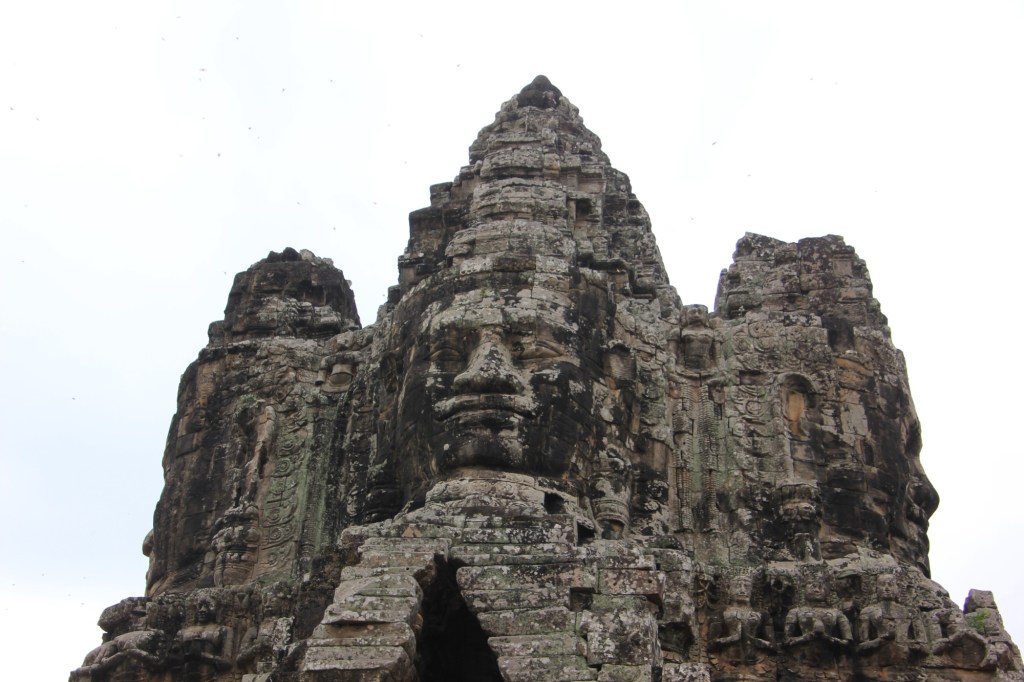
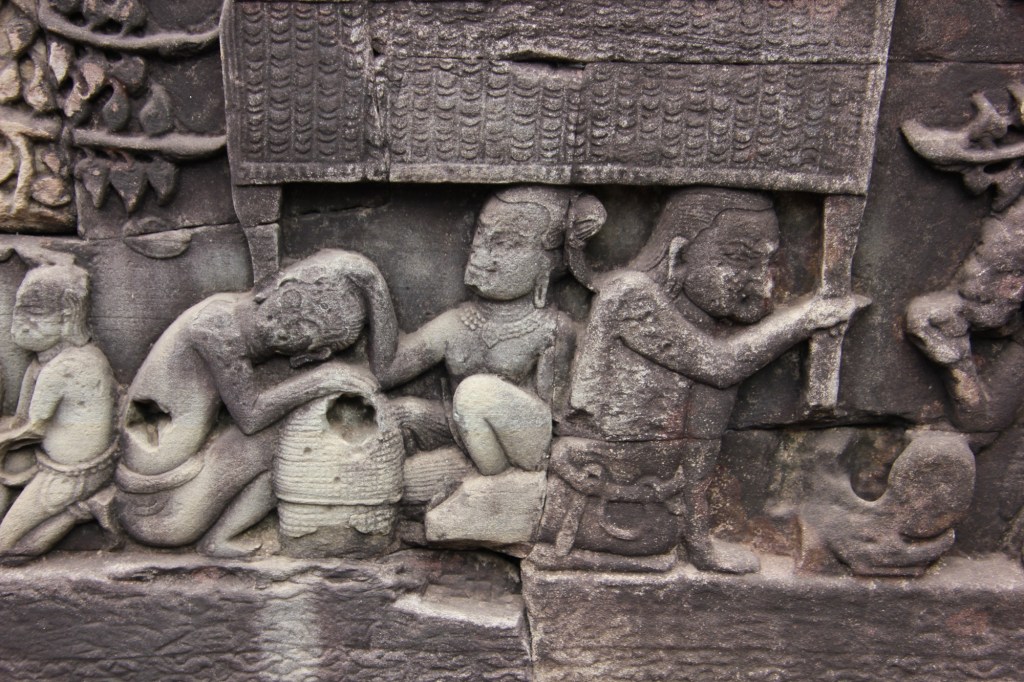
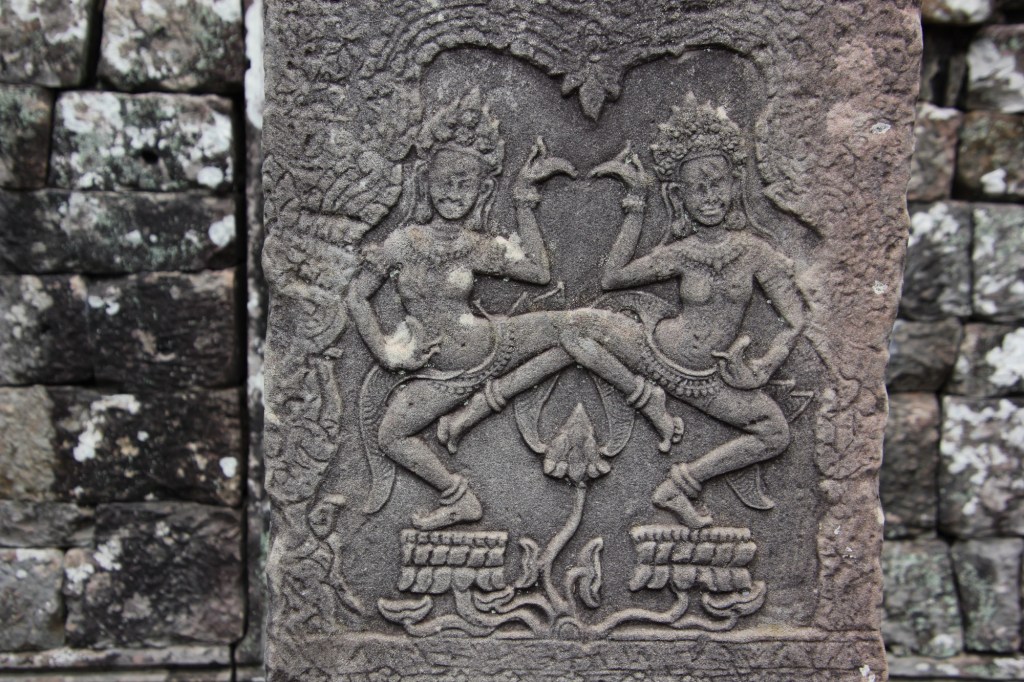
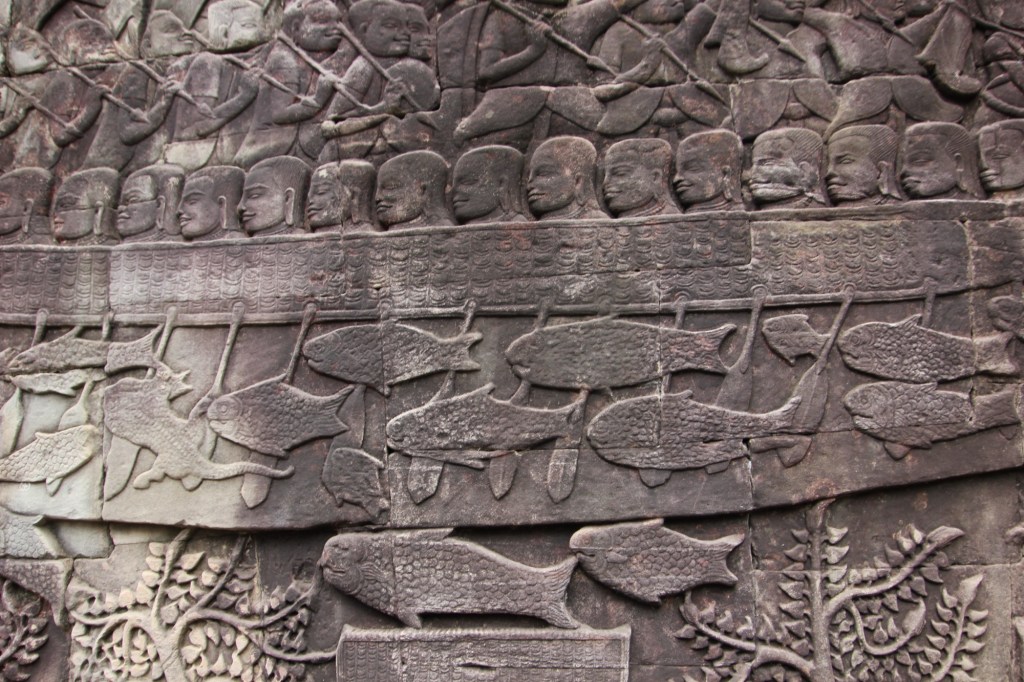
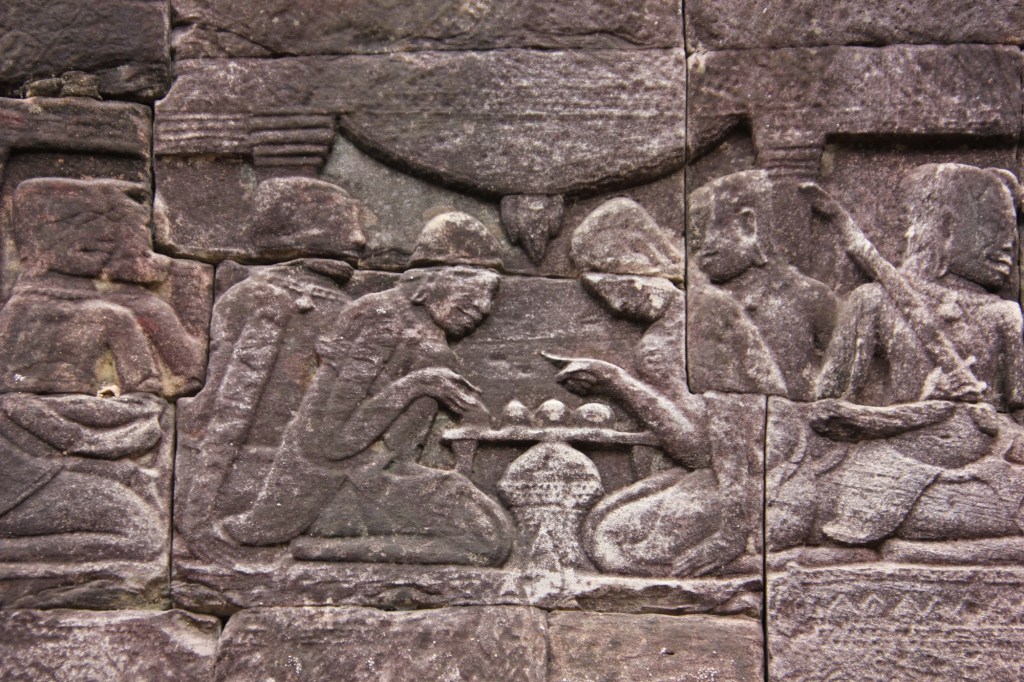
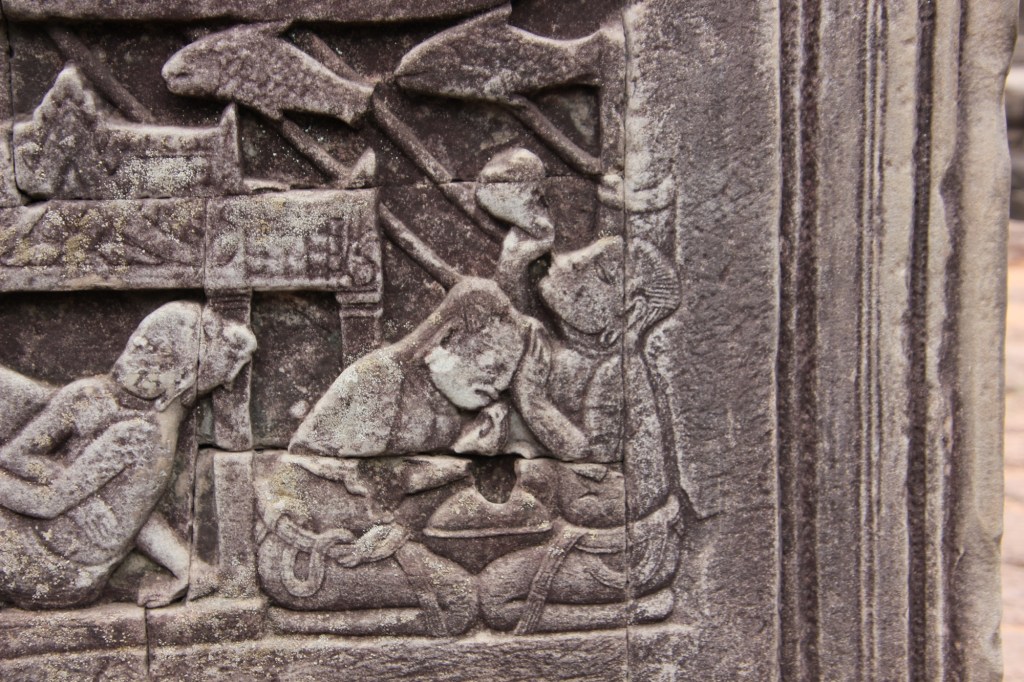
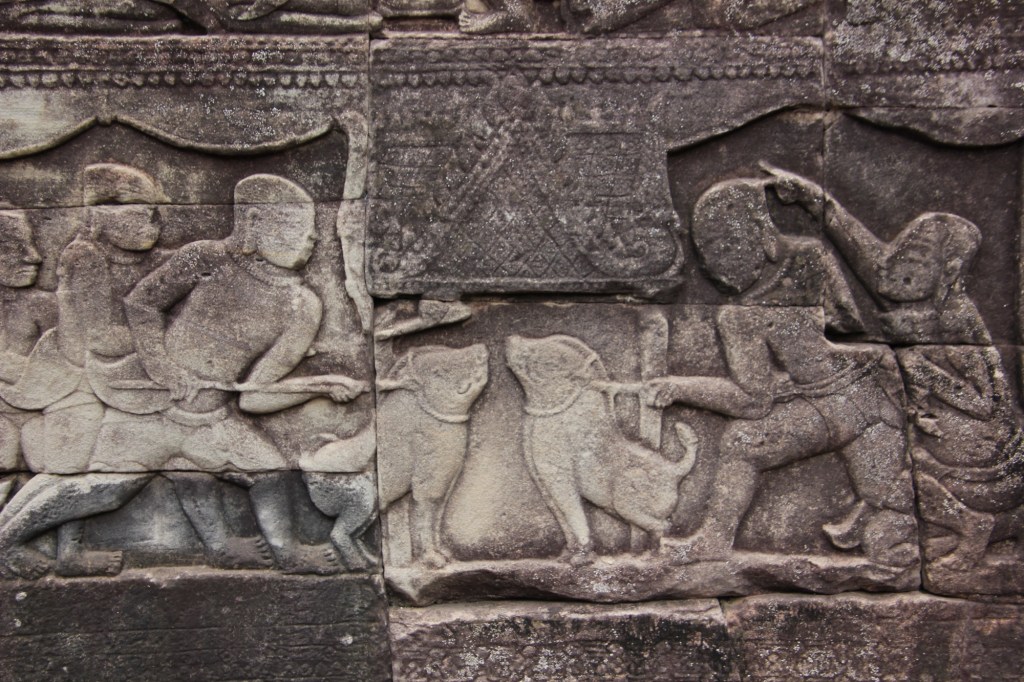
The gate to Angkor Thom (which means big city) was powerful. 80% of the city is still jungle. Inside it were many buildings that have been identified by LiDAR but not recovered yet. One of the temples that has been discovered is Bayon. It had many depictions of everyday life carved into its walls.
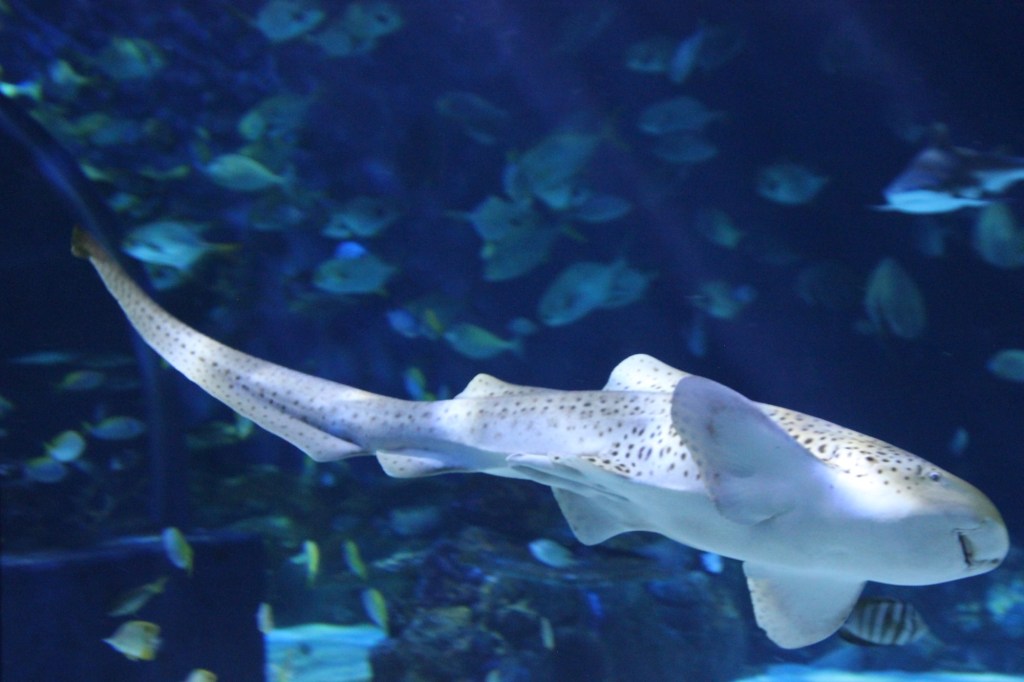
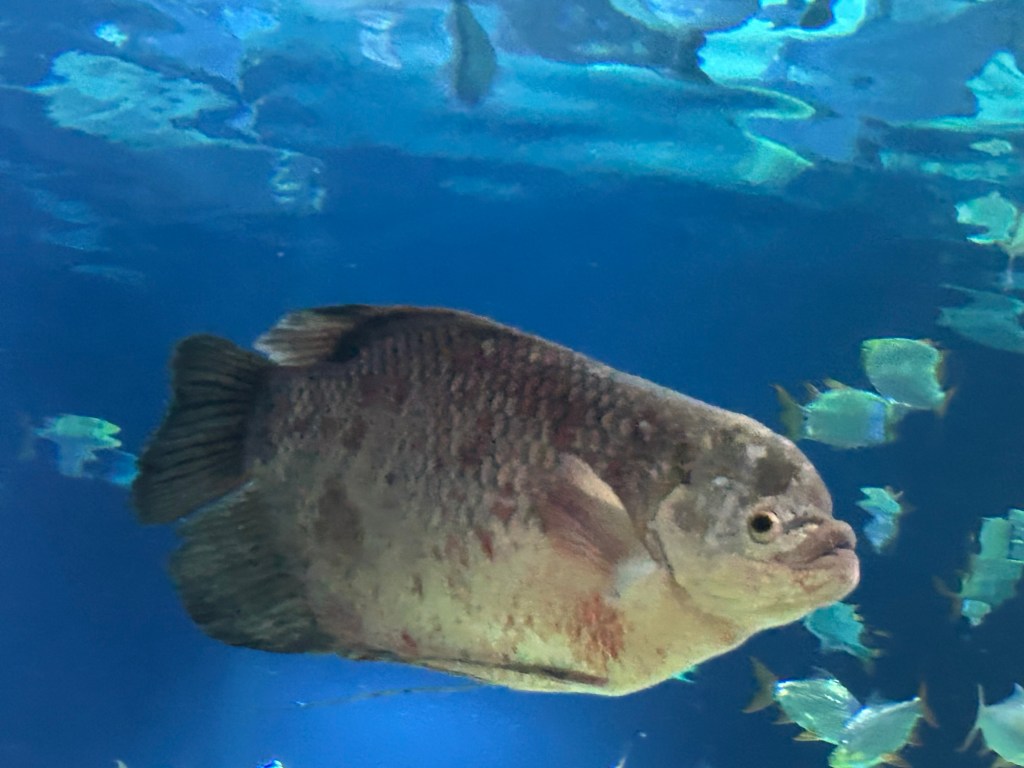
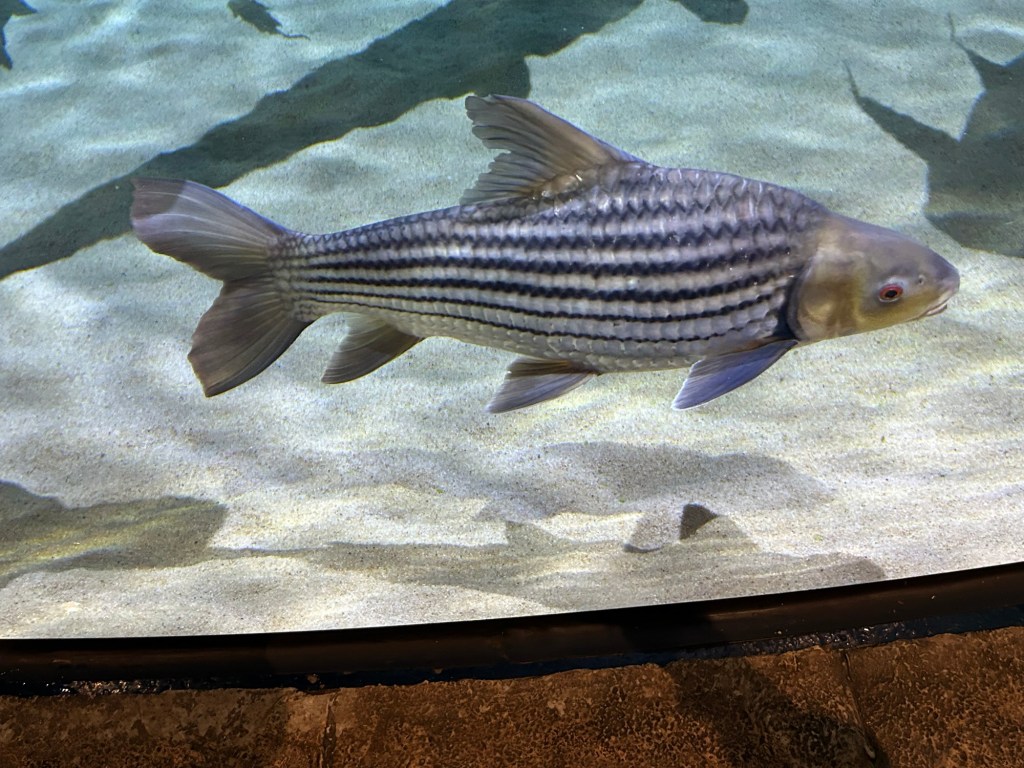
We left this site for something very different. Our next stop was the Angkor Wildlife Aquarium project. This facility is focused on protecting and preserving the the fish and wildlife in the Tonle Sap lake and Mekong river. They also had a mandate to educate Cambodians about the resources in their environment. It was great to look at the fish and see all the species they are trying to save. The lake and river system are under pressure due to upstream activities such as damns and demands on water.
After a delicious lunch at the aquarium we headed out for a boat tour of the lake.
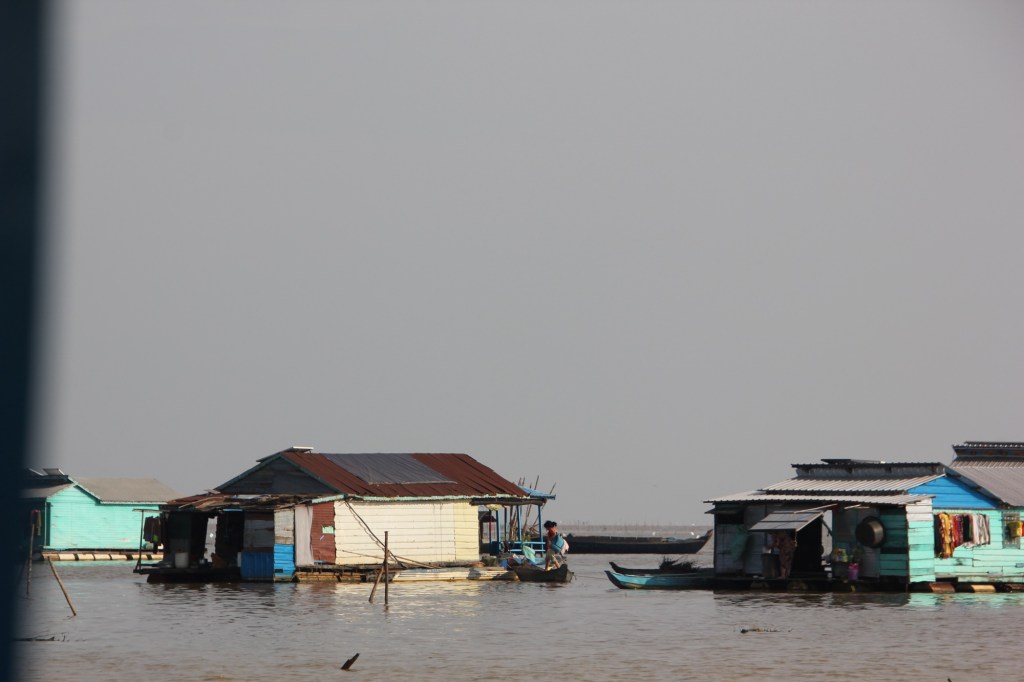
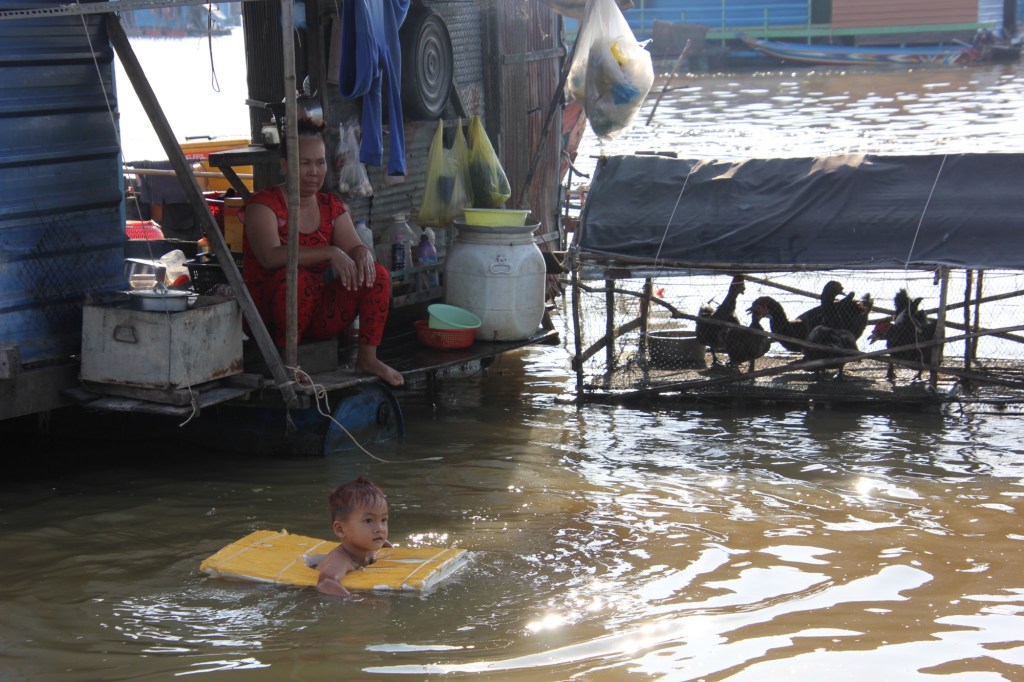
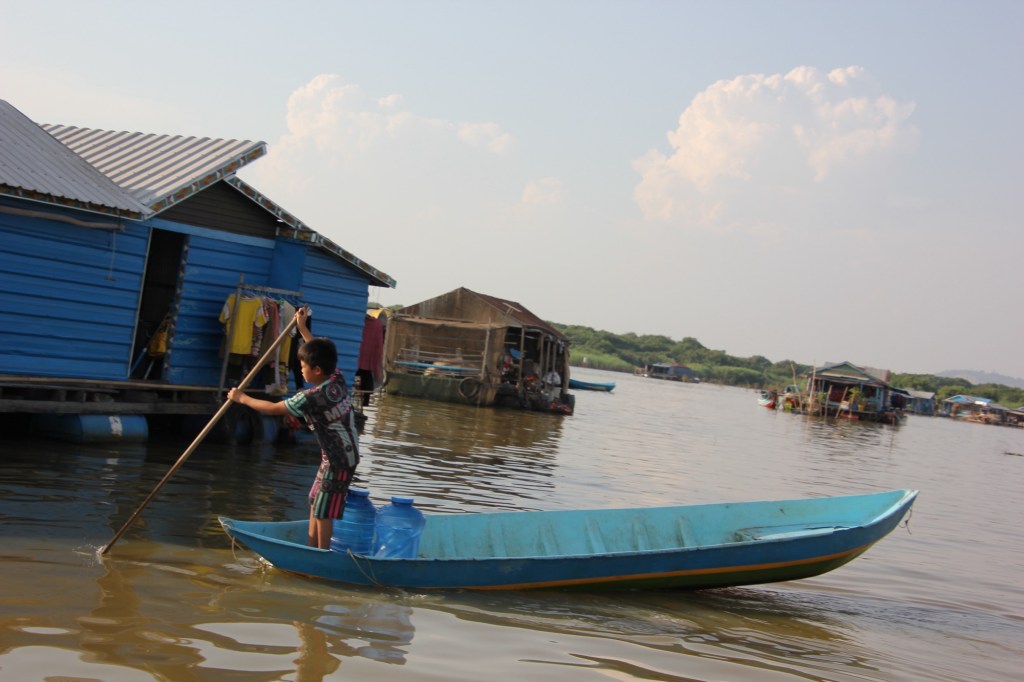
People live on the water year-round. They form a floating community of fisherfolk whose lifestyle revolves around the rivers and lakes. There is significant poverty here but a resiliency to survive and maintain a water-based lifestyle.
This was a jam-packed day and we all piled into the bus for a quiet ride back to the hotel. It was an early night as we were leaving the next morning for Vietnam.
 travelswithannmarie
I would be no good living in the water looks like u guys are having a great time everyone time u guys leave we get a dump is snow no more holidays for u lol