
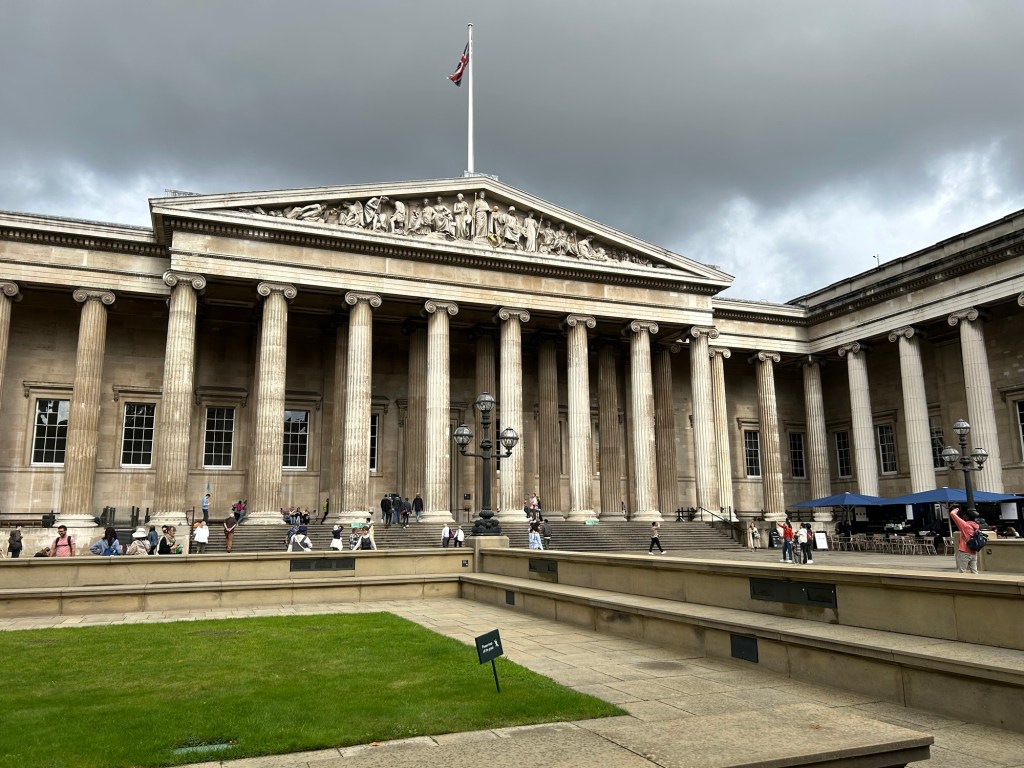
We were glad we planned ahead for entry to the Museum. It was crowded and the security took time to get through. Admission to the museum is free but donations are welcome. We realized that some of the money we had from a previous trip to the UK is outdated and vendors wouldn’t take it. We needed to change it at a bank; however, the museum gladly accepted it and saved us a trip to a bank.
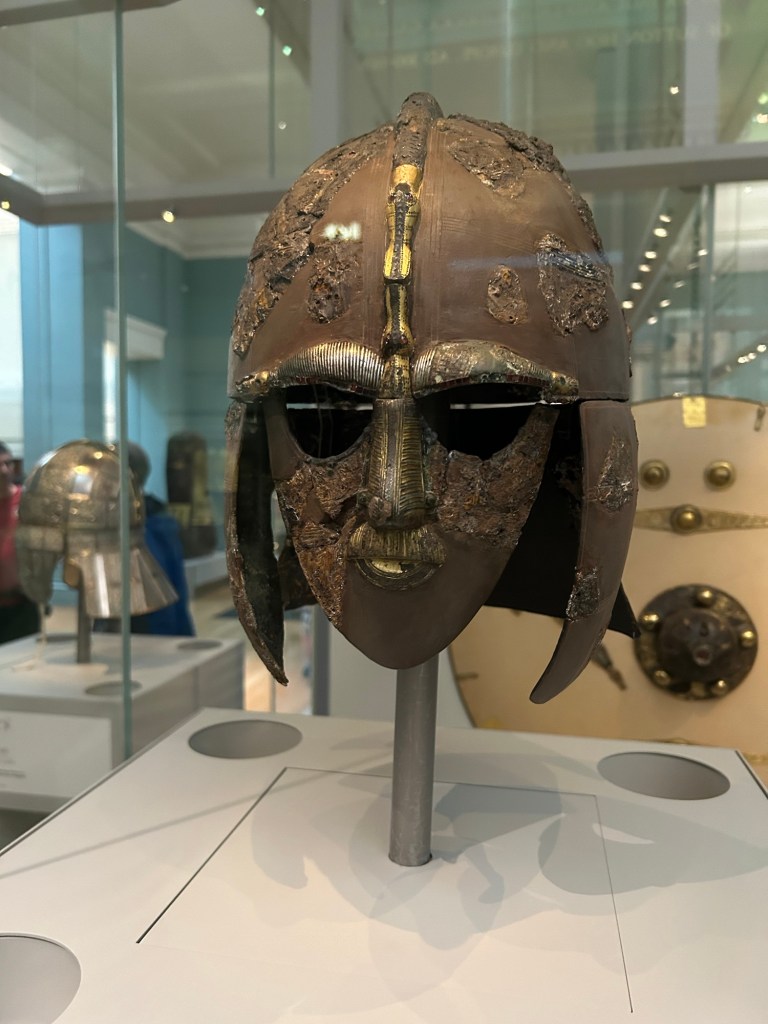
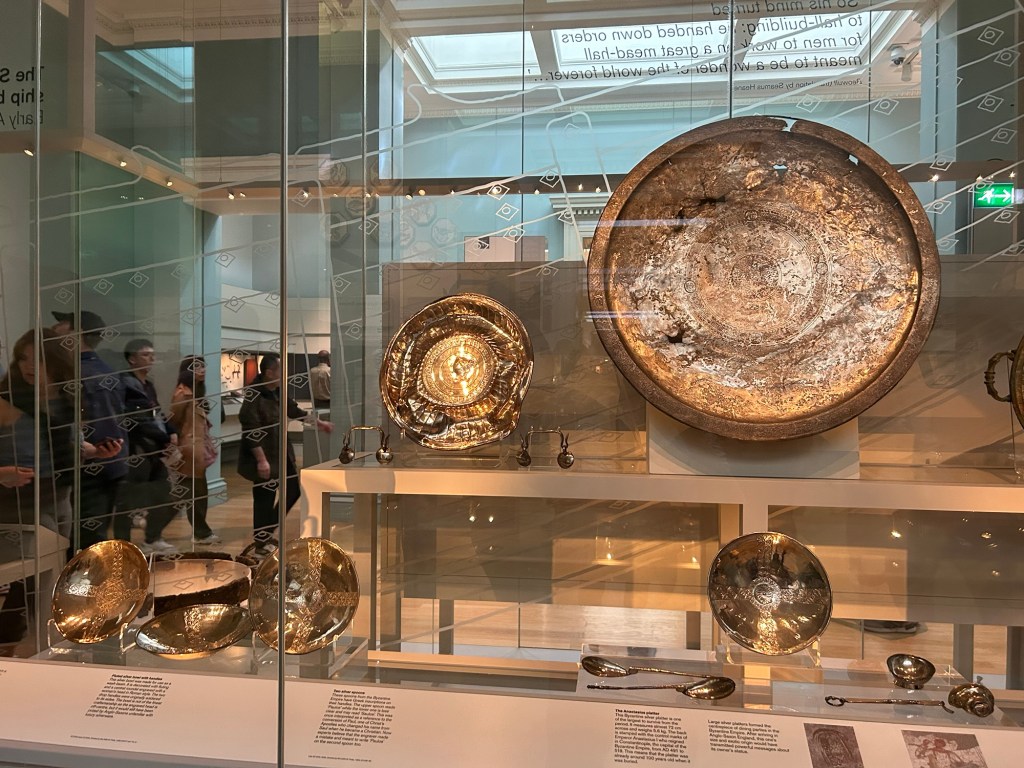
There is so much to see in this museum and after a couple of hours we know that sore feet and backs will kick in, so we decided to focus on specific collections. We had seen a movie a while back about the Sutton Hoo Hoard, so we thought we’d focus there. The Sutton Hoo Hoard was found just as WWII started. Basil Brown, an amateur archeologist was tasked by the land owner, Edith Pretty, to excavate a barrow on her land. They found an incredible and rare, intact Anglo-Saxon boat burial. Gold, gems, lyres, helmets and the remains of a large boat were under what looked like a small hill. The hoard is housed at the museum and it was amazing to see the goods they had buried sometime between 410-1000 AD. They had incredible metal and fine metal working skills.

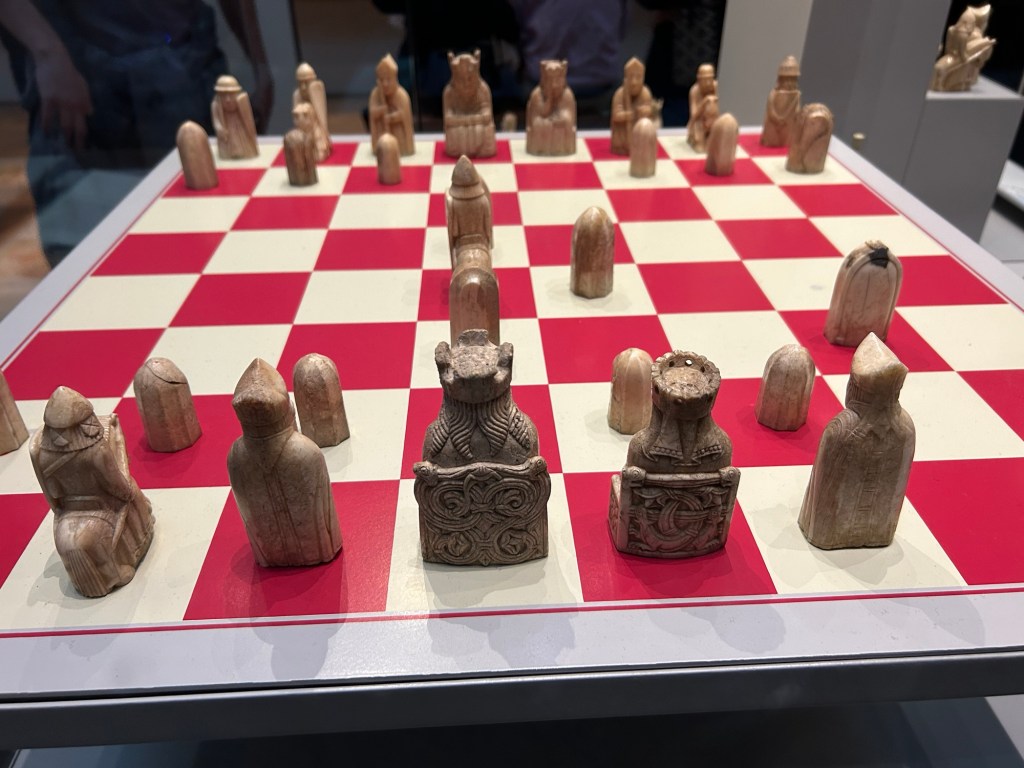
We were also interested in the Lewis Chess set found on Lewis Island in the Scottish Hebrides in 1831. They were carved from walrus ivory in the 1100’s. Most of the 94 pieces are in the museum, but there is some challenge to have more moved to the Lewis Island museum.
We had planned to see the Elgin Marbles, a controversial collection of sculpture from the Parthenon in Athens. However, that exhibit was closed for some reason. The controversy about the marbles is about whether to return them to Greece or not. The whole colonial practice of owning another culture’s important historical objects is a hot topic. We were disappointed with one exhibit’s explanation sign that basically said it was ok to have the artifacts in the museum because “they said we could take it”. There was no context provided about what might have influenced the “gift” giving.
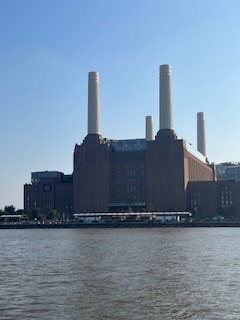
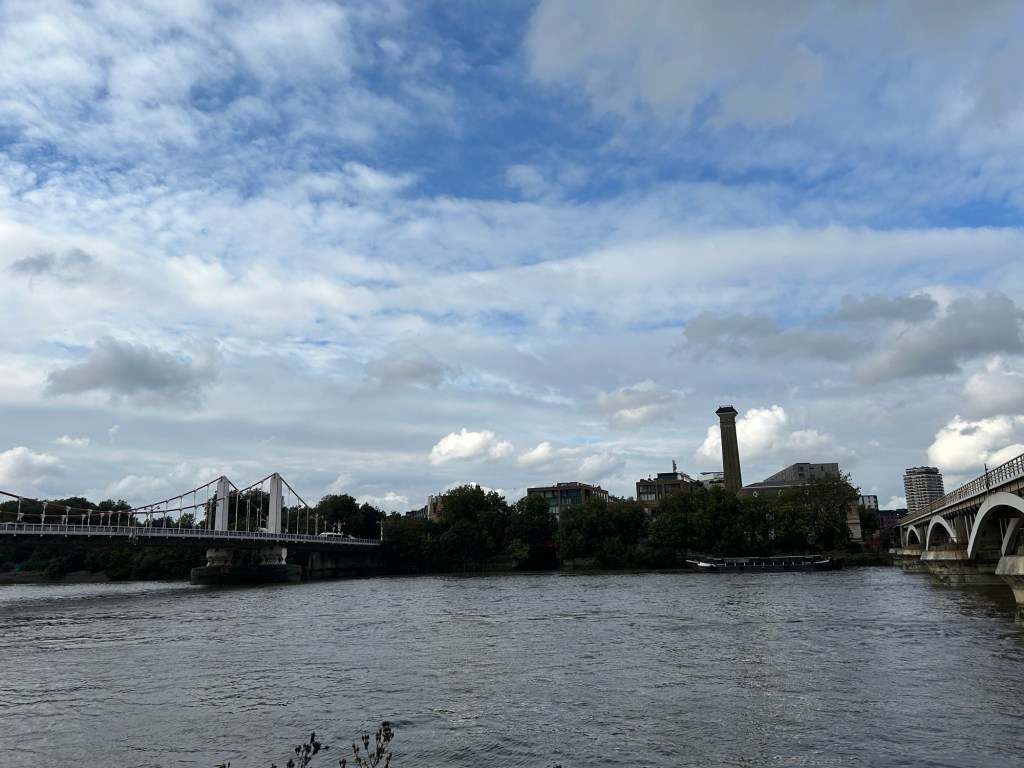
We left the museum and explored Oxford Street – mostly window shopping before heading to the Battersea Power Station. We have several tube stations around us, each taking about 15-20 minutes to walk to. We hadn’t tried the Battersea one yet so we were happy to learn that train from there would be the best way for us to take to the National Gallery tomorrow. We never thought about crossing the river before yesterday, despite having seen the Battersea Power Plant building the first day we were here. It seemed so far away but, only a 20 minute walk. They converted the decommissioned power station into an upscale residential and condo development with lots of shops and restaurants.
We had an early night, finally overcoming jet lag, as we have an early entry to the National Gallery tomorrow.
 travelswithannmarie
Thanks for the fascinating tour. The Battersea development is a project owned by Malaysian interests and that country is very proud of it.
The Anglo Saxon helmet is amazing! Did it look small like some of the suits of armor are?