
Today was a day to explore Portugal’s origins and influence on the world. We started out with our guides, Jose and Ricardo who took us to two delightful historical towns. The Roman influence is still felt in Portugal, both in the language and the communities.
Both Braga and Guimaraes figure prominently in the establishment of Portugal as a country. The first king of Portugal, Alfonso I, was a child (between 1 and 6 years old depending on who tells the story) when his father, a Duke of the County of Portugal, died. His widowed mother looked to improve her lot in life by marrying the most powerful lord in a neighbouring county. The nobles in Portugal didn’t approve and influenced Alfonso to challenge his mom for power. He listened and turned out to be a good leader, pushing back the Moors and winning a battle against his mom and sending her into exile (or a dungeon, depending upon who tells the story). Alfonso solidified his power by sucking up to the Pope, who in turn, supported him and named him King of Portugal in 1137. He is now known as Alfonso the conquerer. I share this story as it was the backdrop in everything we have seen so far.
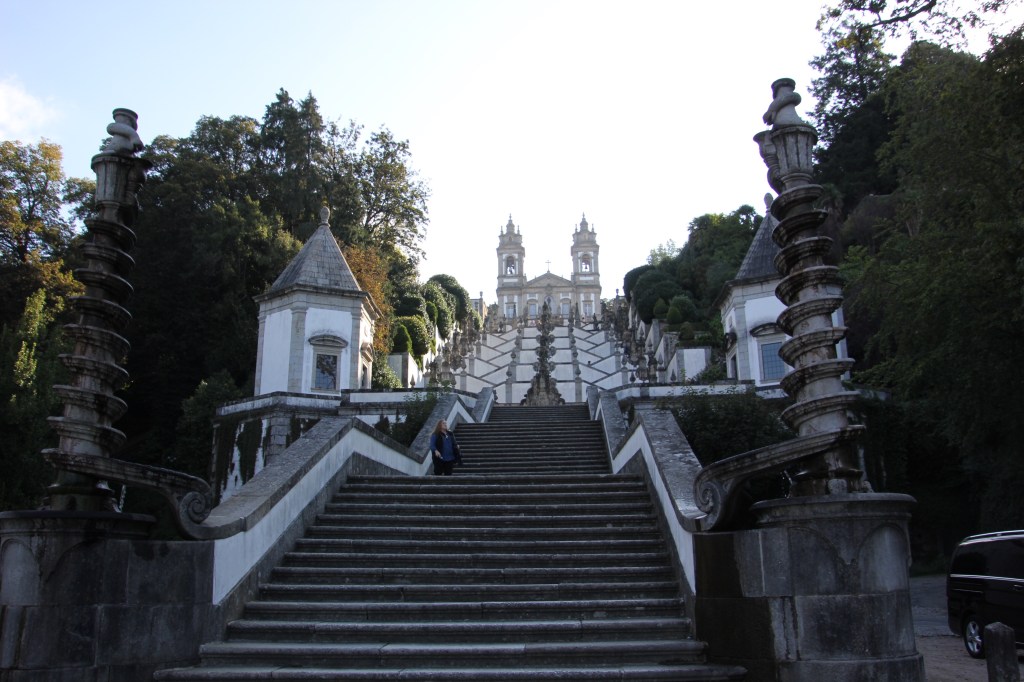
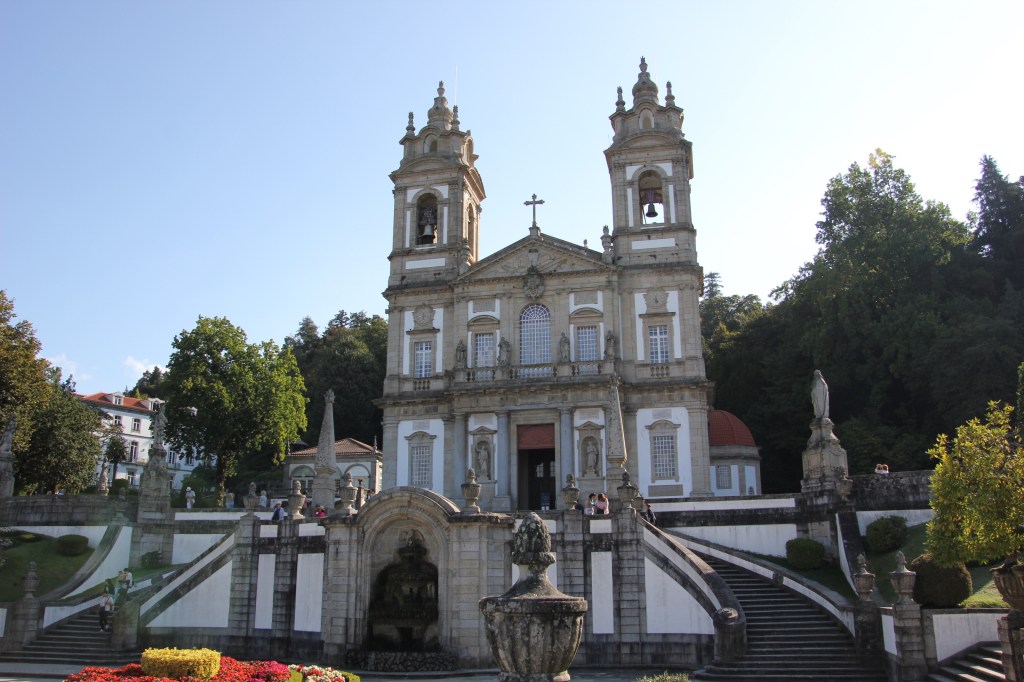
Our first stop on the tour was the Dom Jesus do Monte Sanctuary. The steps climb 381 ft. Apparently, if looked at from a drone view, the statues form the shape of the holy grail. While the first chapel on the site was built around 1373 and was rebuilt as a pilgrimage site in 1629 dedicated to good Jesus and the passion of Christ. It has been renovated many times over the years with the current configuration dating from 1882.
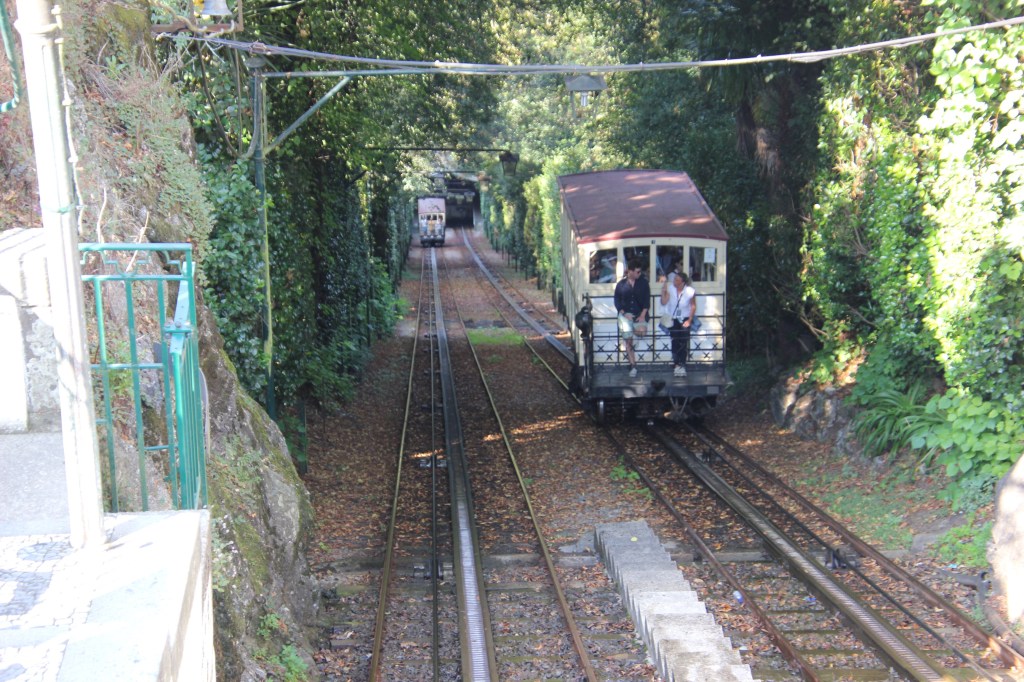
One of the quirks of the site is an unusual train that takes people from the bottom of the hill to the top. It has run entirely on gravity since 1882. A train at the top has a tank that is filled with water. It then pulls the bottom train up as gravity pulls it down the hill.
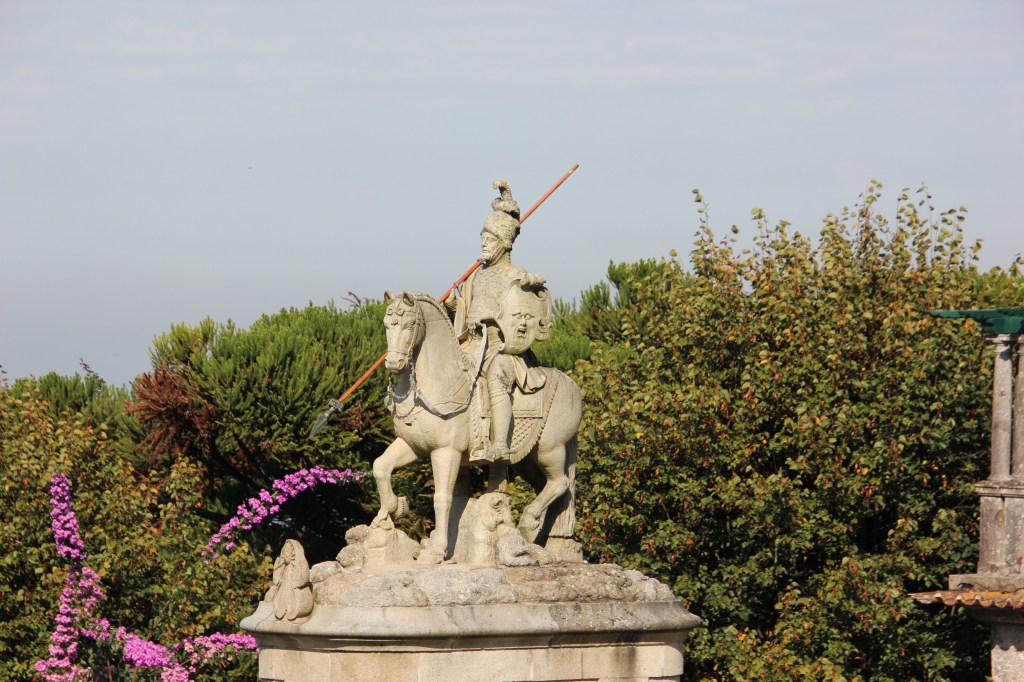
The grounds of this sanctuary also included a number of residences that originally housed clergy and nuns. They have been converted to hotels now. Outside the church is a statue dedicated to the soldier who showed mercy to Jesus on the cross by killing him with his spear. He is considered to be the first “Roman” Catholic.
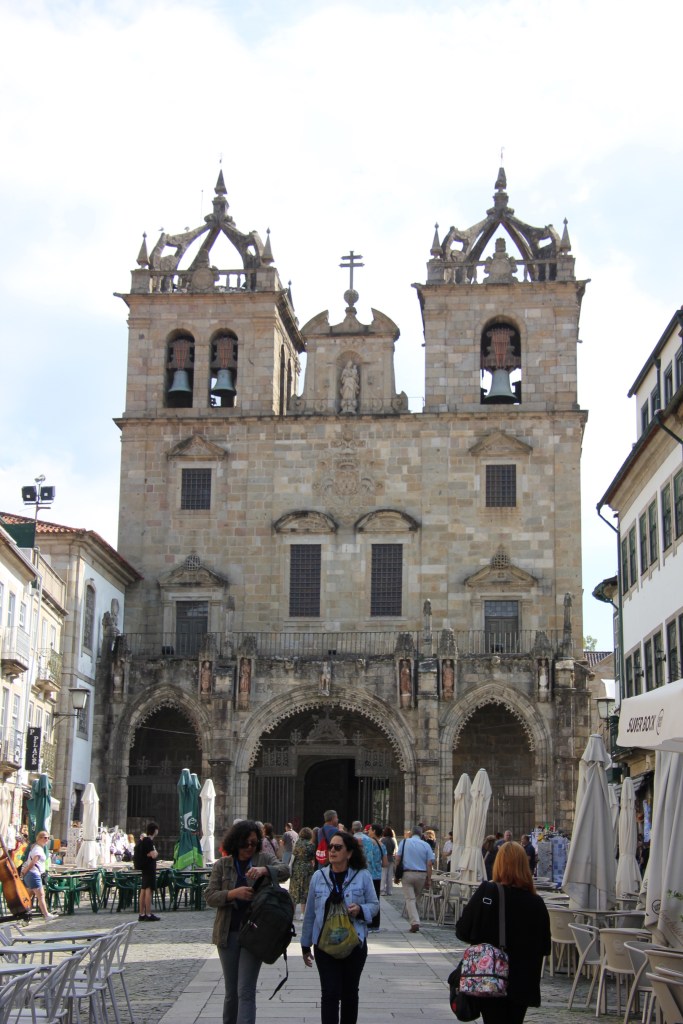
Next we drove into the town of Braga. Braga was founded by Caesar Augustus and is considered one of the first Christian cities in the world. We went to the Cathedral of Santa Maria, the first Portuguese Cathedral. The cathedral was built on the ruins of a Roman temple dedicated to Isis. The parents of Alfonso I are buried here. One way to know that this is an important church is by the crowns above the towers. (They actually look like spiders). The crowns show that the church was “crowned” by a pope. There was a huge competition between Braga and Compostella for the favour of Rome. Braga remains a favourite place to be buried for bishops and clergy from all over Portugal.
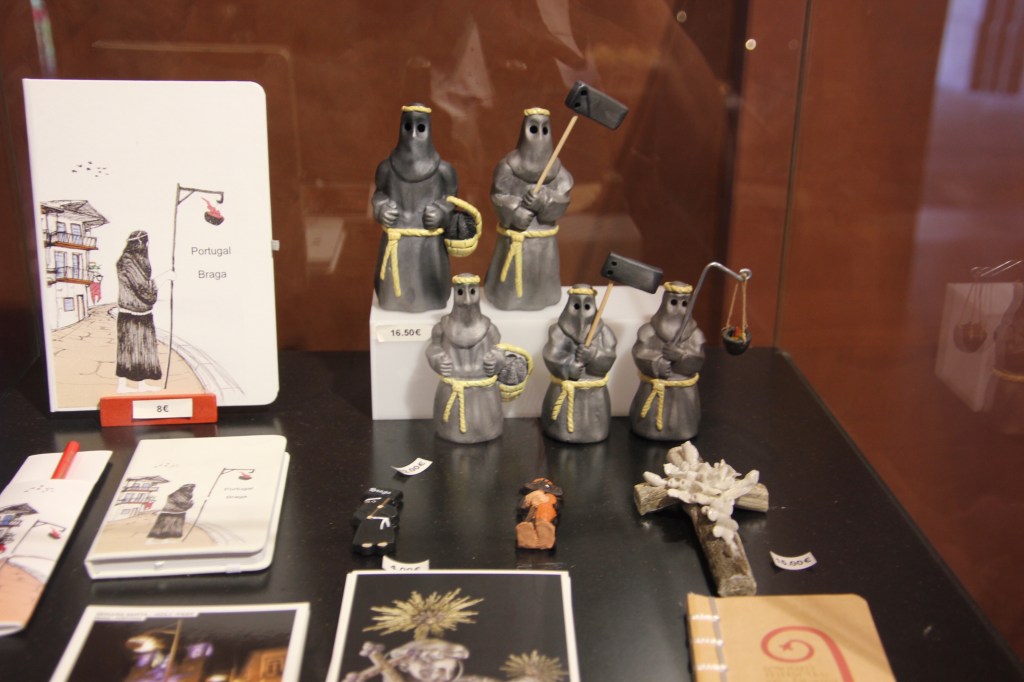
As we walked through town we kept seeing these hooded figurines on display. We learned that that they were the farricocos (the citizens who wore hooded cloaks to announce the coming of a convicted criminal by shouting out the crimes committed to the people of town. To attract attention they would shake black rattles. These figures walk through town during Holy Week processions basically announcing Jesus during the stations of the cross).
Our lunch in a local restaurant was delicious. We ate cod fritters, duck rice and a beef & bean stew. we drank local vinho verde “green wine” and relaxed. This regional wine is not a varietal grape but a process where the wine is released 3-6 months after the grapes are harvested. It can be red, white or rose. When young it can have a slight effervescence. So far we have tried the red and white, the white is much better to our palate.
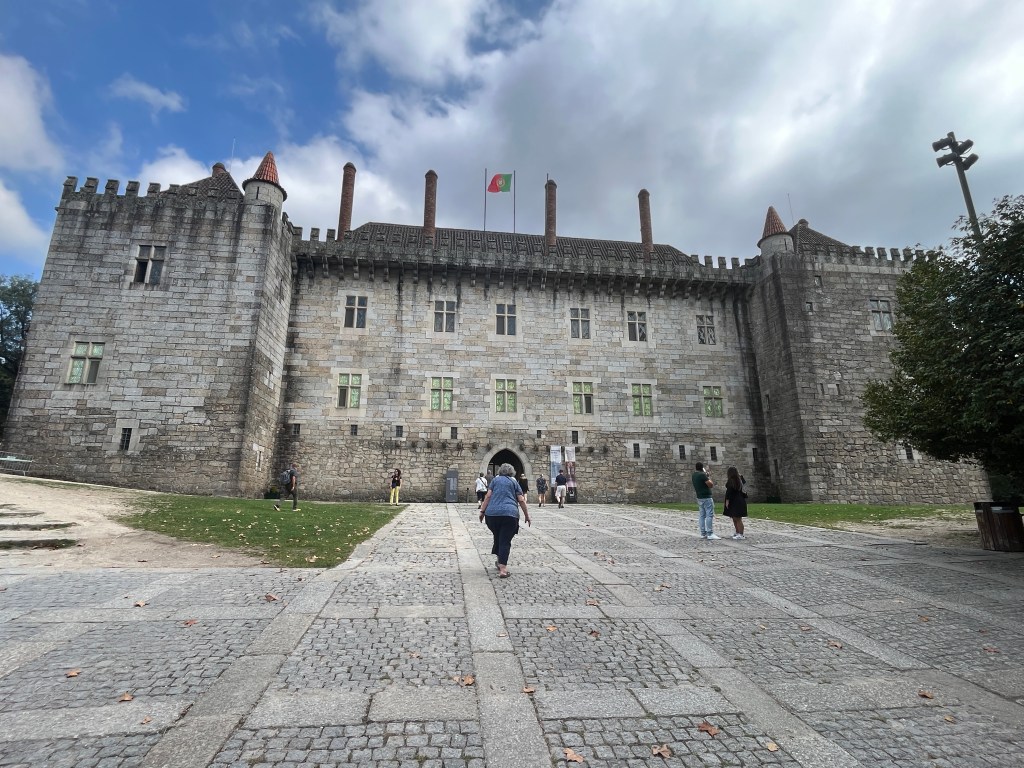
After lunch we moved onto Guimaraes where we walked through the old city and viewed the impressive Duke’s palace. It was originally built in the early 14 hundreds and was lived in by successive dukes for 200 years. It then fell into ruin until it was restored in the early 1900’s. The palace was unique for the times. It had 39 chimneys (making it warm) and 200+ windows (making it bright). They also devised a system of collecting rainwater which helped, among other things, flush out the indoor toilet chambers. The refurbished castle was beautifully furnished with antique furniture and gorgeous tapestries.
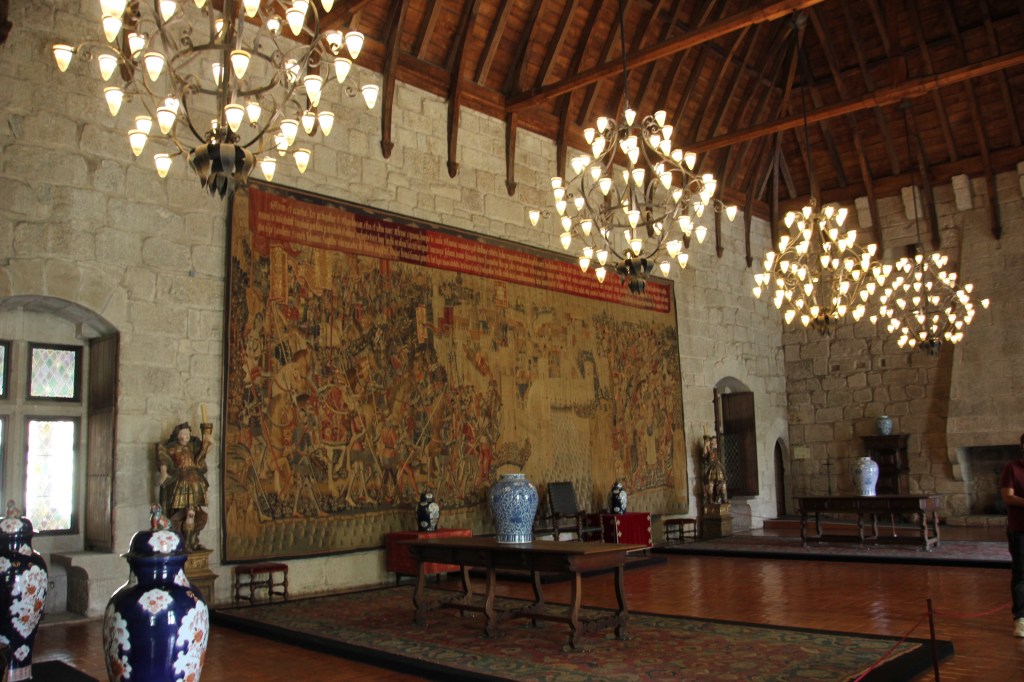
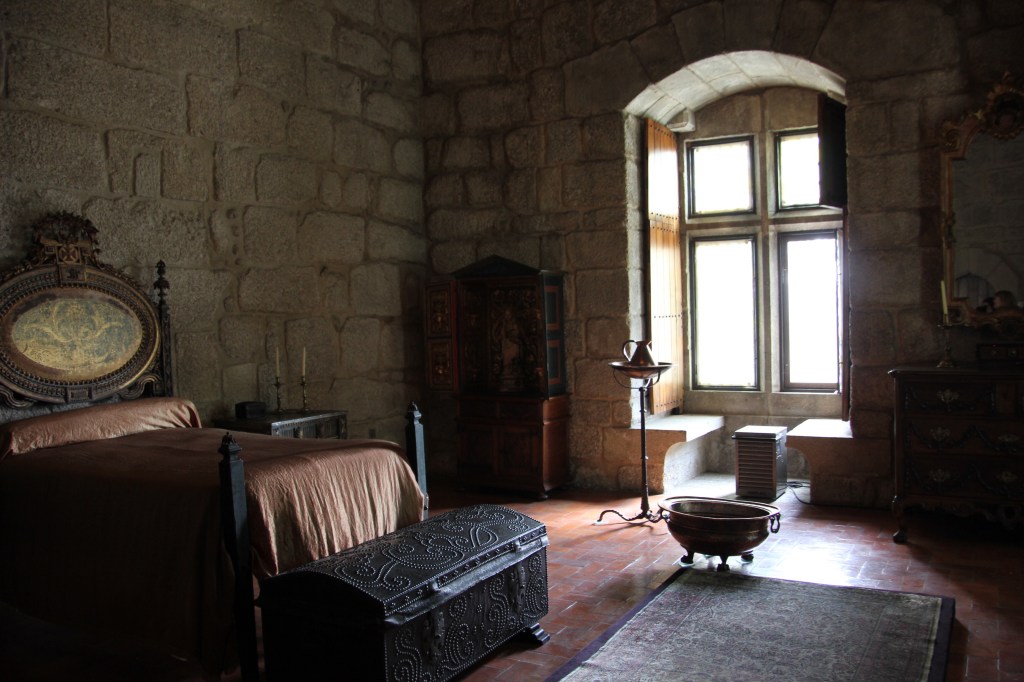
One of the most interesting parts of the palace tour was the discussion of how a princess of Portugal changed the British world. Henry II of England married Catherine of Braganza, the daughter of the Portuguese king in 1662. She was Henry’s second wife. They married when he was 43 and she was 16. Catherine’s dowry was huge, approximately the equivalent of 360 million euros by today’s standards. She also came with the cities of Tangier and Bombay, as well as fur trading rights in the Indies. She basically helped build the British empire. (We learned that Bombay is a Portuguese word for Good Bay). After she became Queen of England she radically changed British ways of life. She introduced forks to the royal court, changed plates from metal to china, fans, smoking and high tea. Who knew!
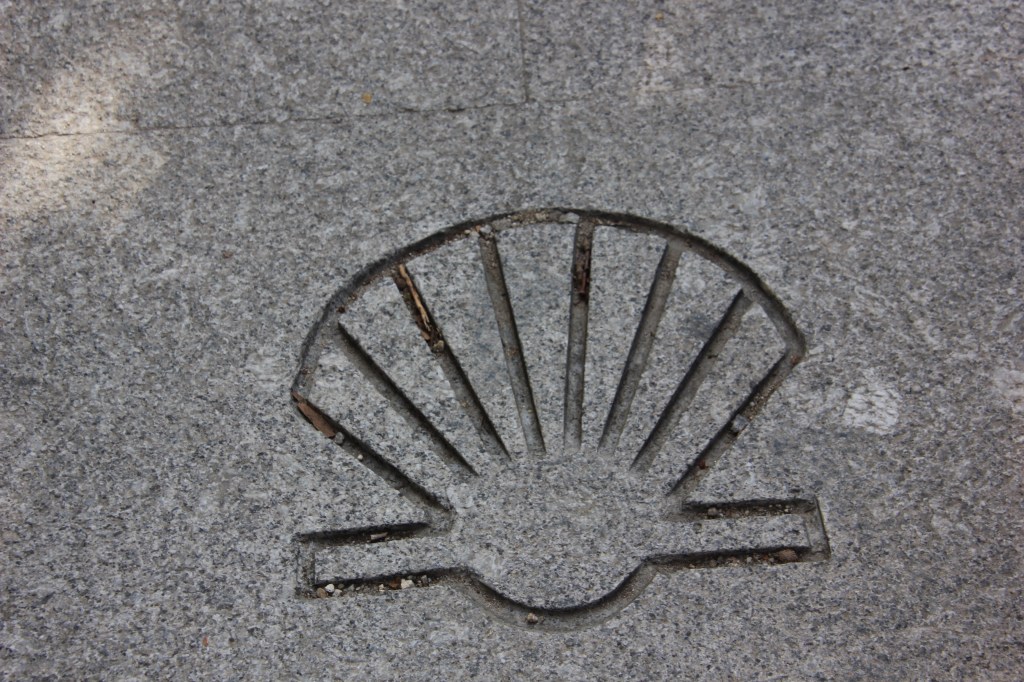
We strolled through the old city of Guimaraes and followed some of the Camino de Santiago de Compostela. The pilgrimage walk goes through the city despite the historical rivalry between Compostela and Guimaraes for papal privilege. The shells in the sidewalks lead the way.
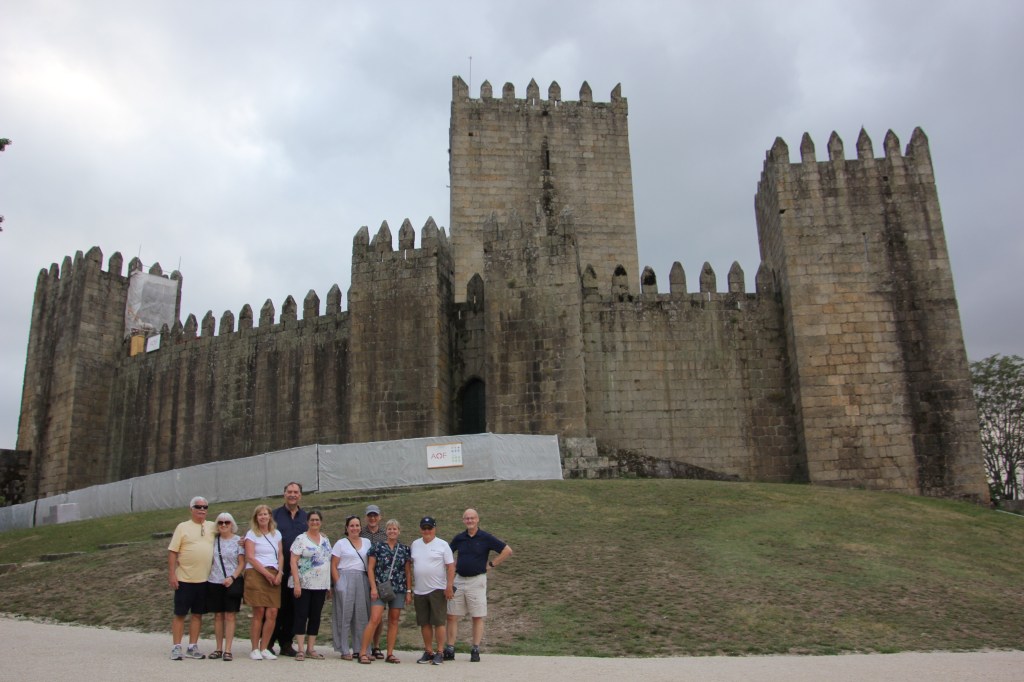
Our last stop was the castle where Alfonso I defeated his mother Theresa at the battle of Sam Mamede in 1128. The castle is being restored but remains mainly in ruin. The parking lot is where the battle took place and is a national historic sight where battle re-enactments occur.
We returned to Porto and had a leisurely dinner at a very odd restaurant near our hotel. It served Indian, Turkish, Italian and American food. The waiter clearly favoured the curries, which were delicious. The nachos however turned out to be stale Doritos and ranch dip. We crashed.
Our Saturday was spent packing, briefly touring the way-expensive shopping district on Santa Catarina street and moving onto our cruise ship. We set sail tomorrow on the Douro river for the next week. We are excited and looking forward to the adventure.
 travelswithannmarie
Glad you are having such a wonderful holiday!