
Porto has been around a long time. The Celts were here 2005 years ago. then the Romans arrived. They stayed in control until the Barbarians took over. The Moors wrested control from them and were later expelled by King Alfonso I who declared Portugal and independent kingdom in 1143. We learned this in the first few minutes with Silva, our walking tour guide. He was a fountain of information as he guided us during our 2.5 hours walking tour. We also learned that Portugal and England have been formal allies since the Treaty of Windsor was signed in 1386. This is the oldest military alliance (637 years) in recorded history. This alliance was crucial for Portugal being able to resist being overtaken by Spain.
Porto rose to prominence in the mid 1700’s after a massive earthquake levelled Lisbon. Porto was unaffected and became a major shipping port. We also learned that Portugal was ruled by a fascist regime from 1930-1974. At the time of the revolution in 1974 (without bloodshed) only 25% of the Portuguese people were literate! Things have changed a great deal since then. Portugal joined the European Union in 1986 and have now got a much better standard of living. Tourism has given a significant boost to the economy but there is still room for lots of change. The average wage in Portugal is 1300 Euros per month and housing costs are very high due to the demand for lucrative short-term rental taking up the housing space.
Silva noted that in the relatively short time as a democracy, Portugal has implemented several progressive laws. For example, they decriminalized drug use, made abortion available and passed gender equity laws regarding same sex marriage and adoptions. We enjoyed getting these brief glimpses into Portuguese culture and history.
Our stating point was the Museum of Photography, a fascist era former prison that has been turned into a museum. Our first stop on the tour was a viewpoint overlooking the Douro river. We learned that the opposite side of the river, where we were yesterday, is another community called Gaia. Due to a better tax situation, all of the major port cellars are located in Gaia.
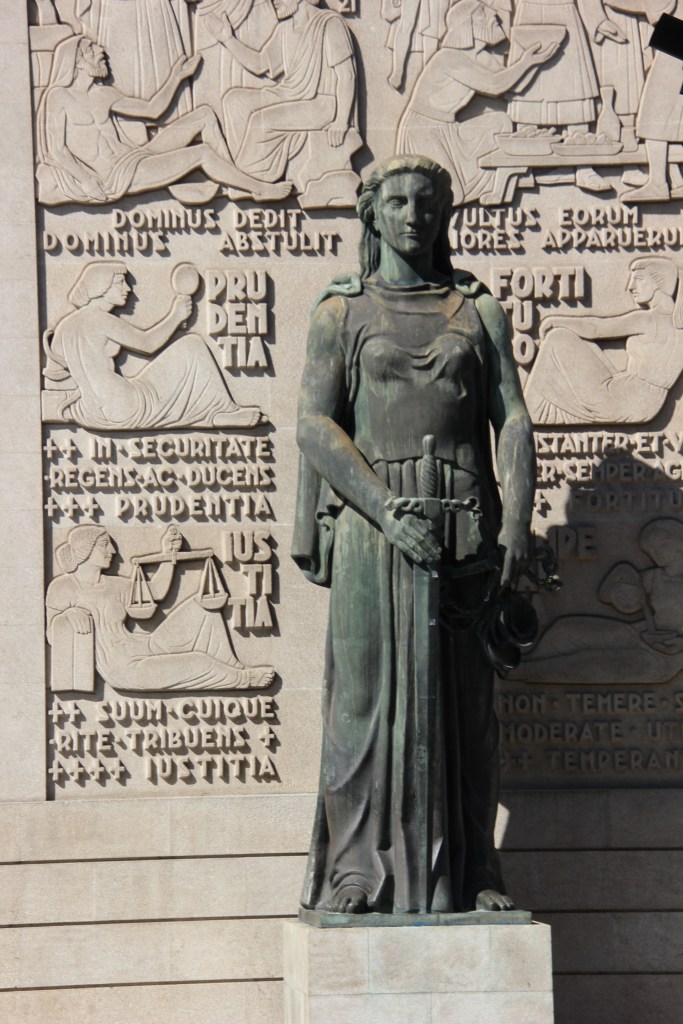
We moved back to the museum and crossed out of the medieval part of Porto. We passed through a park across from the court house. this statue in front of the courthouse represents Lady Justice. As you can see, she is holding a sword and scales, but is not blindfolded. This is because under the fascist regime, there was no pretence that justice was impartial and punishment was harsh and swift.
The park we walked through used to be the prison hanging and burial grounds. It is much more upbeat these days. We loved this sculpture of laughing old men, this is one of several sculptures in a series. A Spanish artist created the sculptures to capture the spirit of men enjoying themselves in the park, a tribute to their joy.

We continued on, through a street market to the twin churches. The first church (The Carmo with the dome was built in 1616 in the early Baroque style). The second church as built in 1756 in the late Baroque style (or Rocco). It was against the law for two churches to share a wall so the original “skinny house” was constructed between them. It also kept the nuns (Carmelita) and priests (Carmo) apart. While it was originally a home, it later became a place for secret meetings during the civil war and the fascist regime.

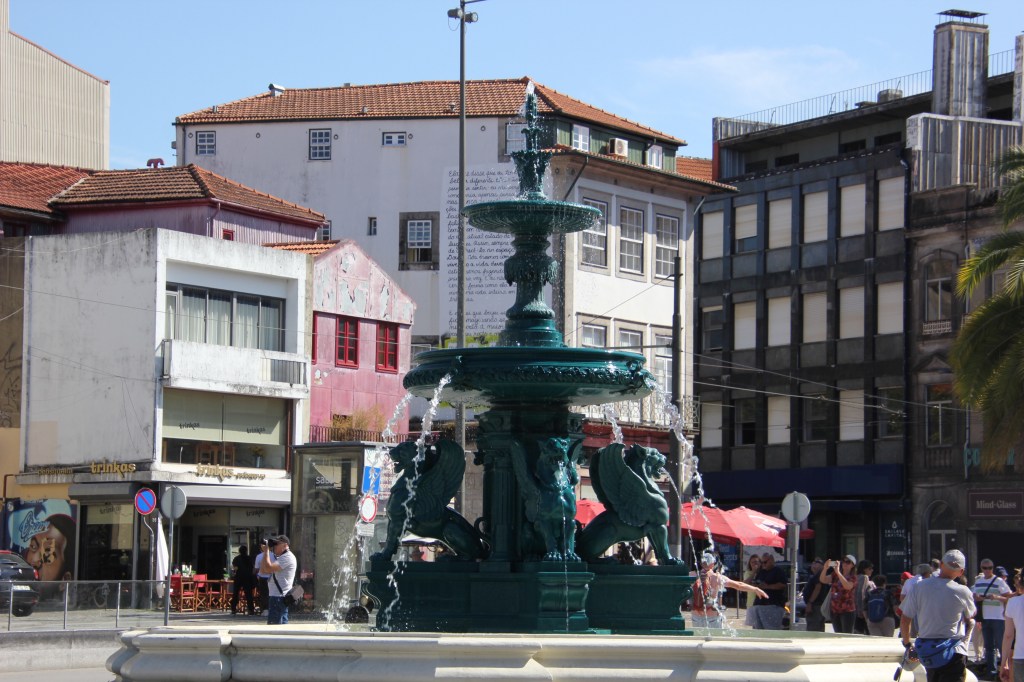
Our next stop was the Fonte dos Leoes, a fountain of griffins outside of the university administrative building. This is when Silva started the story about JK Rowling’s connection to Porto. She lived in Porto from 1991-93. Her husband at the time was from Porto. Rumour has it that several of her literary choices in the Harry Potter series were influenced by her Porto experiences. Apparently, she conceived of the outlines for all the books while in Porto and even began writing the Philosopher’s Stone there. It is thought that, for example, Diagon Alley’s bookstore was potentially inspired by the Livraria Lello near the churches. The university outfits I discussed yesterday may have inspired the Hogwarts student uniforms, the griffon statue inspired the Gryffindor logo and Salazar Slytherin May have been named after Antonio Salazar, Portugal’s dictator from1932-1968.
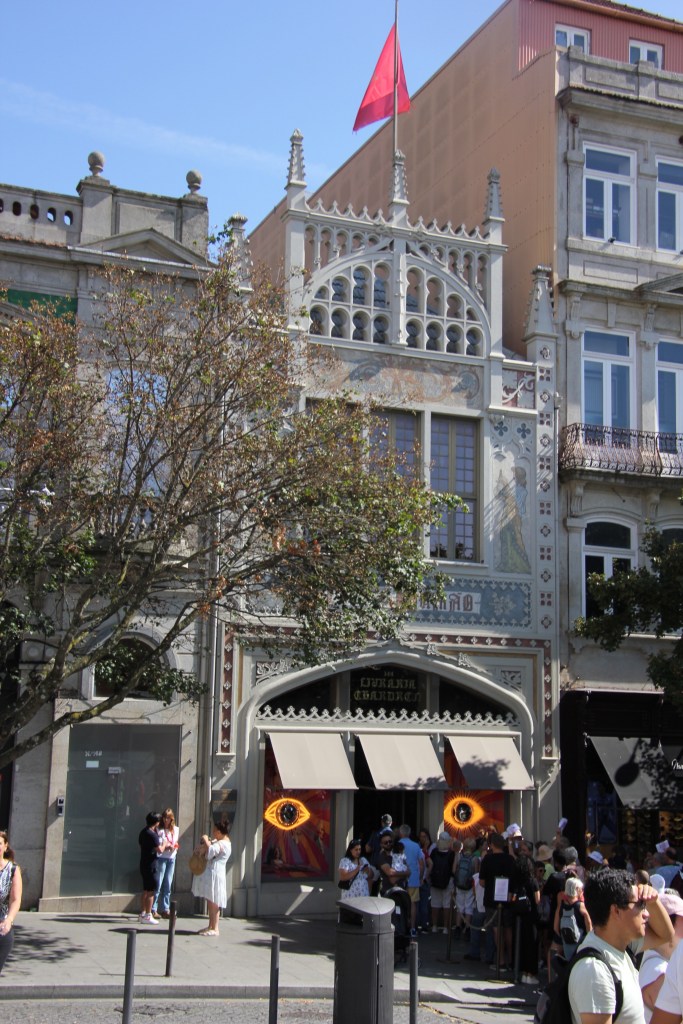
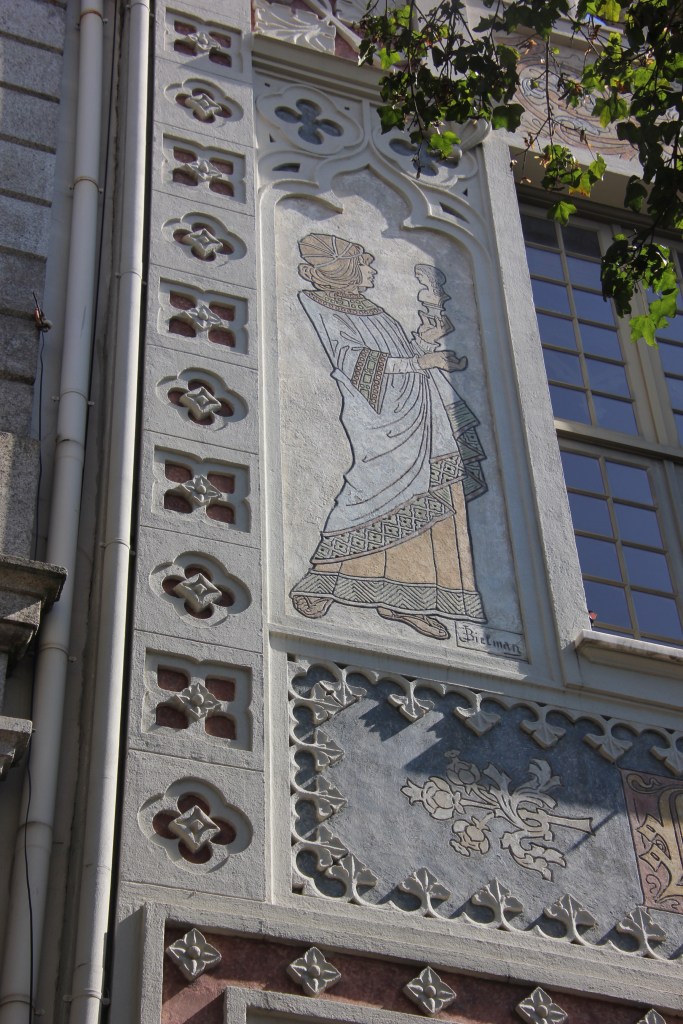
The Livraria Lello is a book store housed in a beautiful art nouveau building. Lello opened the store in 1881 and went through a number of changes in his business structures and the current building was constructed in 1906. Lello was apparently in dire financial straits in the early 1990’s until they connected the bookstore to JK Rowling’s books. So many people flocked to the store that they started charging admission. We didn’t go in because a) you need to buy a ticket in advance, I.e., 6€ for regular admission or 15€ for expedited admission. (Your ticket price is credited toward the price of a book) and b) the line up was super long. This connection saved the store. Recently, JK Rowling denied ever having been in the store, but people still line up for what has been called the most beautiful bookstore in the world.
Leaving Harry Potter behind, we continued our tour to the Clerigos Tower. Italian architect Nasoni built the church bell tower for free on the agreement that he would be buried anonymously in the church. The tower was completed in 1763 and stands 75 metres tall. If you climb all 225 stairs, you would get a wonderful 360 degree view of the city.
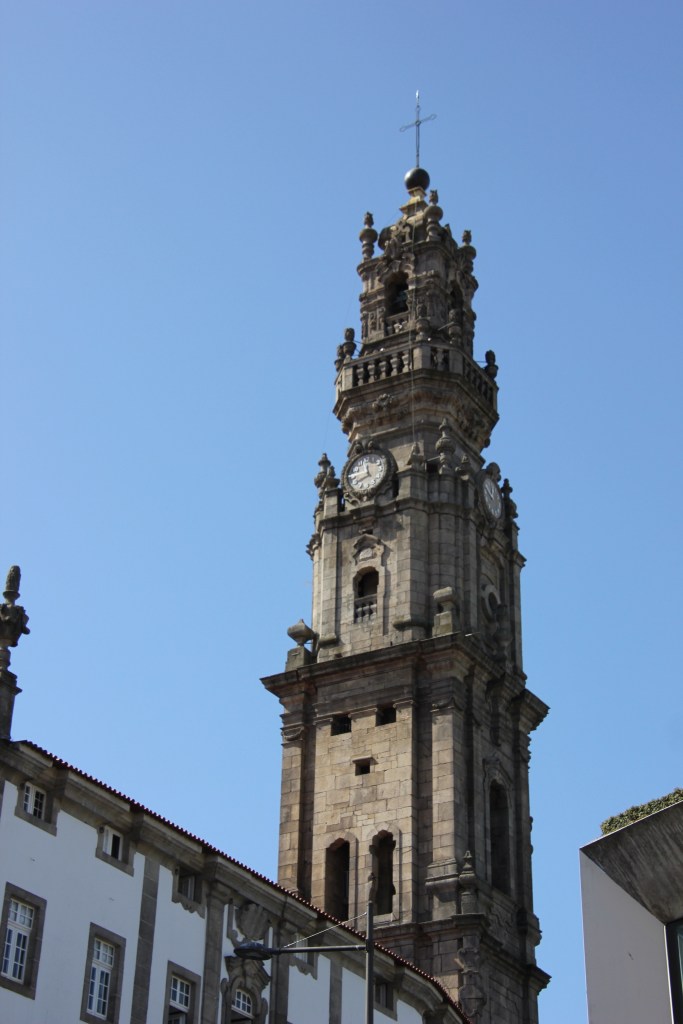
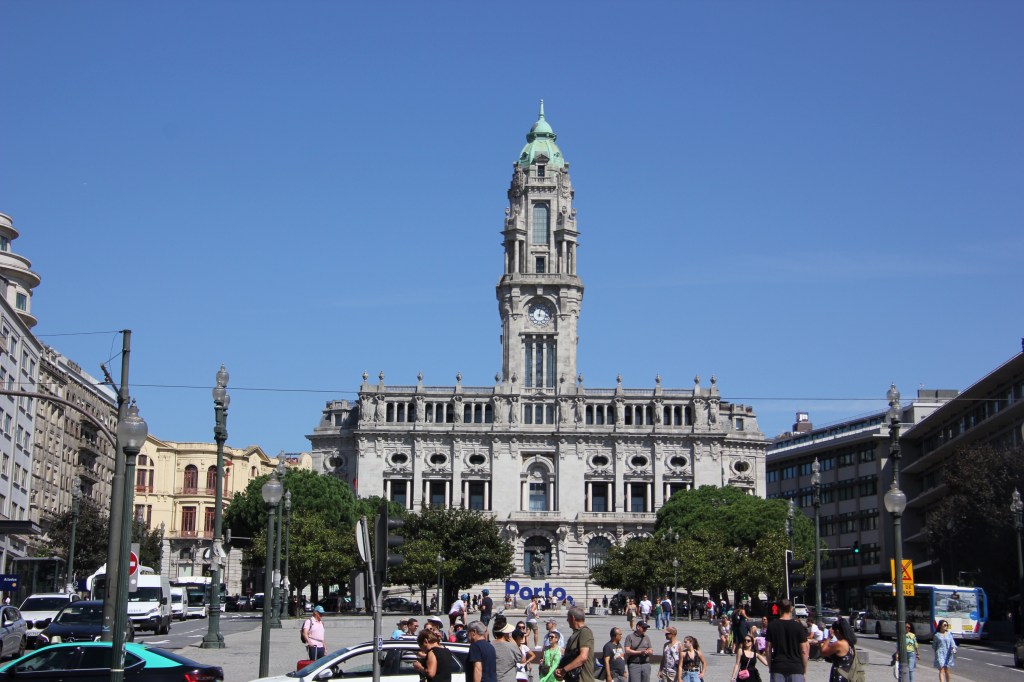
We put this on our “next time” list and continued on to the street where our hotel is on. It is called the Avenue of Allies and is anchored by Porto’s city hall. This was originally to be the centre of Porto’s financial district but that centre moved away from downtown and the avenue is filled with empty buildings. These buildings are being renovated and a new metro station is going in so hopefully the area will come back to life.
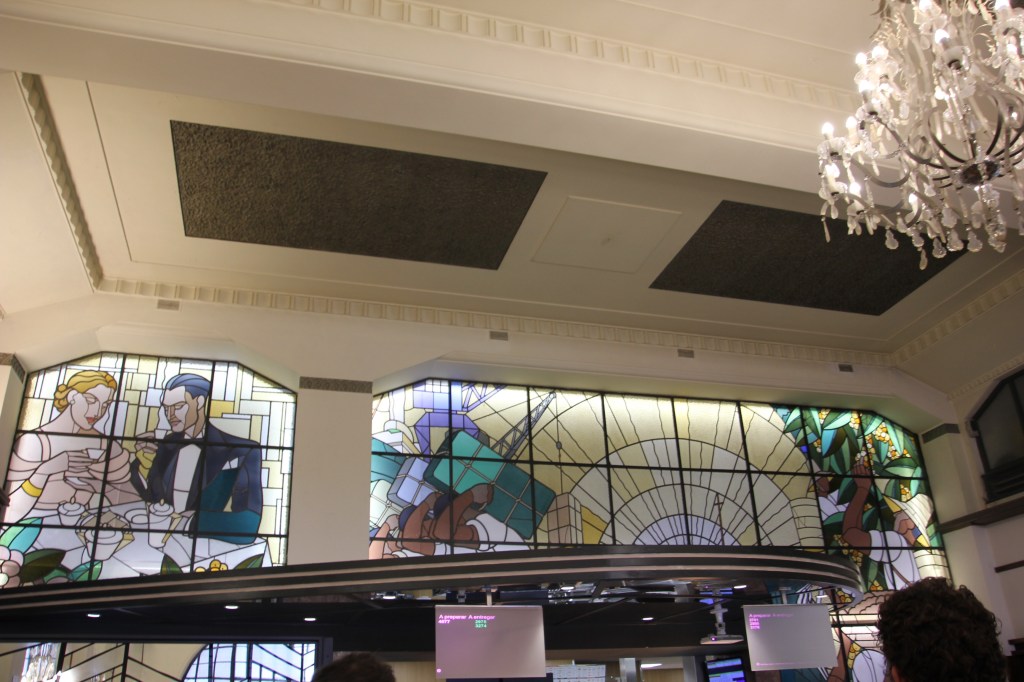
As we started towards the train station, we stopped at McDonalds for architectural purposes, no burgers were purchased. The building was originally the imperial cafe in the 1930’s and was restored for McDonalds in 1995. If you can ignore the restaurant electronic menus you can admire the intact art deco features including stained glass and original chandeliers.
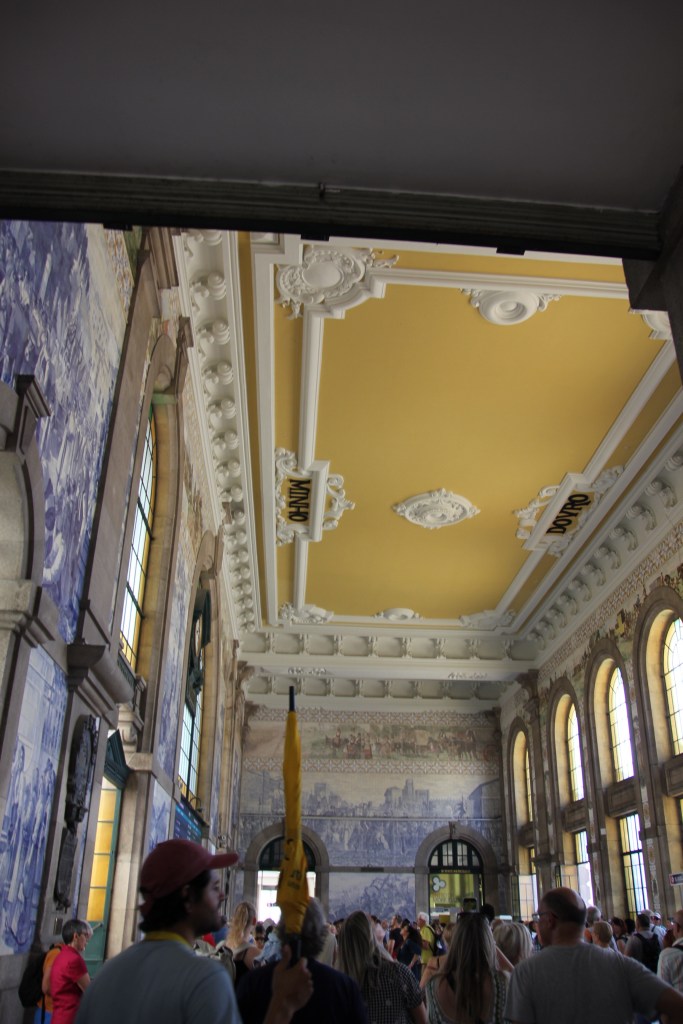
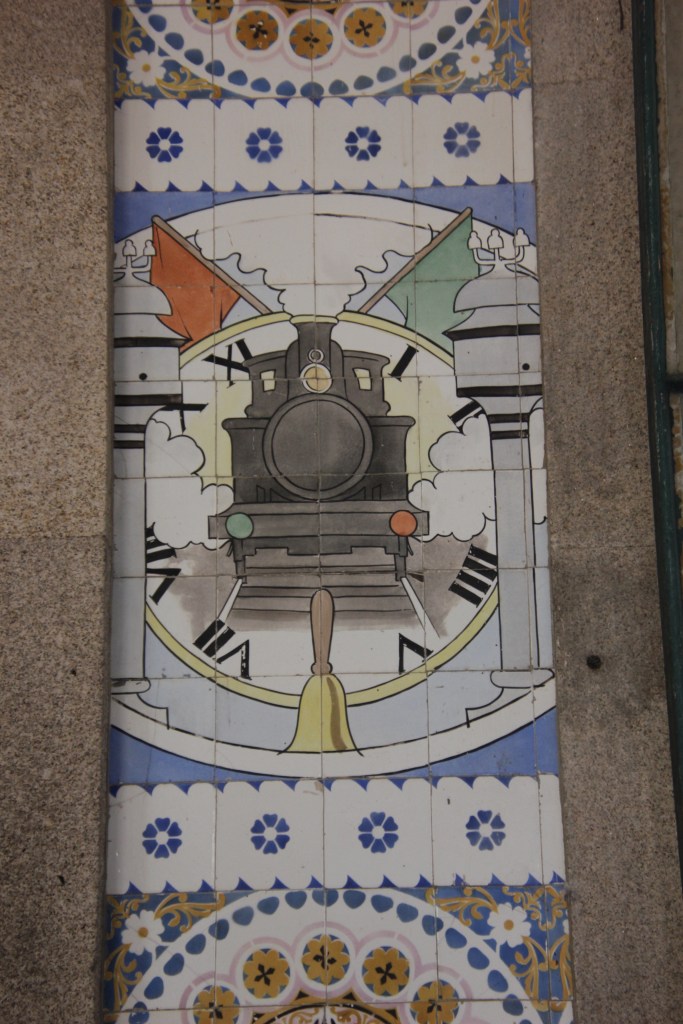
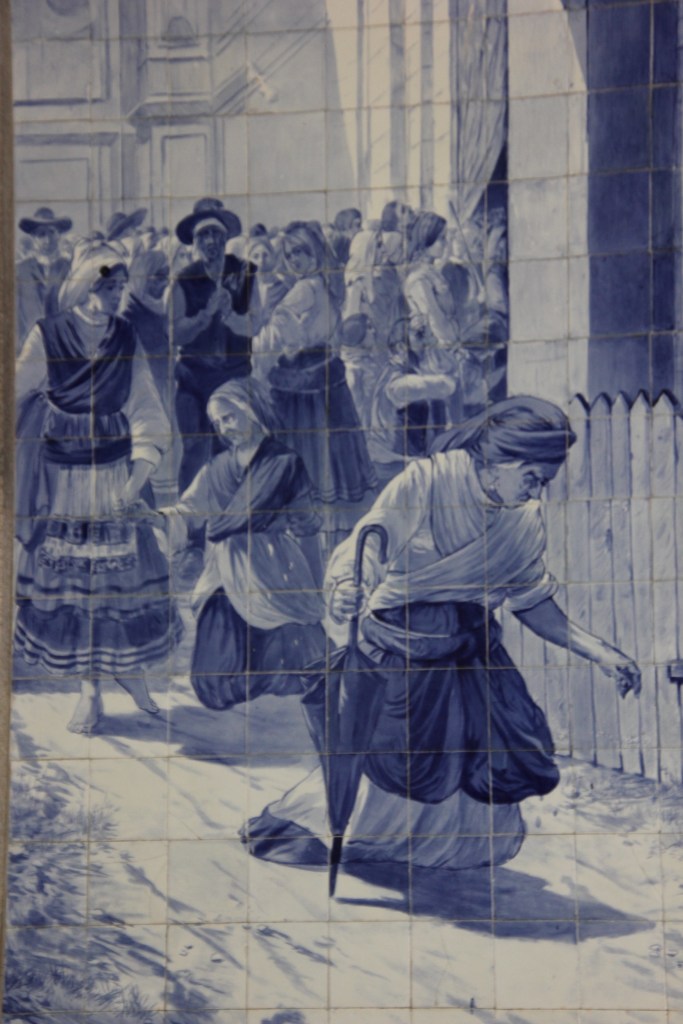
The train station took our breath away as we entered the beautifully tiled main hall. This fully functioning San Bento train station was inaugurated in 1916. The walls are covered with 22,000 tiles depicting historical scenes from Portugal’s history and social life. One man, Jorge Colaco designed all the tiles.
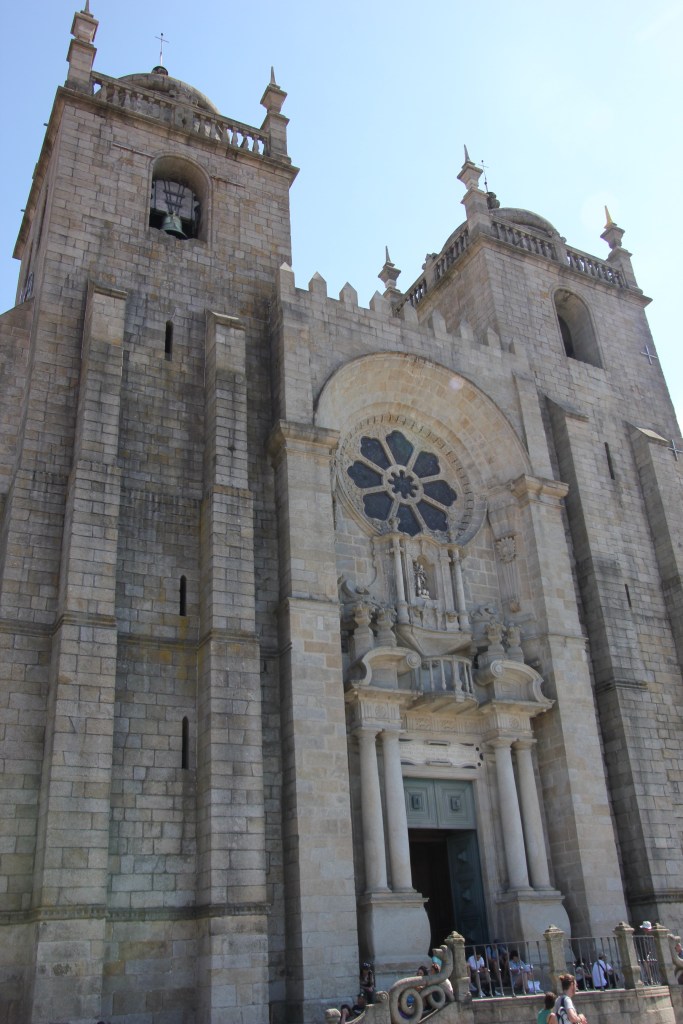
We finished our tour at the cathedral overlooking the river harbour. It was hot and we struggled to the end before thanking our guide and going off to find chairs, food and wine. We succeeded, then did some shopping on our way back to the hotel.
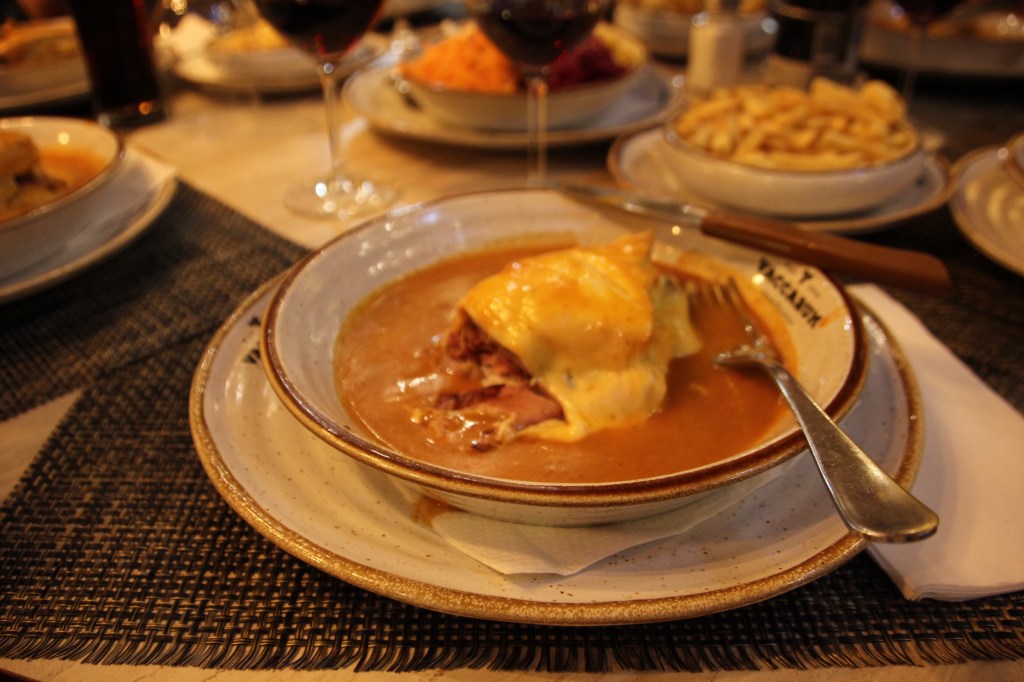
After a bit of relaxation we were off to find supper. Our target was the famous local Francesinha sandwich. It was intimidating! It is a sandwich made of sausage, ham, steak, and cheese between two layers of bread smothered in gravy with a side of fries for dipping. It was delicious and we all entered a food coma as we finished our day.
 travelswithannmarie
Loving your posts – looks like a lovely city