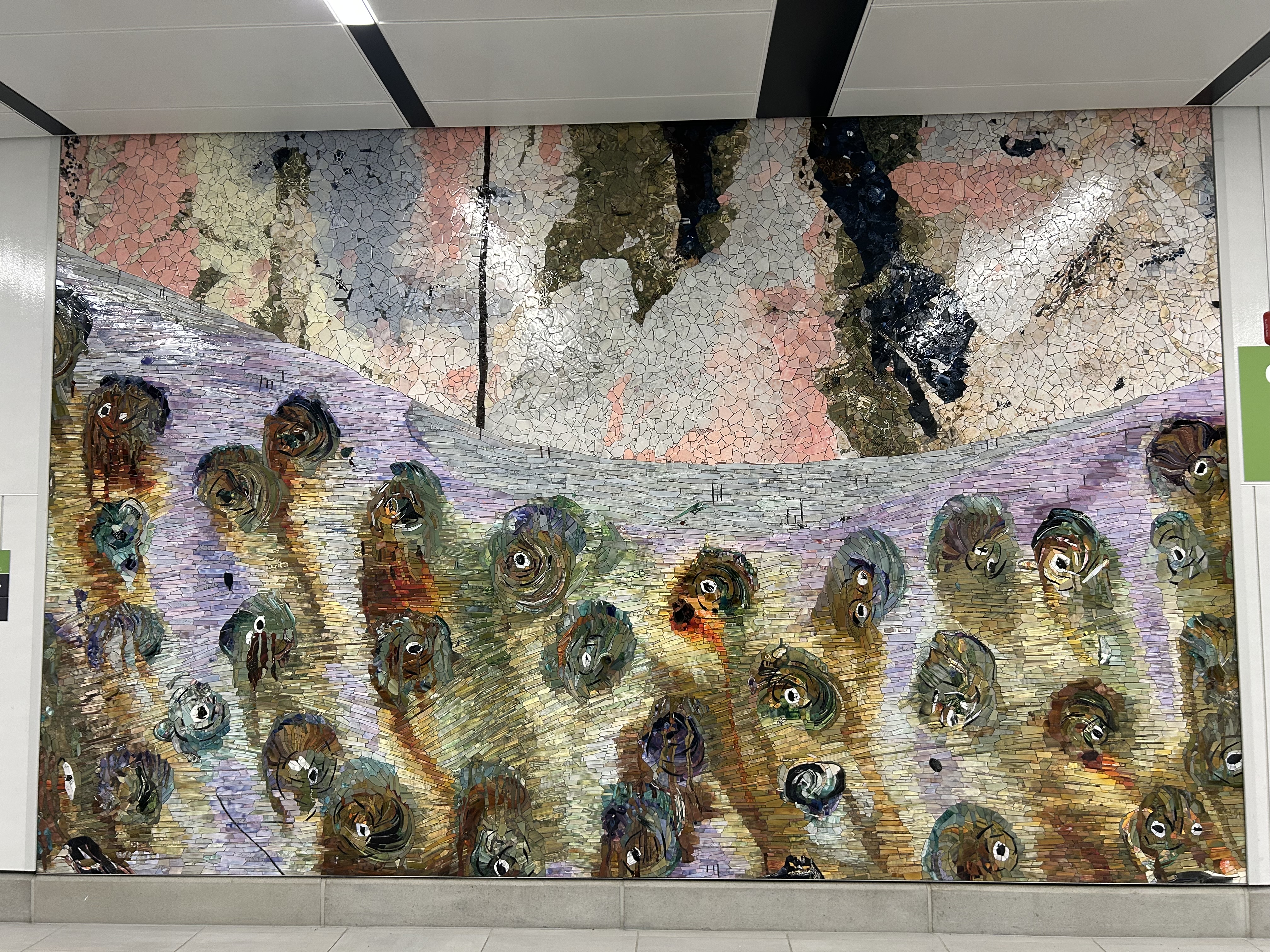
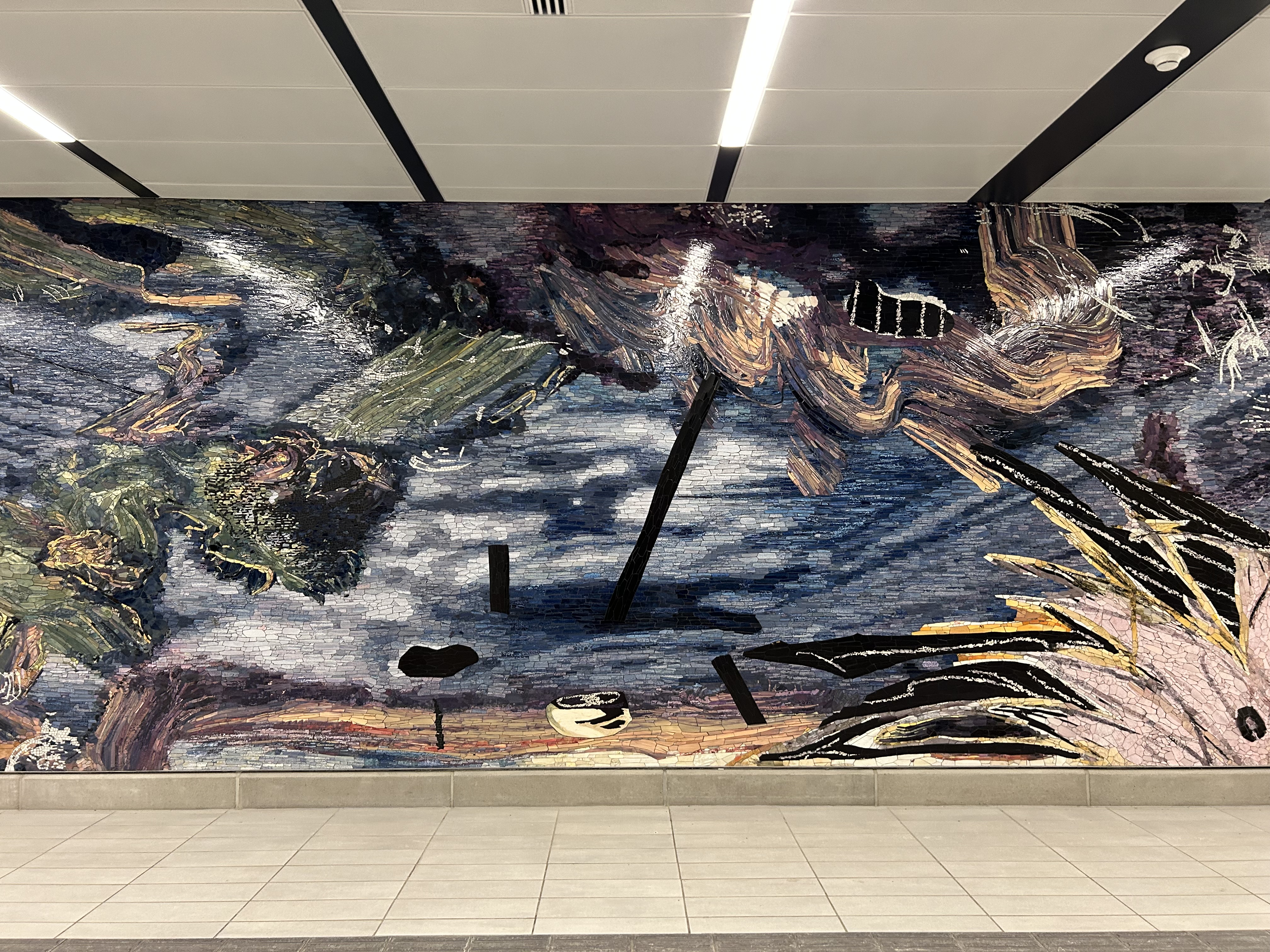
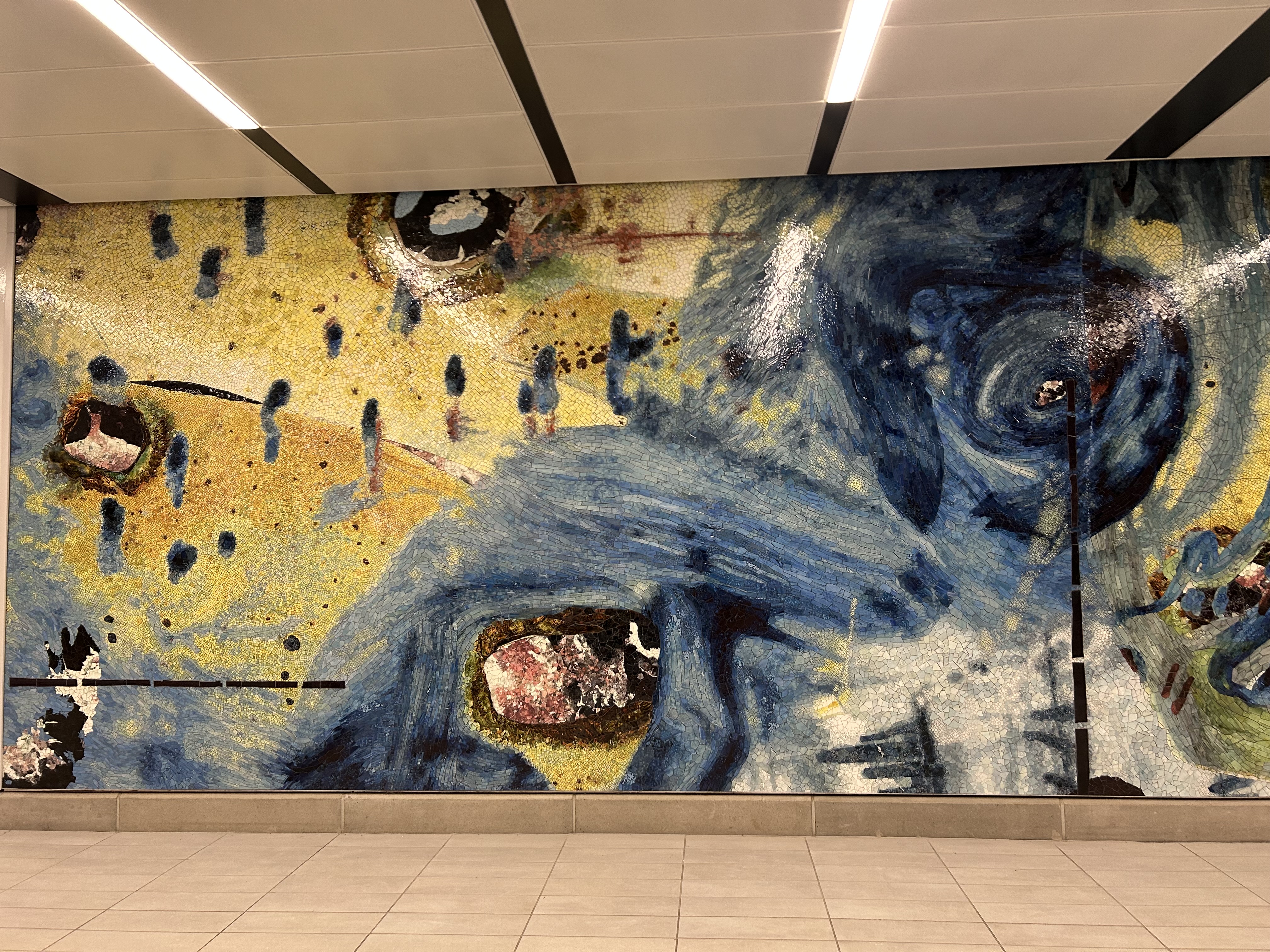
It was a slightly overcast but warm day in Montreal, that was the perfect weather for a day of sightseeing. We drove from St Jean sur Richelieu to the REM train station at Brossard which took us to the Édouard-Montpetit Metro Station where we took the time to view the mosaic murals titled “Le Mont Habité by Haitian artist Manuel Mathieu. He created 5 murals in the deepest metro station in Canada underneath Mont Royal. They were stunning. These images were inspired by the geology of the mountain.
Our next stop was Gare Centrale in downtown Montreal which led us to the streetscape of Montreal. We took a moment to catch our breath at the Boulangerie Ange with a quick coffee and snack. Feeling sufficiently fortified, we entered the Palais des Congres for the annual Salon des Metiers D’Arts du Quebec (SMAQ). This is the Quebec equivalent of the Annual Butterdome Craft sale back home. It was wonderful to see so many handcrafted works of art. We’ve been to the show many times and it is good to see it rebuilding after COVID.
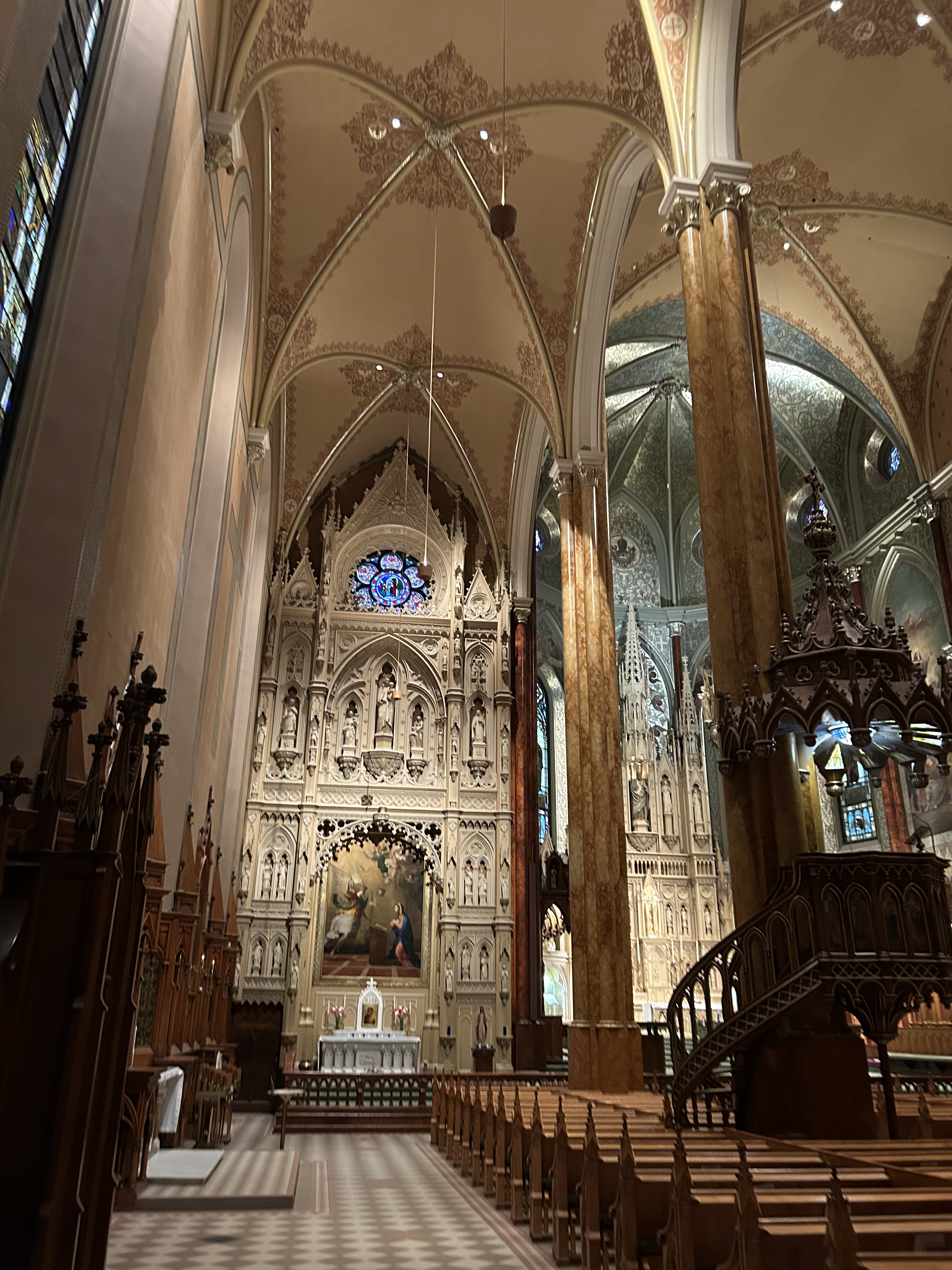
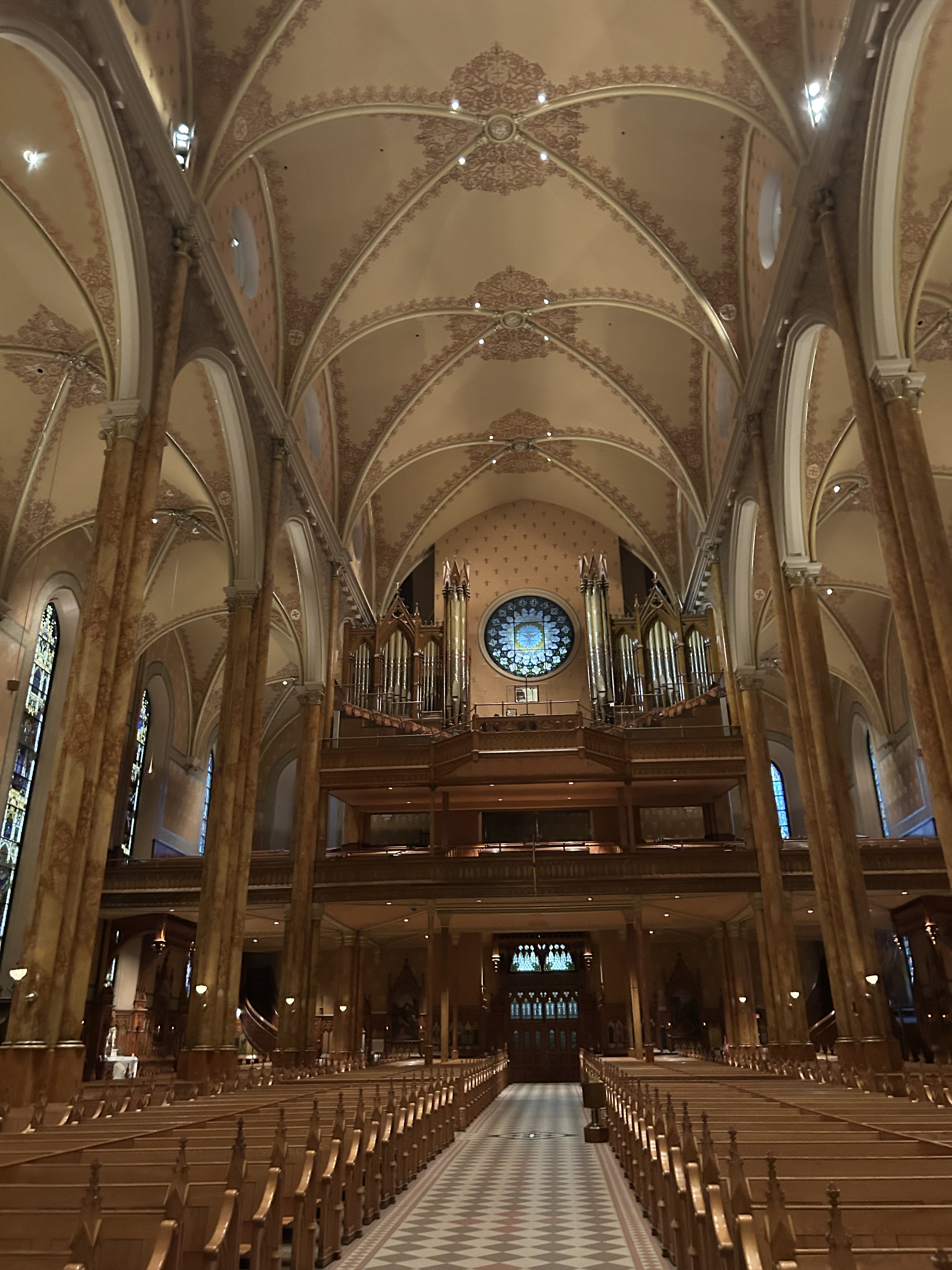
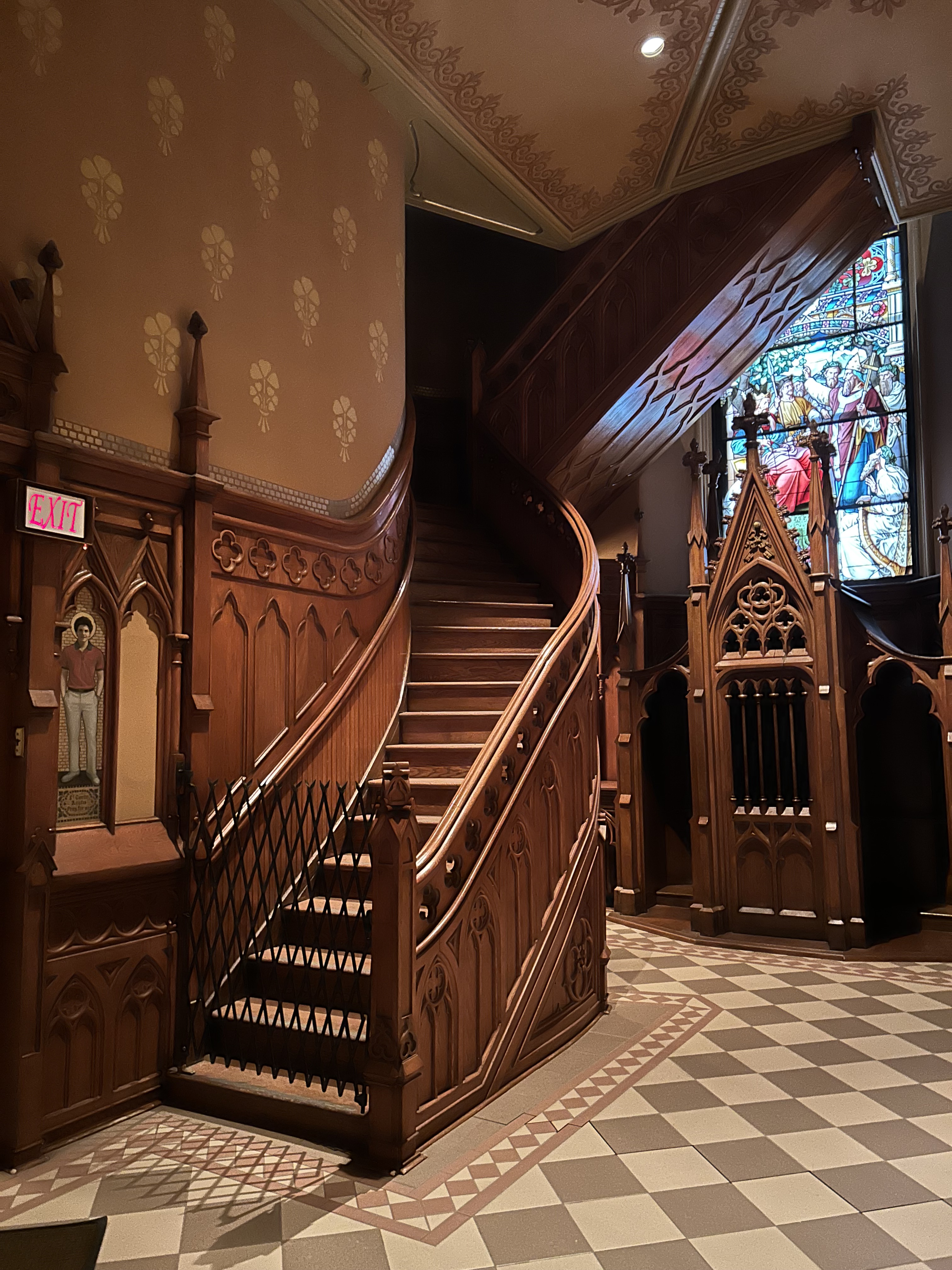
We continued our downtown exploration with a visit to St. Patrick’s Basilica. This beautiful Gothic Revival church was built between 1843-47 to meet the needs of the Irish population flowing into Montreal to escape the potato famine in Ireland. It got upgraded to a minor Basilica in 1989 by Pope John Paul II. It is now a National Historic Landmark and is the oldest English speaking church in Canada. This was the home parish of Thomas D’Arcy McGee, one of the founding fathers of Confederation and his pew is still identifiable. The church was lovely.
We headed back to Uncle Mark’s home just as the temperature started to drop. It was good to get home before the rain turned things icy. The temperature was above freezing all day and it started to rain as we left downtown. We felt blessed to not be dealing with the Alberta Clipper that brought -20C temperatures and tons of snow to Edmonton.
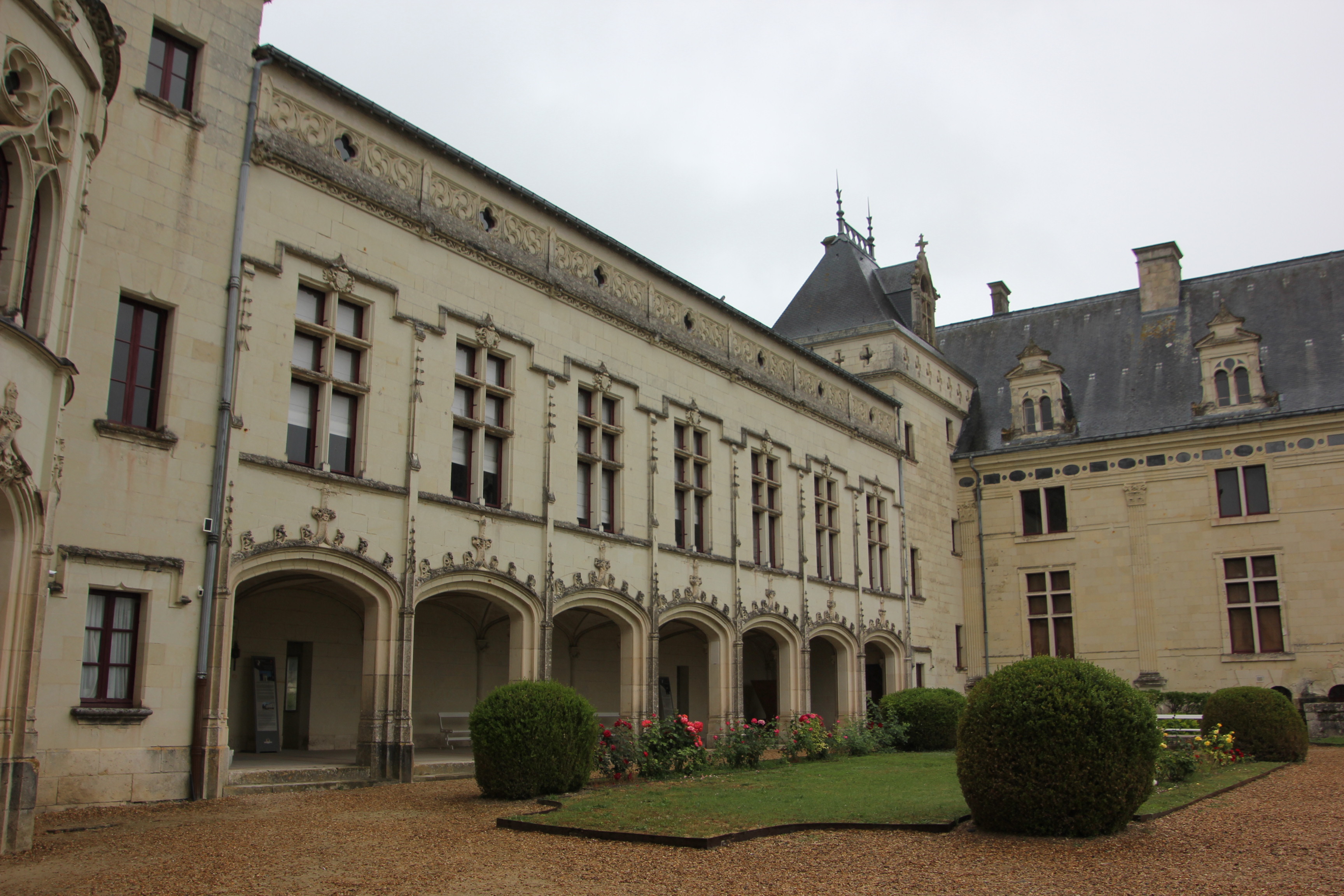
We started our first day in the Loire Valley by visiting Breze, the castle Dale had picked as his #1, had to see castle. The earliest parts of the castle were started around 1060 and it has been added to ever since. The most modern parts date to the 18th and 19th centuries and they were interesting.
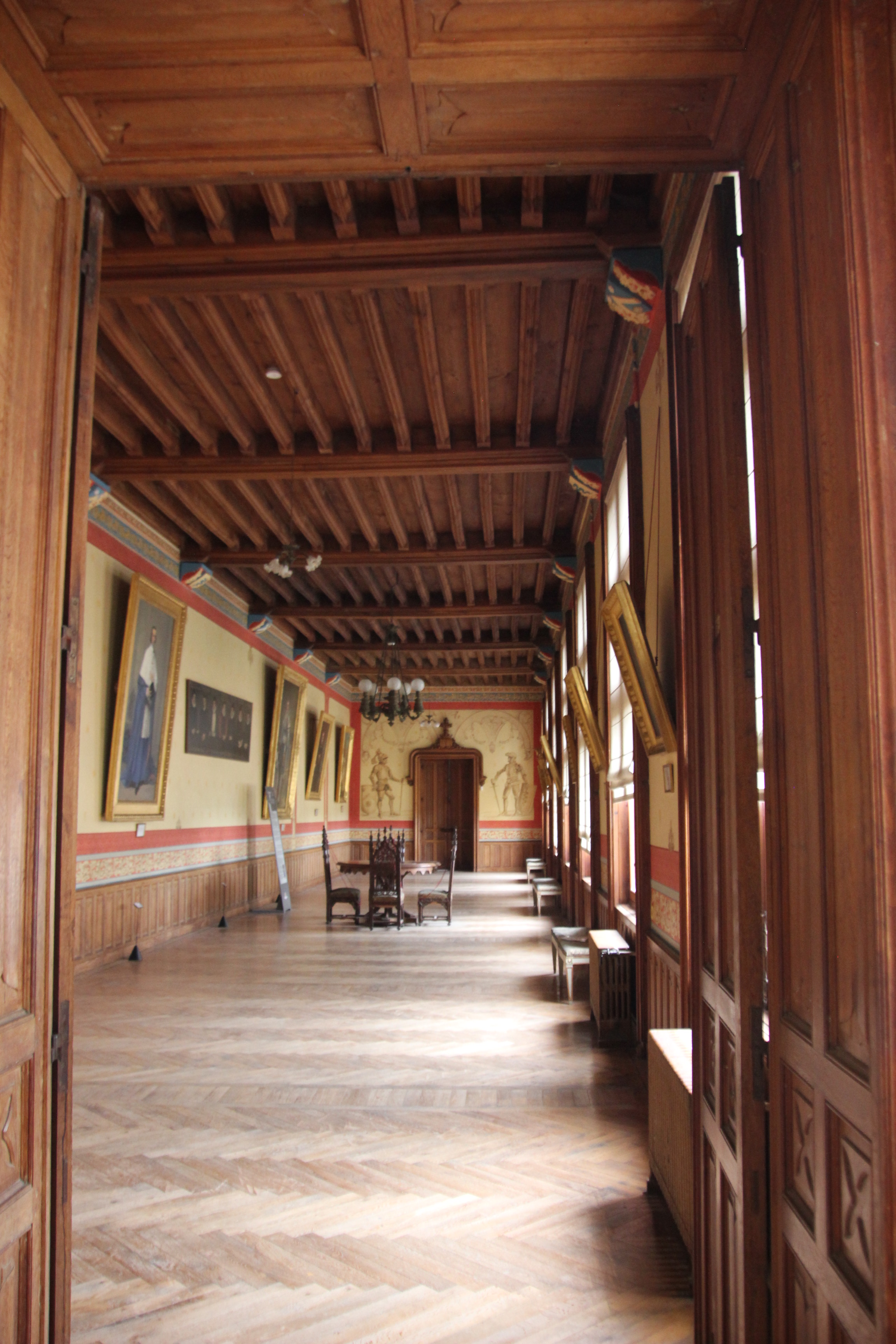
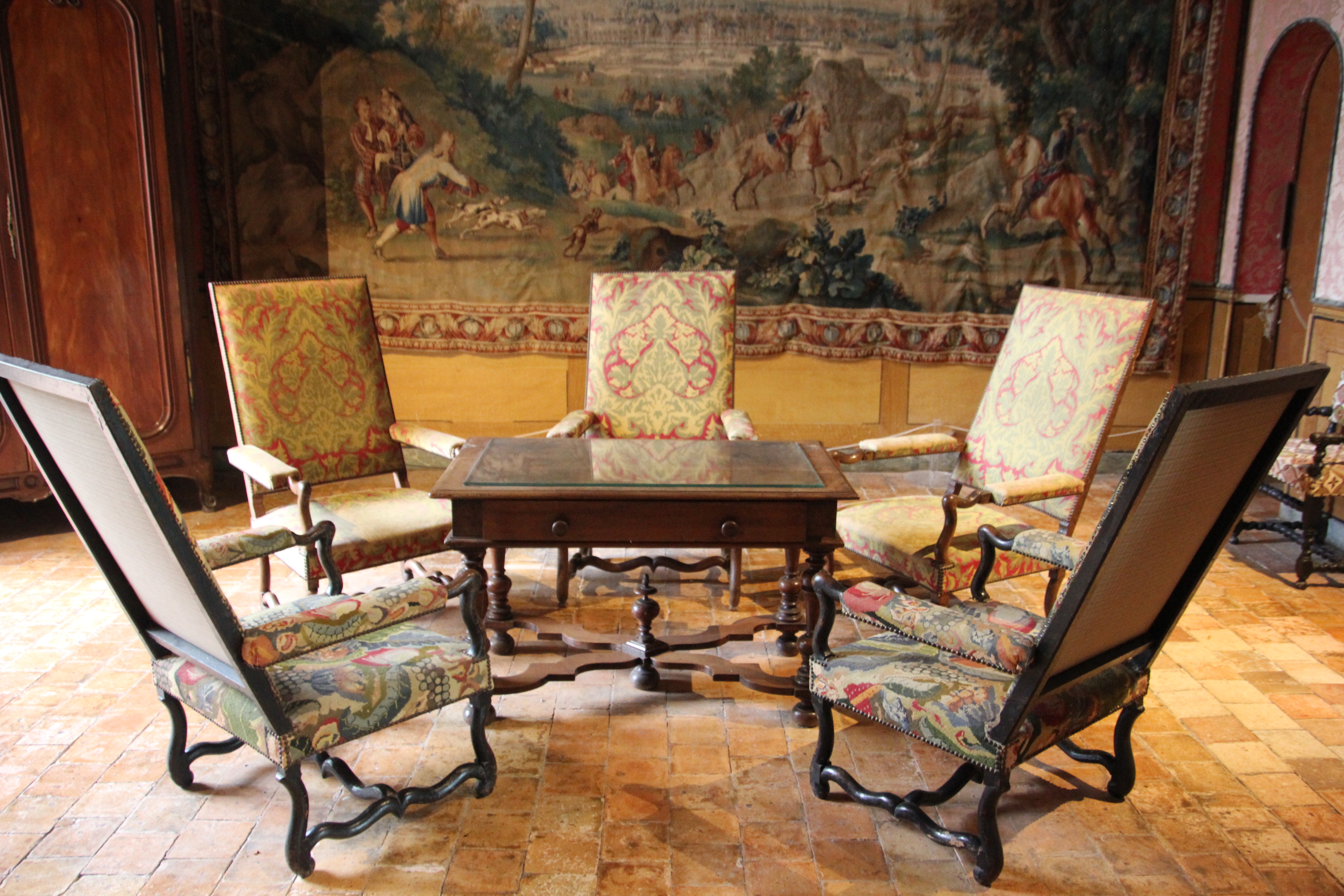
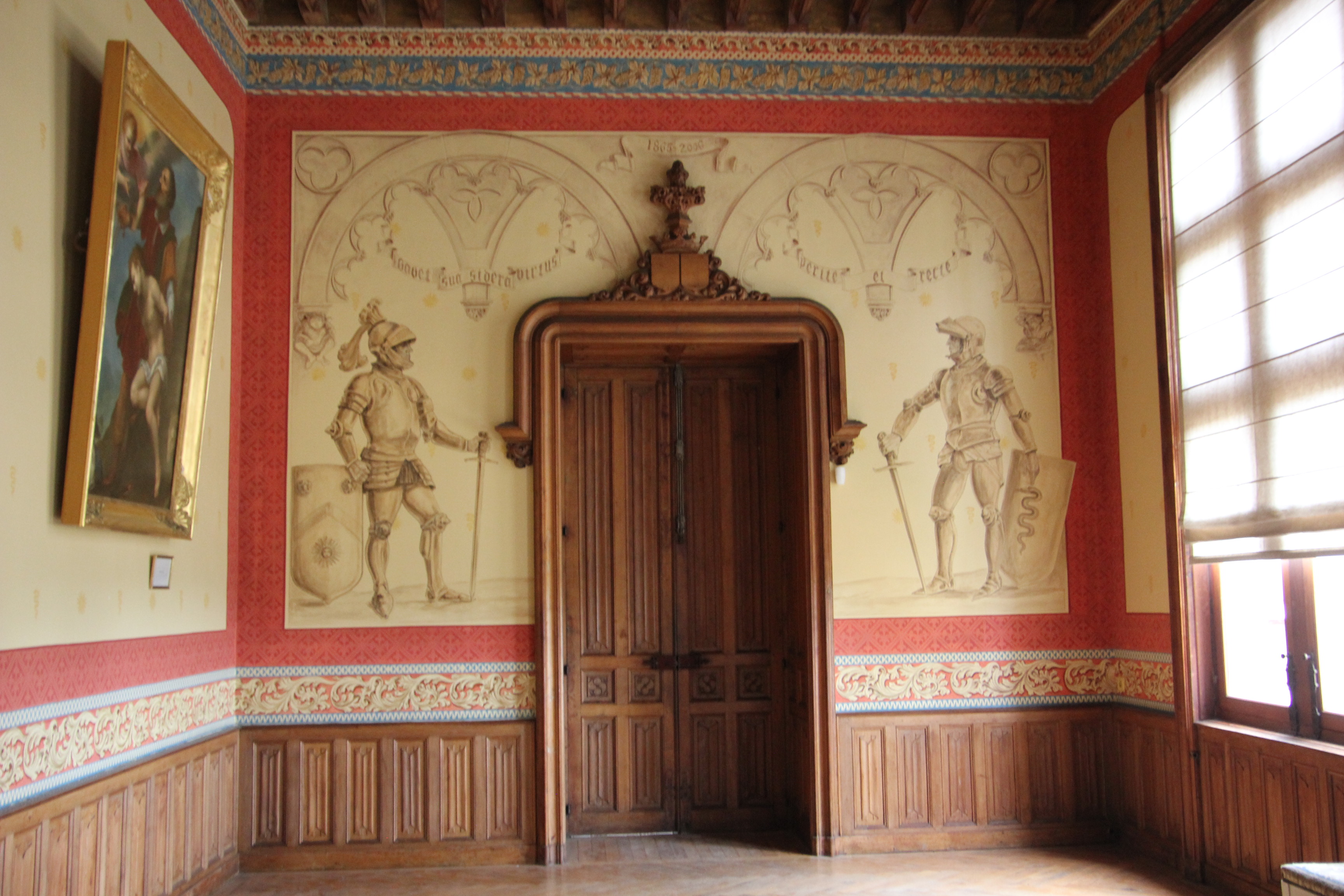
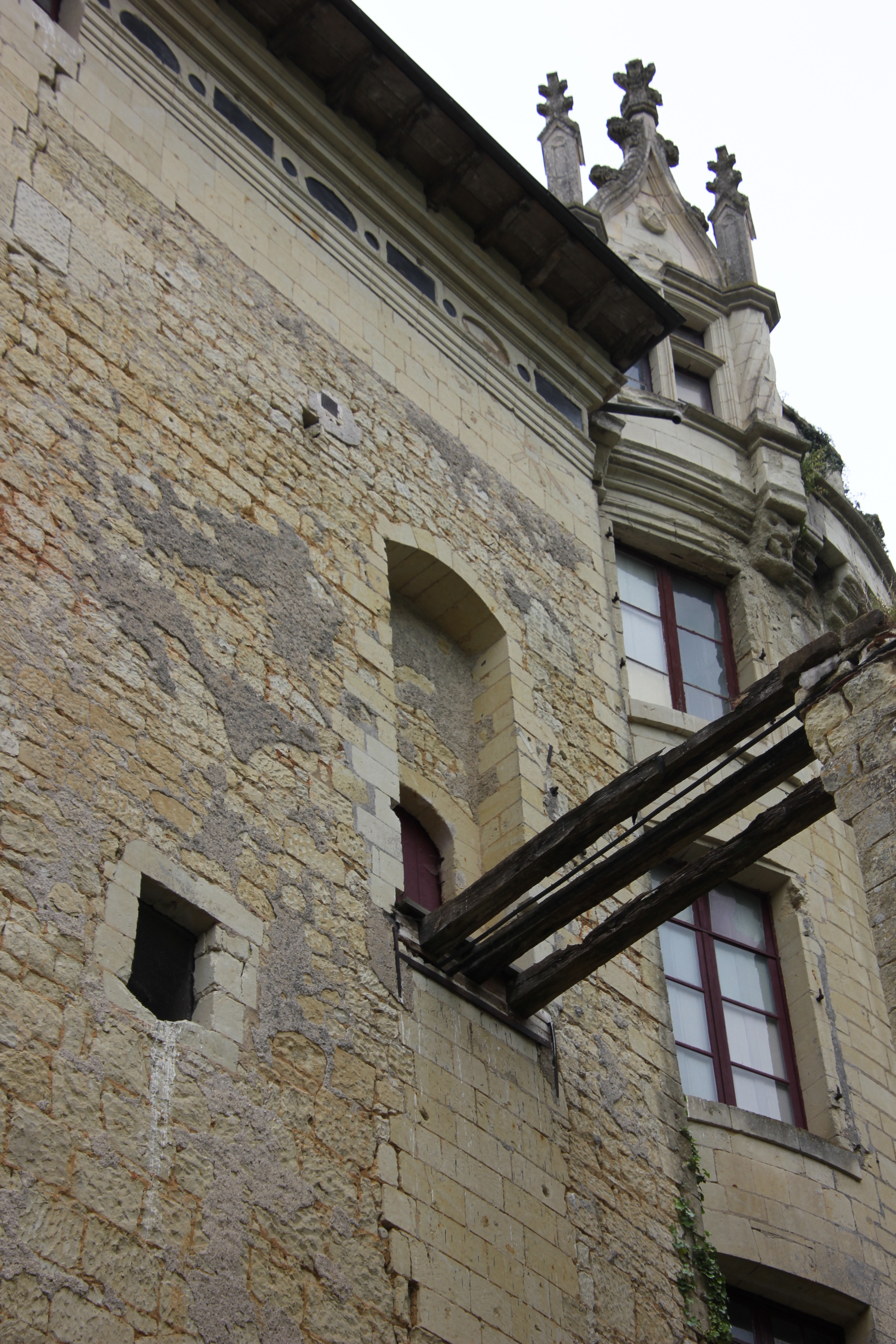
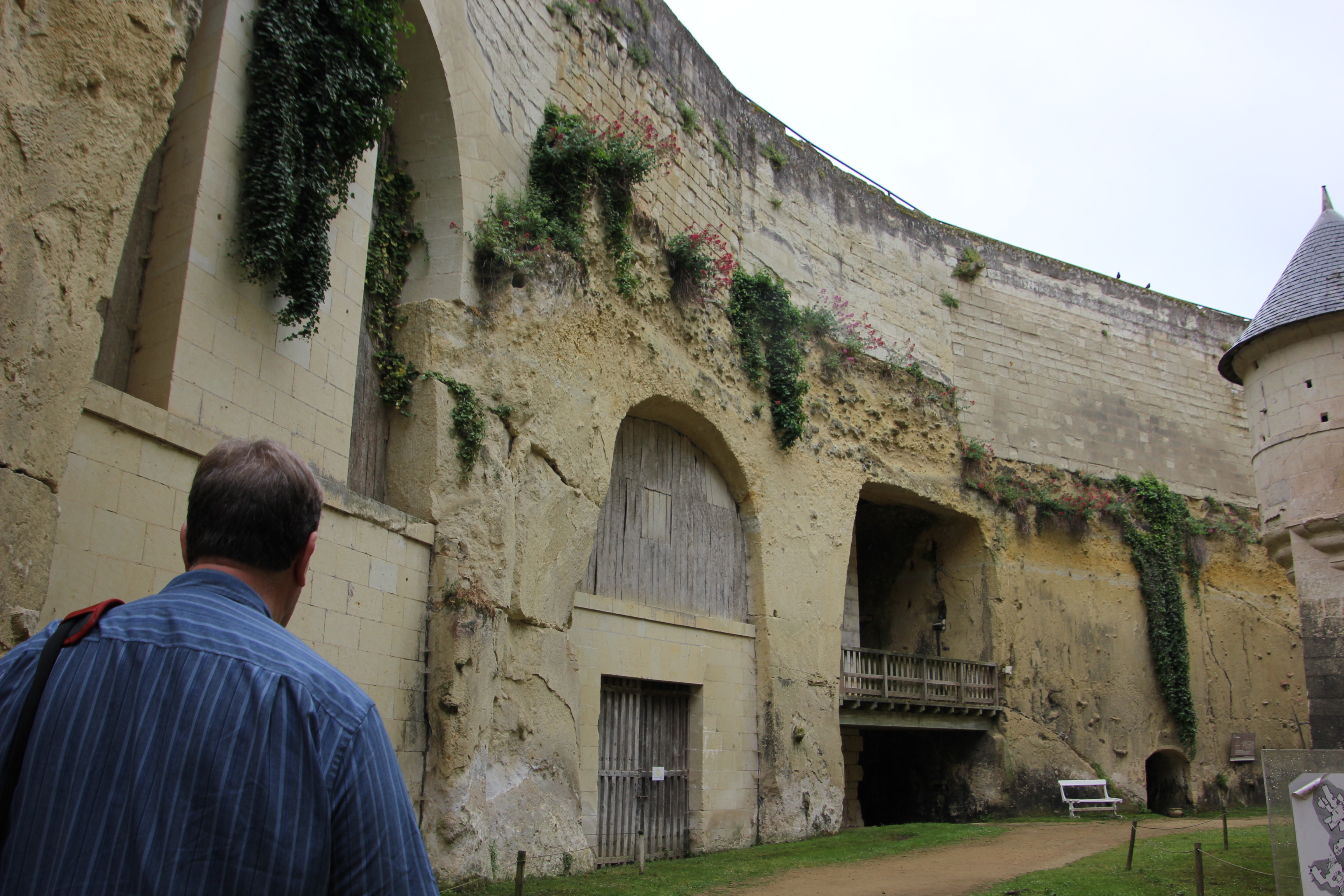
The furnishings in some of the rooms were stunning. King Rene of Anjou gave permission to Gilles de Maillé-Breze (his chamberlain) to fortify the castle in 1449. The limestone from some of the tunnels was used to build some of the walls. The remnants of a draw bridge are still evident and its been under renovation pretty much ever since.
Breze – inner courtyard
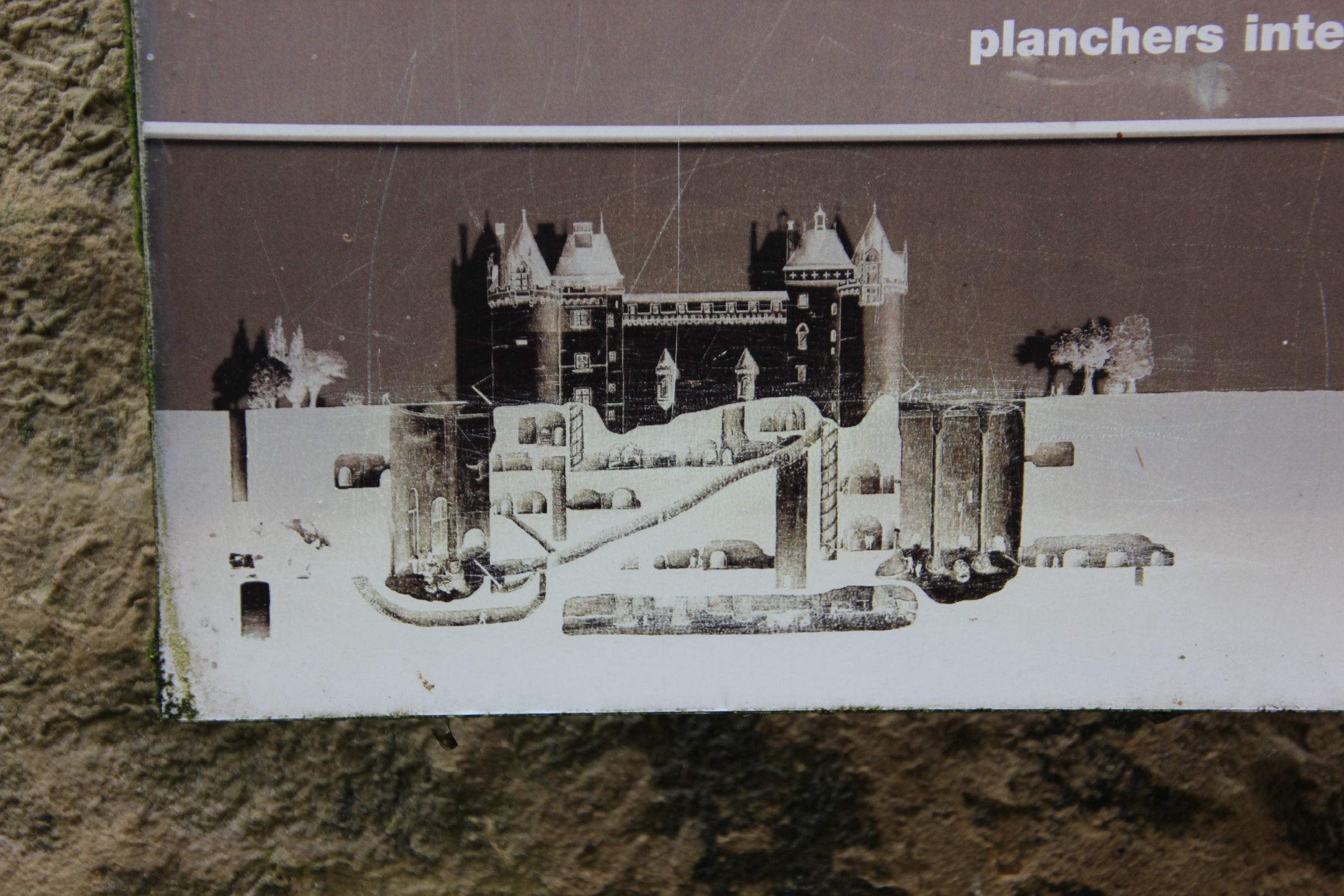
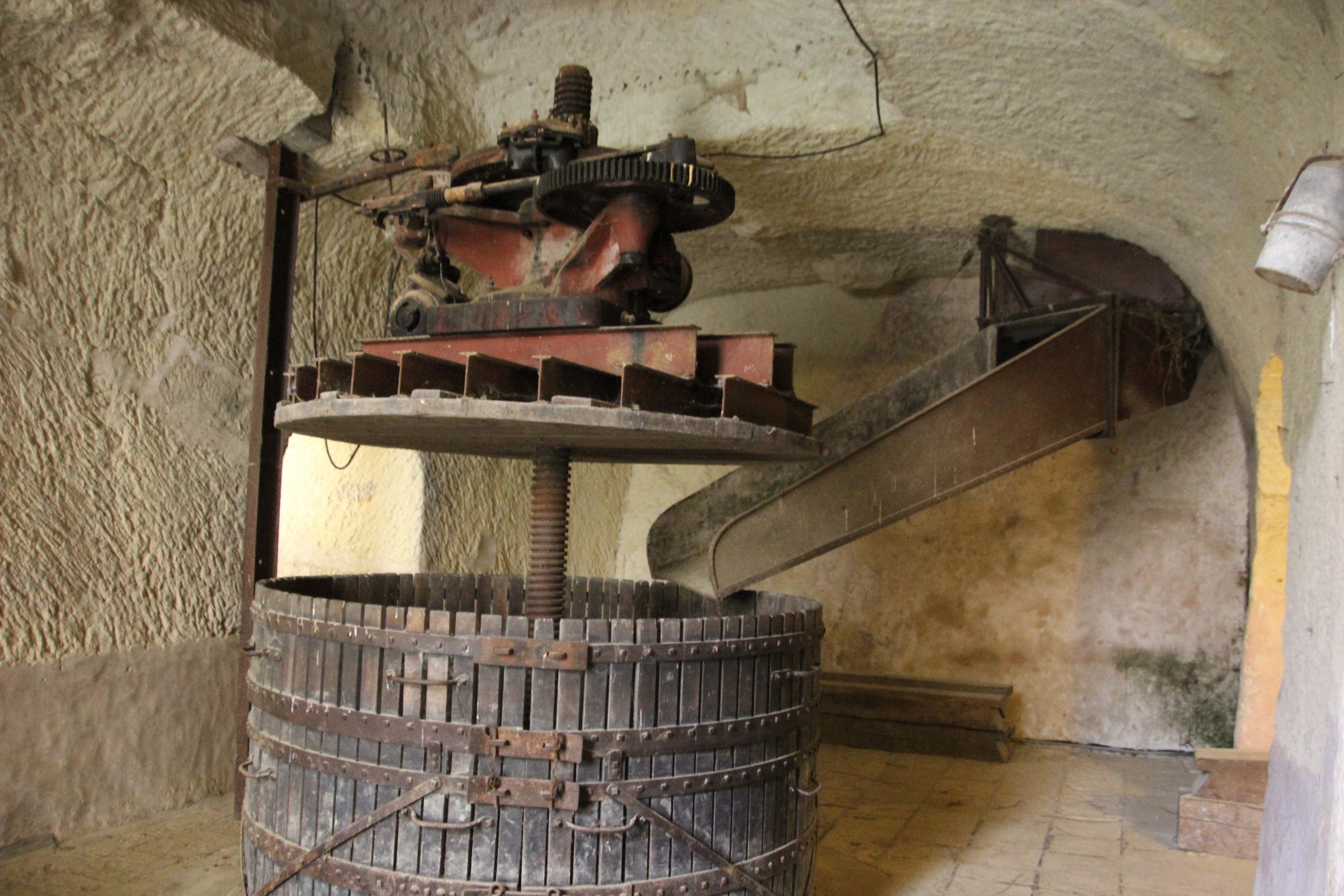
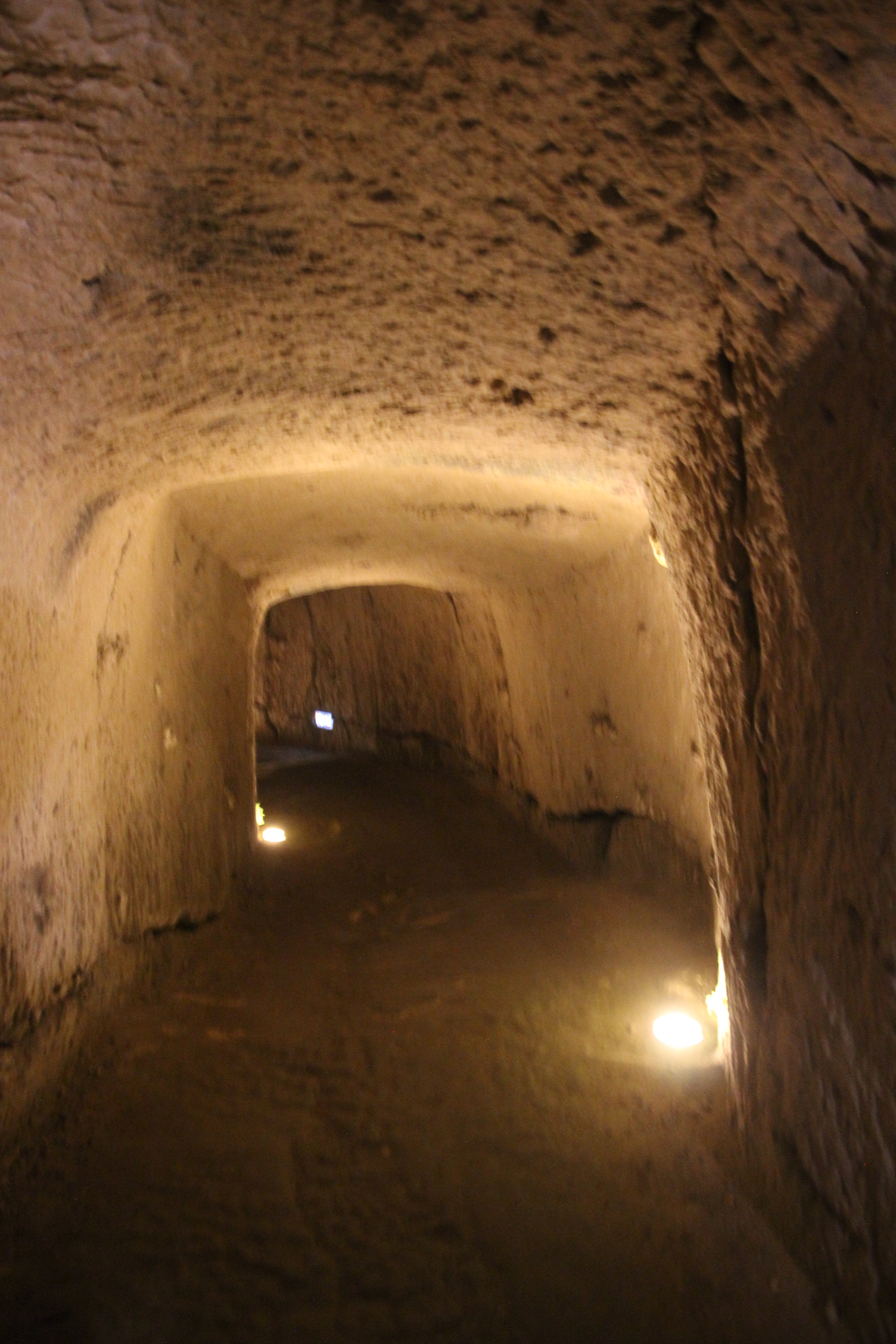
Additionally, there was a dry moat around the castle that opened up even more caves and passages on the land side of the moat. This is where much of the Chateau’s wine was produced, the silk worms were farmed and the bread was baked.
Looking up at the drawbridge from the bottom of the moat.A map of the underground systemWine making until 1976Part of the tunnel systemThe dry moat and caves
We had hoped for a wine tasting at the Chateau, but we were too early in the season. The family that owns the castle continues to produce the Saumur Blancs (white wine). So we left looking for food. We stopped at a roadside restaurant advertising local food. We ordered the formulaire – an appetizer, main and dessert for 16 euro. We understood that we would get a salad, the chef’s meat cut of the day and a mystery dessert. The waitress told us it was “golf” which made no sense to me, it wasn’t written down so I couldn’t read the word and the waitress spoke no English. The food was delicious and plentiful. The meat was a steak the size of my full hand and fries (of course with a sauce) and it turns out the dessert was a waffle (gaufre) with ice cream, chocolate sauce and whipped cream. It was a treat and influenced our decision to eat a salad (with left over steak) for supper.
Gaufres are delicious!
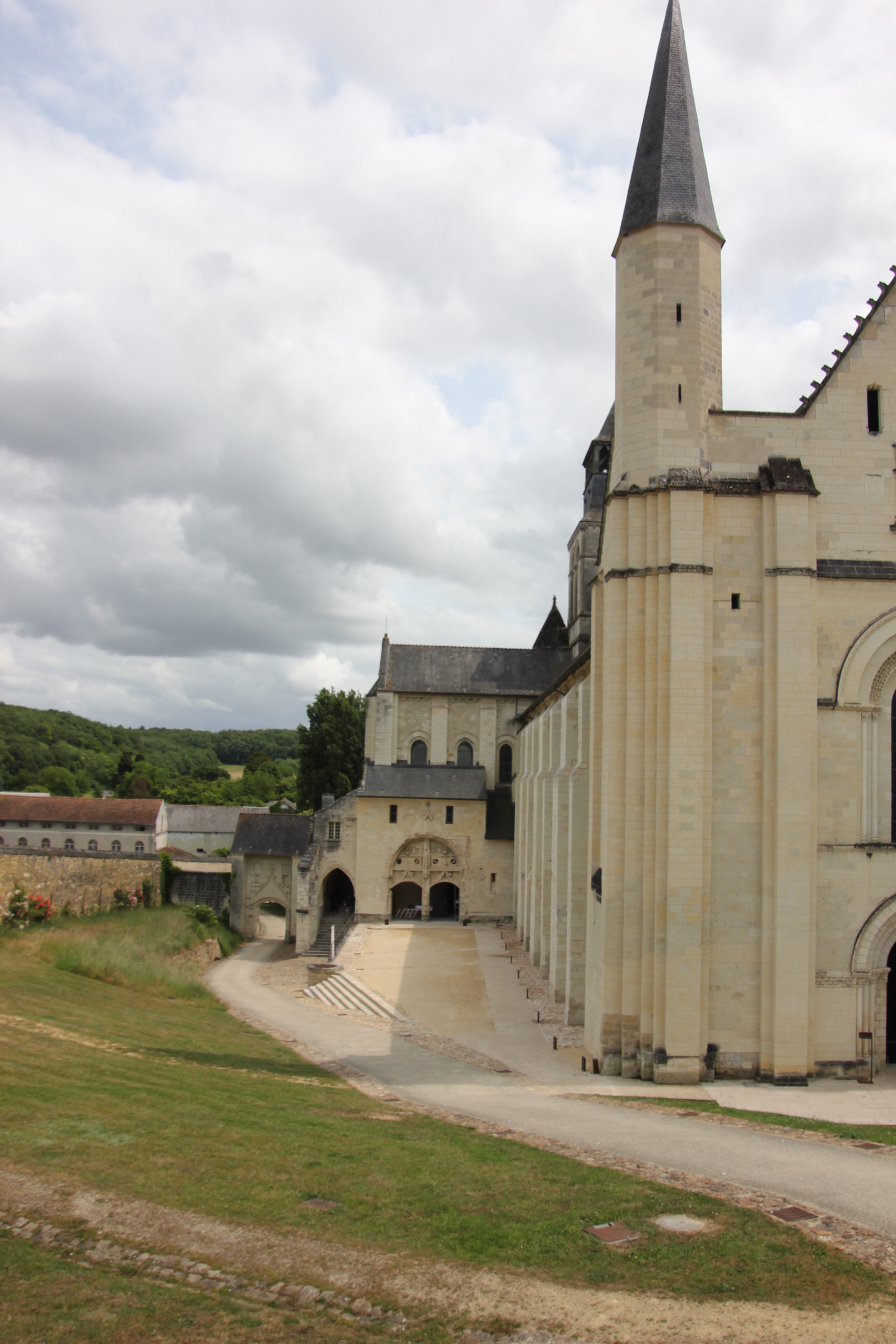
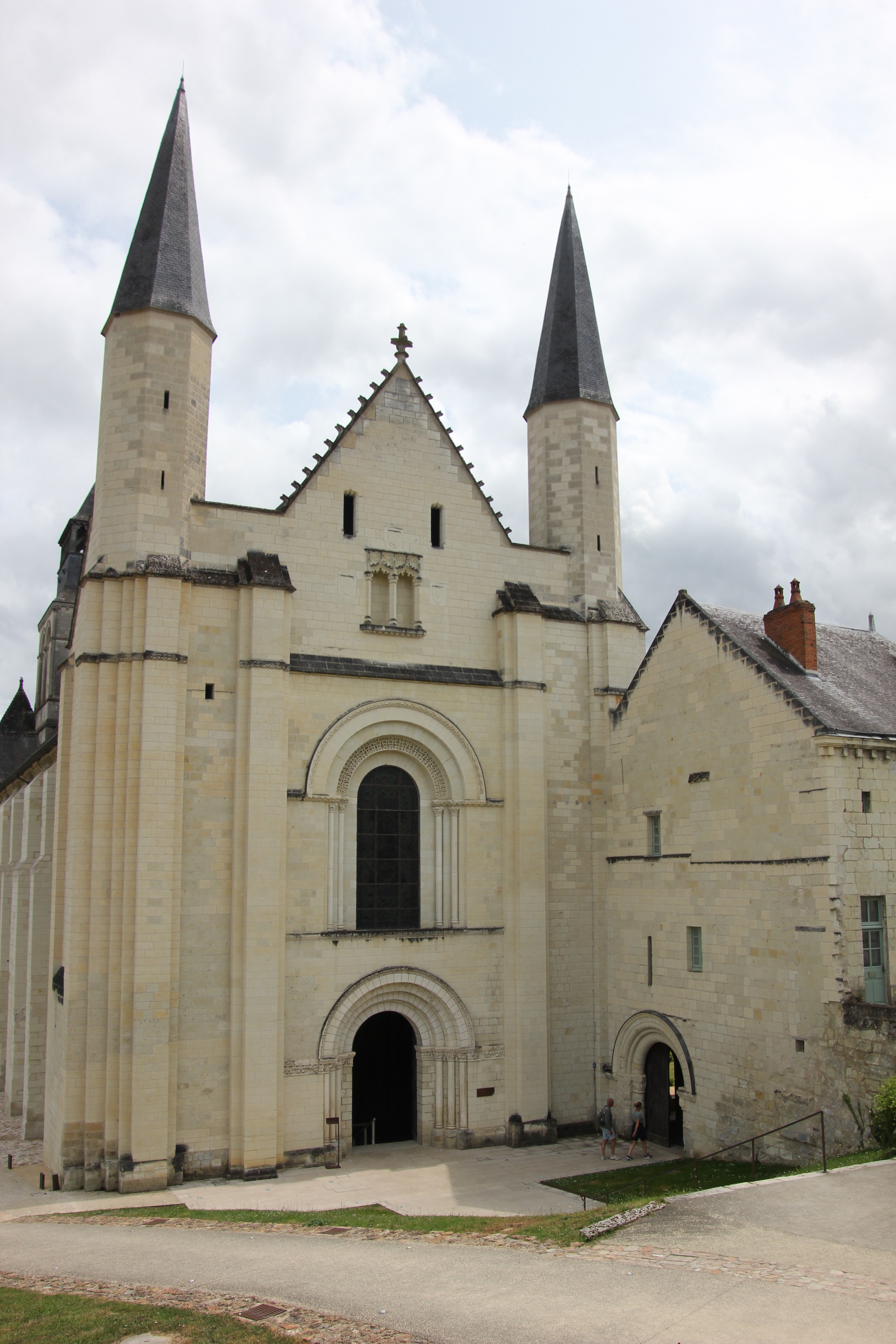
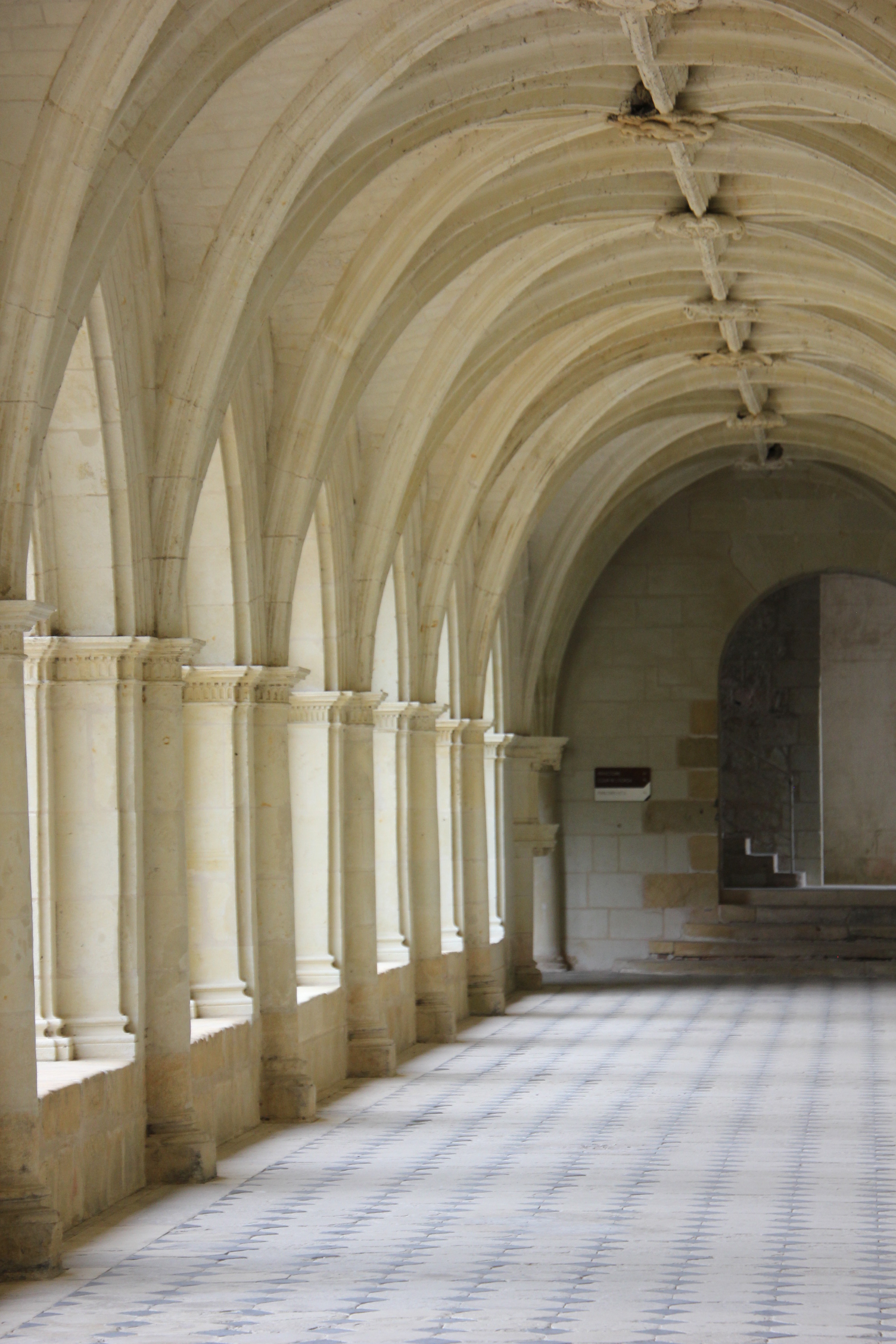
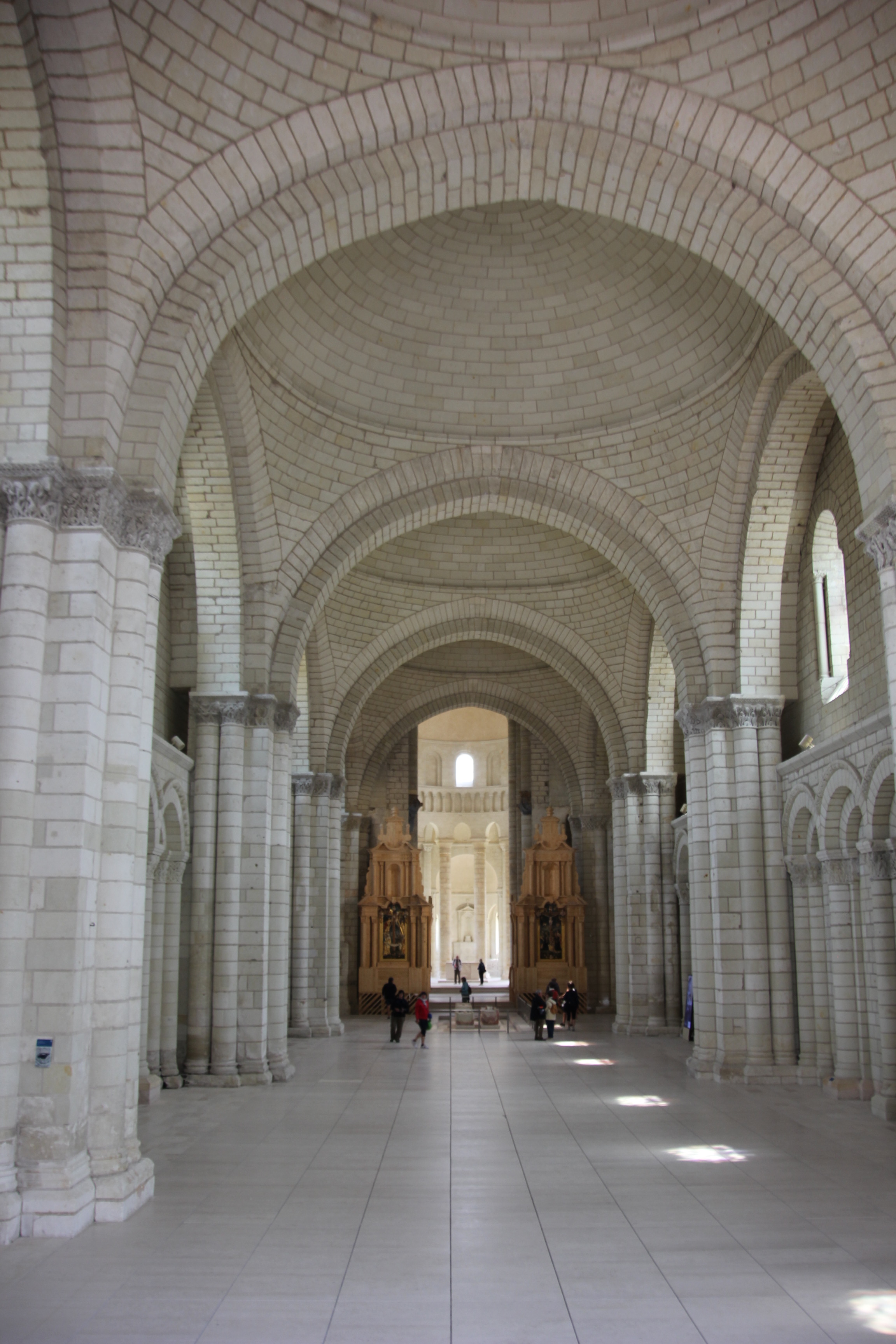
Our afternoon adventure continued to Fontevraud Abbey. This massive monastery was founded in 1101 by a preacher named Robert d”Arbrissel. He was a charismatic man who lived a very strict lifestyle. He grew a following and eventually created a double monastery supporting both men and women in separate parts of the abbey but the Abess of Fontevraud was in charge of everything. His efforts were supported by a land grant from the count of Anjou and his community was recognized as a religious order by the pope in 1106. The religious participants followed the Rule of St. Benedict (I.e. silence, good works, food and clothing). In 1117 there were 3,000 nuns in the community.
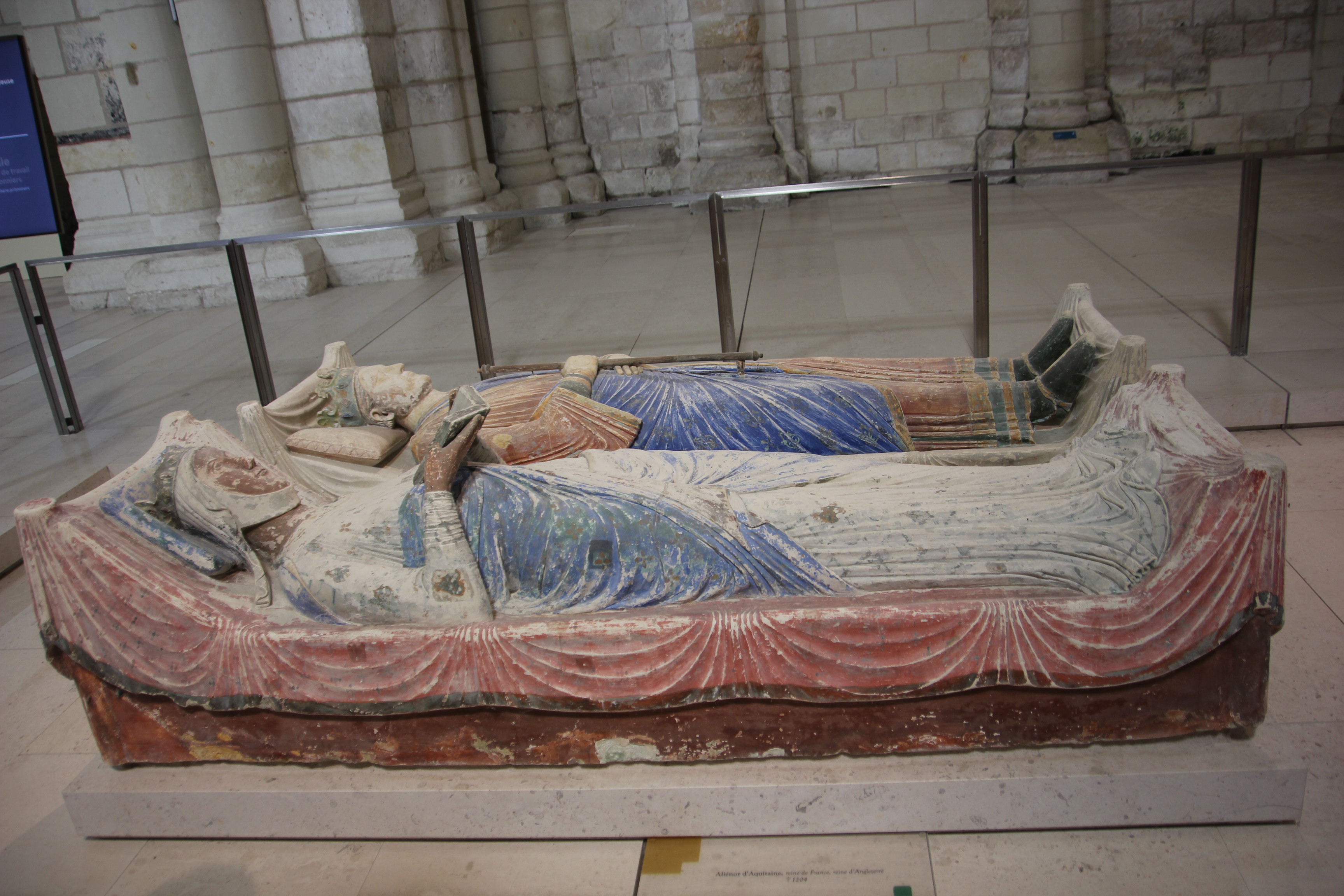
The abbey is located in what was known as the Angevin Empire. Eleanor (Alienor)of Aquitaine, her husband Henry II, their son, Richard the lionheart were all buried here at the end of the 12th century. Eleanor was the Queen of France from 1137-1152 as the wife of King Louis VII until their marriage was annulled due to her not producing a male heir. A year later she married Henri II and became Queen of England from 1154-1189 as the wife of Henri II. She was one of the most powerful women in Western Europe during the high Middle Ages but Henri had her imprisoned for supporting her son in a revolt against Henri in 1173. She was released when Henri died and she acted as regent when her son Richard was away on campaigns. She chose Fontevraud as the final resting place for the Plantaginets. During the French Revolution the Abbey was sacked and the tombs vandalized. Human remains were exhumed and scattered and have never been found. Somehow these four effigies survived and were restored to their current resting place.
Eleanor & Henri II
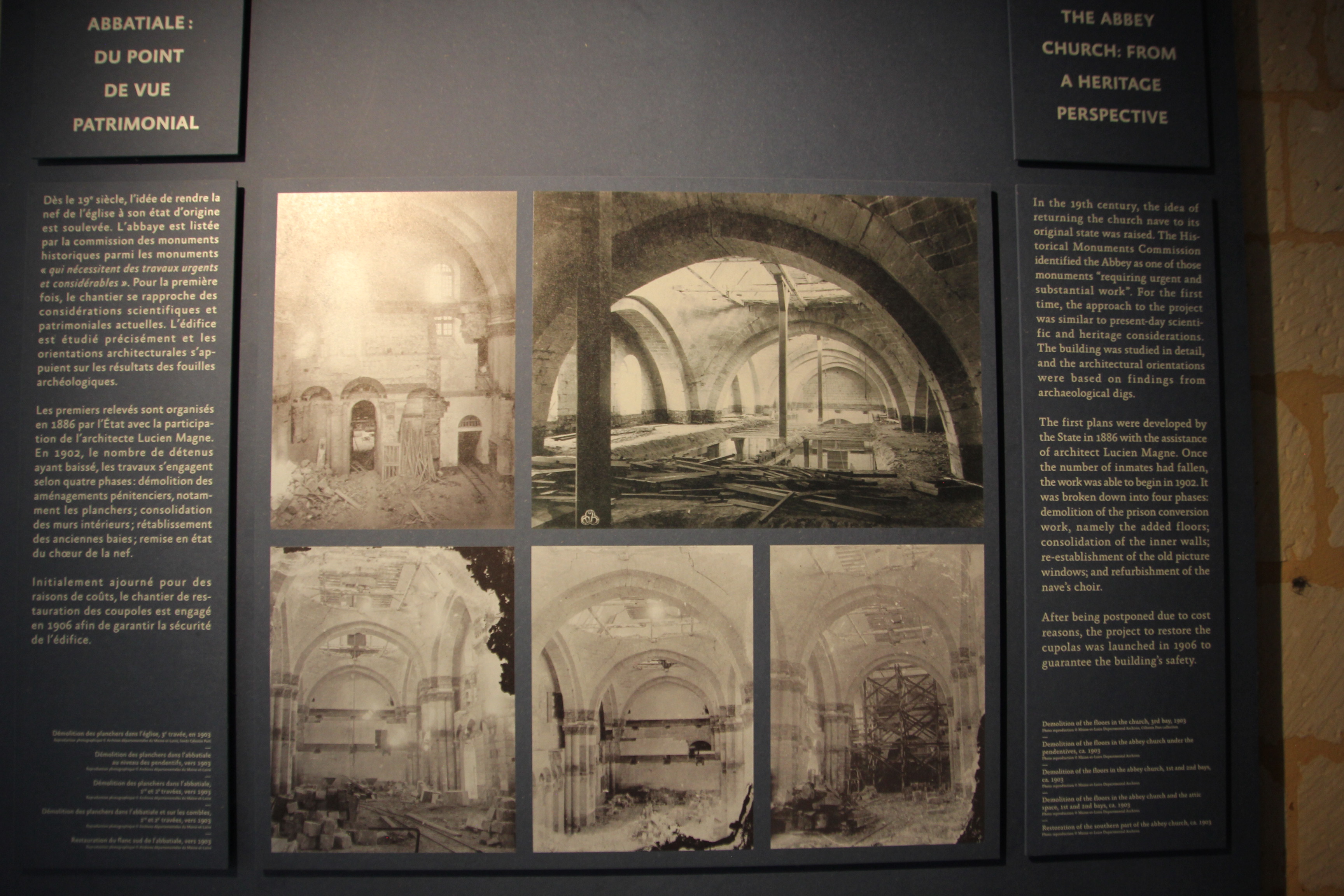
The Abbey functioned with lots of ups and downs for over 700 years until the 1792 order after the French Revolution when Abbeys were disestablished. The site experienced significant damage due to being quarried for stone for other building projects and being turned into a prison. Ironically, its function as a prison saved the site from total demolition. It continued as a prison from 1804-1963.
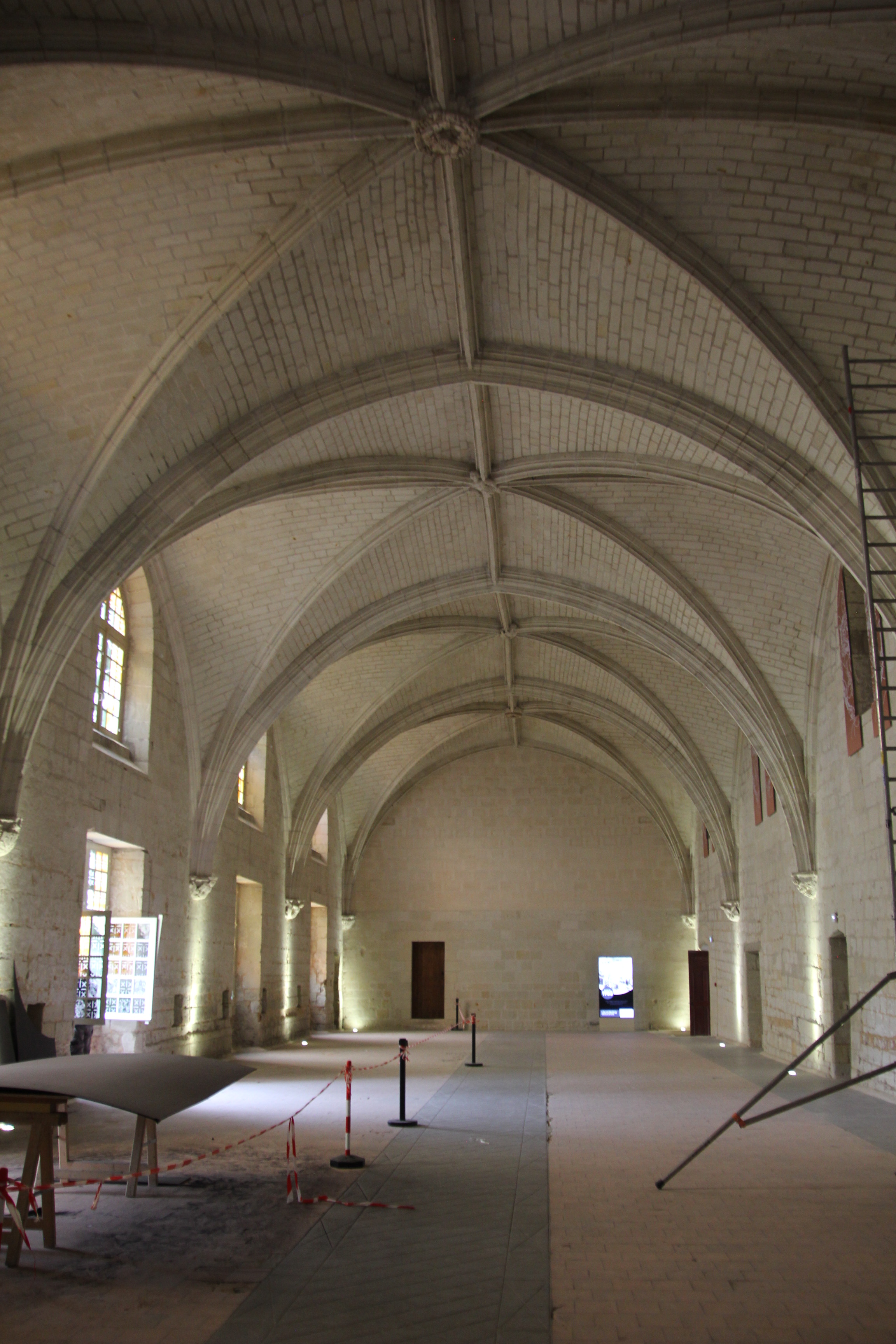
The disaster from the prison days What it looks like restored – work on going
Some restoration work began around 1903 but the serious work began after it was declared a cultural heritage site in 1975. The site is massive and simple in style. It is also an active event centre. There was a conference happening while we were there. It was clear from the information provided that the site needs to generate significant income to keep it going.
We were tuckered out after a big day of wonder and awe. We found a grocery store and stocked up on our veggies and wine before heading into our home in La Chapelle-sur-Loire for a quiet evening of blogging and laundry.
We left our cruise ship at 8:30 am and took a cab to the train station. We had purchased our 9:13 tickets online the day before and we found ourselves with lots of time to spare, so, in my best French, I asked if we could take the earlier train. The ticket seller didn’t even switch to English, so, feeling empowered we got on the earlier train. The trip was an easy hour long ride and we navigated the Dijon train station easily and found our car rental. We got everything sorted out and got on the road. Thank goodness for GPS in English! Dale and Greg shared the driving while I knit in the back seat. The scenery was wonderful and we didn’t get lost too many times. There are thousands of traffic circles in France and both Dale and Greg know how to drive them like the French! We stopped for lunch after looking for a chateau to visit. We got the name wrong and never did find the castle but we did find a great Turkish donair place. Of course it took us longer than we expected to get to our destination.
We stopped at a grocery store to get some supplies and thought it would be a great time to find a washroom. Not to be found! You can’t rely upon gas stations to have restrooms. So, as it was becoming more important we checked in with the Waze app and asked where the nearest bathroom was. They gave directions to a place 400 metres away. It was an amazing stop.
Notice the people cut out – the entrance to the washroomMennetou building
The bathrooms were modern, clean, free and accessible in this medieval looking community. What a lifesaver. Mennetou-sur-Cher dates back to the 13th Century but sure knows how to support modern travellers.
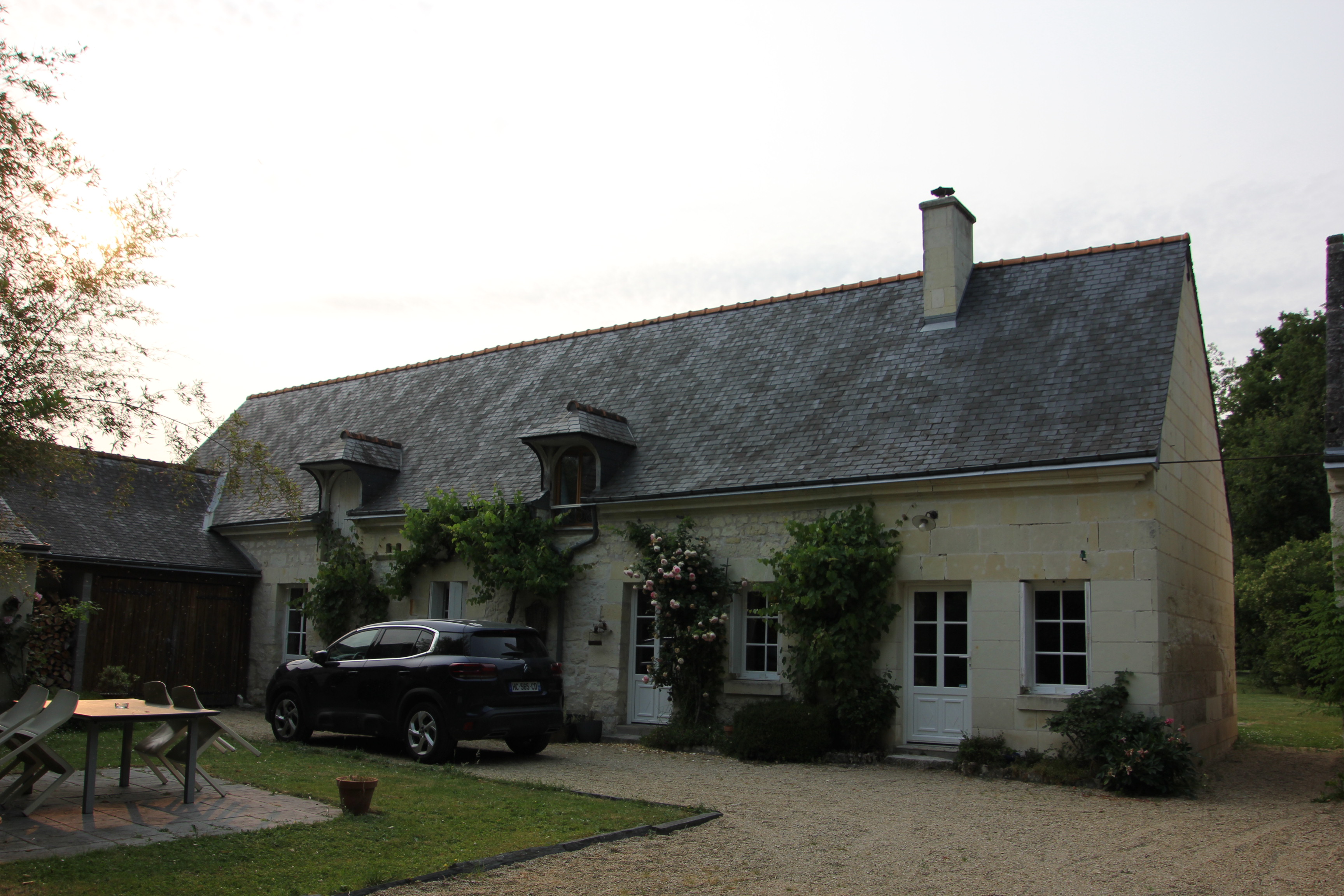
We arrived with little difficulty at our first VRBO. It is delightful and we enjoyed exploring the grounds before heading off to bed.
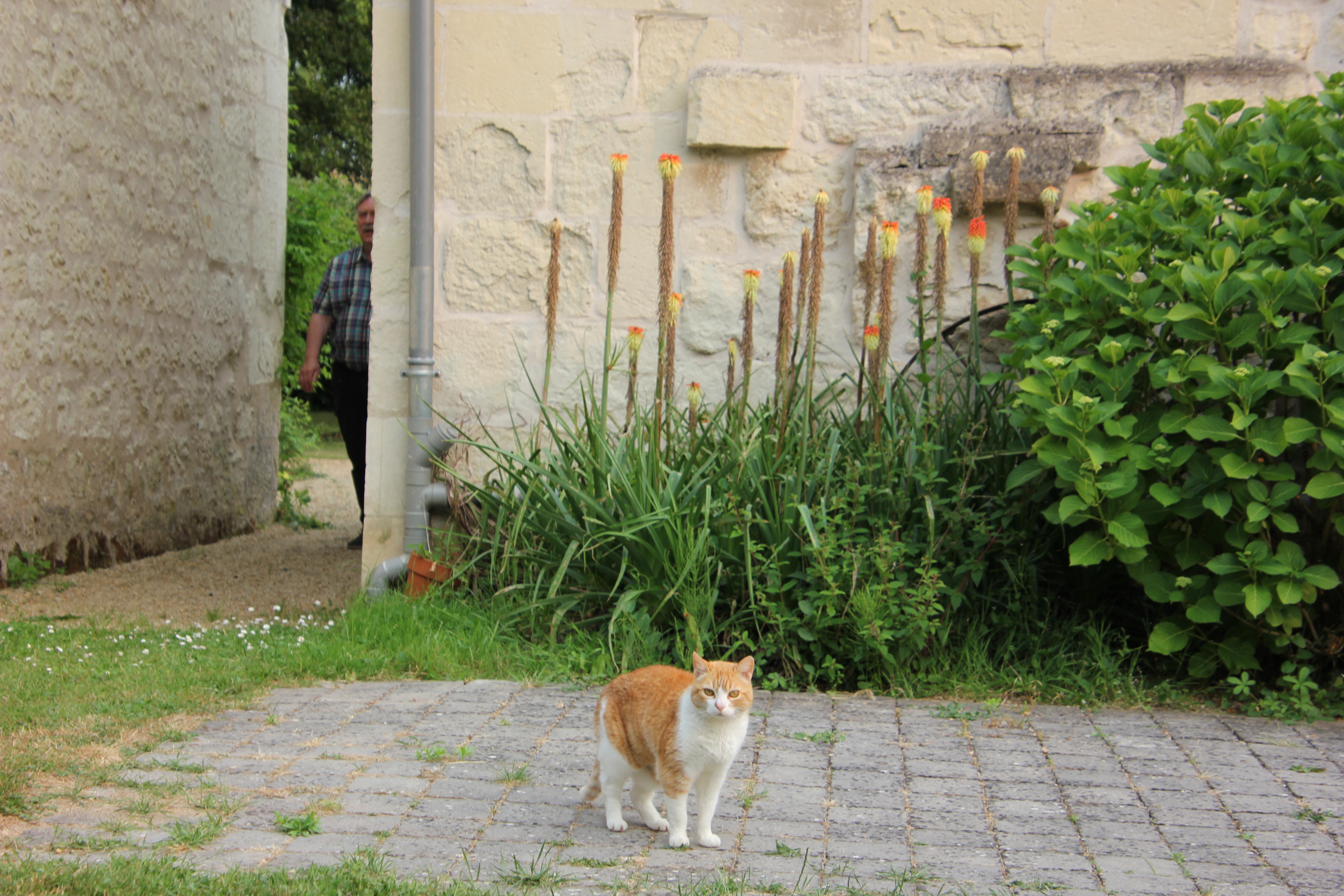
Our housemate was waiting for us.
We have a big day of sightseeing planned for tomorrow. Stay tuned.
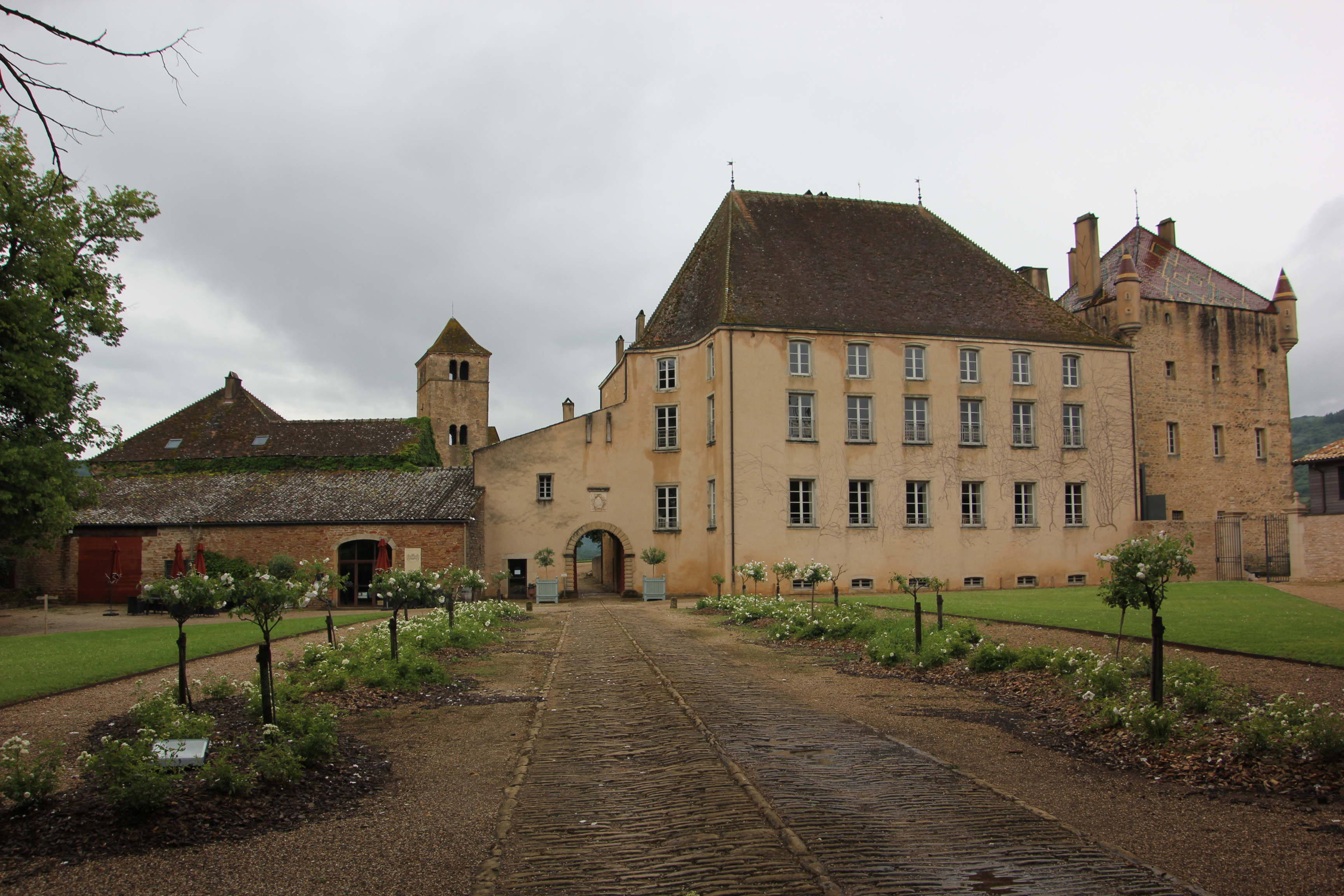
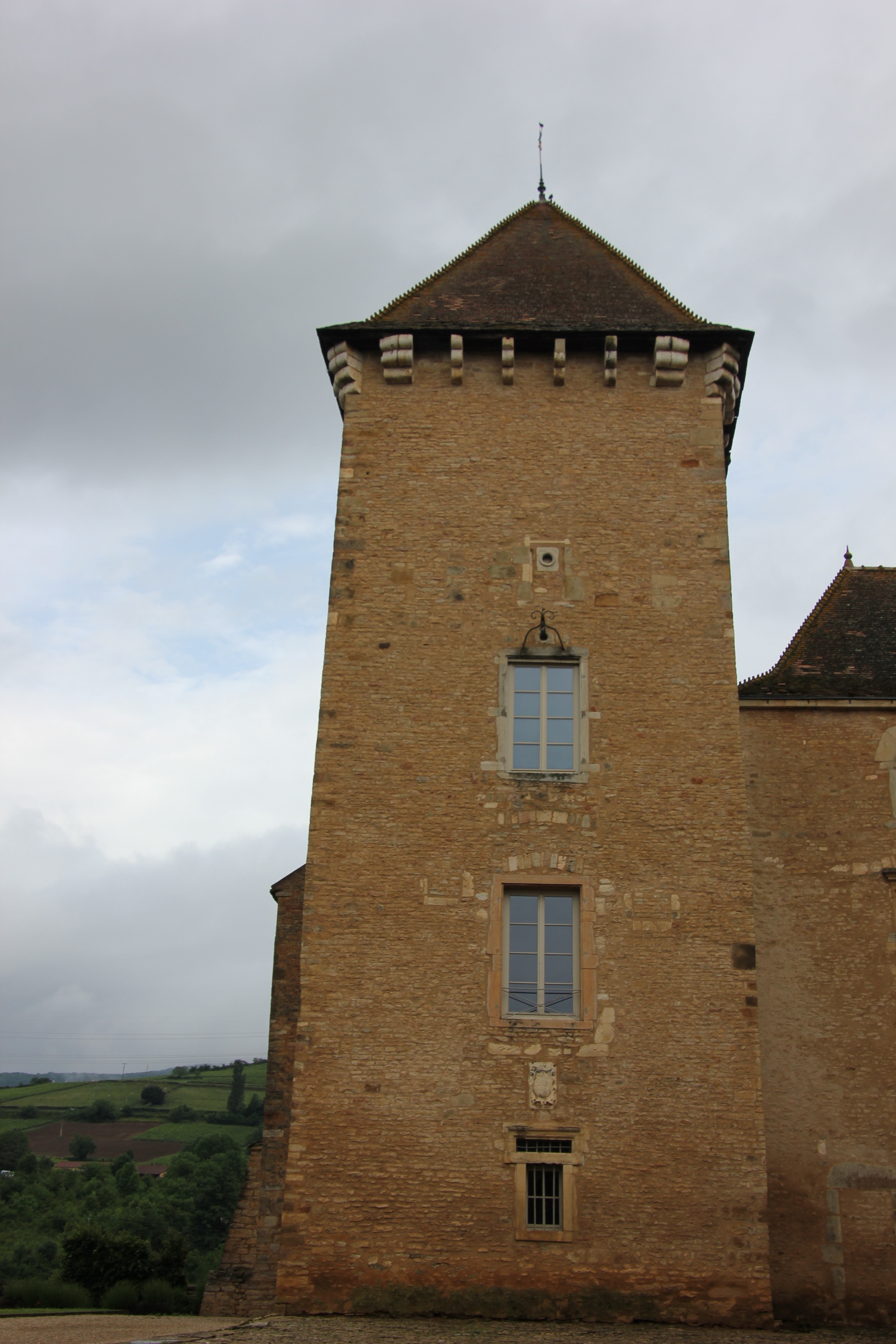
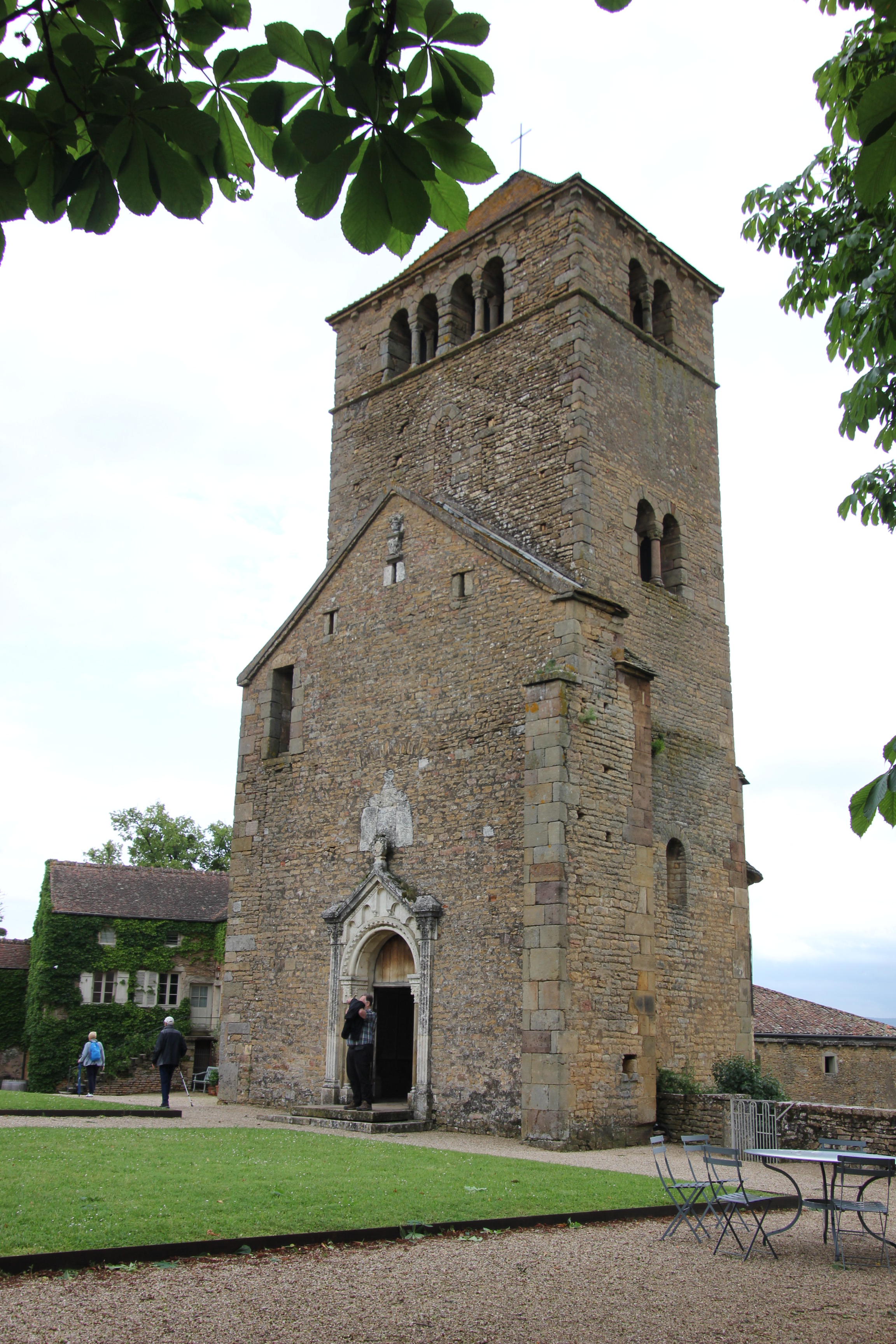
We left Lyon and sailed overnight to Tournus. We got off to a quick start with a trip to a vineyard in the Macon area. This is Chardonnay country in Burgundy. Our guide was enthusiastic about describing the countryside we travelled through. Did you know that towns founded by Romans tend to be approximately 30 km apart. This is because that is the distance that a legion could travel in one day. The wine in this area is produced by processing Chardonnay or Pinot Noir grapes. 85% of the crop is white wine. She took us to a lovely chateau that dates back to at least the 11th century. The current family has owned the property since the 1980’s and have made it a multigenerational business. Our guide was clear that maintaining these old estates takes a lot of care and financial resources. The current owners run the vineyard, host weddings and social events all while they continue to live on the property.
The dungeonThe 11th century bell tower/chapel
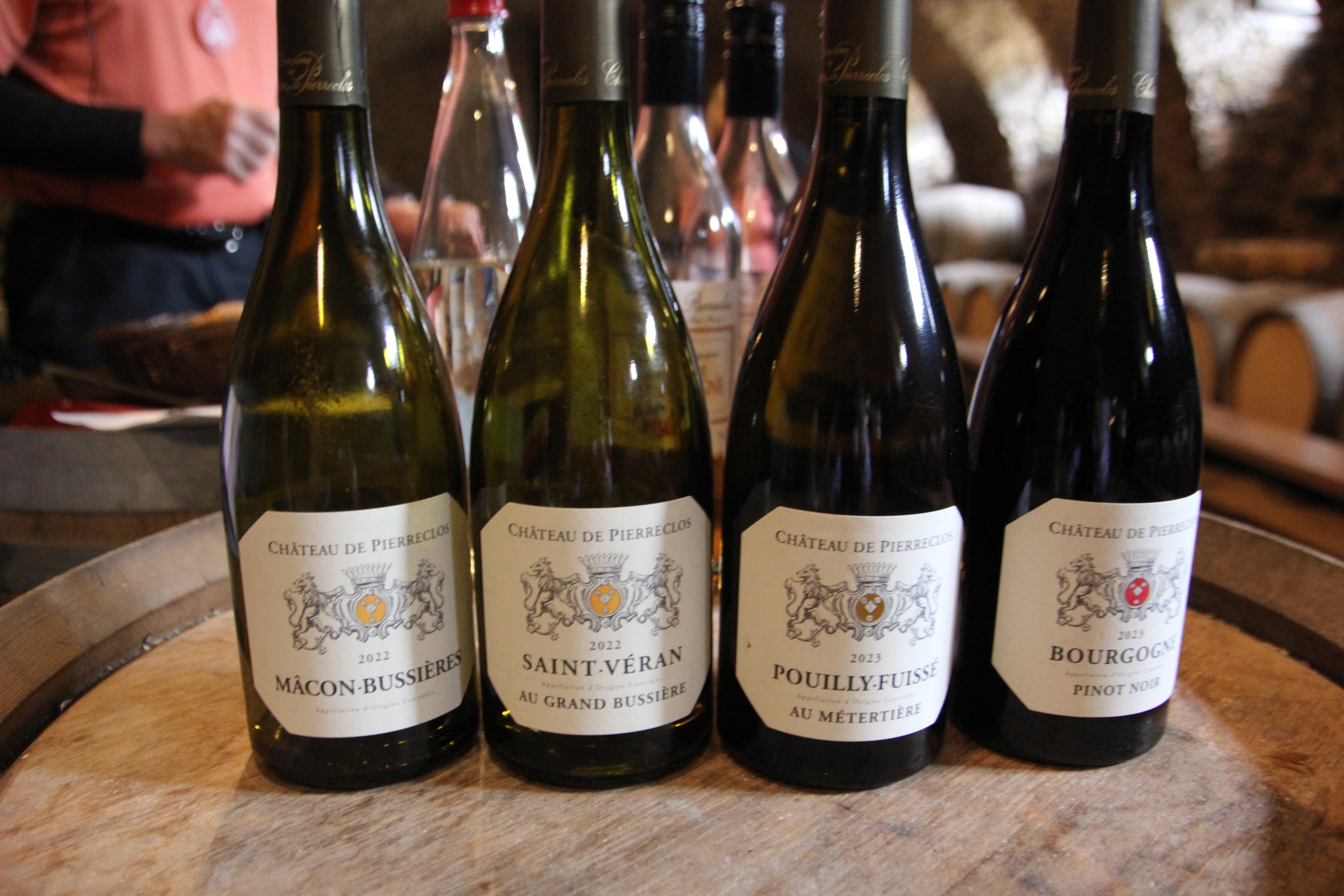
We spent some quality time in the chateau cellars tasting the current owner’s wine. Our guide was very educative and we enjoyed the early morning beverages.
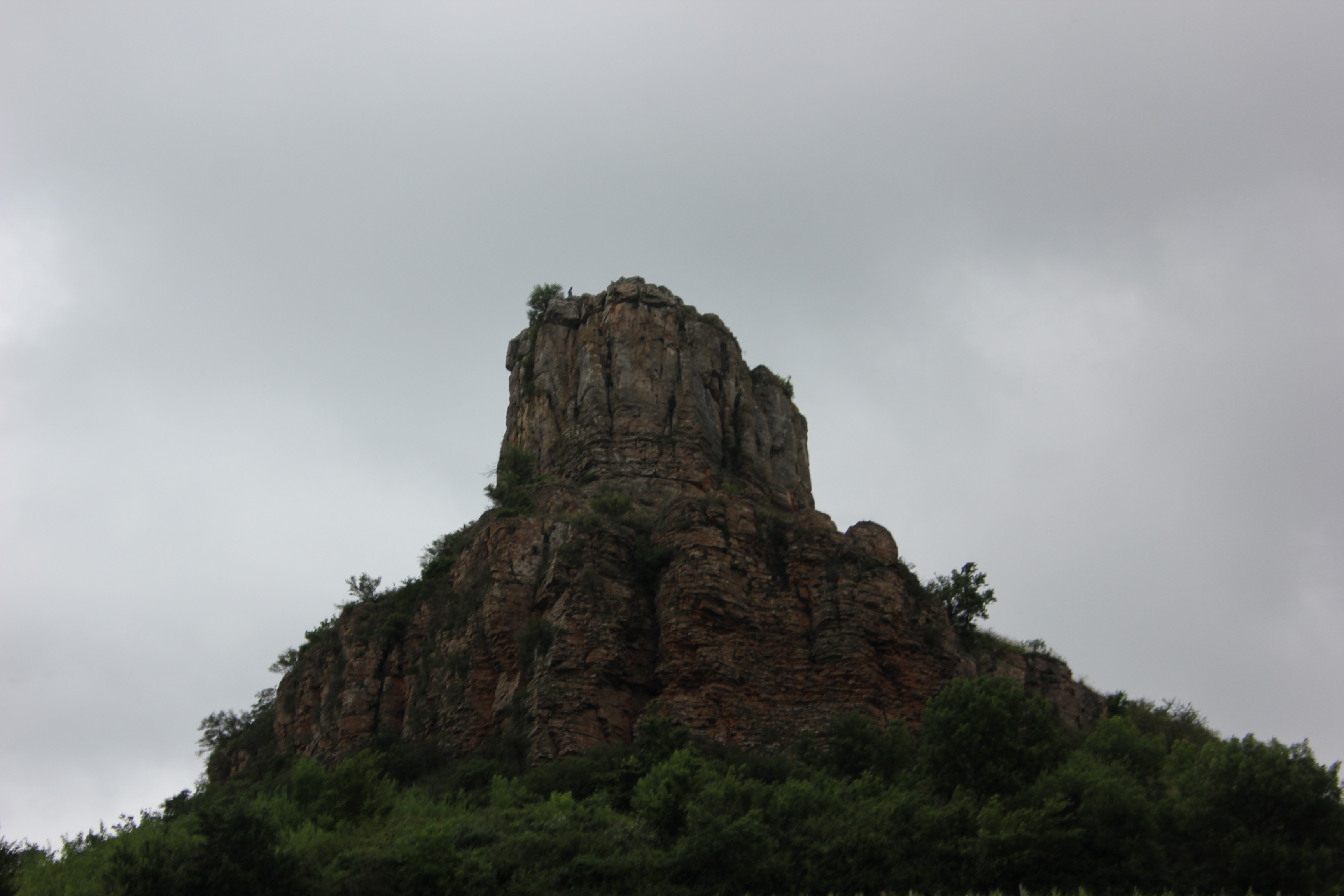
We left the vineyard feeling the need for a bit of a stretch, so our guide took us for a brief stroll to a prehistoric site where we could get out and wander. The Rock of Sulutre is known to have been a hunting ground for prehistoric hunters. It became a much more popular site when President Mitterrand, who was from this area, continued his annual climb of the rock even after he became president.
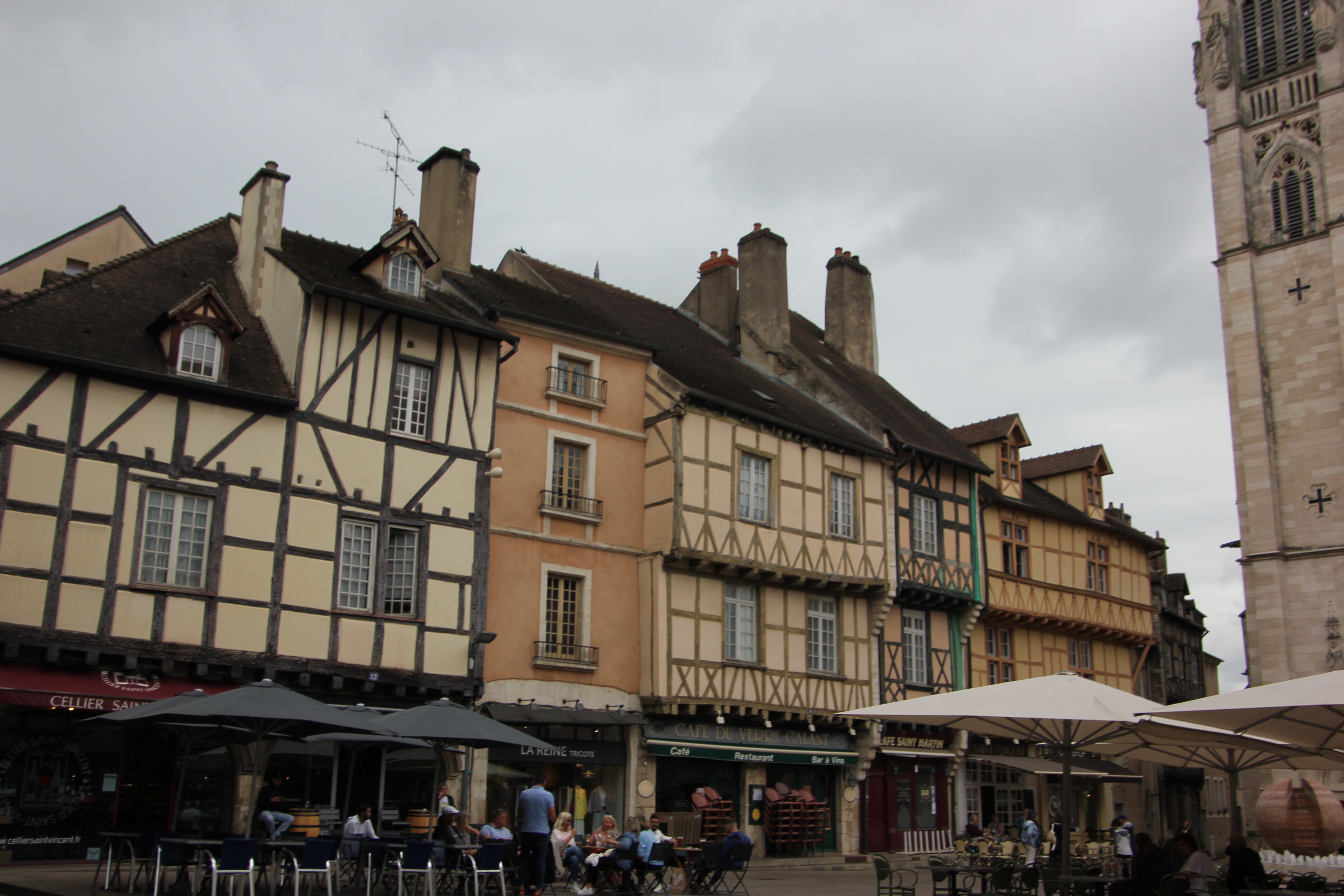
This was our only outing for the day as we continued our sailing to Chalon-sur-Soane, the last stop for our cruise. Chalon is a quaint community with an amazing medieval town square.
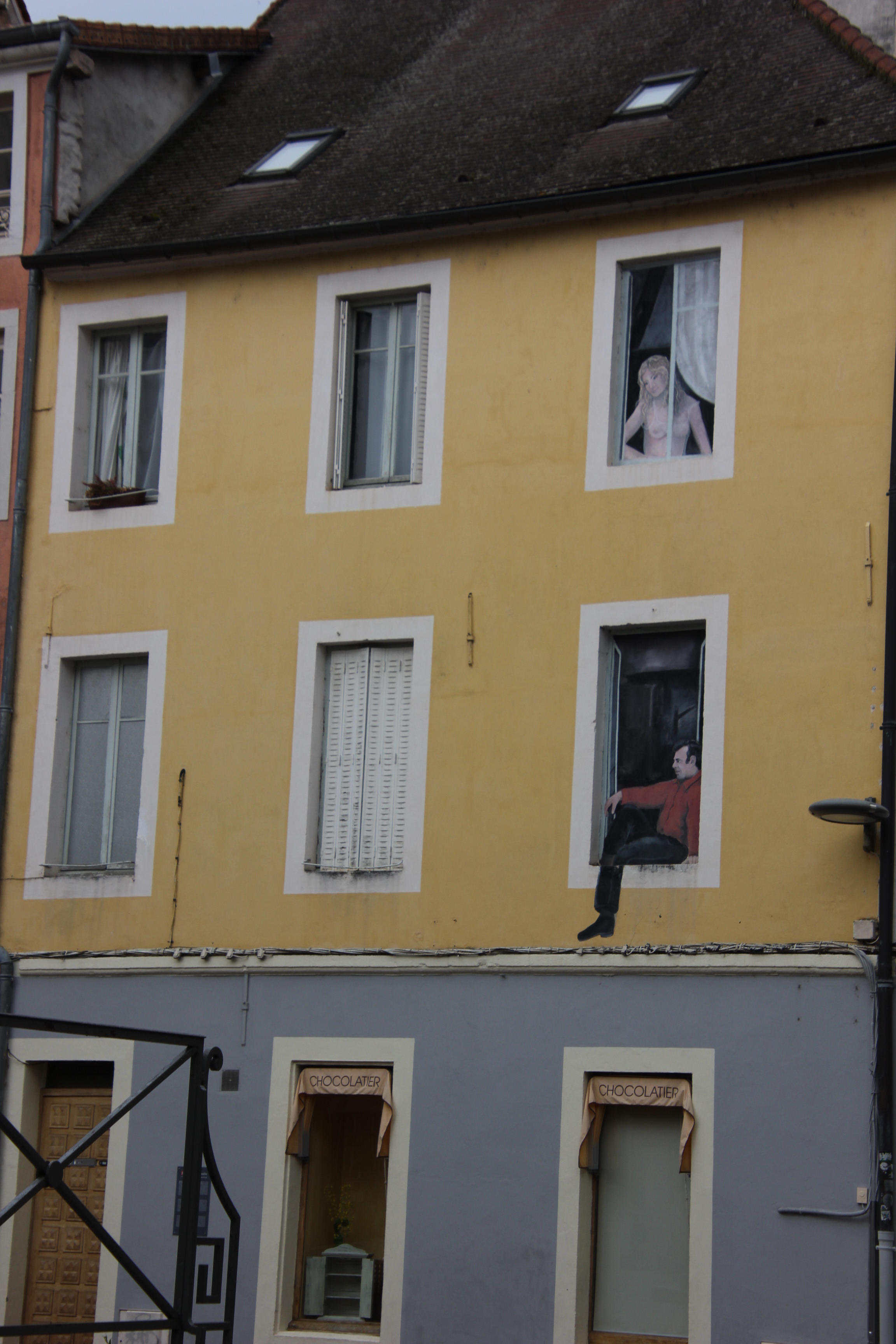
As we wandered the streets, we noticed a tremendous amount of street art.
Trompe l’oeil – only 7/9 windows are real.
We headed back to our boat after a lovely walk and started to prepare to leave the ship. Of course, we needed to experience a bit of stress. We had rented a car that was to be ready for us in Chalon. The car company informed us today that they didn’t have a car for us and that the best they could do was have one for us in Dijon, an hour’s train ride north. We figured out how to book train tickets and settled into a final evening with our travel companions. It was a wonderful cruise and while we are sad to see it end, we are excited to shift into the next part of our journey. Thanks to Cathy and David for making things so easy for us. We are grateful for the time shared with our group.
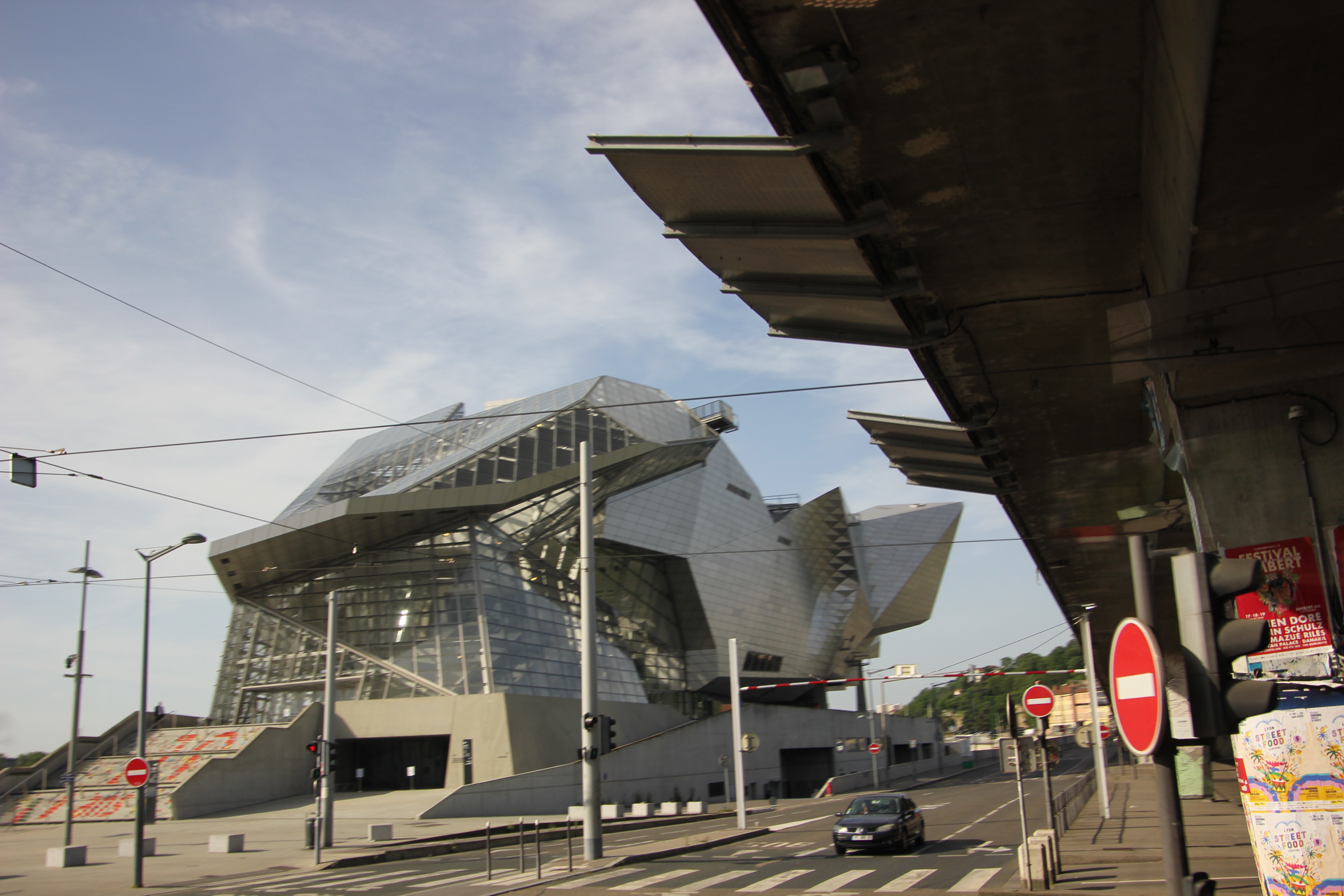
Lyon is the second or third largest city in France depending on how you calculate it. While Lyon itself has 600,000 people, it grows substantially when you consider the metropolitan area. It is a bustling city filled with new, innovative approaches to living while still hanging onto its heritage. It lies at the confluence of the Rhone and Soane rivers and had recently opened a natural history museum called the musee des confluences. We studied this in our French class a few months ago and it was fun to see the actual building.
Lyon is an ancient city. The Celts settled on the eastern hill of Lyon long before the Romans settled in 43 BC. Claudius was the first Roman emperor born in Lyon and a succession of powerful Romans ruled the area until the 3rd century. The Roman presence is still alive in Lyon. For example, a Roman theatre was discovered in 1933 and is used today for performances, most notably the Nuits de Fourvière festival which brings in musical performers from around the world for two weeks in the summer.
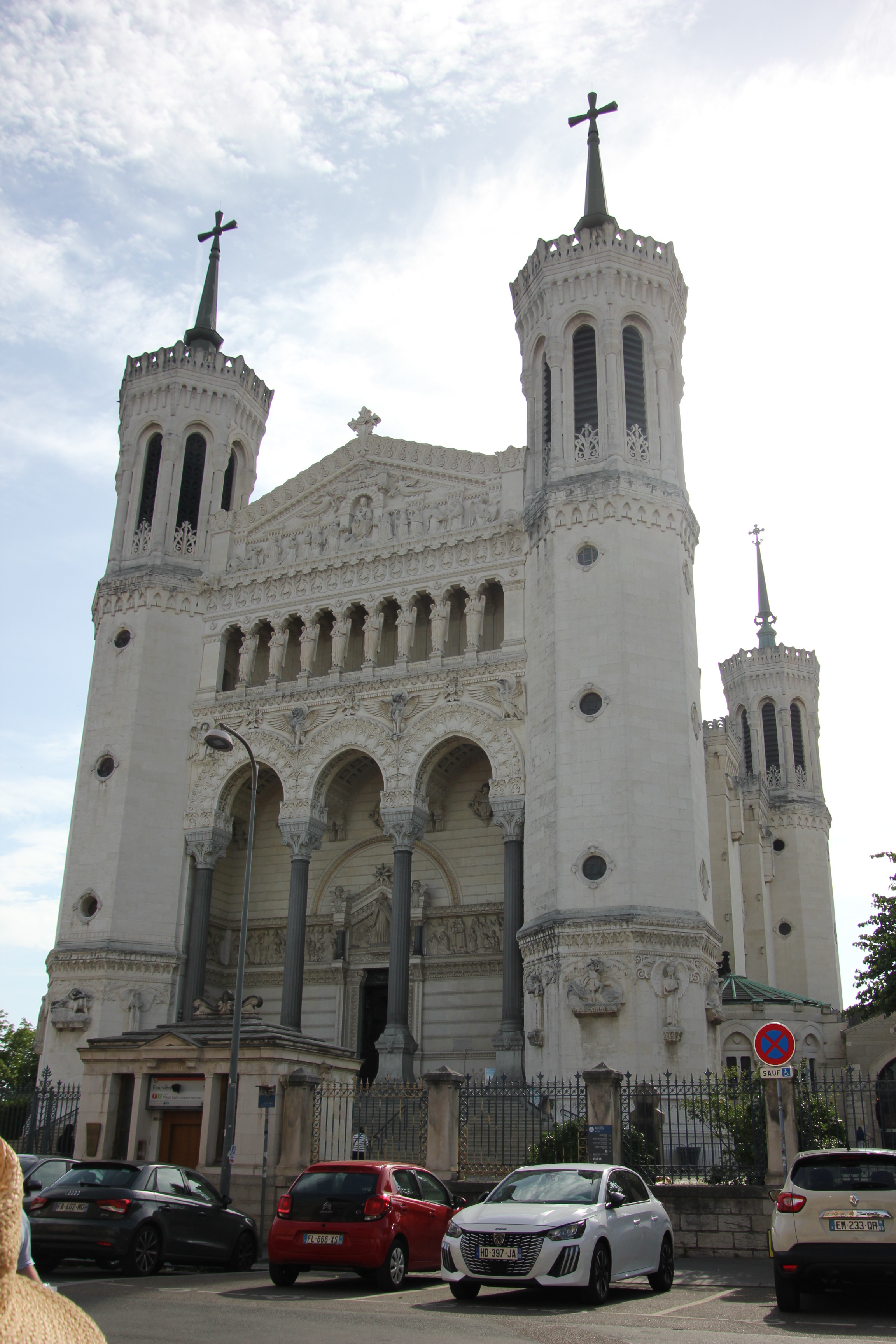
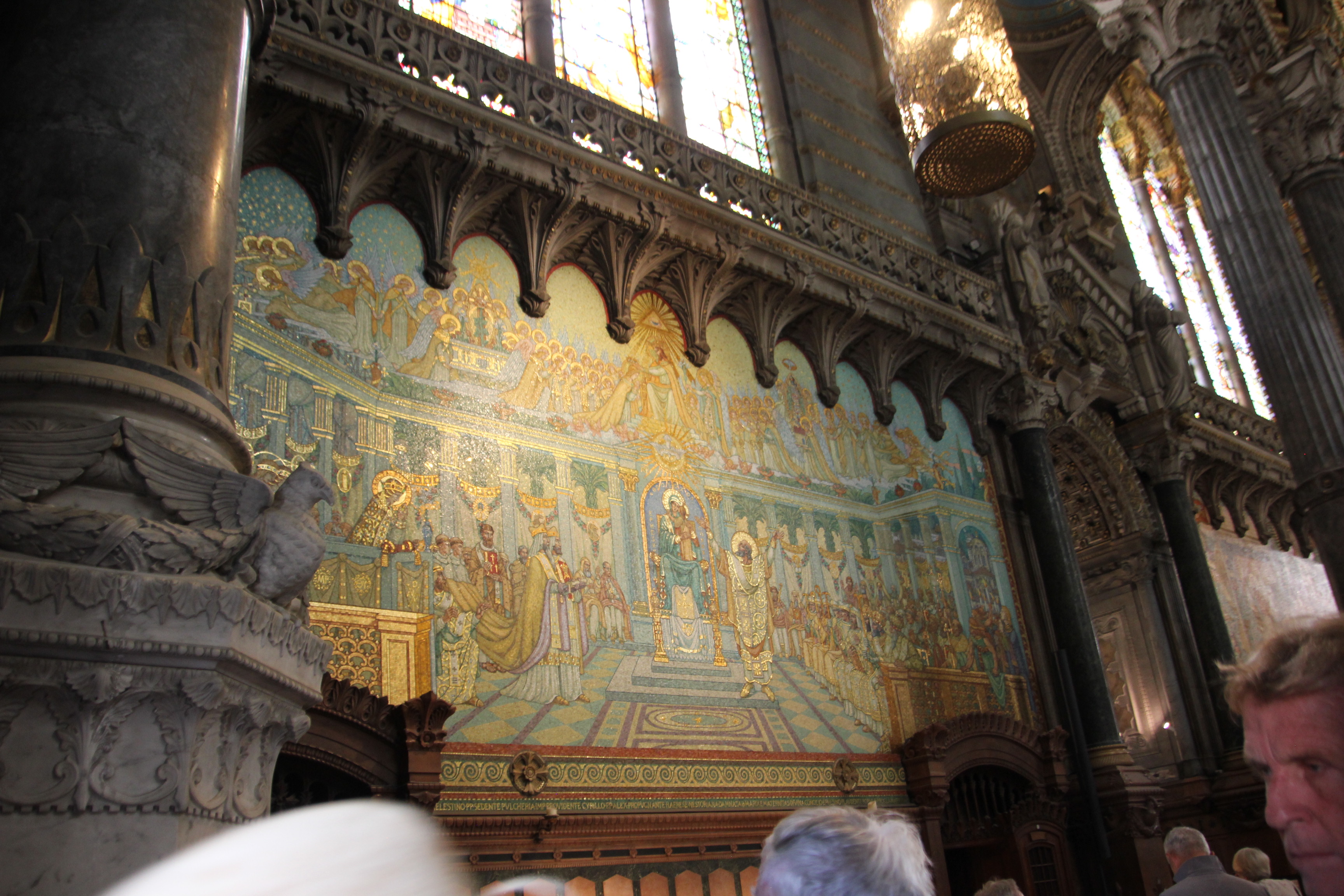
We took a tour of Lyon in the morning. The Basillica de Fourviere was our first stop (Fourviere was the name of the old forum in Lyon). It is was built in 1872 as a tribute to the Virgin Mary. The architect wanted to build her a home out of respect for her saving the community from the plague in 1643, from Cholera in 1832 and the Prussian invasion in 1879. It is a magnificent structure. There was a mass being said as we entered so we weren’t allowed to take pictures inside. I snuck one of the Murano glass mosaic on one wall. We explored the crypt underneath, which was also beautiful. Outside the church we had spectacular views of the city.
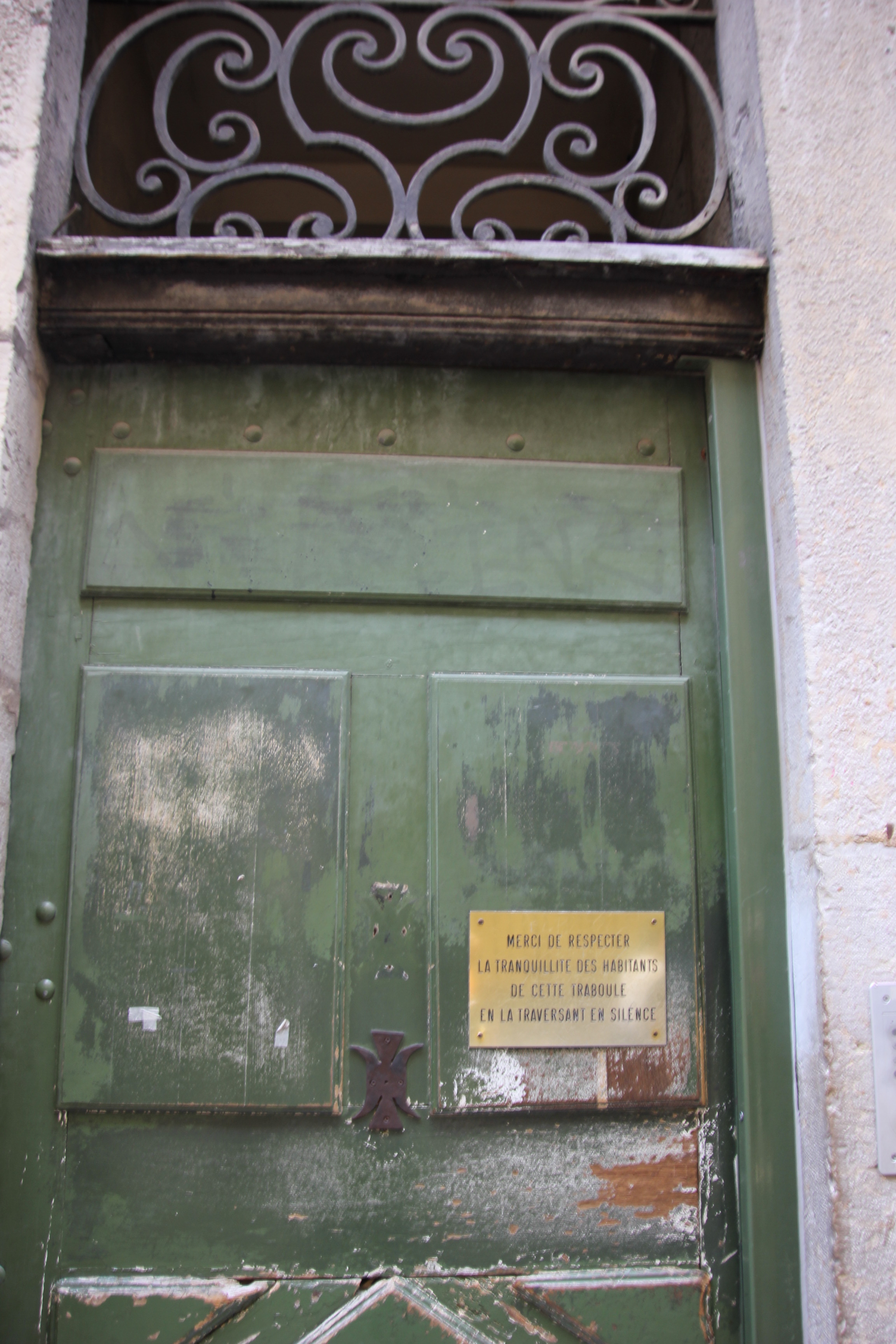
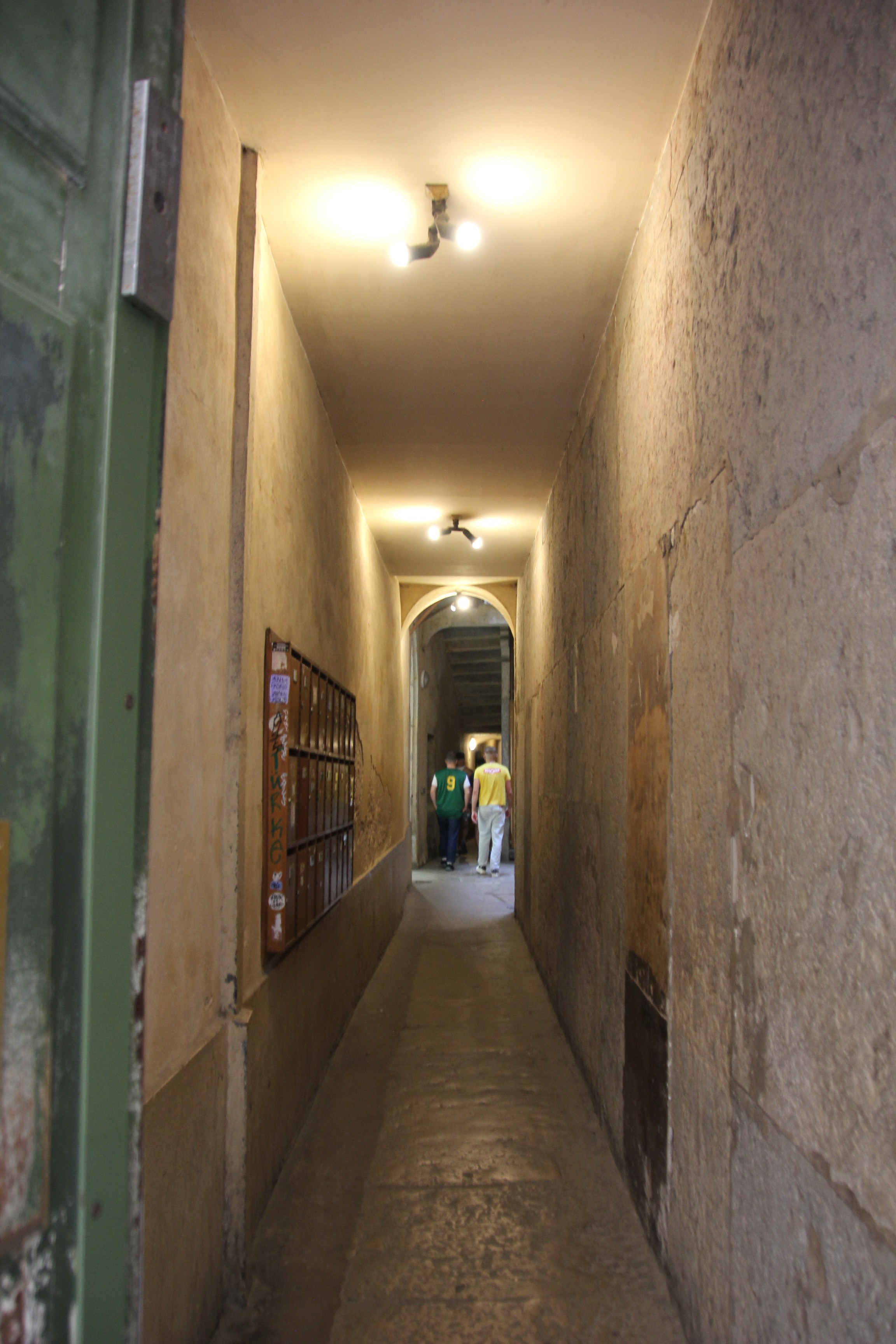
We then went into the old city of Lyon and had a great time exploring the streets of the old city. Historically, the main trade in Lyon was silk. The weavers needed a way to get their products from their workshops to the river for transport. The city was growing, so to facilitate commerce, they created over 400 traboules (hidden secret alleys) that provided covered shortcuts to through the streets to the river. Only 40 of them are open to the public and we found 2. The trick is to find the door and then to go through silently because people live above these passages and get very cranky if tourists make too much noise.
We learned a lot about Lyon on our drive back to the boat. One interesting fact was that Lyon is the proud home to the celebrated author Antoine de Saint-Exupery. He wrote Le petit prince. I enjoyed this tidbit because his book inspired me to climb a Baobab tree in Zambia.
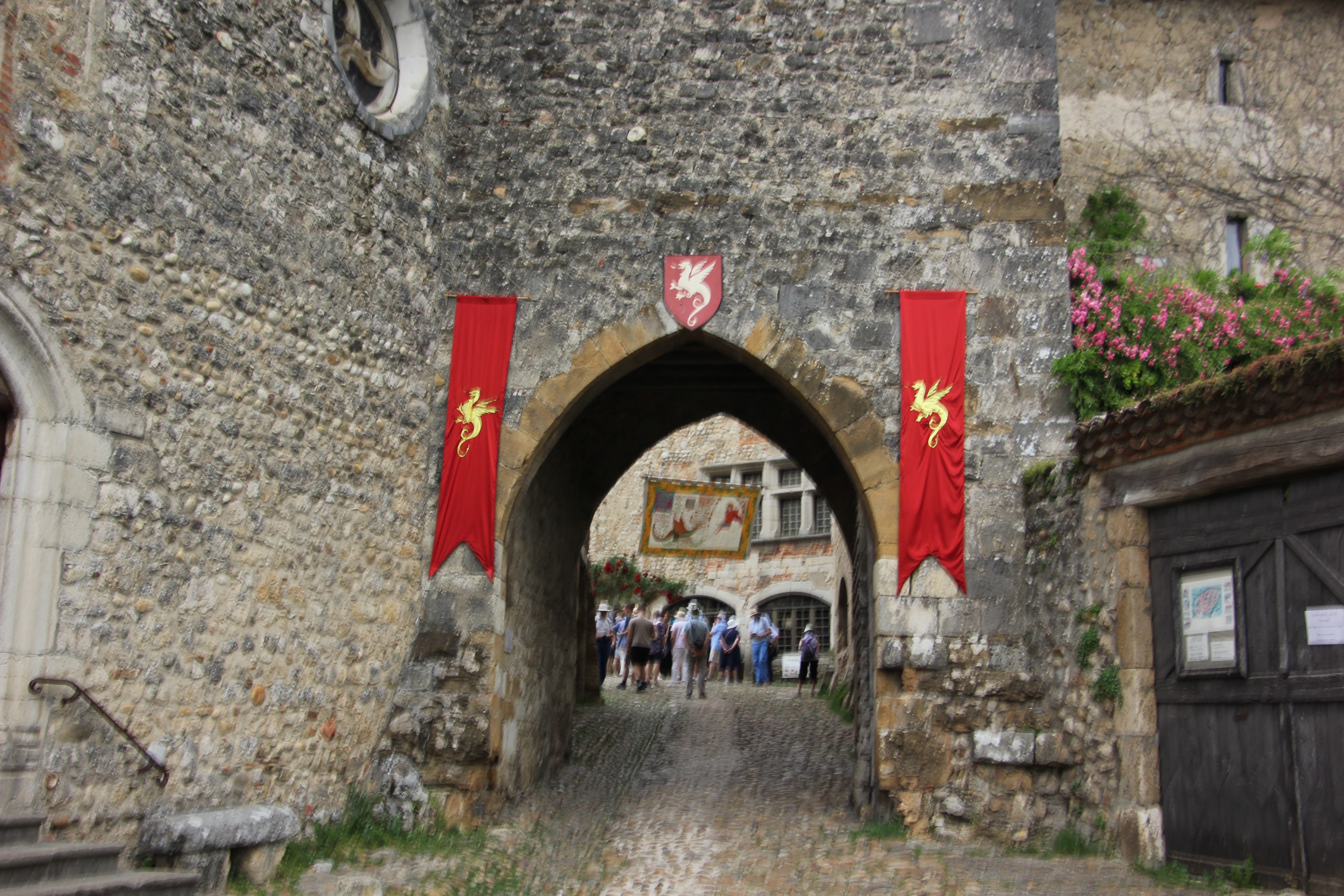
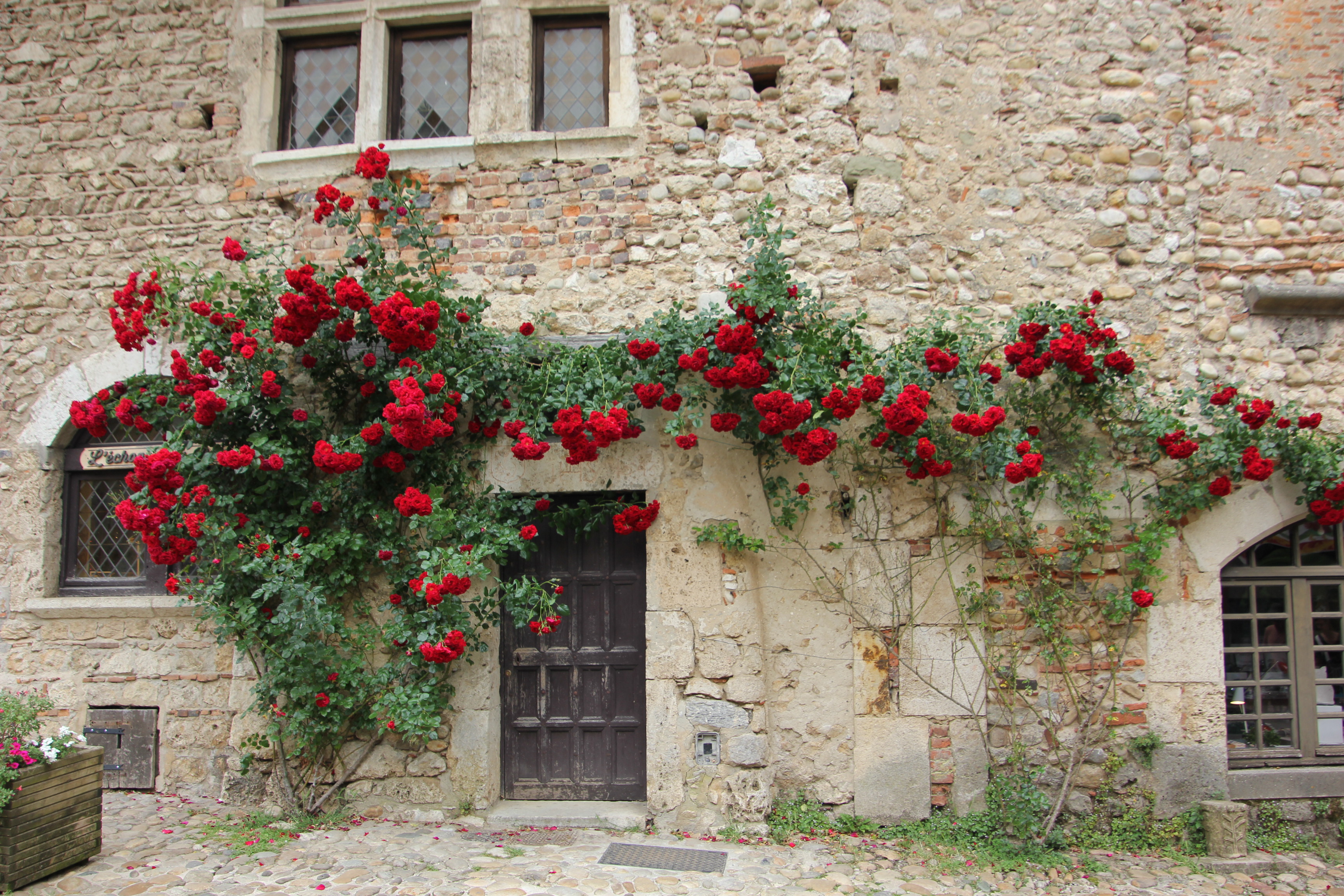
After another delicious lunch on our cruise, we set off for the medieval city of Perouges 30 km north of Lyon. This village on the Ain river was originally a fortress in the 12th century and came under French rule in 1601. It is known as “one of the most beautiful villages in France”. This is an official title and supports small villages of historic value to stay afloat. This village offers 100 years free leases on buildings in the community with the expectation that the leasee will maintain/upgrade the property while staying in line with protecting the historic nature of the village. The village was indeed beautiful with old stone buildings and beautiful flowers.
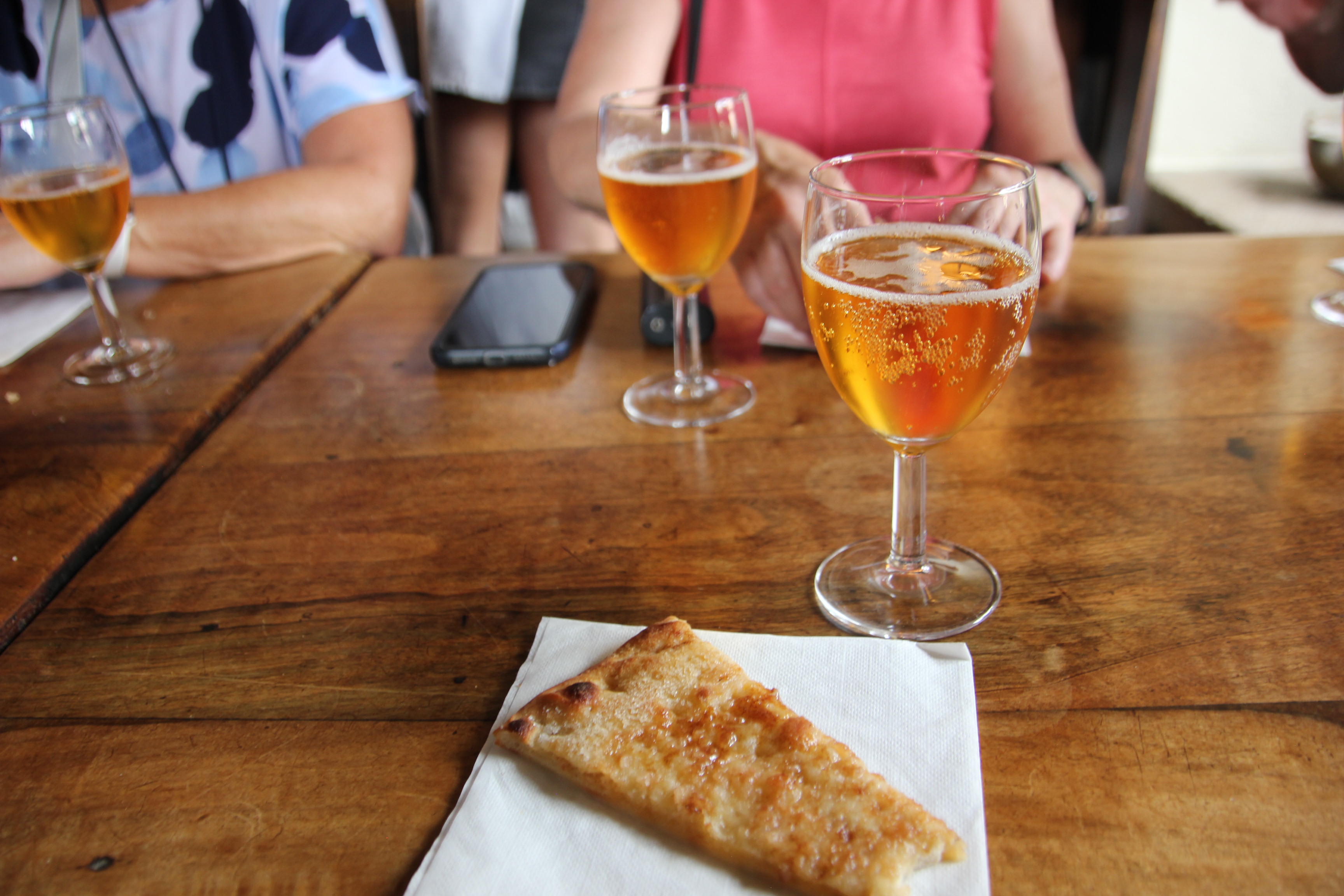
A piece of apple cinnamon galette with a delicious apple cider as a touristy treat in Perouges
We ended our tour with a delicious treat served by costumed interpreters. We continued our exploration of the village hoping to find genuine/authentic crafts but were disappointed. A number of the stores sold stereotypic touristy stuff and there weren’t many authentic French artisans showing their work. The bus ride back to our boat was fairly silent as we got in a brief nap before dinner. It was a great day of seeing amazing architecture and history.
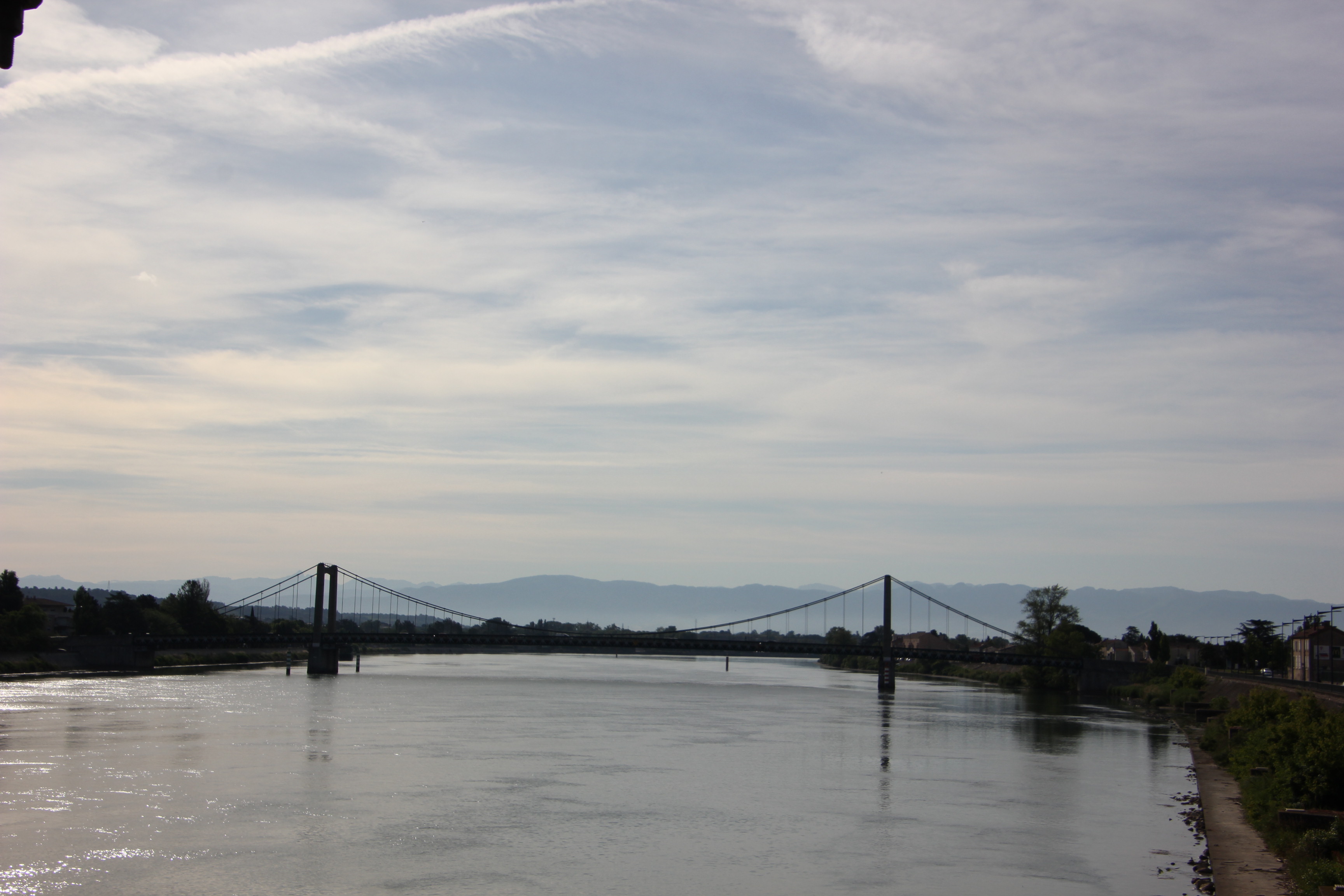
The communities of Tain/L’Hermitage and Tournon are co-located on the banks of the Rhone river. After our ritual breakfast of more food than you could ever choose from, we departed on our guided walking tour. We started with a tour of Tournon which required us to cross the Passerelle Marc-Seguin bridge over the Rhone. Its builder, Marc Seguin, invented the wire cable suspension bridge and built this bridge in 1847. It is now a strictly pedestrian bridge and some of the wooden support beams seemed to be original, very weathered and not confidence inspiring. The town appeared to be very proud of this inventor as almost everywhere we looked something was dedicated to him. He was not the only innovator from this community. The Montgolfier brothers, who created the hot air ballon in 1783, were also born here.
The town of Tournon was built around the castle. It was abandoned in the 1600s and served many purposes, including that of a prison and a school, before being rescued and turned into a museum.
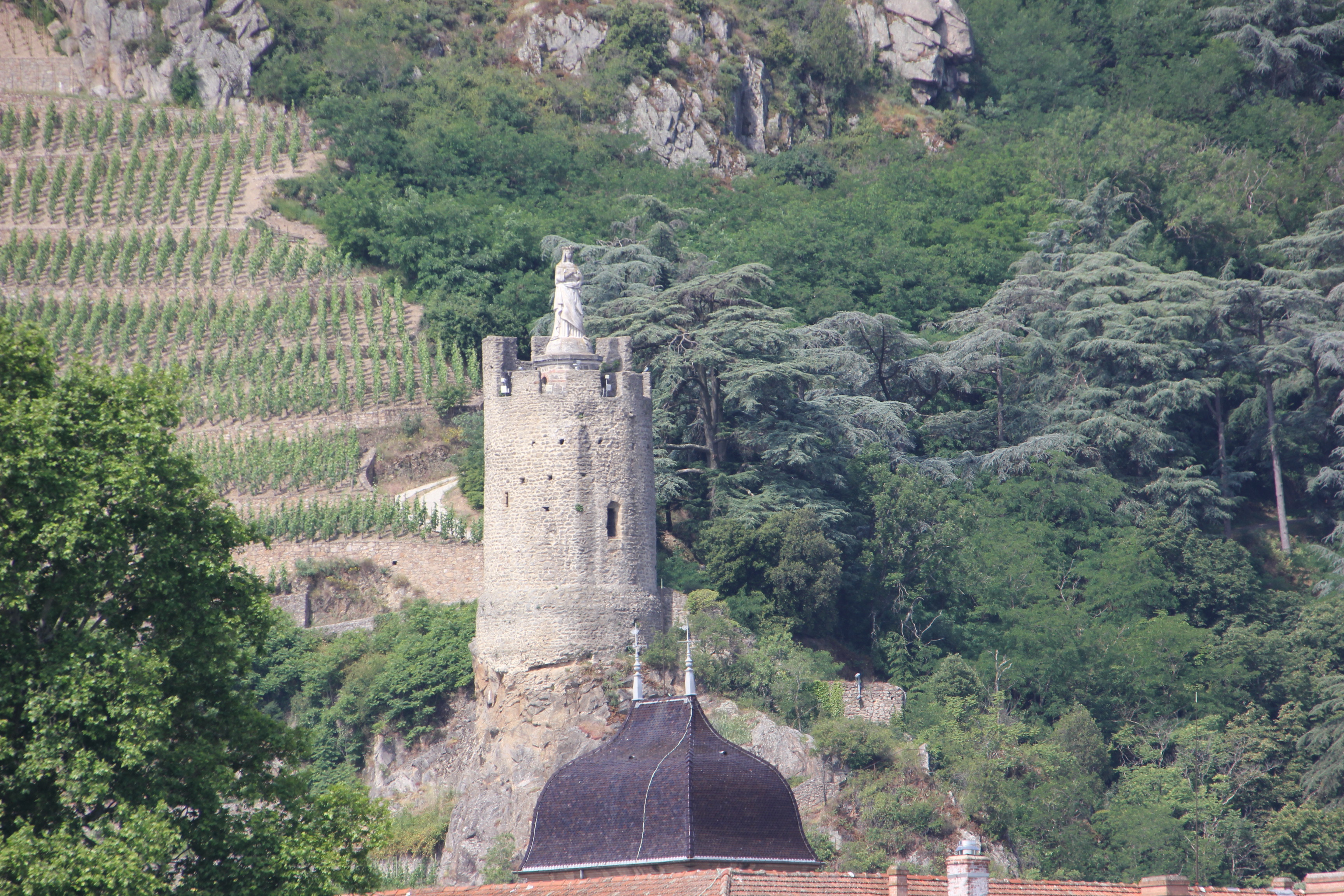
One of two remaining castle towers. There used to be many more on the wall surrounding the city.
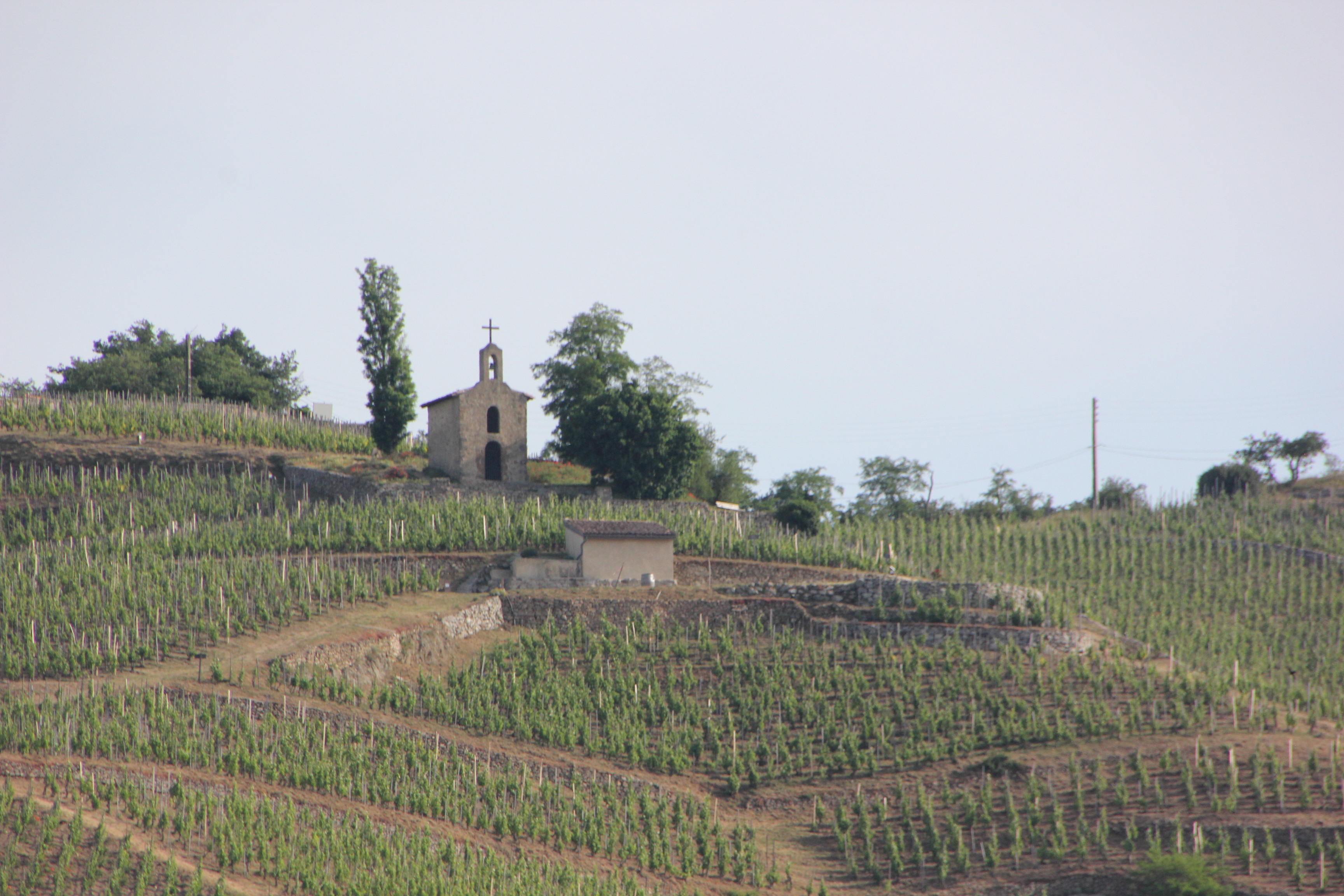
We crossed back on the bridge to the L’Hermitage side of the Rhone. In 1243 a crusader returning from the holy land came to this area. He was allowed to build a hut near the chapel on the top of the hill. He lived there as a hermit (aka the name L’Hermitage) and started to tend to grape vines and started the wine tradition in this area.
The hermit’s chapelle
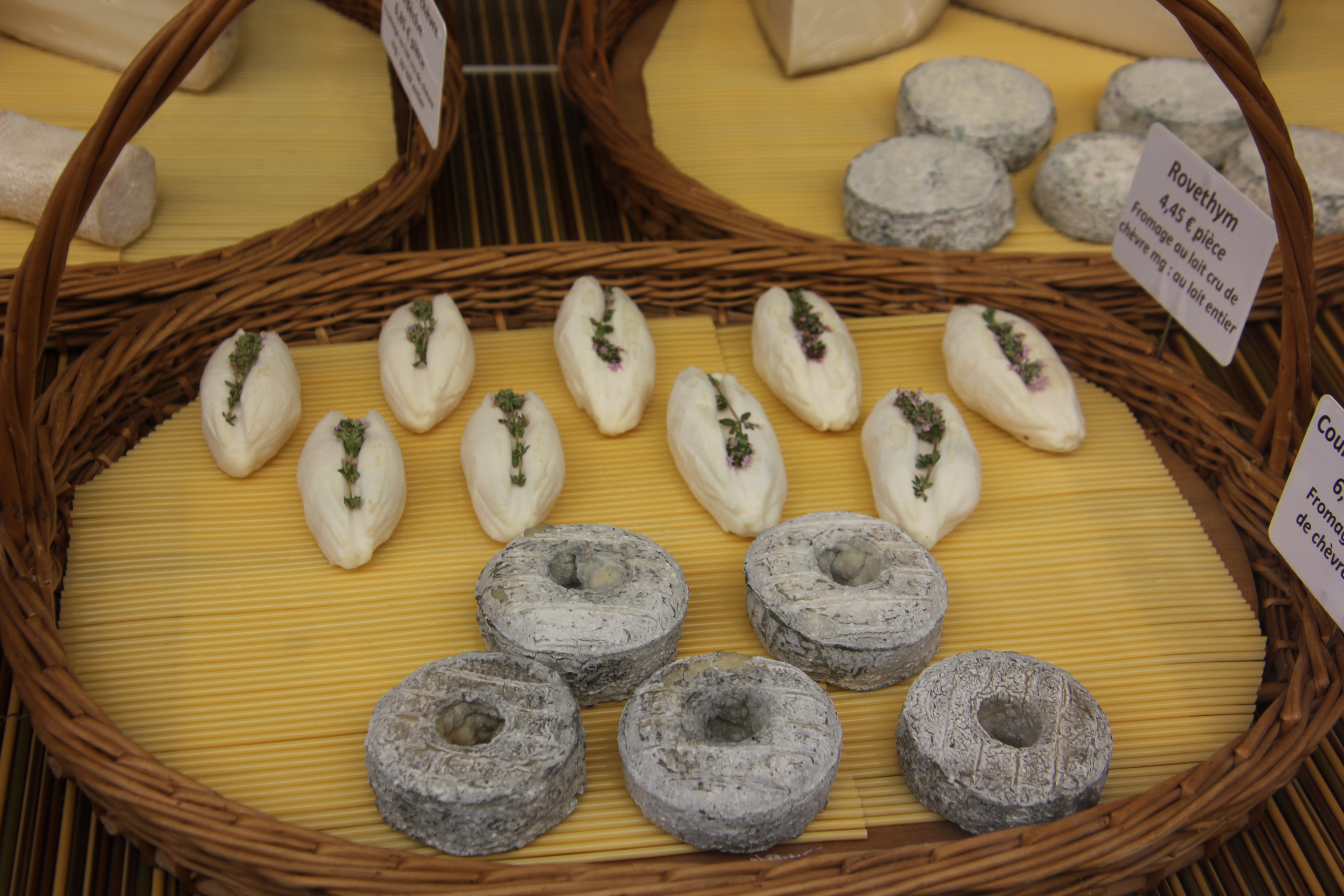
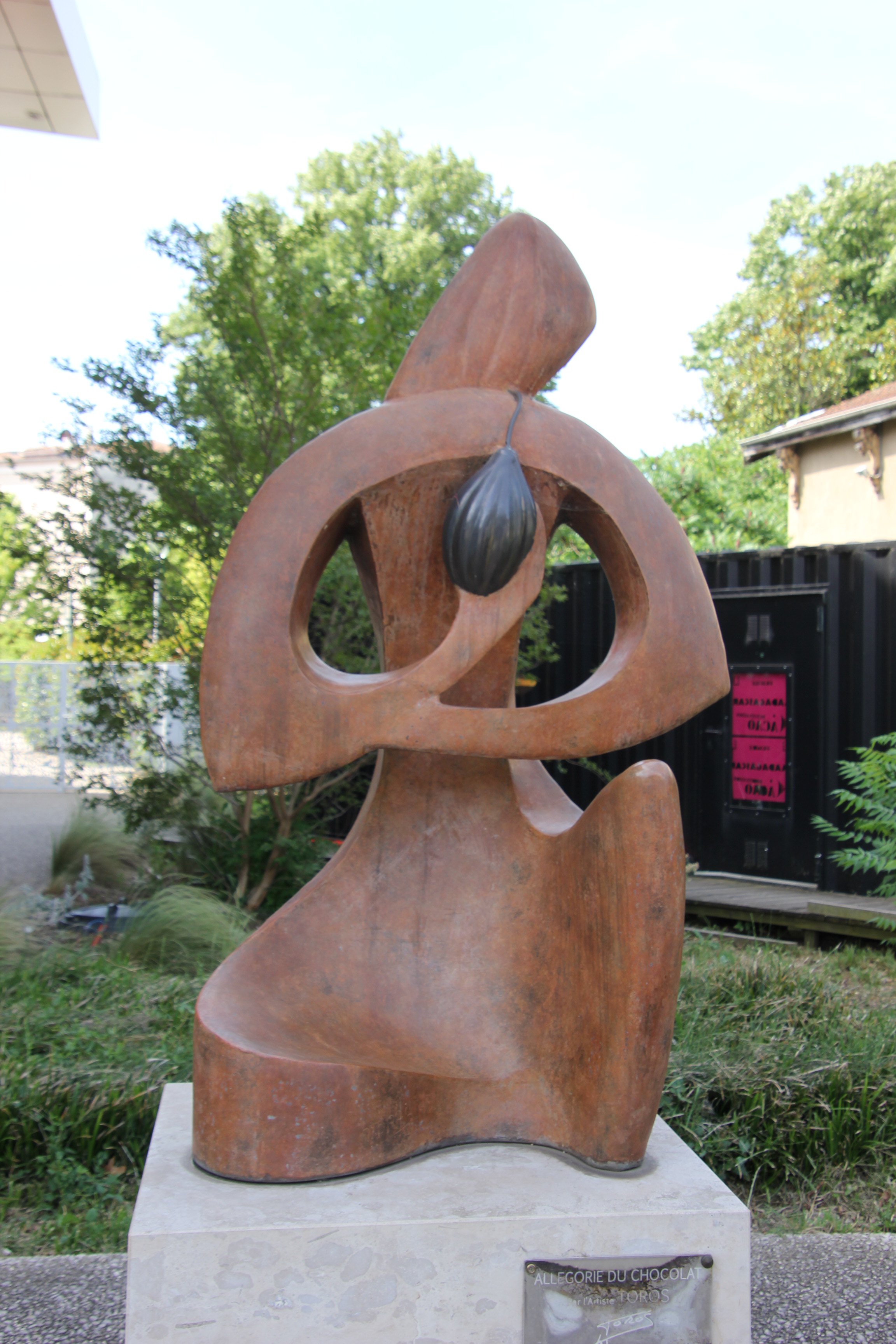
Of course that was just an appetizer for the main course which was a visit to Valhrona, the City of Chocolate. A while back a friend and I took a baking class at the Duchess Bakery in Edmonton. There we were introduced to Valhrona chocolate, known as one of the finest chocolates in the world. We were able to visit the factory site, sample and buy some incredible chocolate. The whole community (not growing wine) makes chocolate.
After making it back to the riverboat laden with a significant amount of chocolate, we set sail upriver for Lyon.
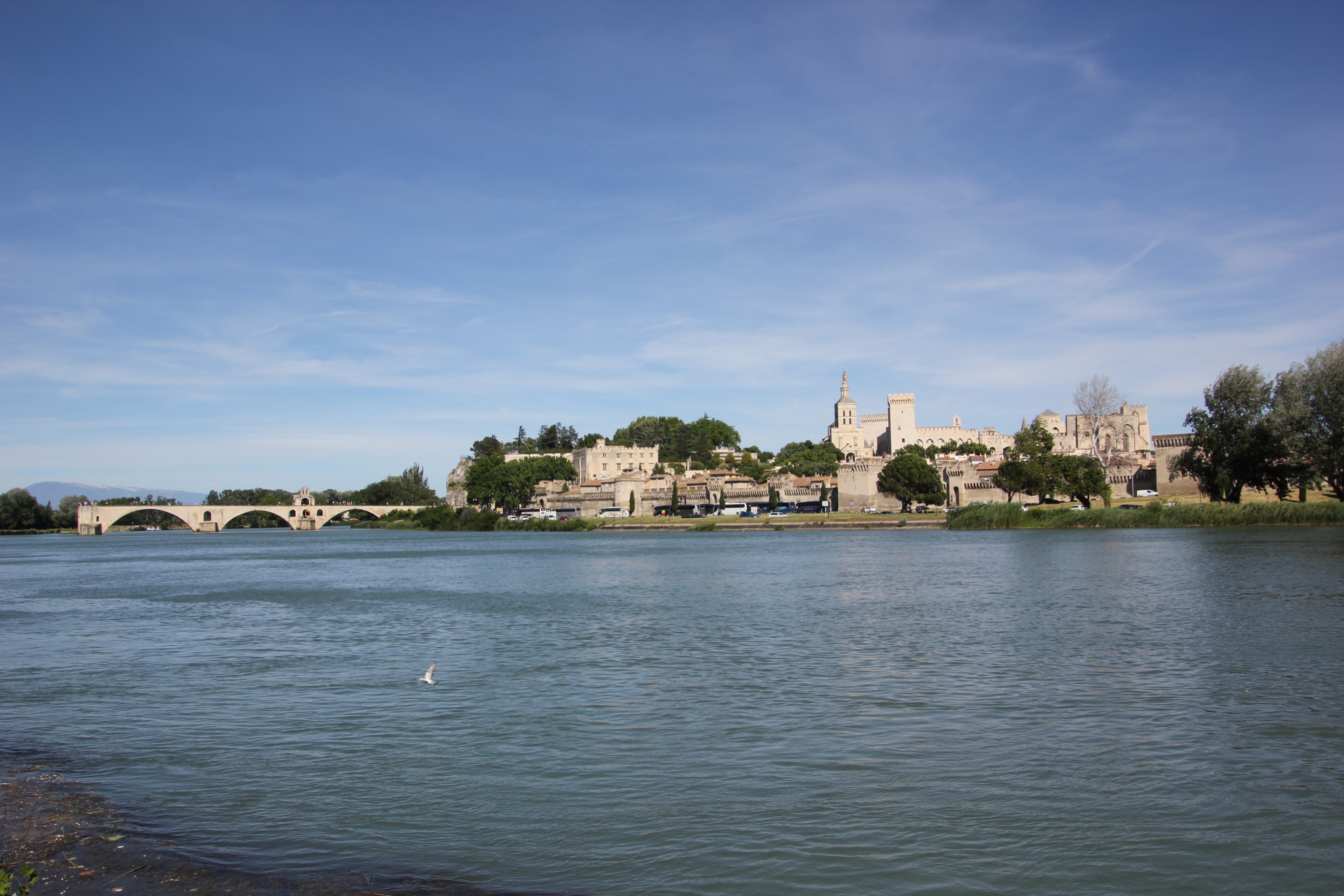
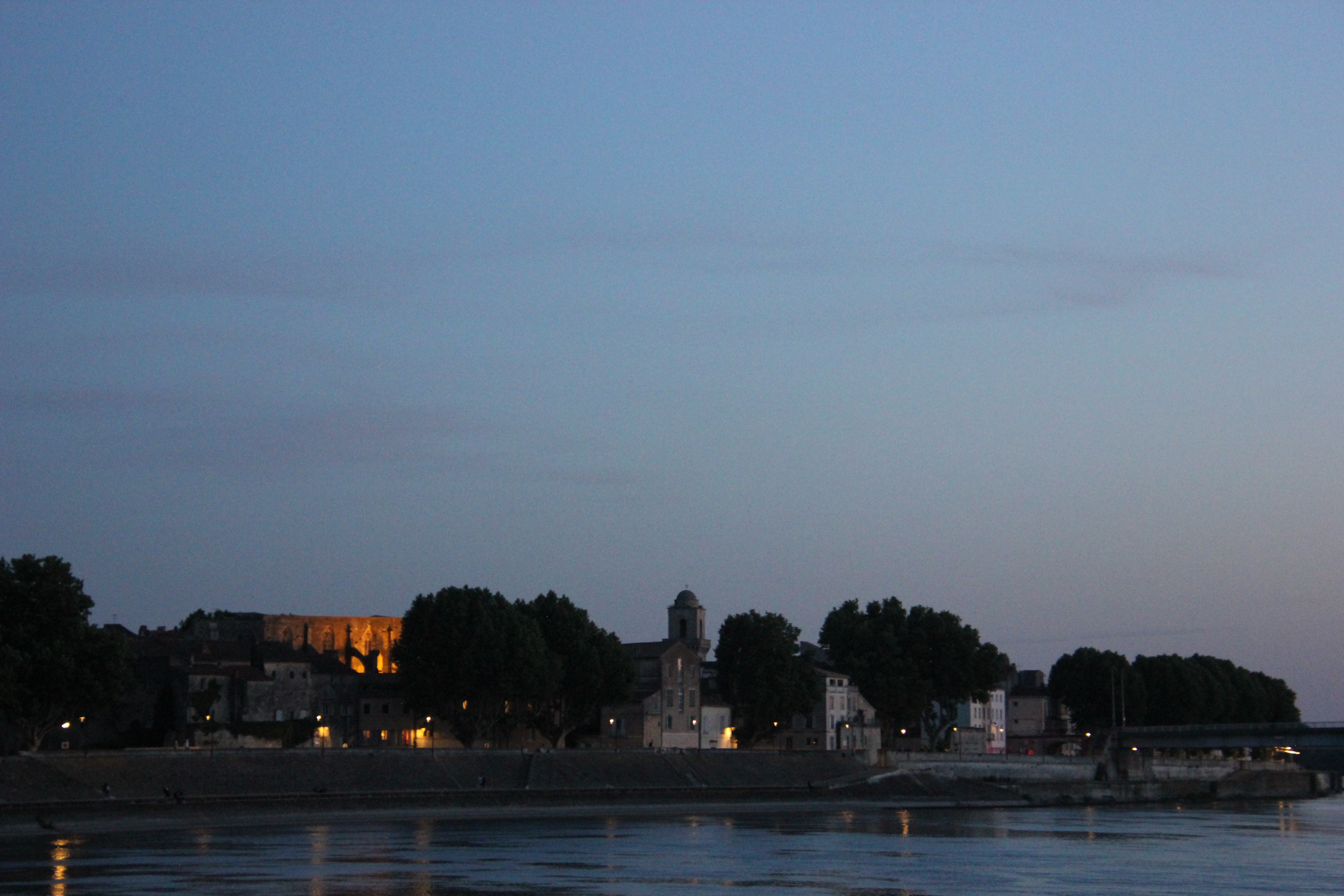
We arrived in Avignon after our day in Arles and were treated to a riverside view of the old city. Avignon is best known for the Pope’s palace and the celebrated St. Benezet bridge over the Rhone river. The old city is a UNESCO heritage site in large part due to the architecture. The main city wall is intact and has served the city well. The 4.5 km long, intact city walls were originally built for defensive purposes but now are more used to keep the city from being flooded than being invaded by enemies. The bridge has only 4 of its original 22 arches left and was originally a toll bridge
Pope Clement V decided to move the papal capital to Avignon due to political pressures in Rome. The popes lived in Avignon between 1309 and 1377 and all the popes were French during this period. This area remained under papal control until the French Revolution in 1791 when it became part of France. We had been to Avignon on our last tour of France, so Dale and I chose to skip the local tour and explore the Pont du Gard.
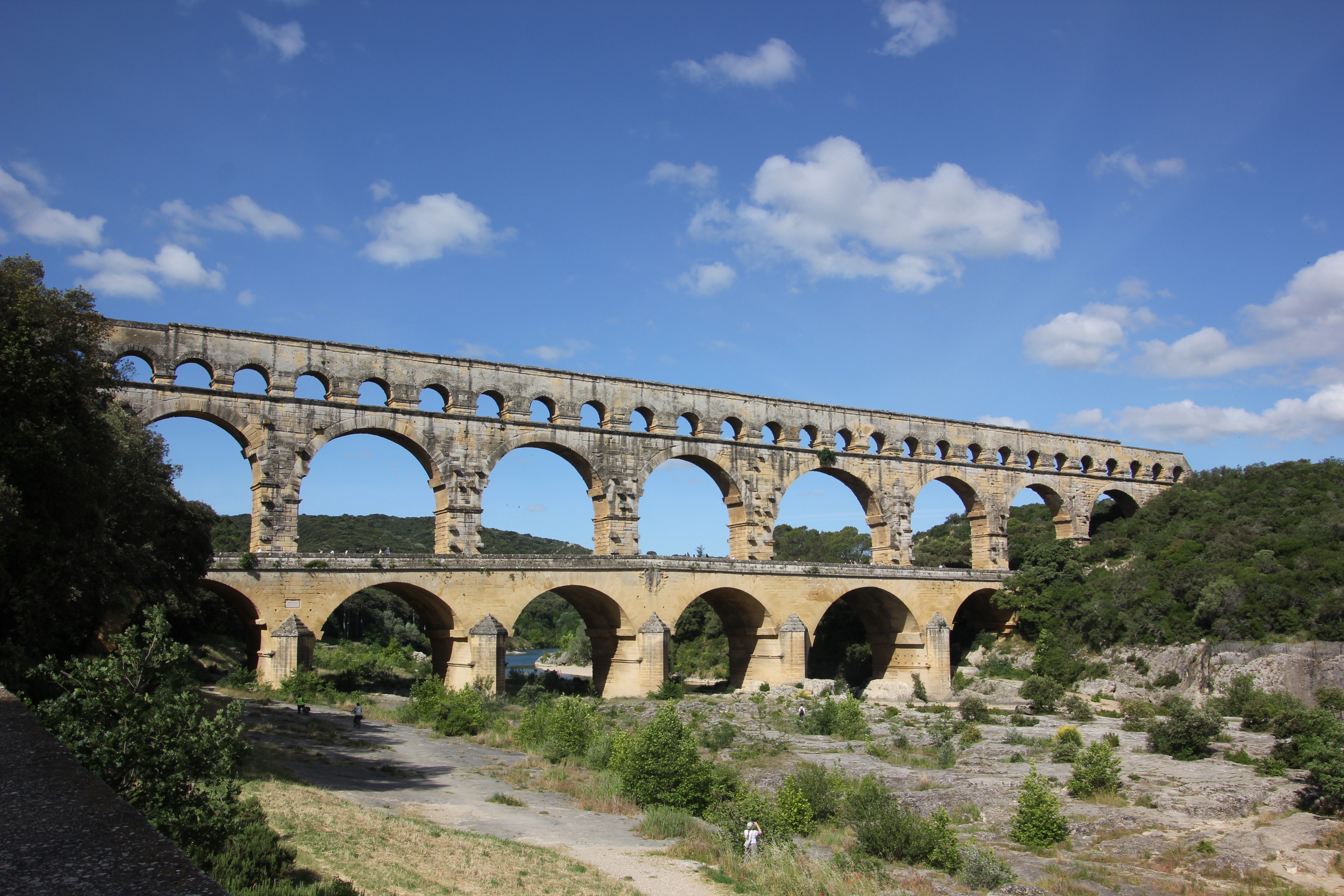
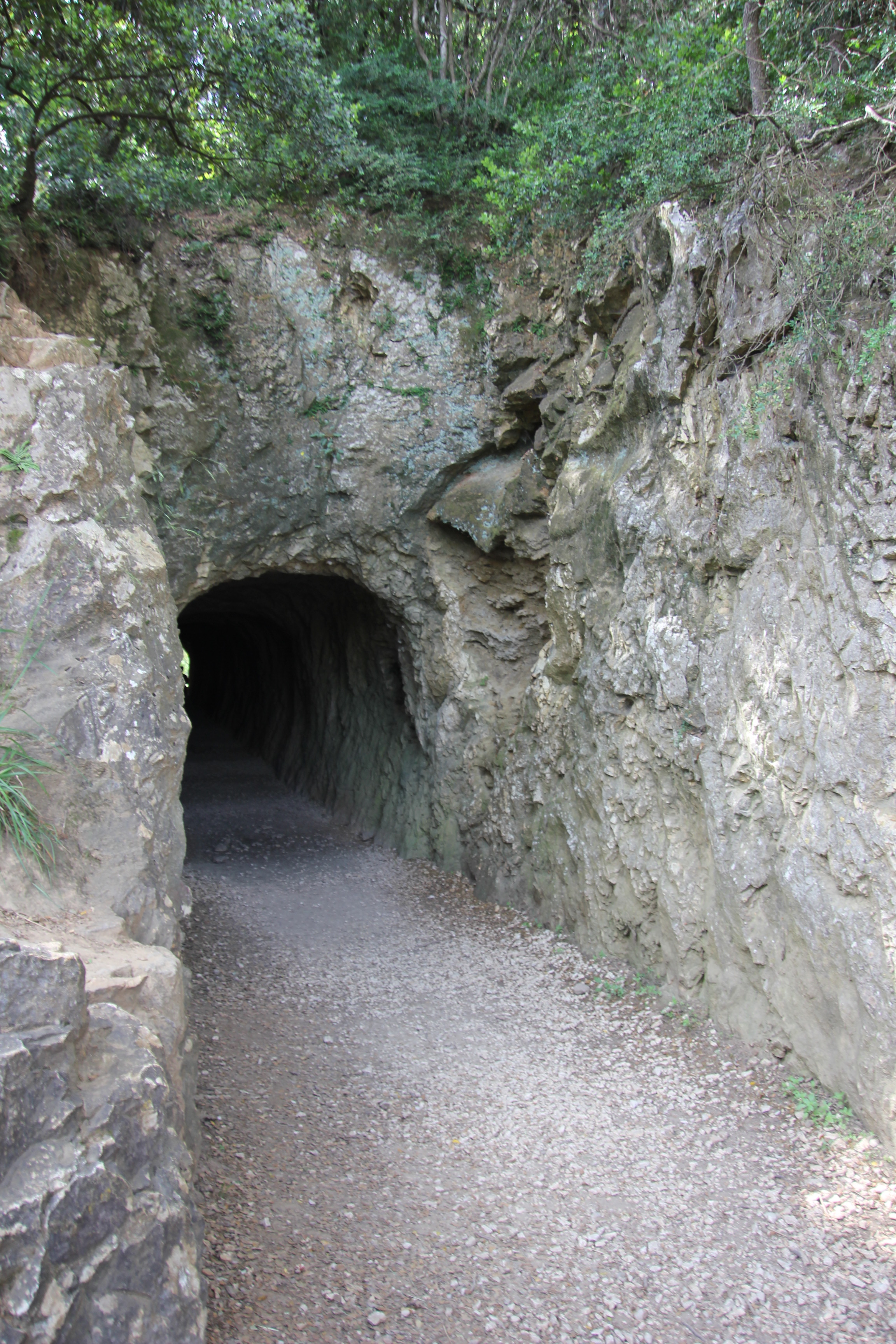
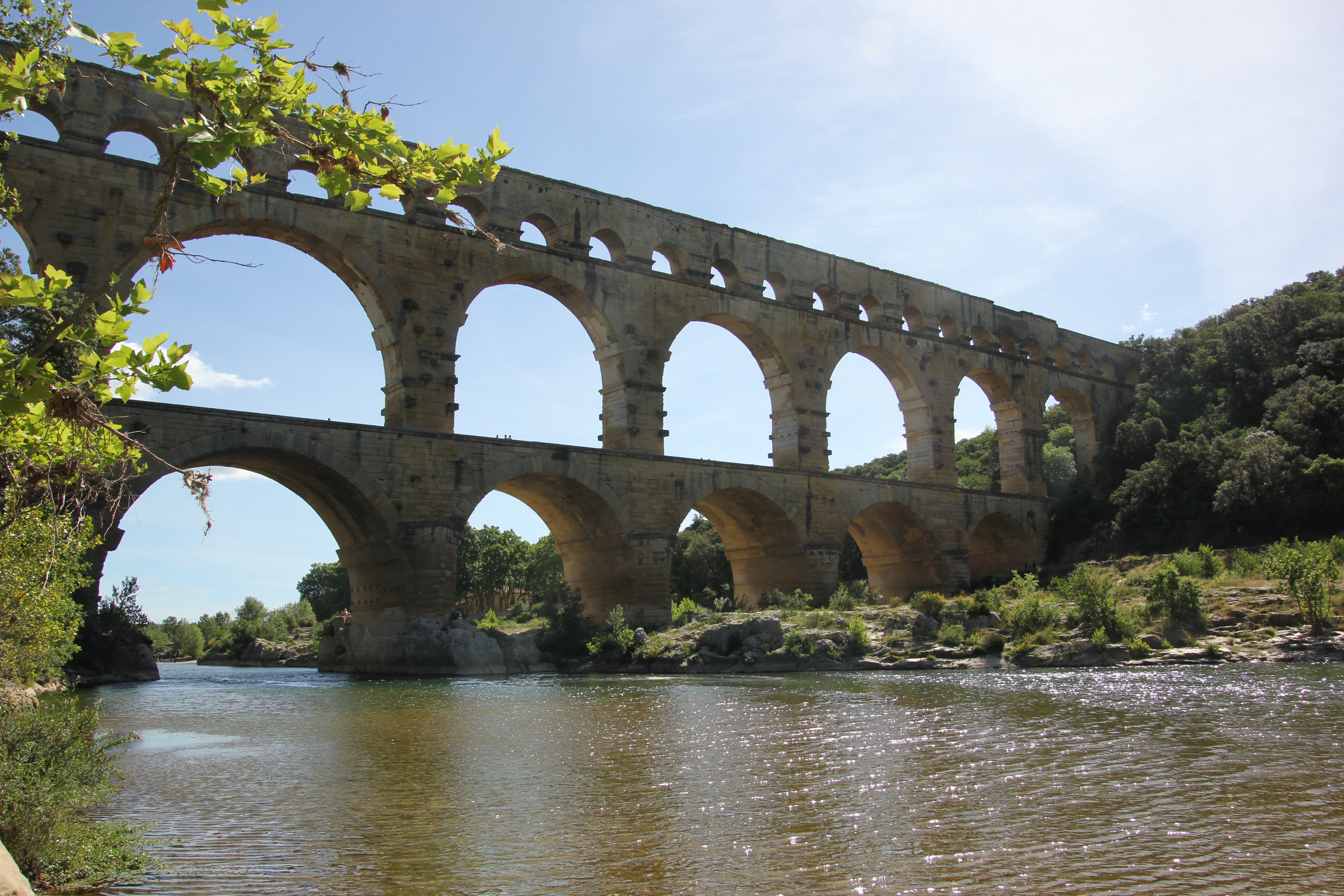
The Pont du Gard is a remnant of a Roman aqueduct that brought water from a spring near Uzes to Nimes. (I apologize for not using any accent marks as I haven’t any idea how to switch keyboards on my iPad). It took the Romans 15 years to build the whole 50km aqueduct of which 5 years was dedicated to building the 49 metre tall portion we explored. A modern road was added to the Roman structure in the 1750’s to facilitate crossing the Gard river. The construction of the whole structure was incredible. 90% of the aqueduct was underground. There was only a 12% slope from the start of the aqueduct to Nimes. We went up the hill to see where the water would have left the tunnel and flowed over the bridge. It was entirely covered by stone to ensure that the water retained its purity and didn’t evaporate. It was active for over 600 years. It was a public holiday during our visit here and the park was full of locals hiking and swimming in the river.
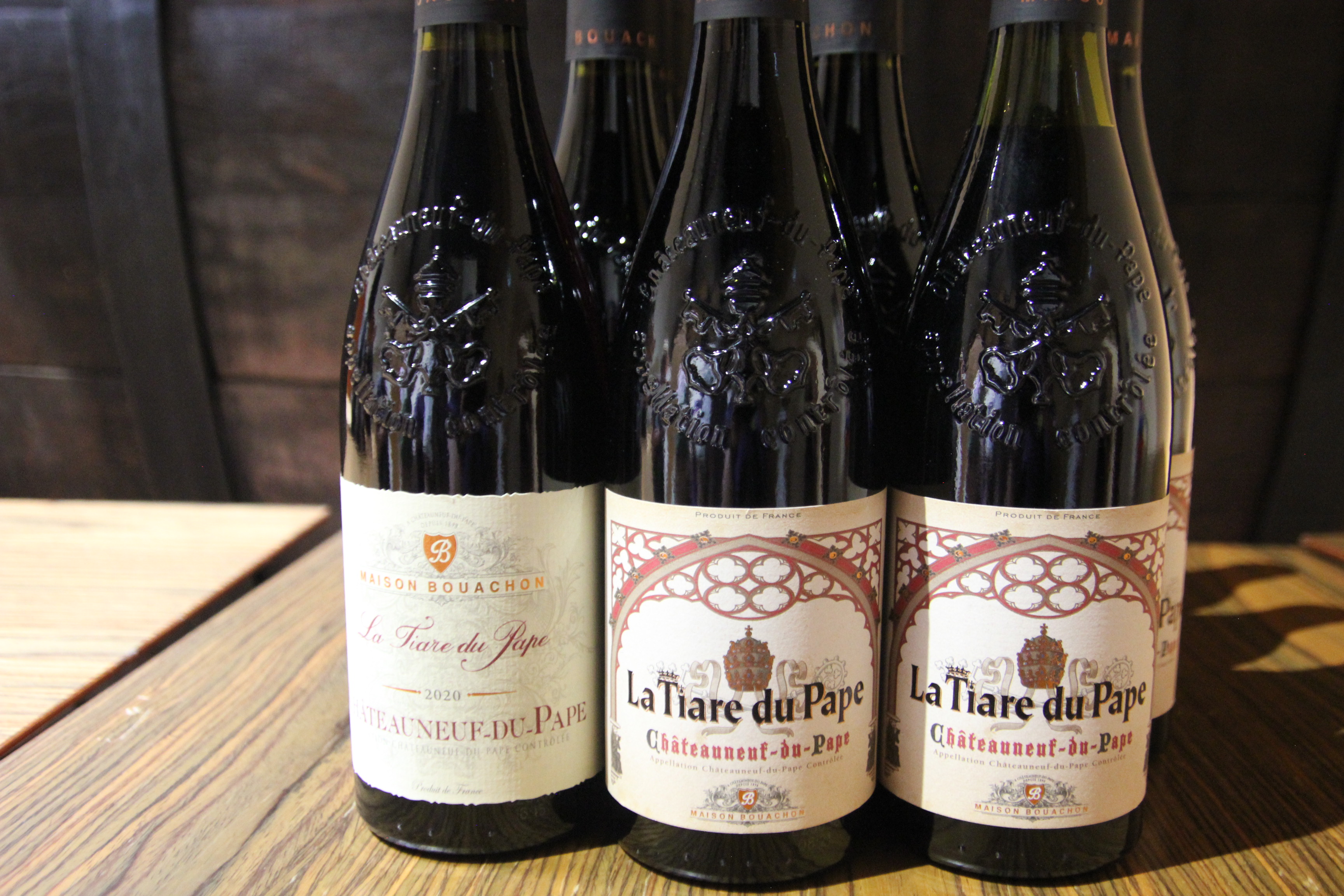
We returned in time for a quick lunch on our boat before taking off for an afternoon visit to Chateauneuf du Pape. This village is dedicated to wine production. While there are 2000 people who live in the town, there are 324 wineries. The Popes created a summer home in this community and started the vineyard to support their wine consumption. We visited the Bouachon vintner for a wine tasting and learned a lot about the manufacturing of one of our favourite wines. Chateauneuf du Pape wines are unique in that the grapes used to produce the wine are grown in fields lined with river rocks left over from the glaciers. It only rains approximately 60 days per year in this region and the rocks allow the water to sink into the ground and not evaporate easily. The rocks also absorb heat during the day and release it at night which maintains the temperature for the grapes and as a result the alcohol content of the wine is higher than other wines. The roots of these vines grow very deep (20-25m deep) to manage with the drought conditions. While there are 13 varietals of grapes that can be used to produce the name brand wines, typically the main three are used – Grenache, Syrah and Movedre. These grapes thrive in hot, windy conditions. All of the Chateauneuf du Pape grapes need to be harvested by hand which differs from the harvesting process for most Côtes du Rhône grapes.
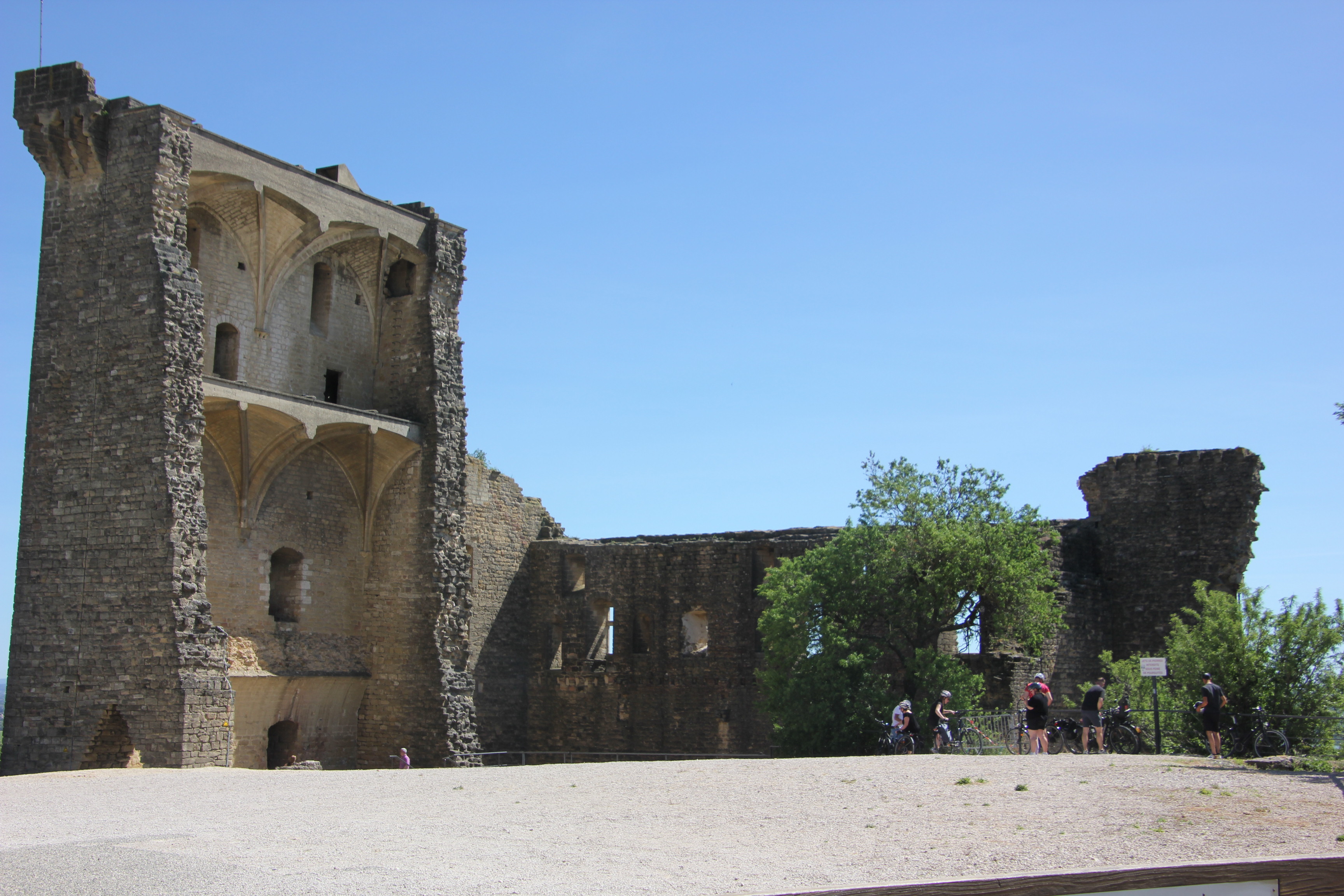
After our tasting, we were chauffeured to the remains of the actual summer home of the popes. It was perched high on a hill and we experienced the full impact of the Mistral winds. The view was impressive and we could see Avignon 12 km in the distance. The palace was destroyed over time as it was too expensive to maintain by the popes and it was used as a quarry for other projects. The donjon was left intact until German soldiers tried to blow it up in WWII. They were successful in destroying half of the building and that is what we can see now.
It was a full day today and we crashed after a delightful dinner. Our day tomorrow is a calm morning of travelling on the river and an afternoon of exploring Vivier.
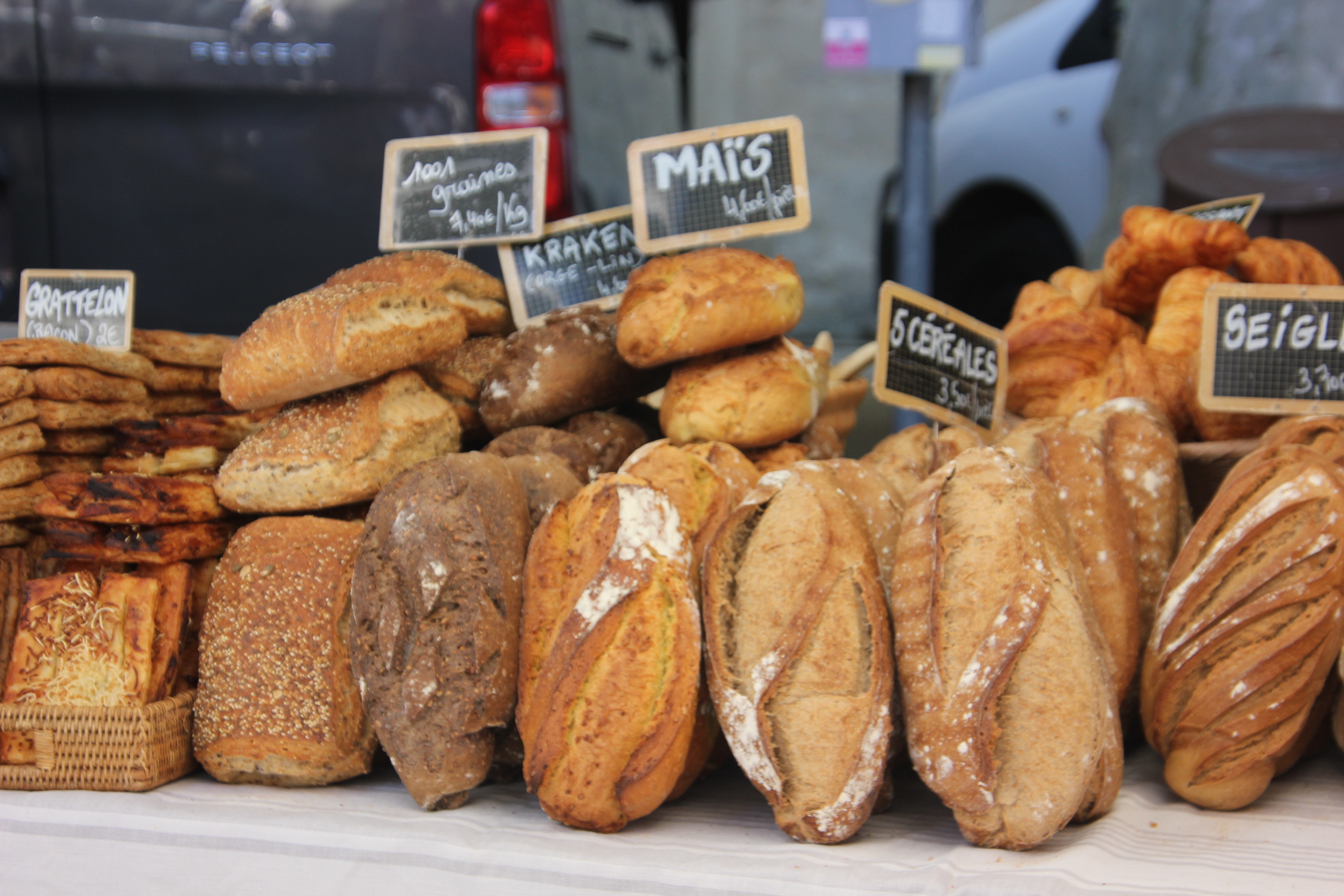
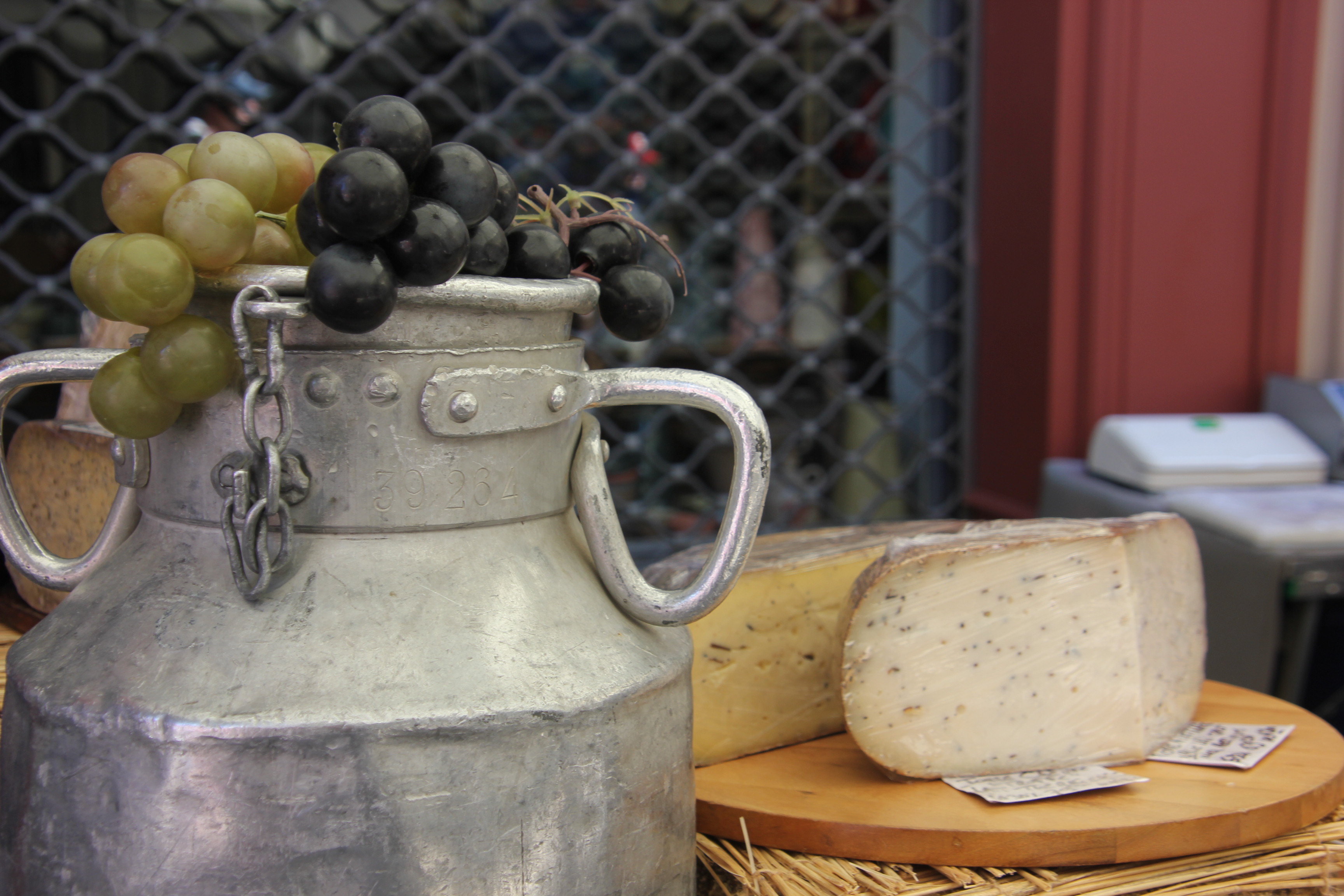
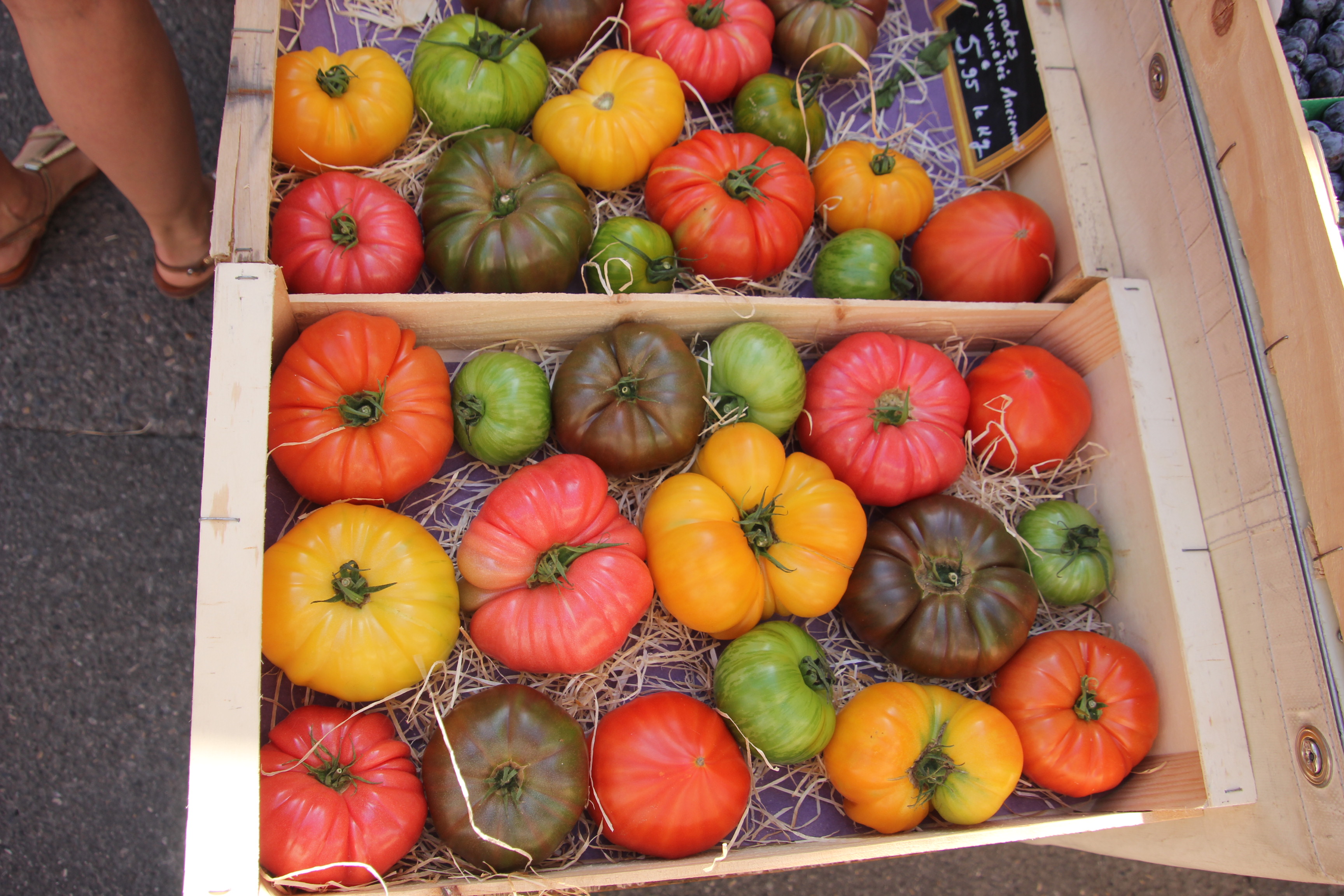
After a good night’s sleep, interrupted only by a subconscious need to check the score in the Oiler’s game at 3:30am, it was time to start exploring. Our lovely travel gurus Cathy & David arranged a private tour for us which included the weekly market at St. Remy and the Carrieres des Lumieres in Le Baux-en-Provence. The market was phenomenal. It happens every Wednesday with local producers and farmers bringing in amazing produce, meat, charcuterie, flowers, honey, bread, olive wood products, clothing and linens.
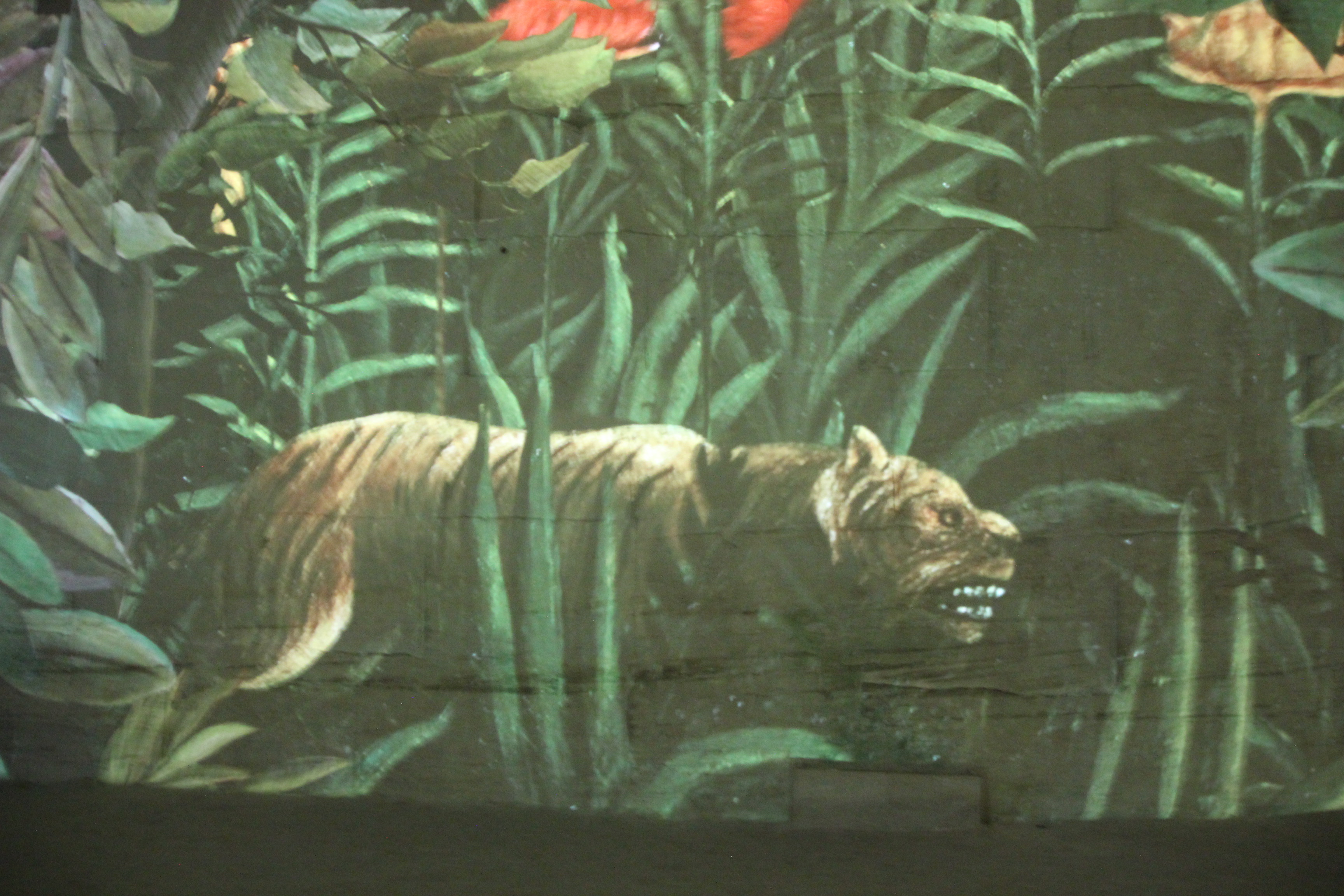
We left the market and headed to a nearby rock quarry for the Carrière des Luminations production. The quarry opened in 1800 and produced limestone products until 1935 when the demand for limestone tanked as new building materials were developed. In 1959 artists started taking an interest in the acoustic value of the old quarry. They initially presented opera in the quarry, but have expanded to consistently have a permanent sound and light show on the go since. The show we saw was based on paintings such as this one by Rousseau. The show is designed to immerse you in the painting by animating a number of different paintings and showing them to music on several surfaces (I.e., walls, floors and ceilings) in the abandoned quarry. It was overwhelming at first and then we got into the artistry of it all.
In modern times Arles is known for its hosting of a variety of artists who painted there, most notably is Vincent Van Gogh who lived here while addressing his serious mental health concerns from 1888-1889. He painted more than 300 paintings in that community.
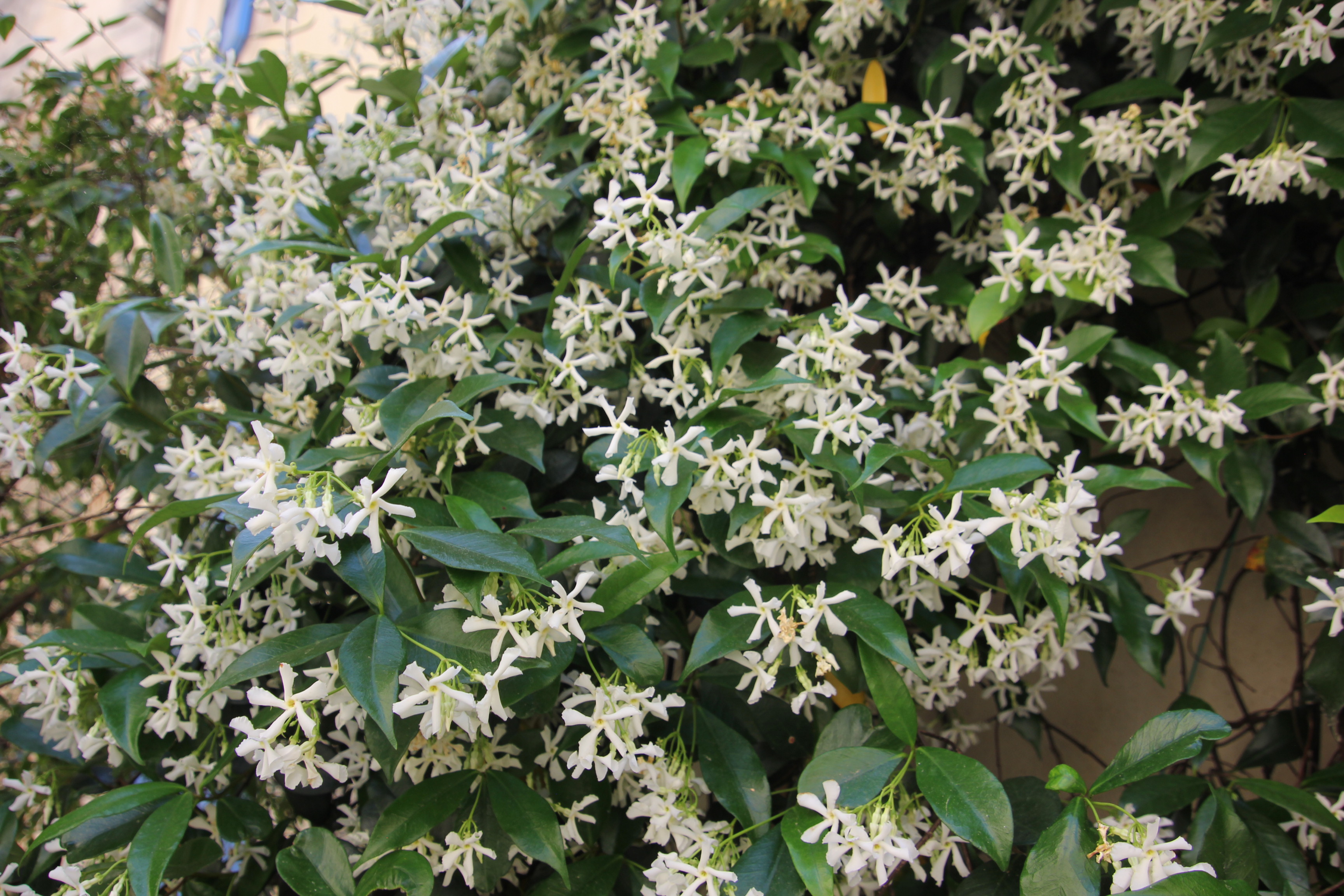
We took the opportunity to stroll through the streets of Arles and were struck by the wonderful flowers growing in abundance. The smell of Jasmine was striking and lovely.
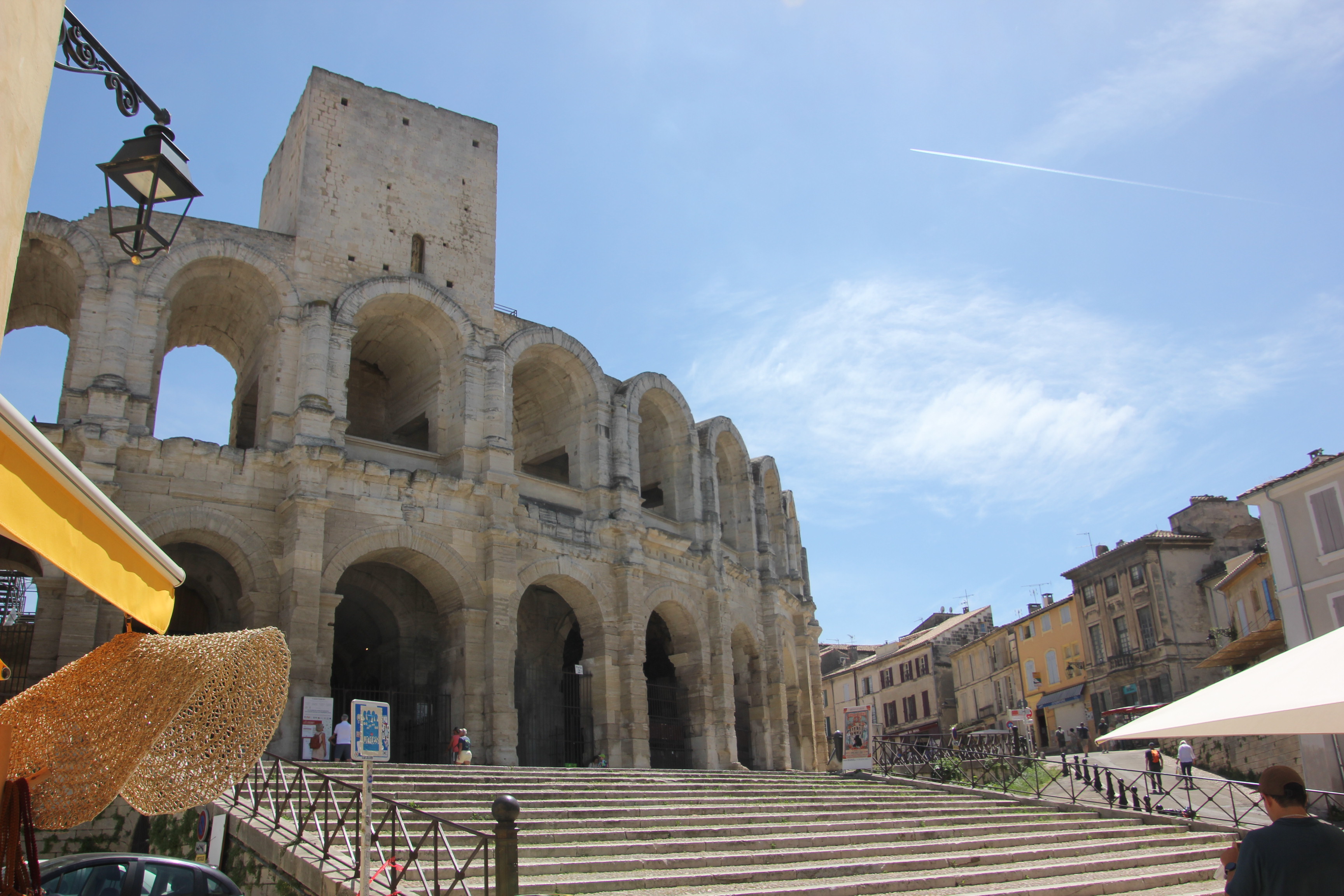
We finally found the Arles Ampitheatre in our wandering. You would think something this large would be easier to find. It was built in 90 AD and was the focus of the Roman occupation until the 5th century. With the fall of Rome, it then became a part of the fortifications of Arles and people started to build houses in it. In 1825 the movement began to change it into a national monument. The houses were expropriated and it was turned back into a performance arena that now hosts bull fights and concerts.
We had a relaxing evening on the ship. Supper is a wonderful time to socialize and eat amazing food. The wine, as one might expect, is delicious. More on that as we go. Tonight the ship moved to our next port – Avignon!
We left Marseille by train to arrive in Arles. Denise and I walked from our hotel to the train station while Ken, Anne and Dale shuttled our luggage. Marsaille is a tough place, with lots of graffiti. We were therefore surprised to walk by a beautiful carousel in the middle of a commercial area. The walk was fairly flat until we reached the stairs to the train. There were lots of stairs and we were grateful we didn’t need to haul our suitcases up them. We explored the train station until we were able to board our train. The main focus of the souvenir shops was the olive oil soap, available in as many scents as you might imagine. We boarded our train almost 20 minutes late only to find we had no engine and no electricity on board. This meant some confusion about where to sit because the seat numbers were electronic. When the engine finally arrived and powered things up, we moved to our assigned seats, which meant of course moving all our luggage to the opposite side of the car. The scenario for our journey shifted from villages to ocean views and we arrived in Arles after 45 minutes. It took us a bit to figure out if we should get off the train because the station was so underwhelming. We noticed that there were signs saying Arles, but the train was so long that our car, the first after the engine, stopped quite a distance from the building and had what seemed to be a dirt trail leading back to the station building. We did finally get off and trudged into the building only to learn that there is a major retrofit planned. This made us feel better and we set off to find our boat. The five minute walk ended at the river and our ship was there to welcome us. Our group of twenty one were finally all in one place now that we were at the ship. After a welcome drink and light lunch, we let jet lag win and we had a nap for a few hours.
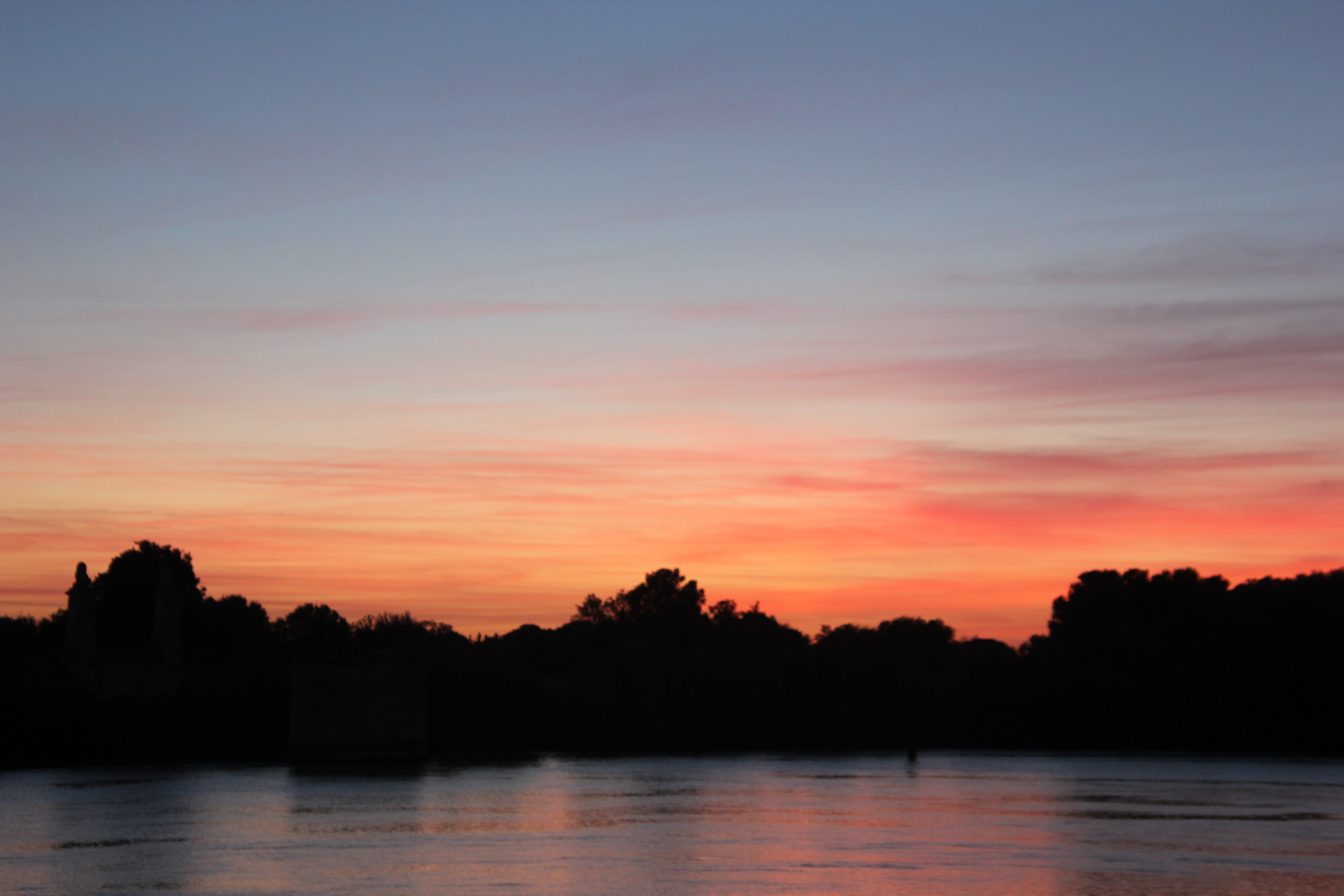
We participated in the orientation to boat safety and the crew and then had a delicious meal. Now it is time for relaxing and perhaps, if we find ourselves awake at 3am, we might watch the Oilers game. Tomorrow is a market day in Arles and we are going to explore it all morning. The afternoon will be spent touring the town, including the Roman amphitheatre shown here as the sun set on this day.
We travelled today from Edmonton to Marseille France via Amsterdam. It was a pleasant journey due to the lovely food on board the flights and the ability to lay flat for a good portion of the journey. I noted the massive wind farms in the ocean as we flew into Amsterdam. There were also solar panels on almost all the buildings as we flew into the airport. They take their alternative energy seriously here. Perhaps lessons for us back home.
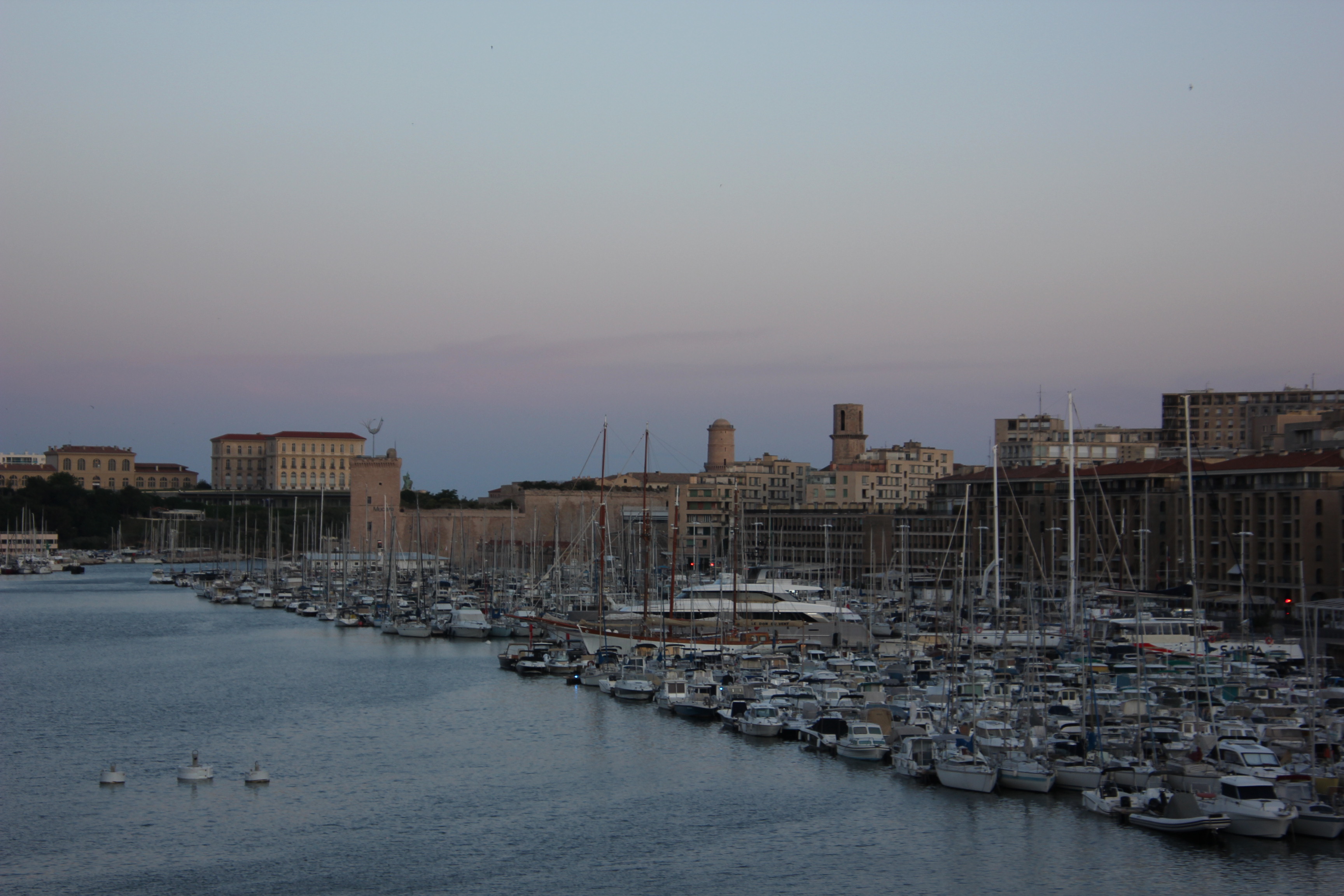
We arrived in Marseille at rush hour and checked in to our beautiful hotel in the old port. We explored a bit before sitting down for a simple meal with our travelling companions. The old port is filled with restaurants and cafes. It was redeveloped in the the 2000’s as part of a larger economic development project and was declared a “European Capitol of Culture” in 2013.
Marseille is an ancient port city on the Mediterranean Sea near the mouth of the Rhone River. It is now the second most populous city in France after Paris. It’s also one of the oldest continuously inhabited cities in Europe, dating back to at least 600 BC. The city has been settled, conquered and resettled by many groups of people over the centuries including Greeks, Gauls, Romans, Visigoths and Arabs. It became “French” in the 16th century. The French national anthem “Le Marseillaise, was first sung here during the French Revolution in 1792. The Germans destroyed a large part of Marseille during World War II and has been rebuilding ever since.
In addition to being an active port, Marseille is known for its olive oil soap, conveniently, a sample was provided to us by our hotel. We were only here overnight before moving to Arles where we are embarking on our Rhone River cruise. Dale and I were awake early and decided to go for a pre-breakfast stroll around the old port. It is a lovely day.







 travelswithannmarie