
Tags
(December 30) We were up at the crack of dawn, literally, and we were off to Agra. For the first time I was able to read in the van. I cannot believe that in only three weeks I am no longer totally freaked out by the traffic.
We learned a lot about the Moghul rulers. First, there was Akbar (1542-1605), then Jahangir (1005-1627), Shah Jahan (1628-1658) and Aurangzeb (1658-1707). After Aurangzeb died, there was a lot of jockeying for power within India and eventually the British took over.
Our first stop was the mausoleum where Akbar’s tomb lay. The building, built in 1605, was magnificent – all for a dead person! Akbar was the third Moghul ruler of India. The Moghul’s came from Uzbekistan and ruled India until the British came and took over. The mausoleum had been badly looted and the British Governor General Lord Curzon, the same person who saved the caves at Ajanta saved the mausoleum. Our guide told us that the archaeological work in India really improved after the 1980`s when they received UNESCO funding to save some of them.
We then went to Fort Agra. This was an immense fort built by the Moghul rulers and 75% of it is still used as a military site by the Indian army. I could have all my facts wrong as there was a huge amount of information given to us by the guide and I had to choose between taking notes or pictures. I chose pictures. I defer to Meenal`s history of India if she chooses to comment J. The man who built the Taj Mahal (i.e. Shah Jahan) was a huge builder of monuments. He engaged in so many that his son, Aurangzeb, actually took over and imprisoned him in the fort to stop him from building anything more. His son believed that although all the building projects gave good employment opportunities to the workers, it was still too much of a drain on the king`s purse and didn`t leave enough for supporting his people in times of trouble. The king died in prison. From his wing of the fort he could see the Taj Mahal but as his eyesight dwindled, they placed a diamond in his room so that it acted as a reflecting mirror and he could continue to see his wife`s tomb. The king had a throne in the fort that was jewel encrusted. When the tomb was looted, the throne was taken to Iran and it became the Peacock throne of the Shah. The big diamond from the throne was called the Koh-I-Noor diamond. It was returned and given to Queen Victoria. It is now in the crown jewel collection in London.
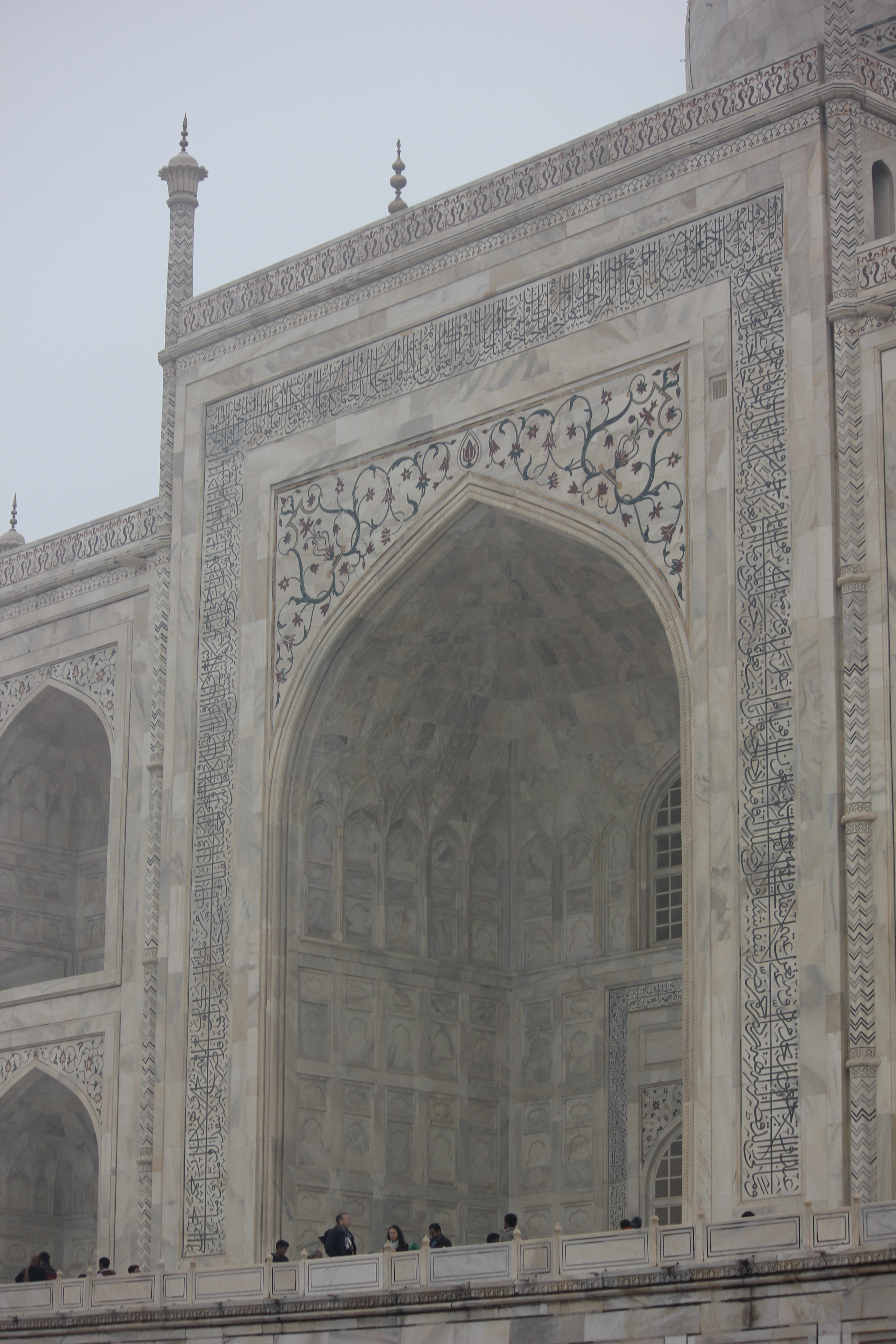
The Taj Mahal was magnificent. We first caught a Tuk Tuk – an organically friendly electric one, because all motorized traffic is limited around the Taj Mahal. The government is trying to protect the monument by shutting down smog producing industries within a 60-mile radius. We went through the amazing gate that was stunning on its own, and got a glimpse of the monument. Wow. The fog made it difficult to see the monument but it took our breath away anyway. Shah Jahan had three wives. The first two didn`t give him any sons. The third wife, his favourite, died giving birth to their 13th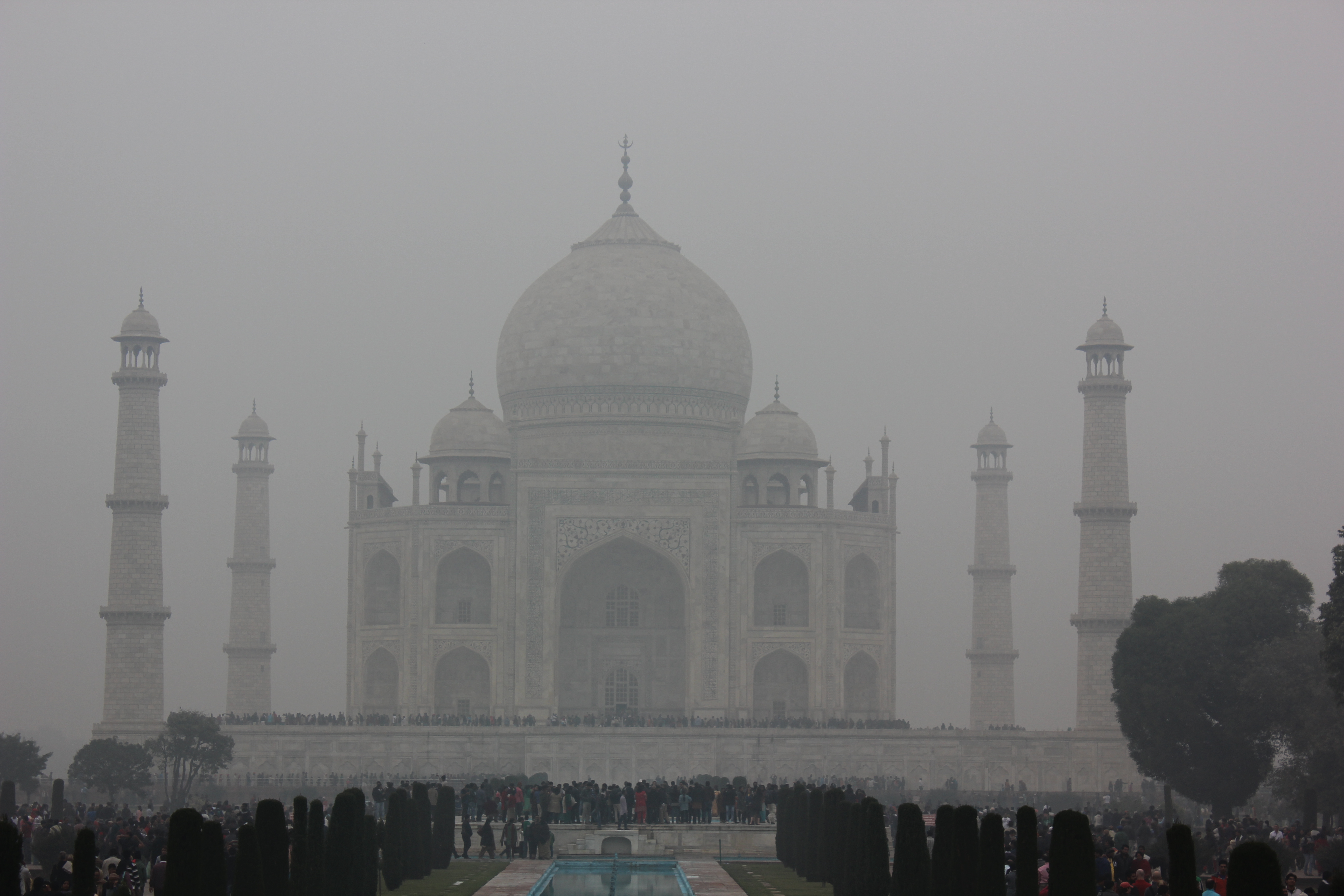 child. At least one son survived. He built the Taj Mahal in response to her request that he build her a monument after her death that would not allow others to forget the beauty of their love. It took 20,000 labourers and artisans 17 years to build the Mausoleum and another 8 years to complete all the structures on the grounds. The Shah had planned to build a black version of the Taj Mahal on the other side of the river from his wife`s tomb, but didn`t get to do it because his son imprisoned him. Therefore, the Shah was entombed in the same space as his wife; his tomb is the only non-symmetrical part of the entire complex.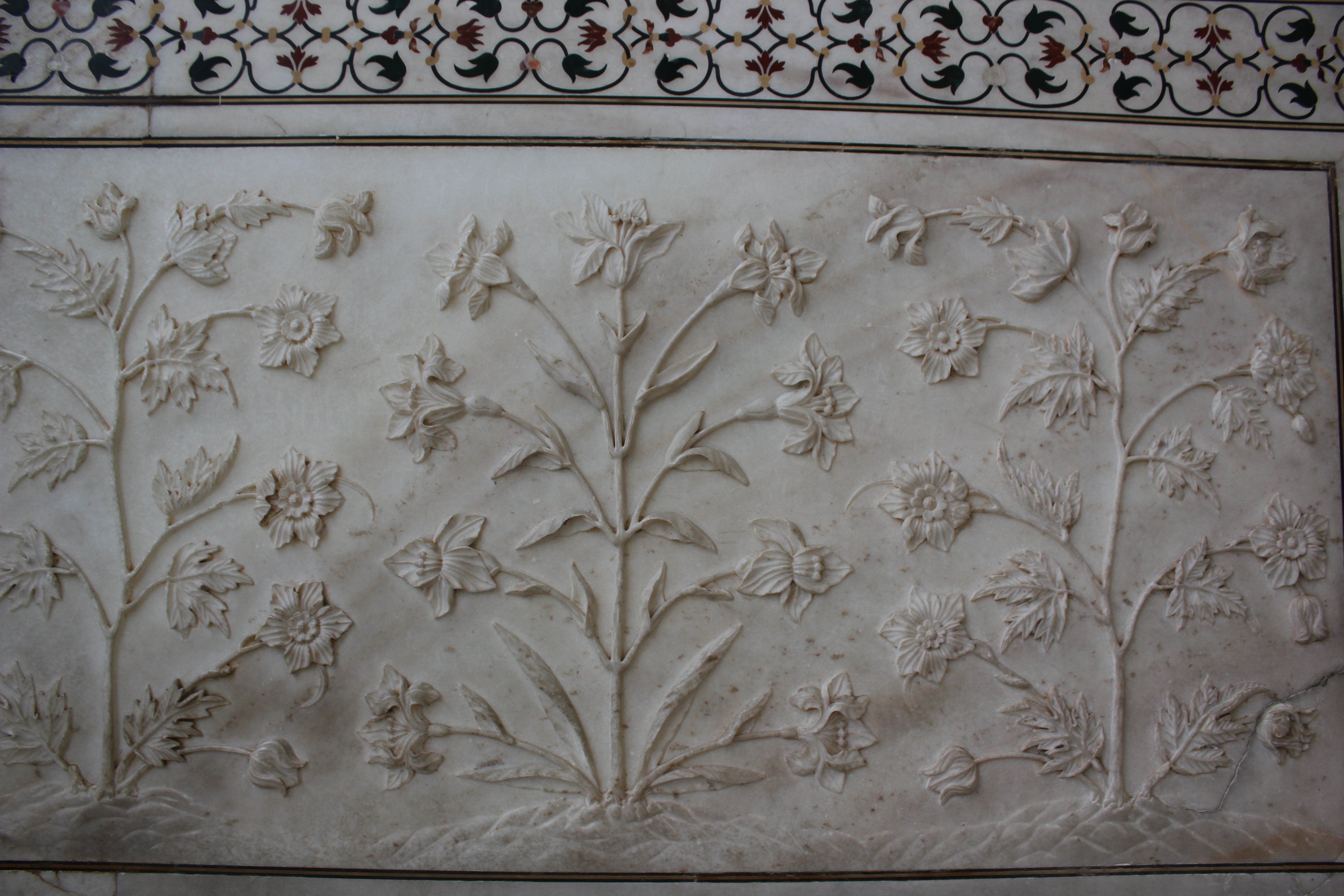
Our last stop of the day was a factory store that showcased the inlaid stone artisanship that was used to build the Taj Mahal. The carvings and inlaid stones were amazing and hard to describe. The artists who did the original work were brought from Persia and their descendants continue to do the work in the same way, using the same tools that their ancestors did. They showed us how they cut and polish the stones, carve the marble and inlay the stones. Then they showed us the showroom and the negotiating began. The pieces were beautiful and it was hard to choose 1) something we could carry with us and 2) something we could afford! We managed somehow.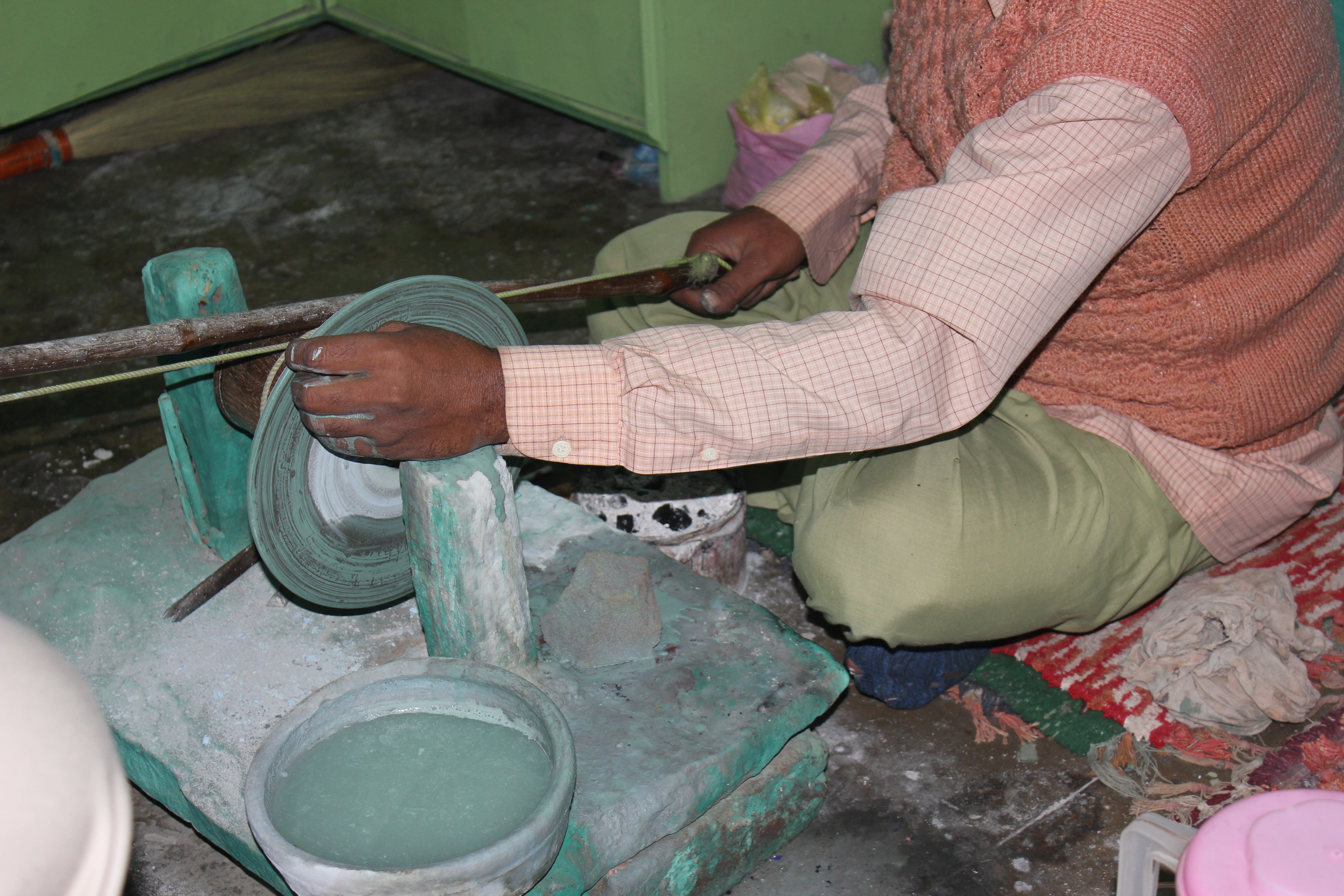
 travelswithannmarie