We were off just after the crack of dawn to catch our flight to Ho Chi Min City (AKA Saigon). The trip was uneventful until we landed. What a crush of people all trying to get through customs. We had to have visas for each of the countries we have visited on this tour and we were warned that Vietnam was uniquely specific about having all data consistent and accurate for all visas. One of our tour mates had a glitch that made us anxious about his ability to continue with us, but all was well and we were able to start our exploration of Saigon.
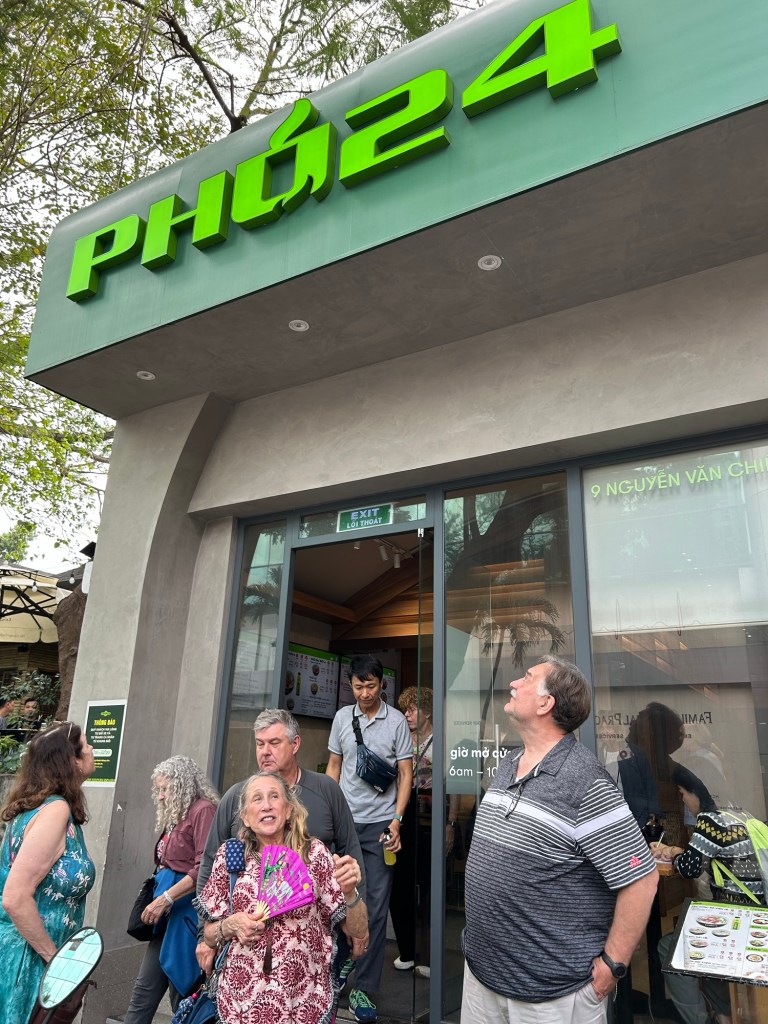
It was a long bus ride to our hotel in the city centre . We stopped for lunch at a local restaurant and experienced delicious spring rolls and Pho.
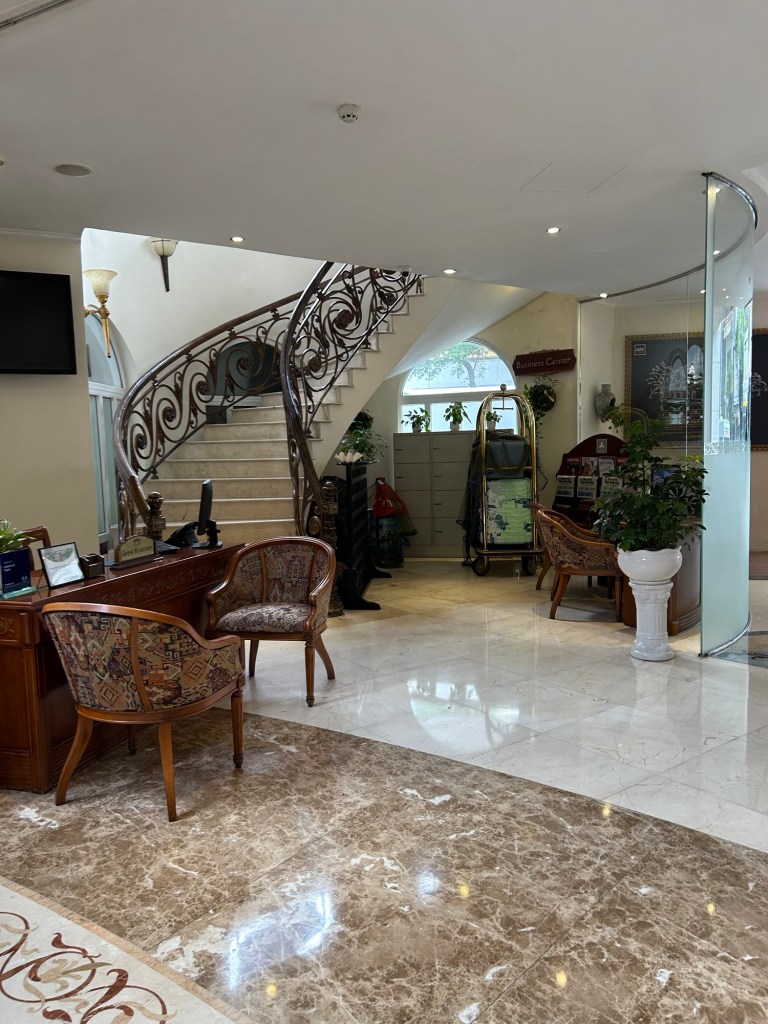
We checked into the Grand Hotel Saigon, built in the 1930’s with a definite European flavour.
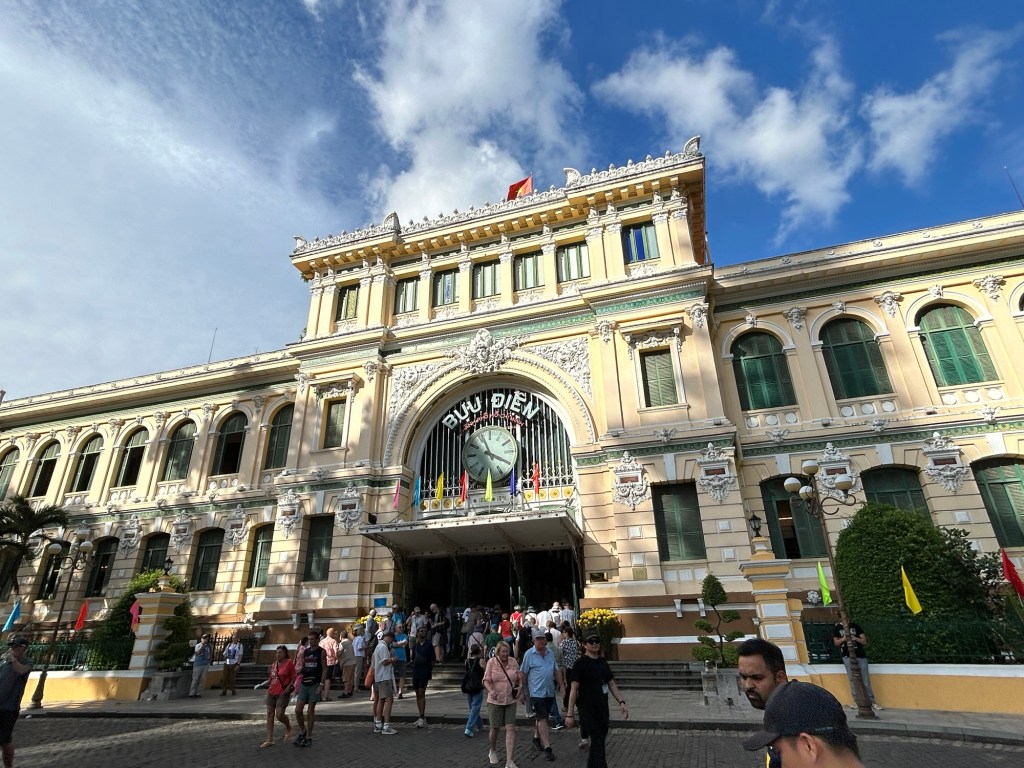
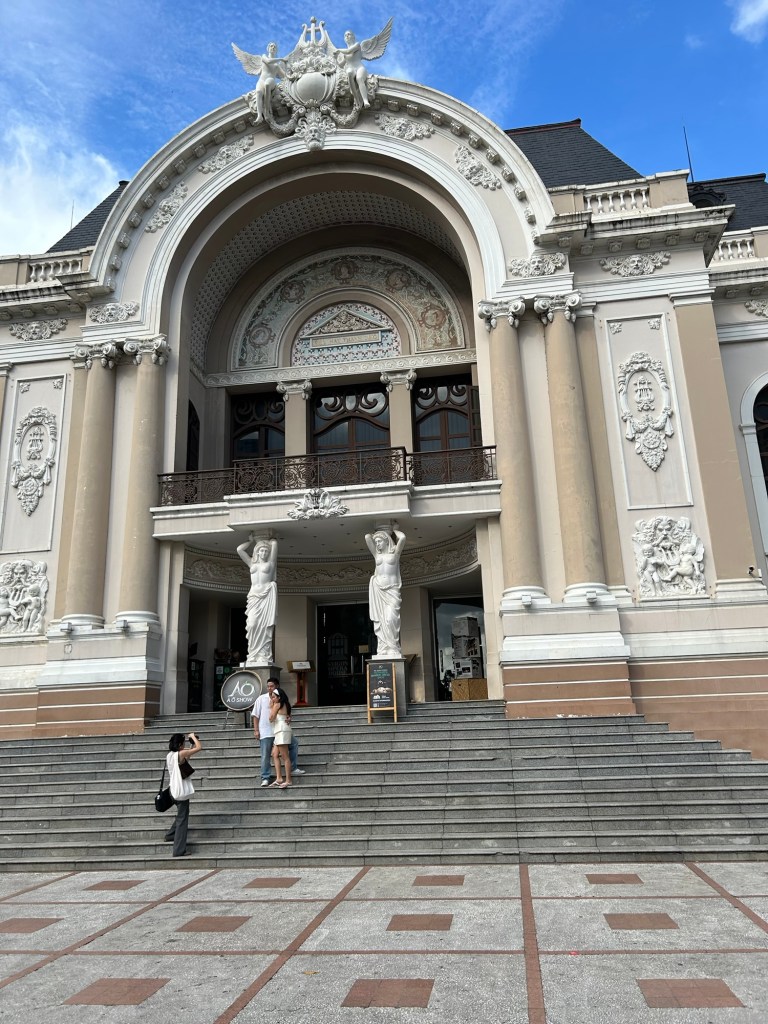
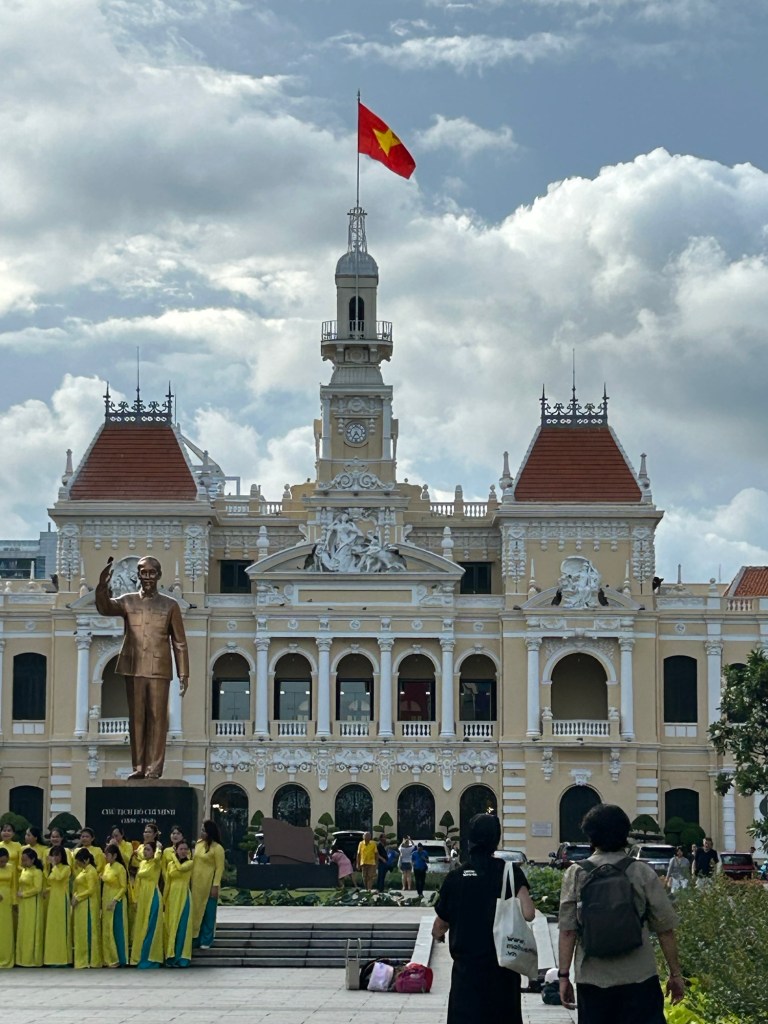
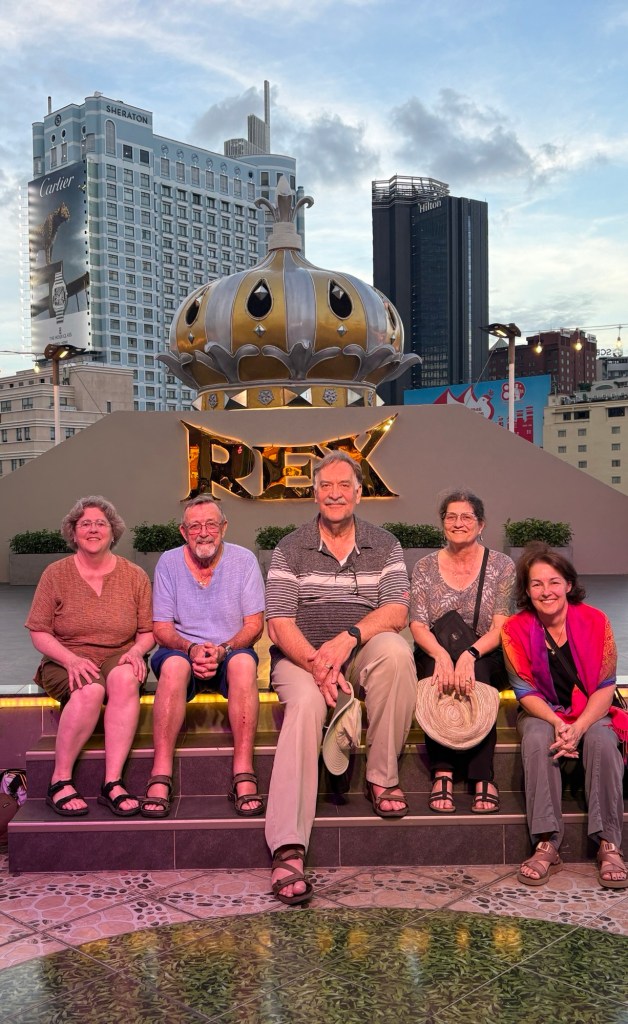
Without much of a break, we went off on a walking tour of Saigon. We noticed the opera house, post office, city hall and other sites before heading to the roof top bar of the Rex Hotel. This was the watering hole for American journalists during the Vietnam war. Correspondents would meet daily for the “5 o’clock follies” when the allies broadcast the news of the day. They were called the follies because the official statements were often too optimistic and didn’t match the reality of the war.
The post office (all materials to build it came from France)The opera houseCity Hall
We wandered through the city until we found food (which was delicious) and finally found our way to bed. More exploration of Saigon and area tomorrow.
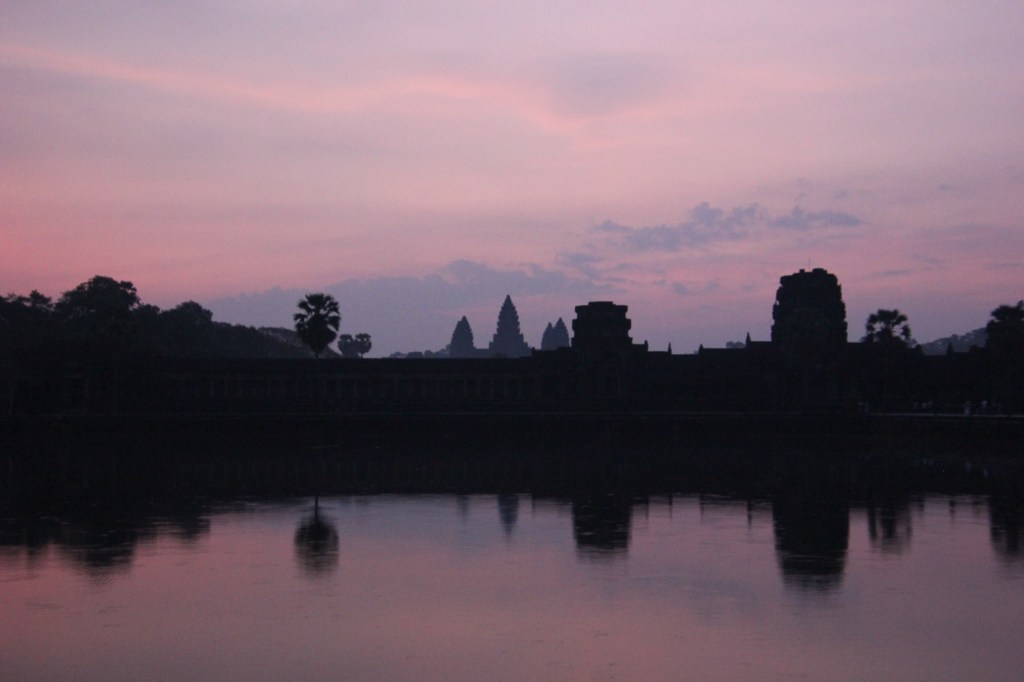
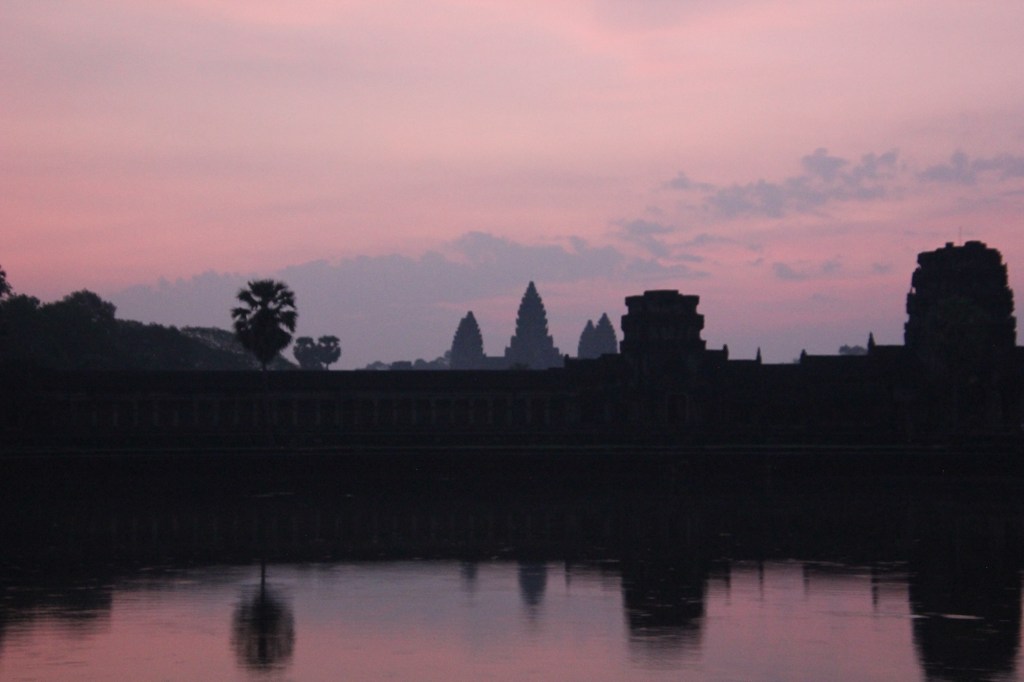
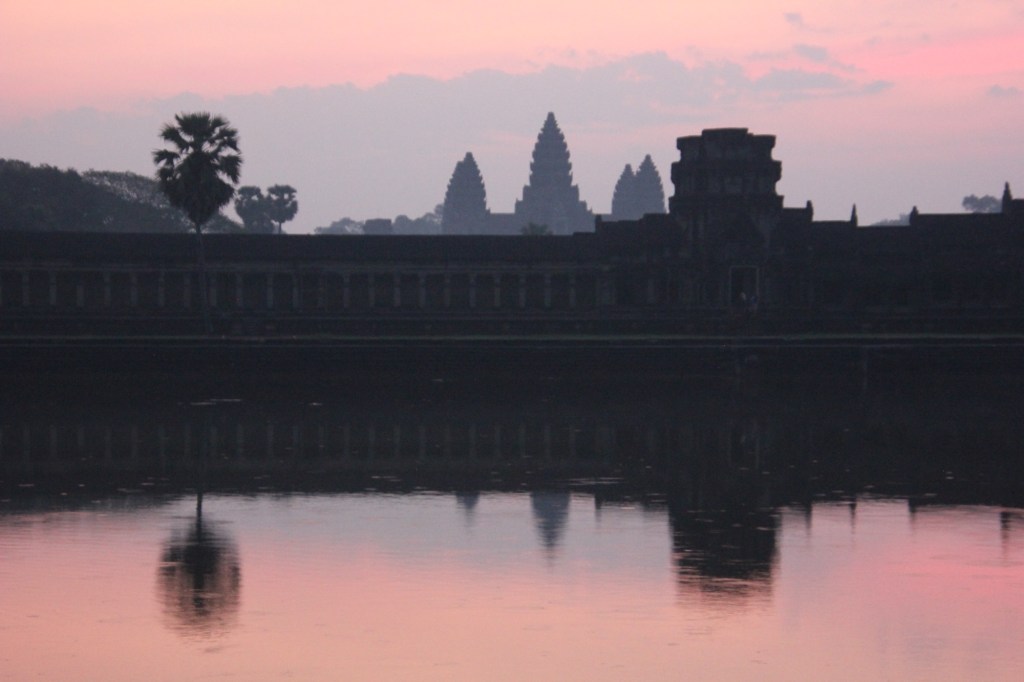
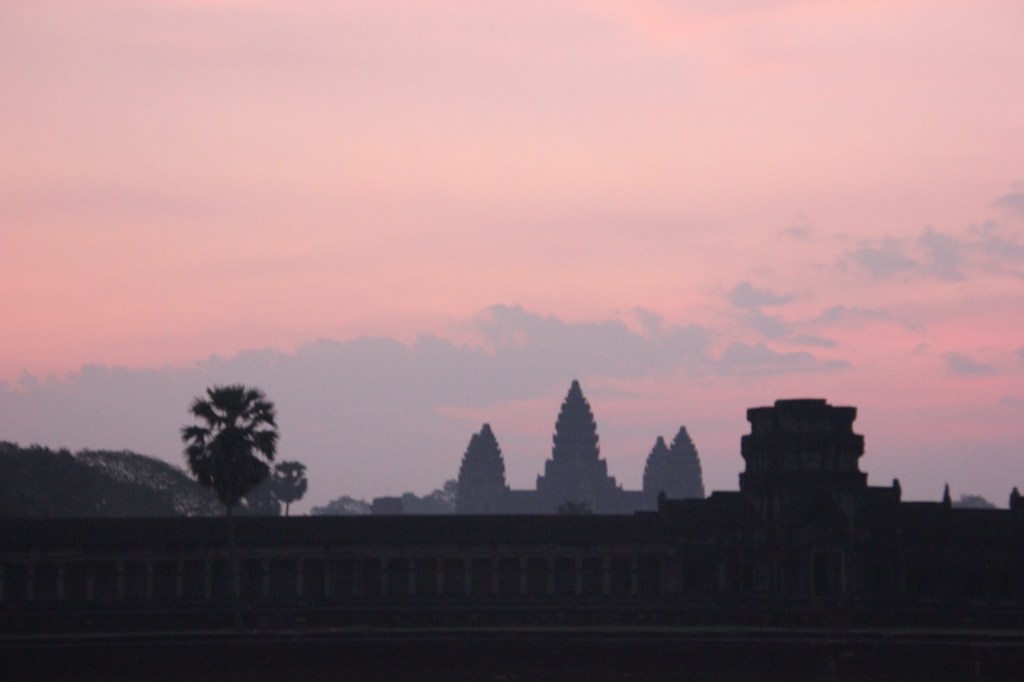
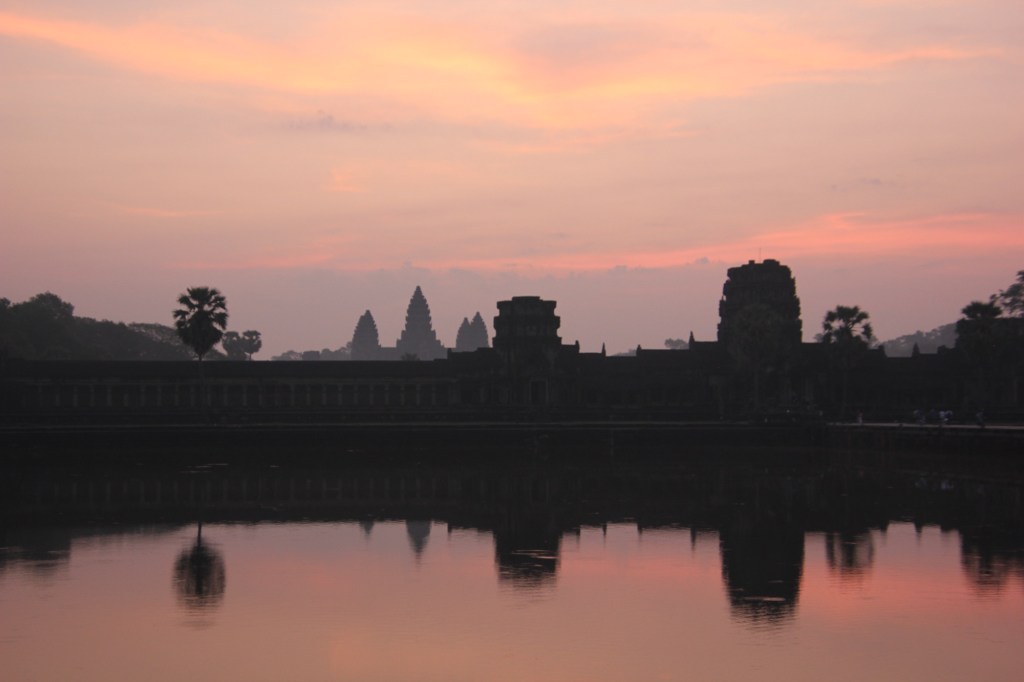
Our alarm rang at 4 am so that we could be on the bus by 5:15 am. The goal for this morning was to first see the sun rise over Angkor Wat and then tour the site.
Sun rising over Angkor Wat
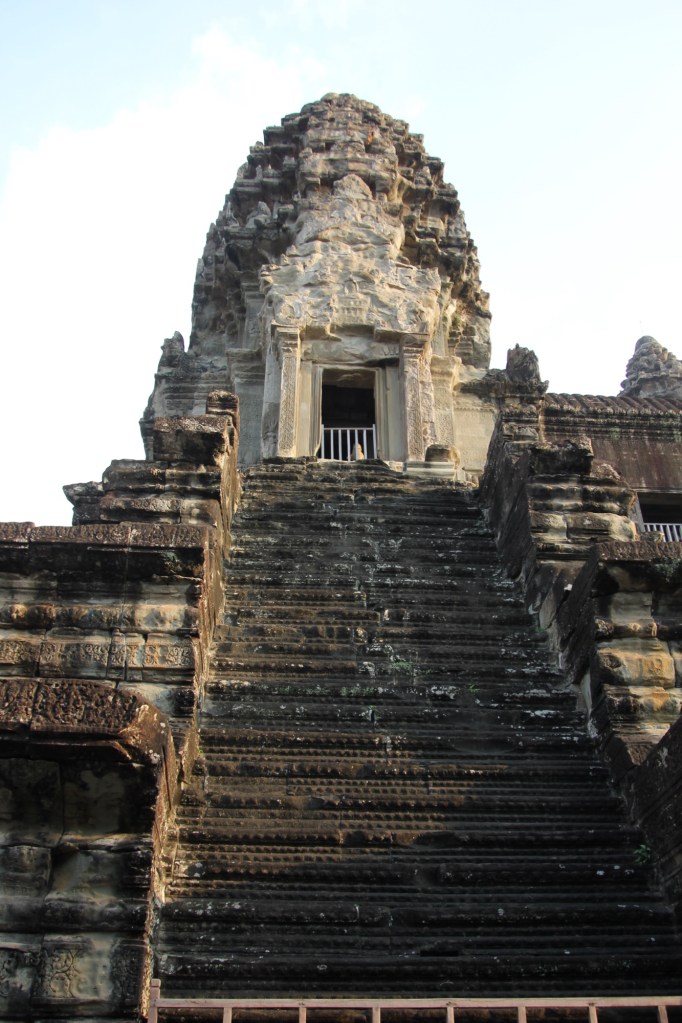
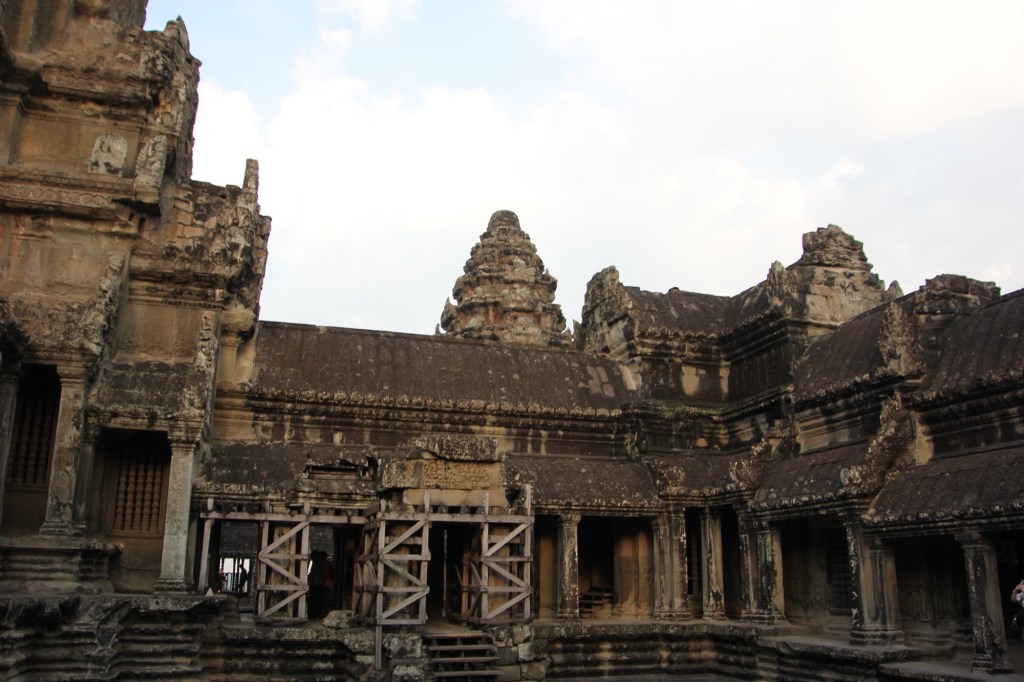
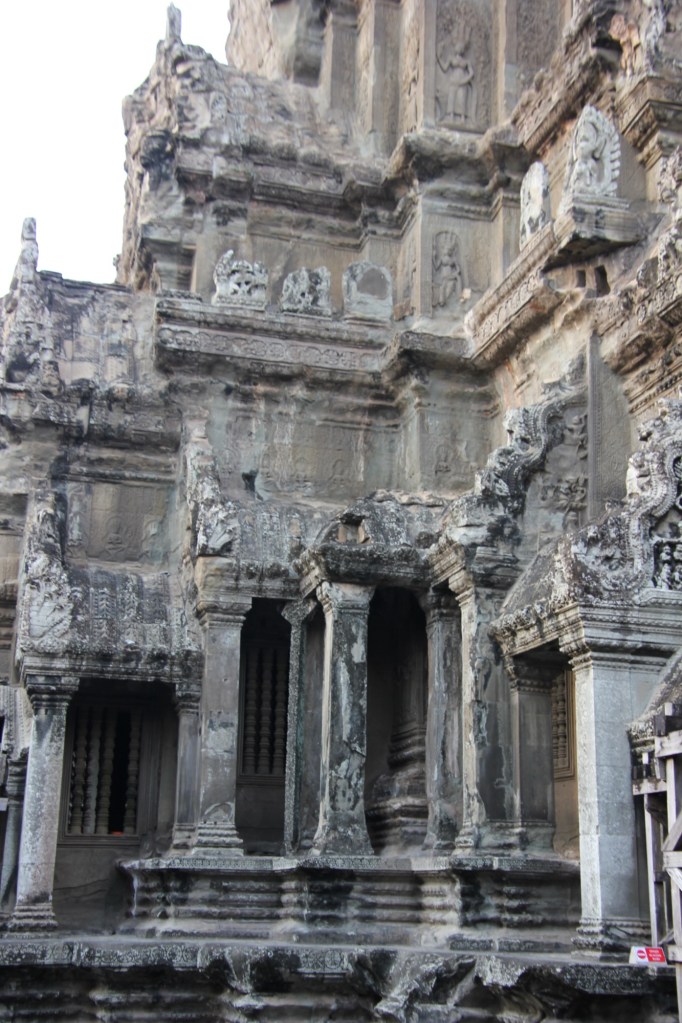
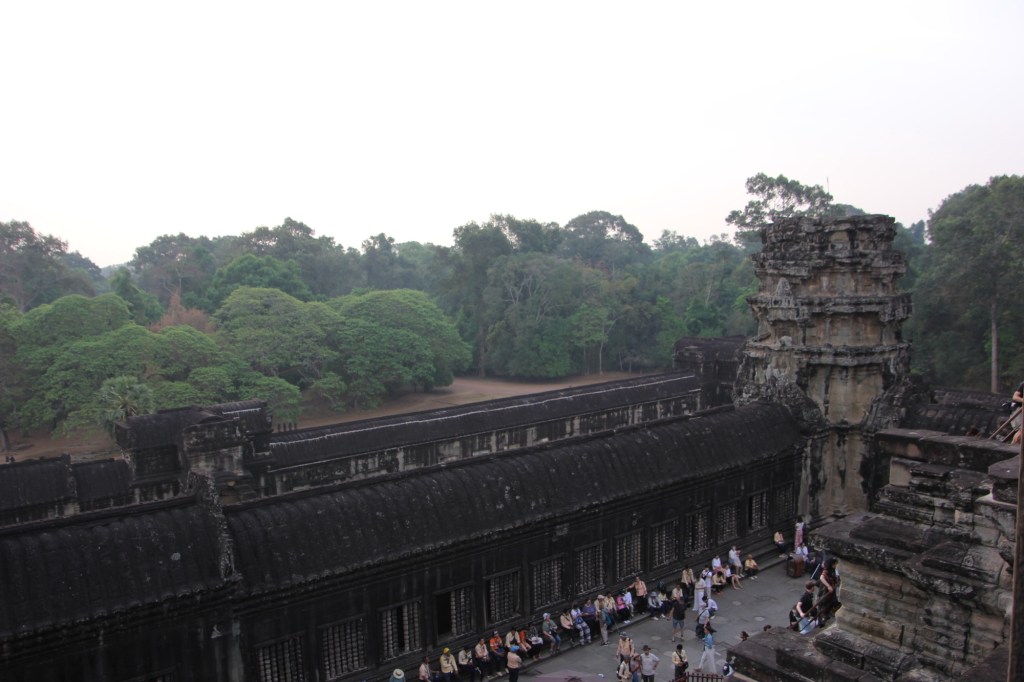
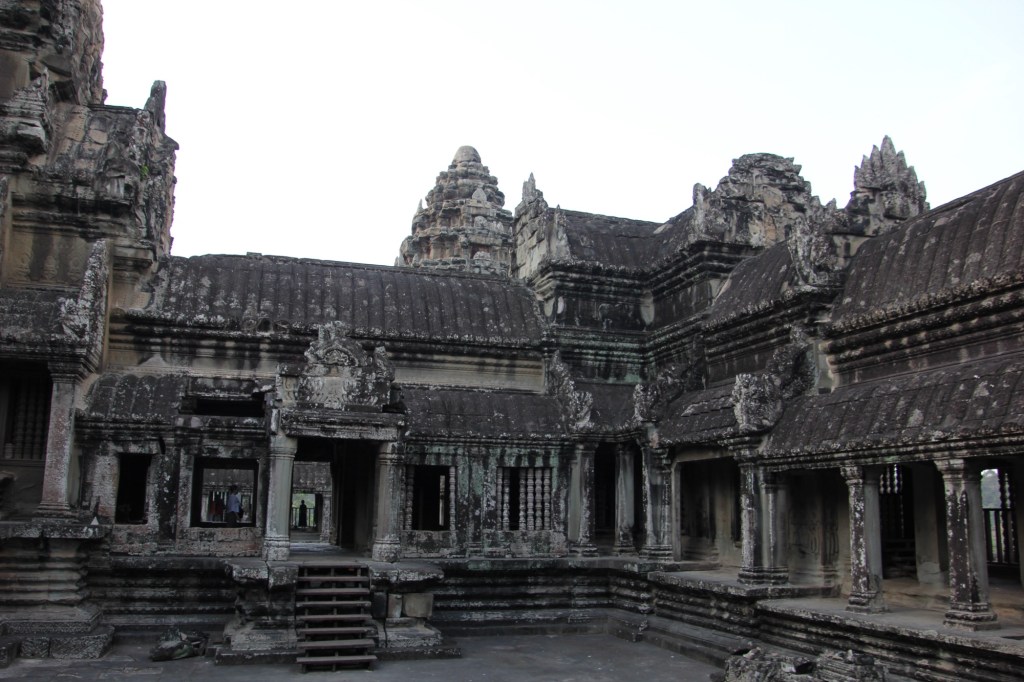
Angkor Wat is the largest religious complex in the world. It was built between 1113 – 1150 CE and covers over 400 acres. This was slightly before Notre Dame in Paris was built (1163). The temples were dedicated to Vishnu and a lot of the carvings reflect Hindu deities and teachings. There are 5 towers in the inner complex which are meant to reflect the 5 central peaks of Mt. Meru (the Hindu dwelling place of the gods) and the 4 directions. The moat around the temple is meant to represent the ocean at the edge of the world. Over time, the temple was rededicated and became a Buddhist temple and by the 15th C it was largely abandoned. However, Theravda Buddhist monks maintained the temple and it remained a pilgrimage site. Europeans “rediscovered” the temple in 1863 and restoration work began. Restoration work stopped during the Khmer Rouge years but has continued since. Angkor Wat was declared a UNESCO Heritage site in 1992. It is now one of the most visited sites in South East Asia.
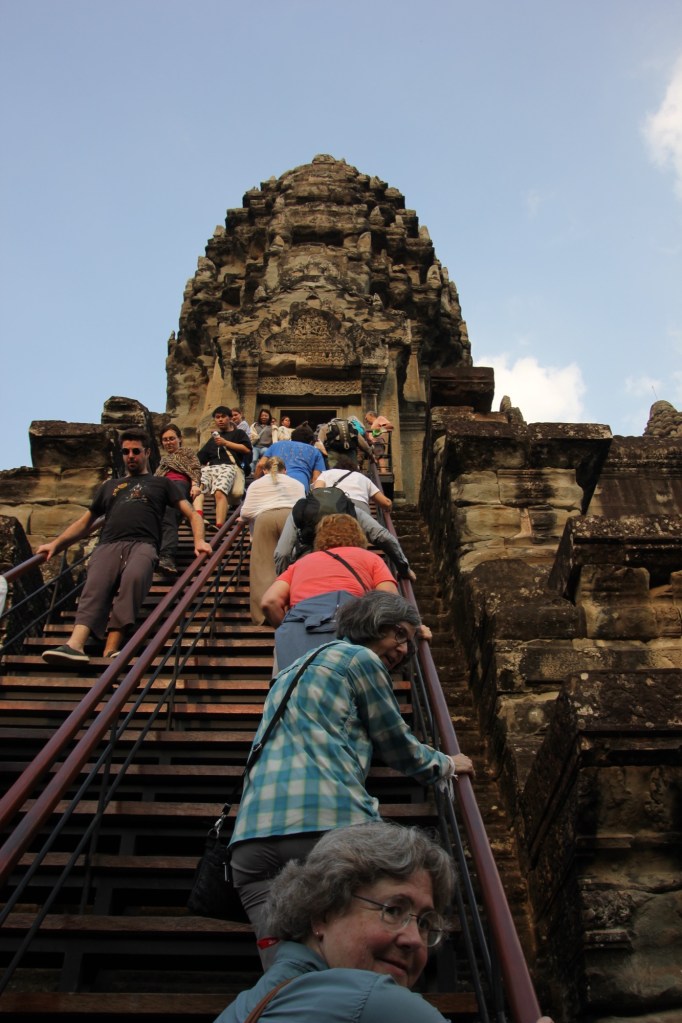
We walked around and into the temple, climbing the steep steps to the central tower. It was worth the effort.
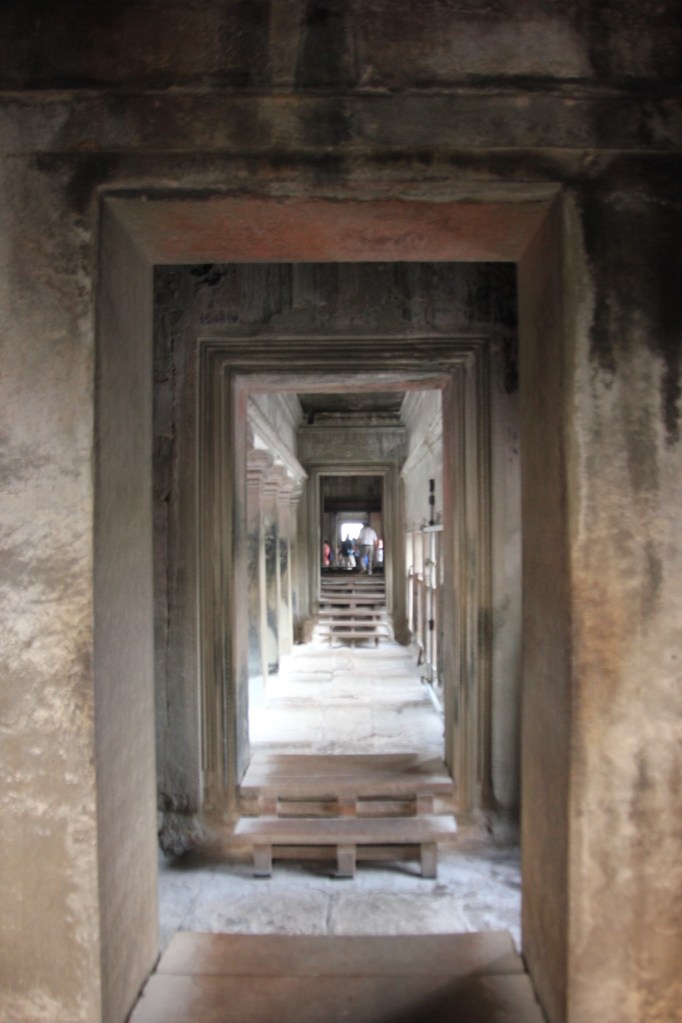
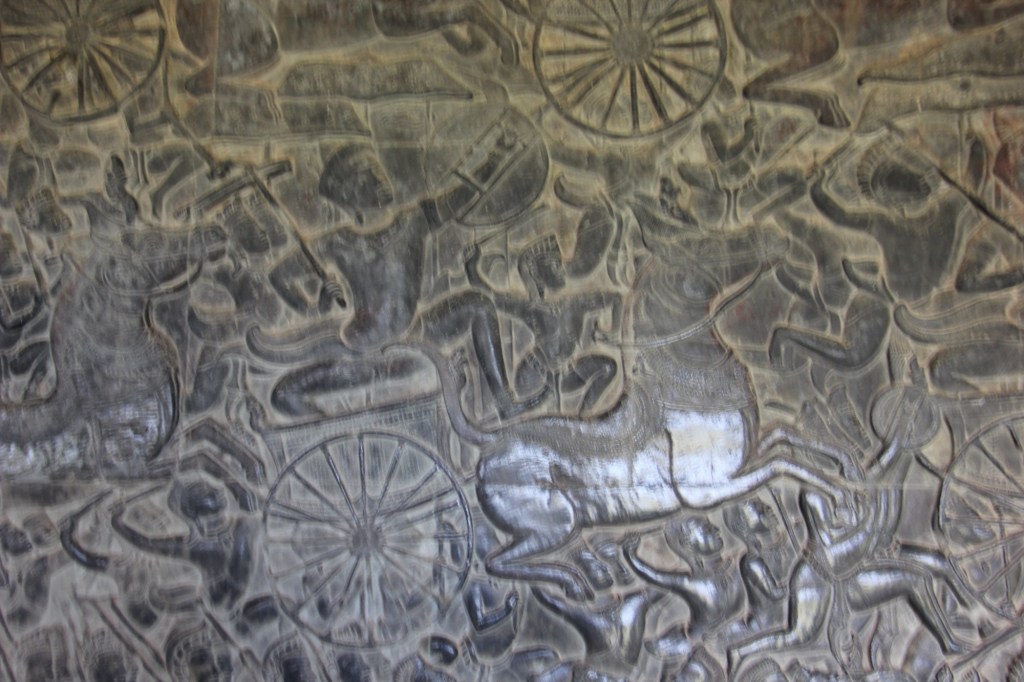
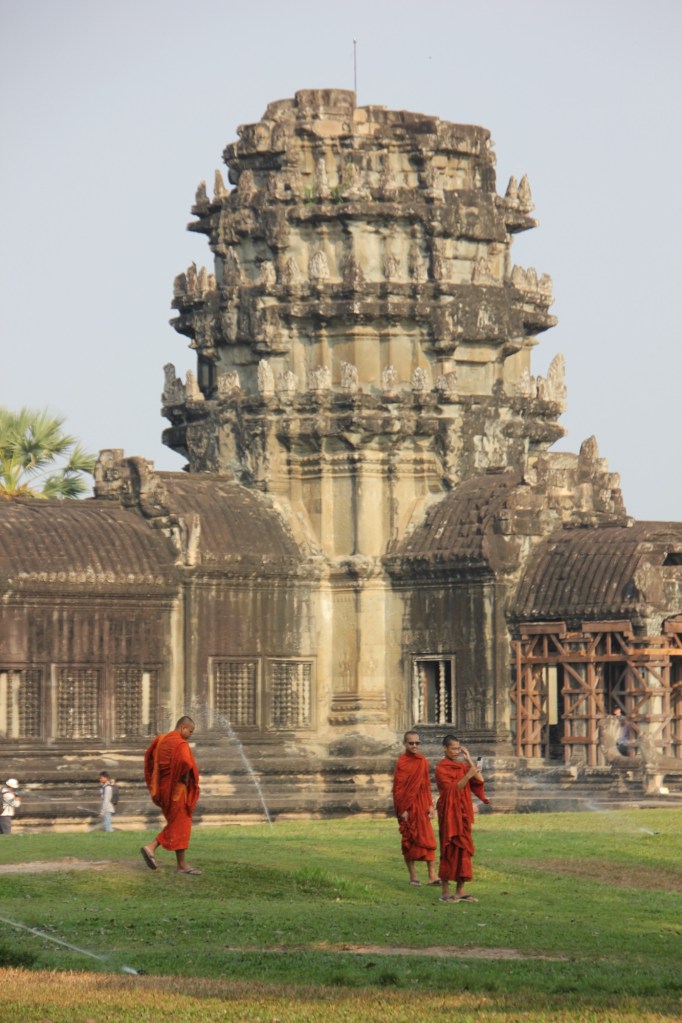
Inside Angkor WatRelief on the wall of Angkor WatMonks at the outer gate of Angkor Wat.
We left Angkor Wat for Angkor Thom, a temple built by the same king. It was smaller but still interesting.
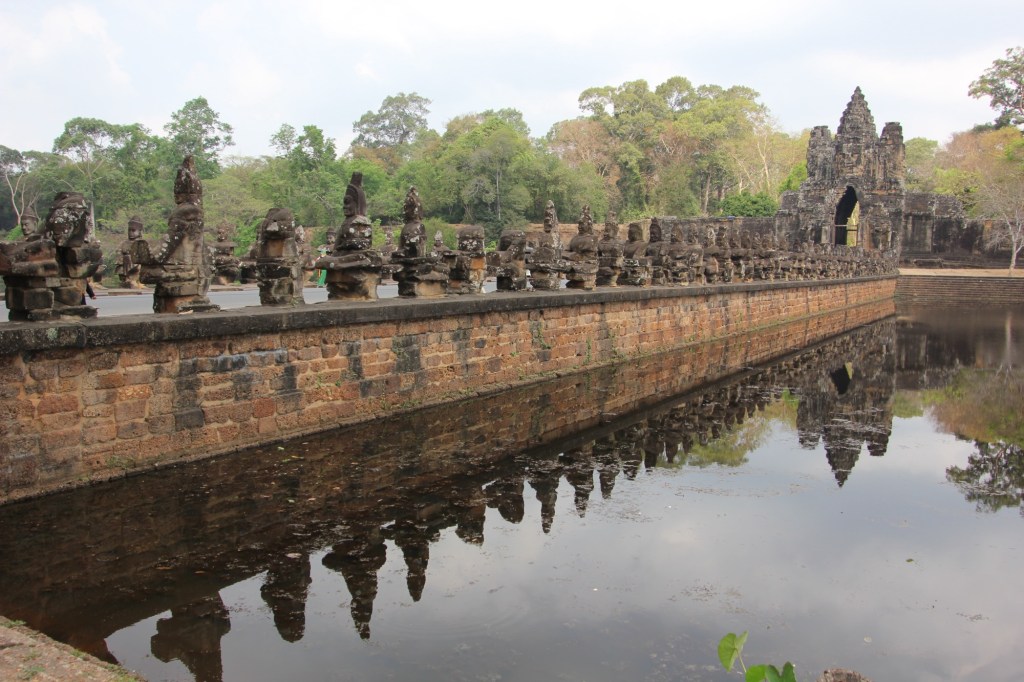
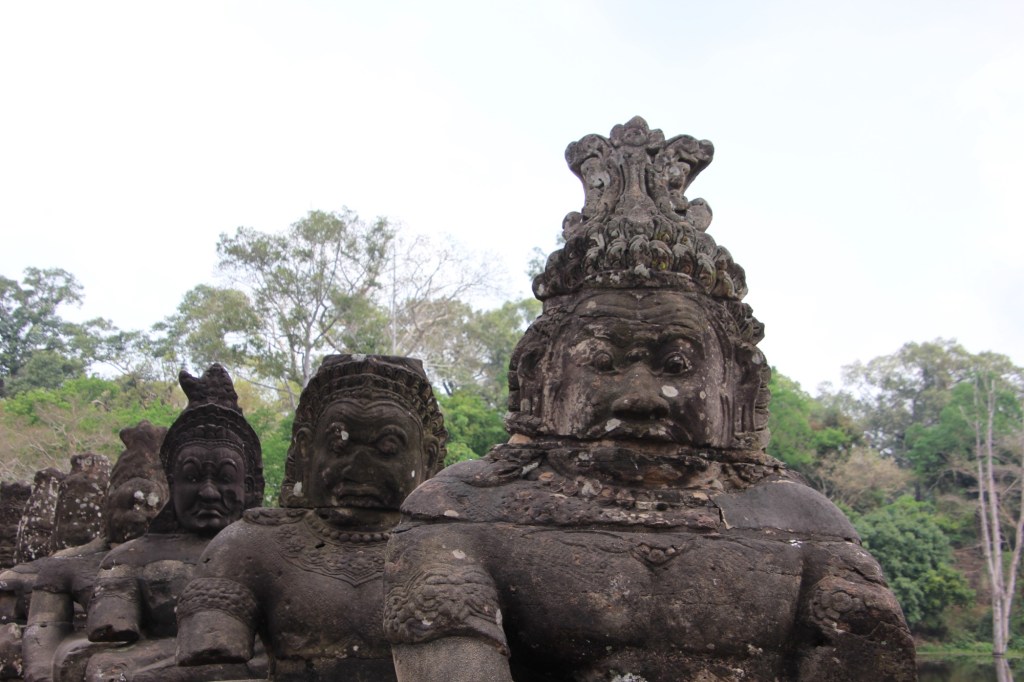
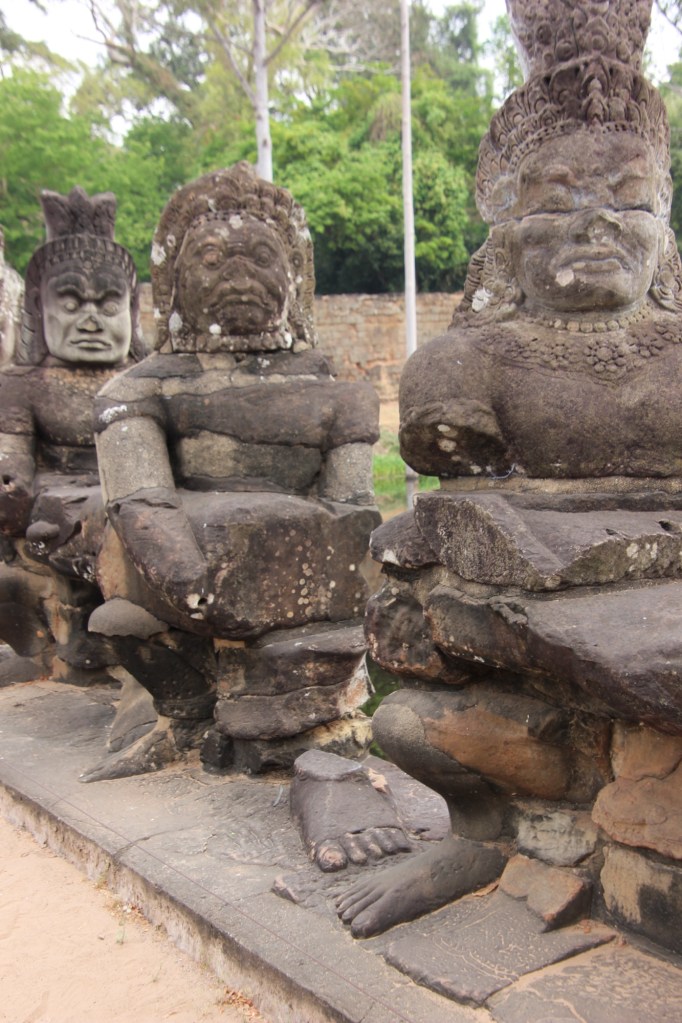
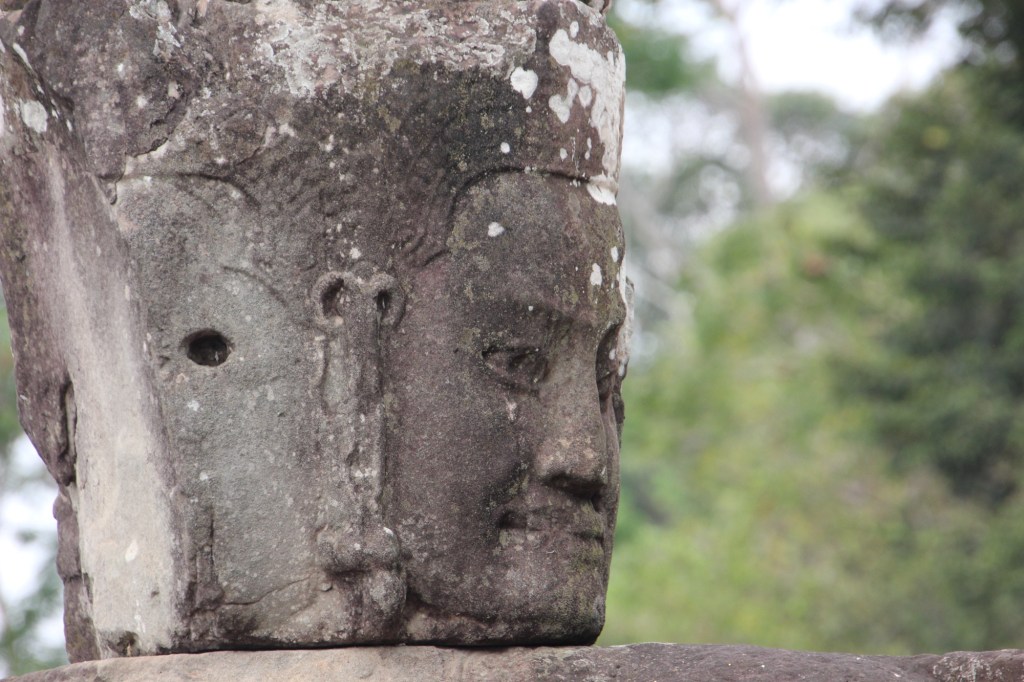
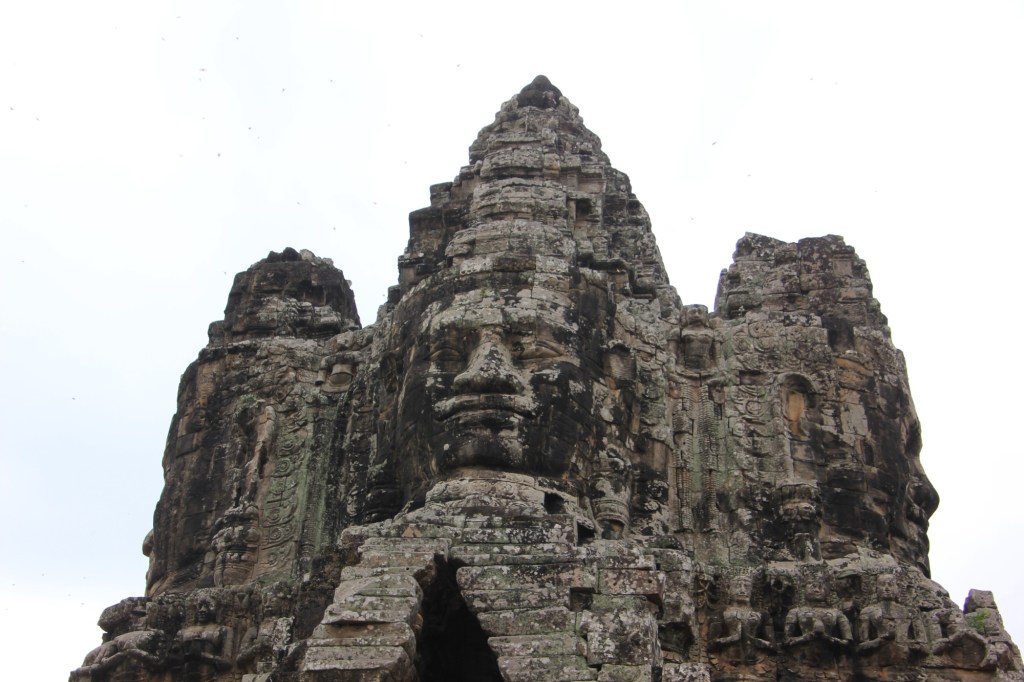
The entrance to Angkor Thom – demons on the right, gods on the left side of the bridgeDemonsGods
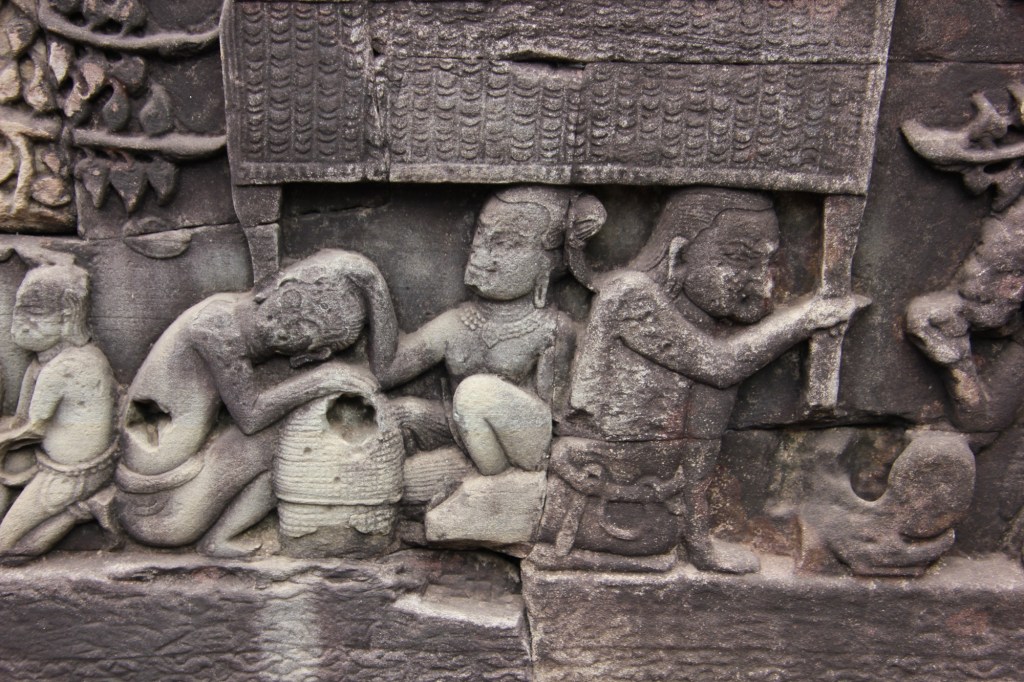
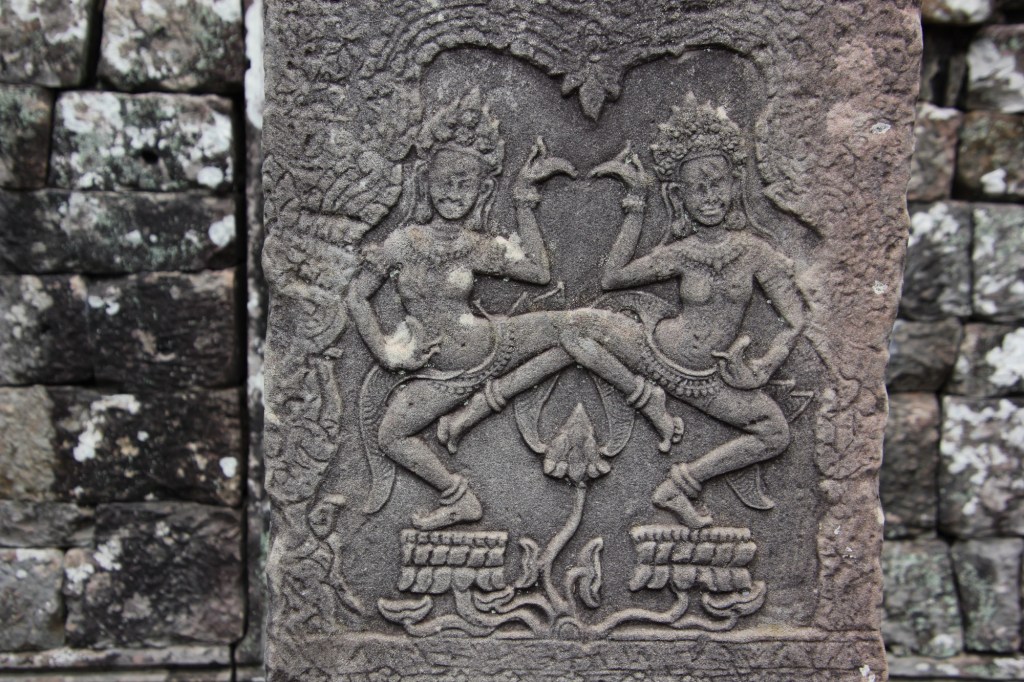
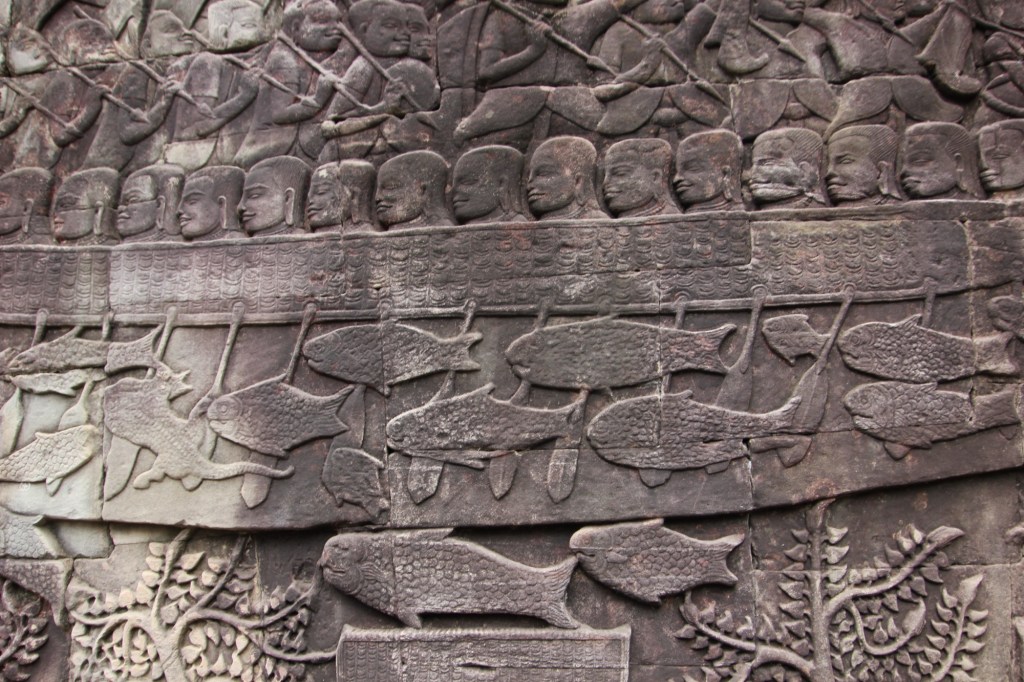
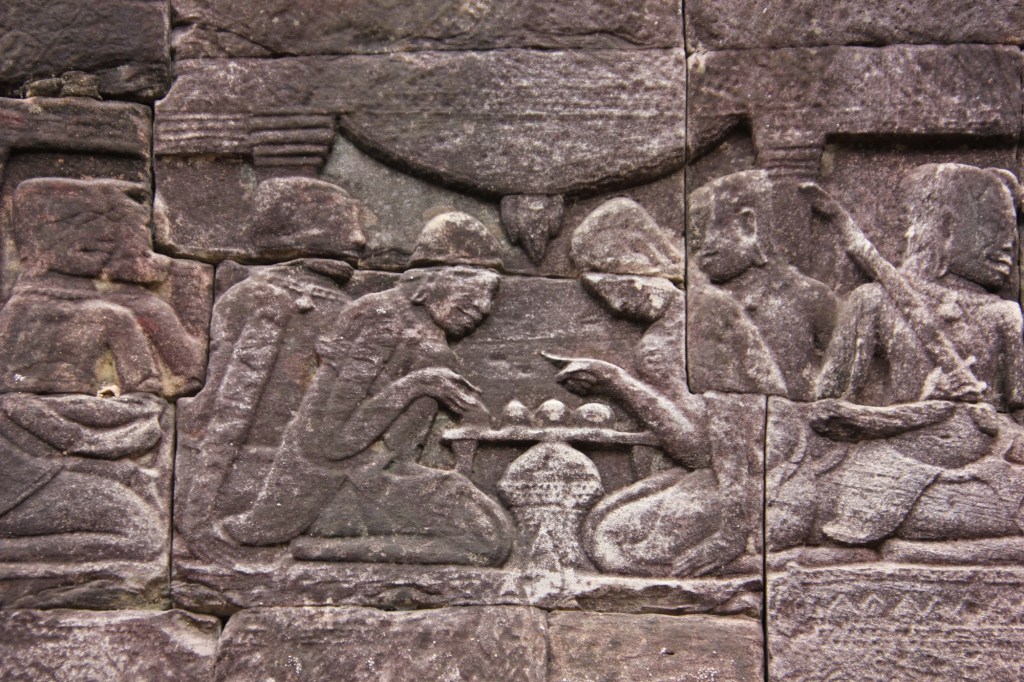
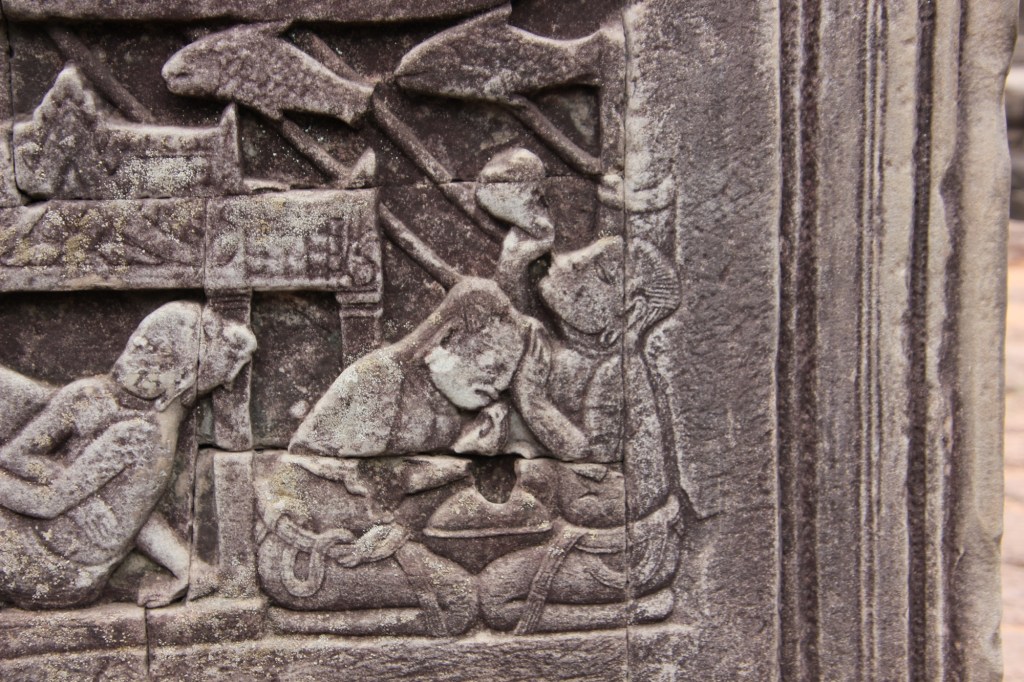
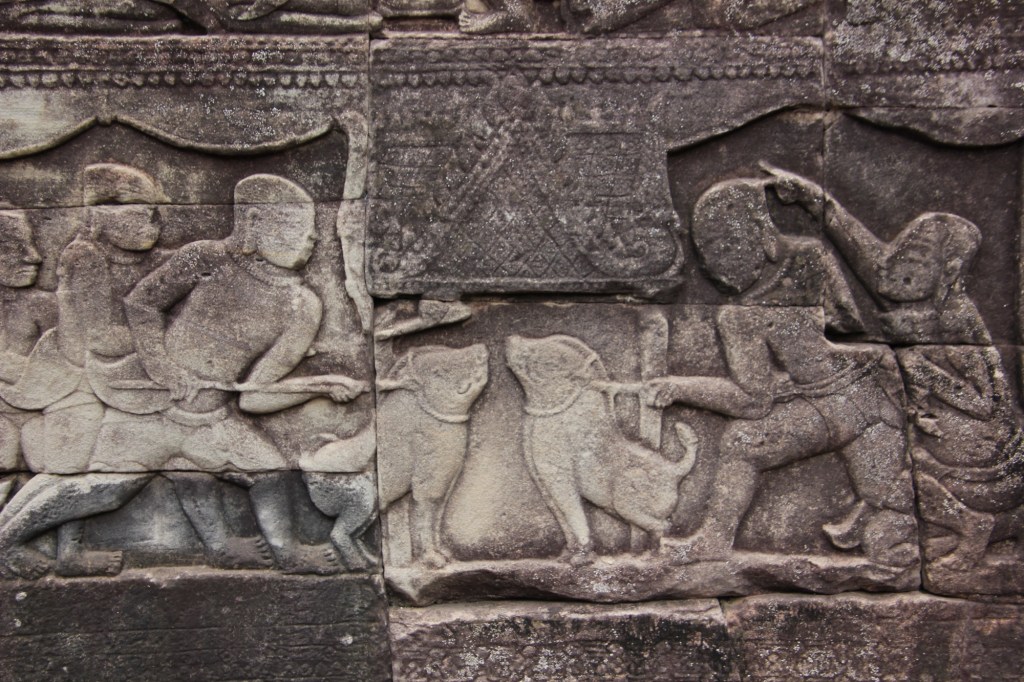
The gate to Angkor Thom (which means big city) was powerful. 80% of the city is still jungle. Inside it were many buildings that have been identified by LiDAR but not recovered yet. One of the temples that has been discovered is Bayon. It had many depictions of everyday life carved into its walls.
Women picking liceDancing fishingWomen playing chessDrinking rice winePig fighting
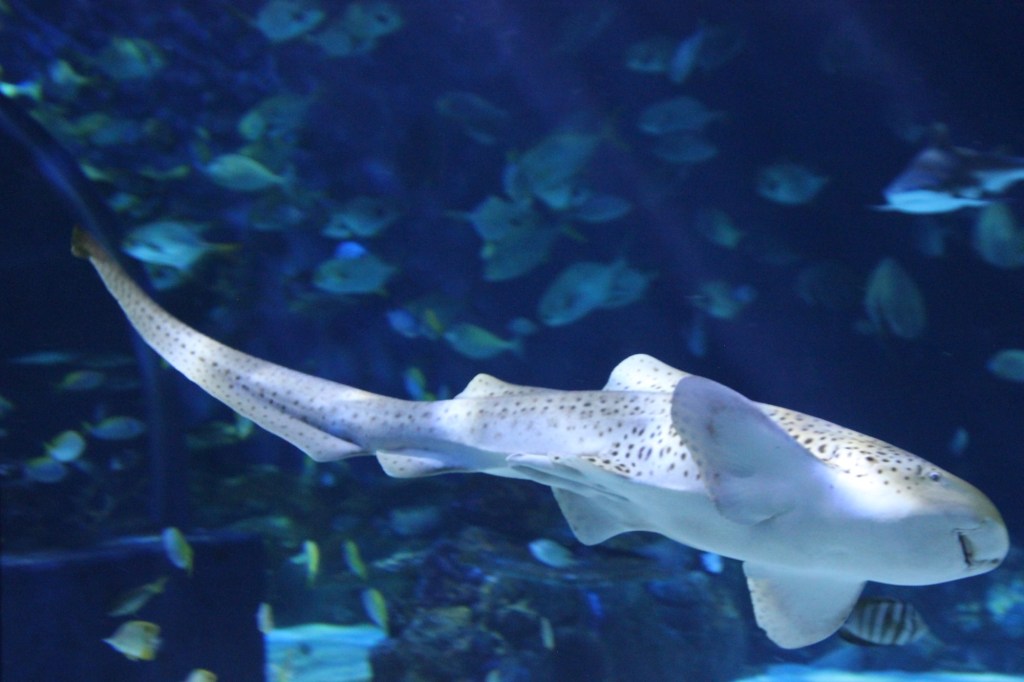
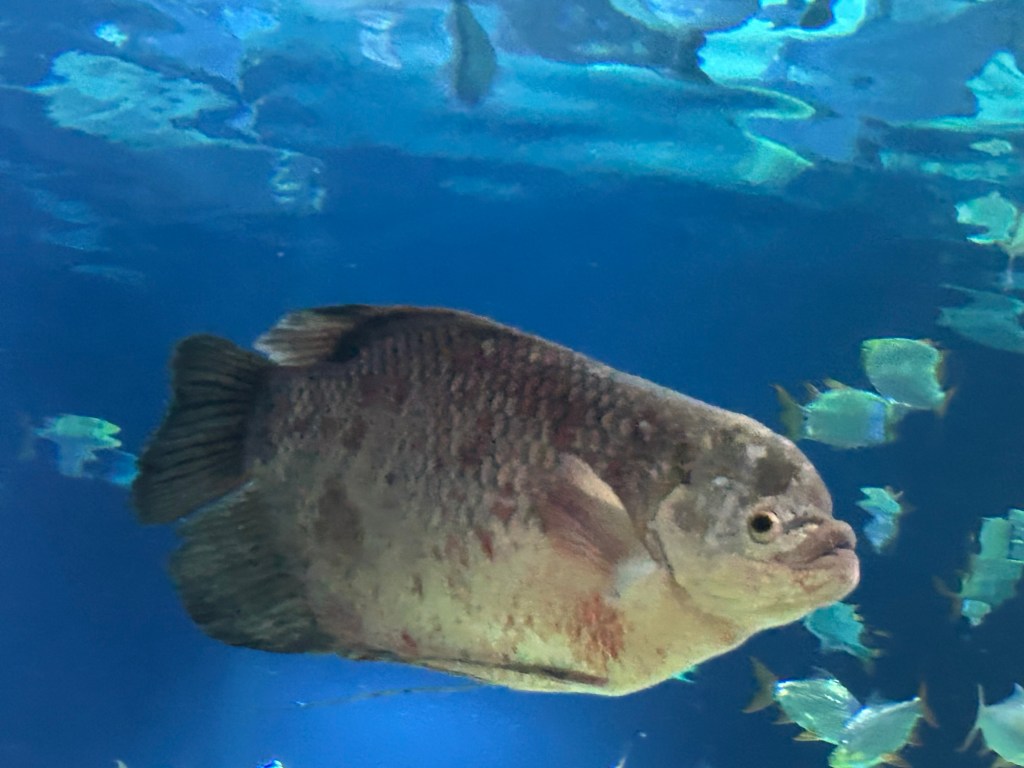
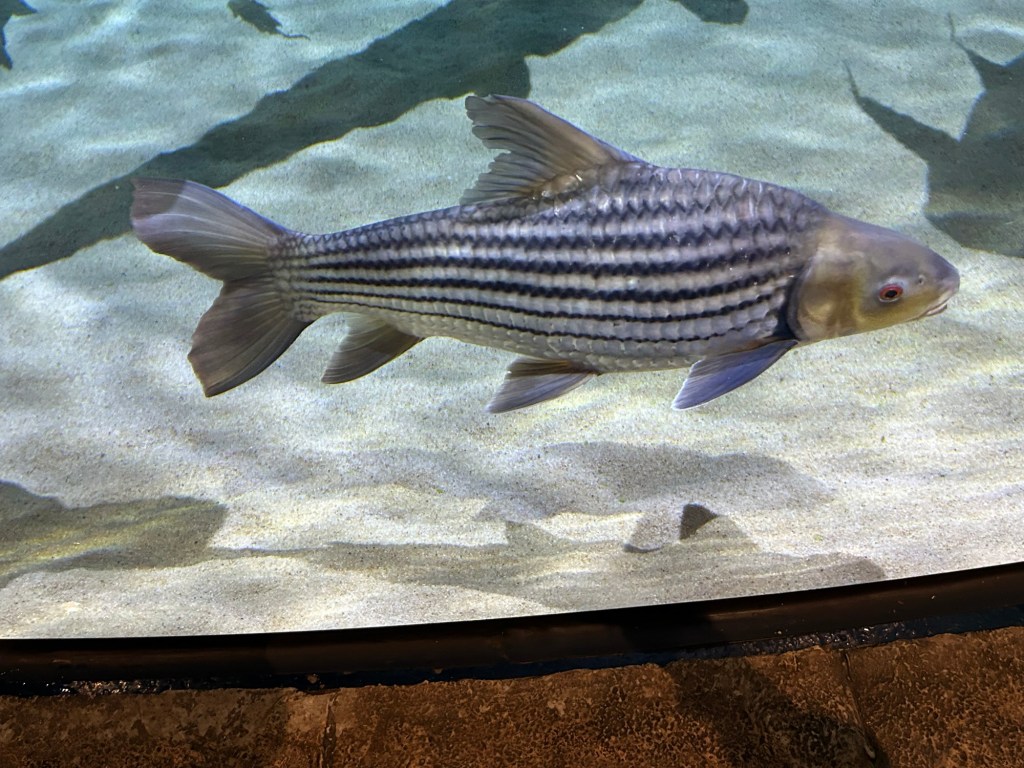
We left this site for something very different. Our next stop was the Angkor Wildlife Aquarium project. This facility is focused on protecting and preserving the the fish and wildlife in the Tonle Sap lake and Mekong river. They also had a mandate to educate Cambodians about the resources in their environment. It was great to look at the fish and see all the species they are trying to save. The lake and river system are under pressure due to upstream activities such as damns and demands on water.
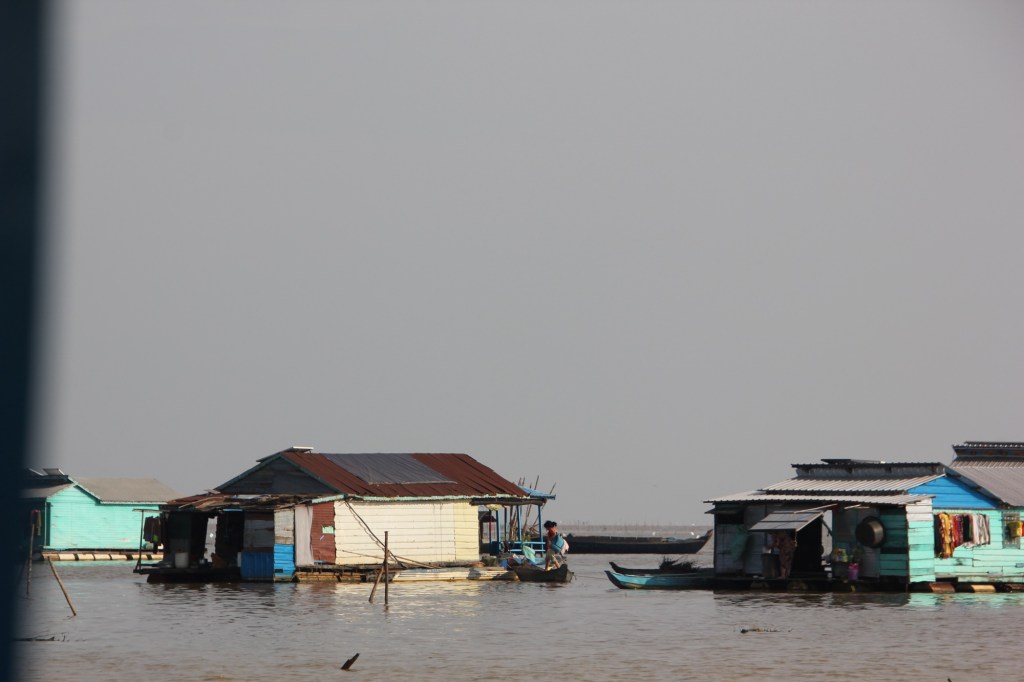
After a delicious lunch at the aquarium we headed out for a boat tour of the lake.
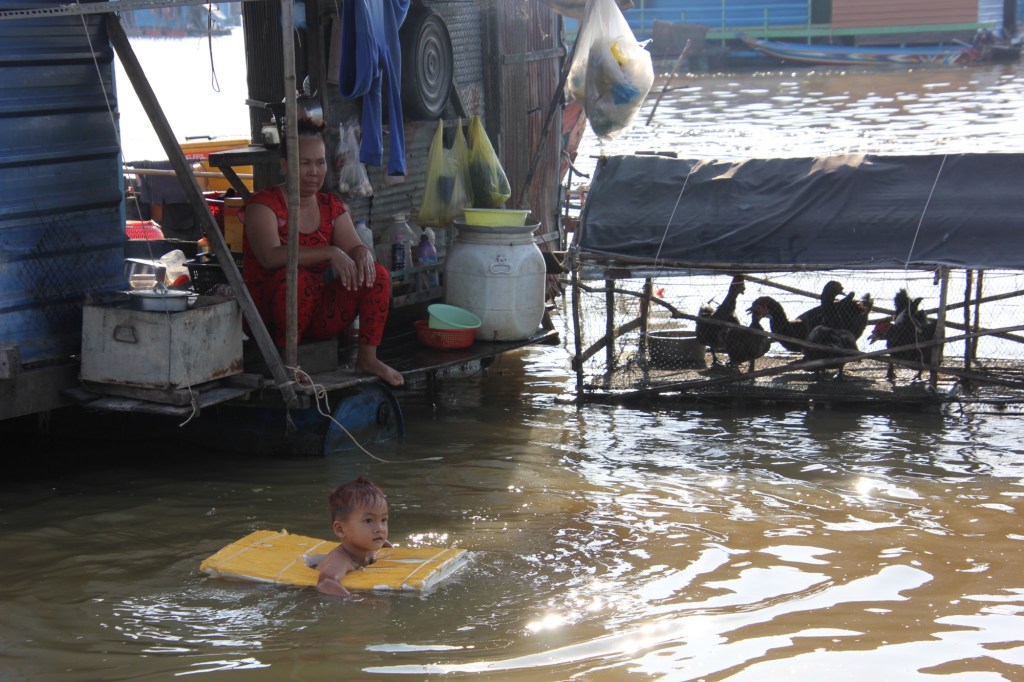
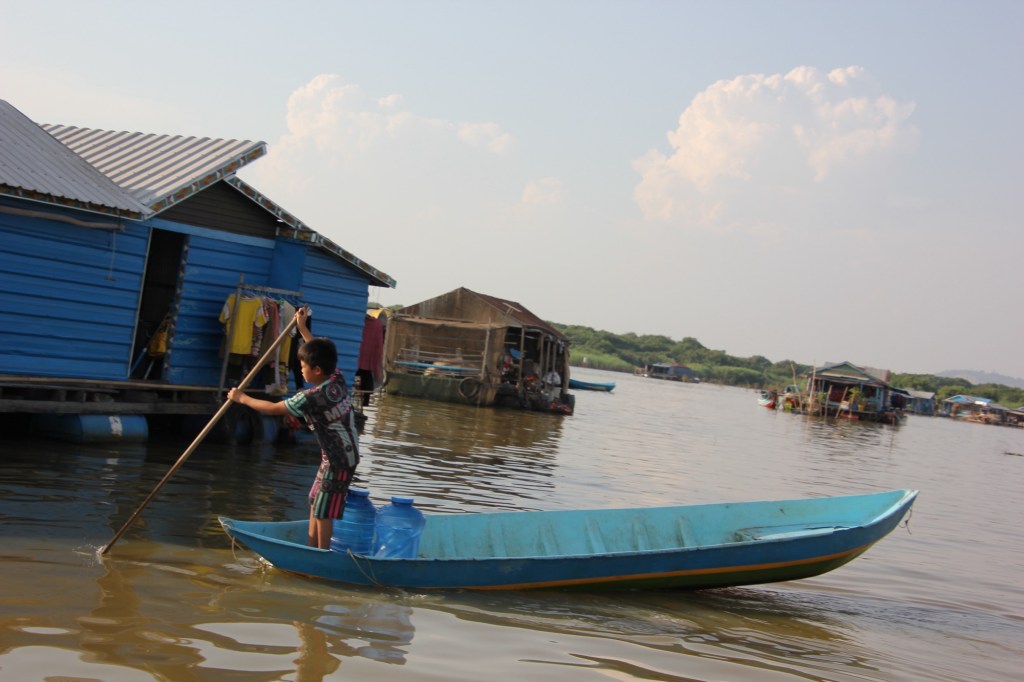
Houseboats on the lakeLife on the lakeCanoes are a major source of transport
People live on the water year-round. They form a floating community of fisherfolk whose lifestyle revolves around the rivers and lakes. There is significant poverty here but a resiliency to survive and maintain a water-based lifestyle.
This was a jam-packed day and we all piled into the bus for a quiet ride back to the hotel. It was an early night as we were leaving the next morning for Vietnam.
We spent two full days in Cambodia and were kept so busy that I haven’t had time or energy to update the blog. We just arrived in Vietnam and have an hour bus from the airport to lunch, so I am going to try to catch up.
One of the most striking aspects of our time in Cambodia was recognizing the resiliency of the people. Our local guide shared freely about his life. He was a child during the Khmer Rouge regime (1975-1979). Pol Pot, the leader of the Khmer Rouge, initiated a genocide that killed over 1/4 of the population (estimated 1.5 – 3 million people died) of Cambodia at that time. That people survived the starvation, disease, forced labour, and the social destruction of the times is amazing. Cambodian society was deeply damaged and recovery is ongoing. After the fall of the Khmer Rouge, physical recovery from the devastation of war and the remnants of war, such as landmines was needed. The country was poor and few professionals of any kind remained. The entire country needed to reboot. Our guides focused specifically on how far Cambodia has come in the almost 50 years since the defeat of the Khmer Rouge. Little information was provided to us about how reconciliation efforts have occurred.
We started our journey into Cambodia by stopping at the Angkor Ticket Centre. Each 3-day pass cost $62USD with $2 from each ticket going to fund a children’s hospital in the area. We then checked into our hotel, had lunch by the pool, went for a swim and then watched a documentary on Cambodia before dinner. This prepped us for what we would see over the next two days.
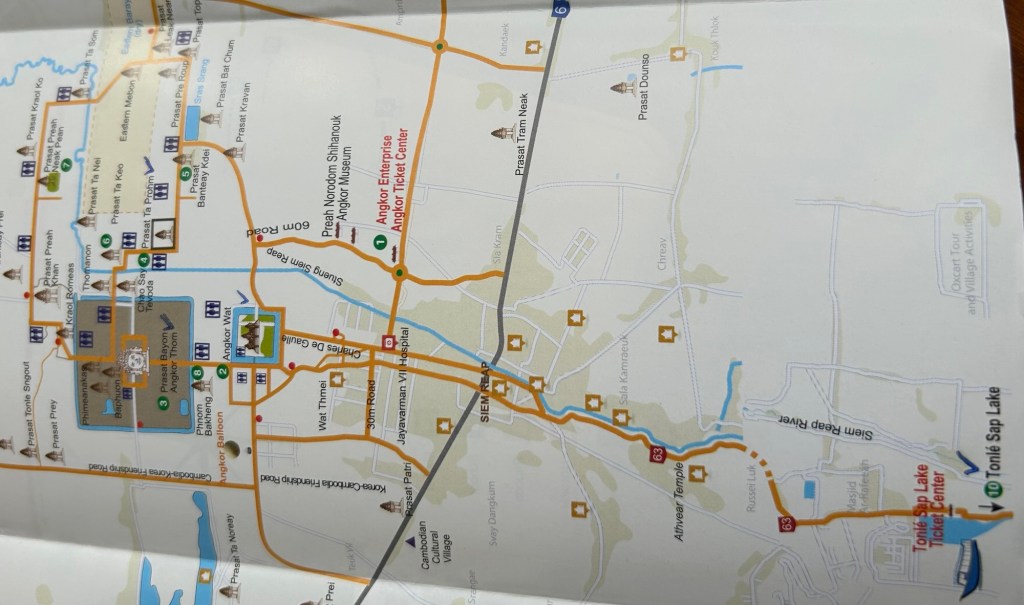
Sorry this is sideways. We visited the sites with a check mark.
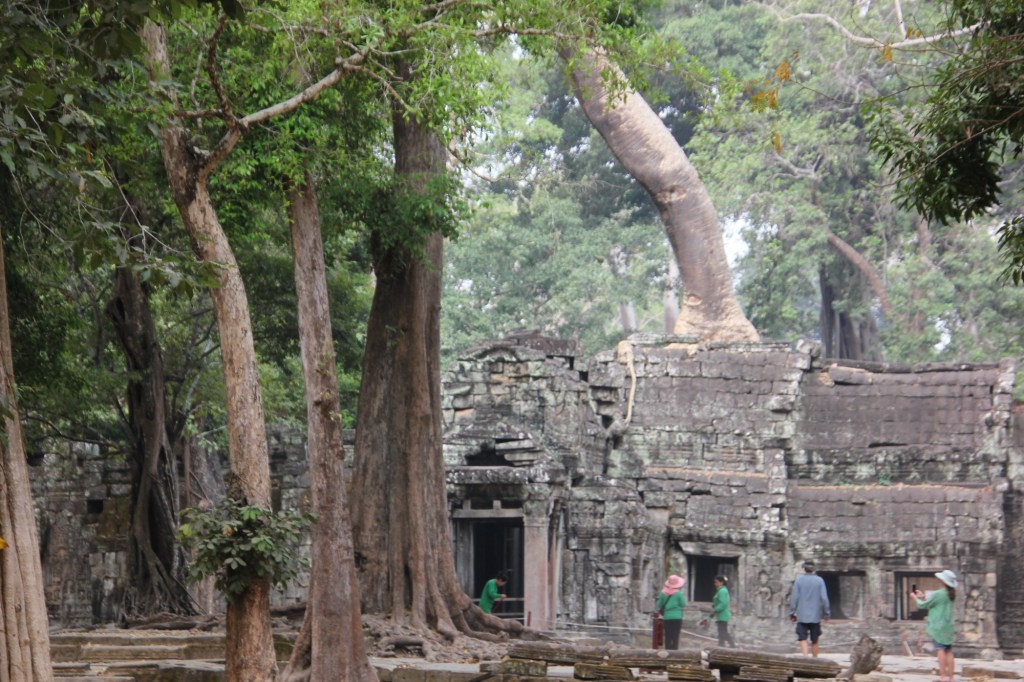
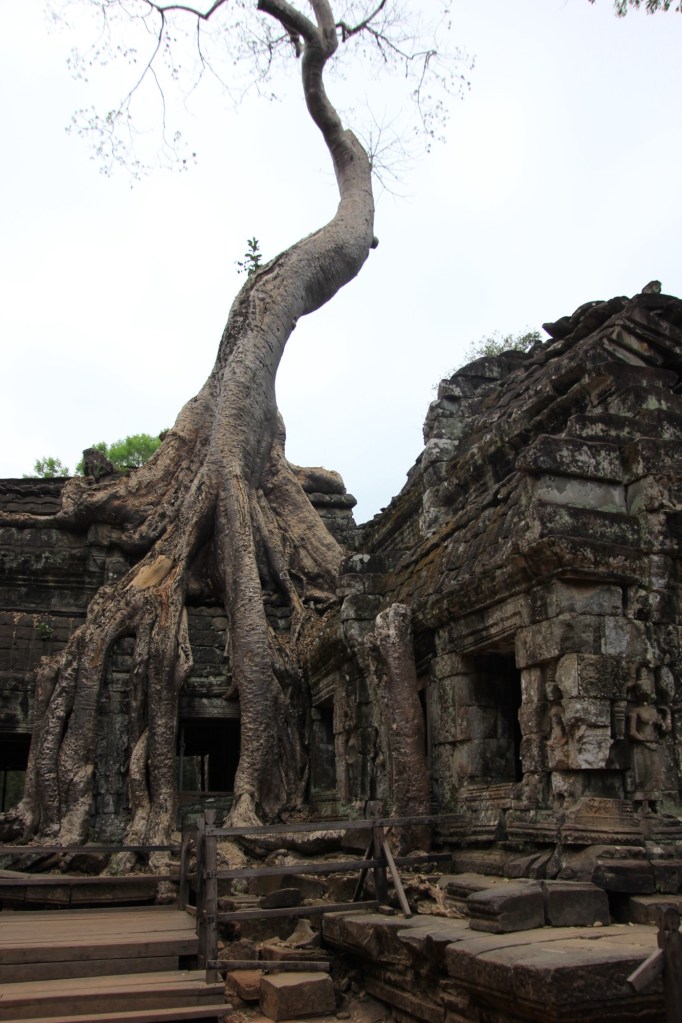
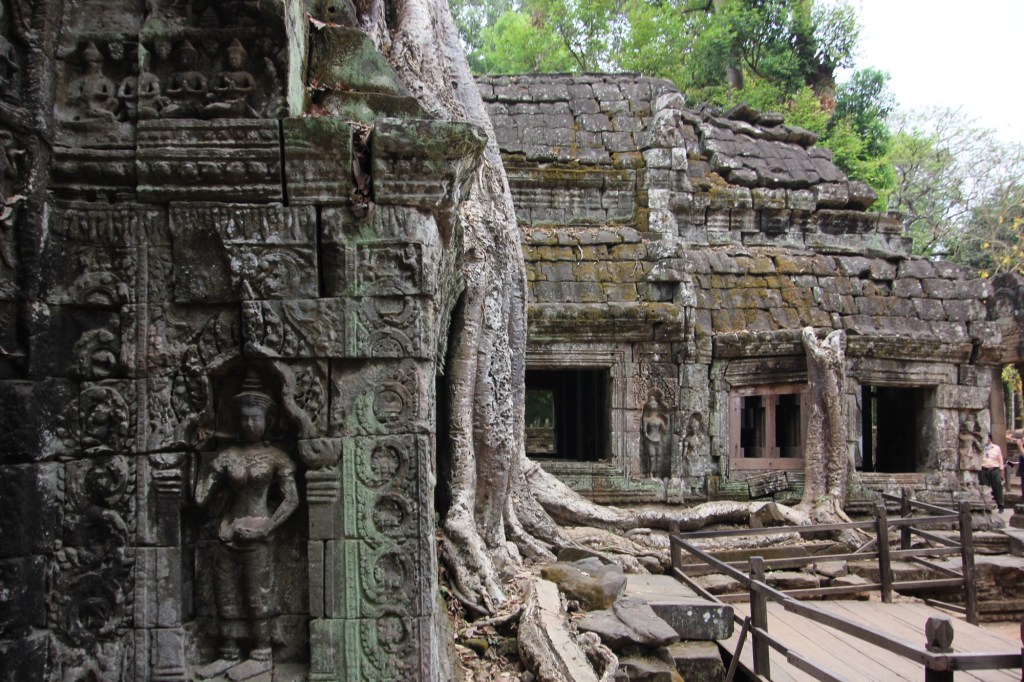
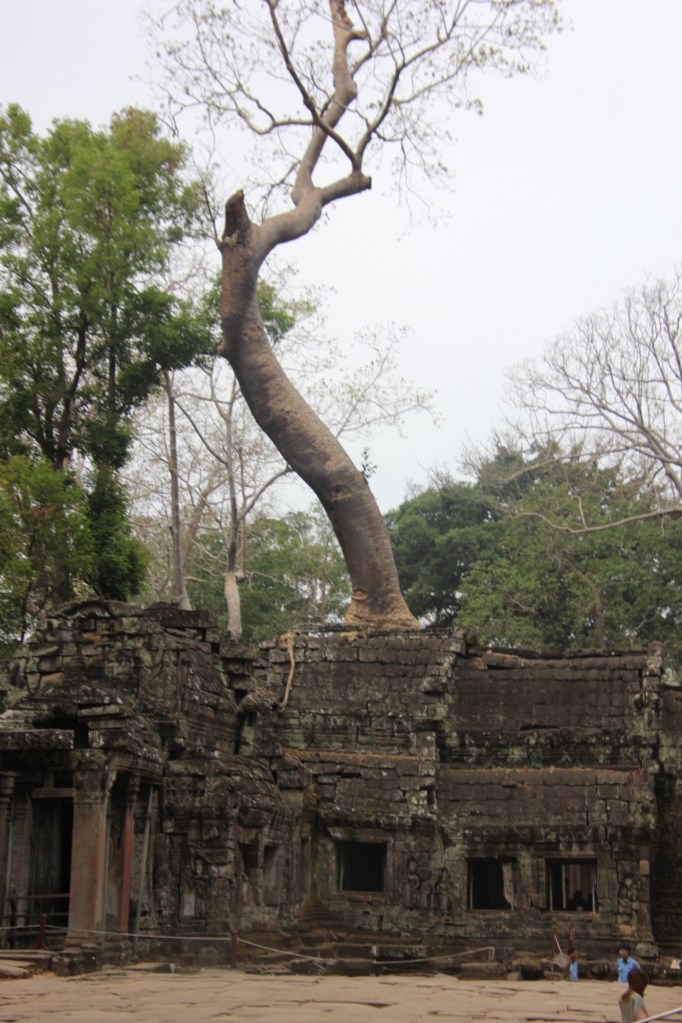
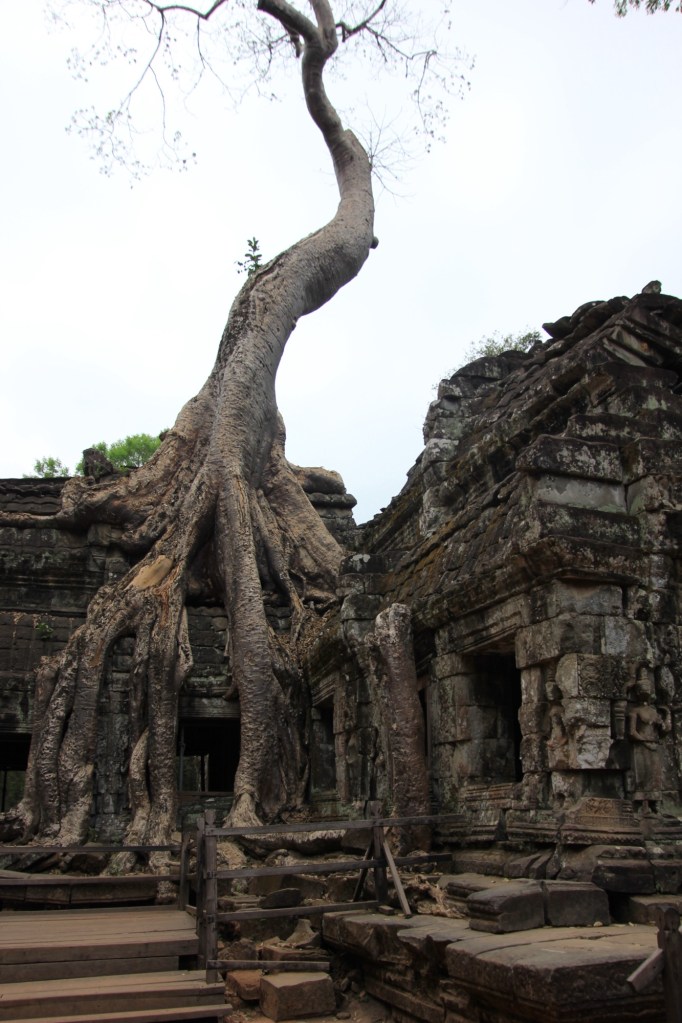
On our first stop was Ta Prohm temple, also known as the jungle temple was built in the 1100’s and later abandoned and left as ruins, allowing the giant kapok trees and strangler figs to take over. It was overgrown by the jungle until it was “rediscovered” by Europeans in the late 1800’s. Archeologists decided it was best to leave the temple “as is” and only cleared trees from a portion of the site. The film Laura Croft:Tomb Raider was filmed here.
Ta Prohm – the Jungle Temple
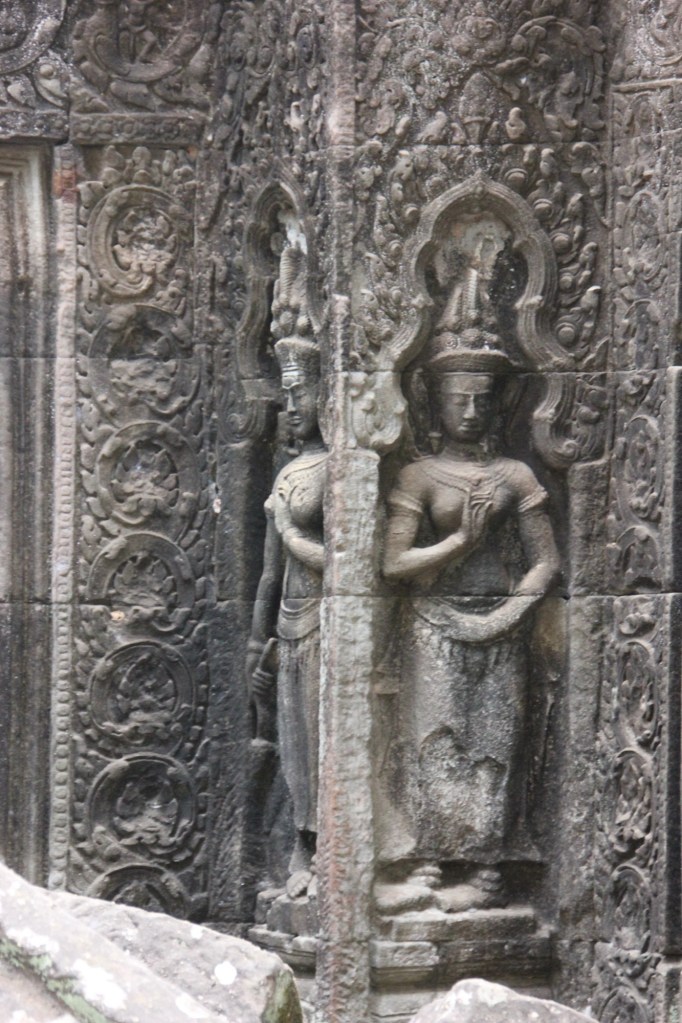
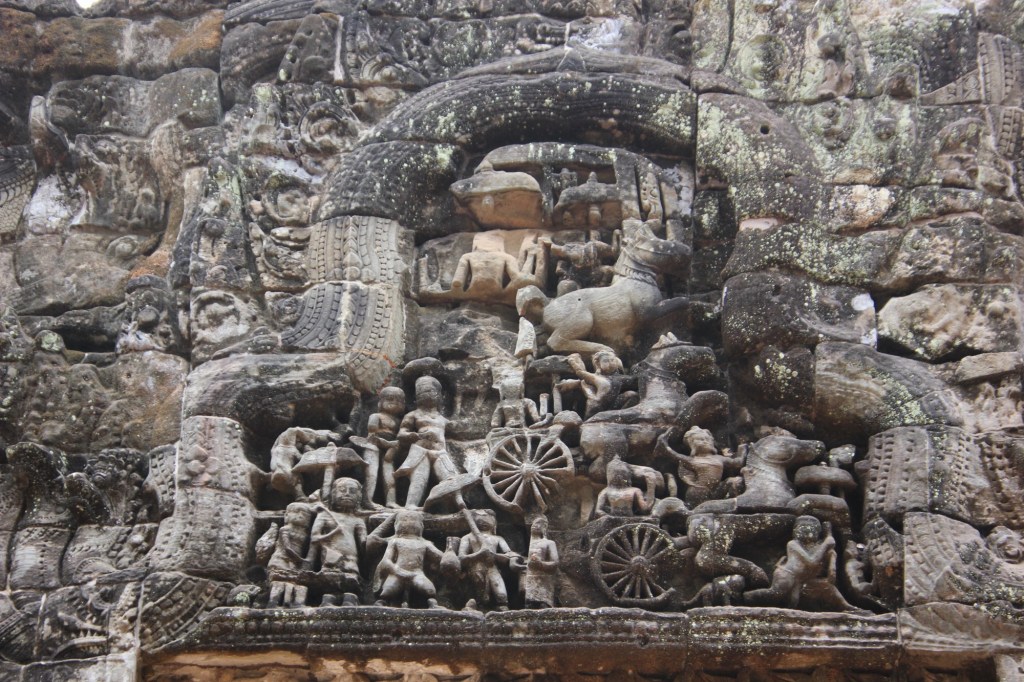
Despite the overgrowth, the carvings on some of the ruins were fantastic.
Carvings at Ta Prohm
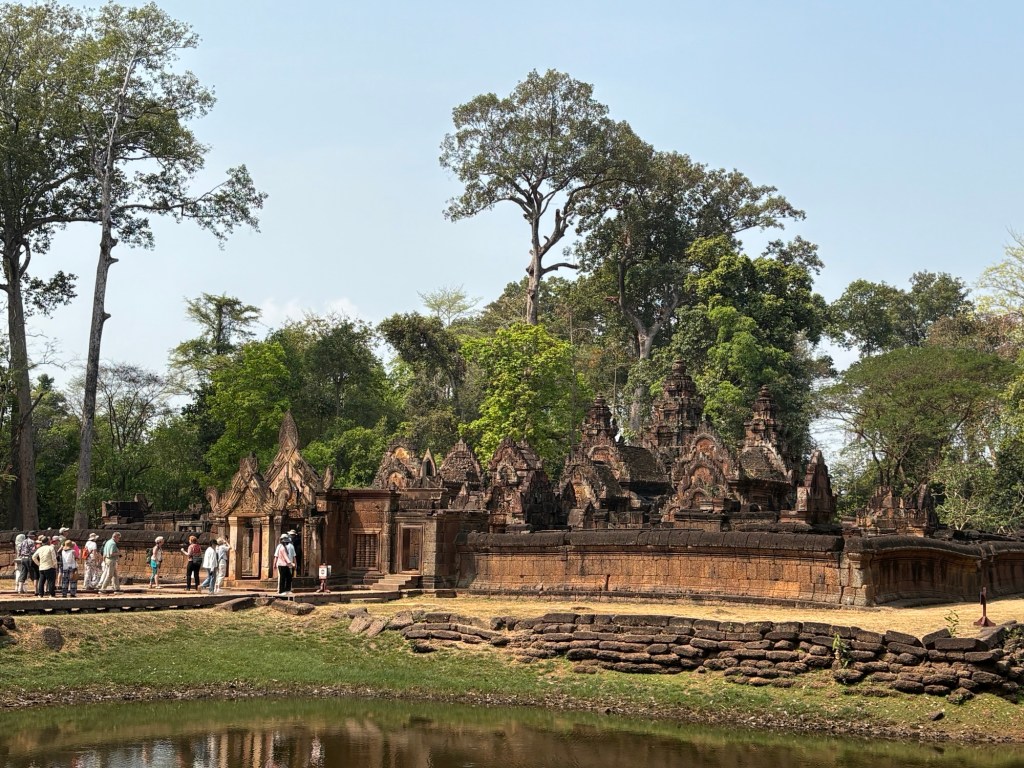
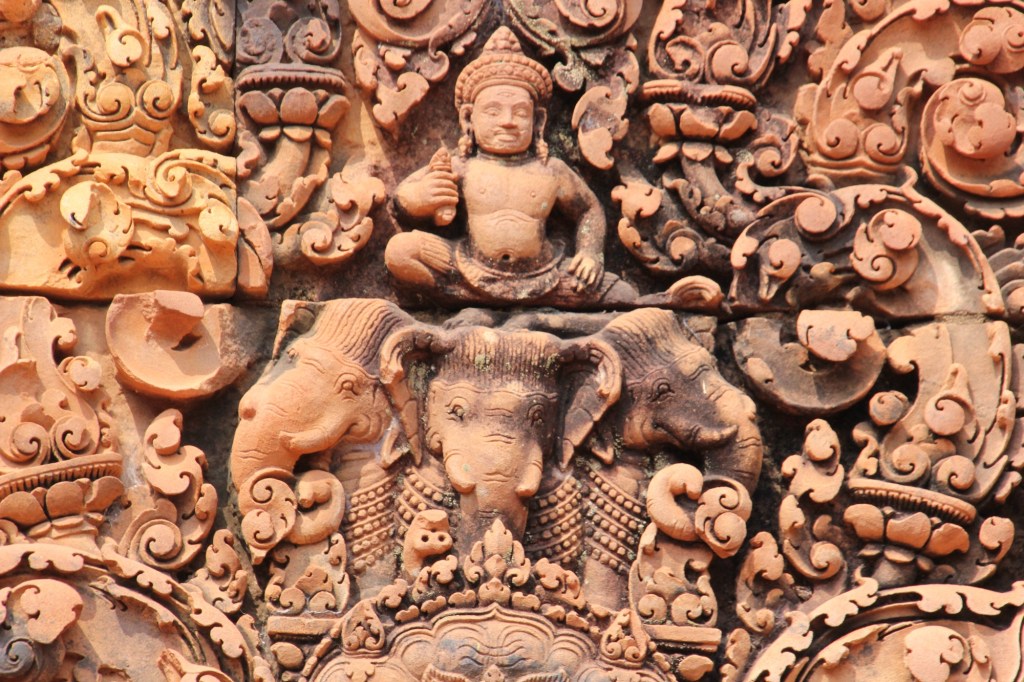
Our next stop of the day was Banteay Srei. It was built in the 10th century and originally dedicated to a Hindu god. It is also called the “woman’s temple” because it is so beautiful.
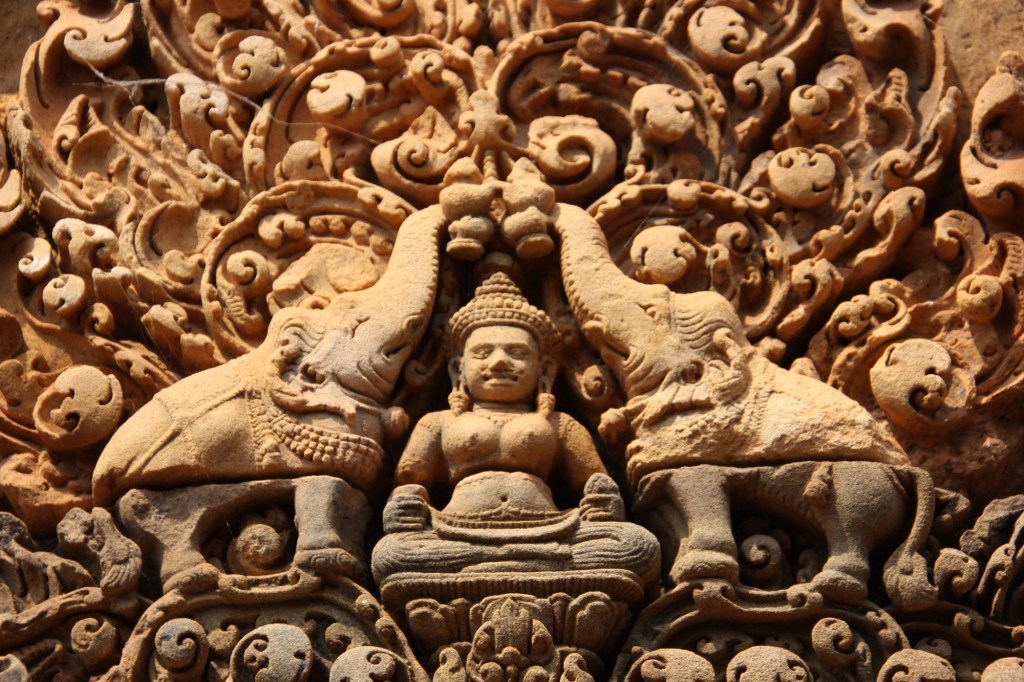
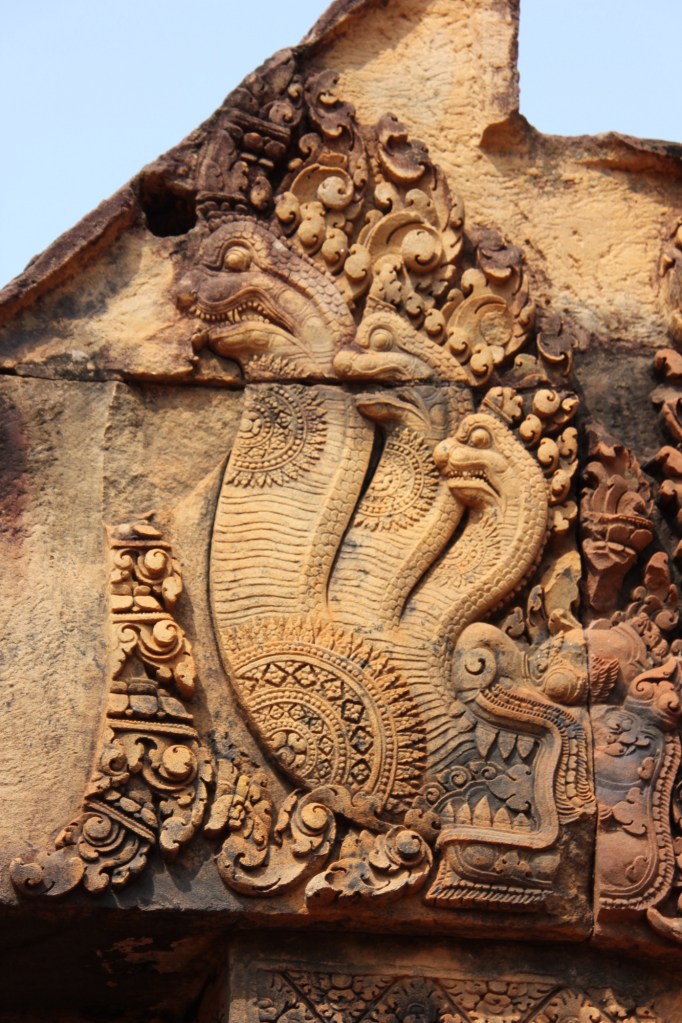
Banteay Srei TempleDetails from Banteay Srey temple
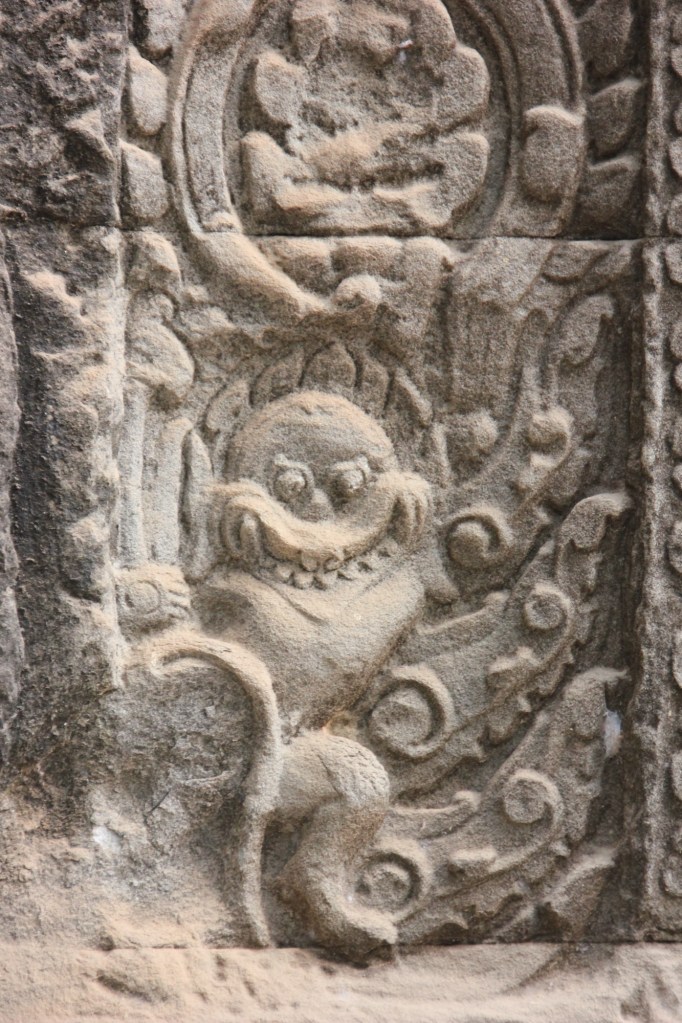
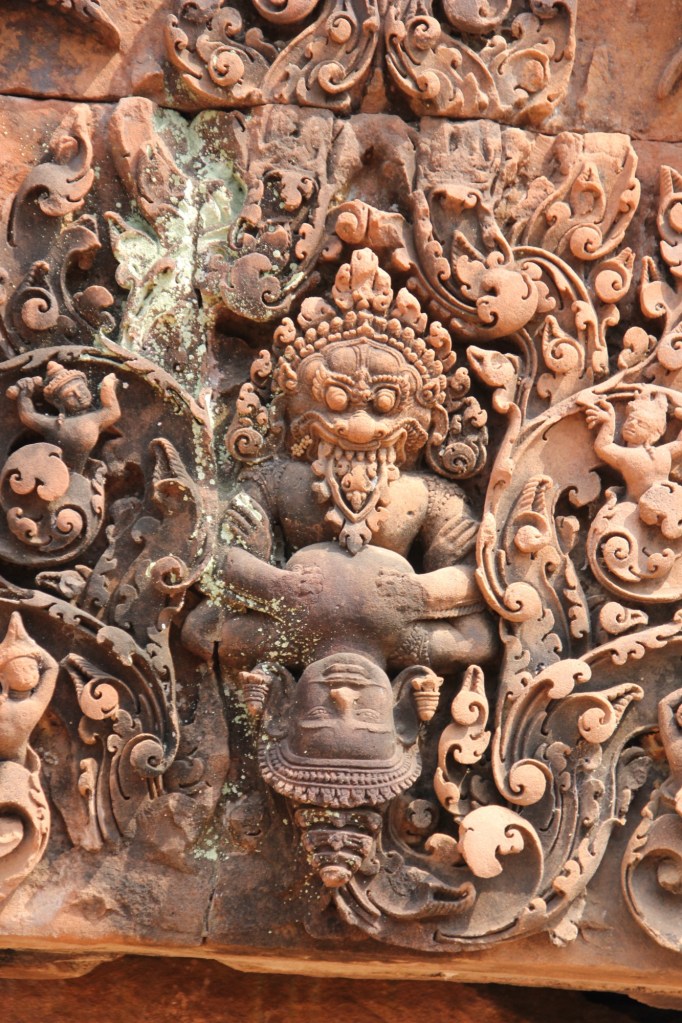
92% of Cambodians follow Theravada Buddhism, a form that arose in the 13th century and emphasizes monastic life, Pali scripture and meditation. The temples, such as this one were originally inspired by Hindu teachings and beliefs, shifting over time to reflect Buddhist beliefs. For example, the our guide showed us this carving and told us the story it depicted.
The Hindu god Brahma (god of creation) and the demon king were at odds. The demon king wanted revenge on Vishnu so he pretended that he wanted to follow Vishnu. Initially Brahma didn’t believe the demon king and kept denying him the opportunity. The demon king persisted and eventually Brahma relented and blessed the demon king with 5 gifts: that he couldn’t be killed by a man or animal or killed in a building or killed during the day or at night or killed in heaven or on earth or killed with a metal weapon. Once these blessings were received the demon turned on Brahma as was his original plan. Brahma seeing he had been tricked, got help from Shiva (the destroyer) and they figured out that to kill the demon they needed someone who was 1/2 human and 1/2 animal (I.e. as above/ man & lion) doing the deed at dawn, in a doorway space with a claw. The moral of the story is don’t mess with the gods (I may have gotten some of this story wrong (i.e., names, spelling, etc), but you get the gist.)
I took a million pictures at this site. The carvings were well preserved and beautiful in their detail.
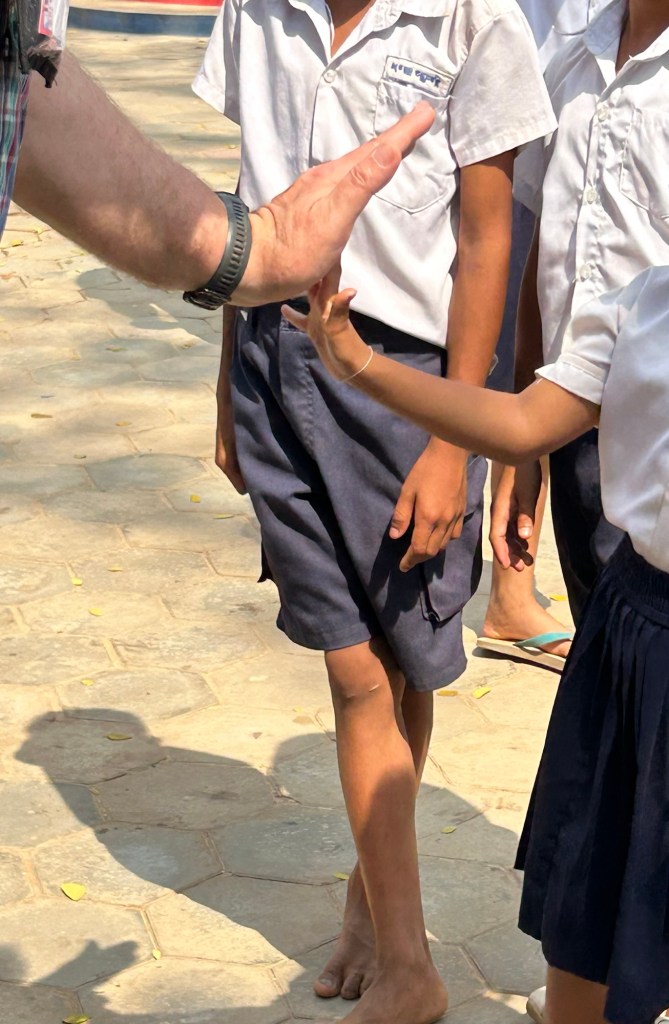
Our next stop on this busy day was the Spitler School. This school was started by an American tourist who saw the need for the village to have their own school. This school has been operating since 2005 and currently has 1200 students in either primary or middle school (grade 1-9). It was fun to interact with the kids.
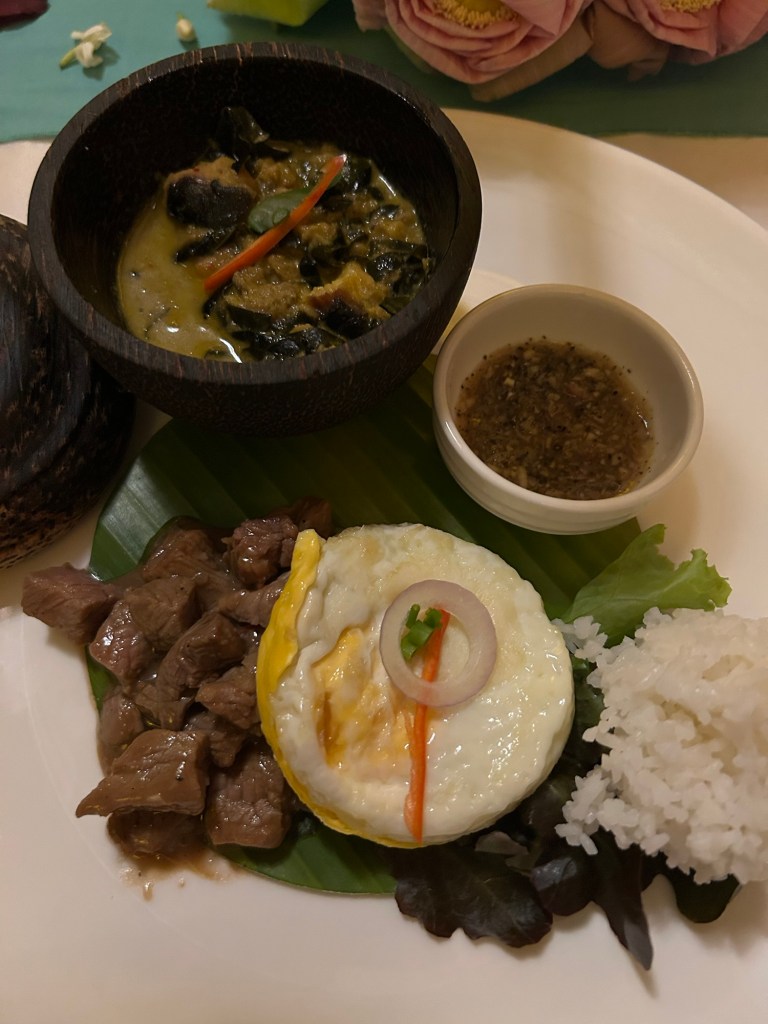
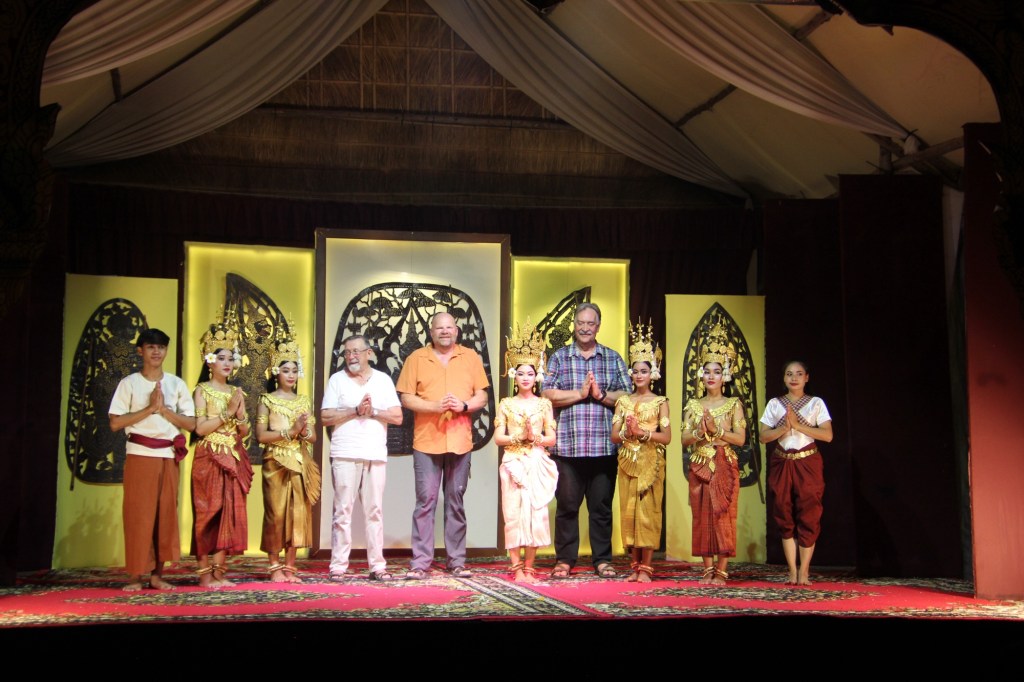
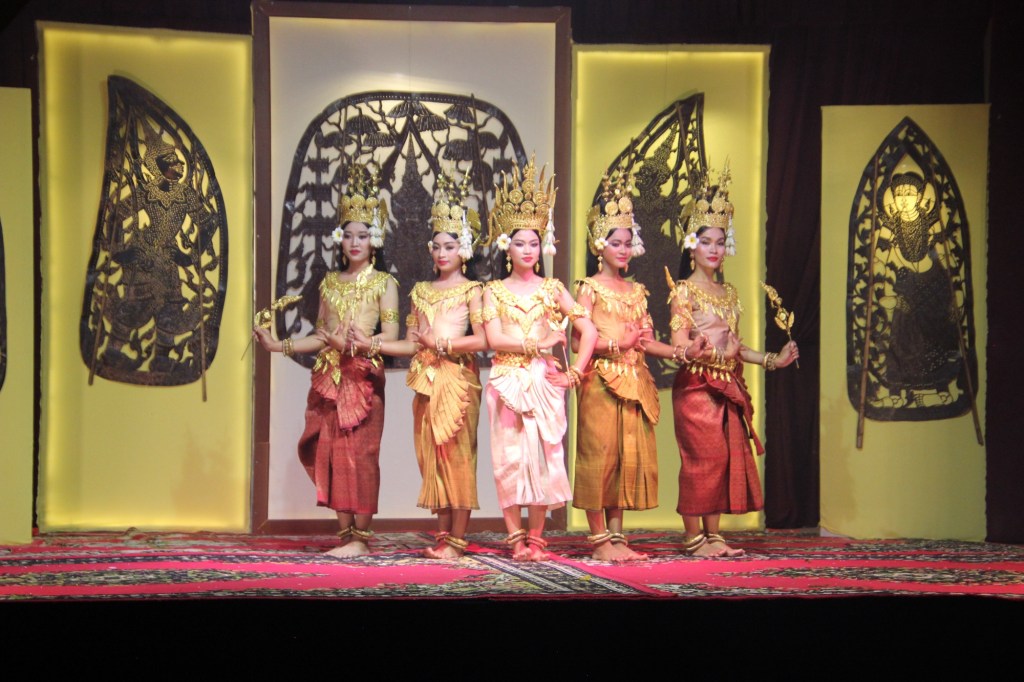
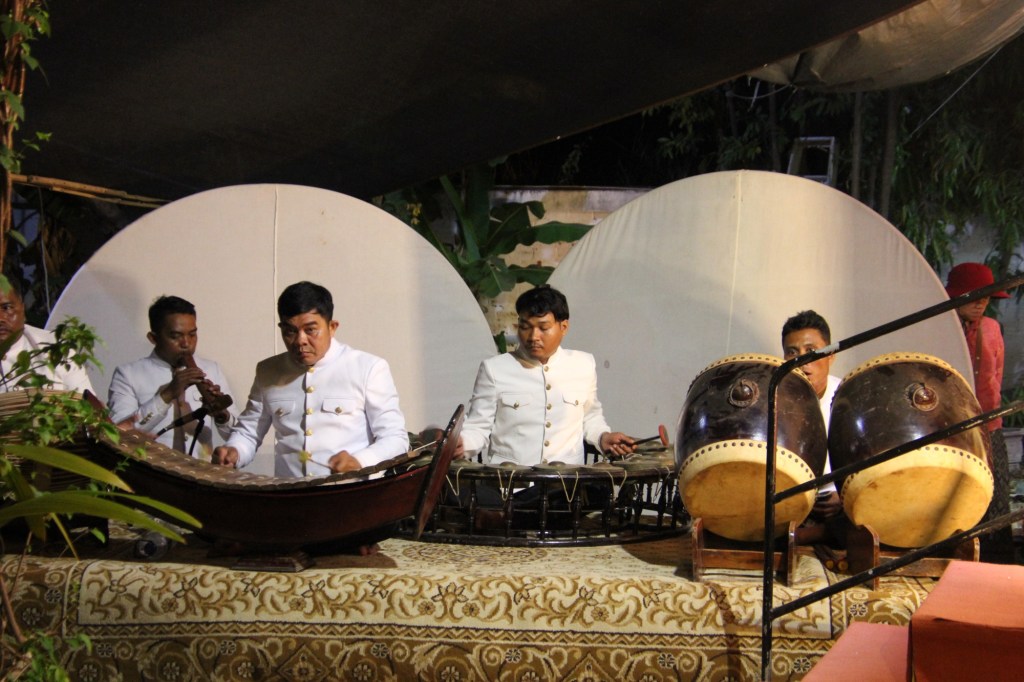
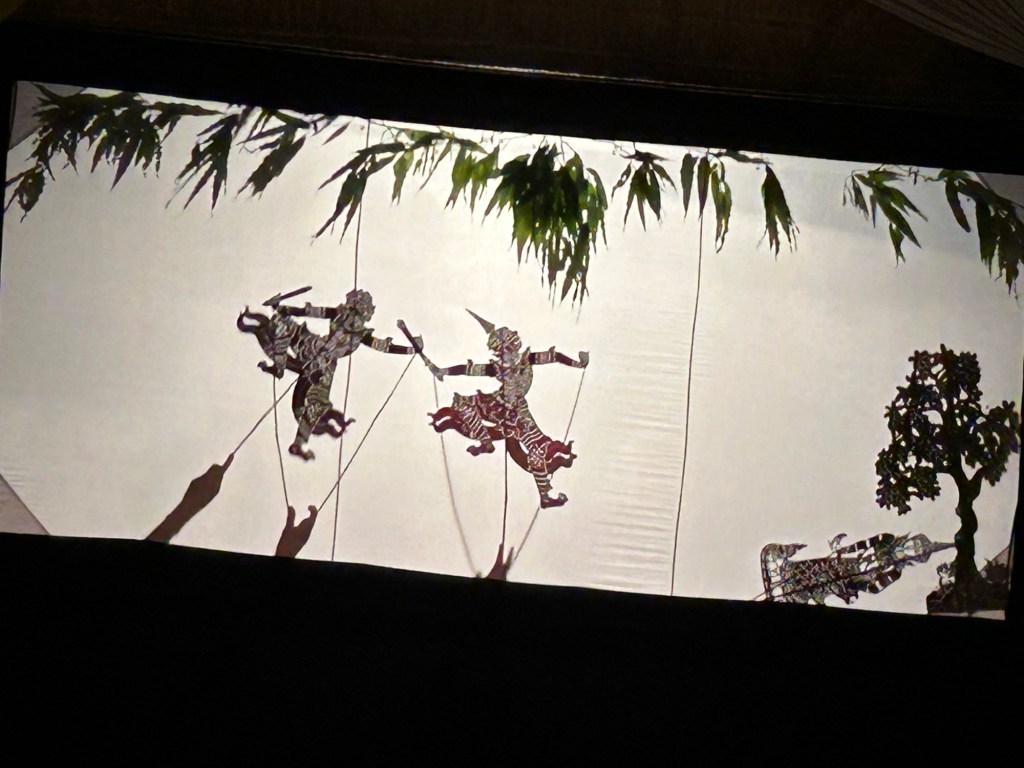
Our day ended with a dinner and cultural performances. We ate incredible food while watching a puppet play and traditional dancing.
The puppets were shadow puppets telling the epic story of Ramayana. We had heard the story before at one of the temples. It was fun to figure out what was happening. The puppets were made out of tooled leather and operated behind a large screen so we saw the shadow in action.
You may now understand why I am delayed in posting. We were exhausted in a good way by the end of this day. We crashed with the reality that we had a 4 am wake up call for the morning. Stay tuned for Cambodia Day 2.
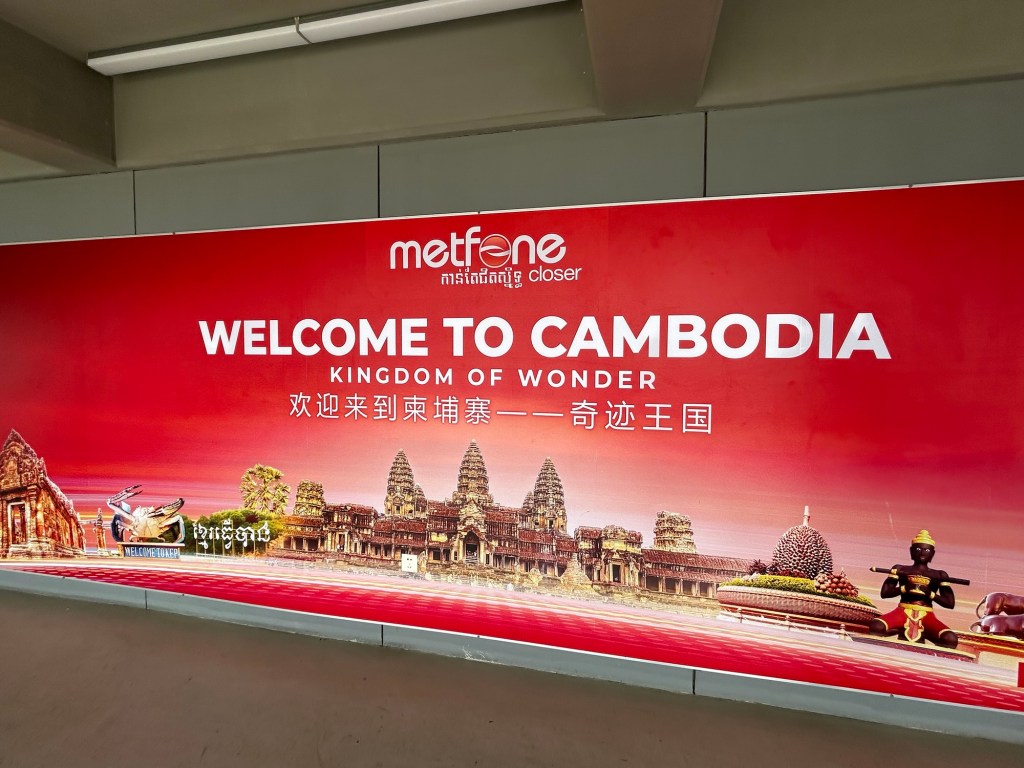
Today was a transition day. We were up before dawn to catch a plane to Siem Reap, Cambodia. We arrived without any difficulty around noon and took a bus tour around town. Siem Reap is tourist central in Cambodia as it is the community closest to Angkor Wat. This community thrives because of tourism. It has only recovered 40% of the tourist industry since COVID shut everything down but it is still pretty busy. I
t was 34C with 73% humidity here today, so after checking in we had lunch by the pool followed by a swim. It was incredibly refreshing. The swim was followed by a film about the temples in the area, including Angkor Wat. We have two jam-packed days of touring coming up to see all that we can in the area. Stay tuned!
Some parting images from Laos:
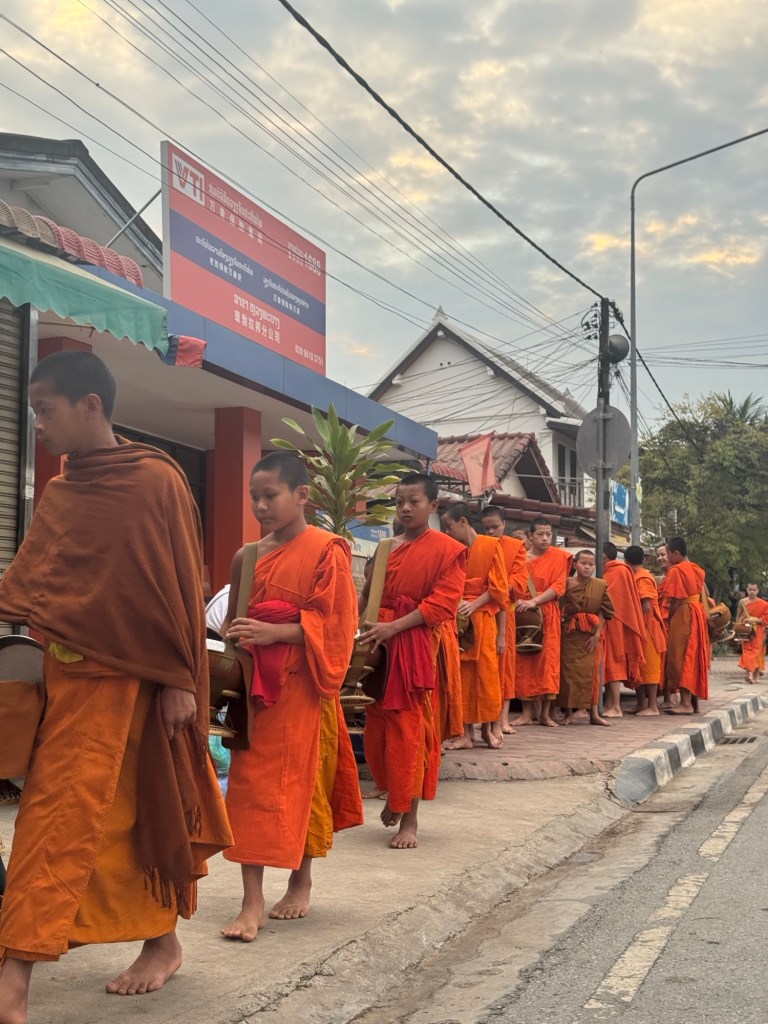
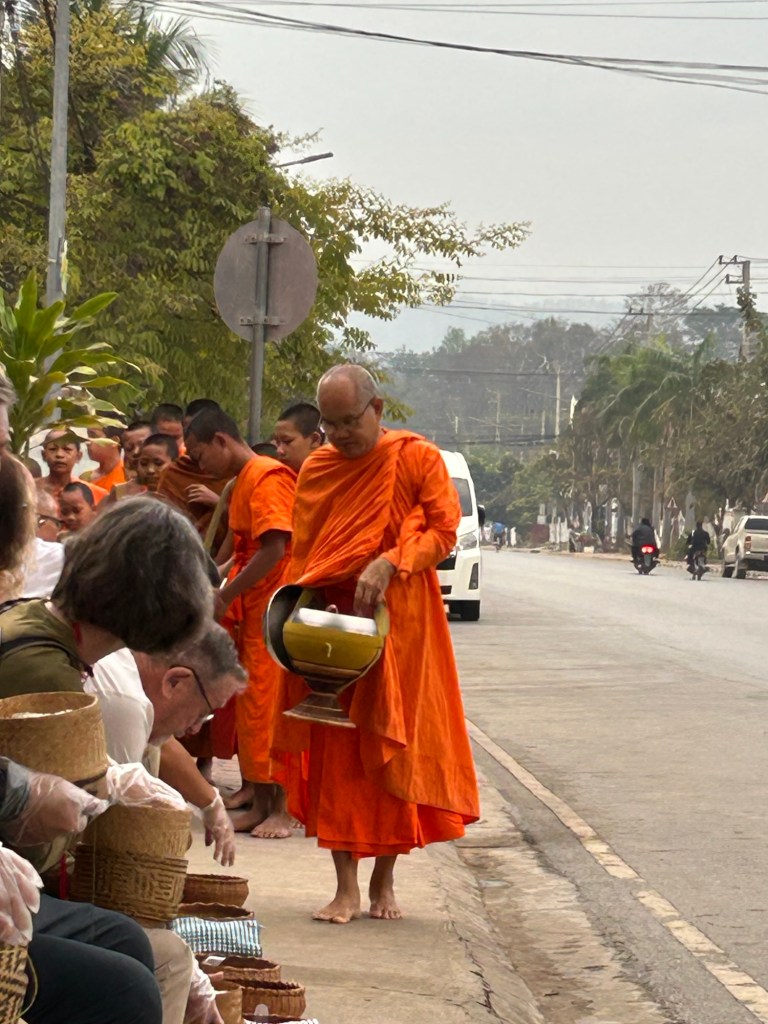
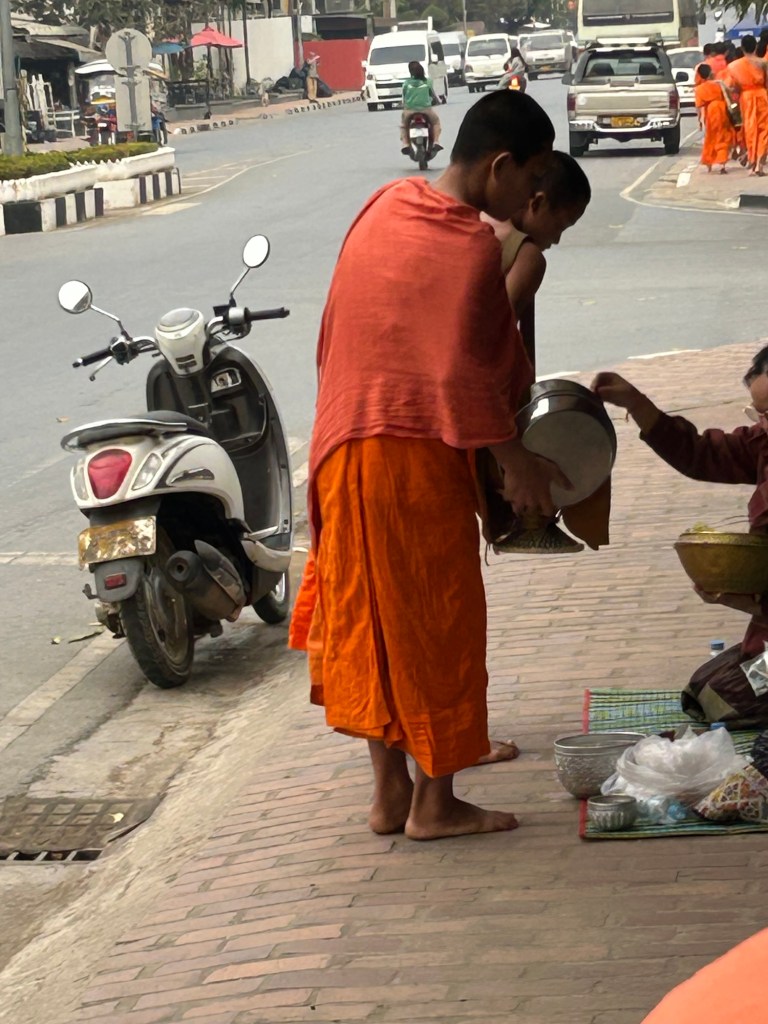
Monks receiving alms in Luang Prabang
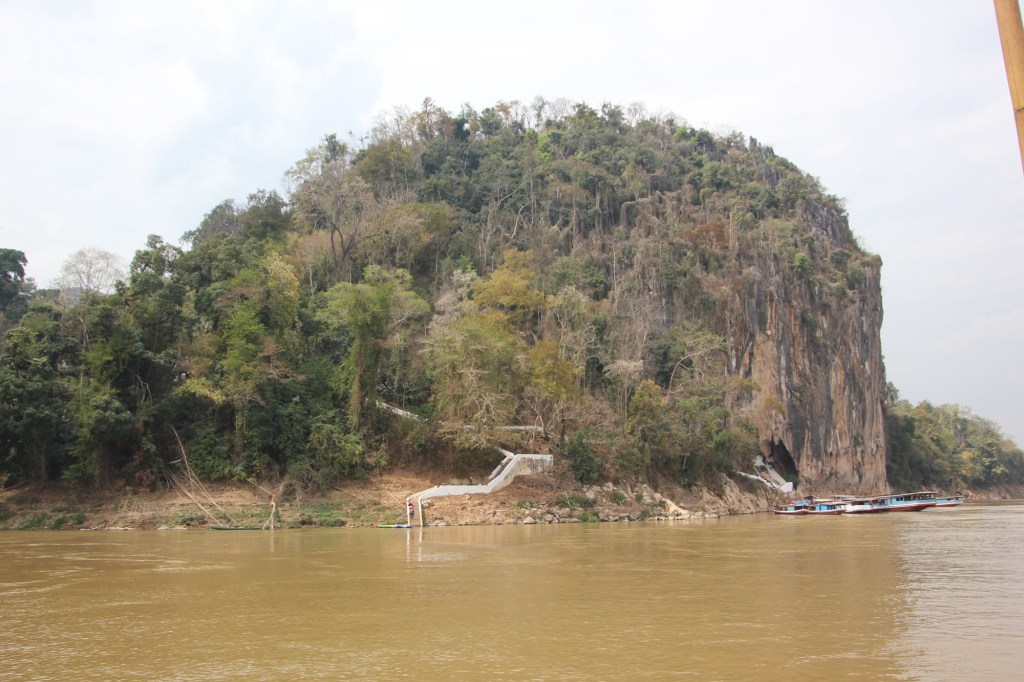
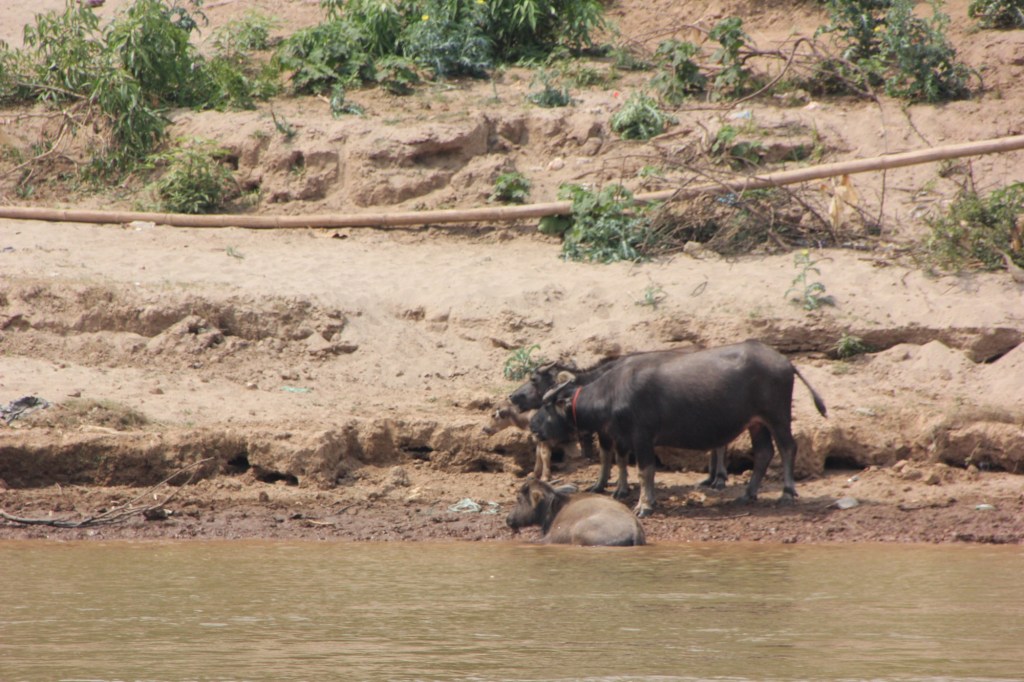
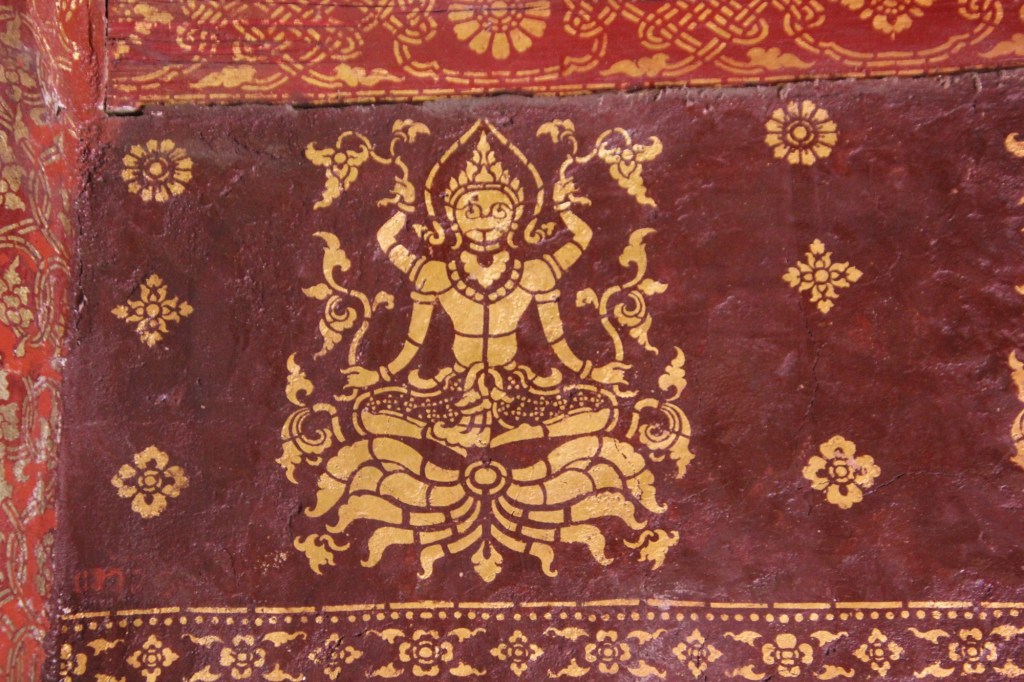
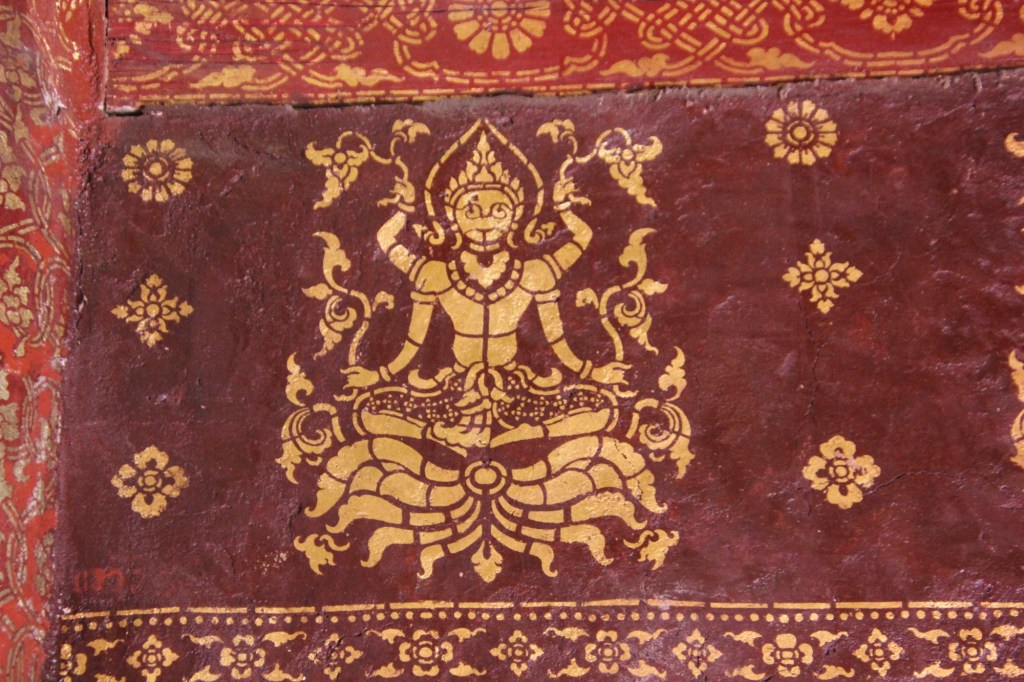
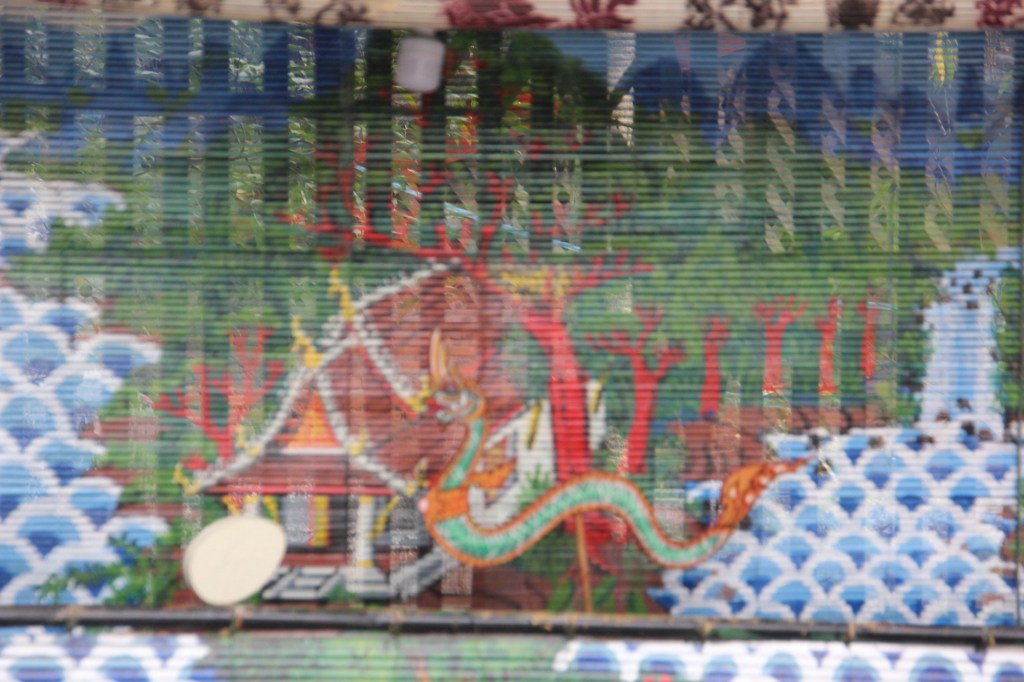
Approaching the Pak Ou caves via Meikong riverboatWater buffalo hanging out in the Meikong riverWall print in a temple in Wat Xieng Thong
We leave early tomorrow so we are having an early night.
We started our day today before dawn. We left the resort at 6:15 and drove to town to give alms to the monks, a practice called Tak Bat. Our guide Dome described the process beautifully and I quote him here:
“Almsgiving is a Buddhist tradition that goes back more than 2,500 years to the time of Gautama Buddha in northern India. In the 5th century BCE, Indian society was undergoing major change. Cities were expanding, trade was growing, and many spiritual seekers were leaving home to search for deeper truth beyond ritual religion. The Buddha was part of this wider renunciant movement.
What made his community unique was how he structured it.
He asked monks to:
👉Own almost nothing 👉Not cook or farm 👉Not handle money 👉Not store food
Instead, they would walk each morning and receive whatever was offered. This dependence was intentional. The Buddha wanted monks to live relying on others’ kindness. It trained humility, prevented the accumulation of power, and kept the religious community closely connected to society.
At the same time, laypeople practice dāna — “generosity” — which is the foundation of spiritual development in Buddhism. Giving reduces attachment and cultivates compassion. So almsgiving is not begging. It is structured interdependence.
Today, in countries such as Thailand, Laos, and Cambodia — especially here in Luang Prabang — this tradition is still very much alive.
Because visitors come to observe it, it can sometimes feel like a performance. However, it is important to understand that this is not staged for tourism. It is a real religious and traditional practice that takes place every morning, whether anyone is watching or not.
The number of monks and novices you see may vary depending on how many are residing in the monasteries at that time. Availability naturally affects what we witness.
Each morning at dawn, this quiet ritual expresses a profound idea:
No one lives independently. Giving and receiving are both spiritual practices.” (Warodom Kokhue, 2026).
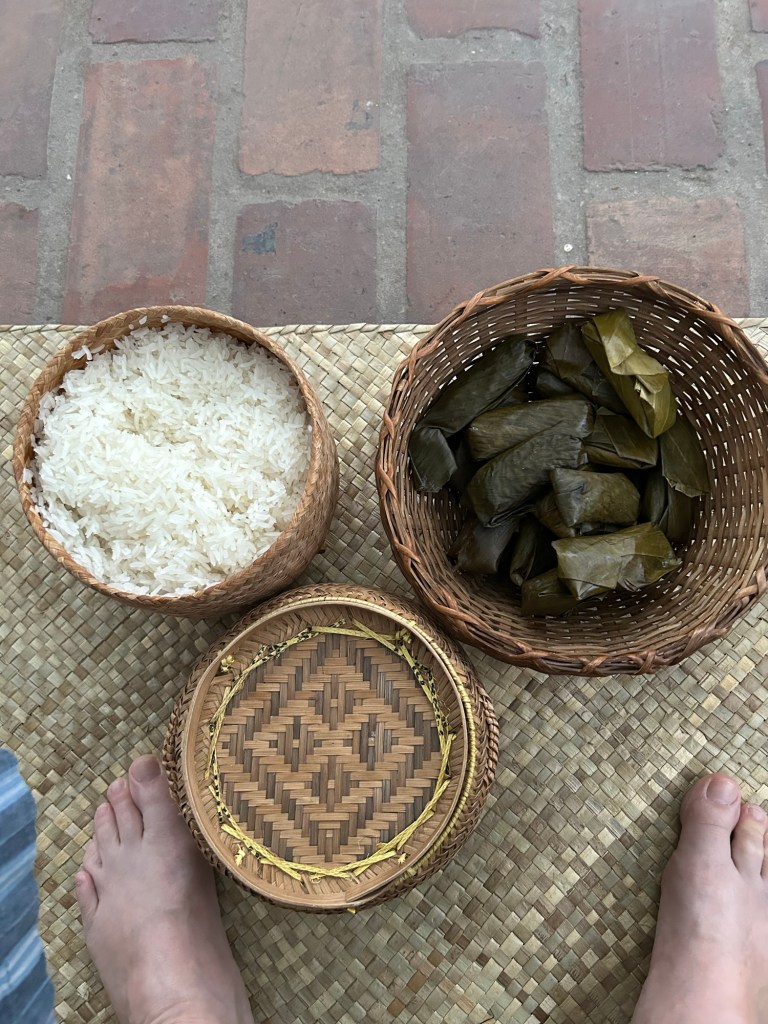
We sat on stools with baskets of sticky rice and Laos food wrapped in banana leaves. As the monks and novices walk by, we put a gloved handful of sticky rice and the wrapped food in their bowls, one after another. These monks come into town from a rural area to gather food to bring back to their communities, not just for the monks but for others who have need.
The Tak Bat ceremony
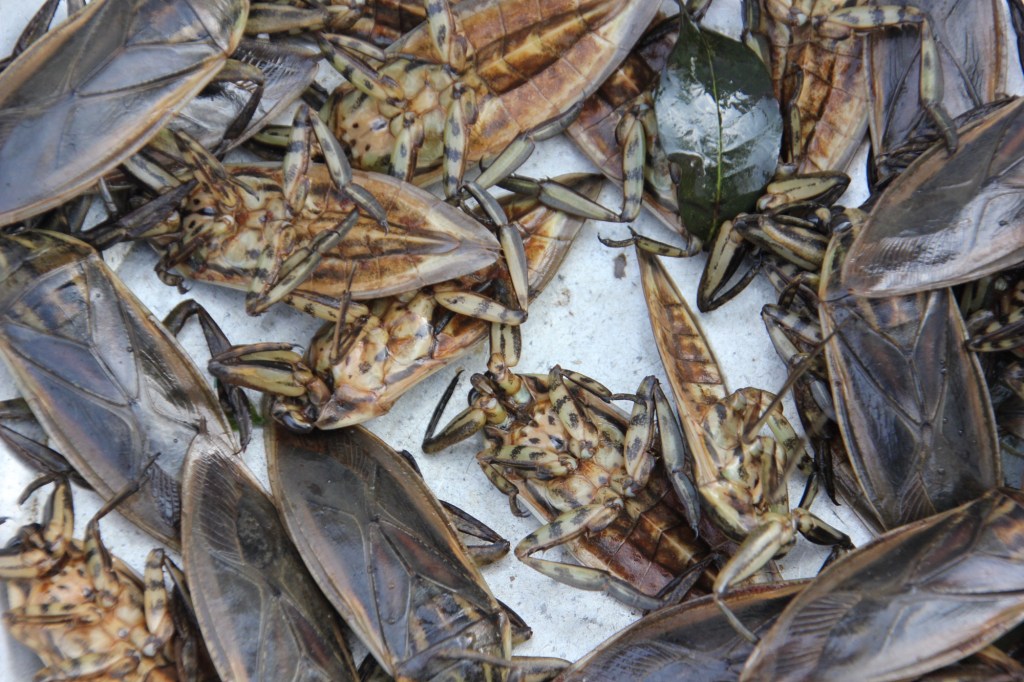
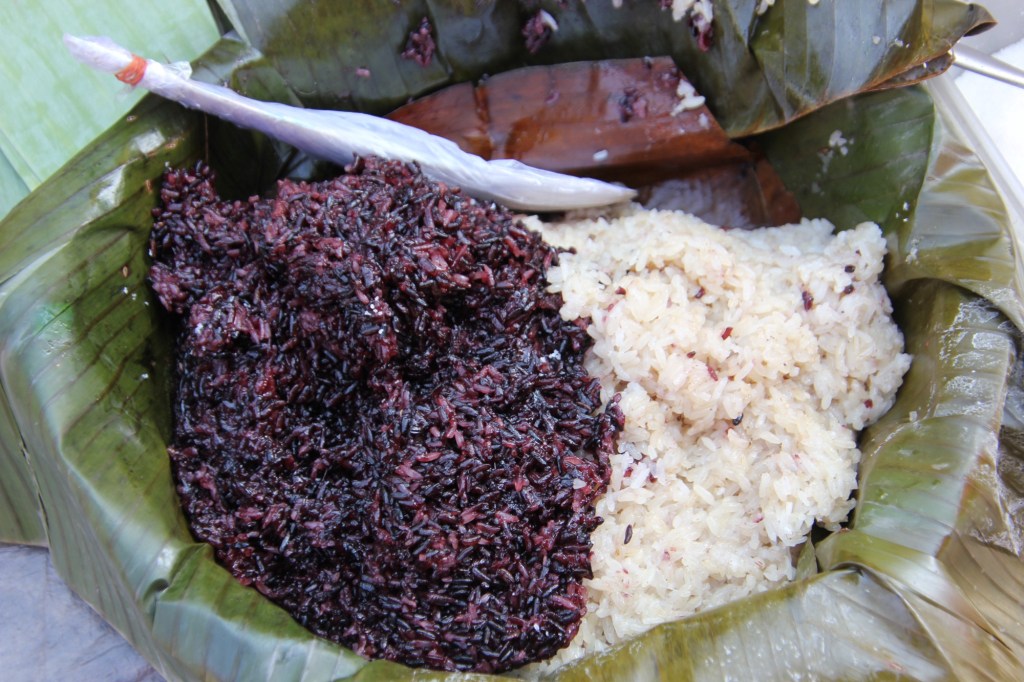
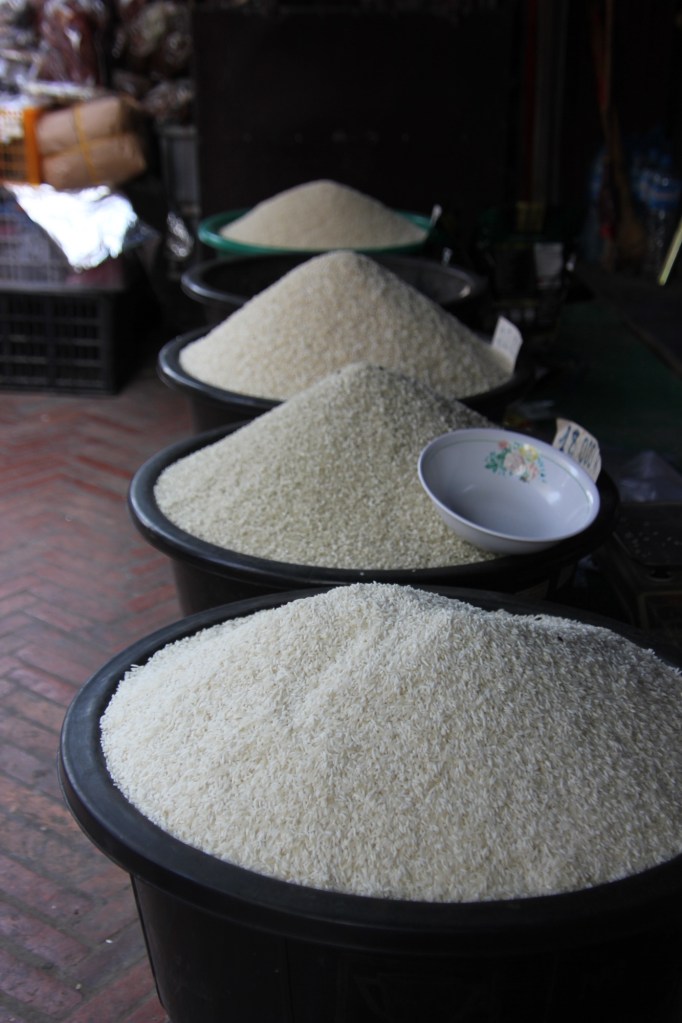
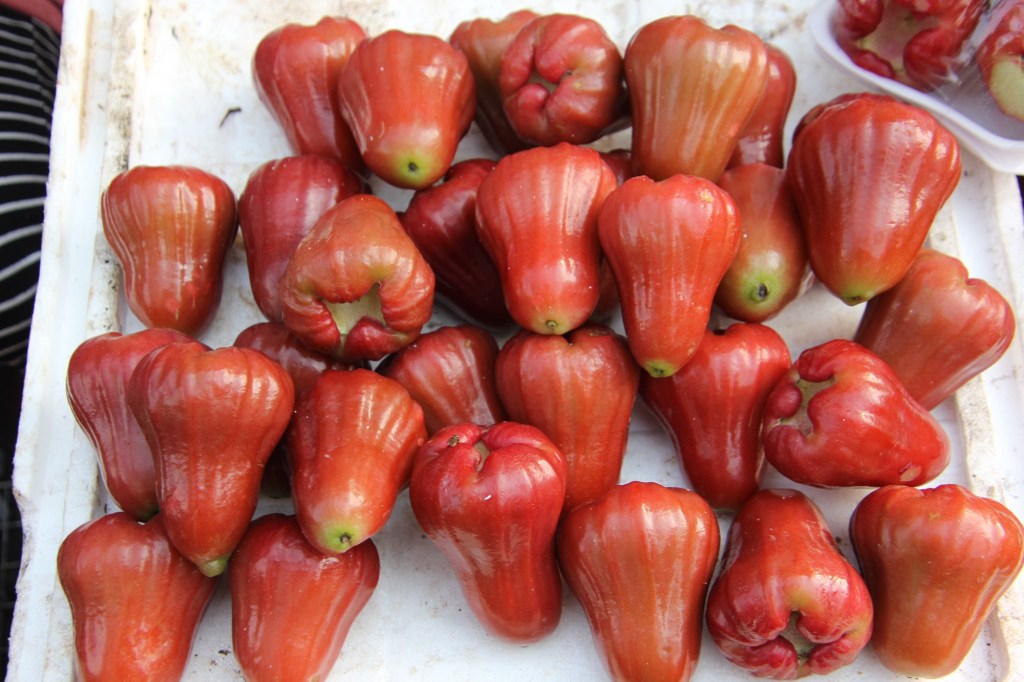
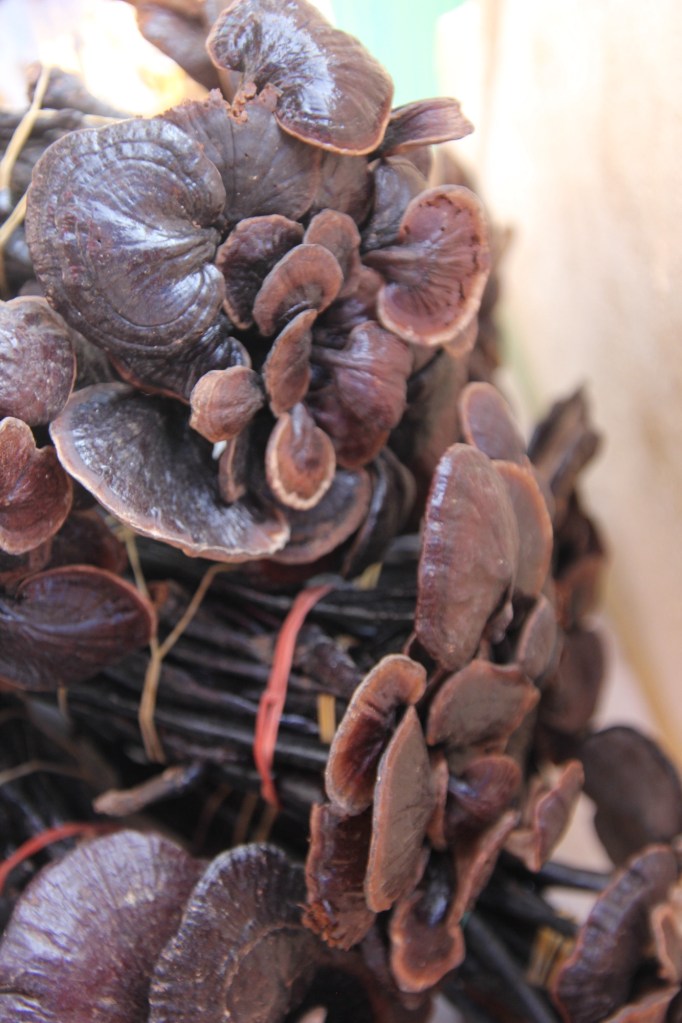
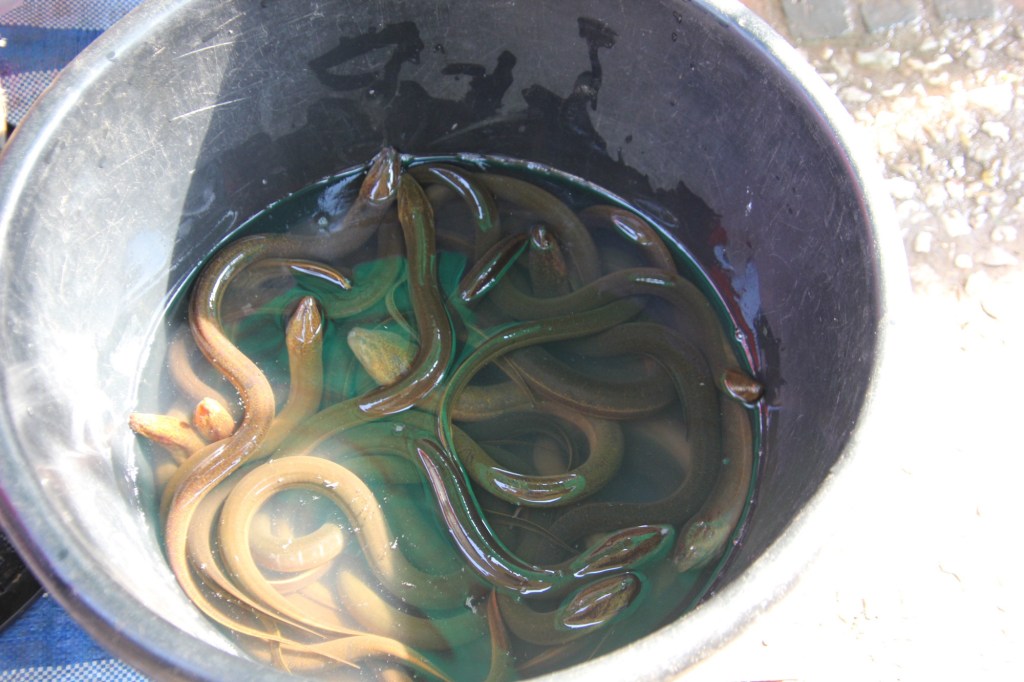
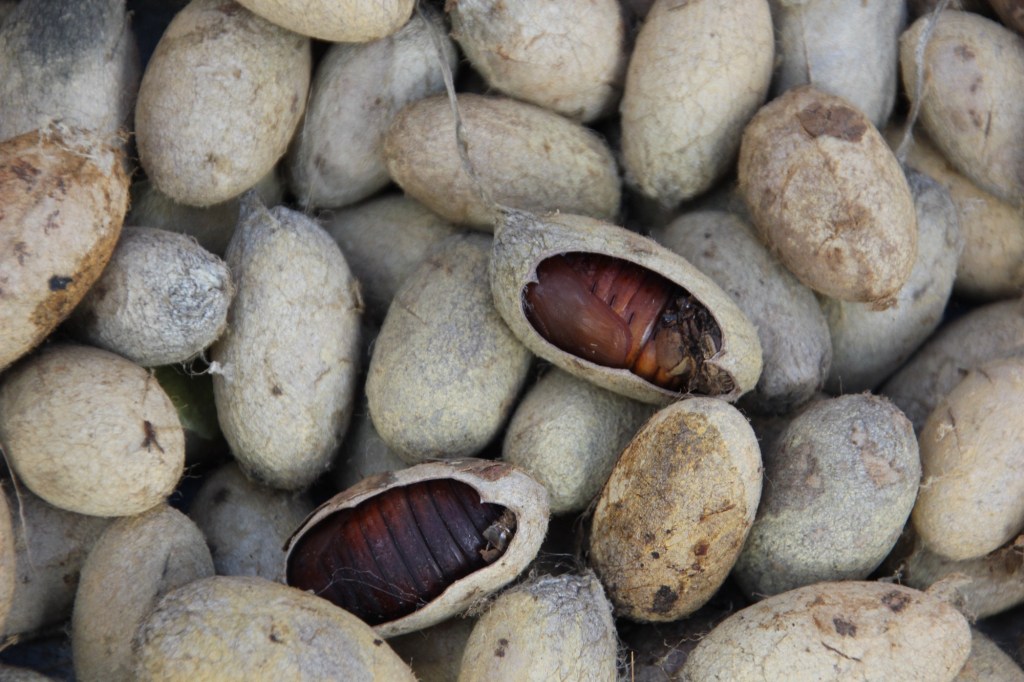
After a quick breakfast back at the hotel, we headed to the morning market in Luang Prabang. What a place! This is the market where local people do their daily shopping. Trigger warning, I am showing pictures of the most unique items I saw. The market was bustling and full of both tourists and locals.
Live roachesBlack & white sticky riceDifferent types of riceRose applesMushroomsEelsSilk work larva
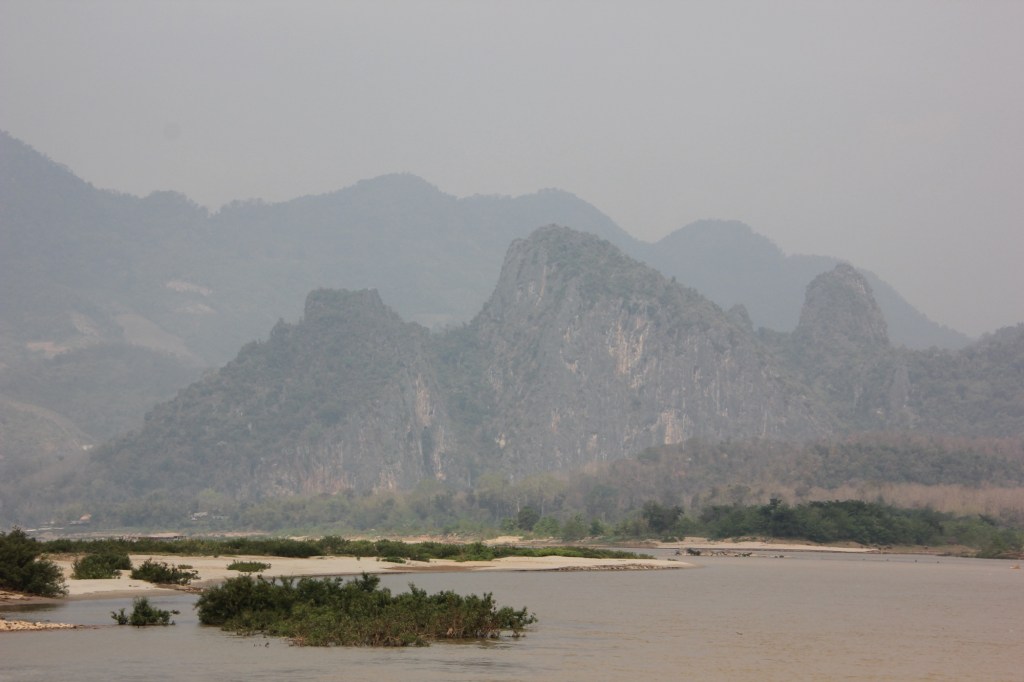
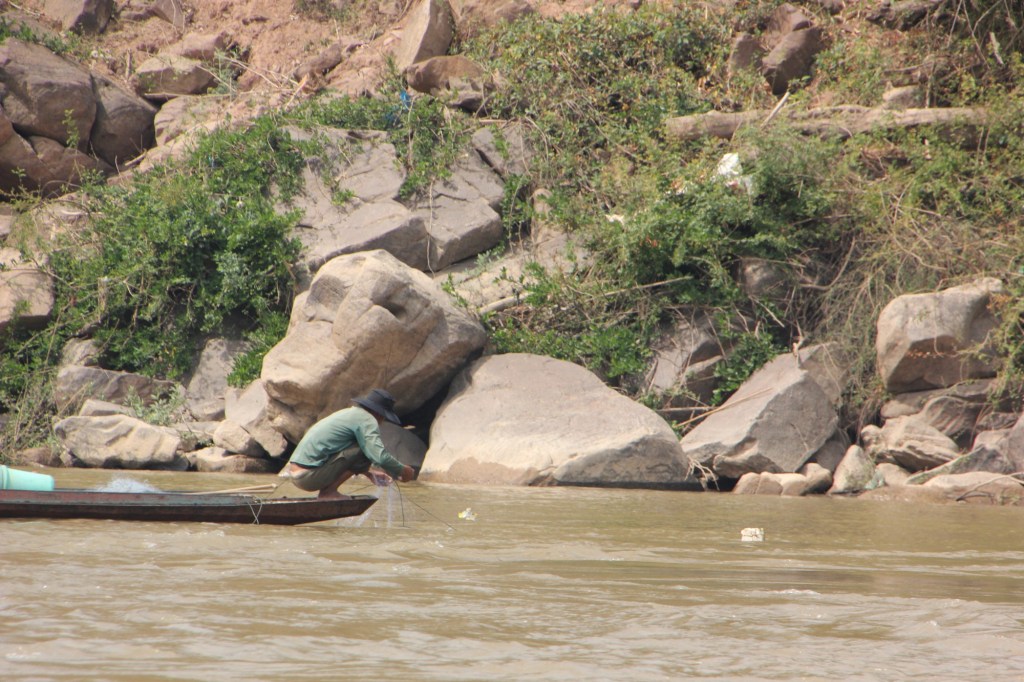
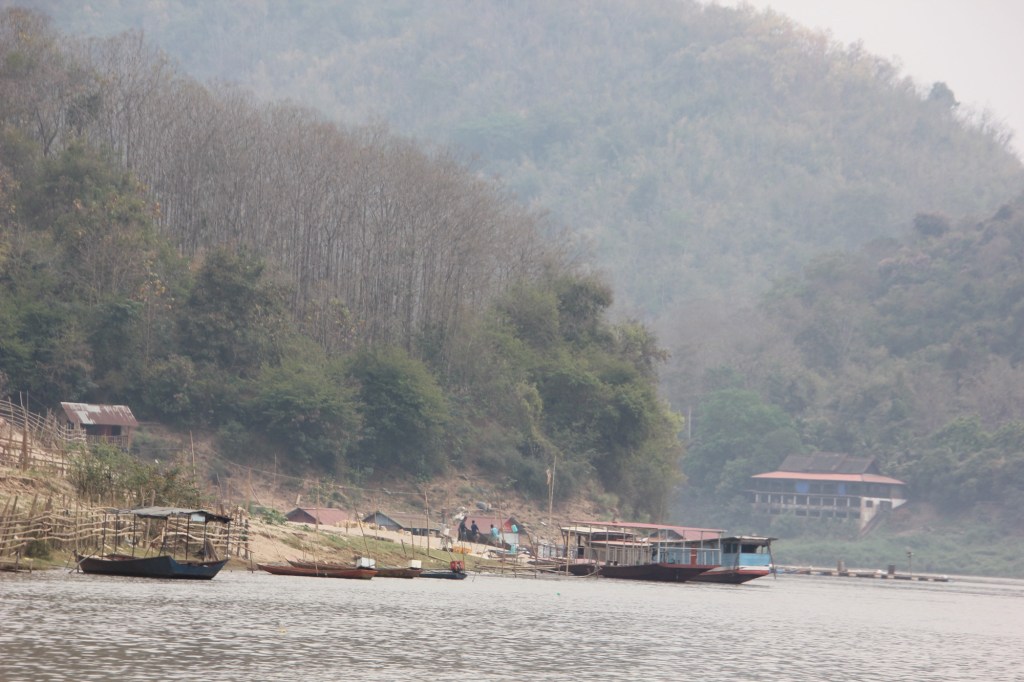
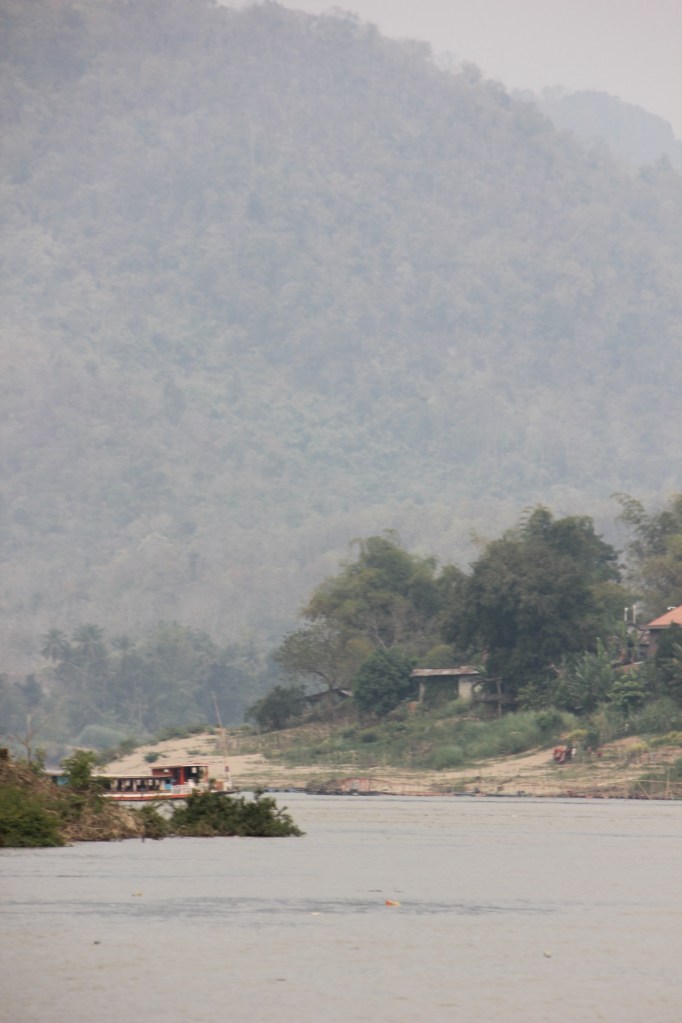
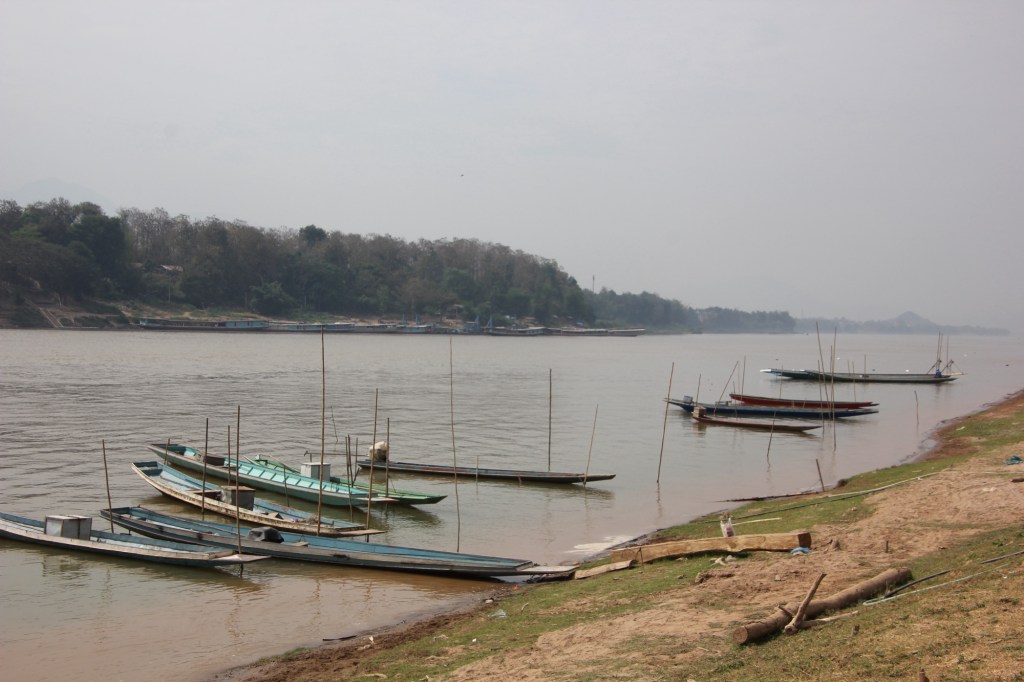
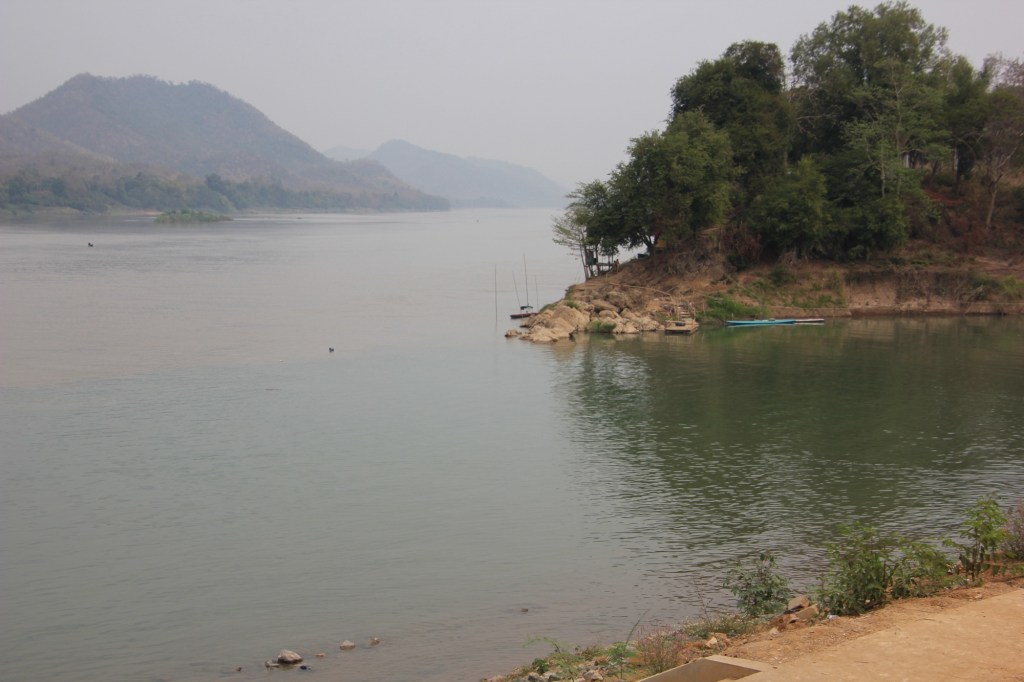
The rest of our day was a cruise on the Meikong river. The Meikong is 350 miles long, beginning in the Tibetan plateau and ending in the Meikong Delta in Vietnam. It also crosses south west parts of China, Myanmar and Cambodia on the way. This river is literally called the mother of all rivers and it provides for millions of people. The river provides food and power with over 1000 species of fish and over 50 dam projects to generate hydroelectricity.
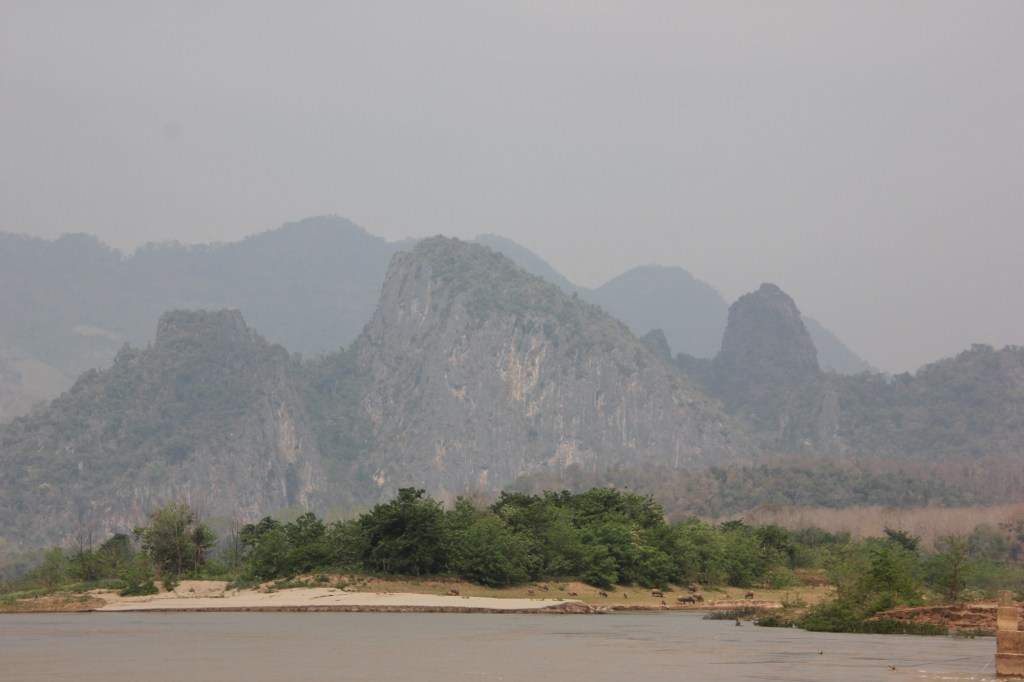
The day was hazy due to smoke from farmers slashing and burning in the mountains to prepare the soil for their crops. The river is bordered on both sides by mountains with more development on the east side of the river.
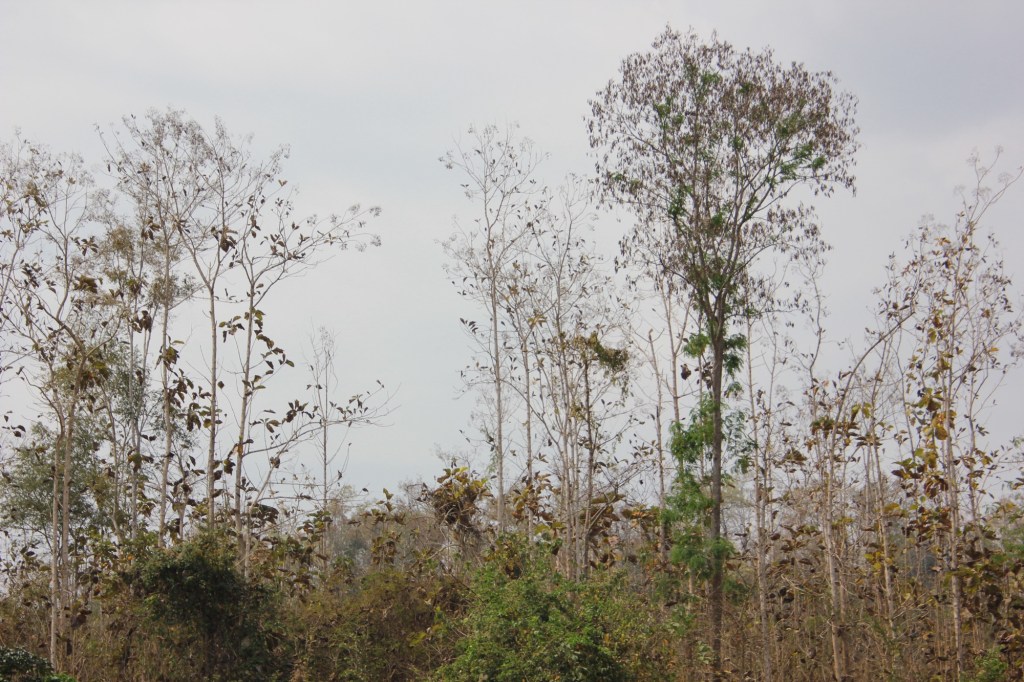
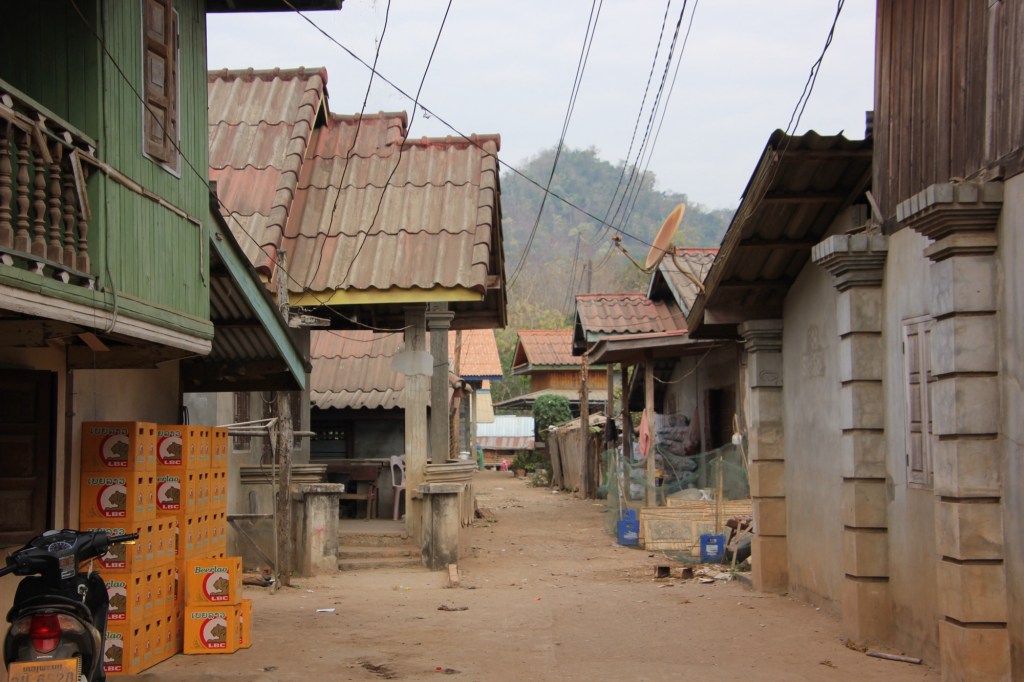
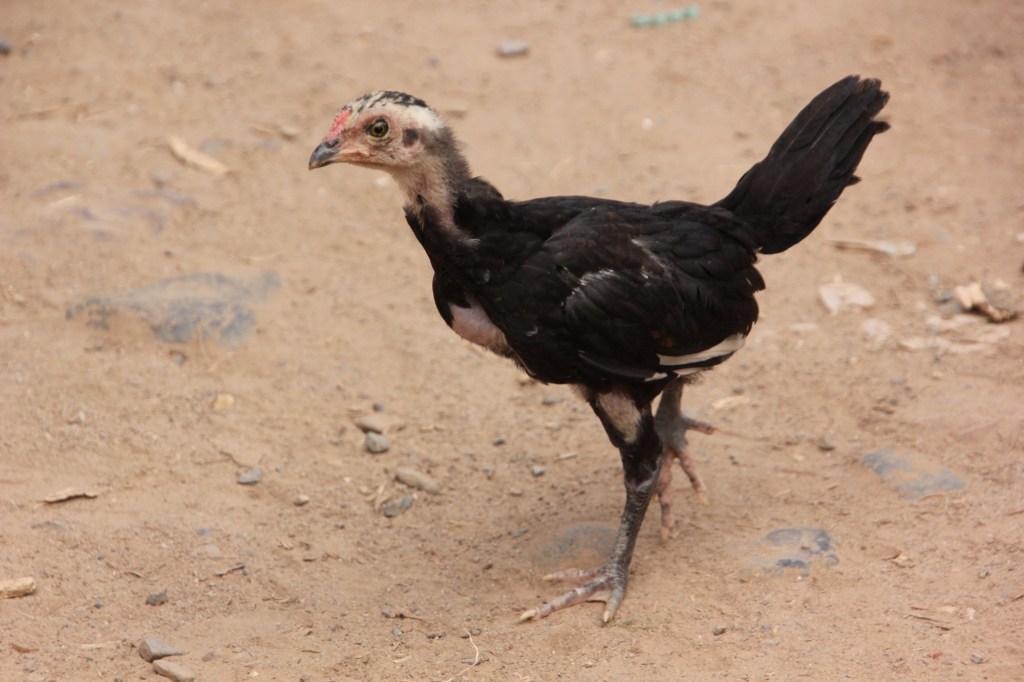
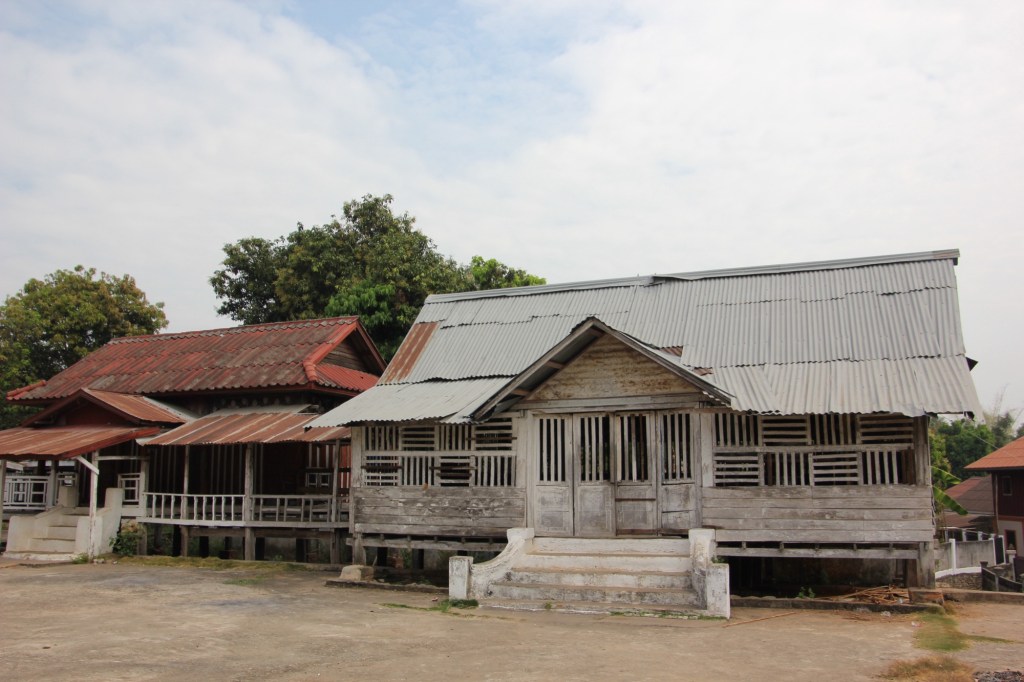
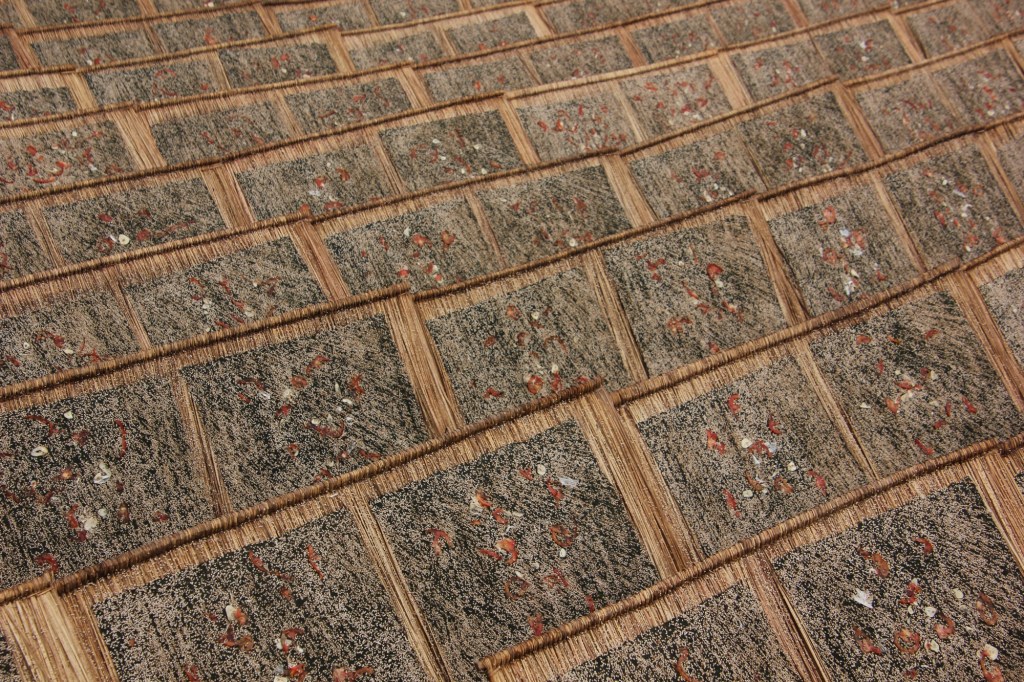
Fishing in the riverFarmed teakThe villageChicken on the looseTraditional house in the templeDrying river weed (a delicious snack) A rural village
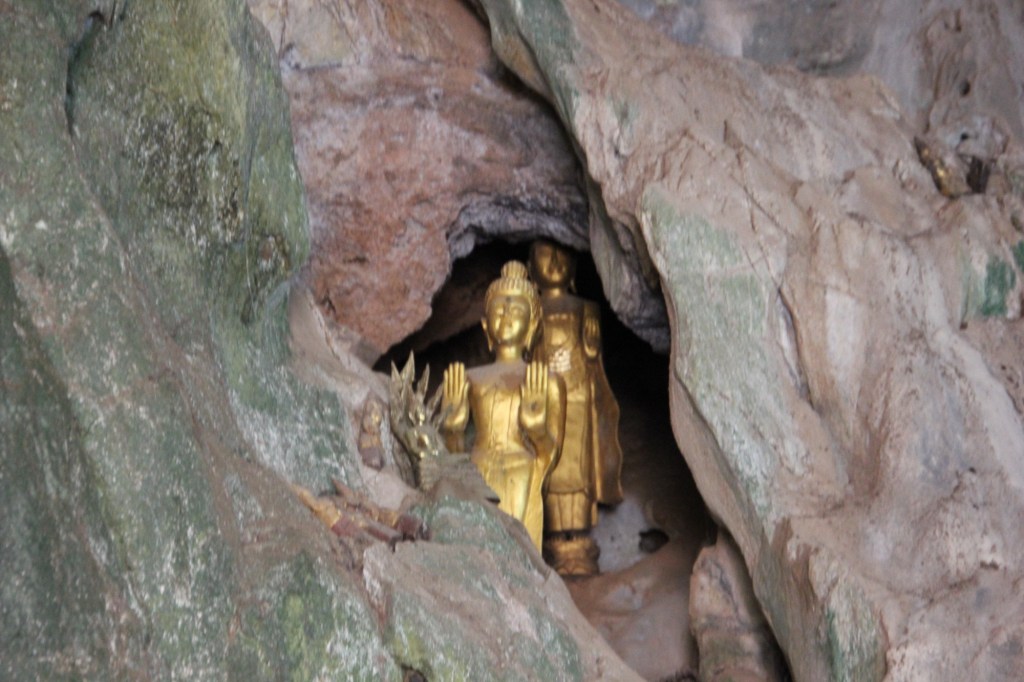
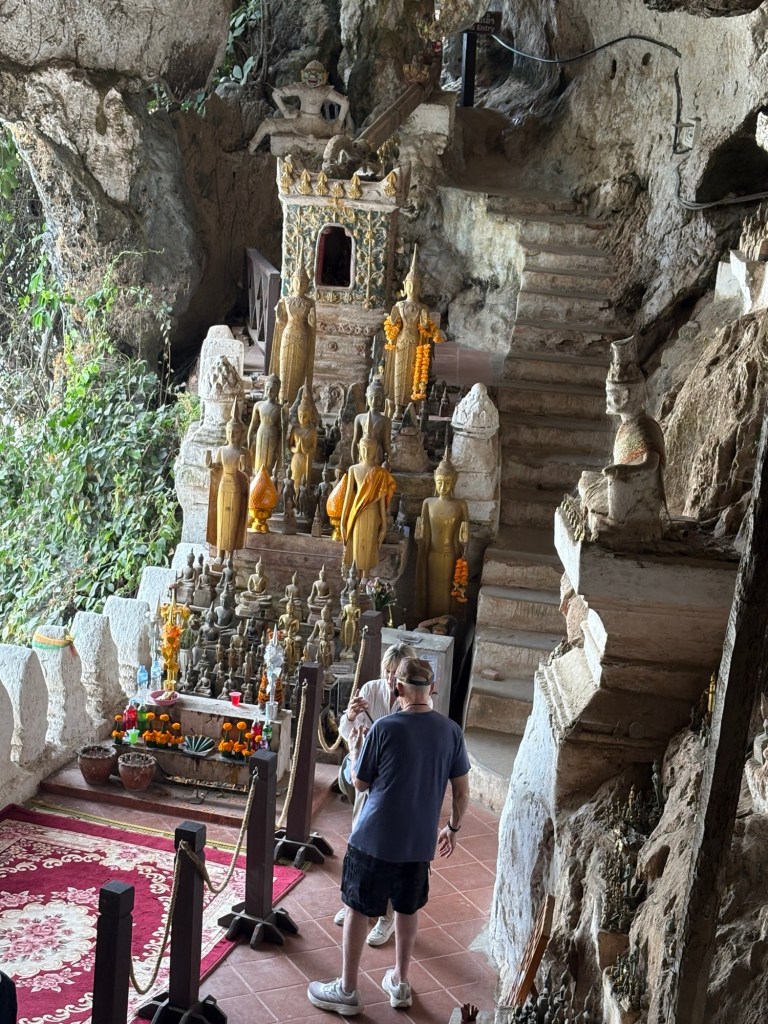
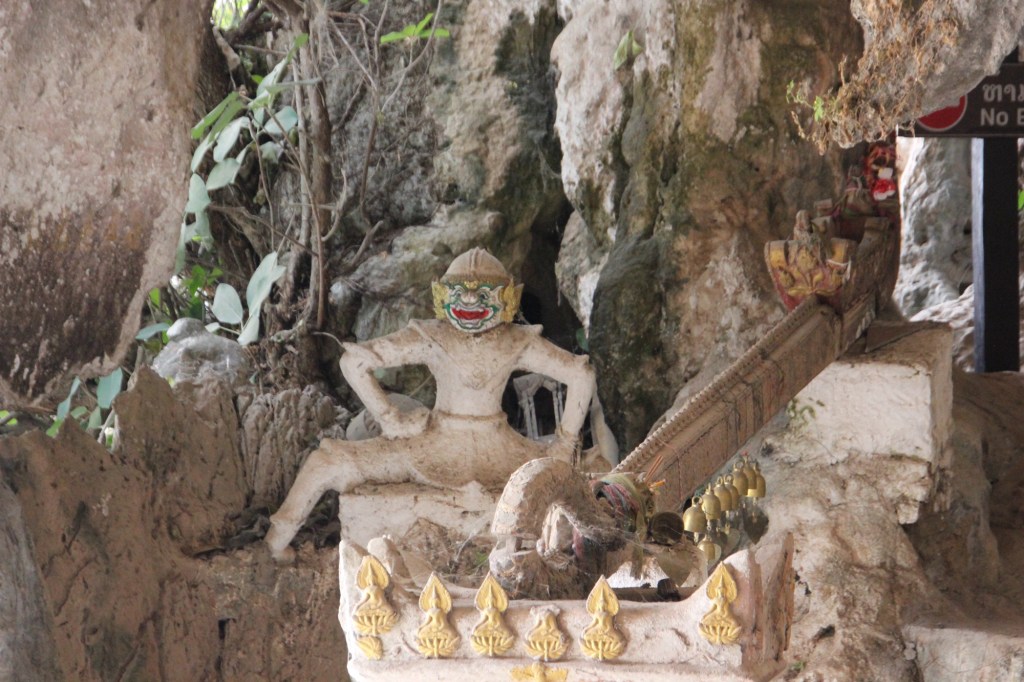
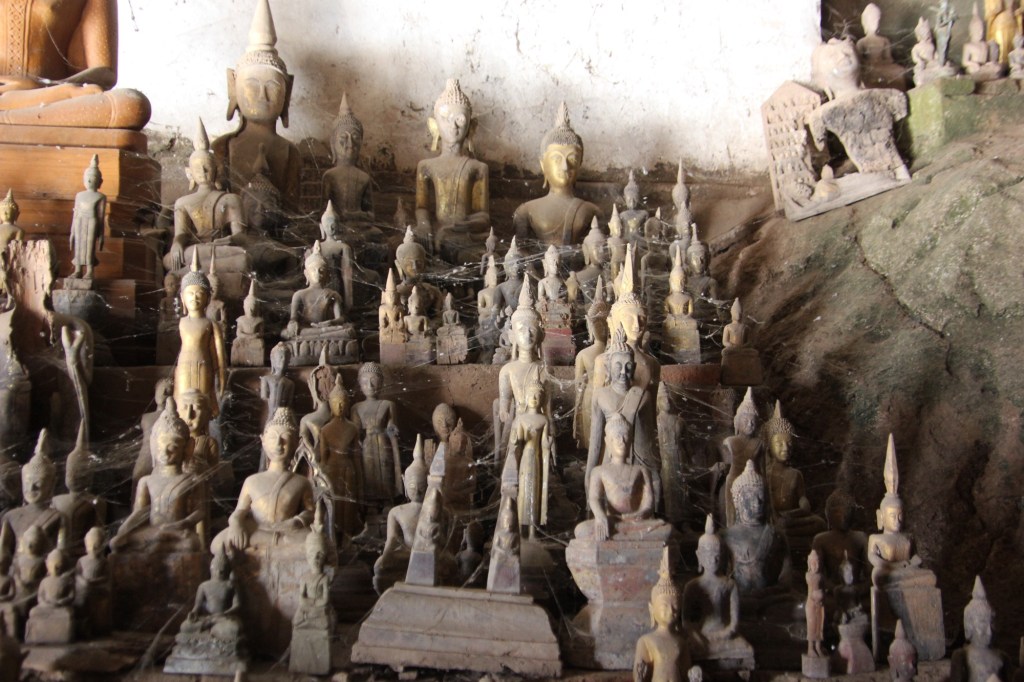
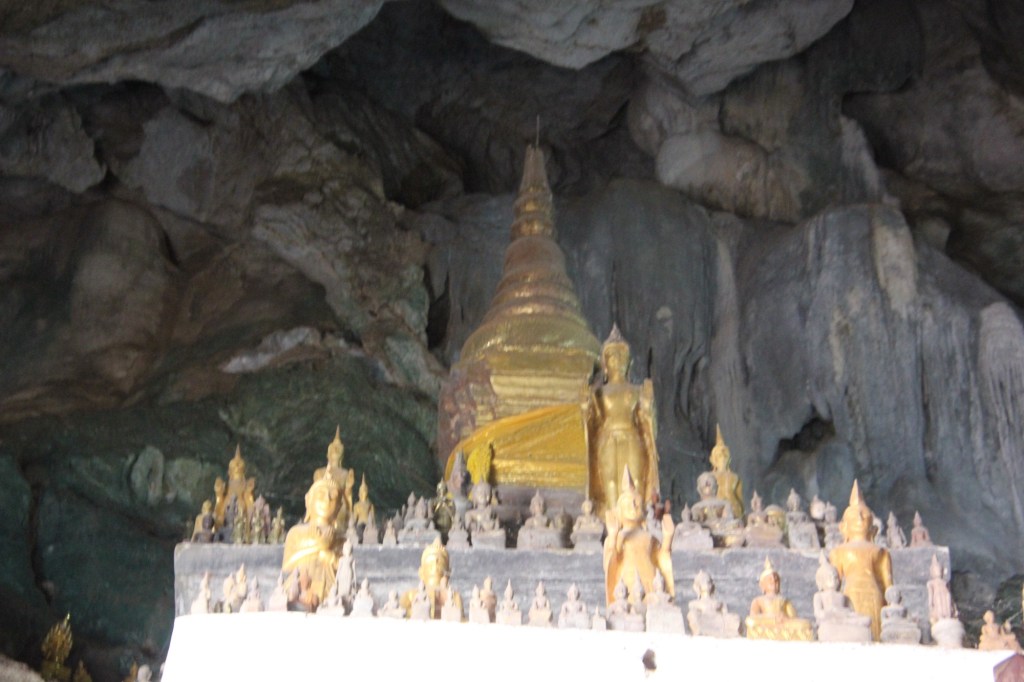
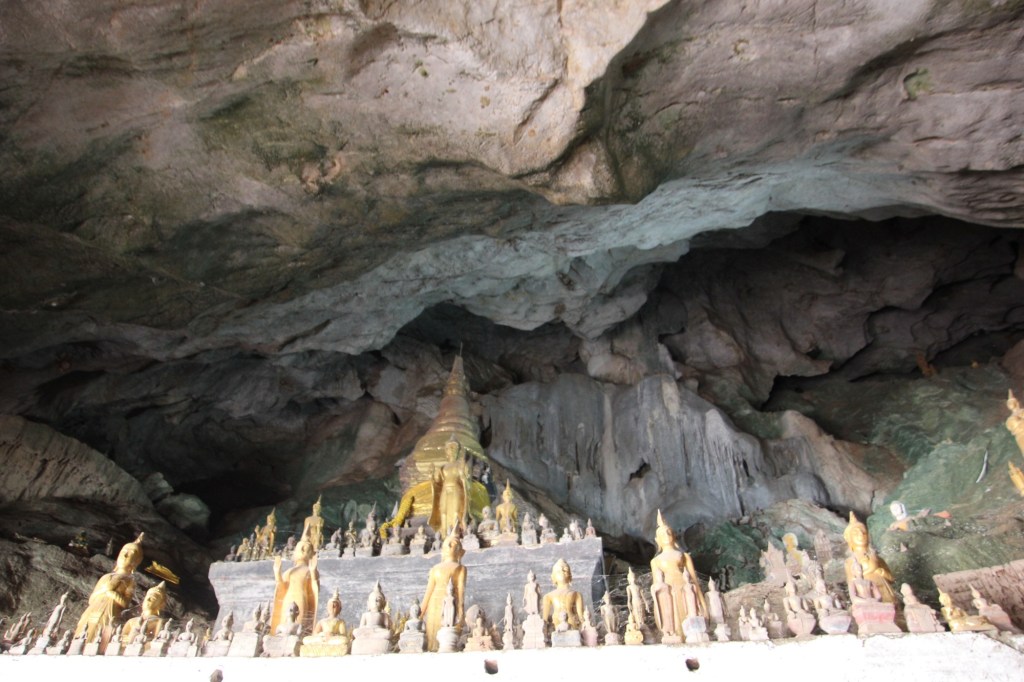
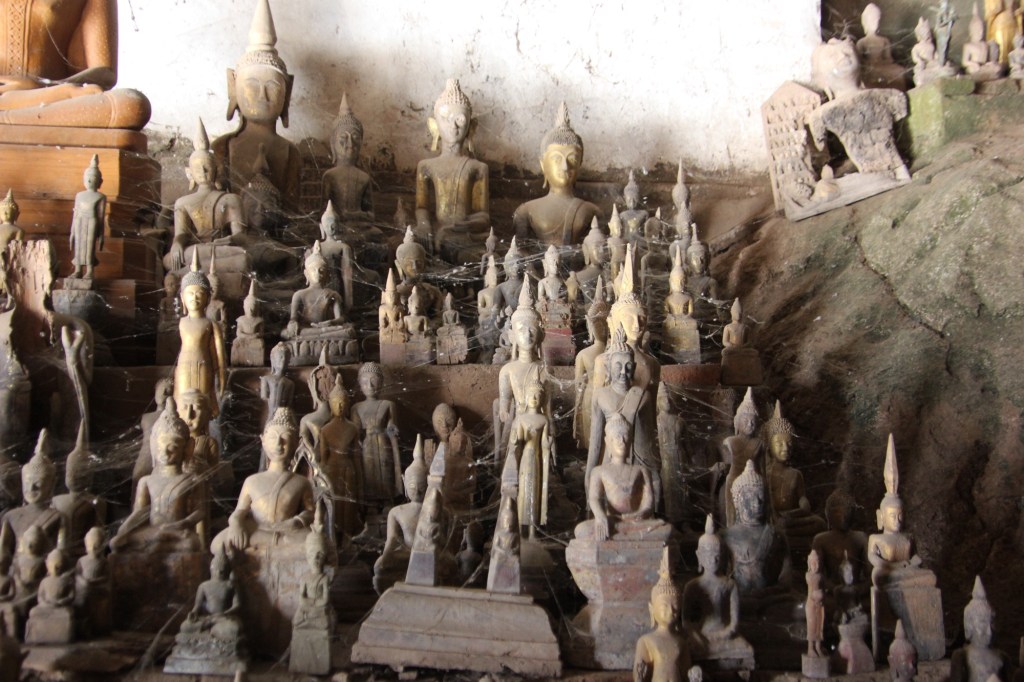
Our second stop was a visit to the Pak Ou Caves located about 25 miles from Luang Prabang at the confluence of the Meikong and Nam Ou rivers. These caves are filled with thousands of statues of Buddha. People have been coming here to worship and leave statues of Buddha for hundreds of years. The statues were in every nook and cranny and every year people from the surrounding villages continue to leave more statues.
Inside the caveHindu god predating Buddha
We finished our visit to the caves. Many of us just went to the first cave but others braved the steep 300 steps to get up to the second set of caves with more statues. Whatever exertion we experienced was rewarded with a delicious lunch on the way back to Luang Prabang. The downstream journey was relaxing and somewhat quicker. We made it back to the hotel and back to the pool for a refreshing dip. Greg headed into town for the night market while the rest of us chose a simple dinner at the resort.
Tomorrow we have a 5:30 am call for breakfast as we head out pre-dawn for the airport. Tomorrow is Cambodia!
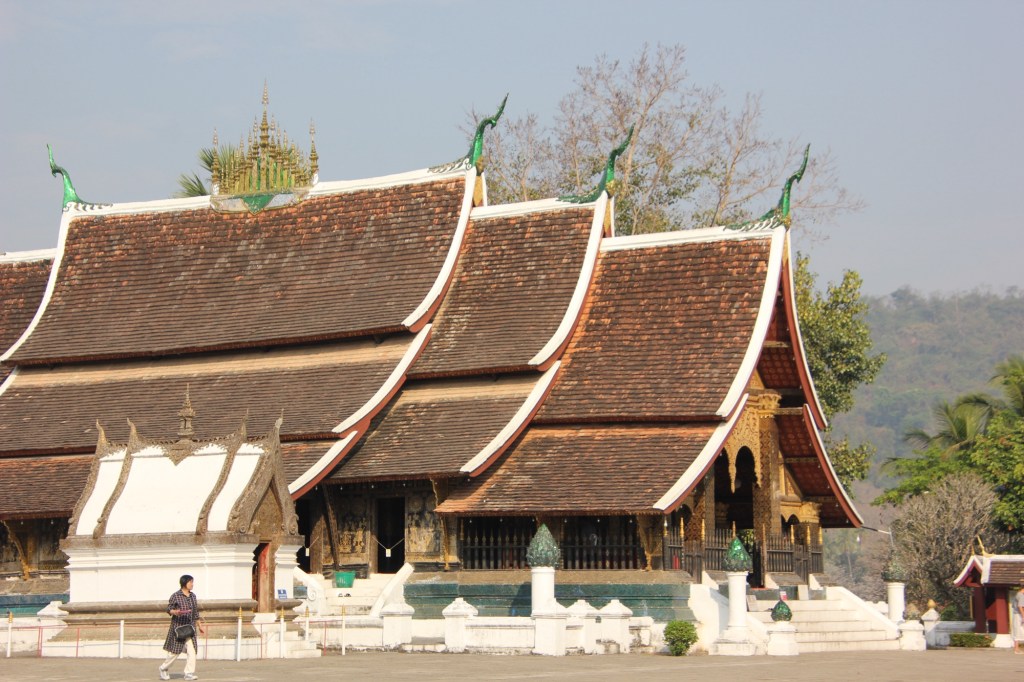
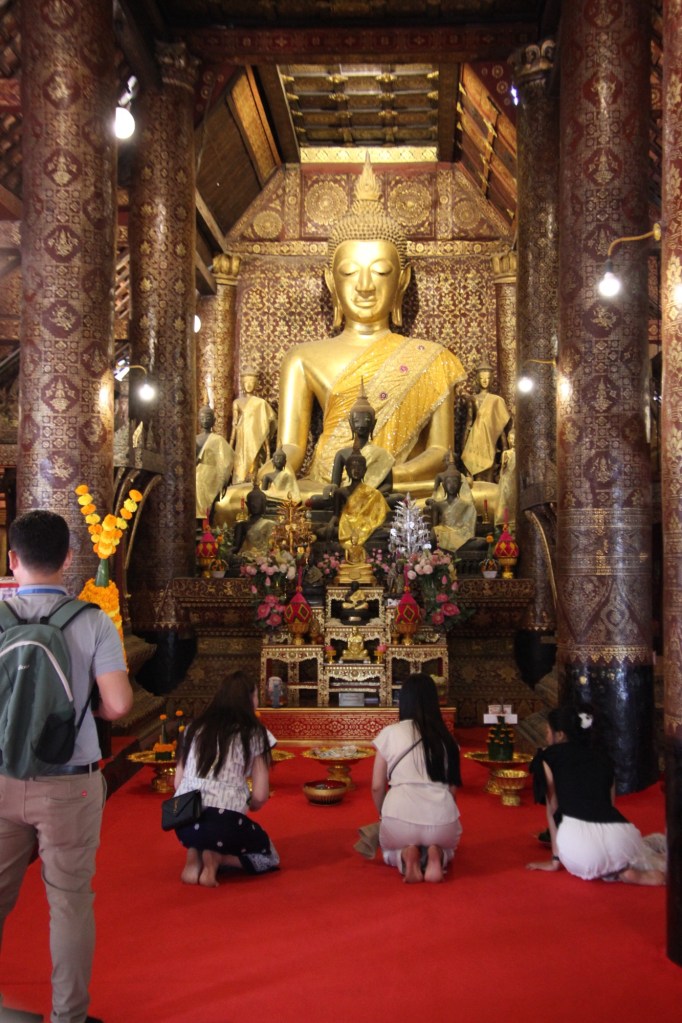
It was a busy day today. Our local guide, Sam, took us on a walk through Luang Prabang on our way to the first temple of the day. We took our marigold tower from last night’s dinner to the Wat Xiengthong (I.e., temple of the city surrounded by the mountain wall). Wat is the Laos word for temple and this temple was named after the original name of Luang Prabang. It was interesting, but we are starting to think of temples like we do churches in Europe- they all start looking alike.
The temple outside and inside
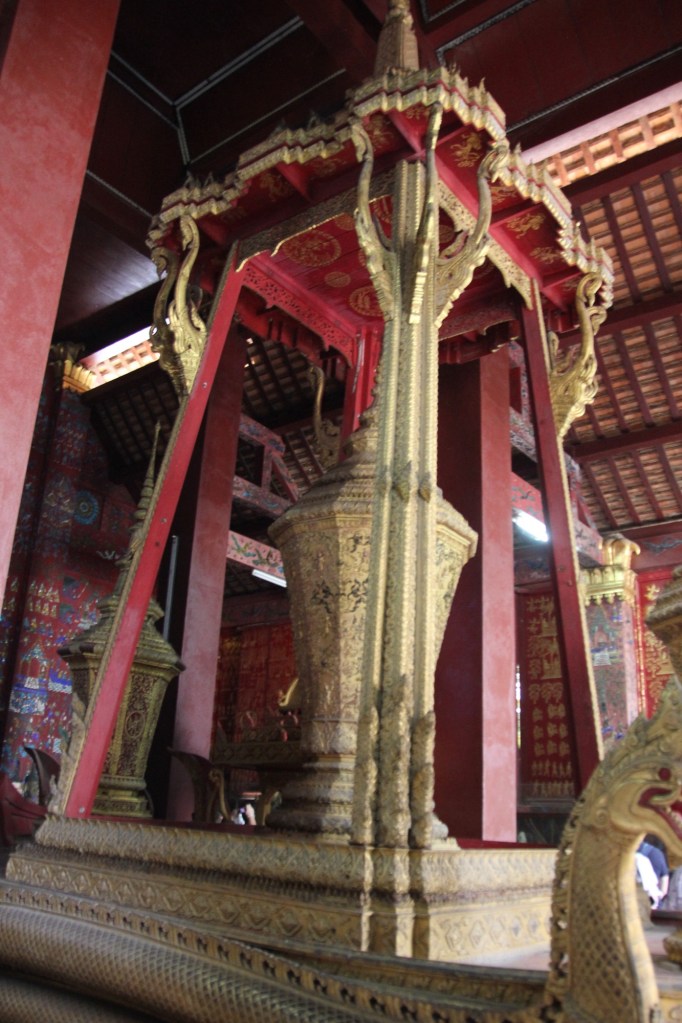
However, this temple is a very important one in Laos and is considered a masterpiece of Lao architecture. One of the buildings on site housed the funeral chariot for the kings of Laos. The king’s coffins were carried through the town upright with the body either standing or sitting in the coffin before being taken for cremation. The coffins of commoners were always horizontal.
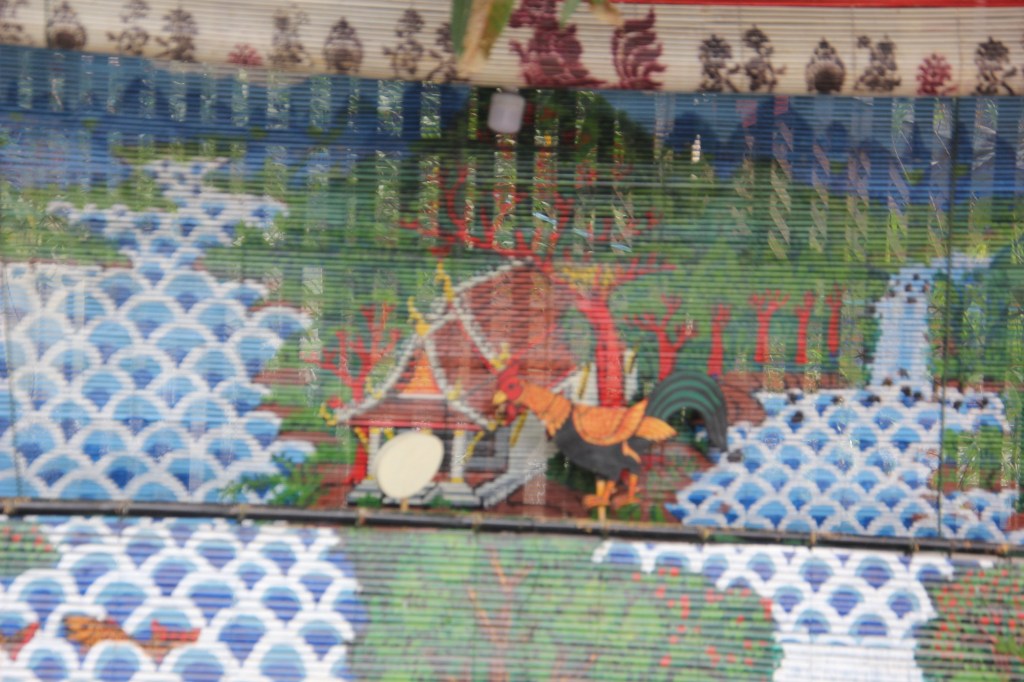
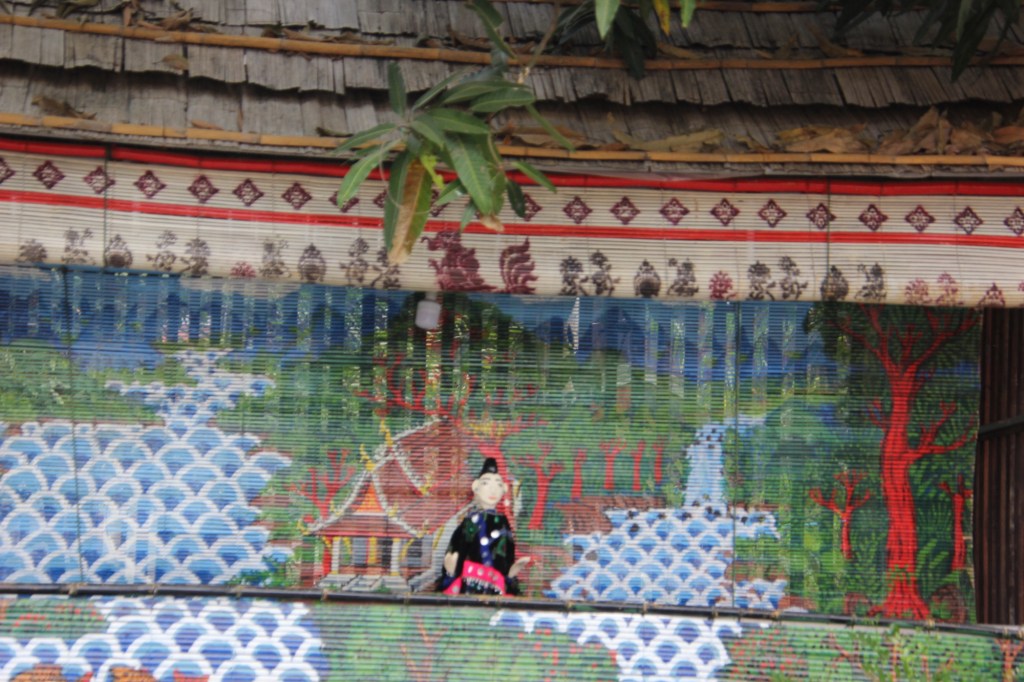
There were children performing puppet shows of Laos folktales. We weren’t sure of the story that was being told but it involved several animal spirits carrying an egg or seed on their backs.
Puppet shows
Luang Prabang was declared a UNESCO World Heritage Site in 1995 after going through an arduous process. The town was declared to be of “outstanding universal value” based on its urban landscape (being the confluence of the Meikong and Khan rivers), promotion and preservation of traditions and traditional ways of life, the coexistence of traditional and colonial buildings and its historical significance. We had a lecture from one of the UNESCO managers about the process of becoming a UNESCO site and some of the progress they have made locally. It was good information but lasted a bit too long, especially when we were almost ready for lunch.
On our way to lunch we walked by the confluence of the Meikong and Khan rivers, the two major rivers in Laos. The Meikong (top of the picture) is fairly muddy compared to the Khan. We are going to cruise the Meikong tomorrow.
We had a delightful lunch at a local restaurant. The food was fantastic.
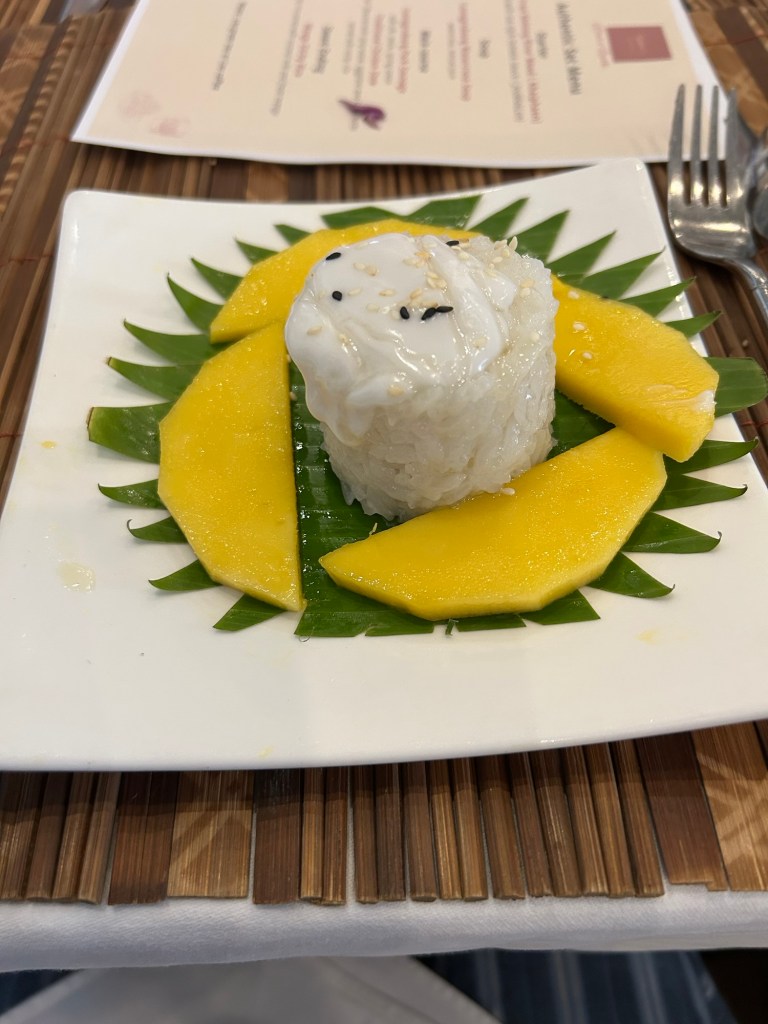
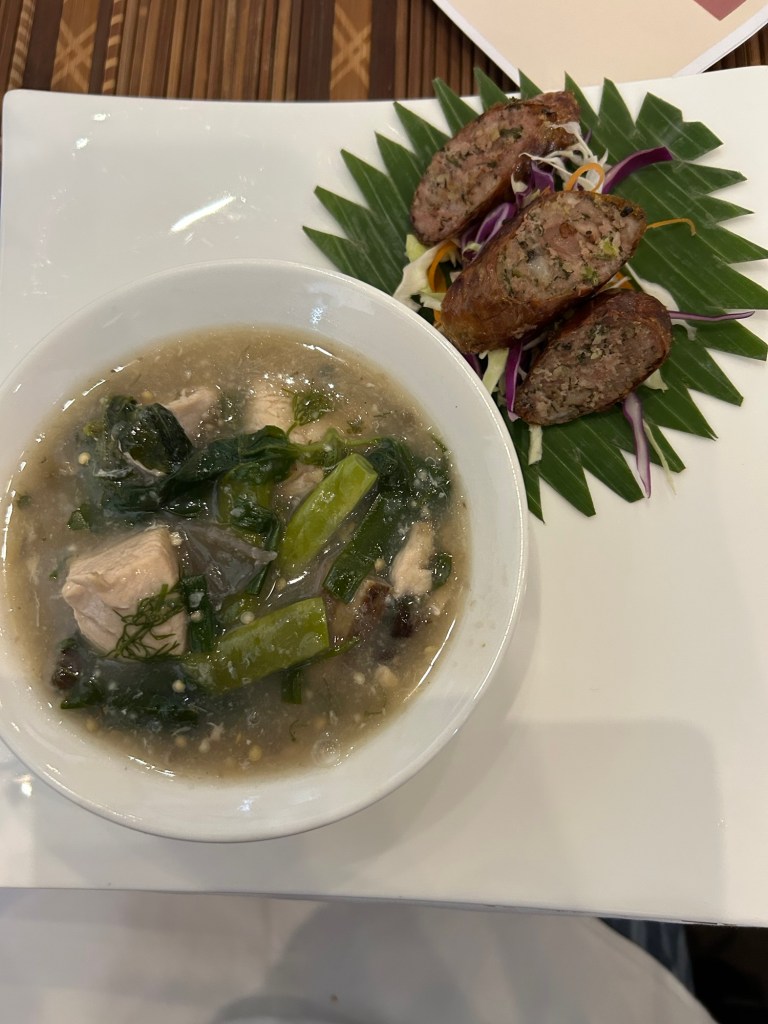
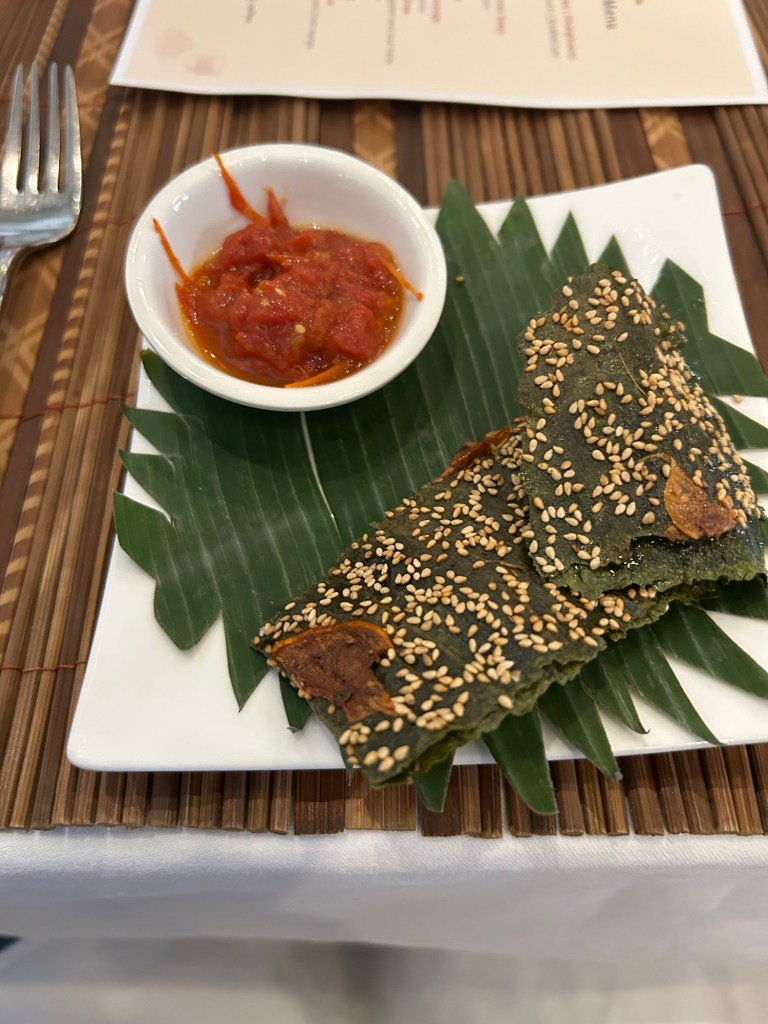
Lunch today – loved the crispy river weed with sesame and the mango/coconut sticky riece dessert. The main was a chicken and veggie stew with sticky rice.
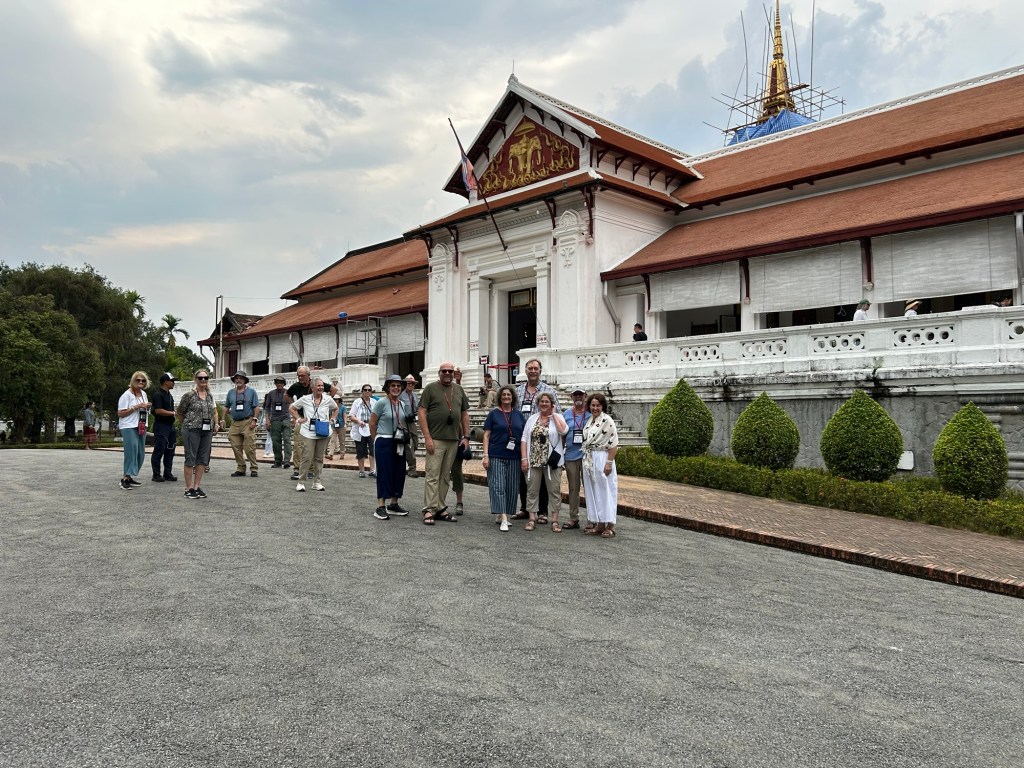
Our first afternoon stop was the National Museum. It is housed in what was the former royal palace. It was built in 1904 during the French colonial era and the royal family lived here until 1975 when the monarchy was overthrown. We weren’t allowed to take pictures in the actual museum which was too bad because the wall decorations were fabulous. There were all sorts of interesting objects on display including the King’s adjustable solid gold shoes (just the uppers). The last queen was an incredible embroiderer and some of her fabrics were on display.
A random group of Canadians in front of the National Museum
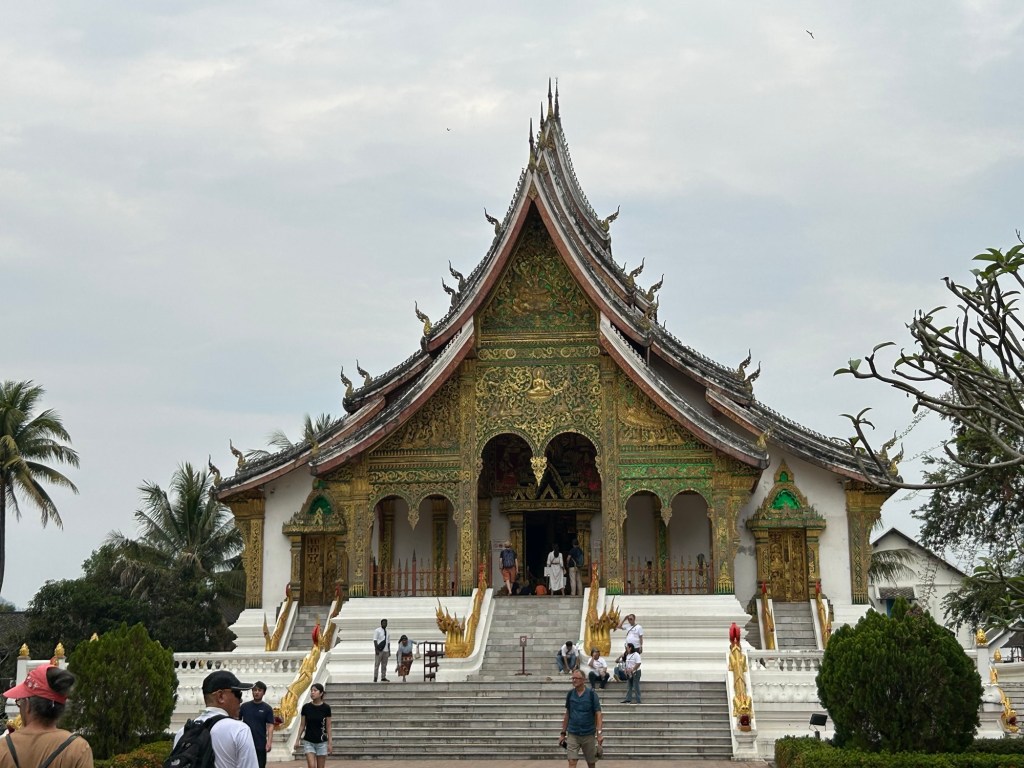
The most important temple in Laos shares the museum grounds.
Haw Pha Bang Shrine
The Haw Pha Bang shrine houses the Pha Bang Buddha (which I wasn’t allowed to photograph). The Buddha is an 83 cm tall, gold alloy statue considered to be the most sacred image in the country. The Buddha statue weighing 50 kg made of cast gold, silver and bronze. It is thought to have been cast in Sri Lanka in the 1st century and given to the king here in 1353. The shrine itself is a new building finished in 2006.
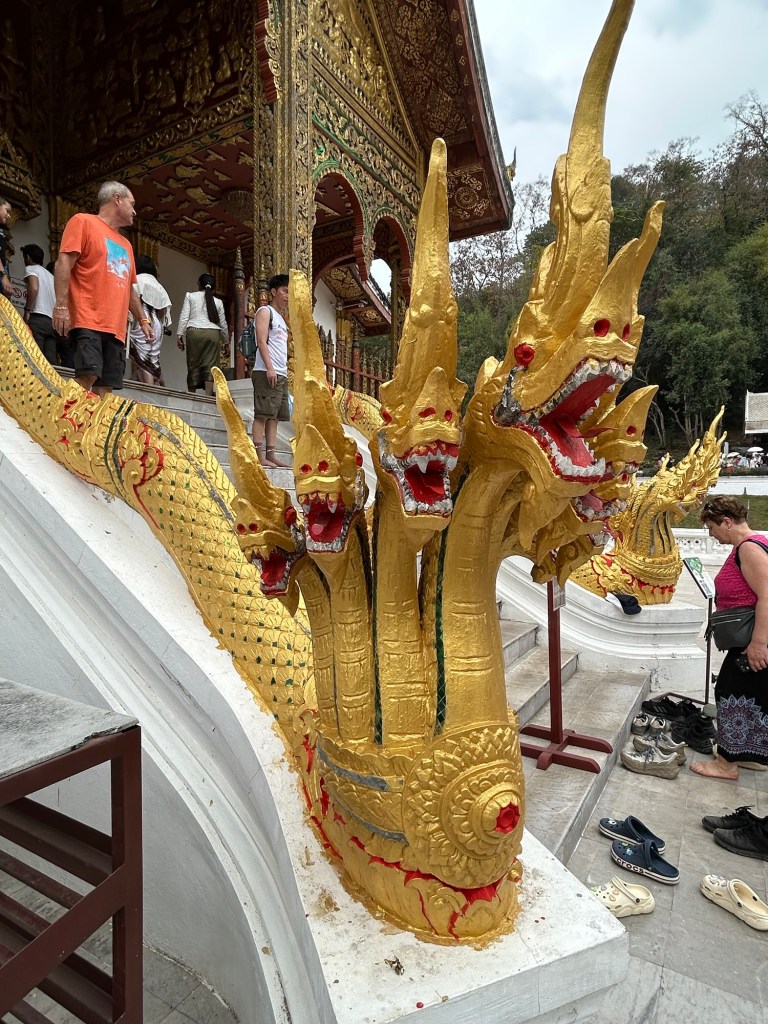
Naga protecting the shrine.
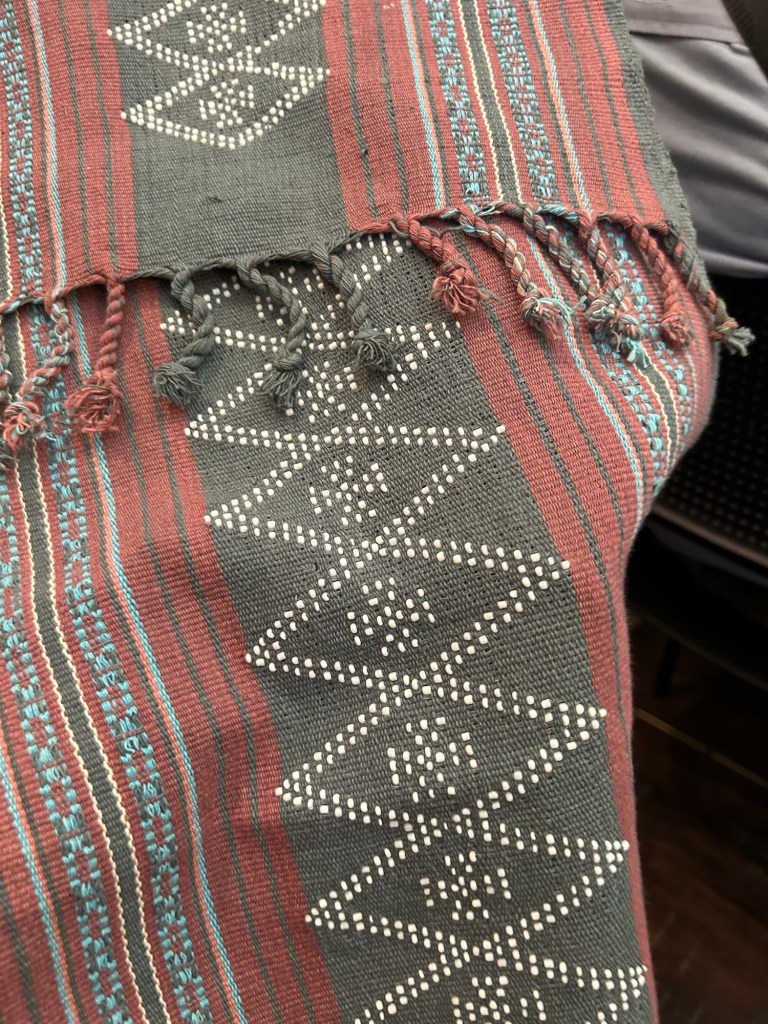
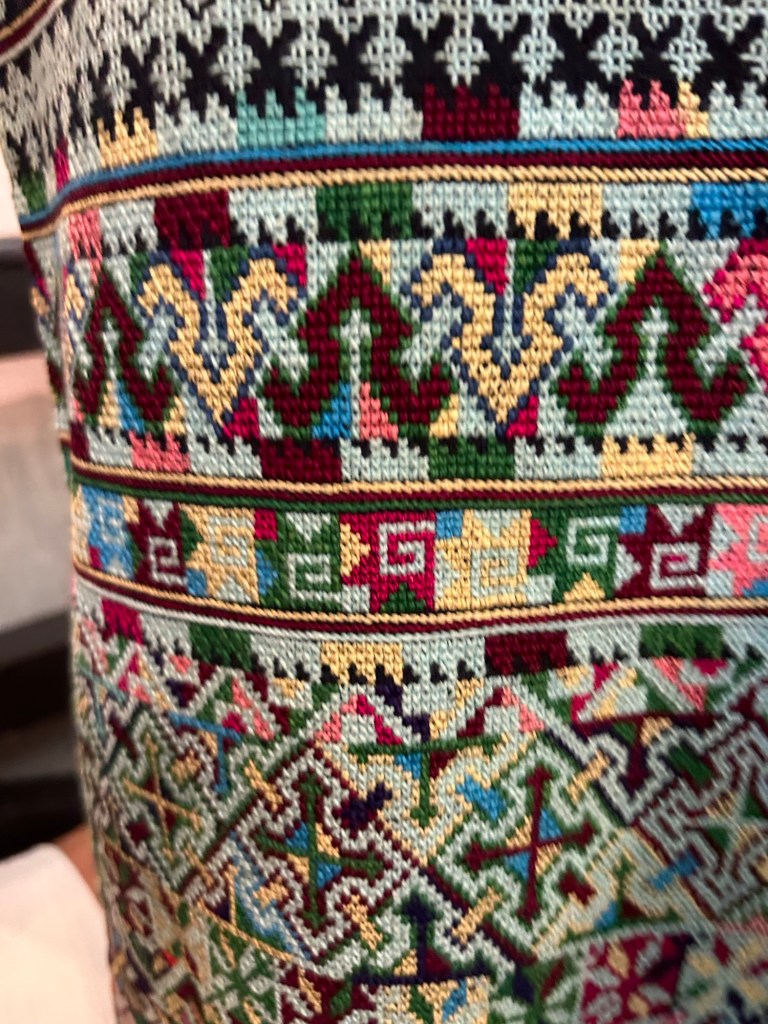
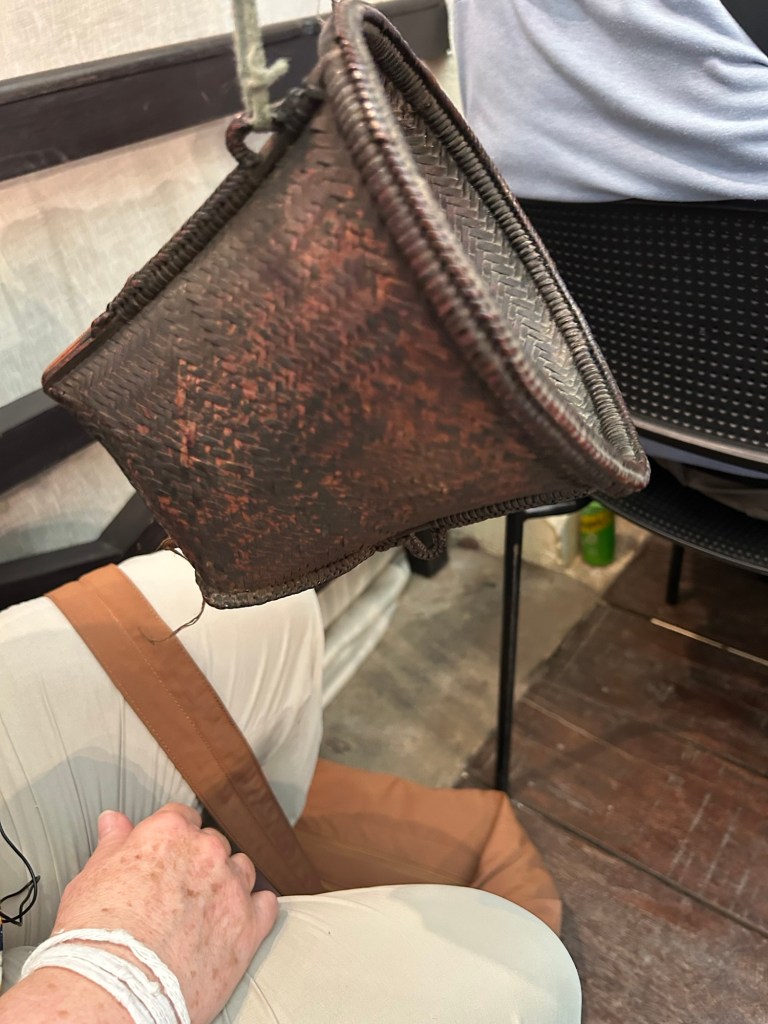
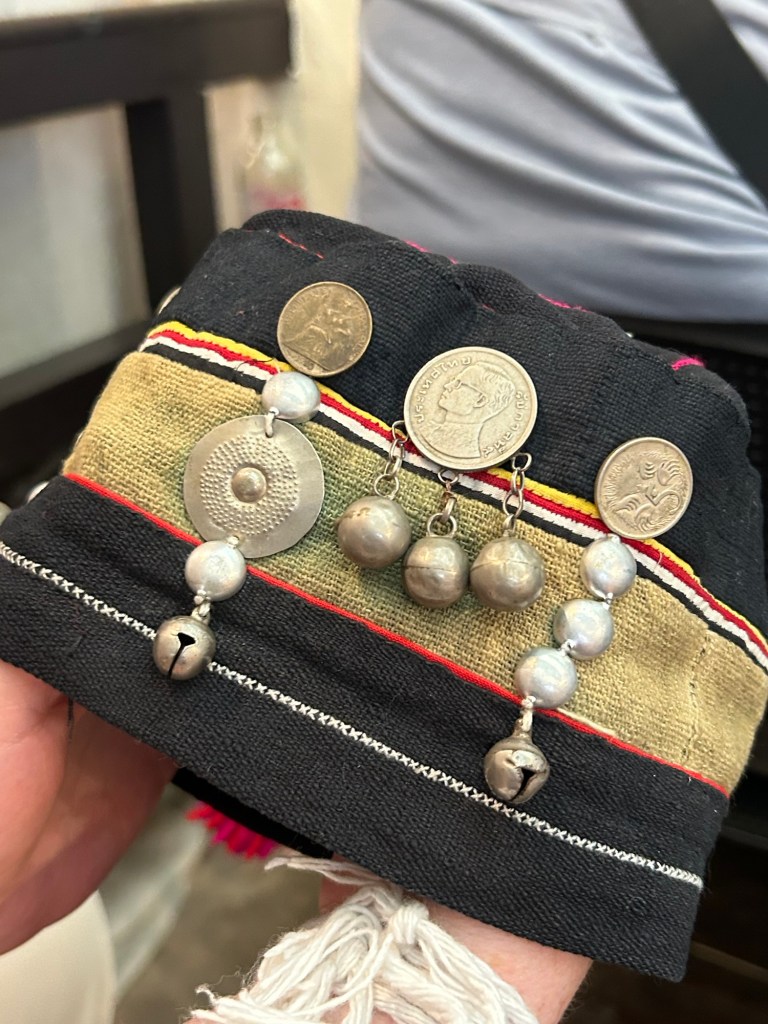
Our afternoon ended with a visit to the Traditional Arts and Ethnology Centre. Our speaker, Tara and her colleague started the centre to highlight the traditional crafts of the more than 50 minority groups in Laos. The Centre creates exhibits of local handiwork, engages in research, preservation and documentation of cultural creative practices, provides education and outreach as well as support for people to build livelihoods based on traditional skills. 50% of all sales from the gift shop goes to the artist who created the work. We bought a lovely hand woven silk wall hanging.
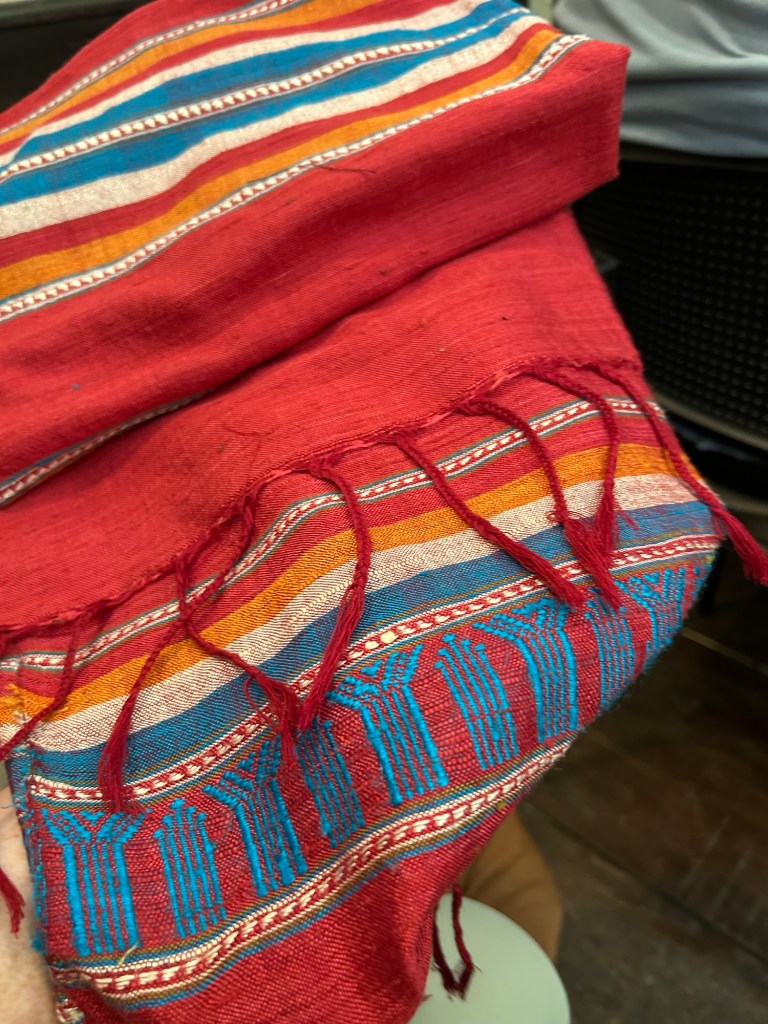
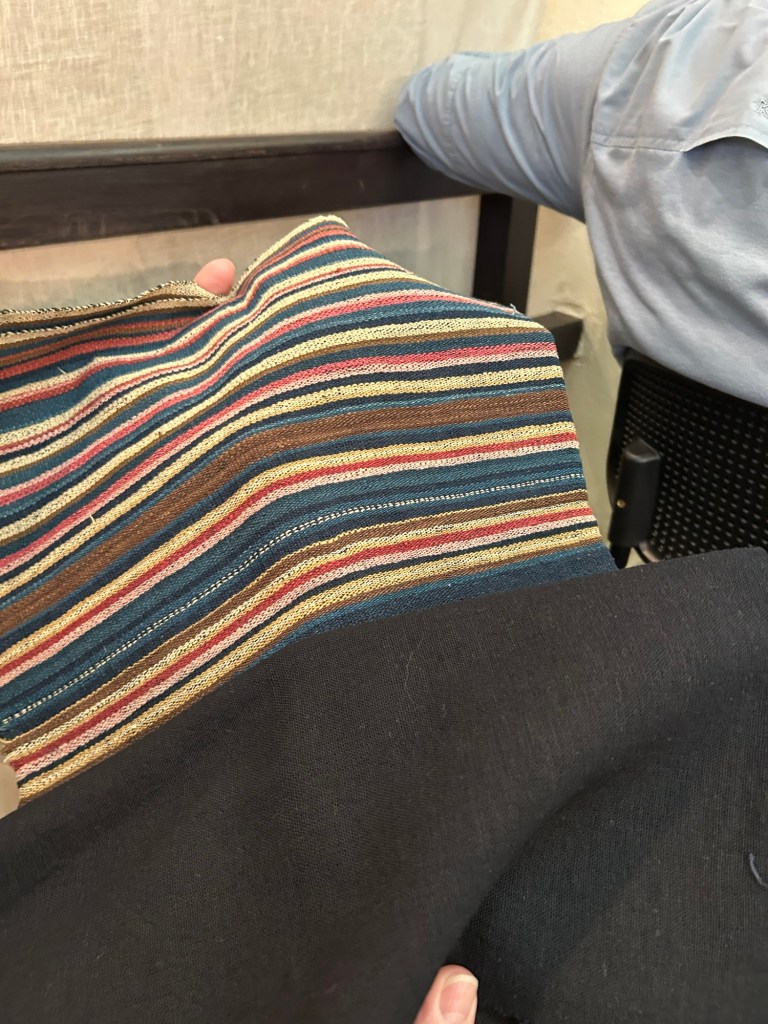
Weaving including seed bead designEmbroidery on silkBasket made by older manSilver coins transformed into beadsCotton wovenCotton
We ended our day with a swim in the pool and a dinner in the hotel restaurant. My sister Brenda figured out a way to stream the gold medal hockey game to us, so while I type, Dale is watching the game. Life is good.
Leaving Chiang Mai was interesting. First we checked in, then our luggage was scanned at the luggage drop. We went to security where chaos reigned. People didn’t lie up in any specific order. We went around a woman who got her hair caught in her purse strap and then got stalled by a family of 5 who didn’t understand that all belongings have to go in the bin. We got through the carryon scanning then headed to immigration where we had to give our finger prints and a retinal scan. We finally ended up at our gate and had Burger King for lunch. They are big on American fast food here – we’ve seen BK, McDonalds, KFC, Dairy Queen, Subway and most popular 7-11. There has been at least one 7-11 on every block in both Bangkok and Chiang Mai.
Leaving Chiang Mai
Laos is a small, landlocked country sharing a border with Thailand, China, Vietnam and Myanmar (formerly Burma). It has a small population of 7.2 million people.
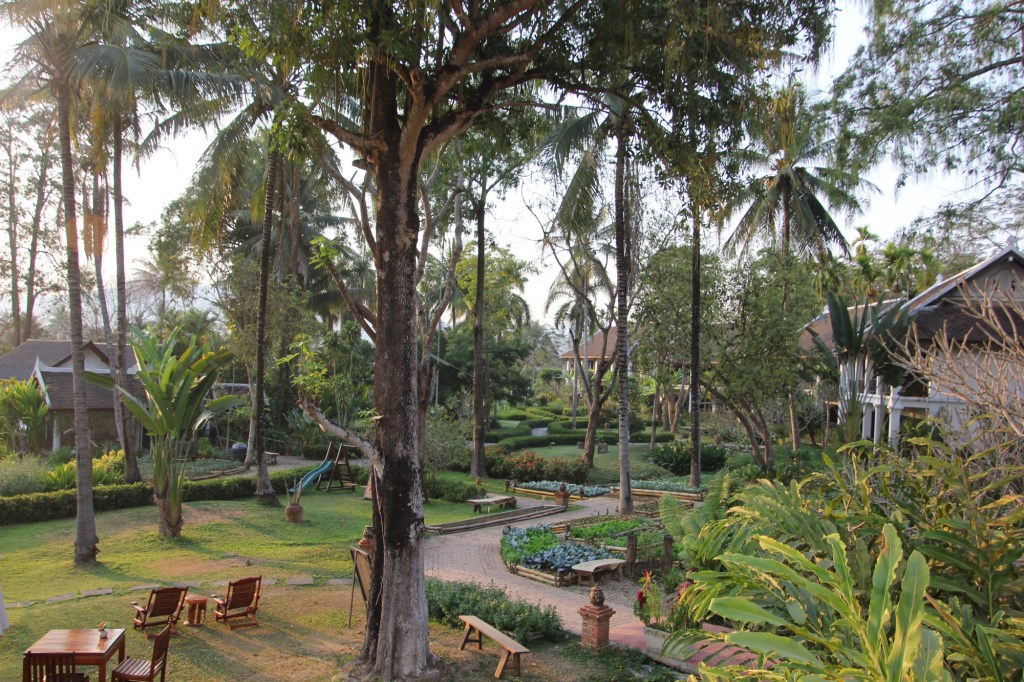
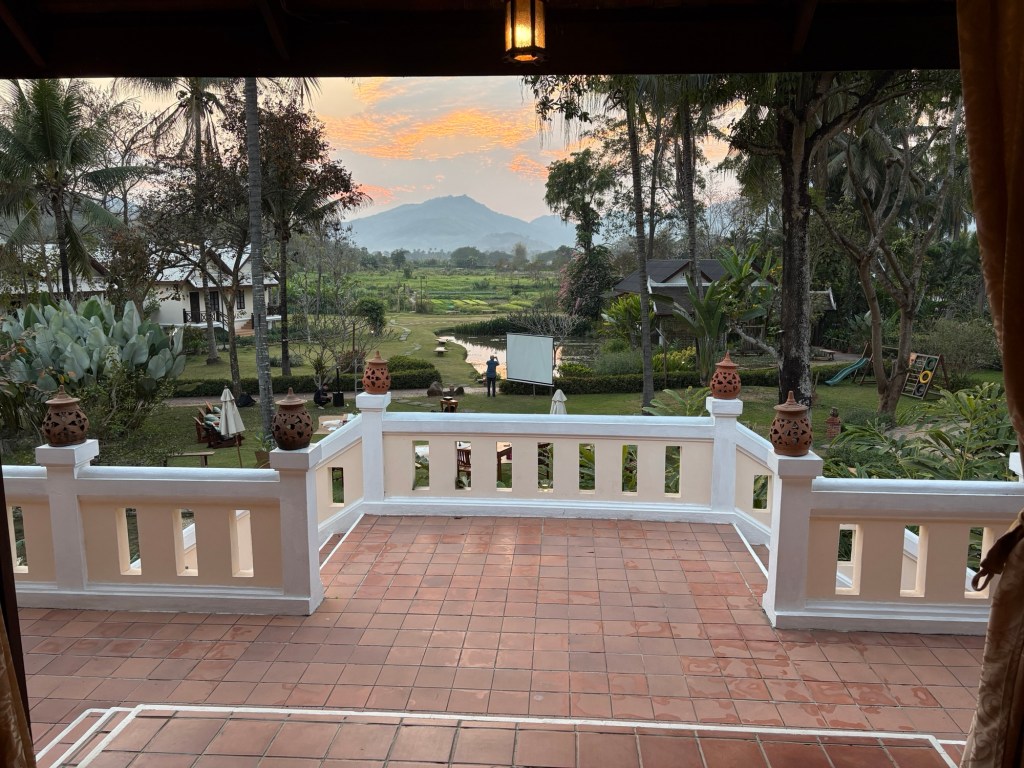
Santi Resort Luang Prabang LaosSunset at our hotel
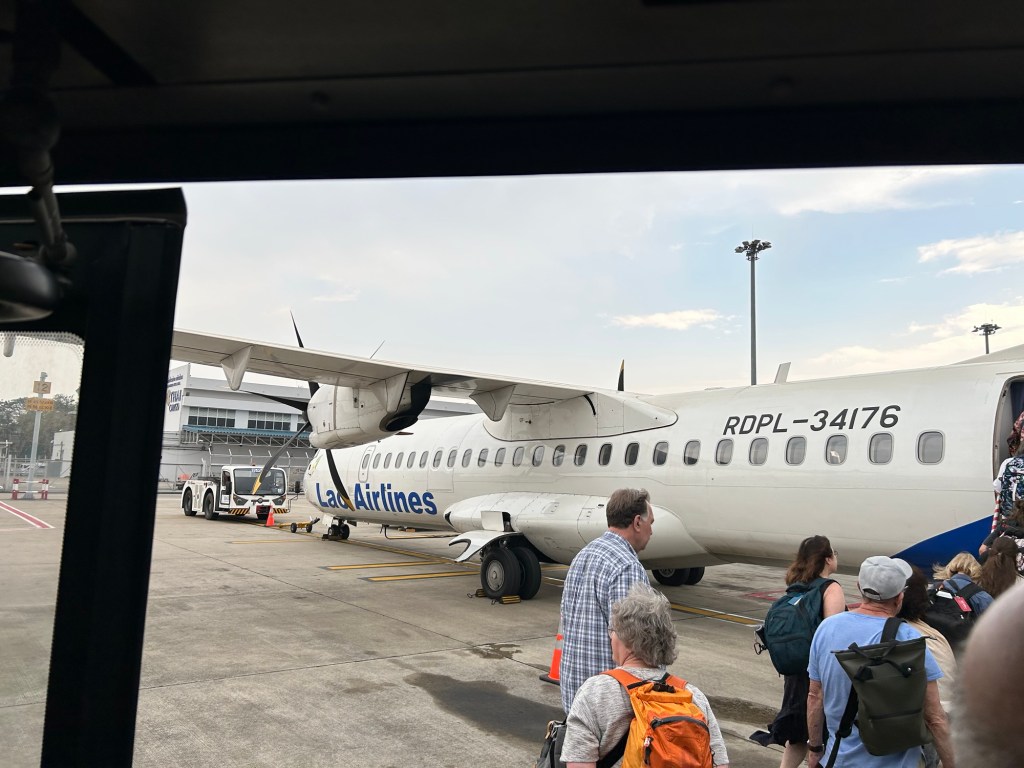
The flight was uneventful and we cleared customs easily. We are staying in Luang Prabang at the Santi Resort. Our room is in the building on the right. There wasn’t much time between checking in and our first event. We were driven to a local restaurant/cooking school for a traditional Baci Ceremony, dinner and traditional dance/music demonstration.
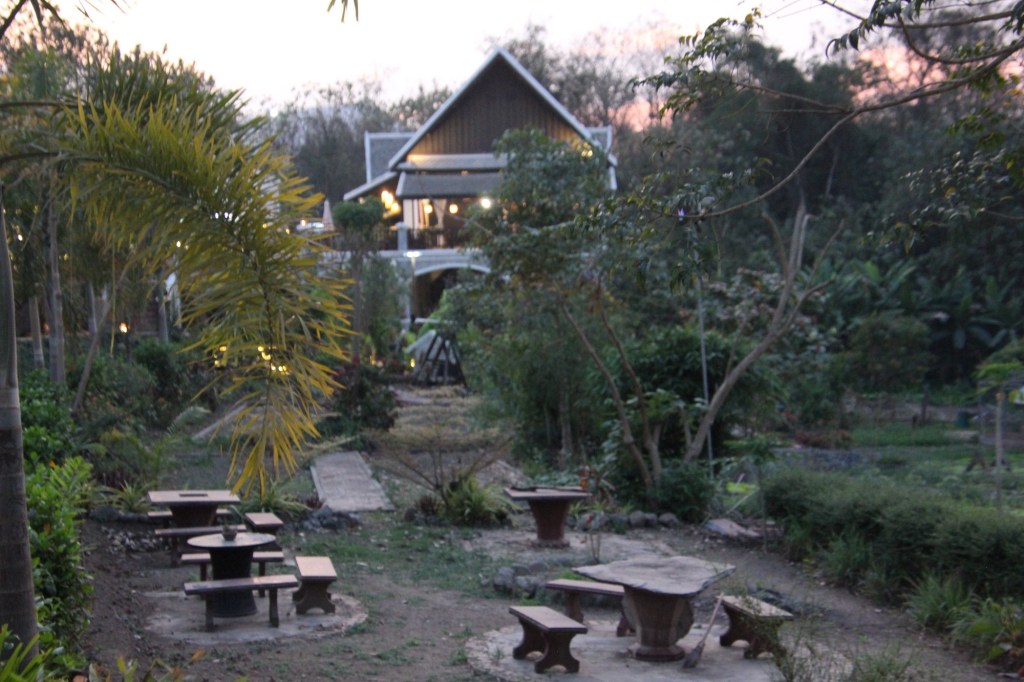
Our evening venue
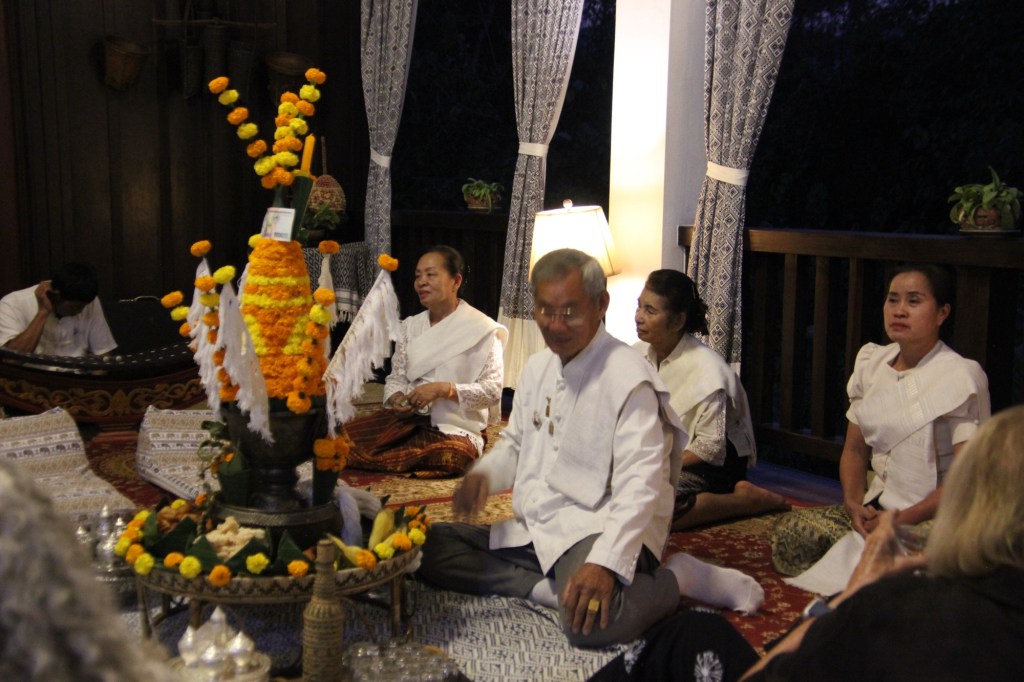
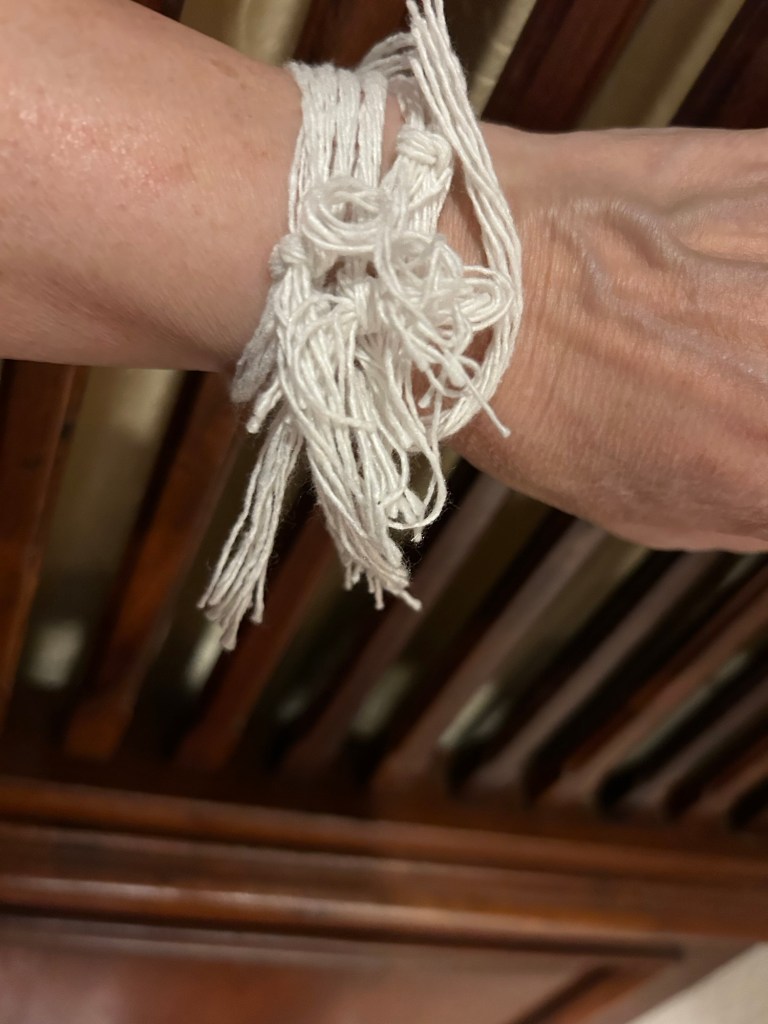
The Baci ceremony conducted for a variety of reasons including welcoming guests, weddings, births and other important events. The ceremony is preformed by a Shaman. The man who did the ceremony tonight is a third generation shaman in his family. White cotton strings were tied around our wrists to support us in calling back our spirits. There is a belief here that everyone has 32 spirits (one for each organ) in their body and sometimes we lose track of some in our daily living. The ceremony is meant to reground people in the moment. As the strings are tied, the blessings are offered for you to have happiness, prosperity, longevity and a good life.
The start of the Baci ceremony
As the Shaman finished chanting prayers, the women passed around special treats including battered/deep fried banana, sticky rice crackers and a sweet dough. This was followed by a shot of sticky rice whiskey (40 proof). All was delicious. The next thing was for the celebrants to bless us as they tied white strings around our wrists The food and strings were initially part of the Pha Khuan (marigold tower) in the picture above. We received the tower as a group and it will be taken to the temple tomorrow as an offering in our name.
White strings we will wear for a minimum of three days
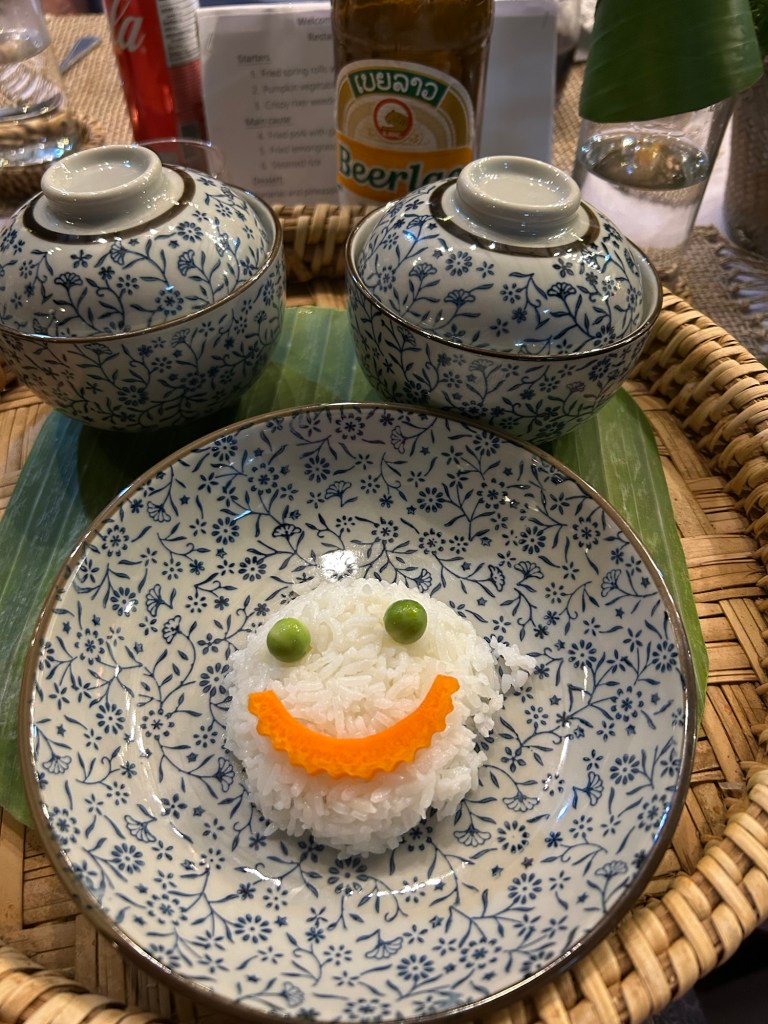
Supper followed the ceremony. We were served a three course meal that would have a small family. The food was delicious. We had been drinking Chang beer in Thailand. Now the beer is Beerlao. Equally good on a hot day.
Enter was rice with fried lemongrass chicken and ginger pork.
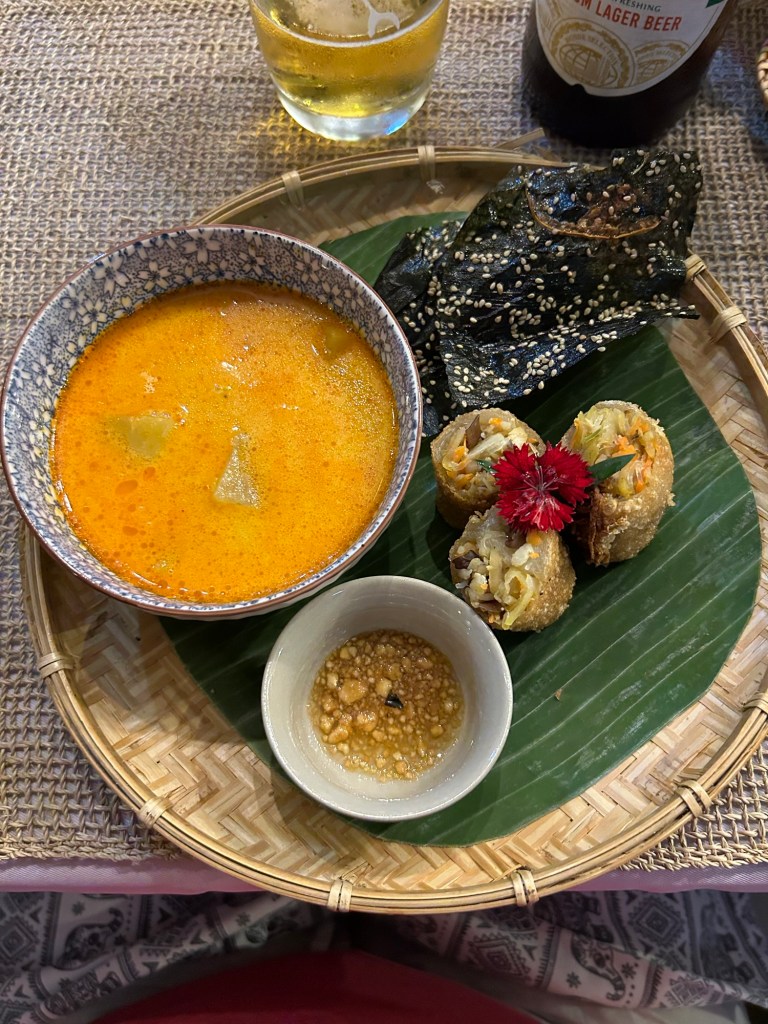
Pumpkin vegetable soup, spring rolls with tofu and crispy river weeds
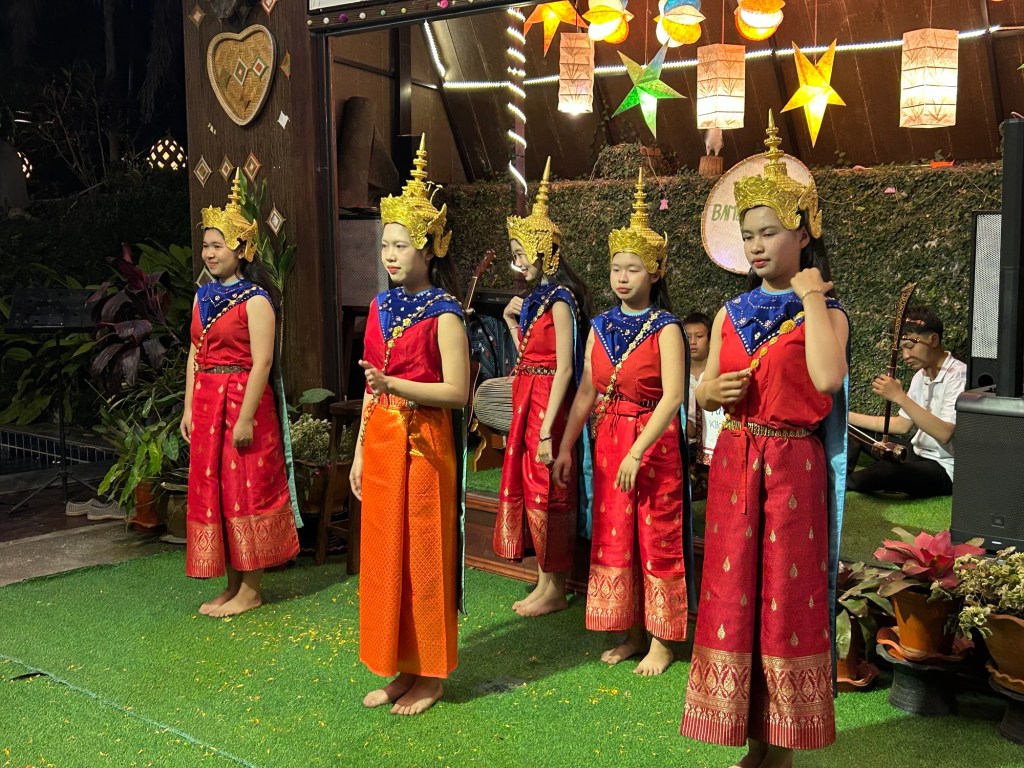
A troupe of traditional Laos dancers performed for us during supper accompanied by traditional music.
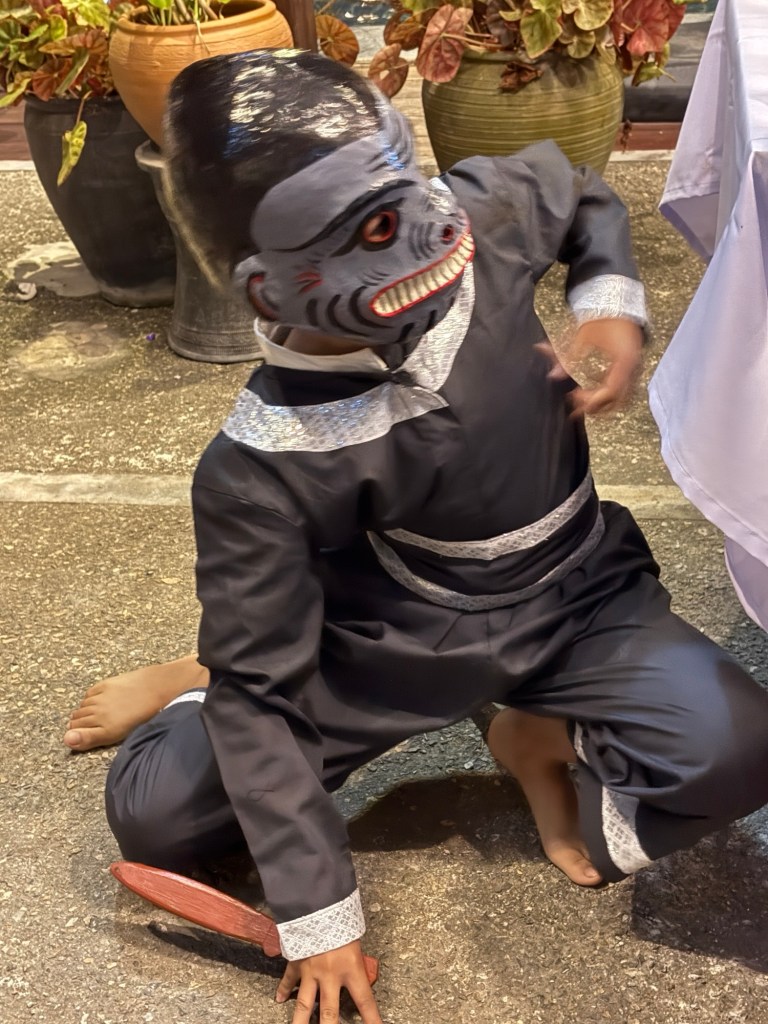
Hanuman (monkey) God came to play
It didn’t take long to crash after our return to the hotel. Tomorrow we go exploring Luang Prabang.
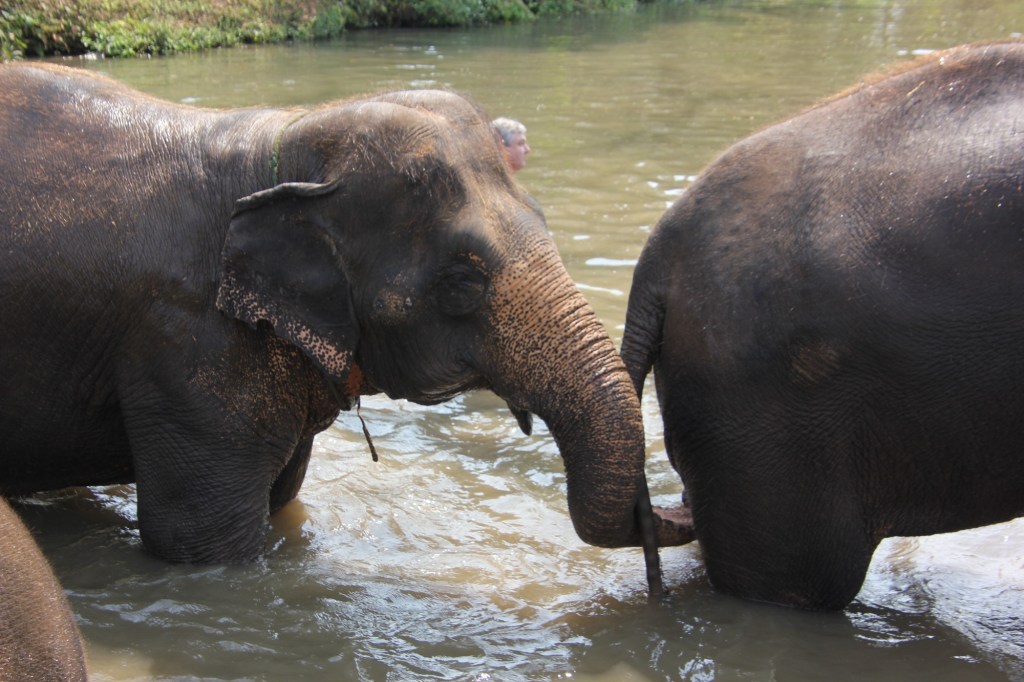
Today was all about Elephants. There are approximately 8,000 Asian elephants in Thailand. Approximately 4600 in the wild and 3400 in captivity. Historically, elephants were used as tanks in warfare or heavy equipment in farming and forestry. As the timber industry changed, the role for elephants shifted to tourism, either to perform in shows or to give rides to tourists.
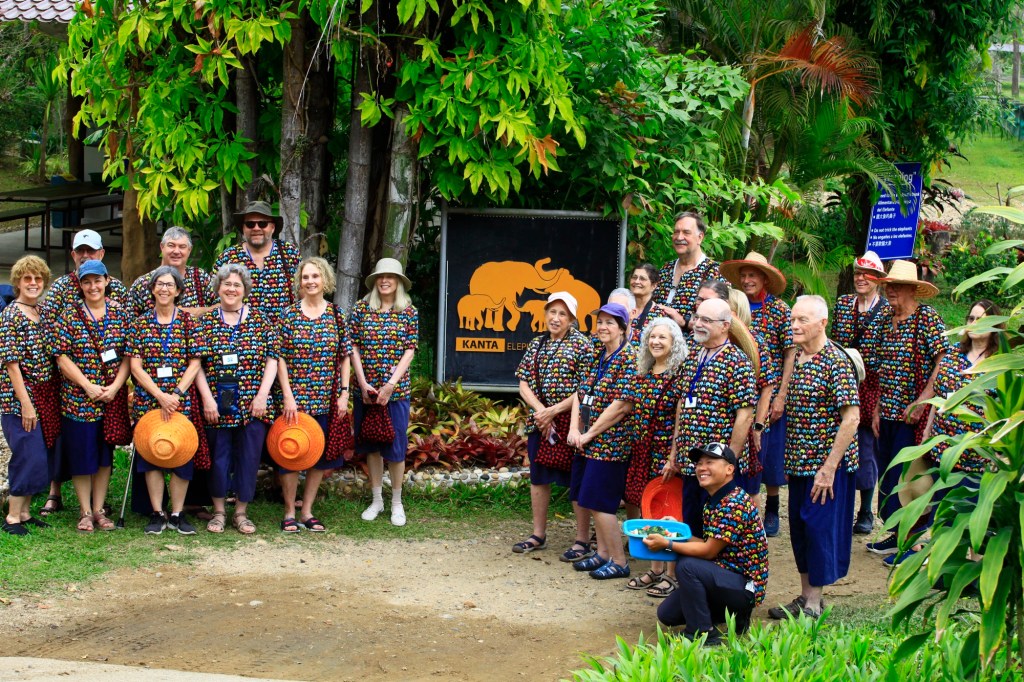
Kanta Elephant sanctuary
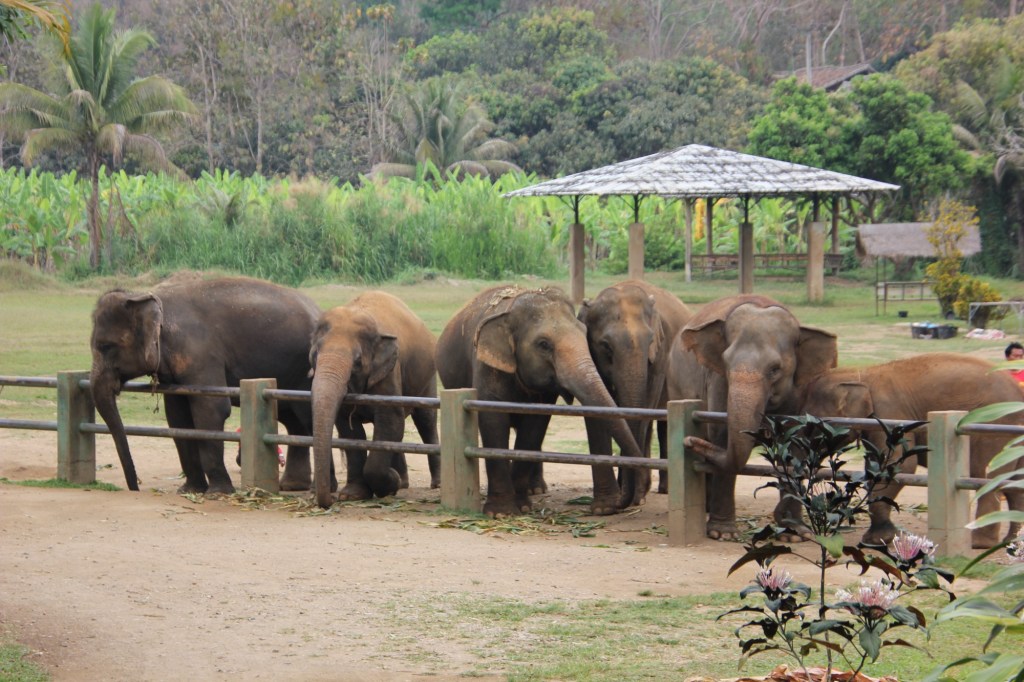
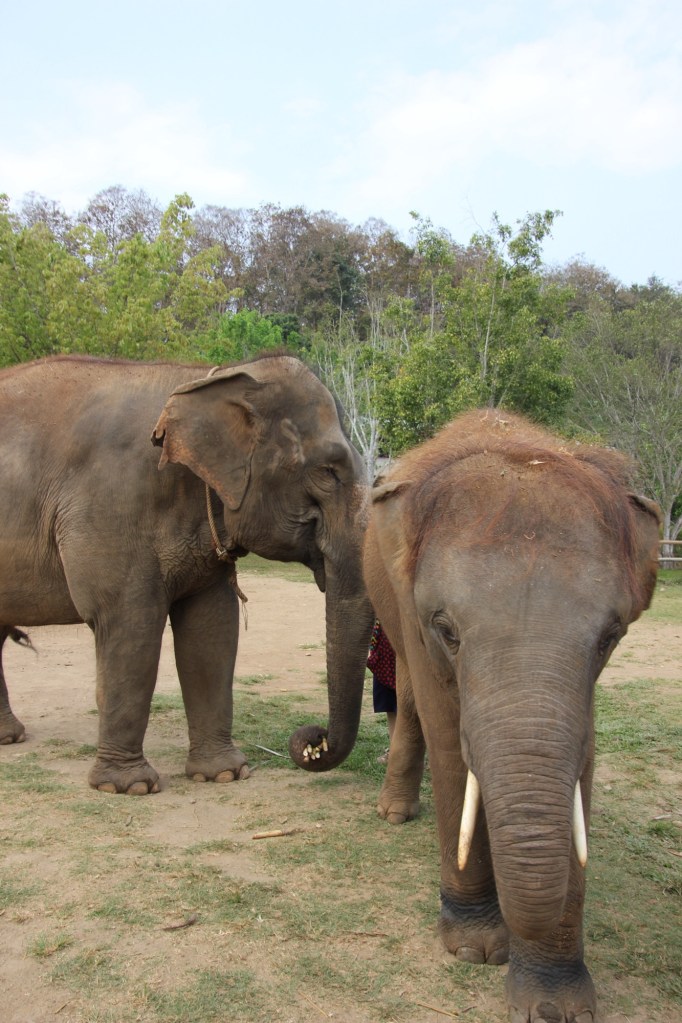
We spent our morning at the Kanta Elephant sanctuary. They are a non-profit operating near Chiang Mai with a mandate to rescue elephants from either work or tourist riding environments. They also take care of elephants who were privately owned but the family no longer wants to care for them. The “rescue” is typically a purchase of the elephant at a cost of $60,000 or more per animal. The oldest elephant at the sanctuary is 70 years old and the youngest, born at the sanctuary, is approximately 2 years.
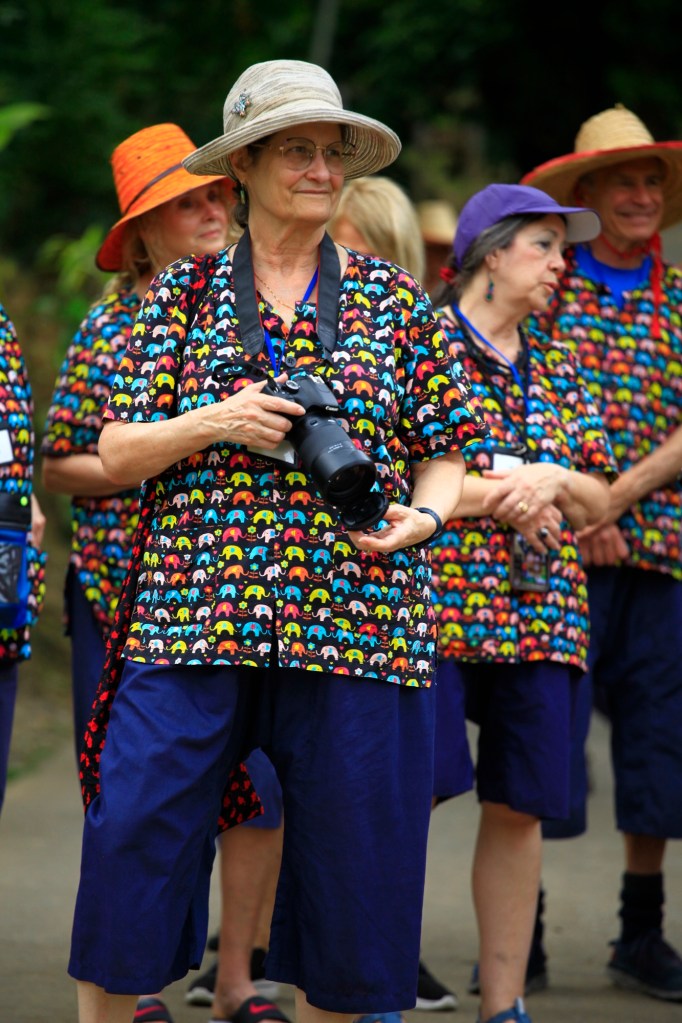
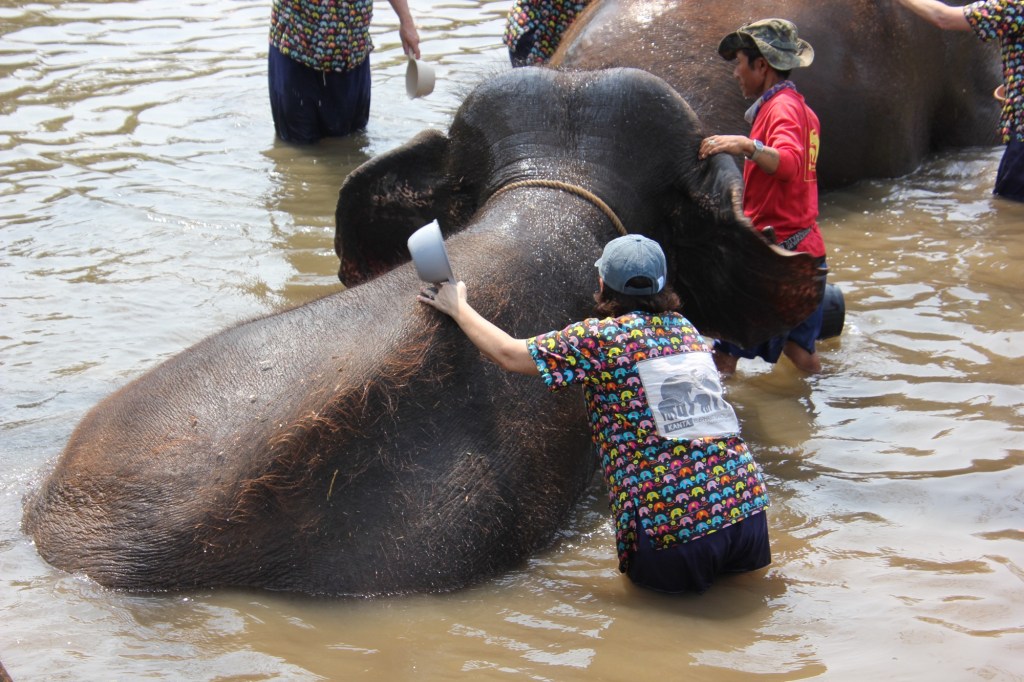
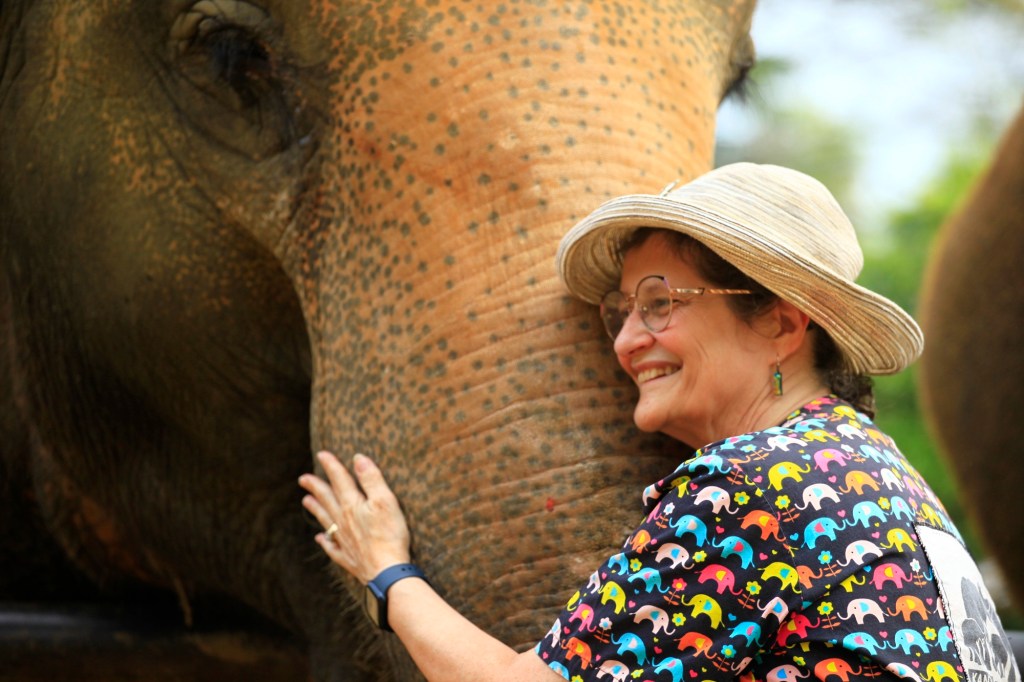
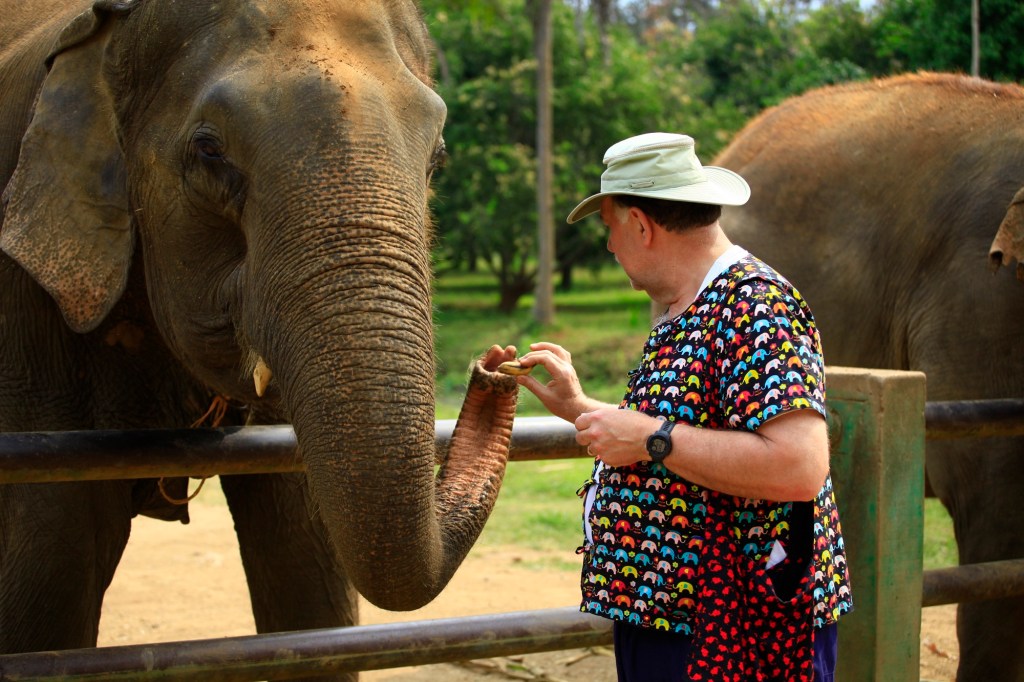
We all wore nifty “scrubs” to protect us from dust and elephant snot. We all got pretty dusty and it was good to have something to wipe our hands on after feeding the elephants. Their trunks are moist and soft when they snuffle the food out of your hand. They were so patient with us, they allowed us to pet and hug them.
Each elephant is paired with a Mahout (caretaker). This is a mutual pairing. The person and the elephant have to connect to make the relationship work. The Mahout is responsible for meeting all of the elephants needs. We were told that elephants in the wild are herd animals, while elephants who have been in captivity are more individualistic and rely on their bond with their ”papa” (Mahout). The mahout essentially lives with their elephant being on call 20/24 hours a day (Elephants only sleep 4 hours/day). There are 32 mahout who work for the sanctuary and live onsite. The sanctuary employs 120 people to care for the elephants, manage the tourist program, care for the site, provide veterinary care and do research.
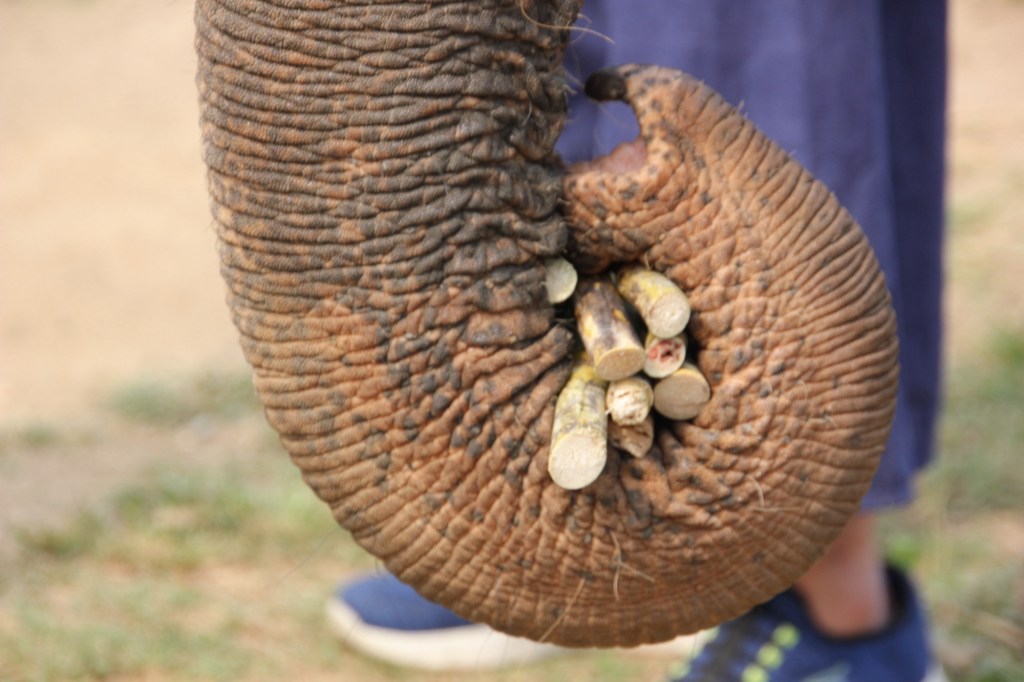
Elephants like the softer sugar cane stalks best and can differentiate the preferred from the rest by smell and texture. They like bananas better
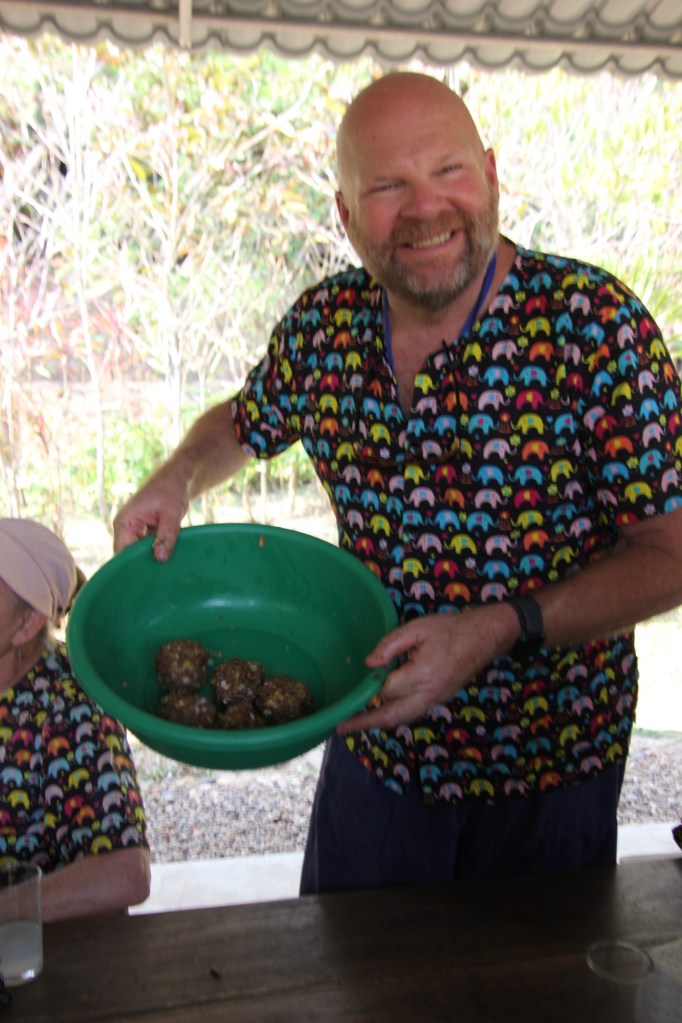
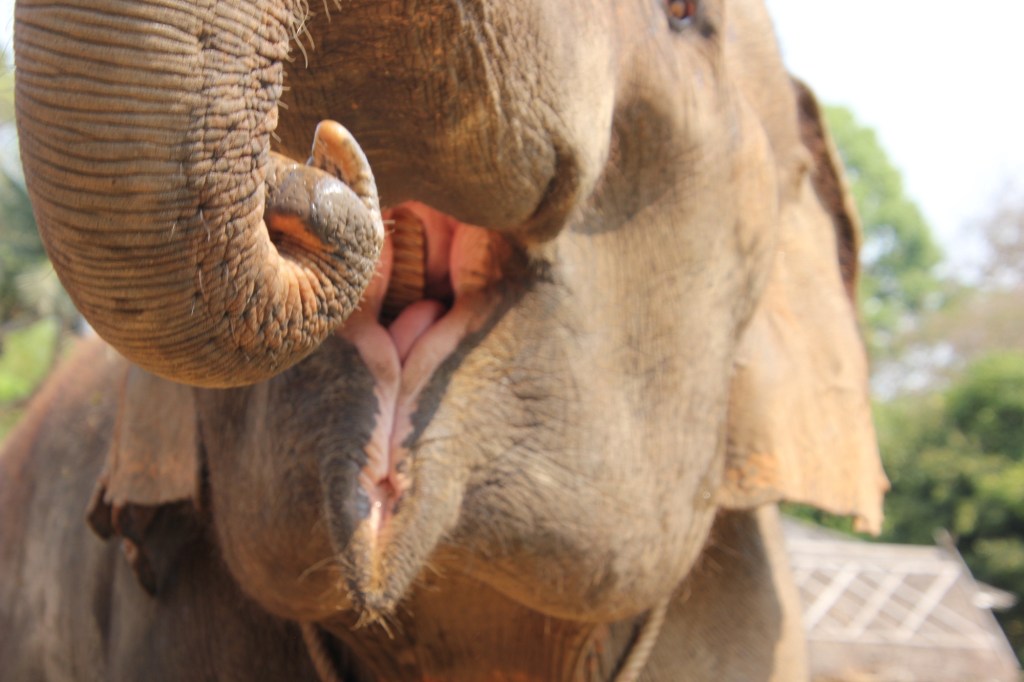
. We made herbal vitamin balls out of tamarind paste, bananas, vitamin pellets and salt and then got to put them in the elephant’s mouth. Their tongues are soft and somewhat slimy as we learned when putting the ball into their mouths. The elephants were patient with us.
Greg with hand rolled vitamin ballsinside an elephant’s mouth – the teeth are designed to grind.
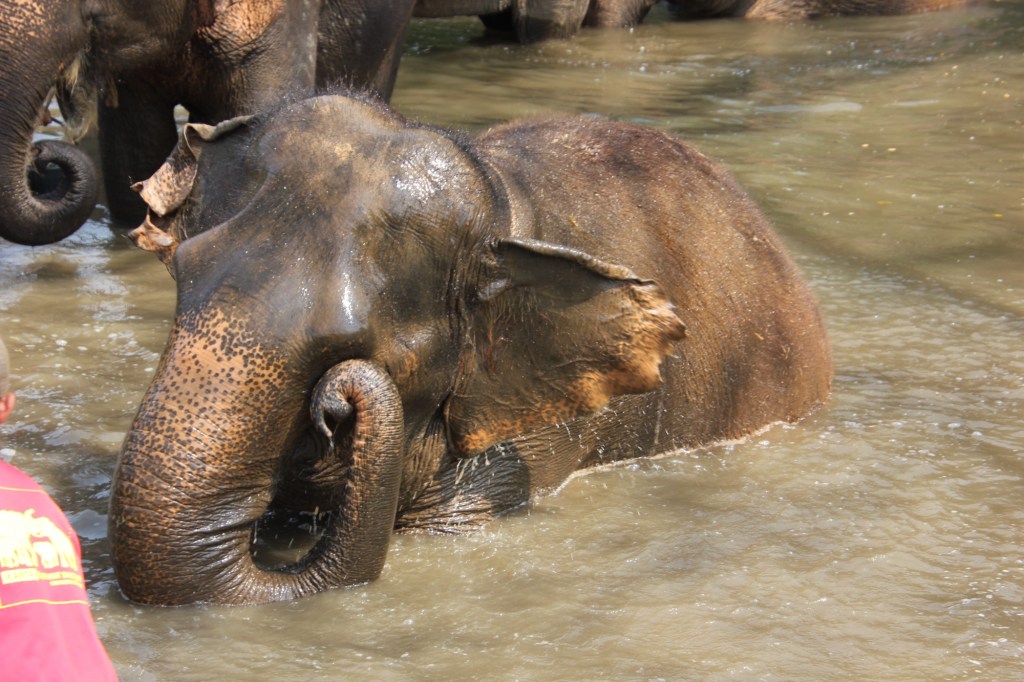
We had the opportunity to feed the elephants, hang out with them and some of us got into the pond to wash them. It was great. They were such gentle beasts who seemed very content to interact with us (especially when it came to getting sugar cane and bananas)
The youngest elephant taking a bathGoing into the watering hole to help scrub the elephants.Dale giving a banana treat
We had a relaxing afternoon by the pool followed by dinner and shopping in the night market in Chiang Mai.
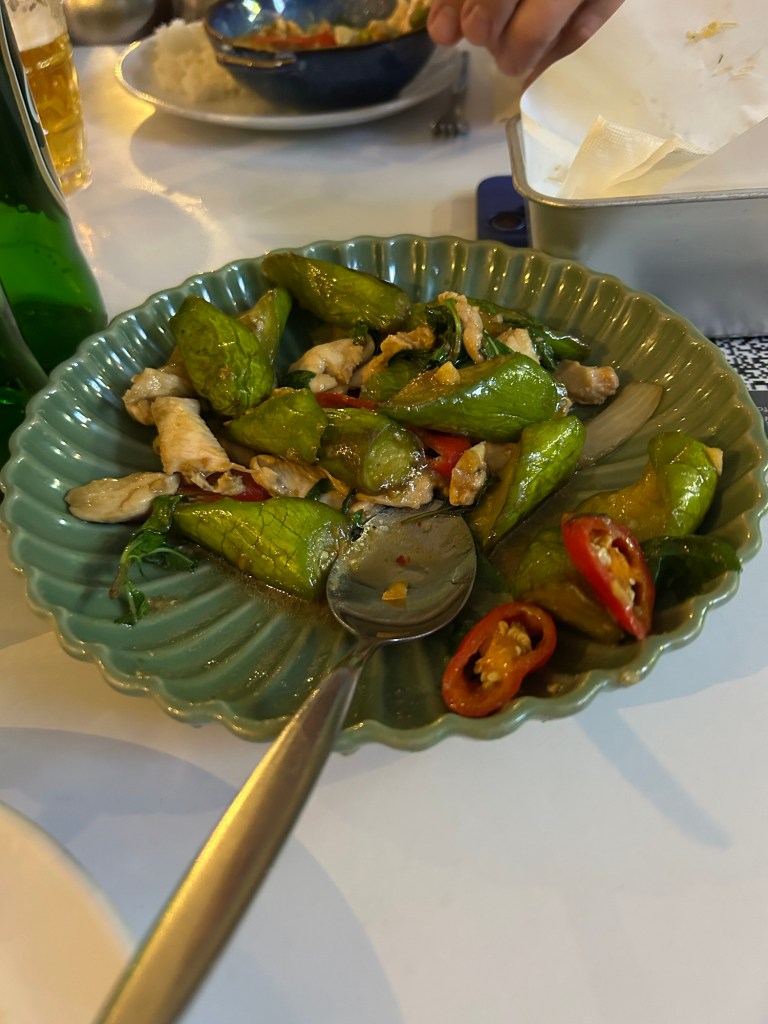
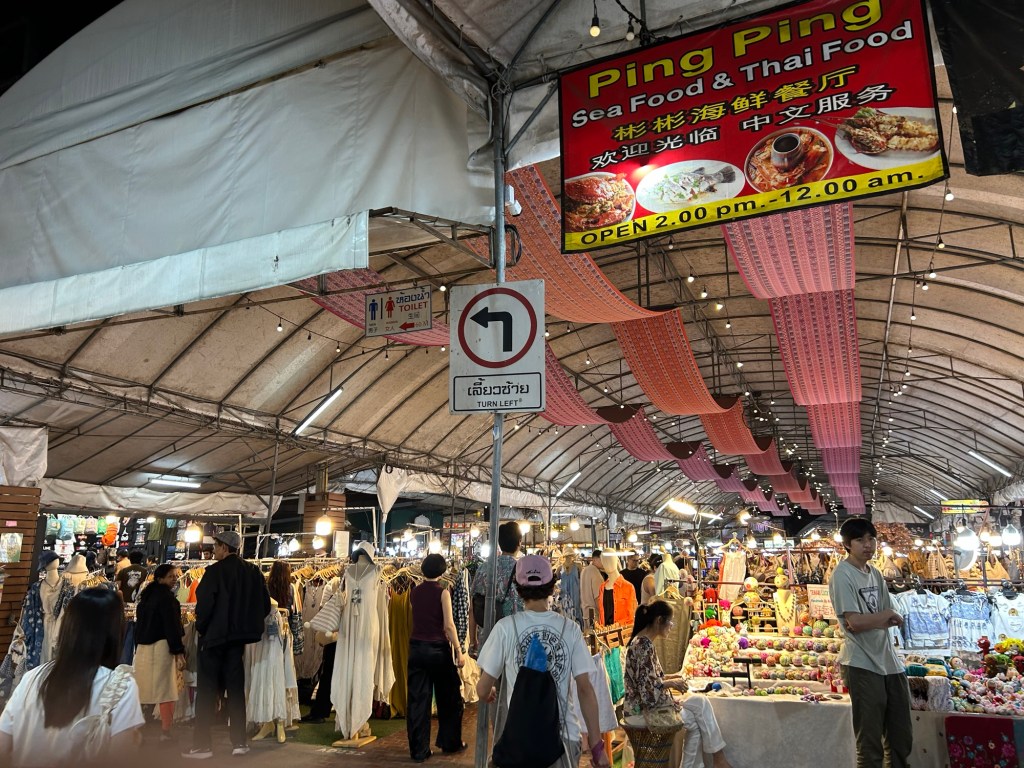
Eggplant, chicken, chillies and rice for dinner. Chiang Mai night market
Today we are flying to Laos for the next leg of our adventure. We can’t believe we are into our second week already. So much more to come.
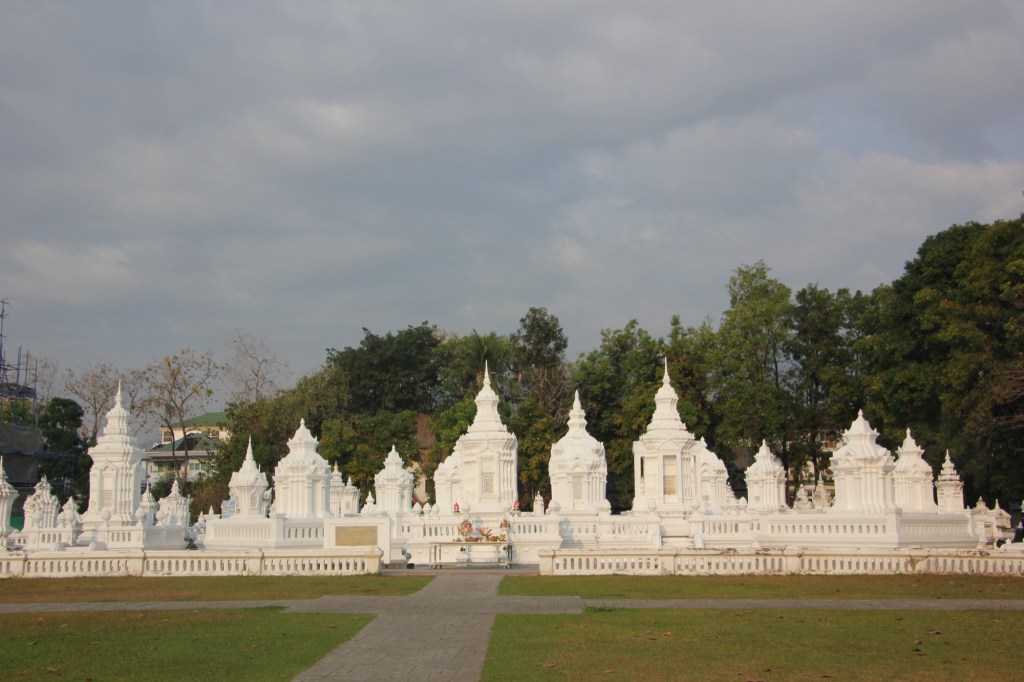
We had an early breakfast before heading out to the Wat Suandok. Wat is a term used to describe temples. However, the term also includes all the buildings supporting the temple such as the Stupa, main buildings where teaching happens, the monastery where monks live, etc. The one we visited today was founded in 1373 and included monuments honouring the ancestors of families over centuries.
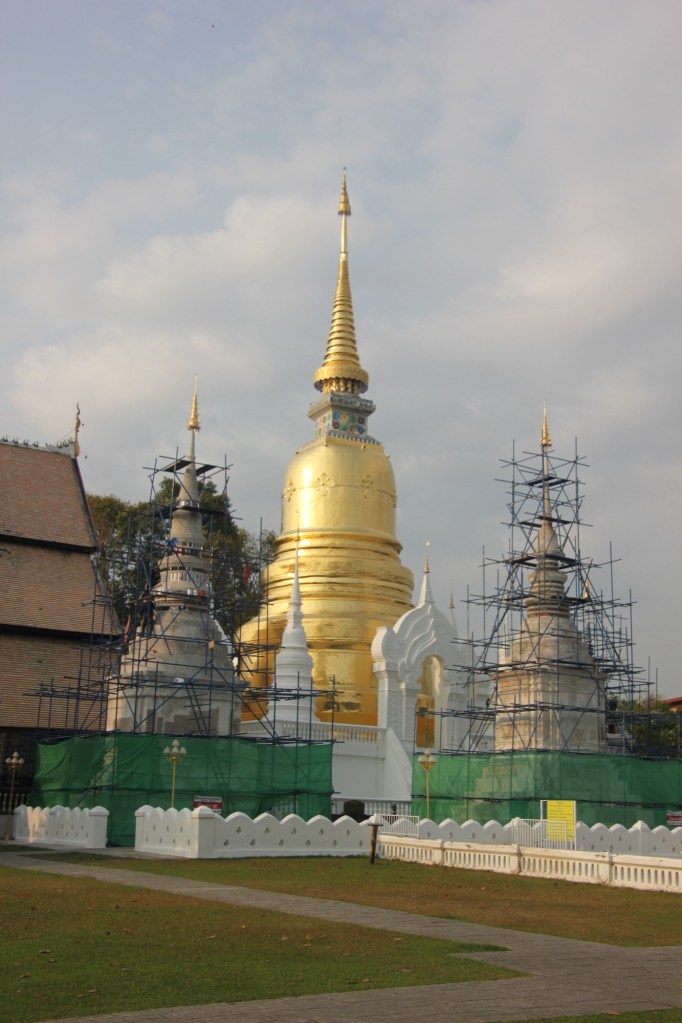
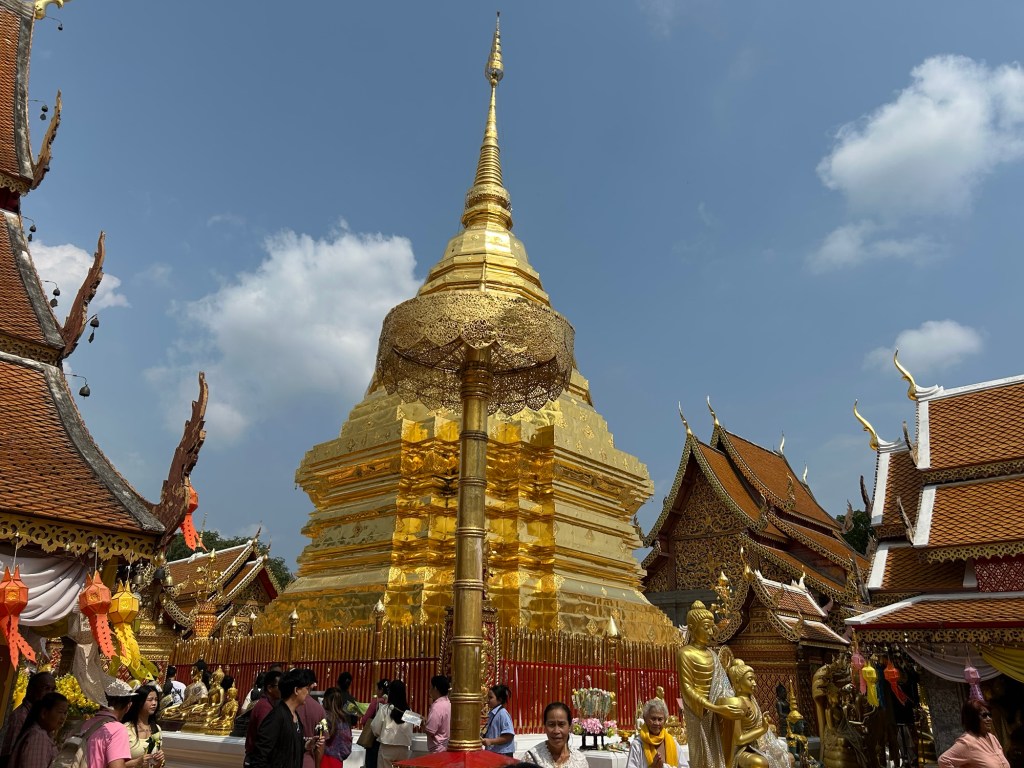
The story goes (as far as I could follow) that a man found a relic of Buddha and brought it to the king who didn’t believe it was real. Another powerful person believed that the relic was true and invited the person to house the Buddha with him. However, the Buddha relic broke in two. The powerful man decided to bury half of the relic at this temple. It is buried in the ground and a large Stupa has been built and rebuilt over it for hundreds of years. A stupa is typically built of brick/concrete overlaid with glass and plaster that is painted gold. It is maintained and added to as time goes by.
The golden Stupa over one half of the Buddha relic
The second half of the relic was placed in a reliquary and put on the back of an elephant. The elephant wandered until it finally lay down and died. This was the place where another temple was built and the Buddha relic piece was again hidden in the ground and a stupa placed over it (more on this story later).
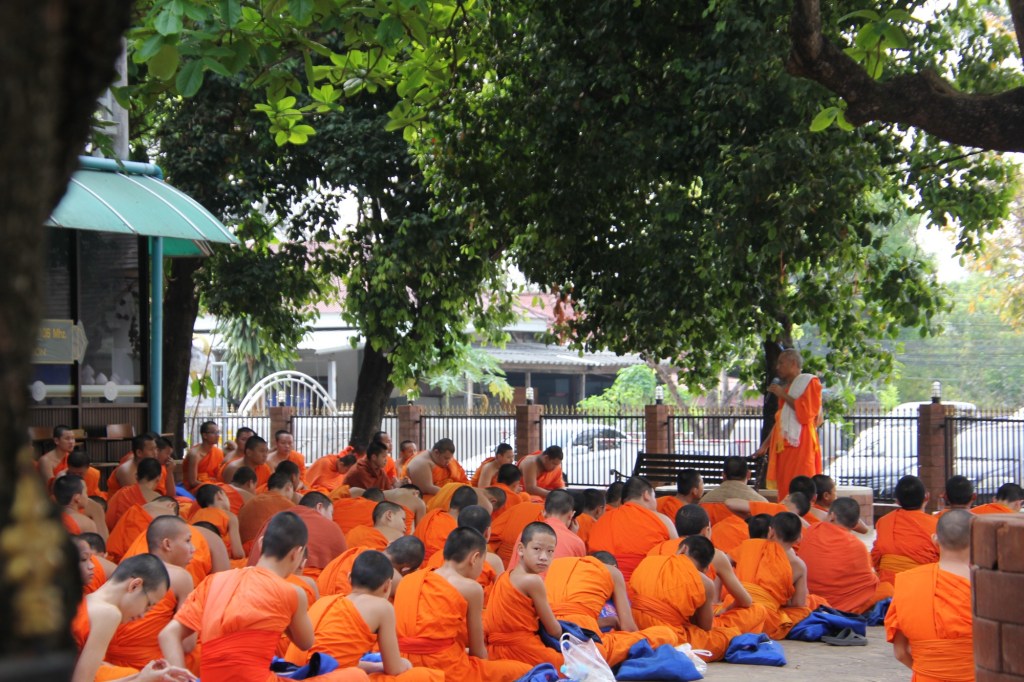
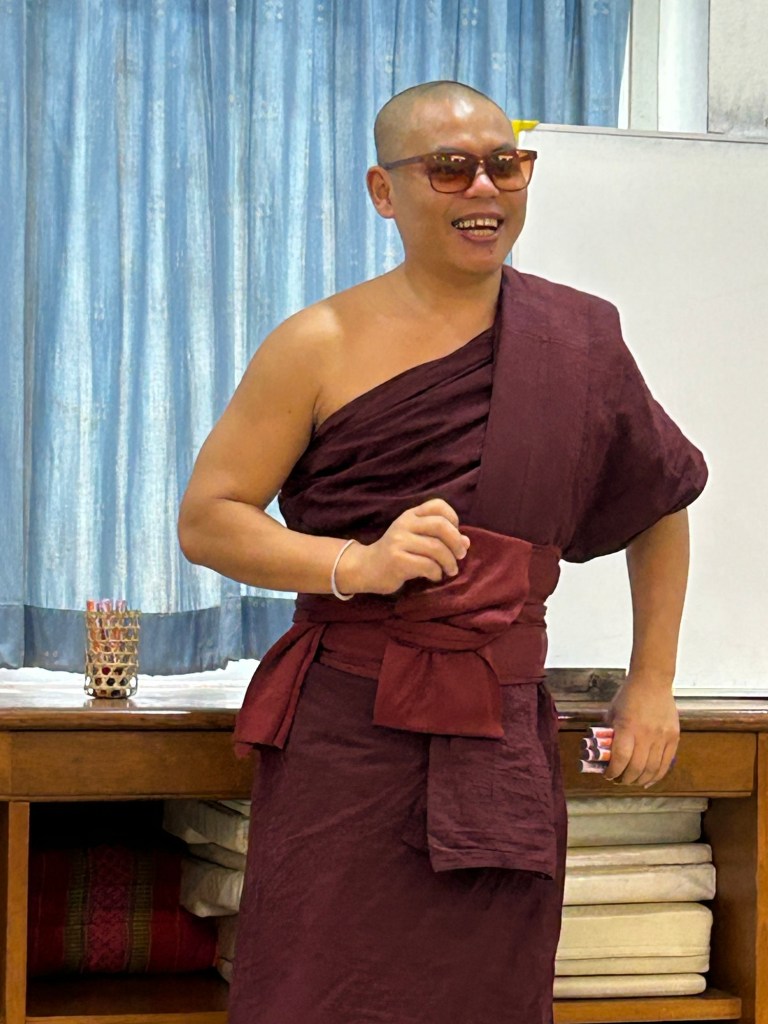
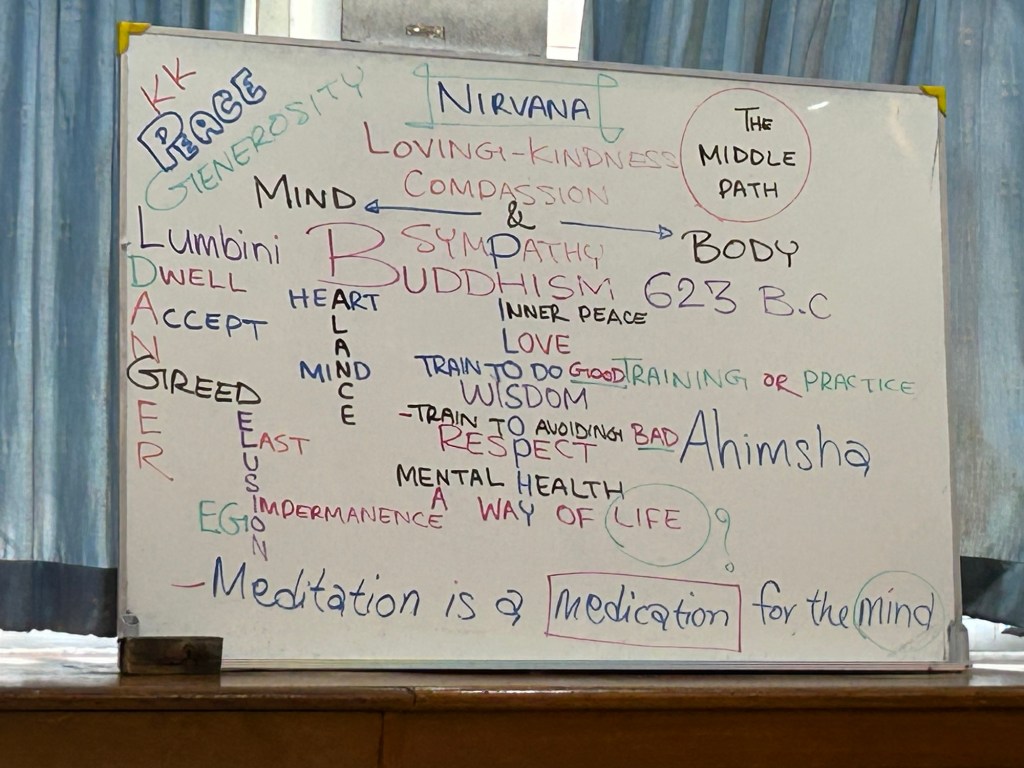
KK, a monk from the temple gave us a lecture about the basic tenets of Buddhism. He was an animated speaker who made a complex topic simple.
Young monks receiving a lectureKK, our teacher for todayToday’s teachings
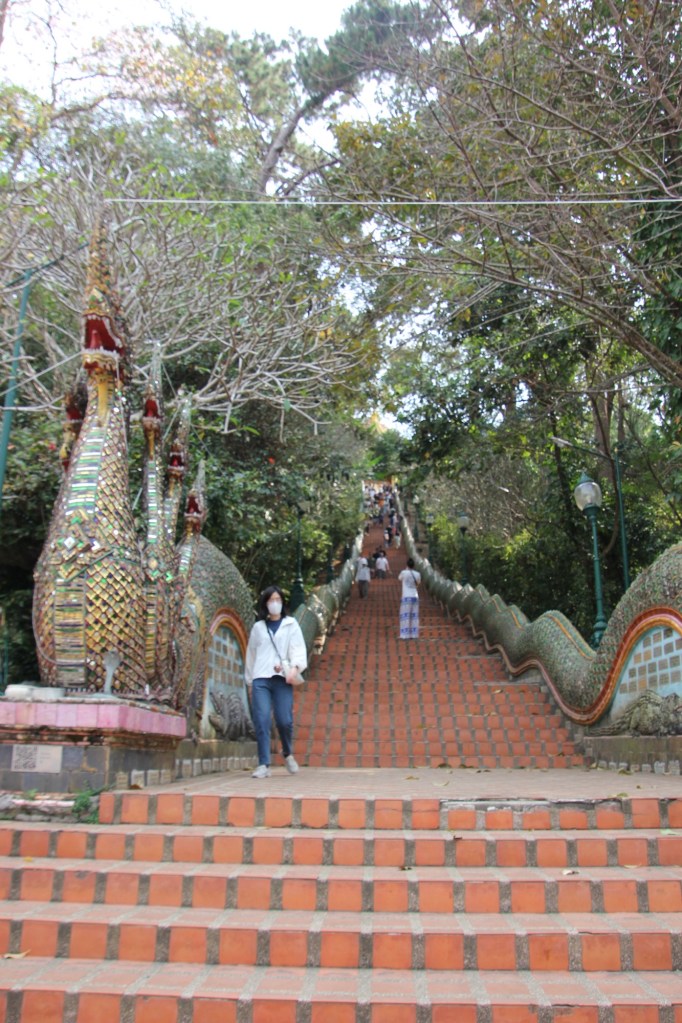
Our second stop of the day was the Doi Su Thep temple on a mountain overlooking Chiang Mai. We climbed the 309 steps to the temple occasionally using the snake’s tail as a railing. The climb was steep and we were grateful that the temperature was only 29C.
The 309 Naga (snake) guarded steps to the Temple.
The temple is thought to have been built in 1383 and is considered a very sacred site in Thailand. This is where the second half of the Buddha relic is thought to be buried.
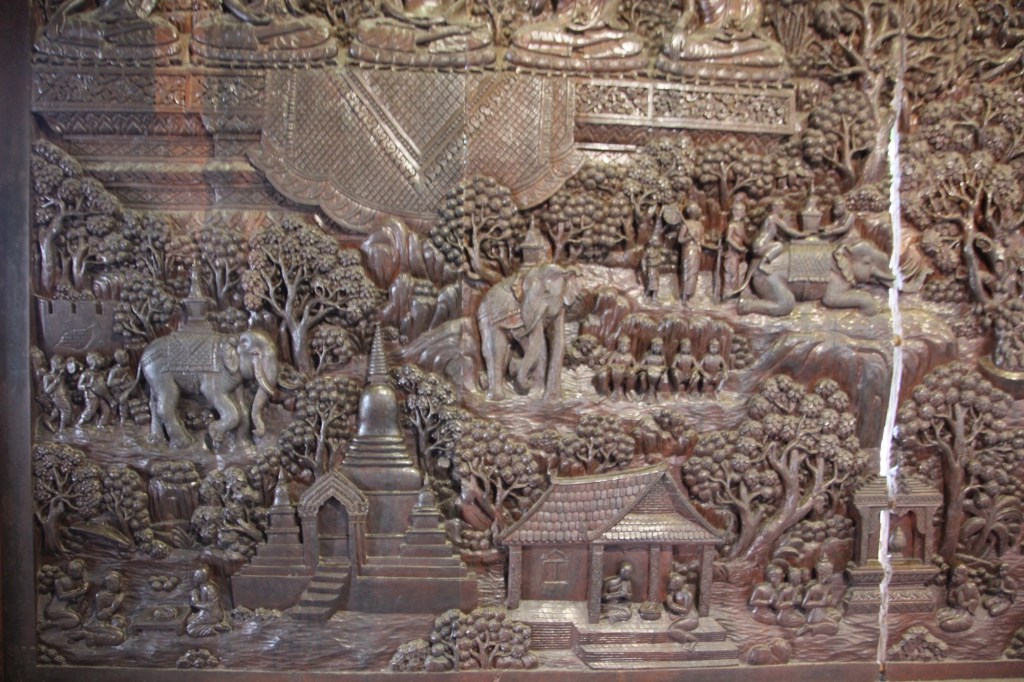
The story of the relic carved in teak.
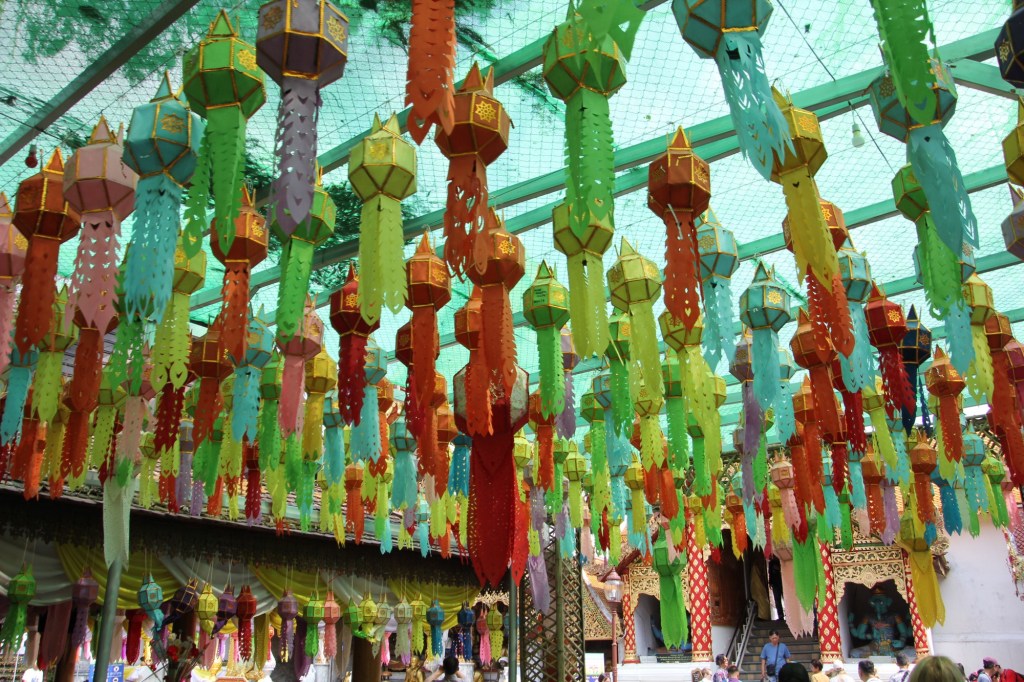
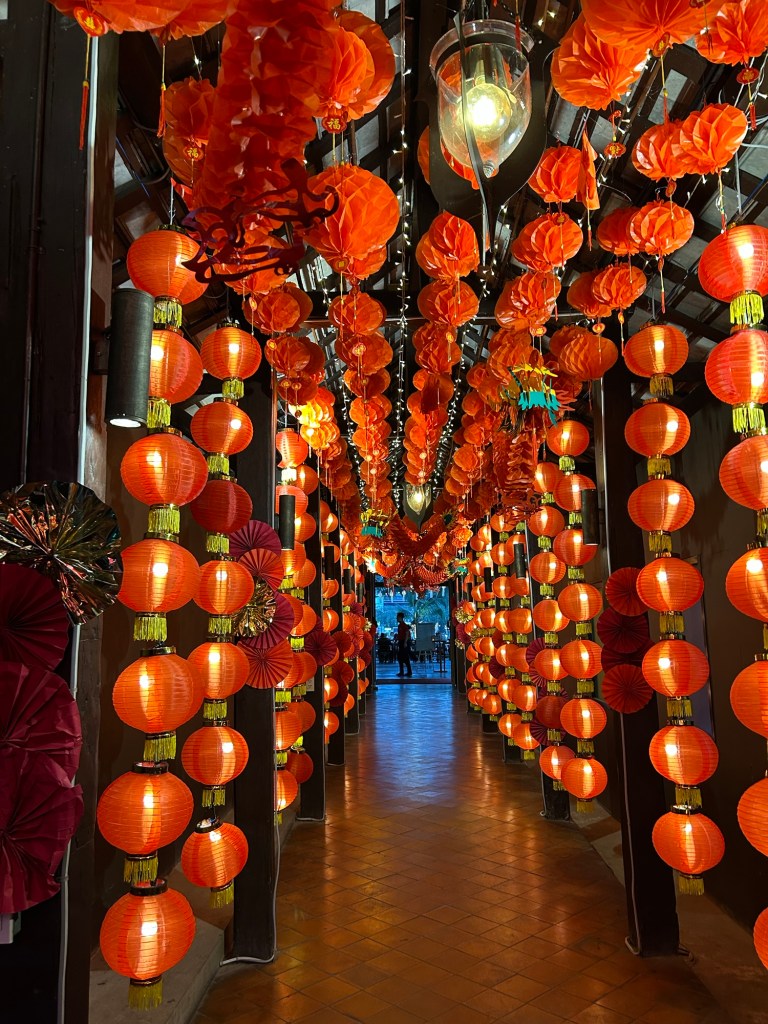
This temple was vibrant with all manor of decorations. For example the lanterns strung around the buildings are one way to show respect at the temple. People write their family names on the lamps, make a donation and then they are hung. The colour of the lamp reflects the day you were born. In my case, Tuesday’s colour is pink. Dale’s a Sunday child and his colour is Red.
Birthday lanterns
We wandered the temple grounds admiring the buildings and statues. There was so much to see that it was difficult to find a place to look. There were Buddha statues everywhere.
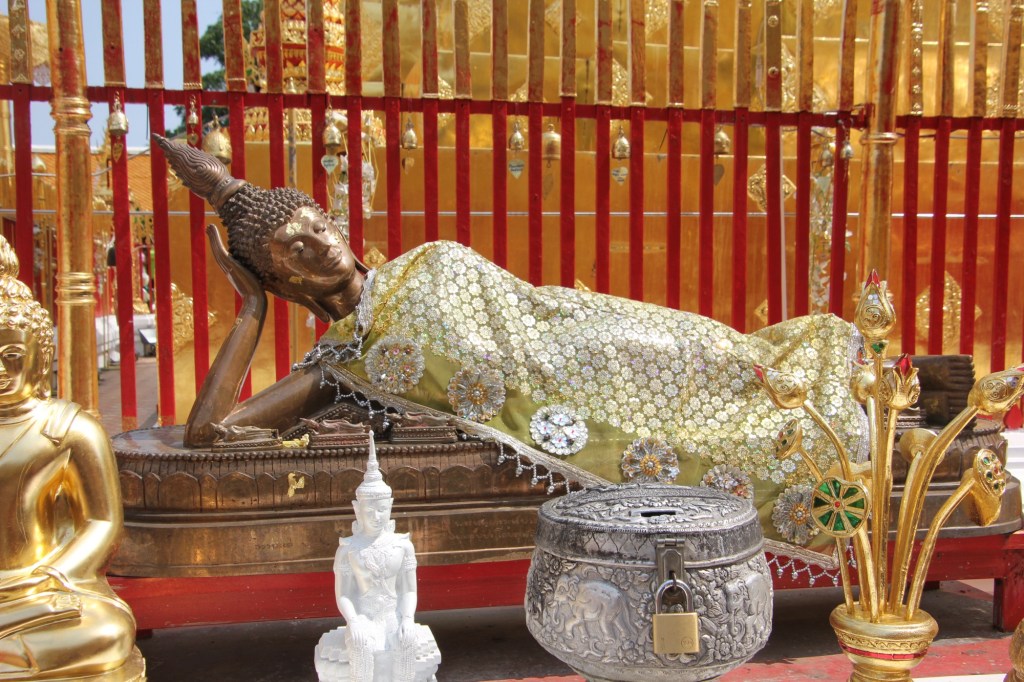
Doi Su Thep TempleTuesday children are connected to the reclining Buddha
While some of us climbed down the 309 stairs, I took the funicular down to the bus to spare my knees. We headed back to town and went for lunch at a local restaurant. The soup they served was spectacular and definitely hit the spot. We returned to our hotel for a bit of a siesta before heading to our evening adventure.
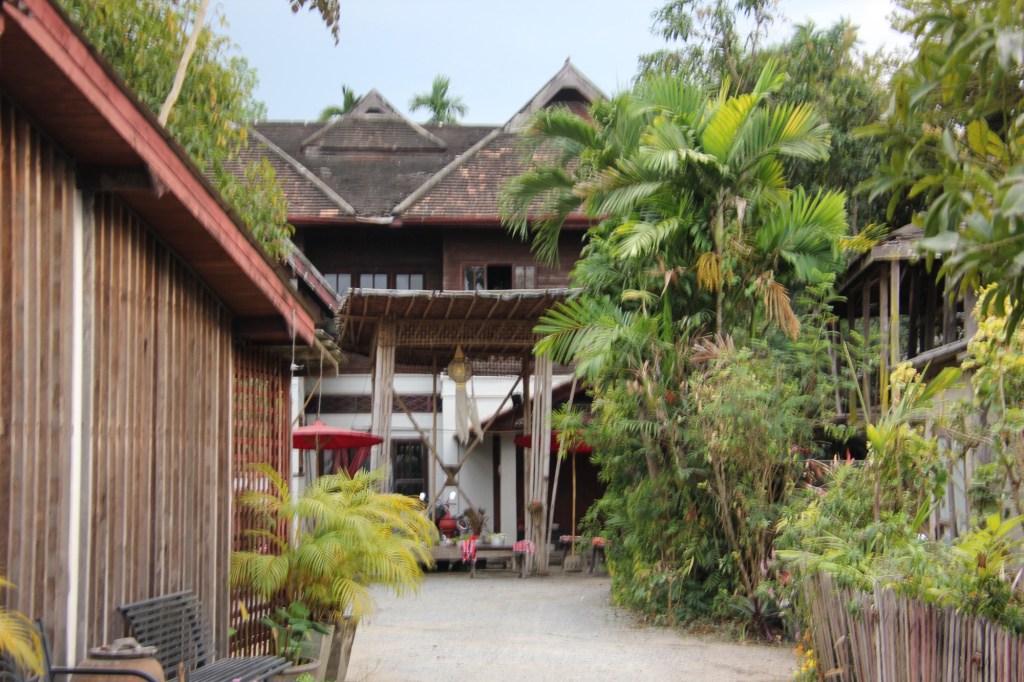
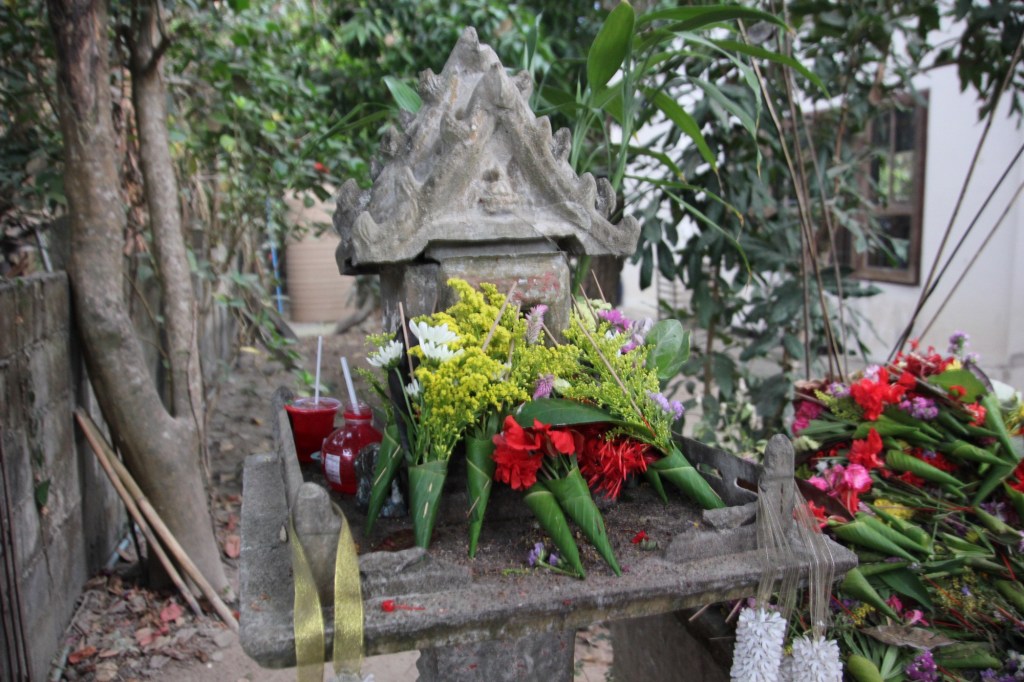
We went to a Lanna family home for dinner. Our host, Joe, welcomed us to his home and shared that he and 12 members of his family currently live on the property that has been in his family for 5 generations. The family were originally farmers growing rice. They now grow many things and focus on making sticky rice. Joe described that his family were 1) animistic (I.e., they believe in spirits), 2) Buddhist, 3) Hindu and 4) followed Feng Shui. He invited us to make bouquets to make an offering at their spirit house before coming into the building.
The Lanna family homeOur bouquets offerings on the spirit house
The family home was over 30 years old and was the second version of their home. The original one was made of teak. It was torn down to make way for a new building. Teak is no longer harvested so they rebuilt using a cement frame and recovered teak from the original building. The living area was on the second floor.
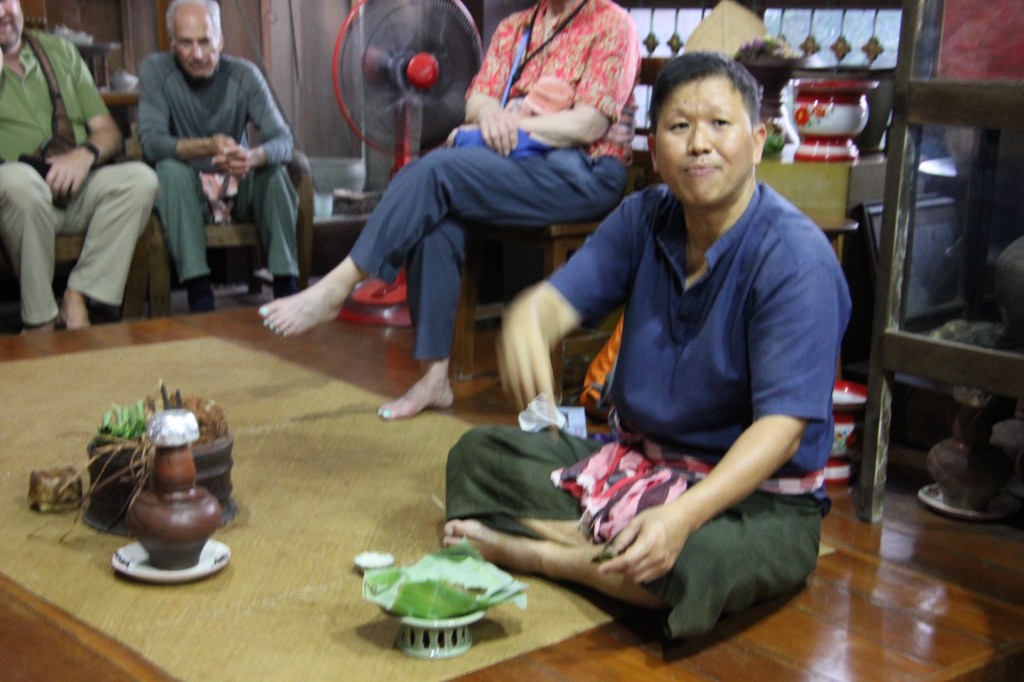
Joe teaching us how to make tea
Joe taught us how they traditionally make tea. He showed us how to take some fermented assam black tea, add a grain of salt to make a good chew. It was surprisingly tasty. More so than his second offering of chewing betelnuts. We were shown to take a Pann leaf, add some dried betelnut, some tree bark and sap from a specific tree and, after wrapping it into a small bundle, chew it without swallowing it. We were encouraged to spit it out. The taste was sharp and unpleasant and left our mouths numb but is supposed to give an energetic boost. It is definitely an acquired taste, that if acquired can lead to addiction or cancer.
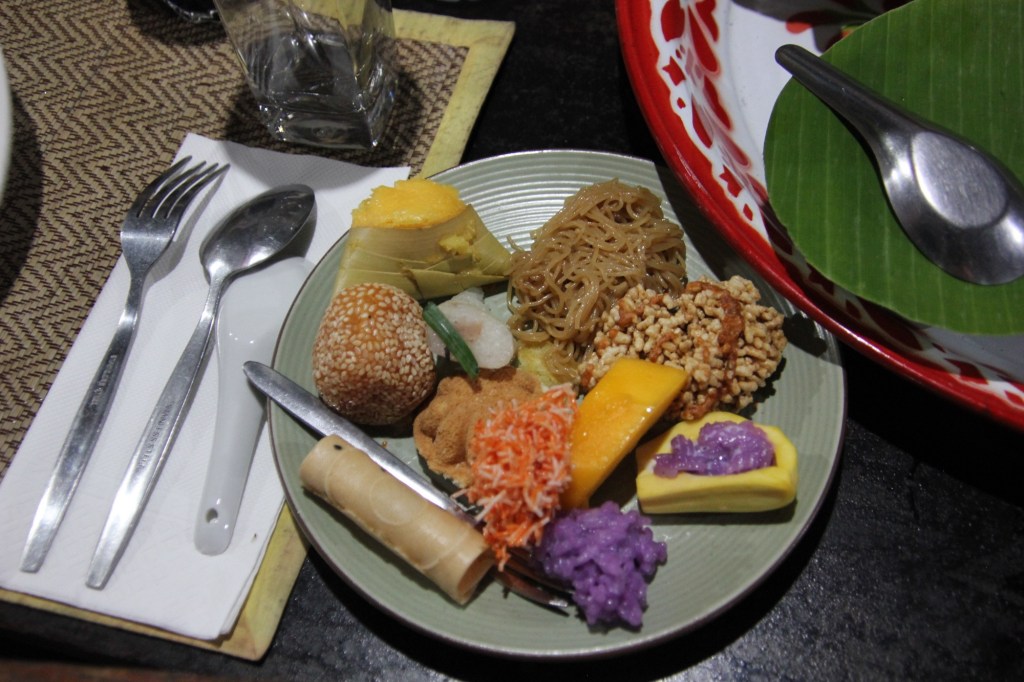
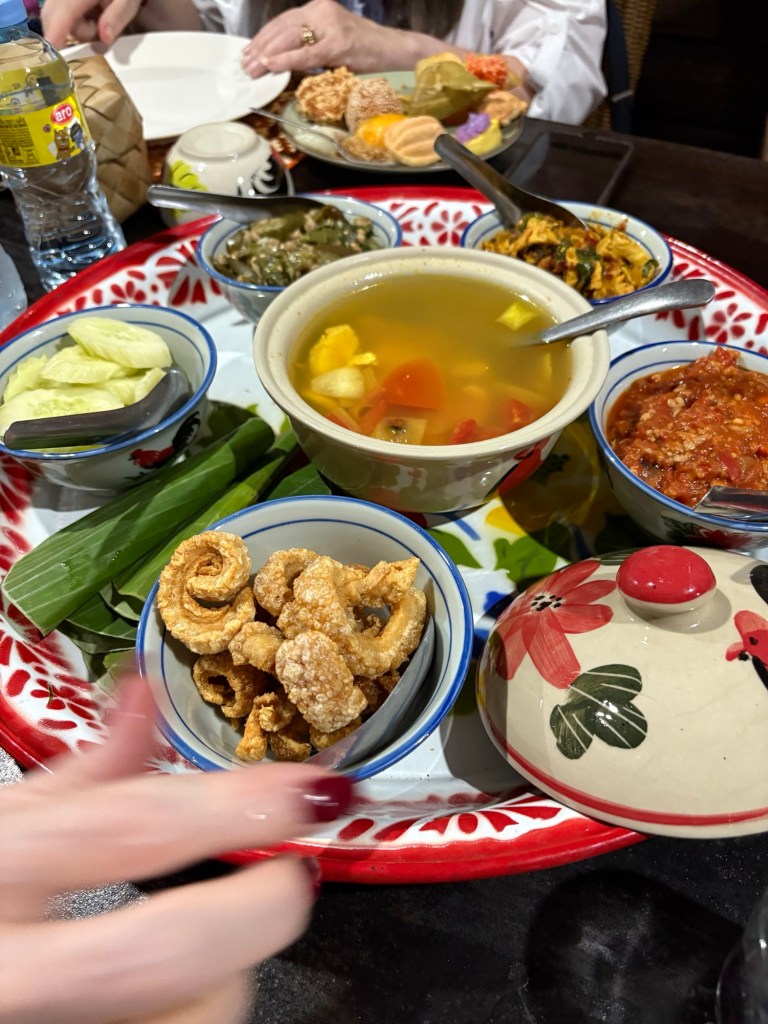
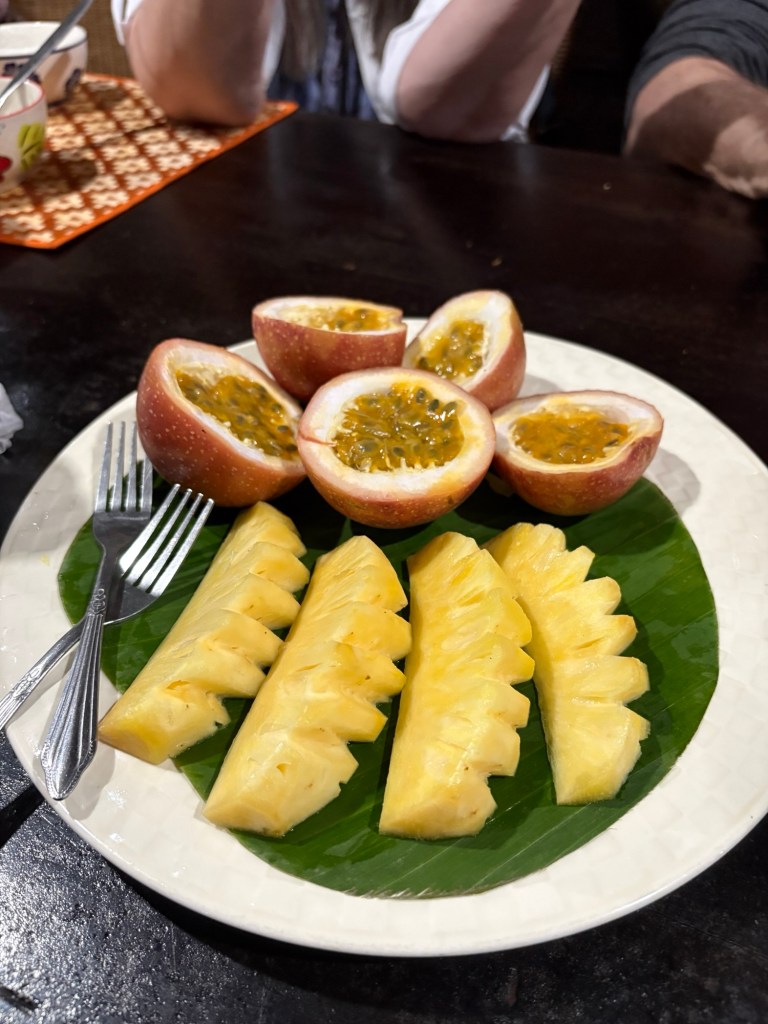
We were invited to join the family for dinner. The food was varied with lots of choices. We had a huge variety of appetizers followed by a main course composed of several dishes and desert- bananas in coconut milk accompanied by fresh passion fruit and pineapple. As we finished our meal our hosts gave us a parting gift of fresh tamarind seeds (delicious once you figure out what parts to eat/not eat).
AppetizersOur main course with sticky riceDessert
A short van ride back to the hotel ended our evening and we retired to get ready to hang out with elephants tomorrow.
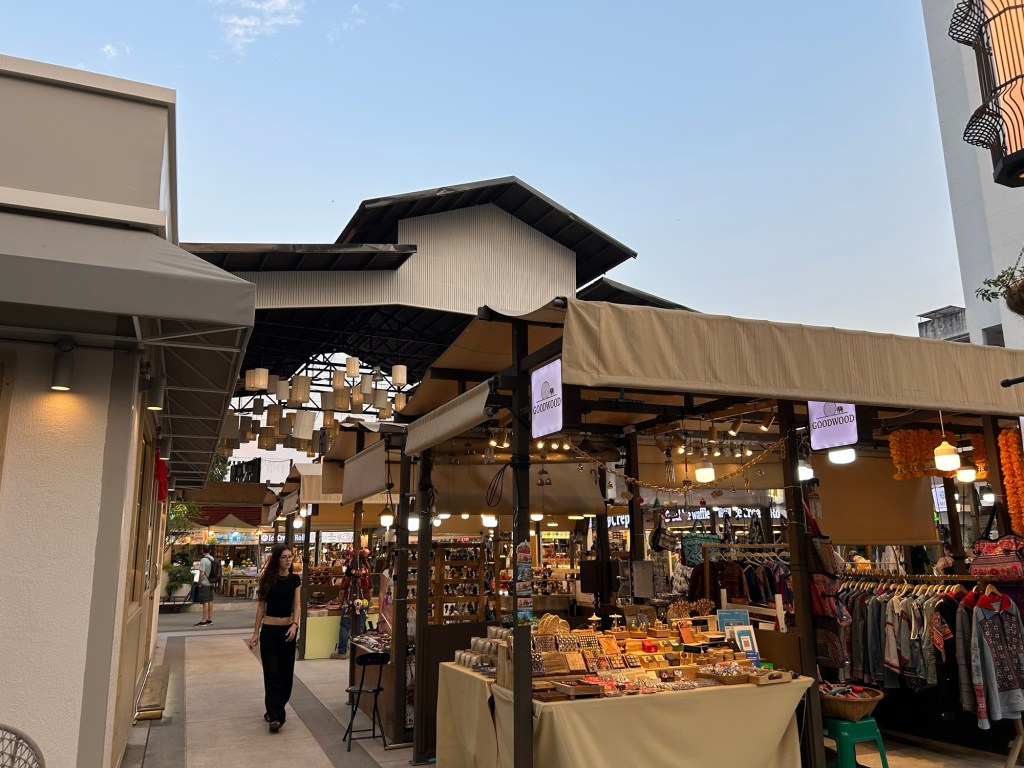
We arrived at our hotel after an uneventful 75 minute flight. It has been a relaxing day. We checked in and then did a bit of a walkabout with our guide. We are staying in the Night Market area of Chiang Mai. It is a vibrant area with lots of stalls open from 6-11 pm every night.
Night Market
We went to the Chef’s Together restaurant by the river for a lovely dinner. The weather was still 30+ degrees but the breeze made it nice sitting outside weather.
It was an early night. Tomorrow we are off to explore this part of the country. Our guide described that this part of Thailand moves at a much slower pace than the south. It was already noticeable in the market. Let’s see what tomorrow brings.


 travelswithannmarie