The Ellora Caves

Tags

,

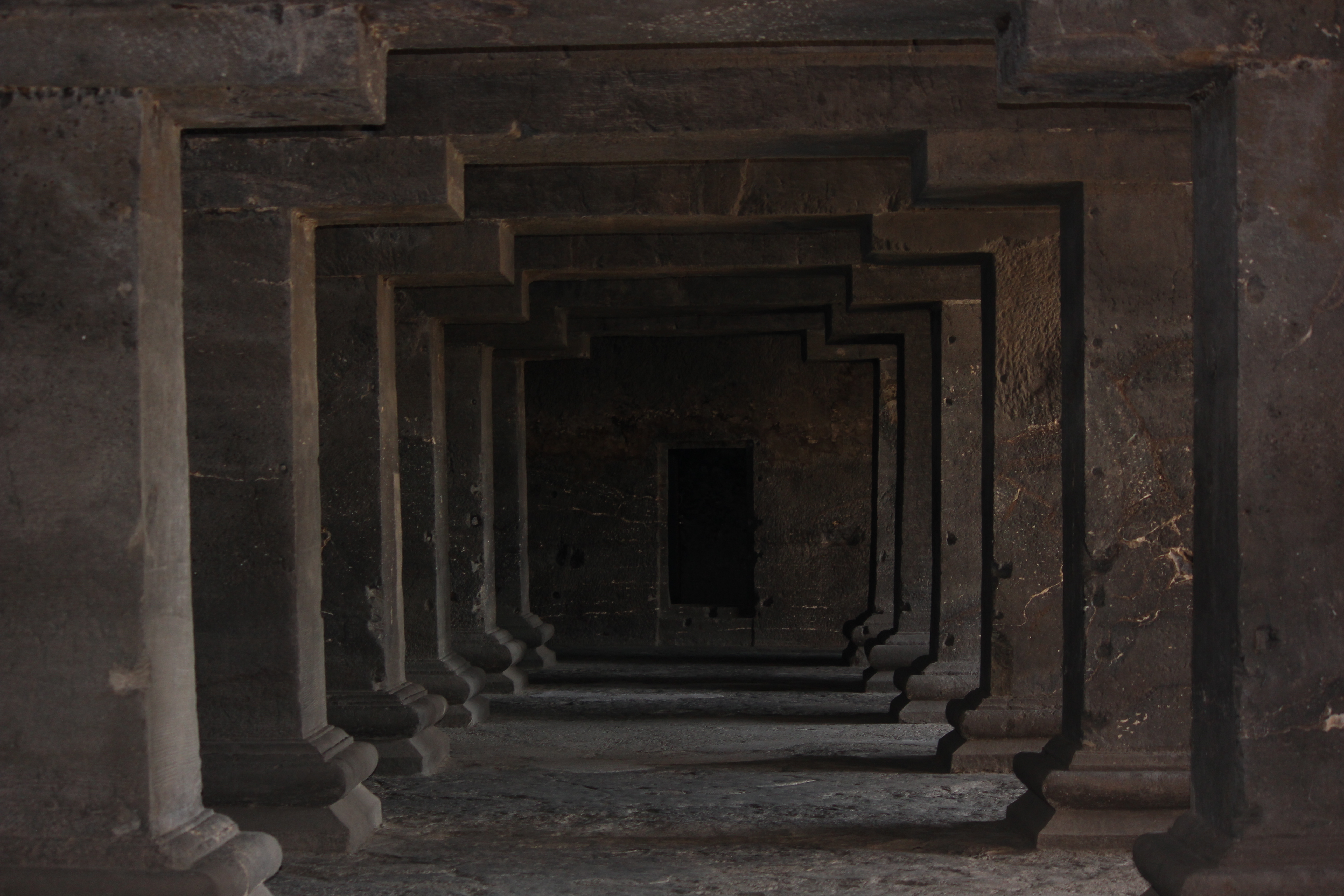
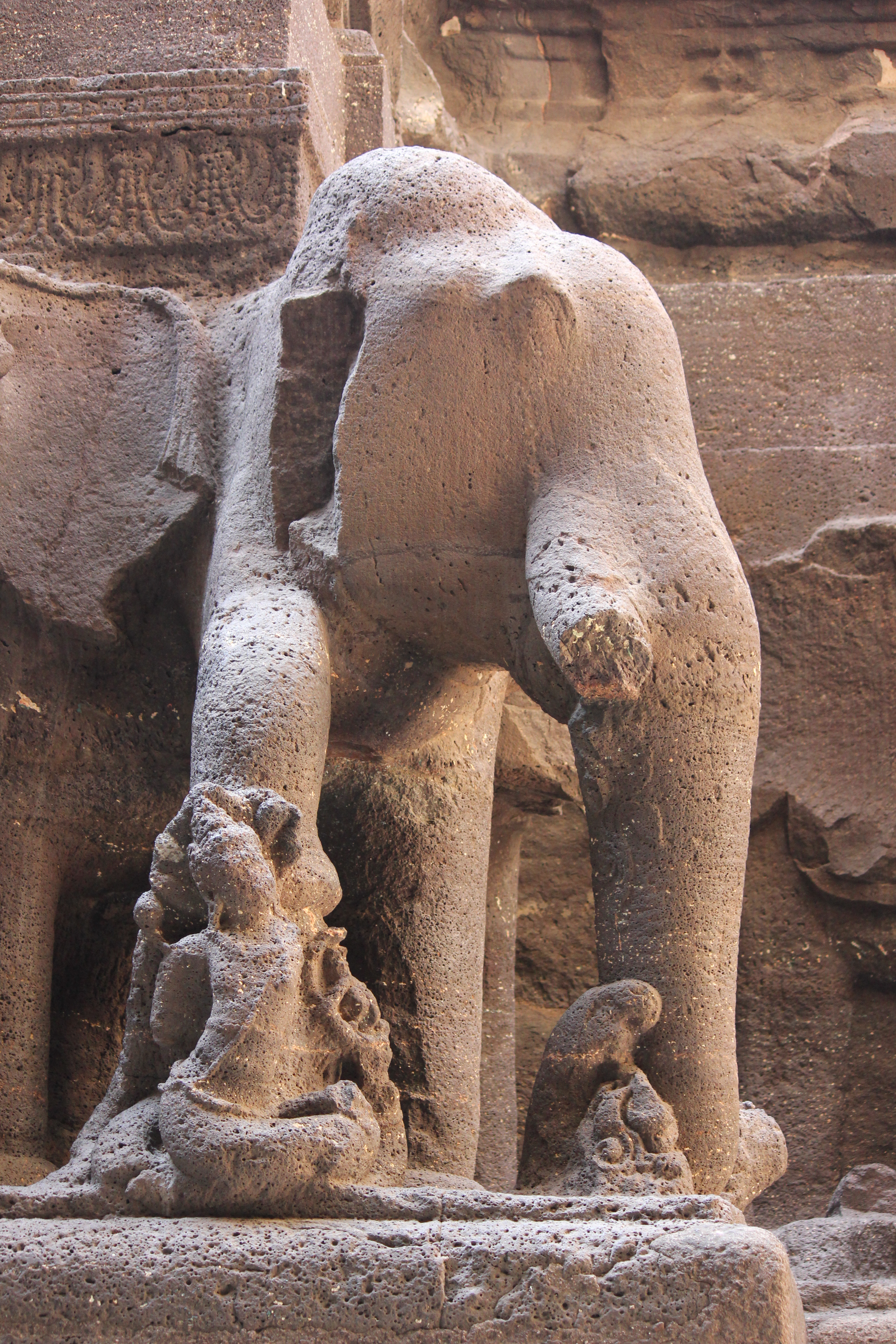
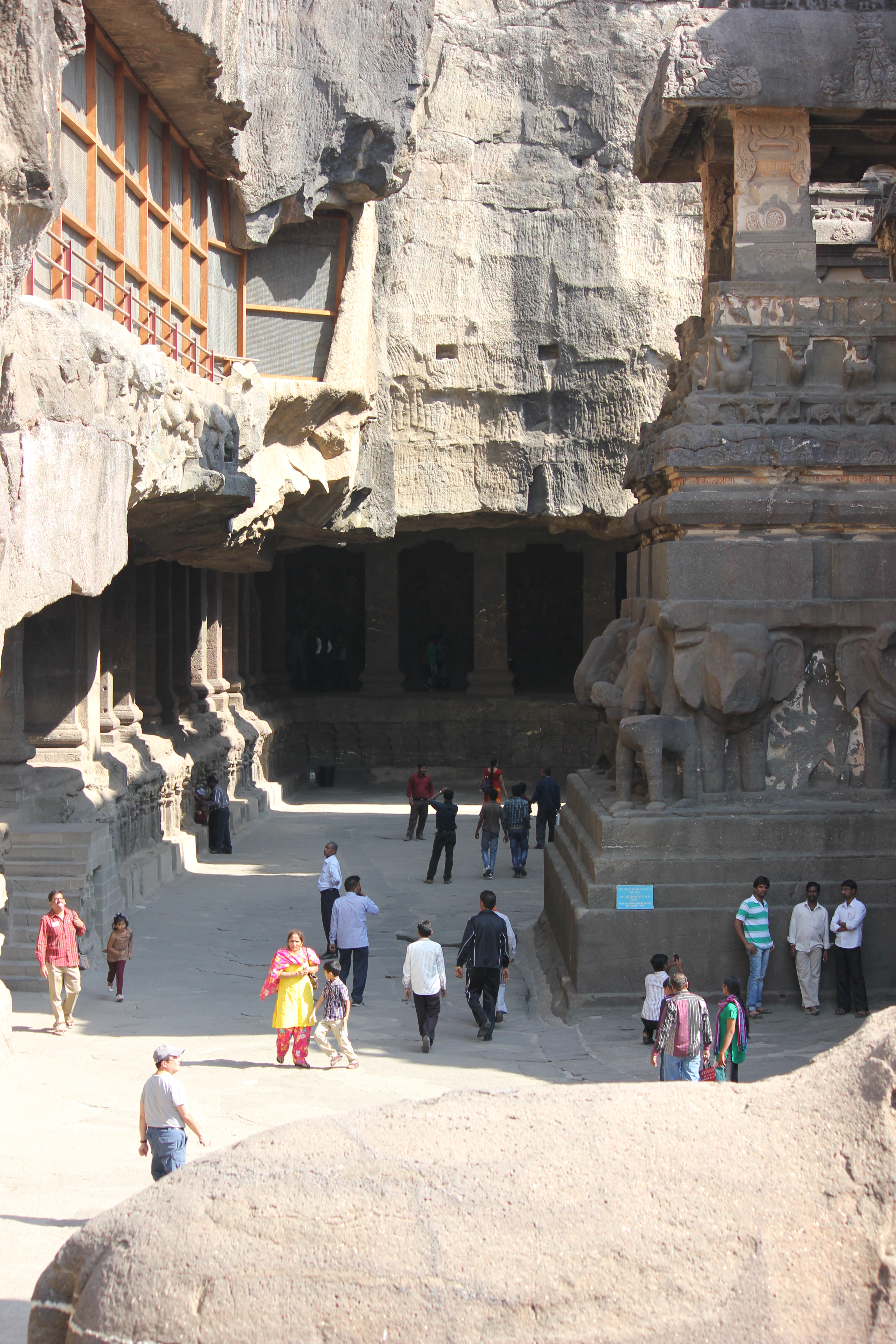
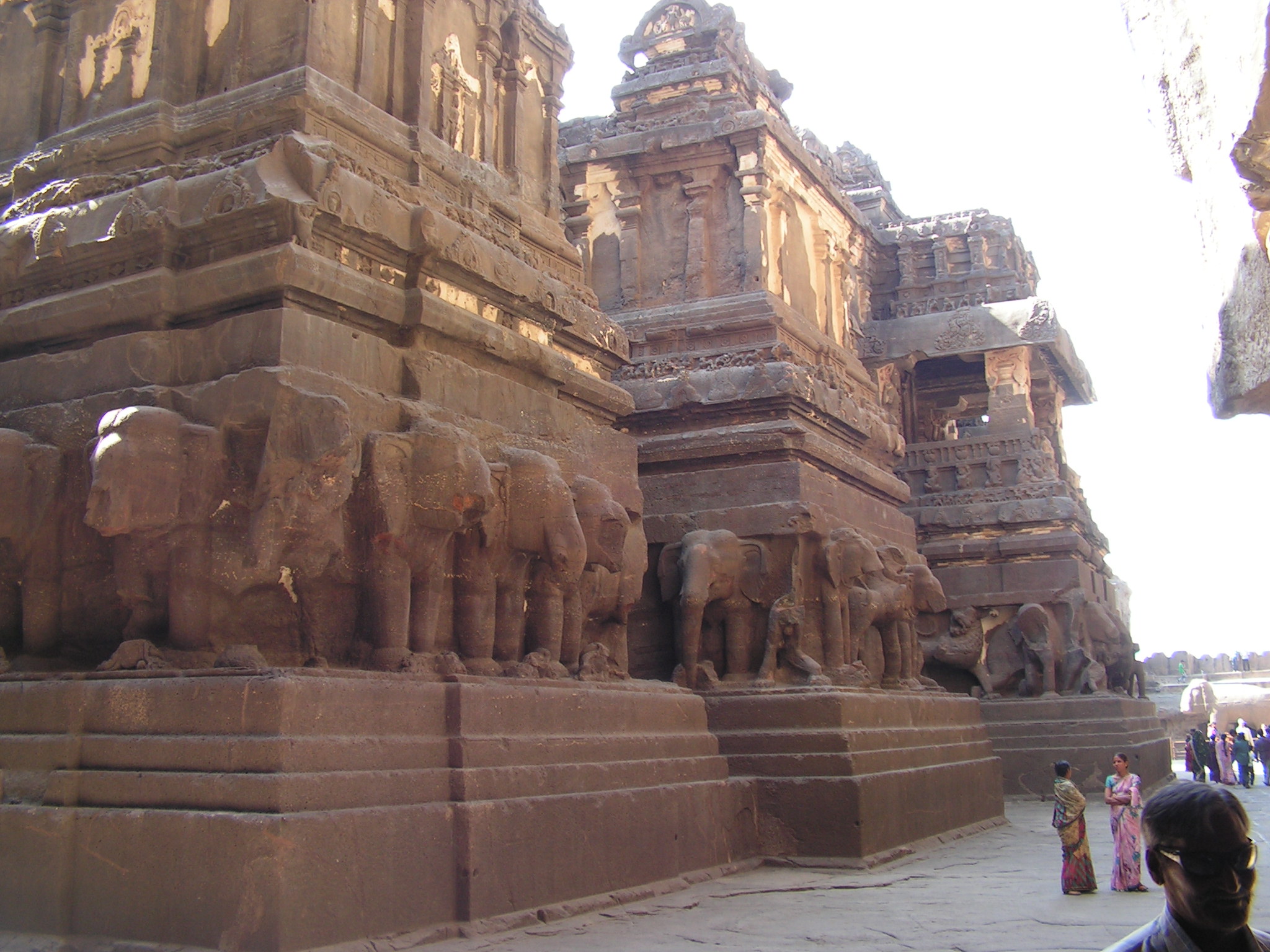
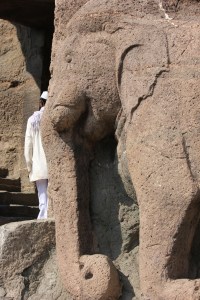
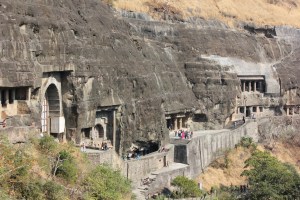
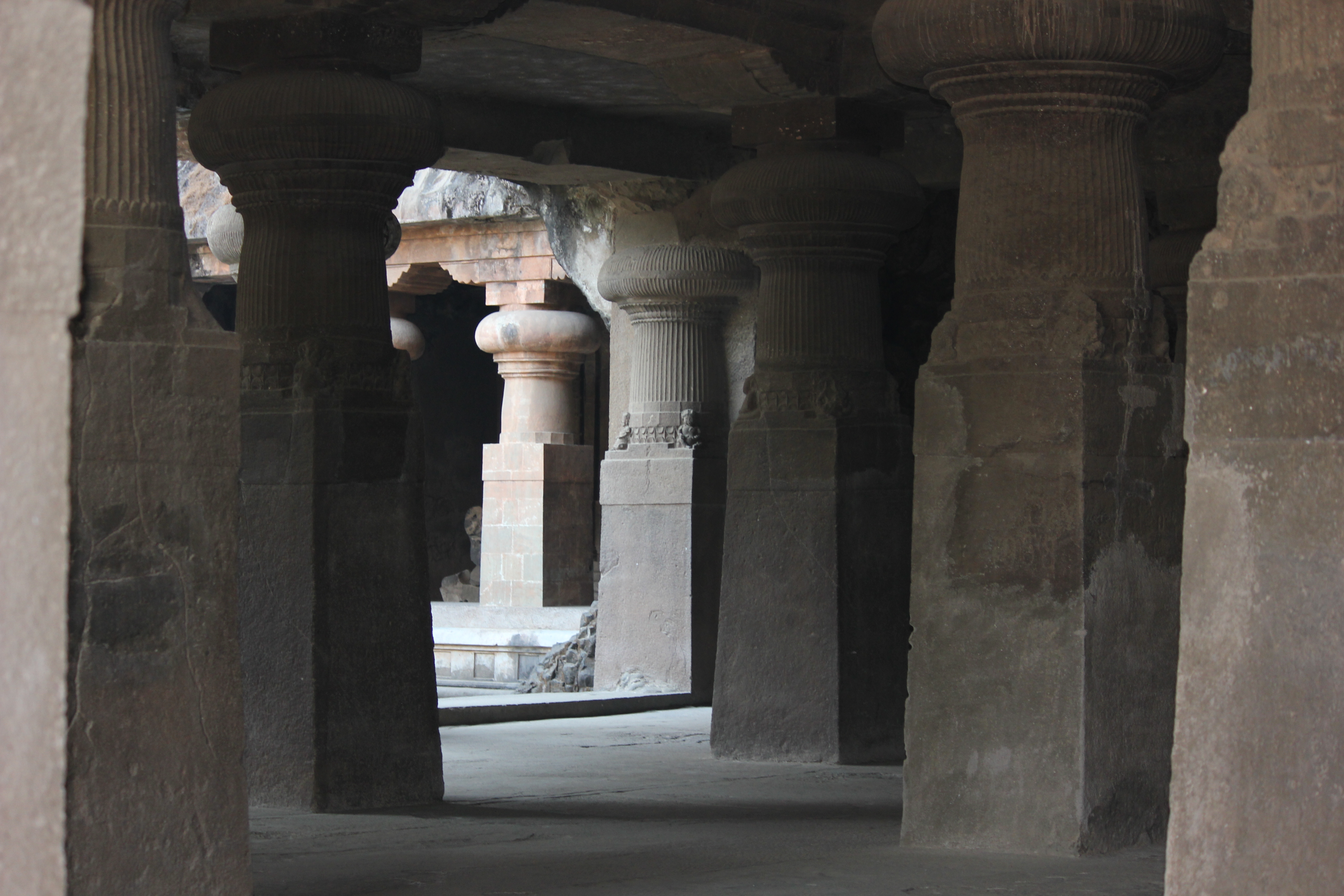
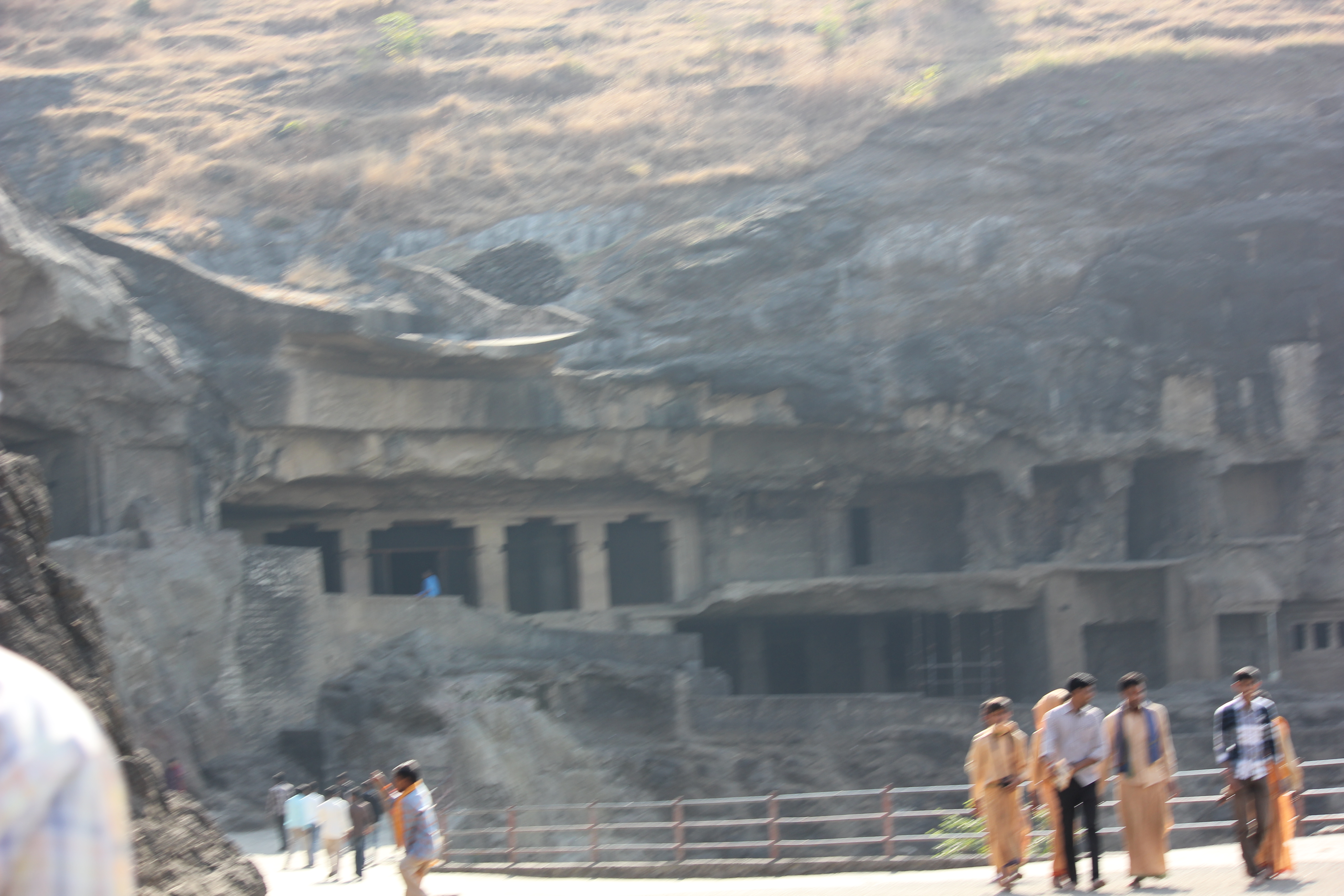
Today we went to the Ellora Caves. The complex was carved out of the solid mountain much like the Ajanta Caves we saw earlier. However, this complex was newer, mostly from the 6th century but it had never been “lost” so they have been rather battered and defaced over the years. The original monasteries were Buddhist but the Hindus took them over and converted them. The temple though was carved from solid stone much like the statues you see in museums. When you look at the temple, it appears to have been constructed but it was not! Every opening, every figure, was carved out of solid basalt (volcanic) rock. there was no construction – just sculpting! It took a whole bunch of monks and artists 150 years of work to carve the temple! There are carvings that show influence from China and Greece as well as Persia. The temple was on the Silk Road. It existed for hundreds of years so that traders could buy silk, spices in one part of the world, and sells them in another. We spent four hours in awe at this complex. Everywhere you looked there was another amazing carving that told an important story. Our guide knew all the stories. Mostly he described the Hindu meanings attached to the temple. He told us which gods & goddesses were displayed. He stated that Hindu isn’t a religion but a way of life and all the gods and goddesses represent important aspects of life and that it is insufficient to simply pray to the gods, you had to do something to improve your life or your circumstances. The gods and goddesses simply helped to focus you in your life’s work.ImageImageImageImageImage
Weaving centre

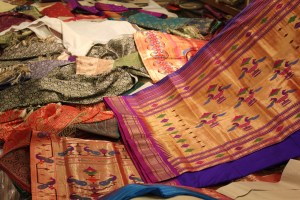
the three looms produce three different products. the orange one at the top is the simplest, the bottom one is the most complex. The middle one is the cheapest because  only the panel you see is woven, the rest of the sari is plain. The bottom one is complex because the pattern keeps being repeated in the border and the actual sari itself.

the same pattern is produced in 3 different levels of detail.

the same pattern is produced in 3 different levels of detail.

On our way to Ajenta…

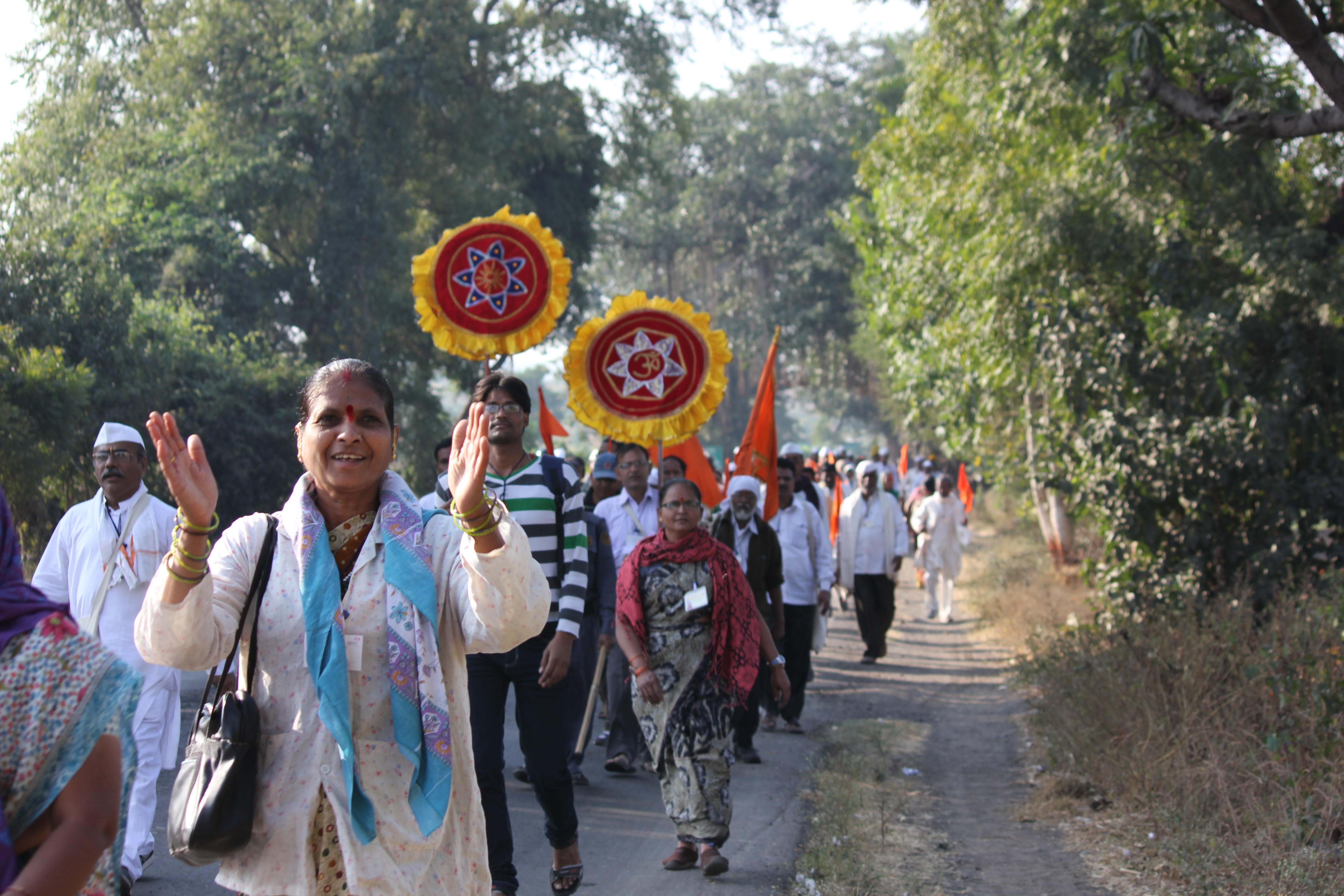
These pilgrims were walking from Aurangabad to somewhere about 200 km up the road. We noticed them on the way up and on the way back. They just walk and chant. They were all happy and friendly when we stopped to take pictures. they covered about 35 km in the day. they don’t take any supplies with them and rely upon others to take care of them – and it works.ImageImage

And now we are in Aurangabad

Mumbai & Aurangabad 122 Ajenta Caves 300 year old weaving technique 2000 year old weaving technique Buddha, Ajenta CavesWe had a very early start today. We were on our way to the Mumbai airport at 4 am for our 6:30 flight. We arrived in Aurangabad (Aurangzeb’s city) at 8:30 am and our guide picked us up and transported us to our hotel – a virtual palace of a place. After dropping our gear, we were off on our two hour drive to the Ajanta Caves. We were initially concerned about being anything but comatose after such an early start, but the caves were fascinating. They were more appropriately called carved mountains than caves because the Buddhist monks living there between 2AD and 6 BC carved the temples and monasteries out of solid rock, creating the caves. Our guide was brilliant. He has been guiding people through the monument for the past 42 years! He knew everything about the caves and was still passionate about making sure we understood the significance of the caves.

Our travels to and from the UNESCO World heritage site were delayed a couple of seconds because we had to wait for ox carts to move off the road. It is staggering to note that people still use ox carts, live in huts and walk miles for water. This is the reality for many of the people living in and around Arangabad. The poverty here is obvious. However, for many of the people we encountered, it was “just life” and they were accepting of how life was. We saw migrant worker “villages” filled with tarp-tents. A whole family would live in the tent while picking whatever was being harvested. The crops around here included sorgum, sugar cane, lentils, wheat, ginger, fruit, castor, red chilli peppers and cotton. They use oxen to transport their goods to and from the field.

We ended our day at a weaving school. The weavers there use three different types of looms. The first loom they showed us was based on 2000-year-old traditions of tapestry with silk threads. It takes one weaver over two years to make one Sari using this technique. The people of the Aurangabad area are some of the originators of loom weaving in the world and the school is trying to preserve the traditional weaving techniques. The second loom technique they showed us was mechanized but on a 600 year old style of loom. An early computer helped speed up the weaving process. The third loom was only 300-year-old technology. It used a punch-card system that resembled the computers of the 1980’s. The two looms would automatically pick up specific warp threads so the shuttle could weave the pattern. We ended up buying a whole swack of goods and enjoyed the whole process.

An afternoon of touring Mumbai

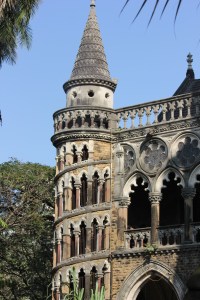
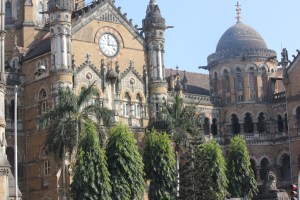
Our afternoon was spent on a city tour. We first stopped at a laundry where men do all the work! They have concrete tubs and piped in water that is then used to wash hotel linens, restaurant cloths and people’s clothes. The men beat the cloths against the cement after letting them soak in soapy water. Then they rinse them and hang them to dry. We then stopped briefly at the University of Mumbai to look at the exterior of these beautiful buildings. The train station was close by. 1700 trains go through the Mumbai train station every day. Each train is designed to carry 1007 people but they typically fit 4500 people on the trains. The cars are segregated by gender so that women are squished with women and men are squished with men.

Mumbai University

Harry Potter Anyone? 

The Train Station of Mumbai

The Train Station of Mumbai

Now for a relaxing evening with Meenal’s brother and his family and life is good. Our last stop of the afternoon was a museum built to honour Ghandi. He stayed in the house where the museum was located every time he was in Mumbai. Ghandi also started some of his most important campaigns from this house. It was interesting!

Lunch in Mumbai

We had lunch in a wonderful restaurant. It was the Indian equivalent of dim sum. They started by asking us what level of heat we would like our food to be. That determined which cuisine we would be served. We were each given several small bowls on a large tray. The waiters then came around and filled the bowls with different stews or sauces. We were given several different types of bread and pickles to go with the food. It was vegetarian which was important because meat would have filled us up way before we could have tried as many different things as we could. There was even dessert! I don’t have a sweet tooth, but Dale does, so life was good. 


The Elephanta Caves, Mumbai

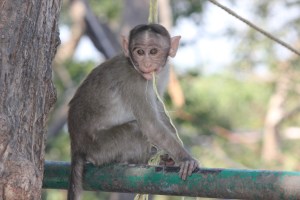
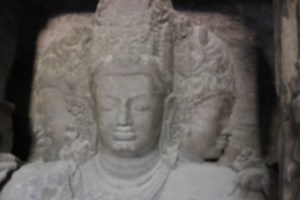
A little monkey businessThree heads of Shiva

Well the world didn’t end today so we decided to have a great day of touring. We got up at the crack of dawn, had breakfast and hit the trail. Our first stop was the harbour where we took an hour-long ride on a local shuttle to the Elephant Caves. They were amazing. In the 4th-6th century, the people of the island carved these caves out of the mountain. There were approx. 9 different panels dedicated to different aspects of Shiva’s life. The Hindu’s learned the carving techniques from the Buddhists who carved some caves we will see probably tomorrow. The Hindu people were used to worshiping in temples with columns to hold up the roof, so the carvers carved the pillars from solid stone to make the temple look familiar. In 1543 the Portuguese traders decided to use the caves as targets for their canons and severely damaged all the panels. The one exception was the massive three-headed sculpture of Shiva because it had been hidden by a screen and not visible from the gun ships. 2000 people live on the island with the statues and manage all the stalls and food stands on the island. There is also a small train to take people from the boats to the monument steps. You have to walk up 120 steps to get to the top with people trying to sell stuff to you all the way. If you can’t walk up the stairs, people put you on a chair with carrying poles and carry you up the stairs. It was a bit weird to have four men carrying a seated woman come at us, but we stepped aside and let her pass. There were little monkeys hanging around the entrance to the caves so we stopped to watch them groom each other.Image

Mumbai

We got up this morning, had breakfast and hit the road to Mumbai. Our driver took to the road and we started for the Kochi airport. The traffic was fiercer than we have encountered to date as we entered new Kochi. The pace and traffic definitely was “bigger city” than we had seen so far. Our local guide met us at the airport and he helped us navigate the airport process. We had to confirm that we had a flight before entering the airport. We had to go through a scanner with our bags and then get into line to check in. We then had to go through security, they scanned our stuff, and we were patted down. They segregated the security line so men and women went through separately. We finally got through to the waiting lounge and found upholstered comfortable chairs to relax in and wait for our flight. The flight was an experience. We had our boarding passes checked three times before getting on the plane and then once when we got off! We arrived in Mumbai without any problems.

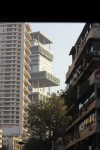
There are 20 million people living in Mumbai (only 16 million officially). The place is huge. It took us 85 minutes to get from the airport to our hotel. The whole drive was bumper-to-bumper traffic on three lane roads that allowed five lanes of traffic. We drove by the wealthiest man in India’s home. He has a 27 story home that houses five people. The tower was situated right next to businesses and dilapidated housing. Our impression of Mumbai was that it has both grandeur and grime. We saw the slums coming in from the airport and they were just like in Slumdog Millionaire. There is also a vibrancy to the city with lots of construction happening and a huge amount of retail.

We briefly met with Meenal’s brother and hope to see him again tonight, this time with his family. Today we have lots of sightseeing to do and I look forward to posting more pictures soon.


Kochi, our last stop in Kerala

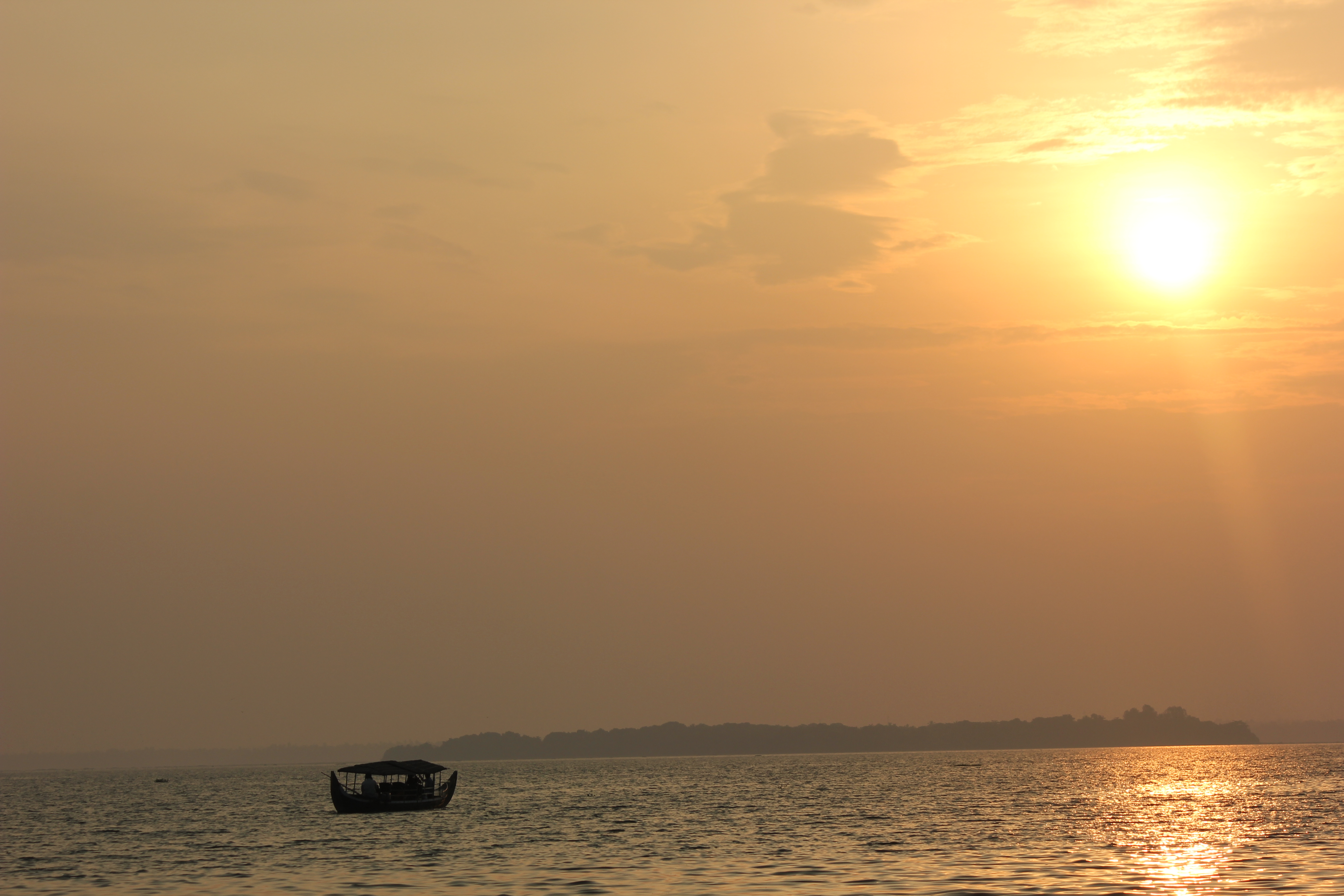
We finished our stay at the Coconut Lagoon by taking a sunset cruise on the lake and having a wonderful seafood supper by the lake. All the fish and shellfish are caught locally and everything was radically fresh. Earlier yesterday, we attended a cooking demonstration as the chef taught us how to make two different traditional Kerala dishes, one vegetarian and one fish. This same chef cooked for us later that evening.

We learned a great deal about the lake. The hotel is an award winning conservationist effort and they had two biologists on staff to teach us about the lake ecosystem, the birds, the dragonflies and the plants. We saw many bird species and even some butterflies and dragonflies.

We took the boat and then a bus to Cochin. We had a tour of the town with a guide. Cochin is considered the cultural capital of Kerala. We toured an old Palace, the oldest synagogue in India and the oldest Christian church here. Kerala was very important in the spice trade and the Portuguese, Dutch and English were all dominant here at some point since the early 1500’s. Kings who were unique in India ruled the province. They were very focused on sharing their wealth with the people.  When India gained independence in 1949, the King became an accountant and blended into the community. In other parts of India, the royalty were more conspicuous because of their palaces, etc. The Kerala kings shared their wealth so they did not maintain castles etc. like their northern counterparts did.

We managed to walk through a film set and take pictures of the stars of the event. There was absolutely no way that the director could control the set or have any way of keeping people out of the scene. They just made do.

We went to a Kathakali performance in the evening. We went early enough that we were able to watch them put on their makeup. The performance included a man teaching us about the moves and skills a Kathakali performer needed in order to do a good performance. Then we watched a play (actually a kind of ballet). It was a good thing that they had explained everything in advance; it made it easier to follow.

Tomorrow we are off to Mumbai and the next phase of our adventure. Image

A bird watcher’s paradise

On December 17th we took off again on a driving adventure. We spent four hours driving from our resort to Alappuzha where we caught our houseboat to the Coconut Lagoon. What a trip. The drive was uneventful now that we are used to the driving. The houseboat trip was spectacular. Our cruise took us into the Backwater streams and lakes. Backwater occurs when freshwater from rivers silt up and builds a dam between fresh and salt water. It is a dynamic system in that sometimes the dams break up and there is a shift in the salinity of the water. The waterways provide for a unique way of life. Rice is farmed. There is an active fishing industry and people live very close to the water. Tourism is a big part the ecosystem now. Our hotel is an eco-hotel that is doing its best to bring awareness to this vulnerable ecosystem. Our hotel is literally across the stream from a bird sanctuary and they help to preserve an indigenous form of small cow that provides a significant amount of milk in exchange for the amount it eats. The milk is used in Ayurvedic medicine.

We got up early this morning and went on a bird watching tour of the grounds. We got to see 36 species of birds. This impressed the naturalist guiding us. It was a good day for birding. Eric, was in his glory. Yesterday, Dale and Eric saw an Oriental Dwarf Kingfisher. Even one of the naturalists, who’s been at the resort for 4 years, has never seen this rare bird.

Our day is a quiet one with a lunch planned where we get to help with the cooking. This afternoon we plan to visit the butterfly and dragonfly garden and this evening we have more relaxing to do as we enjoy local entertainment. WE must give lots of credit to our travel planners, Meenal & Sanjiv, they have done an amazing job of finding us interesting AND restful places to visit and learn about India.