
It was a busy day today. Our local guide, Sam, took us on a walk through Luang Prabang on our way to the first temple of the day. We took our marigold tower from last night’s dinner to the Wat Xiengthong (I.e., temple of the city surrounded by the mountain wall). Wat is the Laos word for temple and this temple was named after the original name of Luang Prabang. It was interesting, but we are starting to think of temples like we do churches in Europe- they all start looking alike.
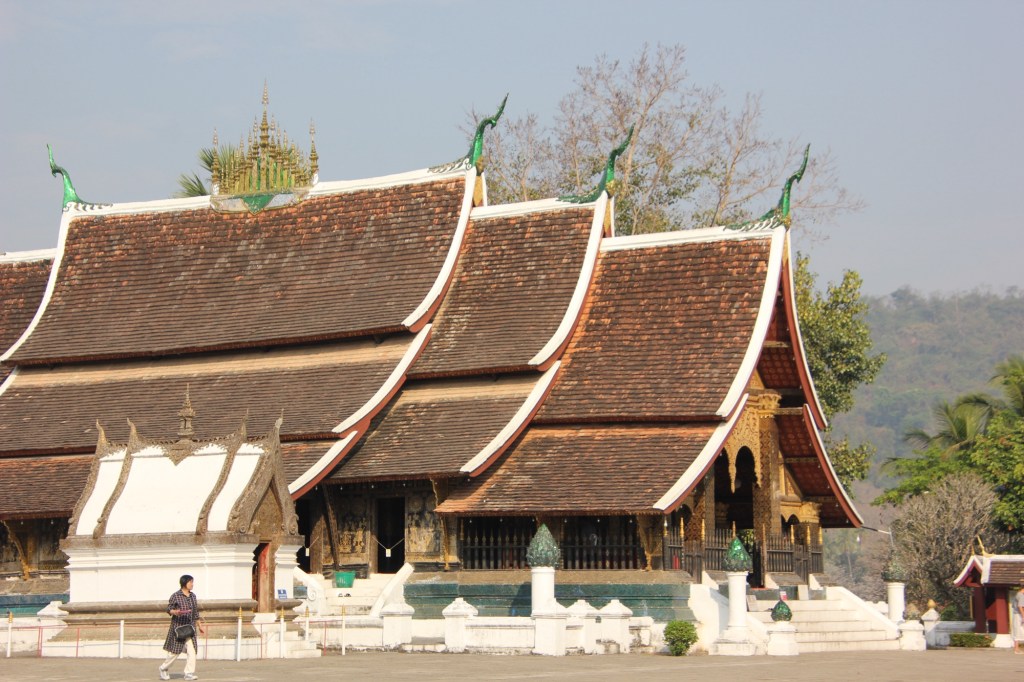
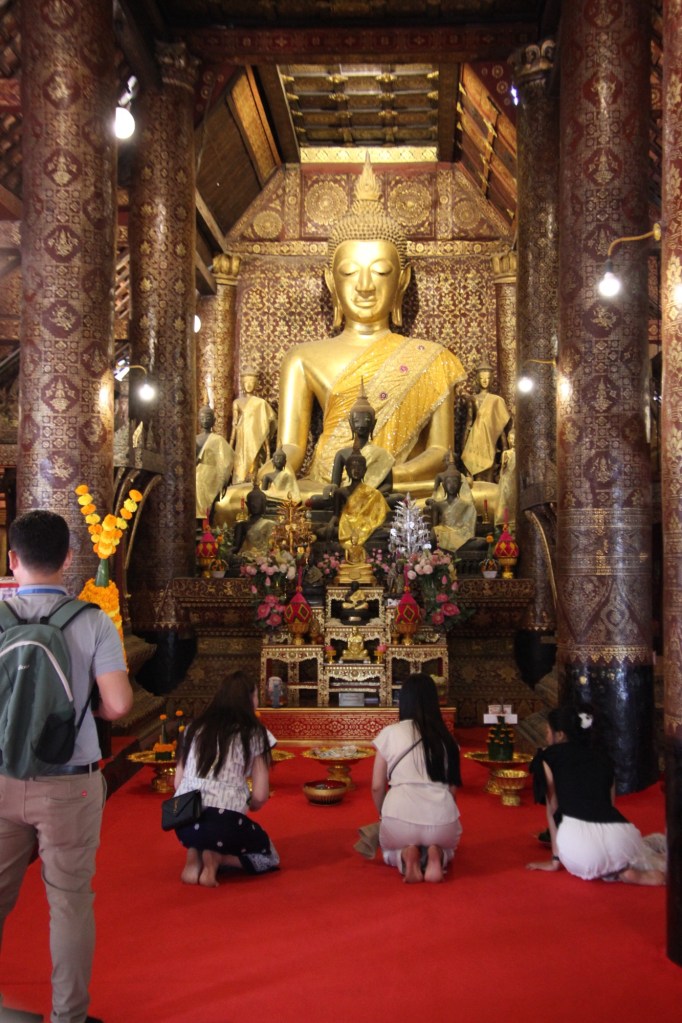
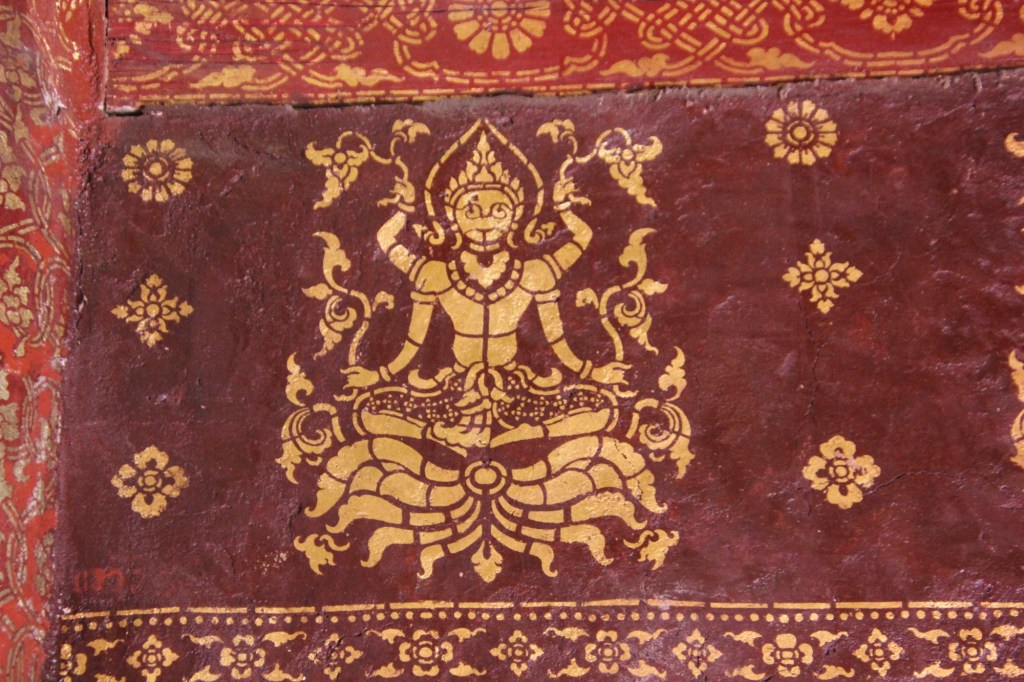
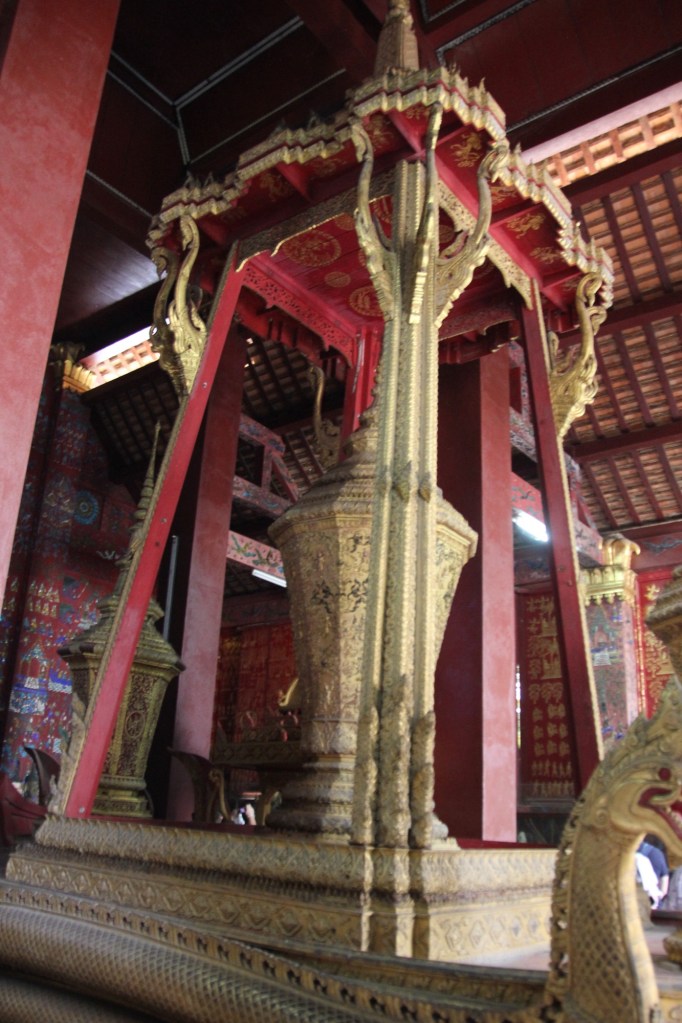
However, this temple is a very important one in Laos and is considered a masterpiece of Lao architecture. One of the buildings on site housed the funeral chariot for the kings of Laos. The king’s coffins were carried through the town upright with the body either standing or sitting in the coffin before being taken for cremation. The coffins of commoners were always horizontal.
There were children performing puppet shows of Laos folktales. We weren’t sure of the story that was being told but it involved several animal spirits carrying an egg or seed on their backs.
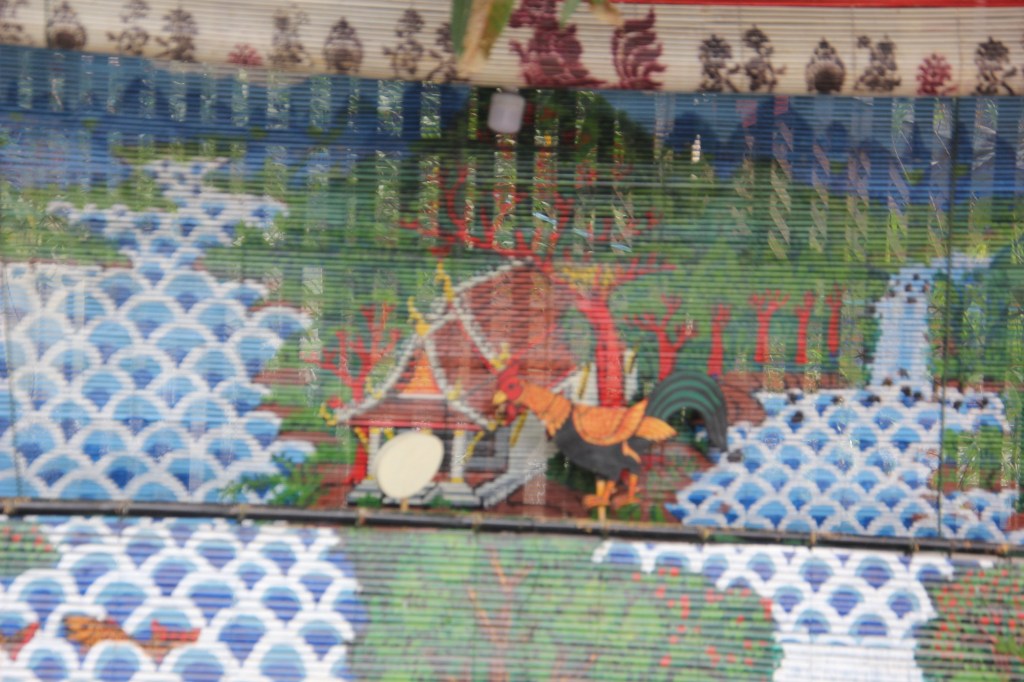
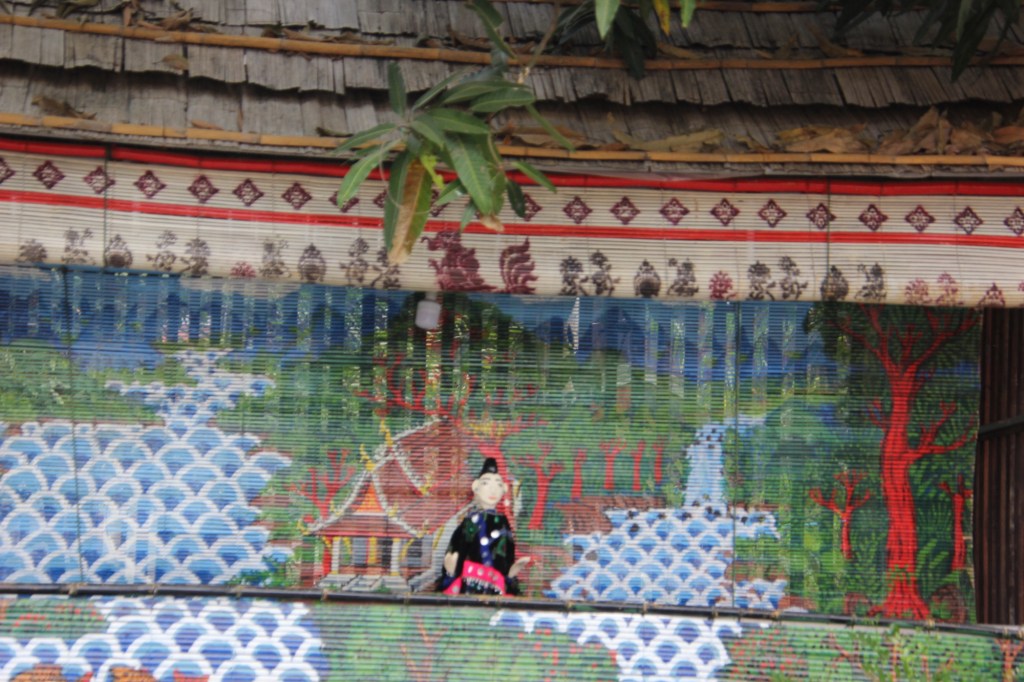
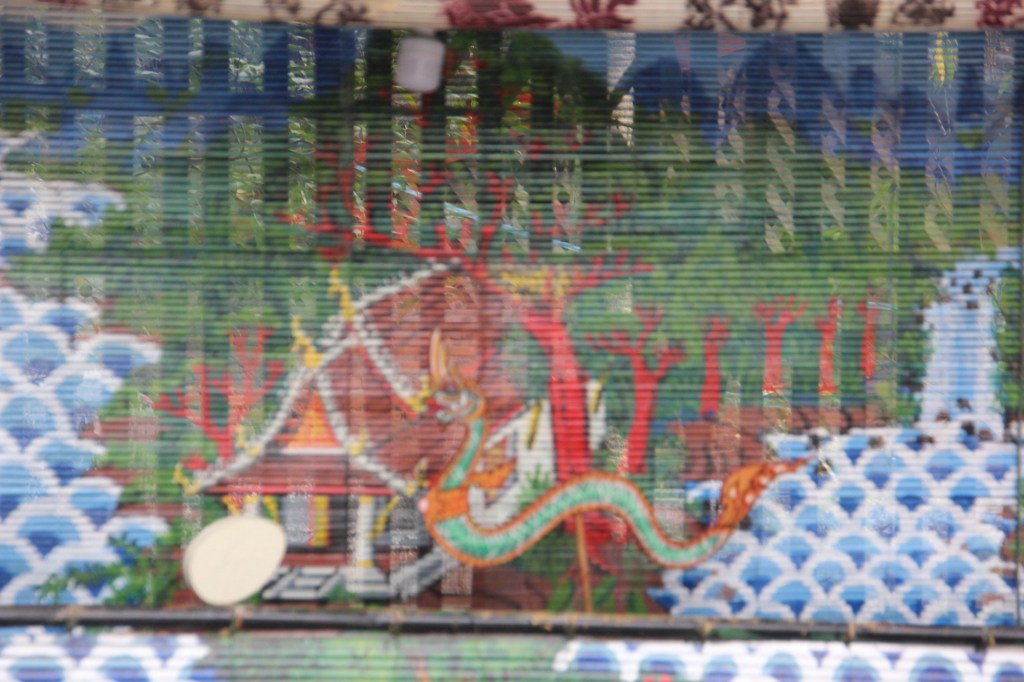
Luang Prabang was declared a UNESCO World Heritage Site in 1995 after going through an arduous process. The town was declared to be of “outstanding universal value” based on its urban landscape (being the confluence of the Meikong and Khan rivers), promotion and preservation of traditions and traditional ways of life, the coexistence of traditional and colonial buildings and its historical significance. We had a lecture from one of the UNESCO managers about the process of becoming a UNESCO site and some of the progress they have made locally. It was good information but lasted a bit too long, especially when we were almost ready for lunch.
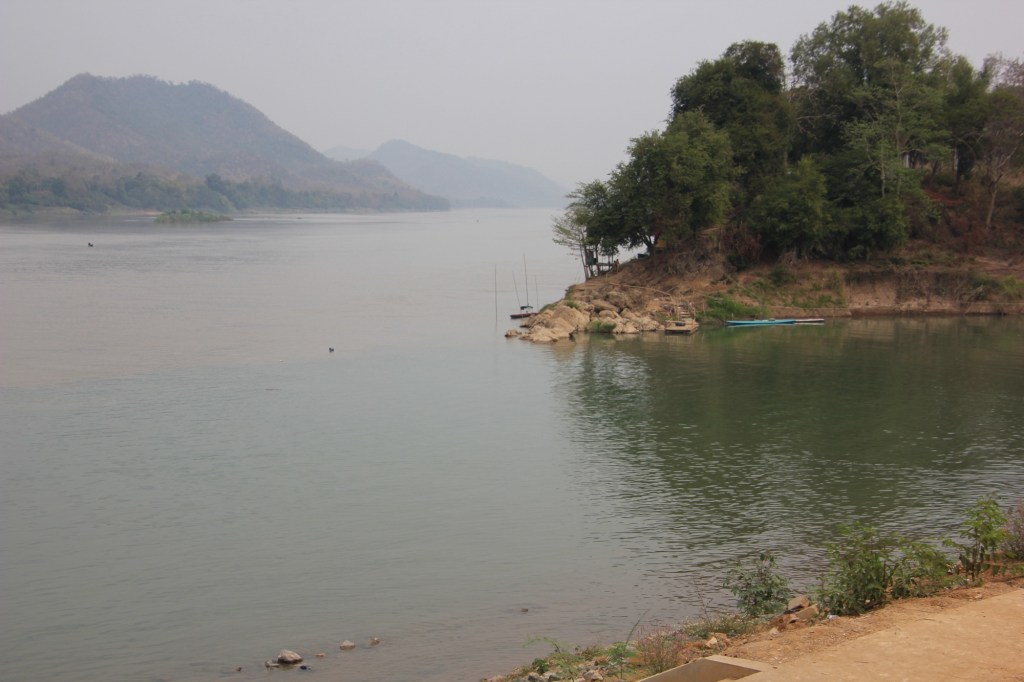
On our way to lunch we walked by the confluence of the Meikong and Khan rivers, the two major rivers in Laos. The Meikong (top of the picture) is fairly muddy compared to the Khan. We are going to cruise the Meikong tomorrow.
We had a delightful lunch at a local restaurant. The food was fantastic.
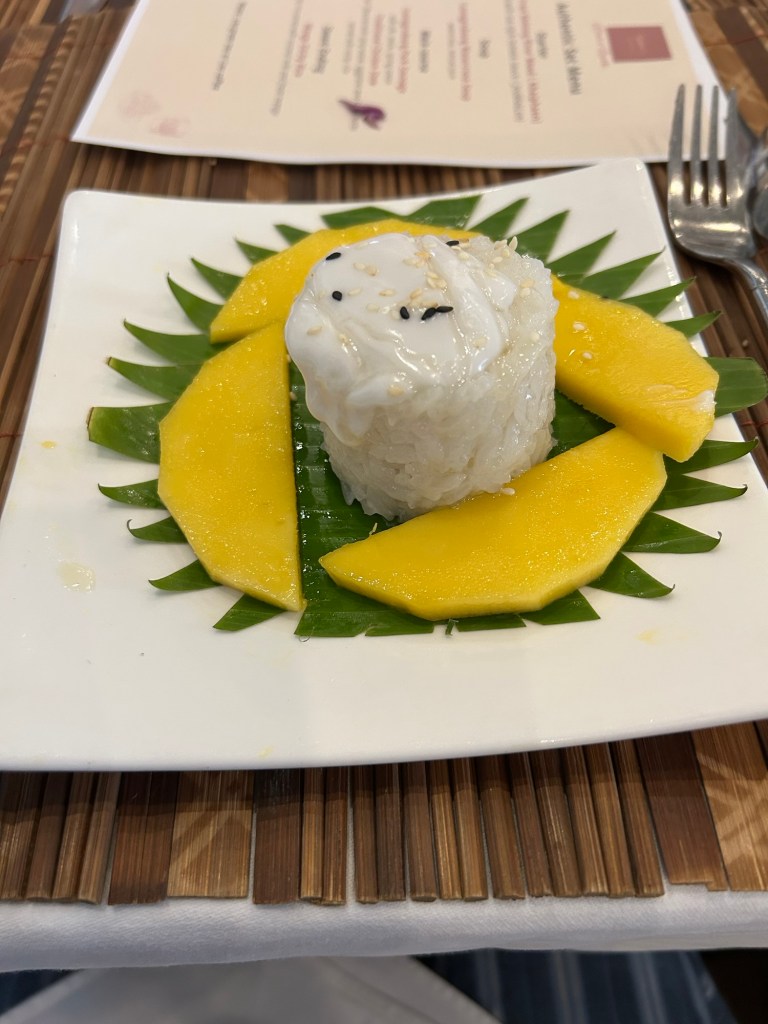
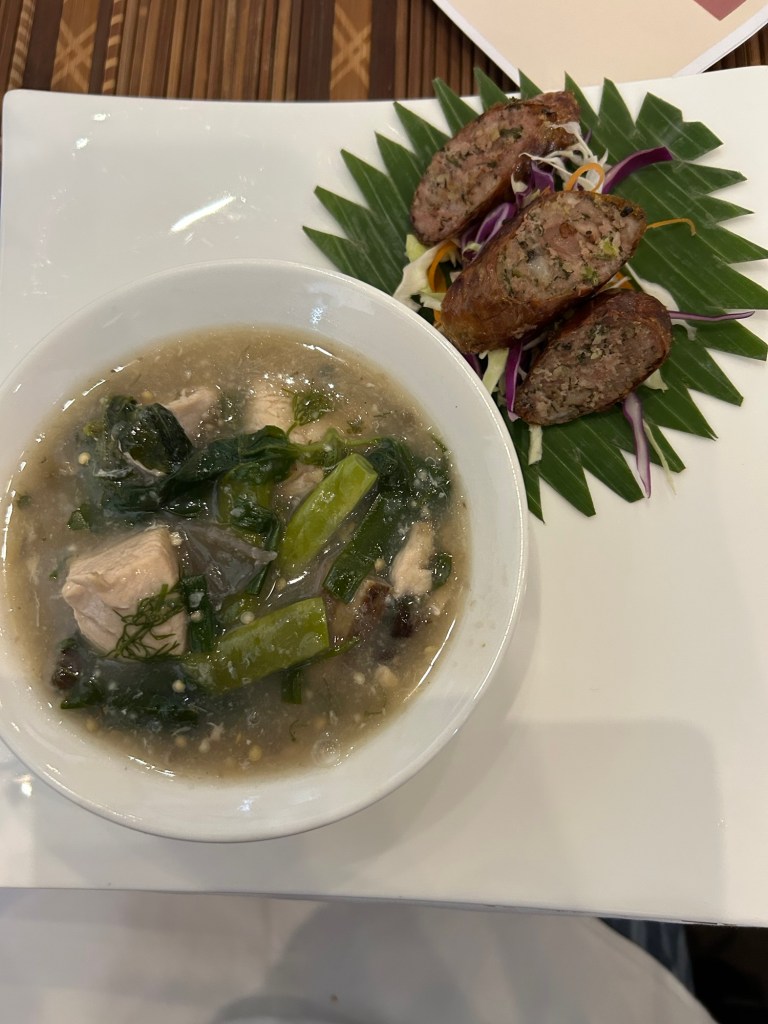
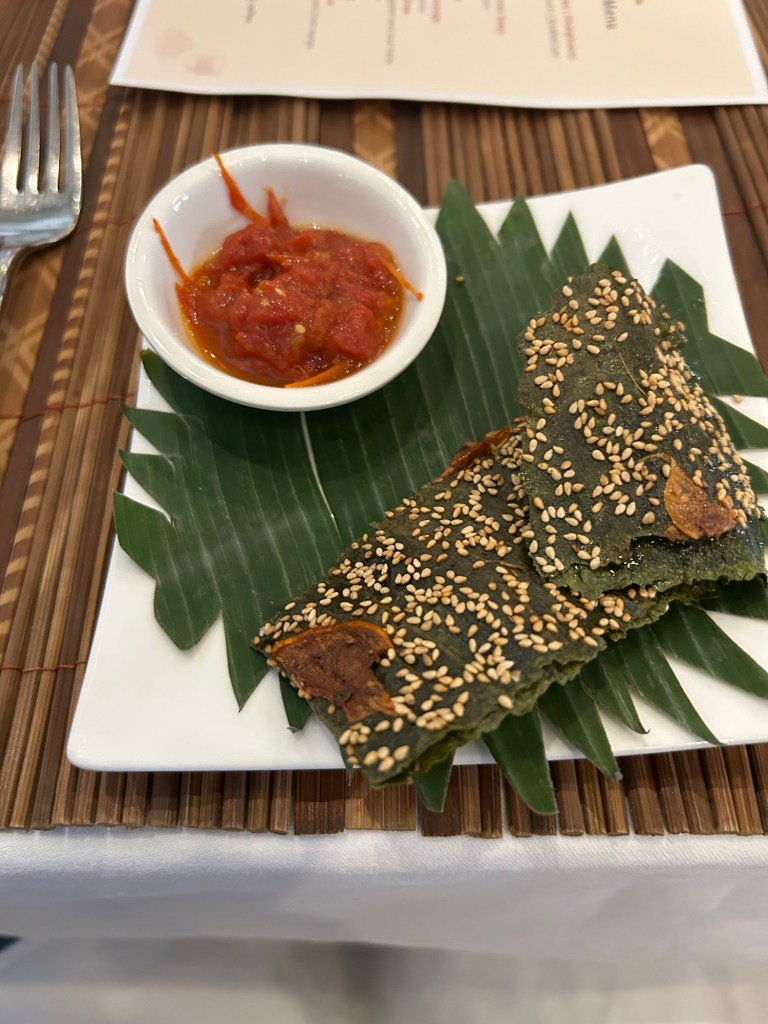
the crispy river weed with sesame and the mango/coconut sticky riece dessert. The main was a chicken and veggie stew with sticky rice.
Our first afternoon stop was the National Museum. It is housed in what was the former royal palace. It was built in 1904 during the French colonial era and the royal family lived here until 1975 when the monarchy was overthrown. We weren’t allowed to take pictures in the actual museum which was too bad because the wall decorations were fabulous. There were all sorts of interesting objects on display including the King’s adjustable solid gold shoes (just the uppers). The last queen was an incredible embroiderer and some of her fabrics were on display.
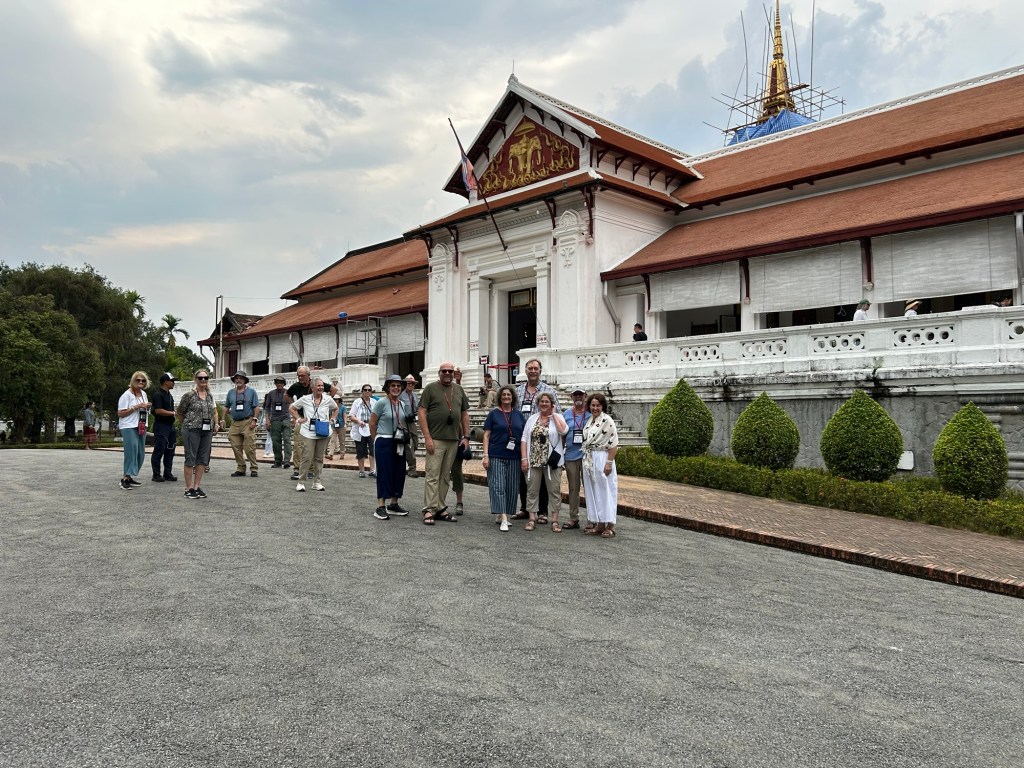
The most important temple in Laos shares the museum grounds.
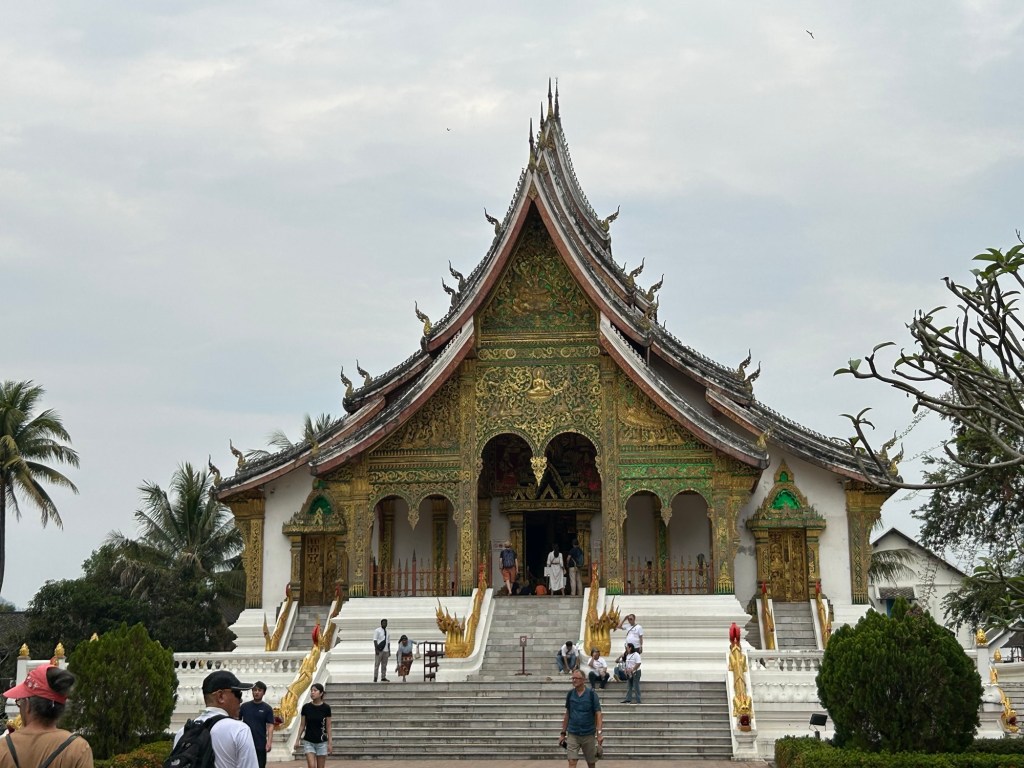
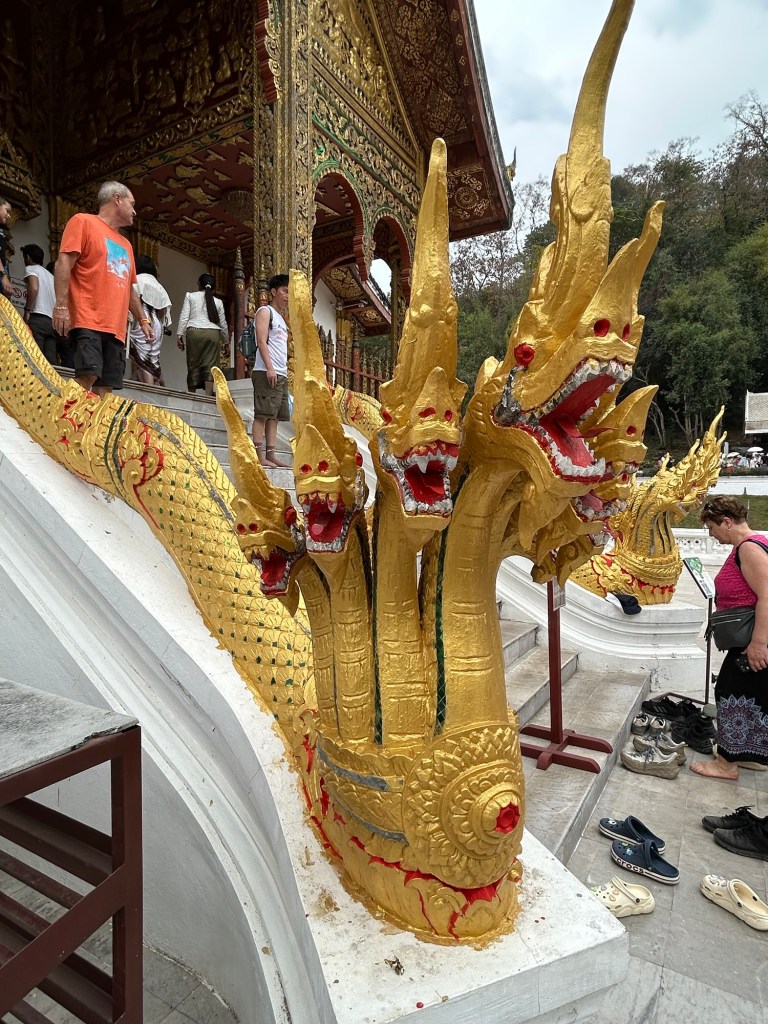
The Haw Pha Bang shrine houses the Pha Bang Buddha (which I wasn’t allowed to photograph). The Buddha is an 83 cm tall, gold alloy statue considered to be the most sacred image in the country. The Buddha statue weighing 50 kg made of cast gold, silver and bronze. It is thought to have been cast in Sri Lanka in the 1st century and given to the king here in 1353. The shrine itself is a new building finished in 2006.
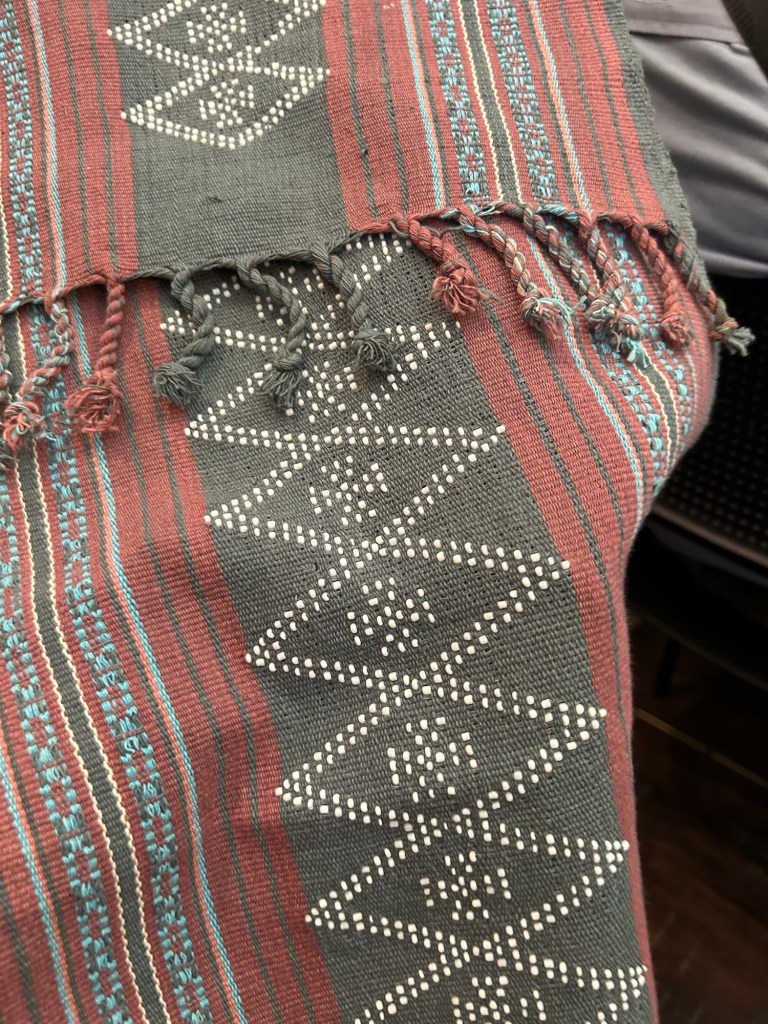
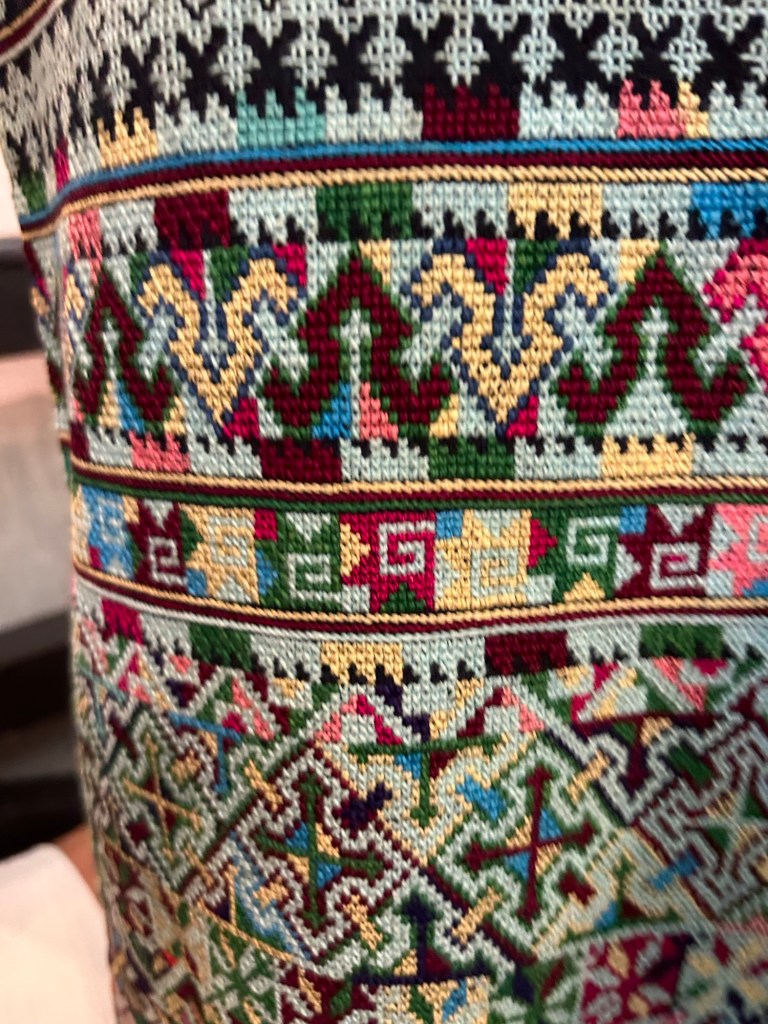
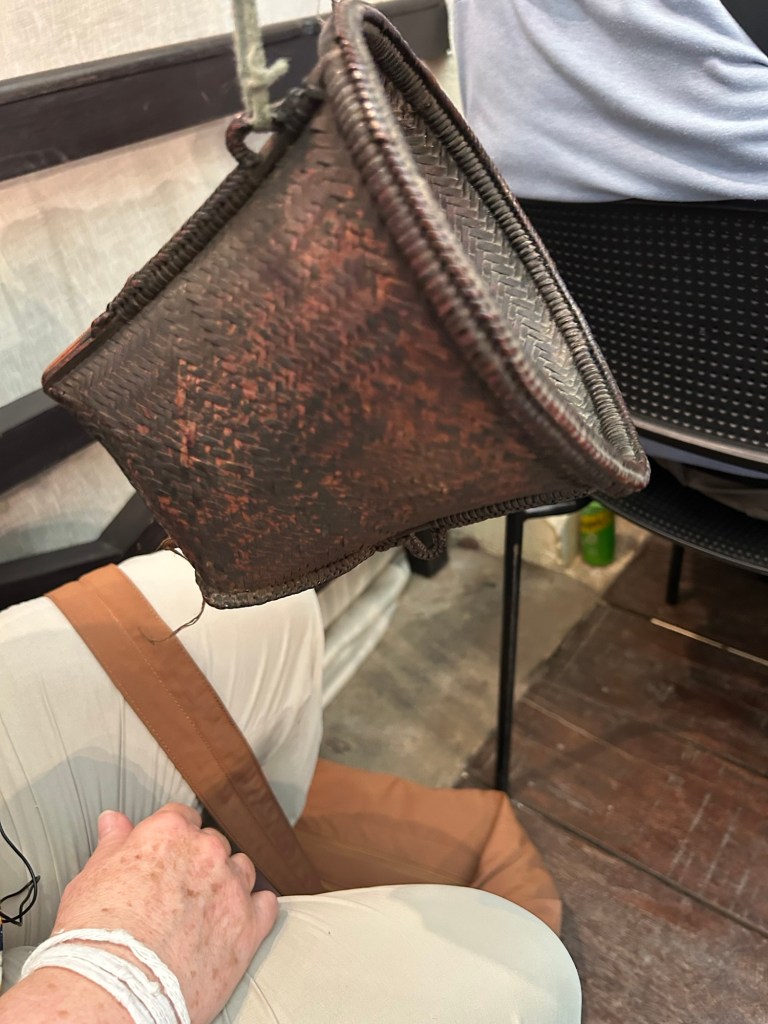
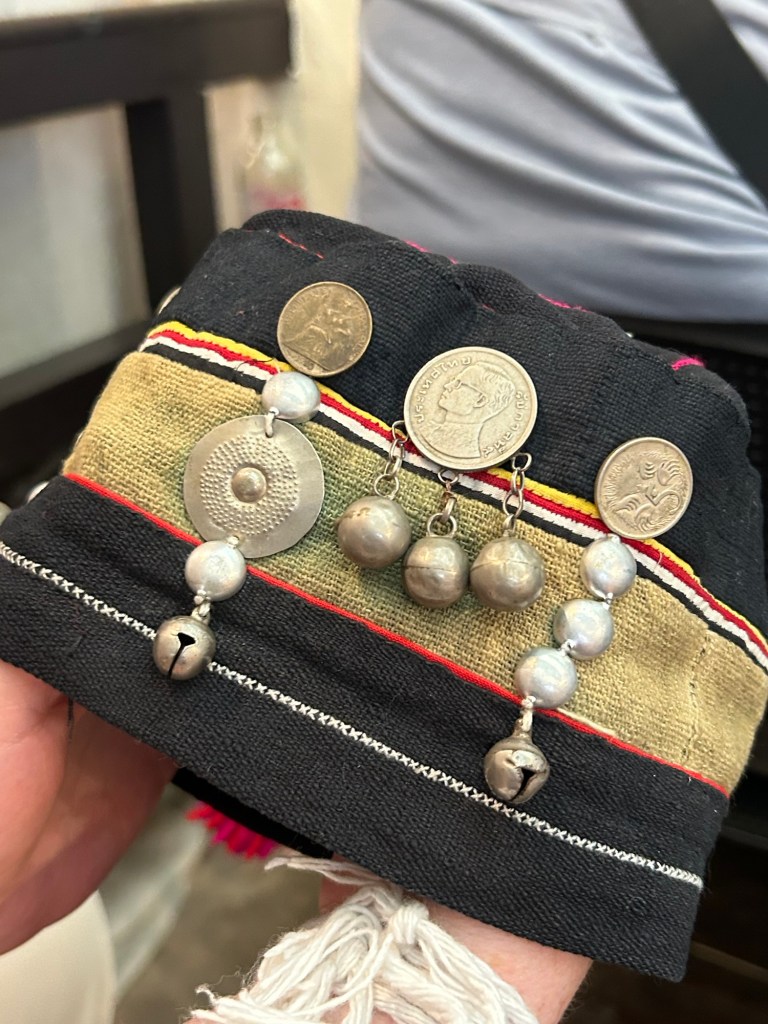
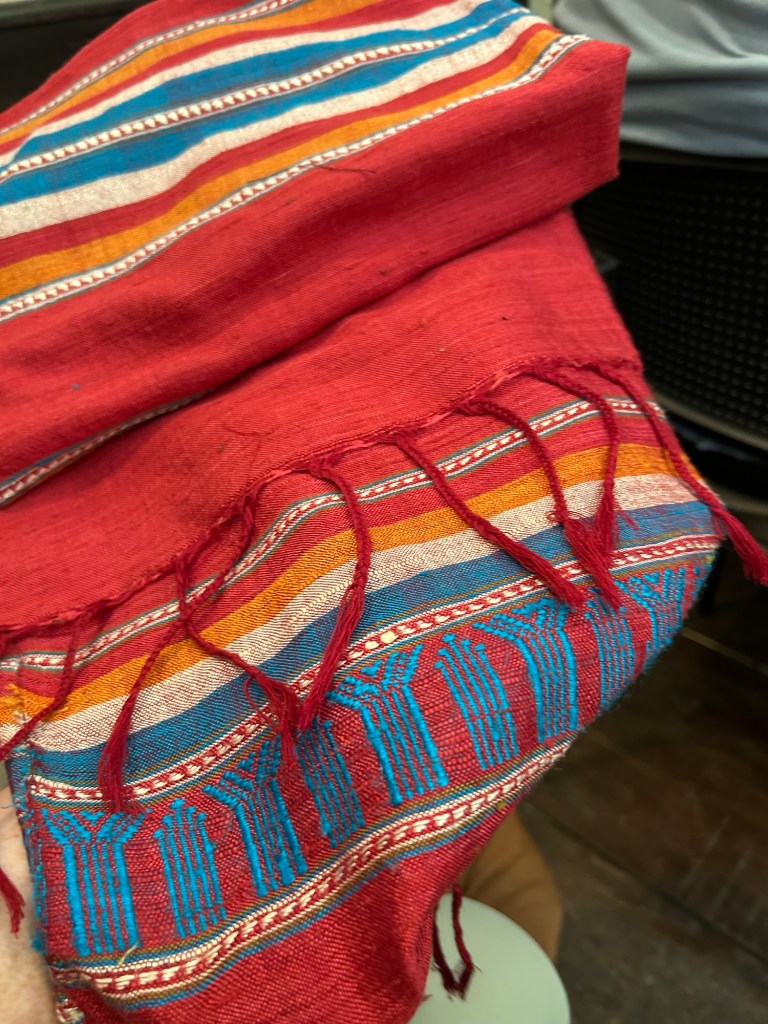
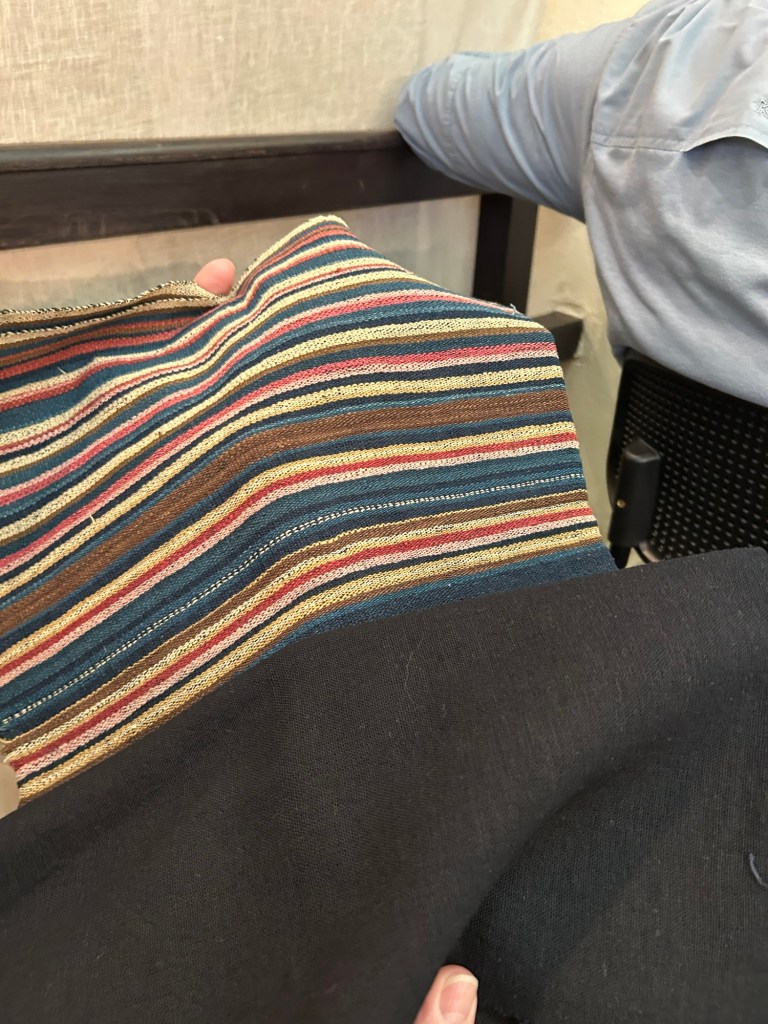
Our afternoon ended with a visit to the Traditional Arts and Ethnology Centre. Our speaker, Tara and her colleague started the centre to highlight the traditional crafts of the more than 50 minority groups in Laos. The Centre creates exhibits of local handiwork, engages in research, preservation and documentation of cultural creative practices, provides education and outreach as well as support for people to build livelihoods based on traditional skills. 50% of all sales from the gift shop goes to the artist who created the work. We bought a lovely hand woven silk wall hanging.
We ended our day with a swim in the pool and a dinner in the hotel restaurant. My sister Brenda figured out a way to stream the gold medal hockey game to us, so while I type, Dale is watching the game. Life is good.
 travelswithannmarie