
The fact that we were in Normandy on the weekend of D-Day remembrances influenced our plans for today. We returned to Bayeux and toured the Museum of the Battle of Normandy. This gave us the bigger picture of the battle beyond the landing. I must admit I didn’t know much about WWII or the battle of Normandy other than Canadians were important in the implementation of the plan to oust Hitler.
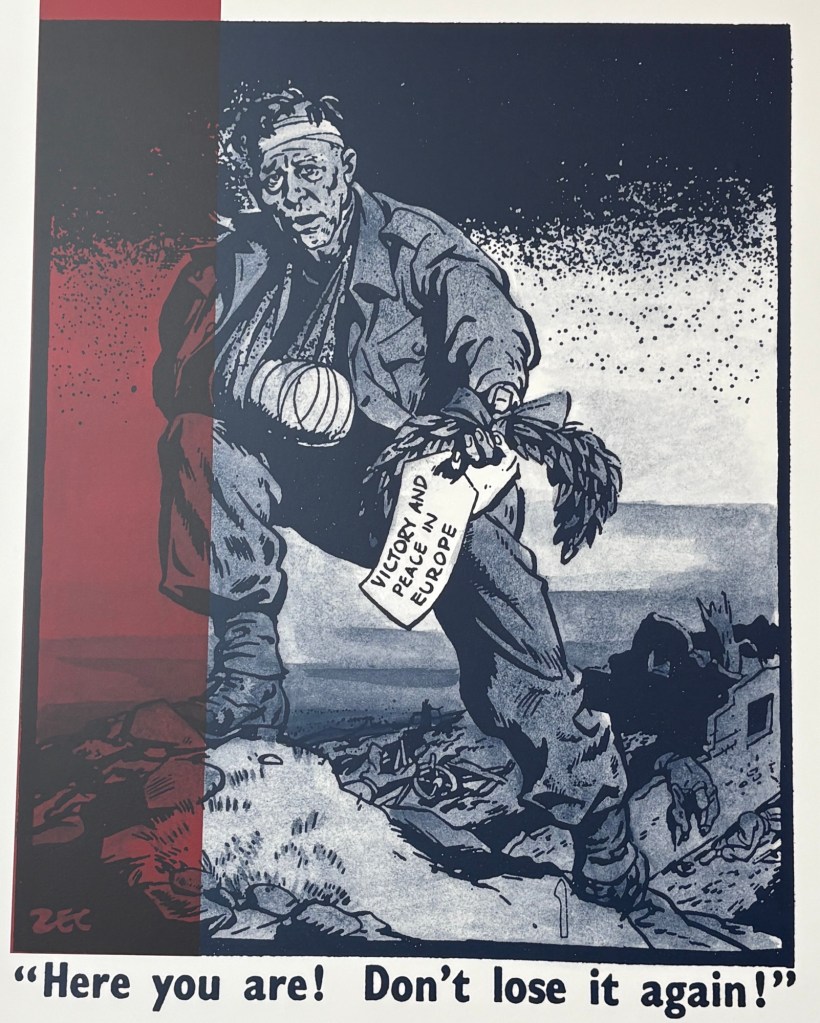
I have a hard time at these military remembrances. I appreciate the sacrifices people made. It was very clear that Canada did not conscript anyone, all of the military who served did so voluntarily. I appreciate the valour and patriotism involved in the choices to enlist and to stay with the plan. The horror of war and the courage required to stay and fight was clearly displayed. What was heartbreaking was how little we have learned from this horror. For example, as I read what Hitler said on this slide, it seemed like a clip from today’s news:
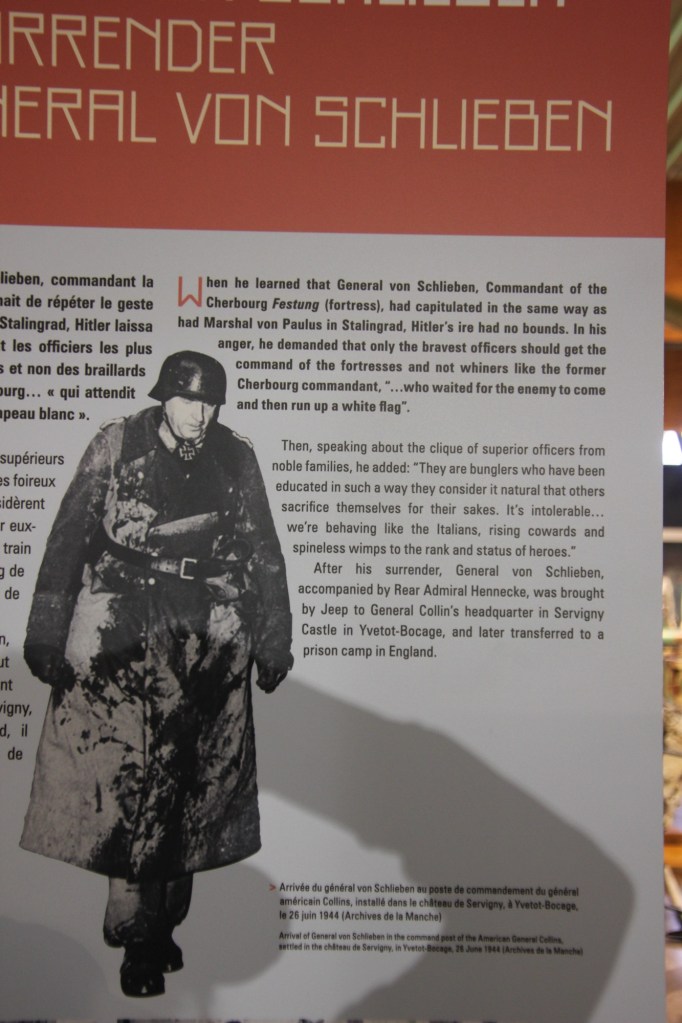
The battle of Normandy was over a year in the planning. This took me aback somewhat because it meant that the allied forces knew that the war was a long game even though the war had been going on for years already.
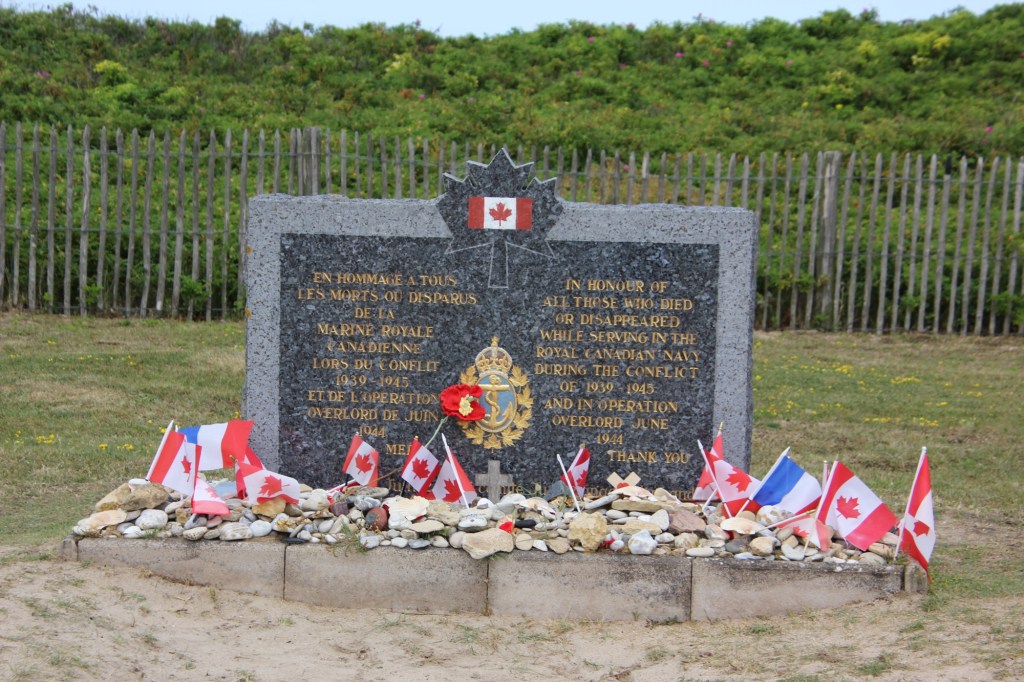
We left Bayeux for Juno Beach. It was powerful to see the Canadian flags as we approached the community by the sea. There were 5 beaches involved in the Normandy invasion, only one of which involved Canadians. Juno Beach is now a recreational, ocean-side area but during the war it was 8 km of terror. The Germans had been expecting an invasion and were dug into the beach area in bunkers. So many people died just getting to land! The memorial at the Juno Centre to those who died and those who disappeared said a lot about how hard it was for those Canadian soldiers to even make land.
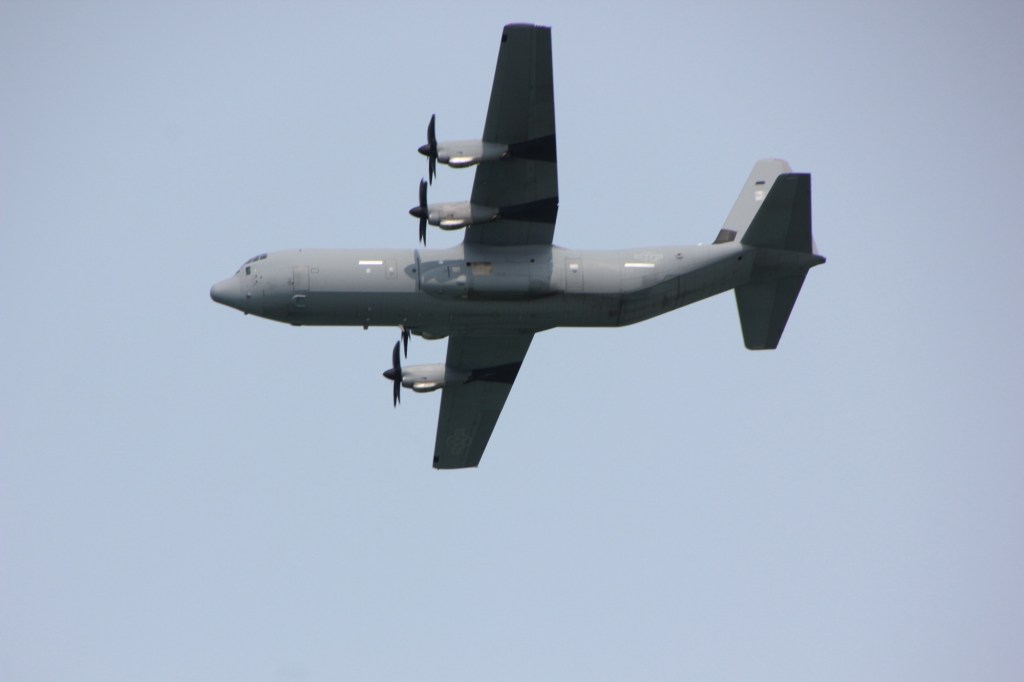
While we stopped for lunch at Juno Beach before viewing the museum, WWII bombers flew by as part of the ceremonies of the day.
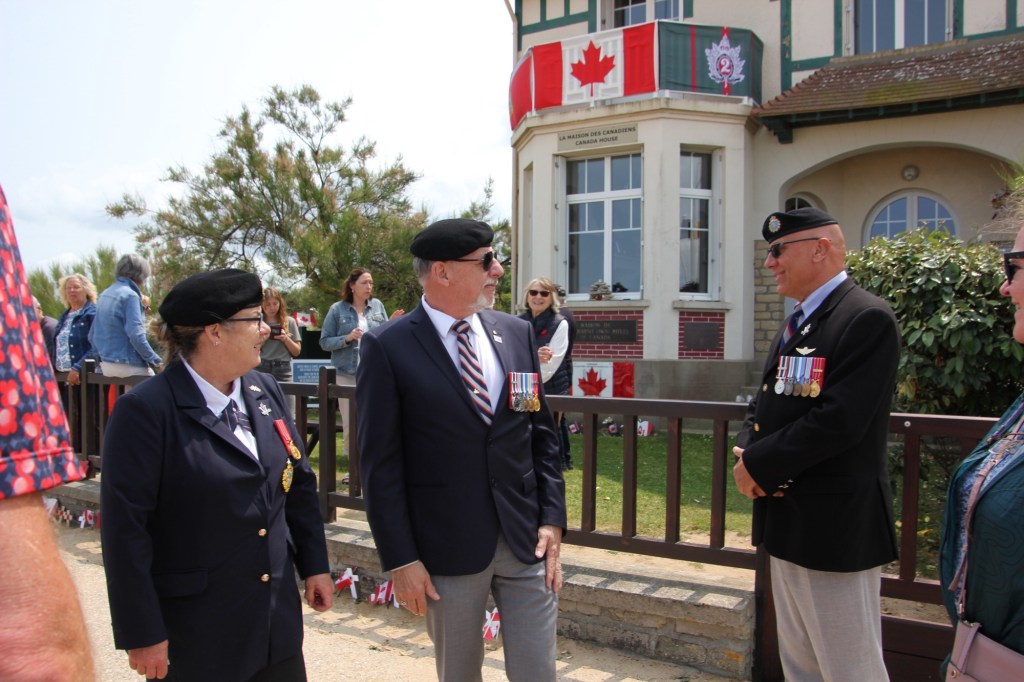
We also toured the museum at the Juno Centre. This centre told the full story not only about Canada’s involvement in the Normandy invasion but also about Canada’s role in the war in general. There was a specific exhibition about our role in the air battles as an ally of the British Air Force. We had the privilege of connecting with some recent veterans outside Canada House on Juno Beach. They had been in a parade earlier and were so proud to have served in our armed forces. Canada House was the first house liberated during the invasion by allied forces. While the house is still standing, over half of the troops sent to free that section of the beach were slaughtered by German gunfire before the mission was complete.
One of the striking things about the Juno Centre is that it highlighted the role of Indigenous, Inuit, Métis and immigrant peoples in not only WWII, but ongoing role in the military ever since. In addition to recognition in the Museum displays, we noticed these items outside the Centre as we left:

While we were glad to have explored the D-Day experience as part of our tour of Normandy, especially since we were here during the D-Day weekend, we left feeling saddened that we as North Americans have learned so little about history and how much what is happening now reflects what happened in the build up to this war. Somehow it seems different to explore castles from medieval or earlier times than to explore these more recent conflicts. Perhaps we are doomed to repeat history.
Today left us unsettled and ready to re-enter the denial of a holiday agenda by shifting to viewing ocean-side vistas that we can’t see at home.
 travelswithannmarie