
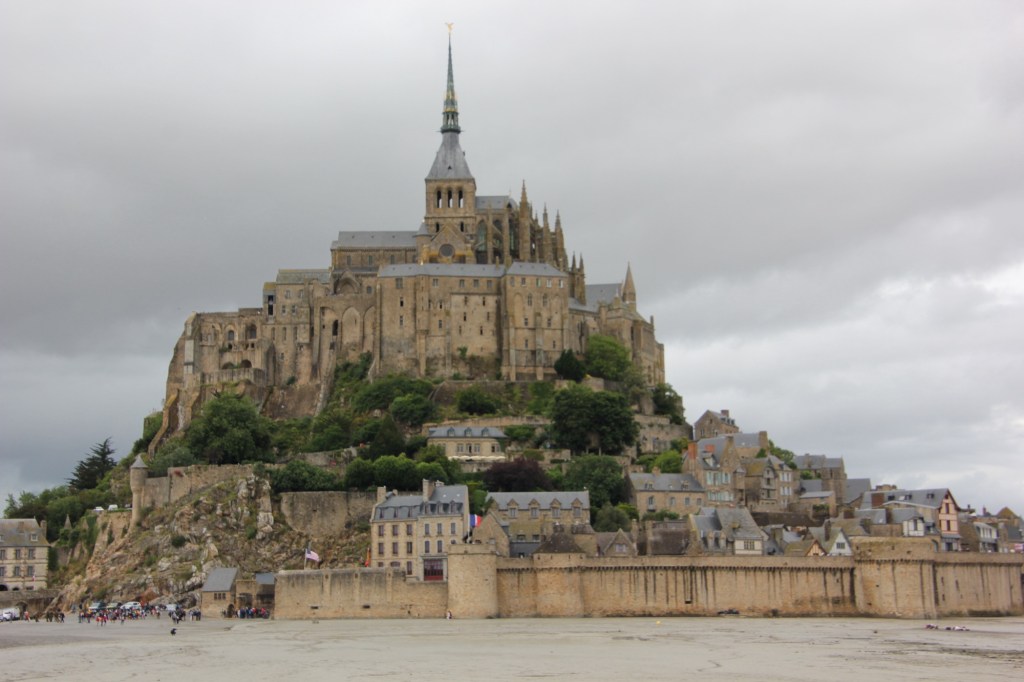
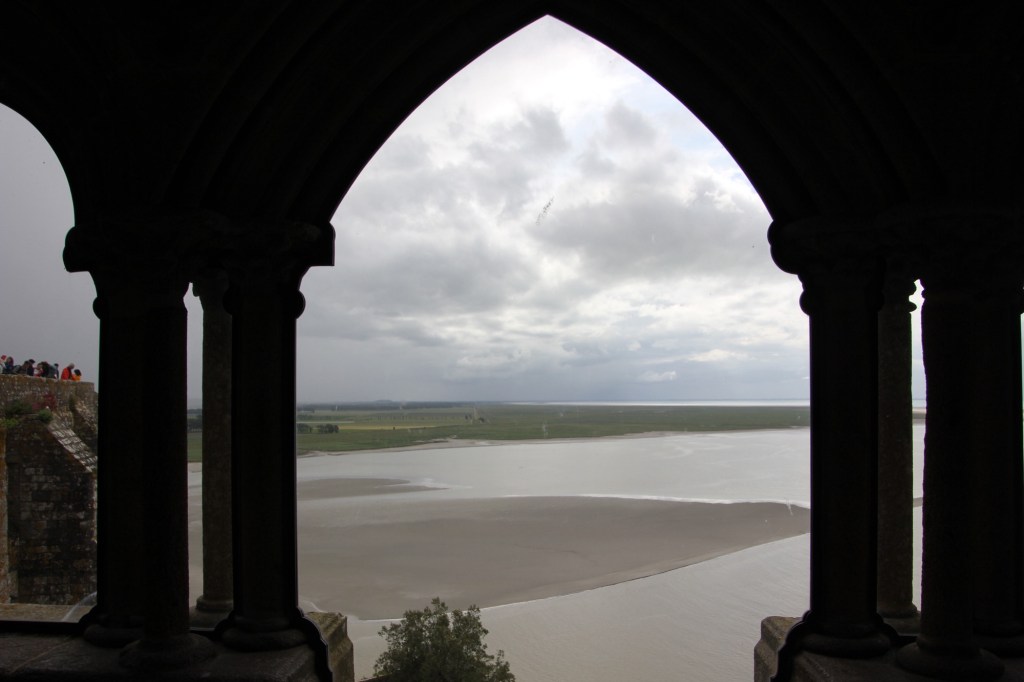
We arrived at Mont St. Michel after a 3 hour drive from La Chapelle sur Loire. We stopped for a picnic lunch at a roadside stop and made it easily to Mont St. Michel. This is one of my bucket list places to visit. The site is considered emblematic of France, it has resisted its enemies and was described to us by our guide as never having been conquered, even during the religious wars. One of the reasons that this site has been defended itself so well is that, depending upon the time of year, the tide isolates the islet and makes it an island, It is the site of the highest tides in Europe – their version of the Bay of Fundy,
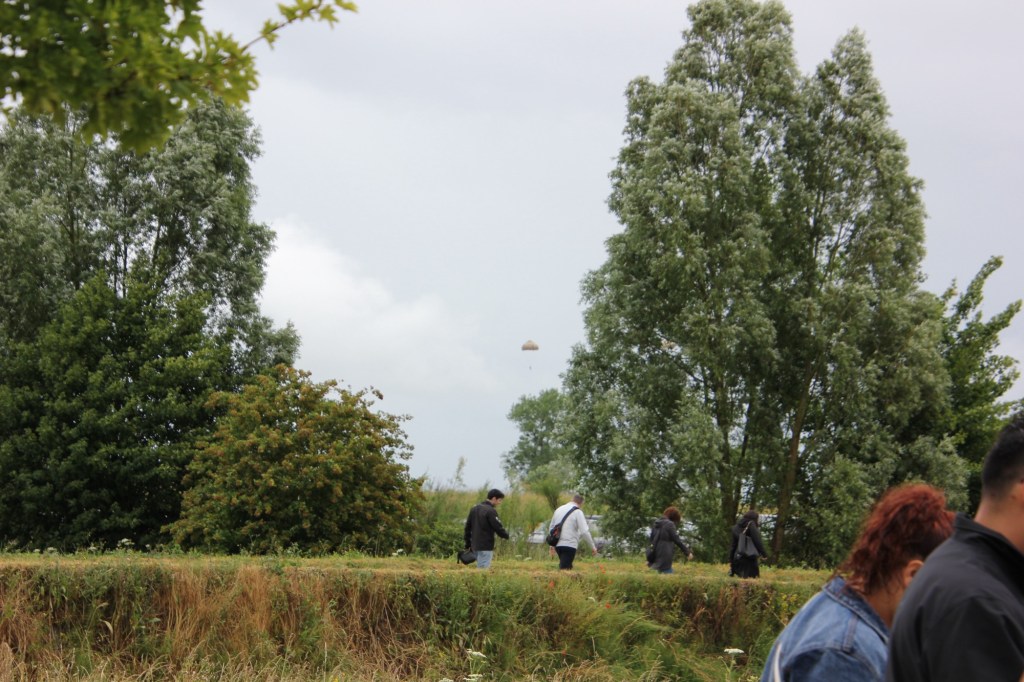
We headed towards Normandy without thinking that today is June 6, D-Day. The Germans did hold Mont St. Michel during WWII but never damaged it and the allies never bombed it. We watched paratroopers jumping from airplanes over the northern beaches of Normandy as part of the D-Day celebrations. St. Michael is the patron saint of paratroopers.
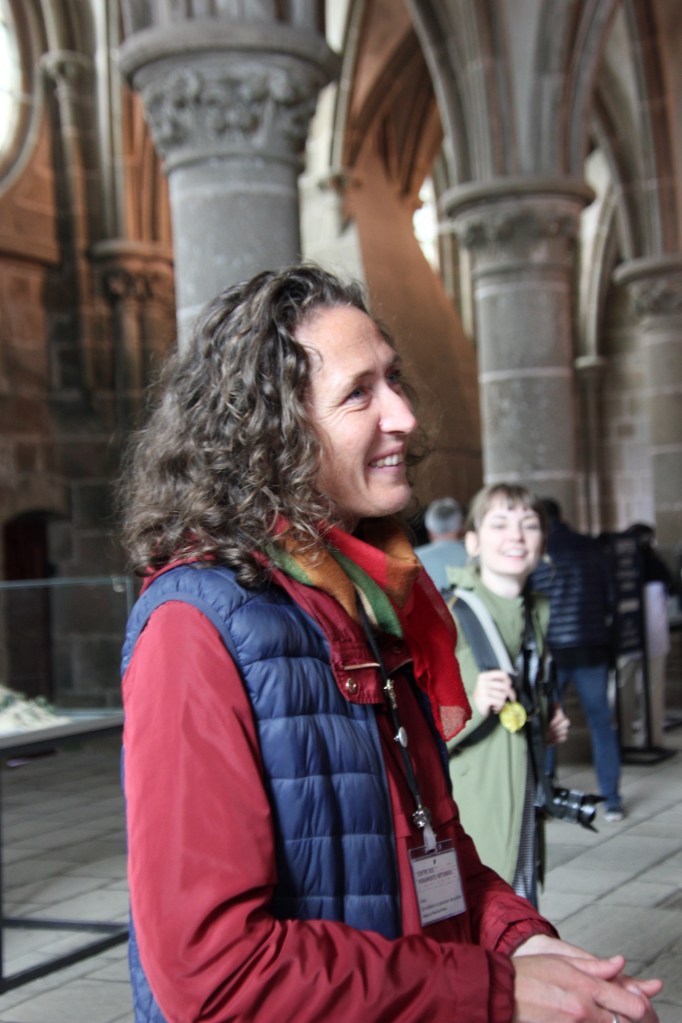
The Abbey is built on the natural stone of the island and rock was brought in from the English Channel and nearby islands. The design of the Abbey is incredibly complex. The designers built a platform on four primary outcroppings of rock at the top of the islet. This platform was supported underneath by a number of crypts. The church itself is over 80 m long and reaches 92 m into the sky. It is amazing and the tour took over 90 minutes and I am sure we only saw the highlights. Our tour guide, Anne, tolerated me taking notes while she spoke, and gave us a great introduction to this massive monument. She even gave us a bit of Gregorian chanting so we could hear the acoustics of the refectory.
The founder of the Abbey is considered to be a man named Aubert, who in 708 had a vision that St. Michael wanted him to build a sanctuary. To fulfill the vision, he built a church here in 709 AD and things evolved from there. The abbey on this islet has stood here since at least 867 AD. King Charles III was trying to make peace with the Rollo, a Viking leader (later known as the Normans). Charles III married his daughter to Rollo in 903 and Mont St. Michel was part of that contract. The first group of monks to inhabit the islet moved in 966 and the Abbey and village grew around them.
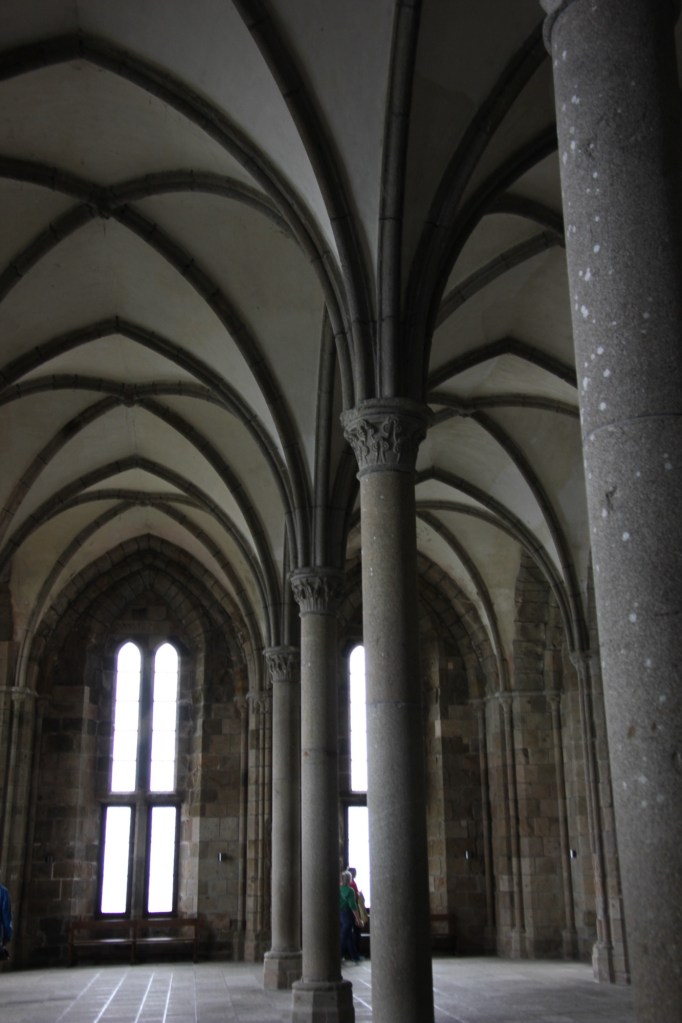

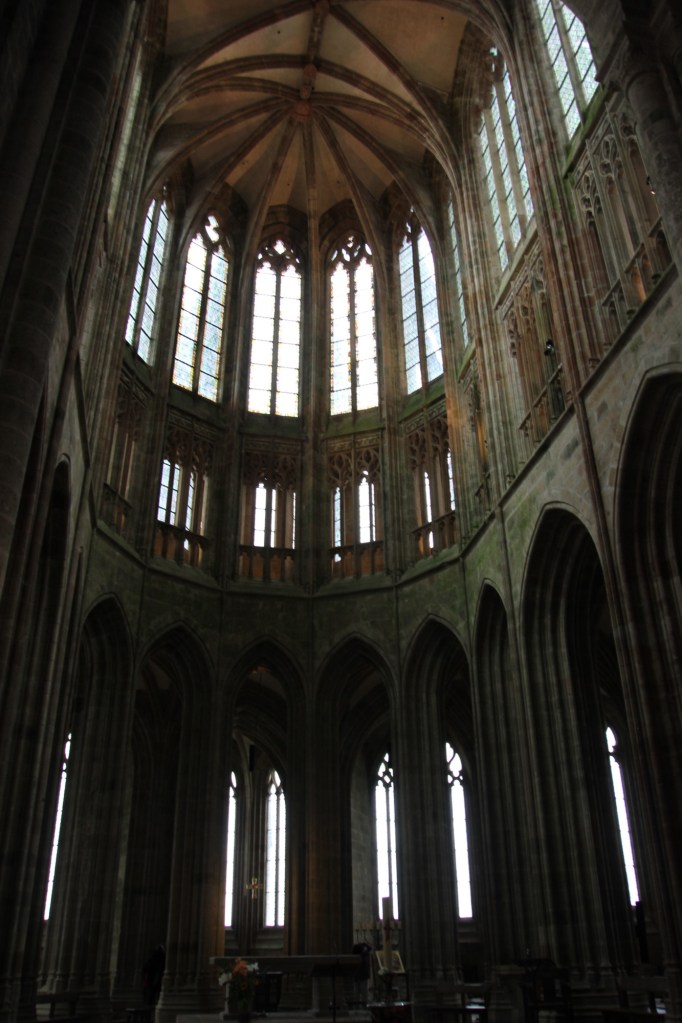
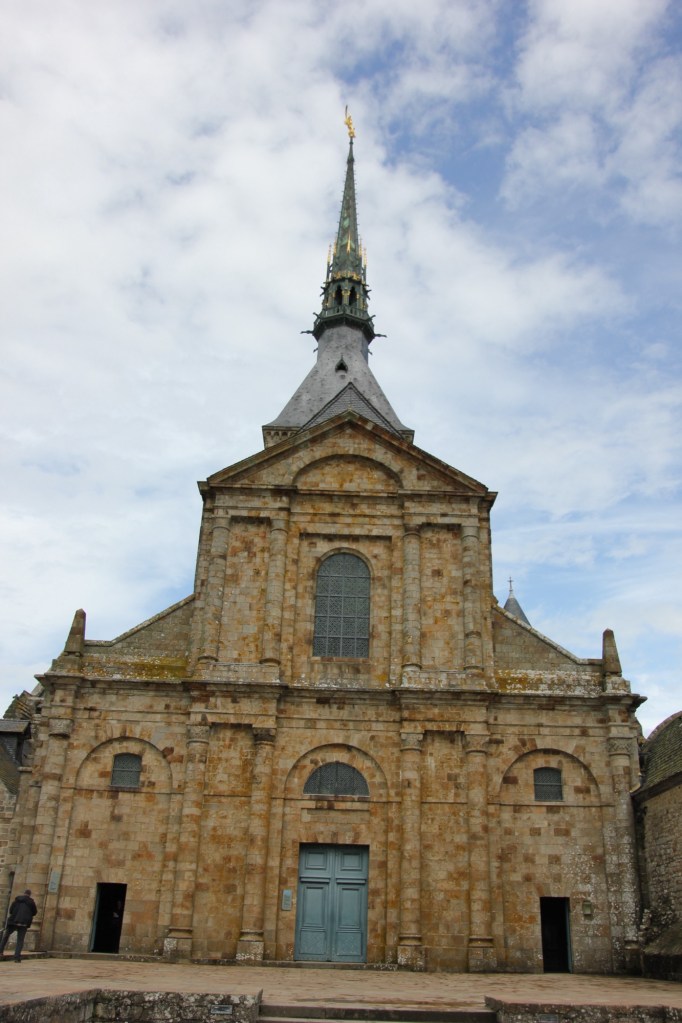
The primary focus on this site was religious until the French Revolution. The revolution did to French Abbeys what King Henry VIII did to English ones. This Abbey however was not demolished, but, like Abbey Fontvraud, was turned into a prison. It remained a prison for 70 years and then restoration work began. While it continues to have some aspects of religious life, it is now primarily a tourist site. Mass is said daily and nuns live onsite, praying 3 times per day.

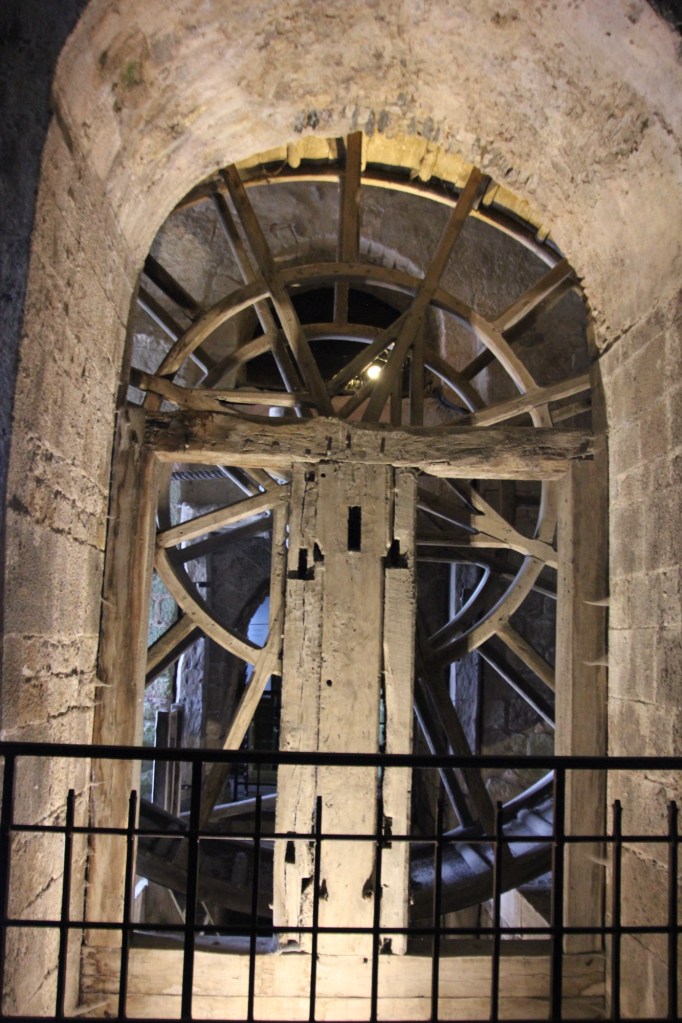
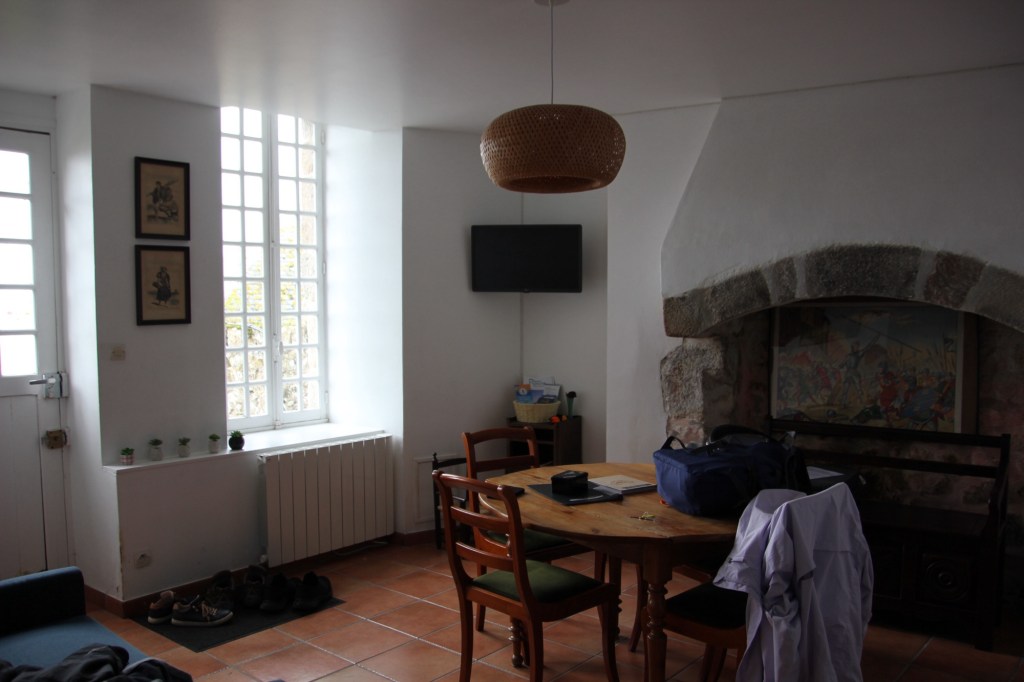
We stayed in a wonderful Gite on the island. It was a welcoming place only 182 steps from the main gate if you took the short cut. We took the longer, but fewer staired approach.
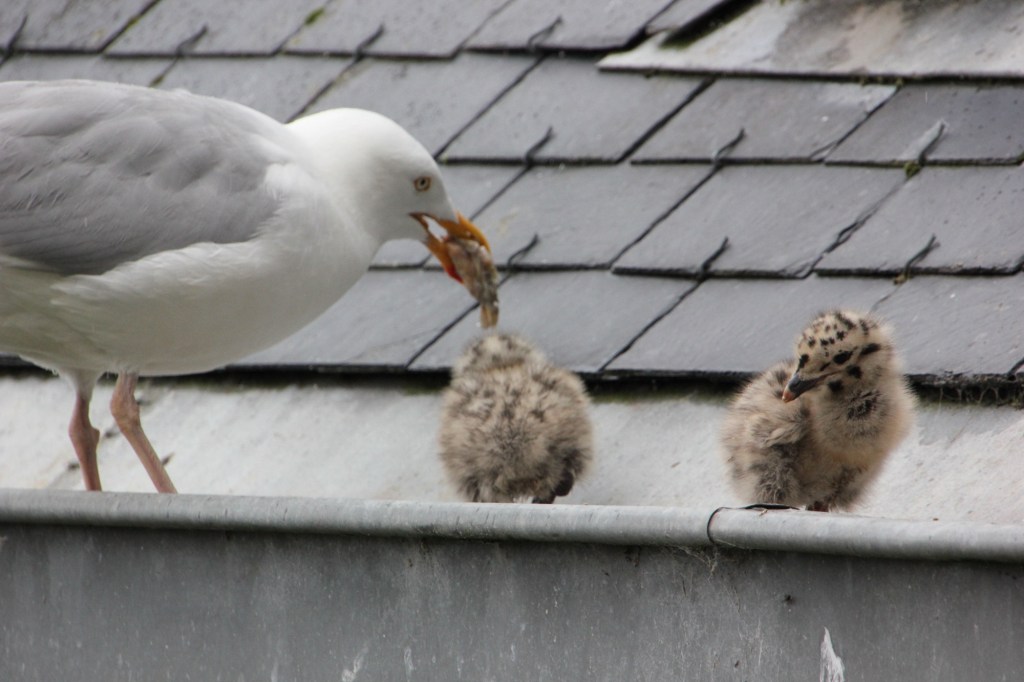
We also had a delightful view of a family of gulls. They had a nest outside of our bedroom window. I never thought of gulls as cute, but the little ones are special.
After climbing the equivalent of 37 flights of stairs today we felt justified in indulging in a restaurant meal. (We actually cooked evening meals for ourselves since getting off the boat). We had an incredible meal at the Hotel du Guesclin. The specialities here were mussels, lamb and chocolate cake. We tried them all. A fitting end to a delightful day. Tomorrow we are off to explore more of Normandy. We are staying near Caen for 5 nights and will day trip from there before heading to Paris and then home.
 travelswithannmarie