
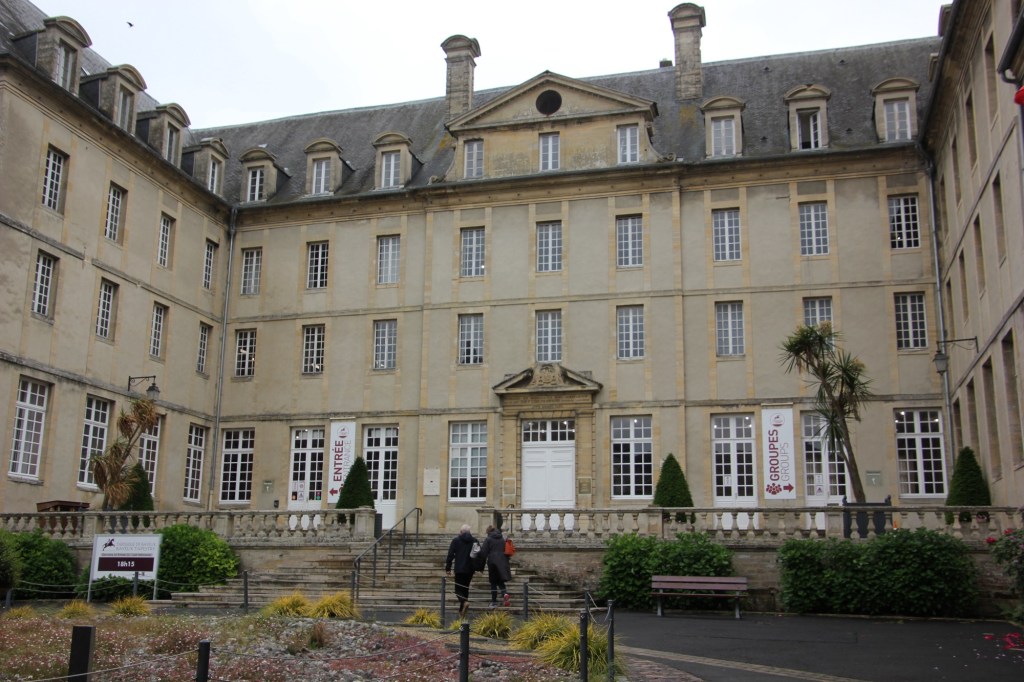
I learned about the Bayeux tapestry in high school. I think we have all seen the images of Norman nights fighting the battle of Hastings in 1066. What has always intrigued me was that a group of women artisans embroidered this 224 ft. Long/20 inches high work piece telling the story of how William the Bastard, Duke of Normandy, became William the Conqueror, King of England.
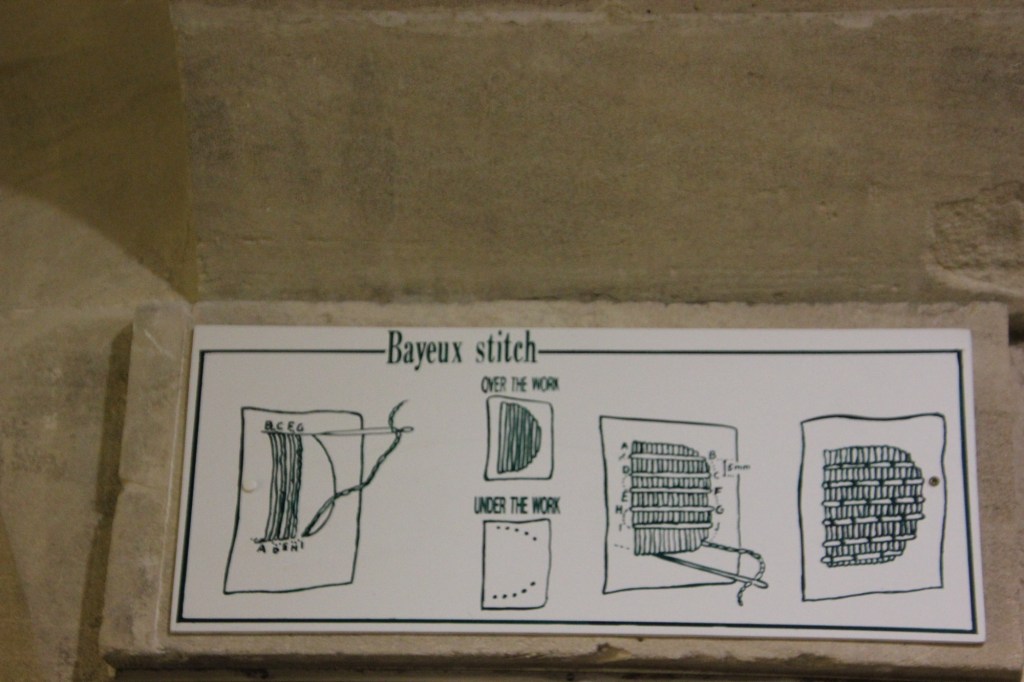
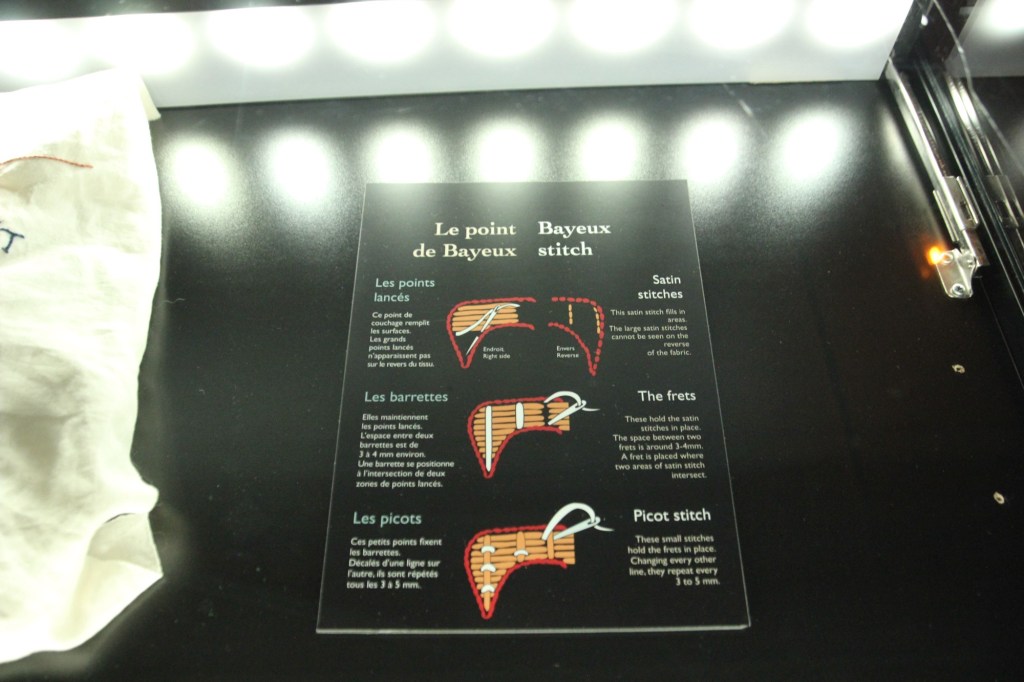
We were not allowed to take pictures of the tapestry itself. The viewing process was impressive. There were no advanced ticket sales. We arrived at the site and got in line for tickets. We then entered a line to get in to see the tapestry. Within 15 minutes we were at the door and they handed us an audio guide. The guide went through each panel of the tapestry explaining what part of the story the panel depicted. The detail in the needlework was impressive. The artisans were able to capture the emotions of the people, the details of clothing and the movement of horses. This was all done with consistency. The needlework was limited to four stitches: including the straight stitch, chain stitch, satin stitch and the Bayeux stitch.
There are several theories about where the tapestry was made. Some say it was made in England, other say it was made in France. Not much is known about who made it and who commissioned it. I was disappointed by the lack of information about the creators. The display focused on the battle and how it was depicted. The information in the static exhibition also focused heavily on the battle of Hastings rather than on the tapestry itself. This may change with the next museum. There is a plan to create a new museum that will allow a better scientific exploration of the tapestry and display it in a more ecological manner. We were happy to get to see the tapestry now as the current museum will close in September and reopen in 2027.
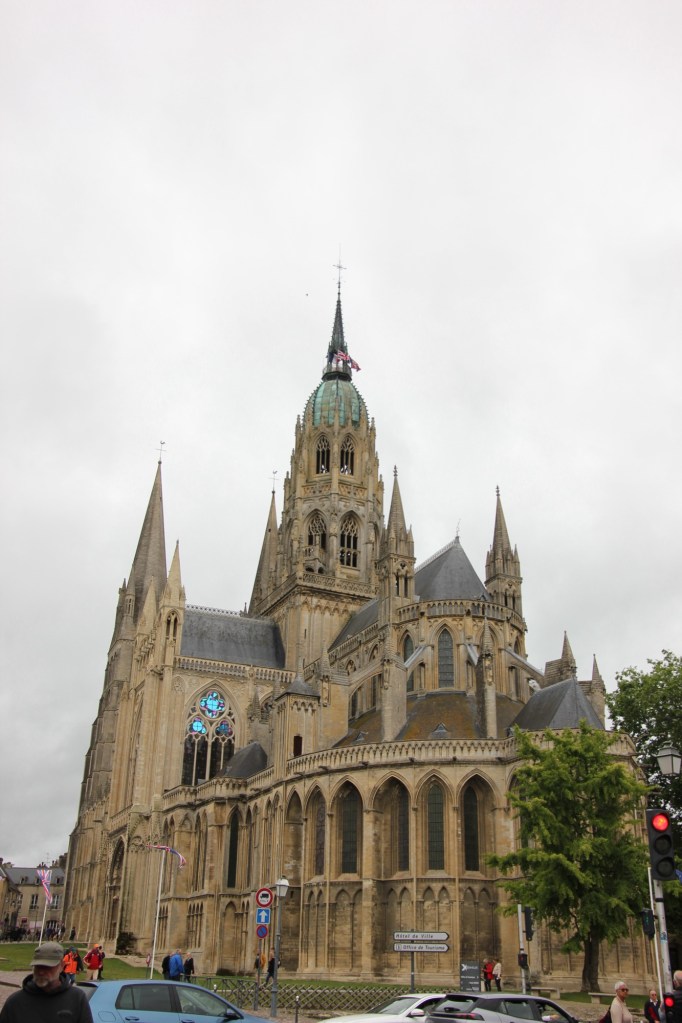
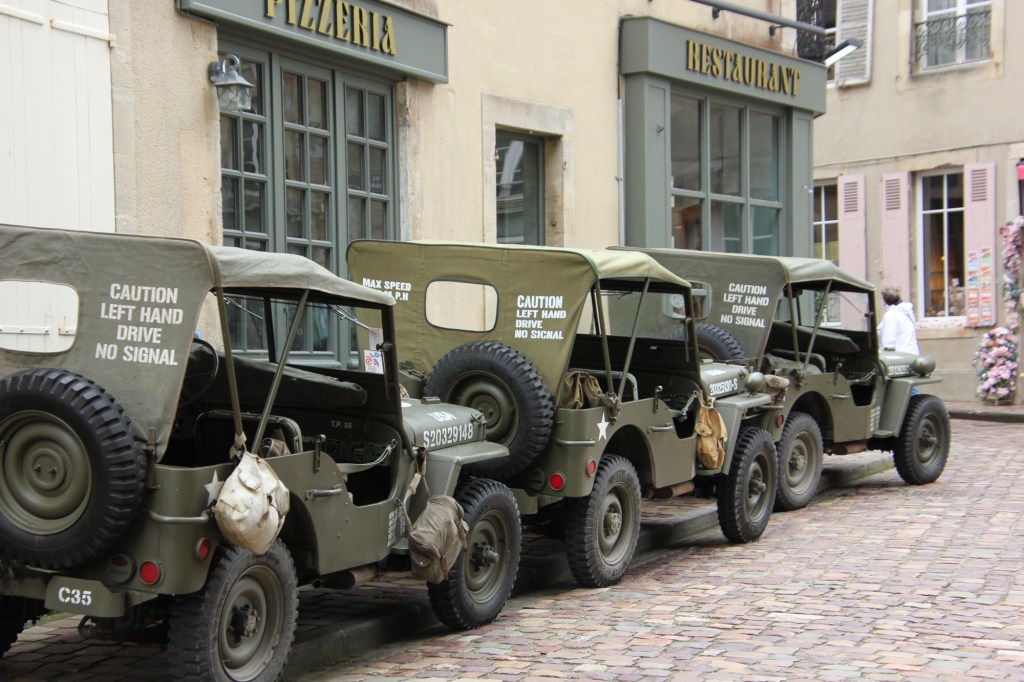
Bayeux was one of the first villages liberated on D-Day. There were British flags flying from the main church steeple and other momentos of the end of D-Day invasion. There were many people displaying signs that they had served in the British or American military. We also saw some folks displaying Canadian flags.
 travelswithannmarie