
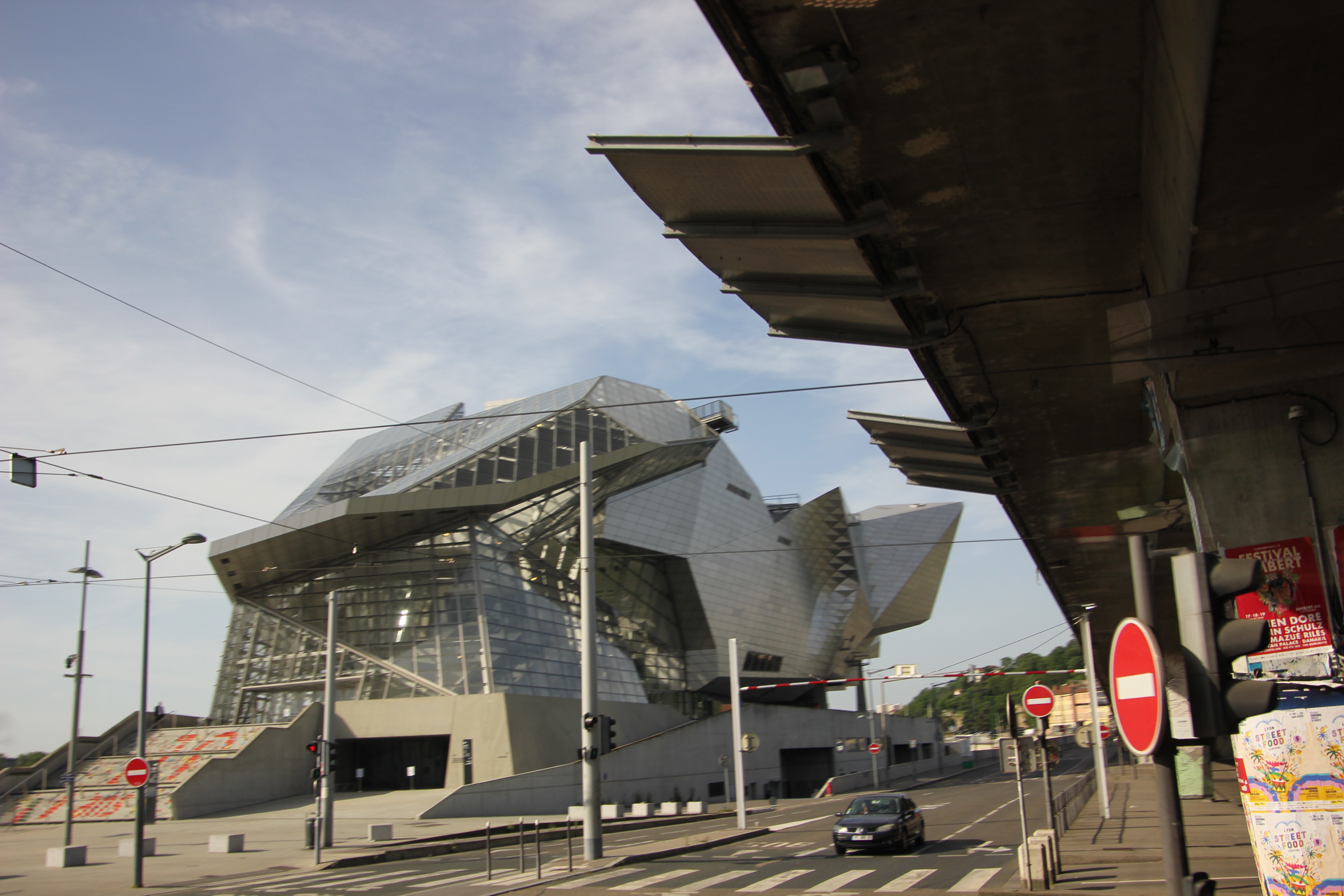
Lyon is the second or third largest city in France depending on how you calculate it. While Lyon itself has 600,000 people, it grows substantially when you consider the metropolitan area. It is a bustling city filled with new, innovative approaches to living while still hanging onto its heritage. It lies at the confluence of the Rhone and Soane rivers and had recently opened a natural history museum called the musee des confluences. We studied this in our French class a few months ago and it was fun to see the actual building.
Lyon is an ancient city. The Celts settled on the eastern hill of Lyon long before the Romans settled in 43 BC. Claudius was the first Roman emperor born in Lyon and a succession of powerful Romans ruled the area until the 3rd century. The Roman presence is still alive in Lyon. For example, a Roman theatre was discovered in 1933 and is used today for performances, most notably the Nuits de Fourvière festival which brings in musical performers from around the world for two weeks in the summer.

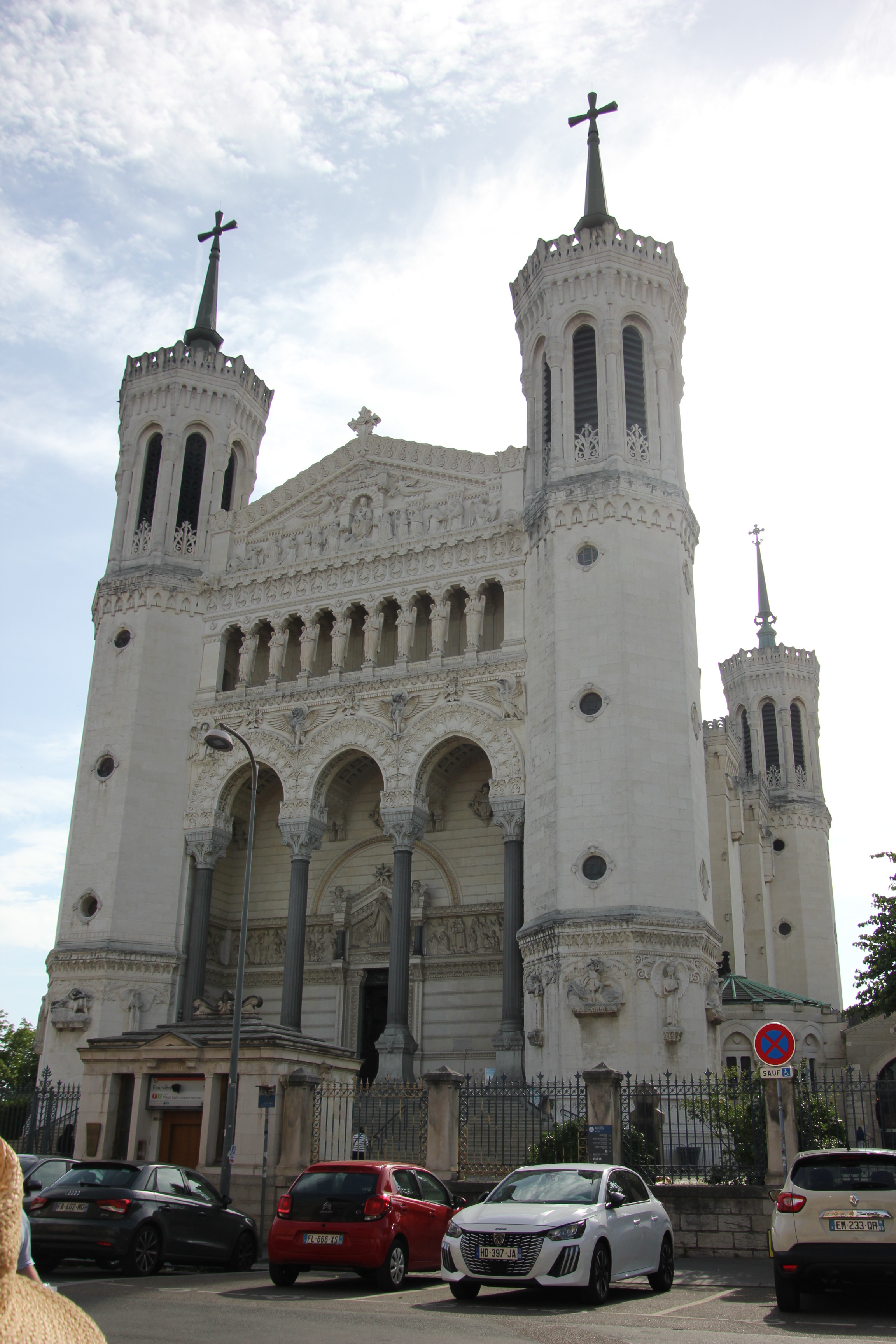
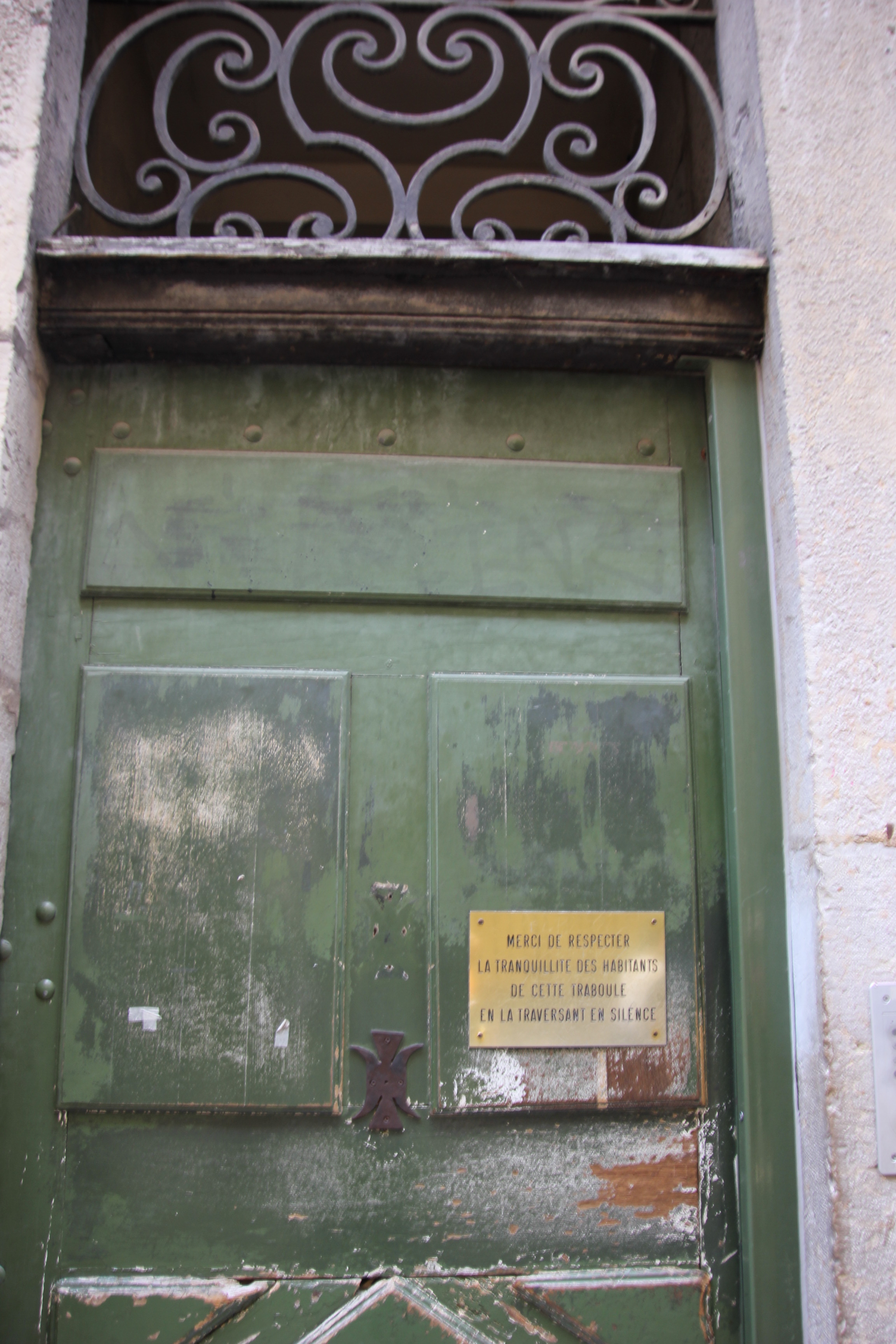
We took a tour of Lyon in the morning. The Basillica de Fourviere was our first stop (Fourviere was the name of the old forum in Lyon). It is was built in 1872 as a tribute to the Virgin Mary. The architect wanted to build her a home out of respect for her saving the community from the plague in 1643, from Cholera in 1832 and the Prussian invasion in 1879. It is a magnificent structure. There was a mass being said as we entered so we weren’t allowed to take pictures inside. I snuck one of the Murano glass mosaic on one wall. We explored the crypt underneath, which was also beautiful. Outside the church we had spectacular views of the city.
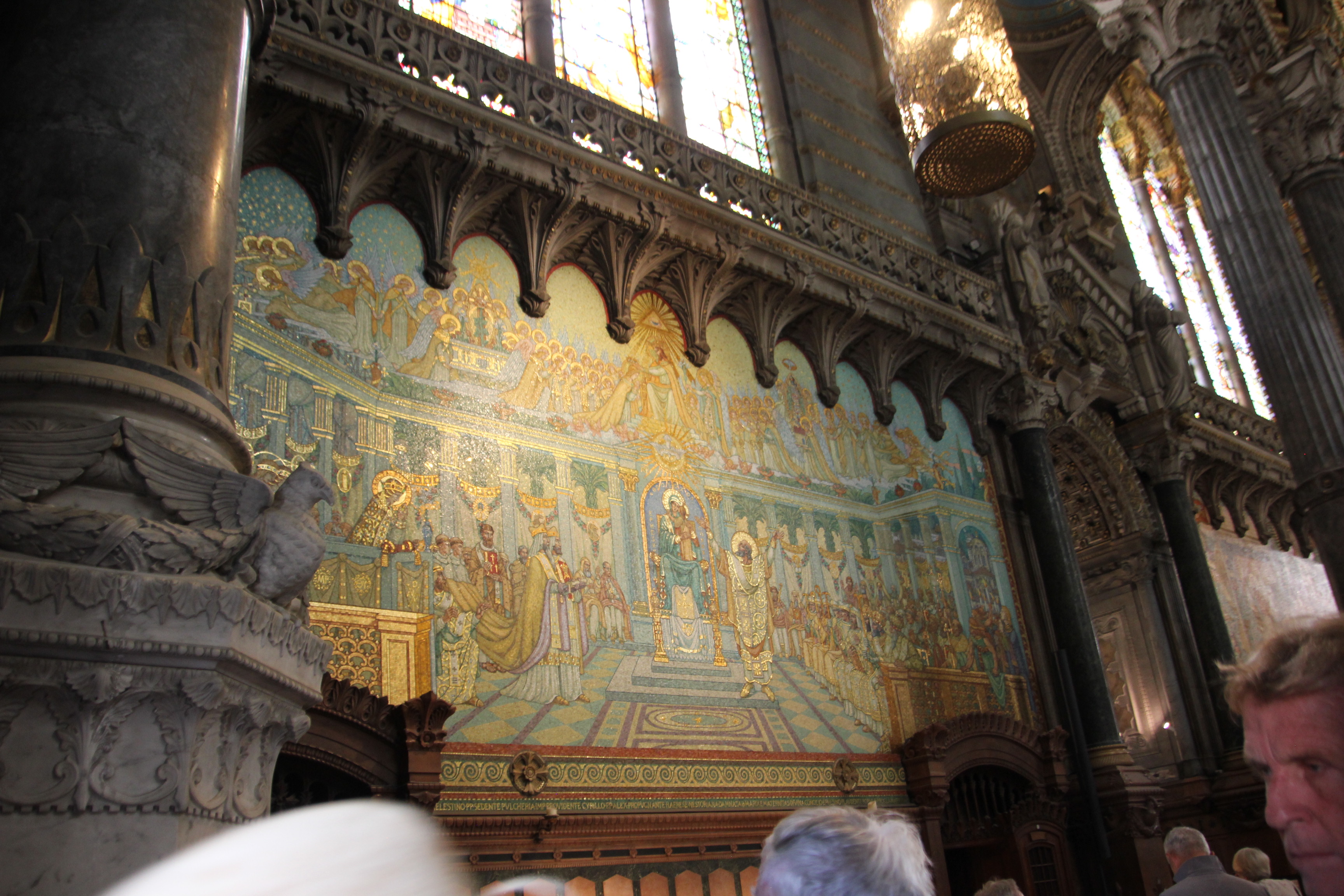
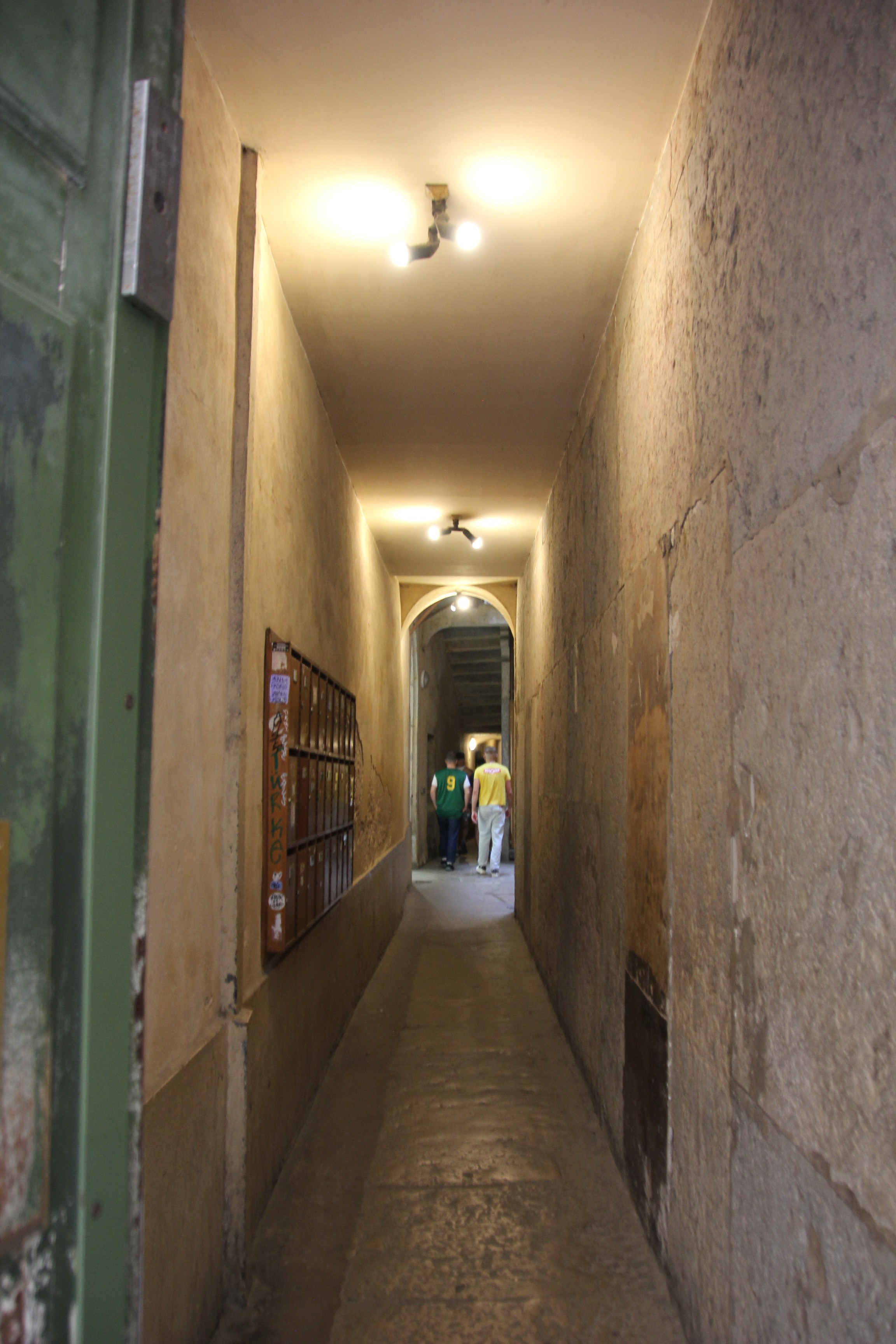
We then went into the old city of Lyon and had a great time exploring the streets of the old city. Historically, the main trade in Lyon was silk. The weavers needed a way to get their products from their workshops to the river for transport. The city was growing, so to facilitate commerce, they created over 400 traboules (hidden secret alleys) that provided covered shortcuts to through the streets to the river. Only 40 of them are open to the public and we found 2. The trick is to find the door and then to go through silently because people live above these passages and get very cranky if tourists make too much noise.
We learned a lot about Lyon on our drive back to the boat. One interesting fact was that Lyon is the proud home to the celebrated author Antoine de Saint-Exupery. He wrote Le petit prince. I enjoyed this tidbit because his book inspired me to climb a Baobab tree in Zambia.
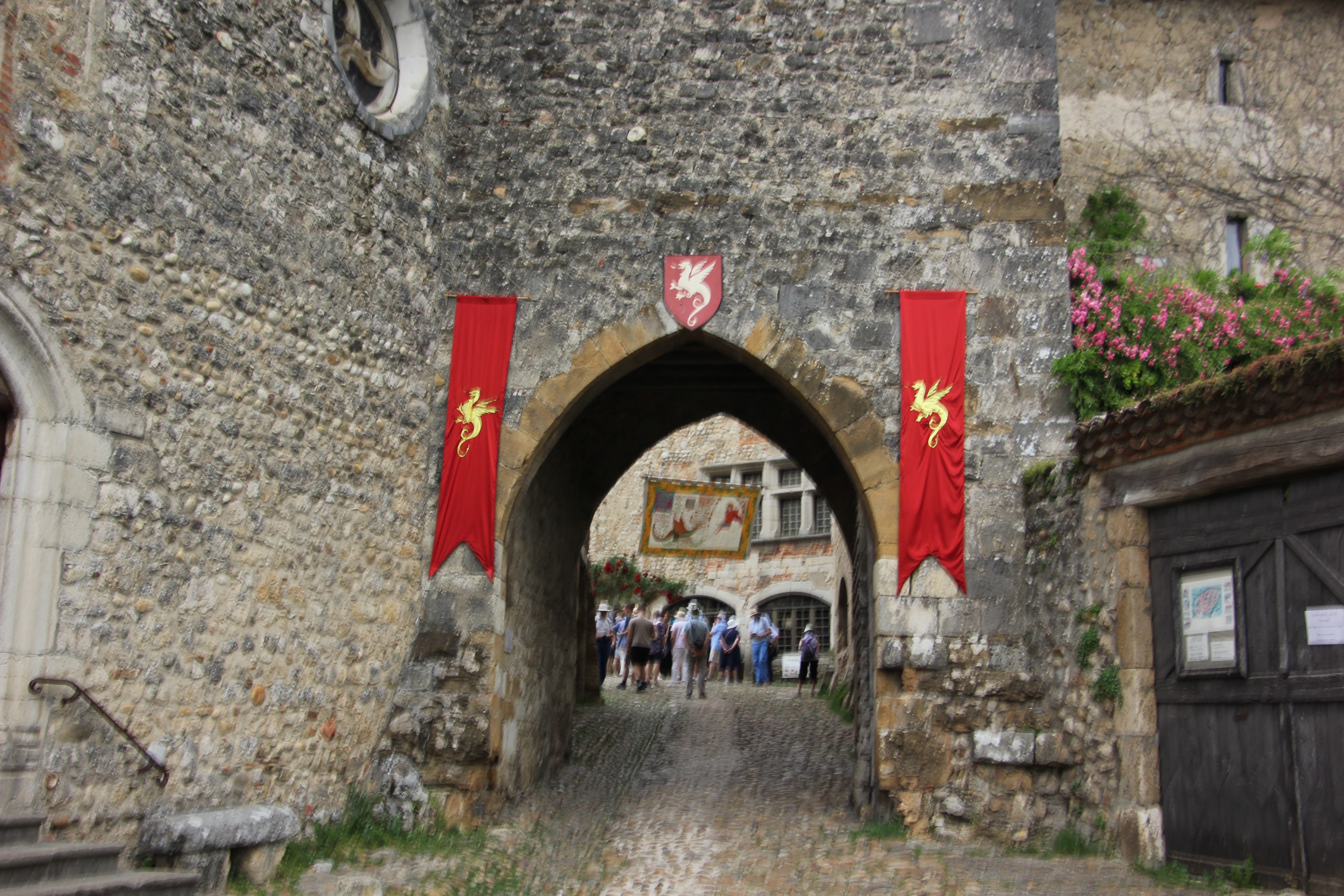
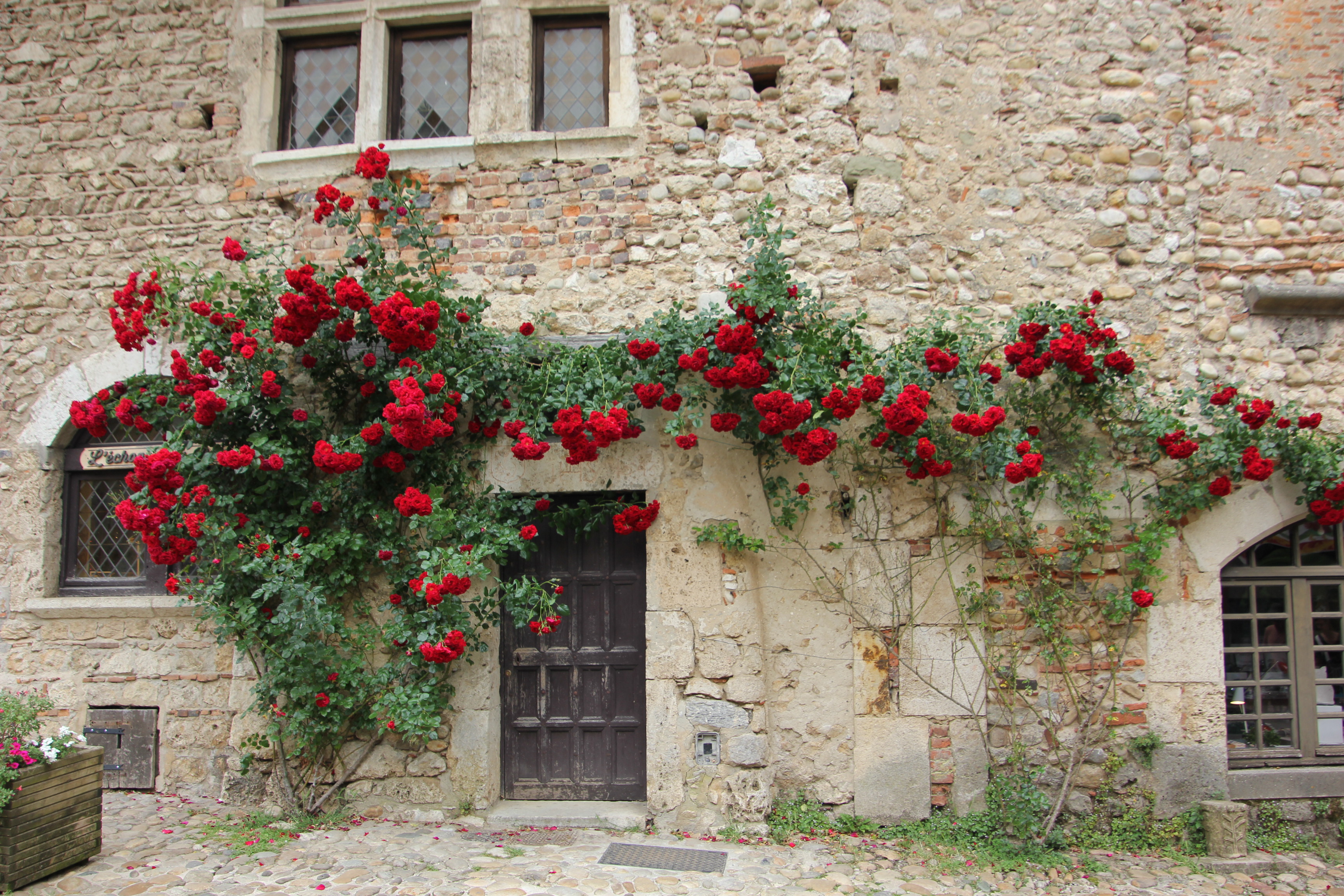
After another delicious lunch on our cruise, we set off for the medieval city of Perouges 30 km north of Lyon. This village on the Ain river was originally a fortress in the 12th century and came under French rule in 1601. It is known as “one of the most beautiful villages in France”. This is an official title and supports small villages of historic value to stay afloat. This village offers 100 years free leases on buildings in the community with the expectation that the leasee will maintain/upgrade the property while staying in line with protecting the historic nature of the village. The village was indeed beautiful with old stone buildings and beautiful flowers.
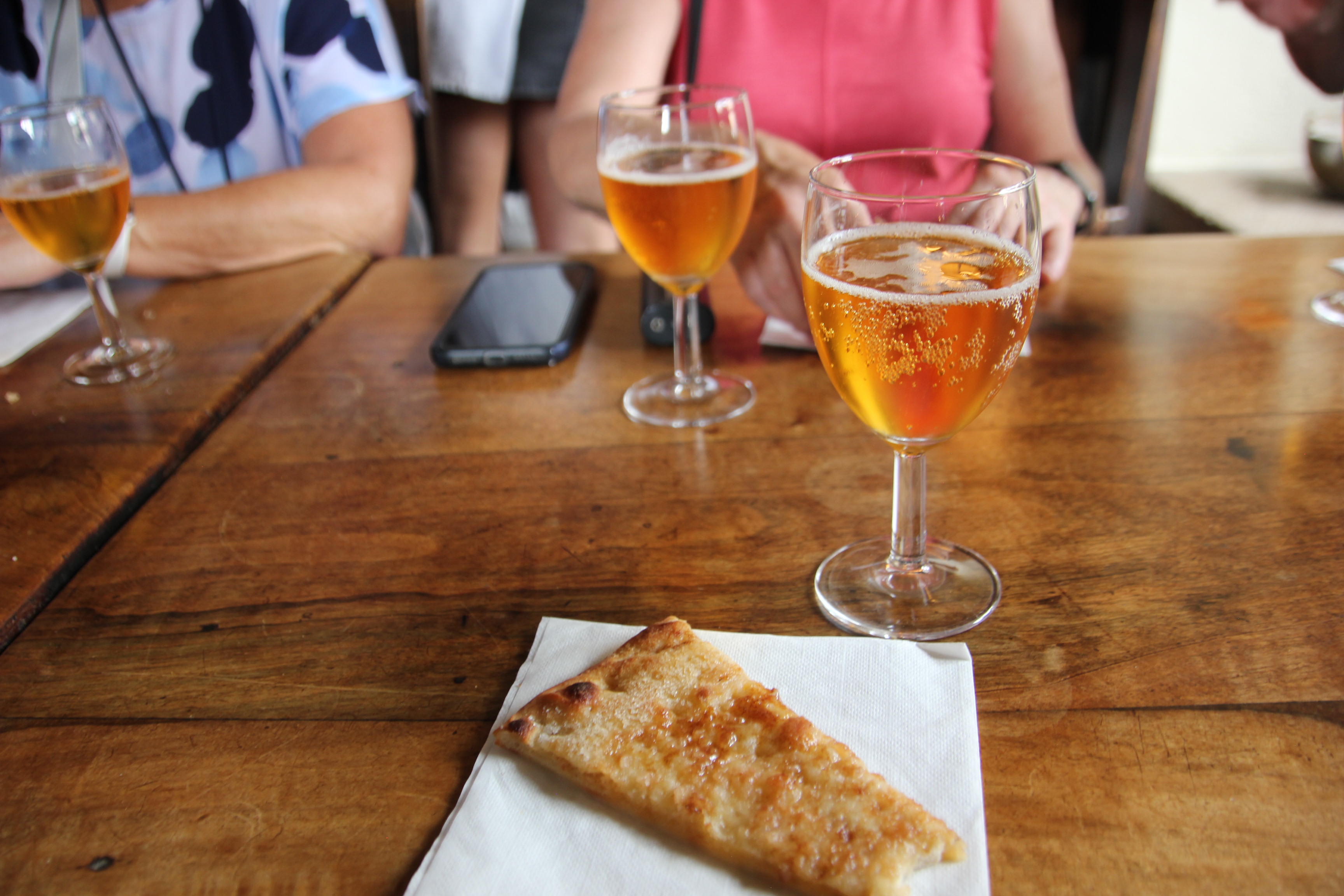
We ended our tour with a delicious treat served by costumed interpreters. We continued our exploration of the village hoping to find genuine/authentic crafts but were disappointed. A number of the stores sold stereotypic touristy stuff and there weren’t many authentic French artisans showing their work. The bus ride back to our boat was fairly silent as we got in a brief nap before dinner. It was a great day of seeing amazing architecture and history.
 travelswithannmarie