
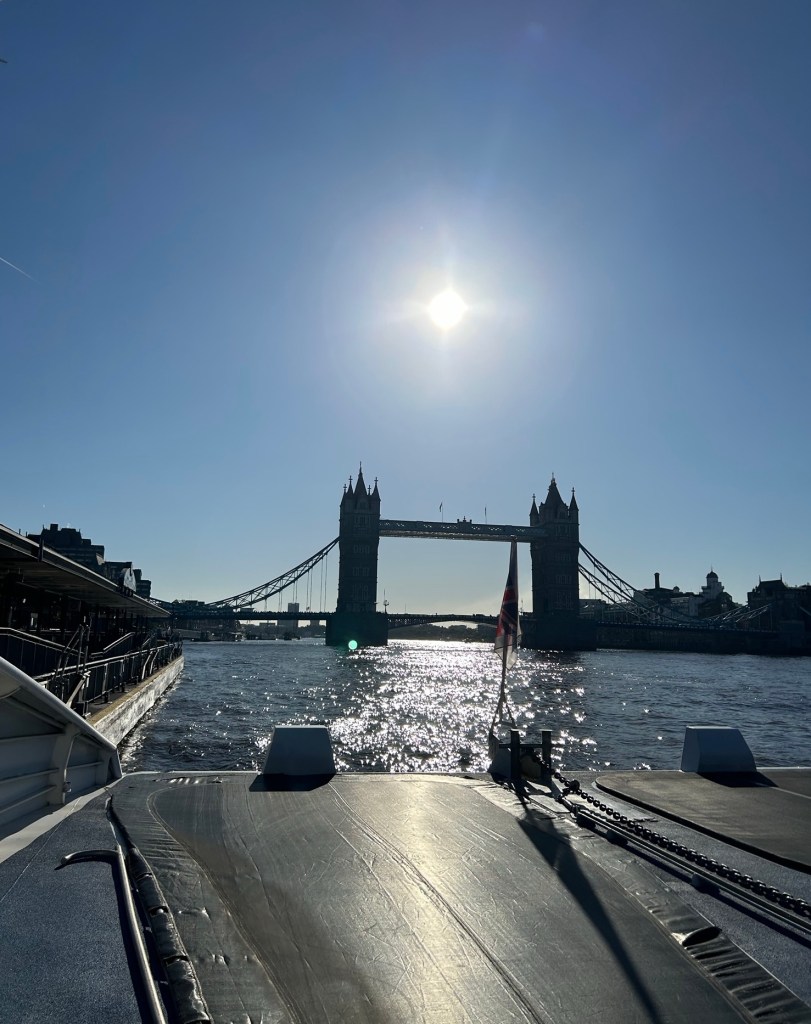
We got up early today to catch the Uber Boat to Greenwich. We have walked miles and miles through London and taken many tube rides. It was time for something different. The 45 minute float took us by all the famous sites along the Thames. This surprised us a bit which told us how disoriented we were about where we’ve been in London so far. We’ve been focusing our routes using google maps. As a result we never got a good sense of where we’ve been like we might have with an old school paper map.

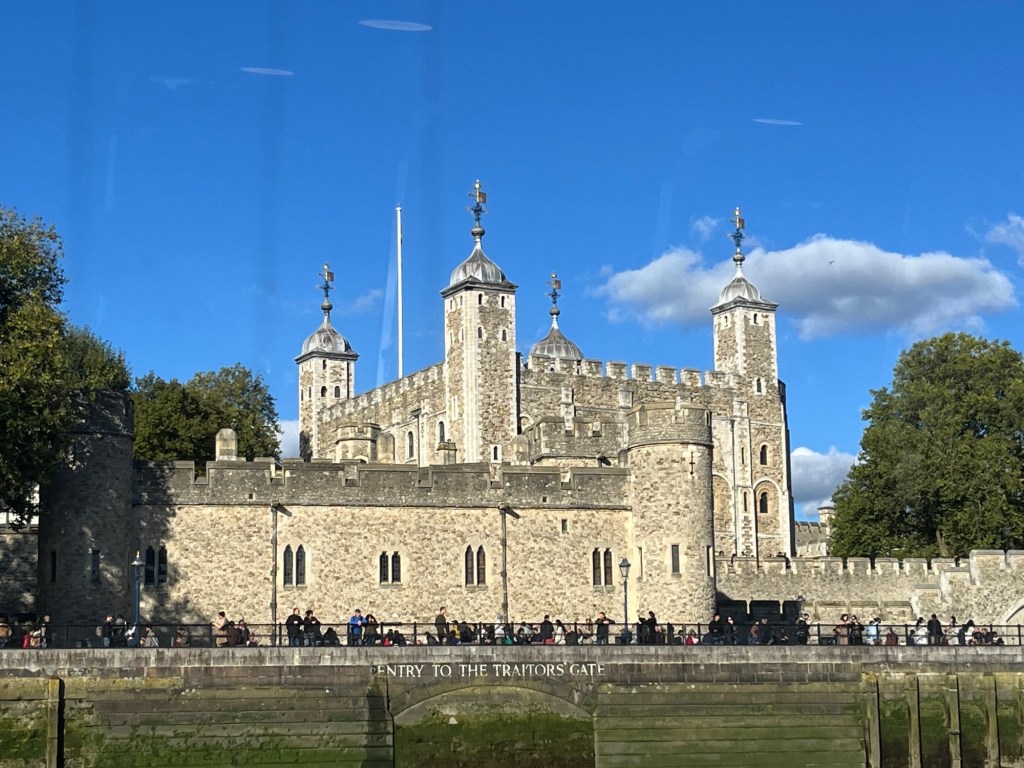
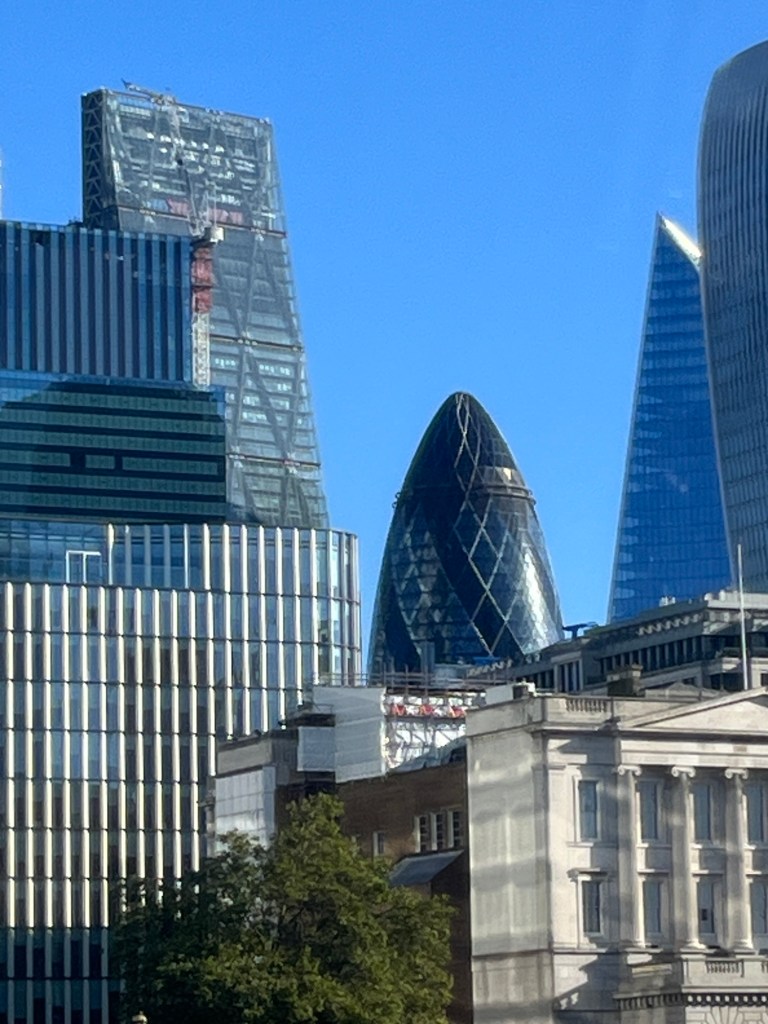
We got off at the Greenwich Pier and, after consulting with the information booth lady, started our uphill climb to the Royal Observatory. We realized it was the first hill we have actually seen in London. The observatory is in a large park that was rife with children and dogs. It was obviously a day for families to be out and about. The observatory was built in 1675 by Christopher Wren. John Flamstead was the first Royal Astronomer . He was instrumental in building the British/western world’s understanding time and space. He introduced the concept of meridians (aka, lines of longitude). As Britain was expanding its empire, the need for sailors to have a reliable sense of time became more important. A meridian (in case you have forgotten) occurs every 15 degrees around the globe (I.e., 360 degrees in a full rotation divided by 24 hours per day= 15) and represents one hour. George Airy, the 7th Astronomer Royal determined the prime meridian and because most ships were using navigation charts based on that line, it was declared the prime meridian by international convention in 1884. The prime meridian separates east and west in terms of time.

Getting the math right took a lot of work. For millennia, sailors navigated by the stars. But as ships got larger and sea trade routes got longer, it became more important to know not only where you were in the sea, but when you might arrive at your destination. In 1714 British Parliament passed a law stating that whomever created the most precise and reliable clock for determining longitude while sailing would win the equivalent today of 2 million £. Only 51 years and 4 meticulously crafted prototypes, John Harrison eventually won the contest and got some, but not all, the prize money.
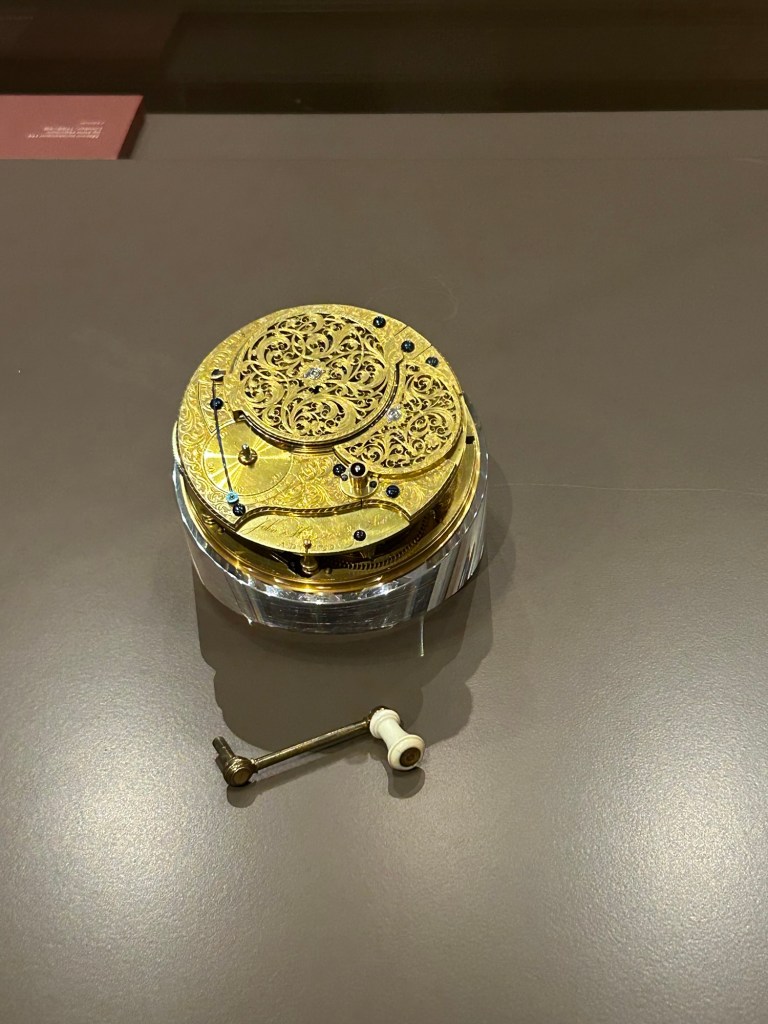
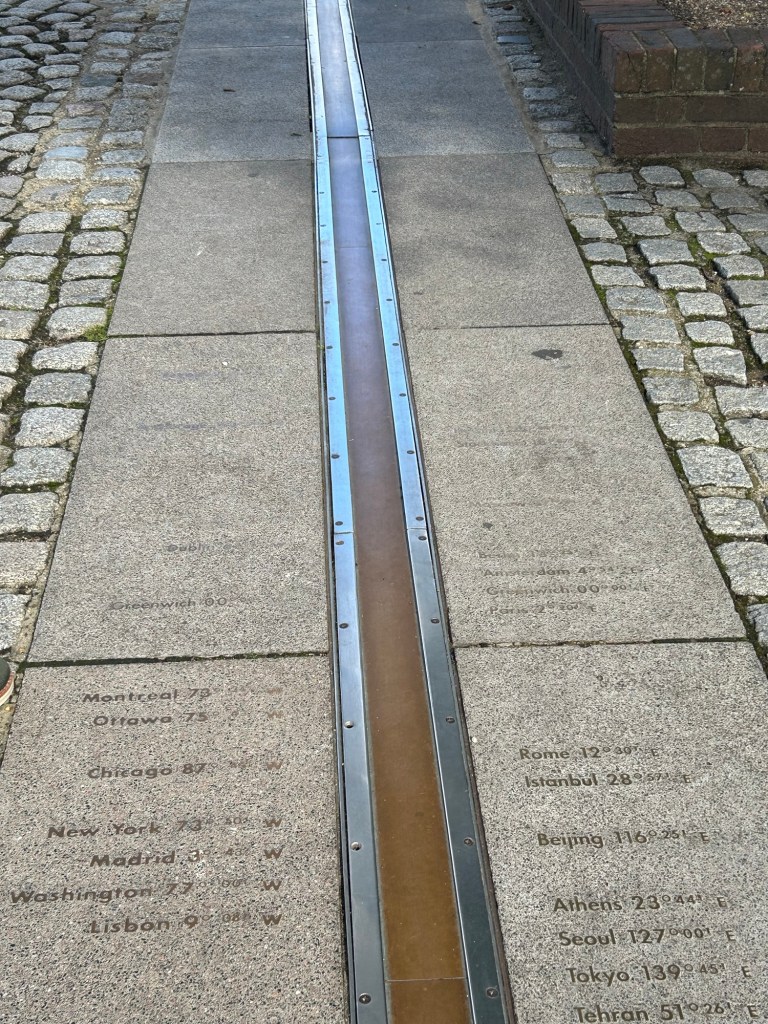
The Observatory displayed the development of keeping time until modern times. Apparently time is no longer based on Greenwich Mean Time (GMT), but by Coordinated Universal Time (UTC). However GMT still defines time zones. We finished our tour of the Observatory by taking this photo of the Prime Meridian. Only 2 Canadian cities made the engraving – Montreal and Ottawa.
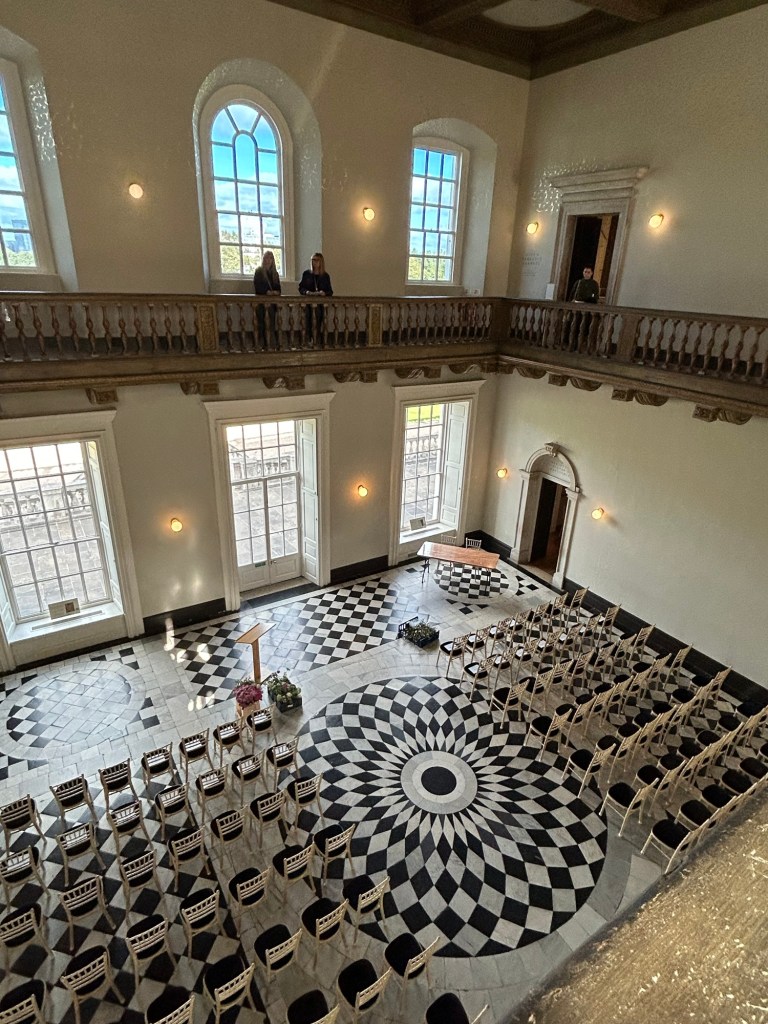
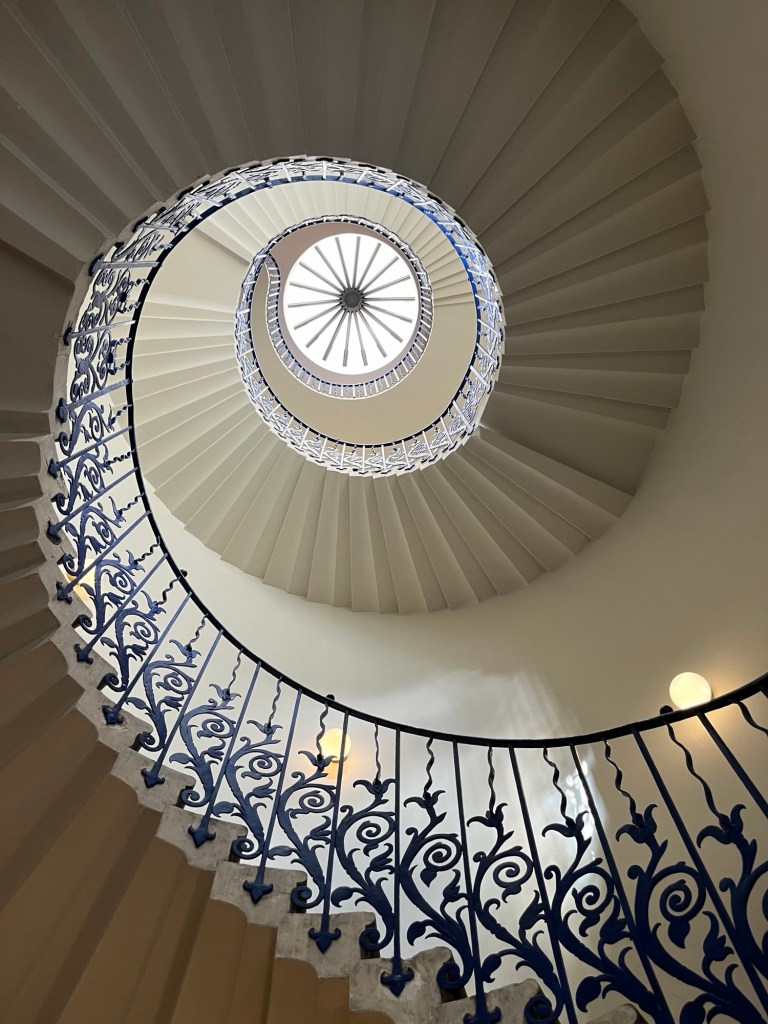
Our next stop was Queen’s House. King James I commissioned Inigo Jones to design and build a palace for his wife, Queen Anne. It was finished in 1635. The grand hall and the tulip staircase are the most notable features in the building. We weren’t allowed into the grand hall but could look into it from a balcony as it was being set up for a wedding. We had to think about what type of budget you would need to have to shut down a national monument for your wedding. Apparently booking the venue starts at £250/guest ($452cdn) not including beverages.
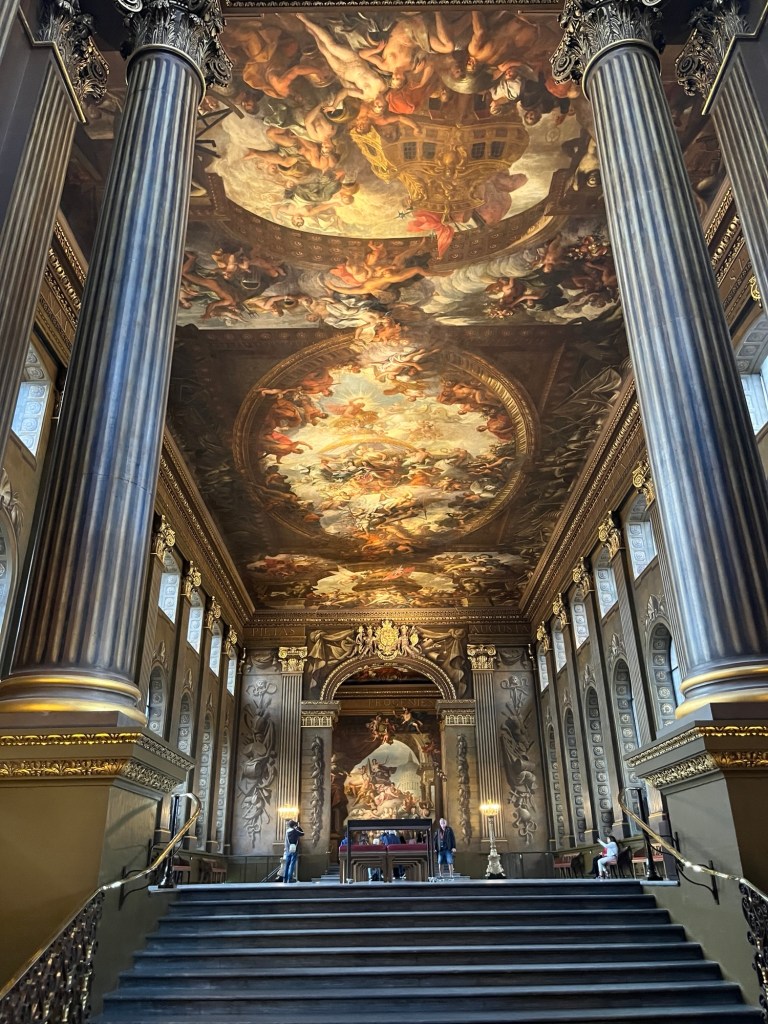
After a delicious lunch on a patio (despite it being only 15C), we were off to our next stop, The Painted Hall in the Royal Naval Academy. What started out as a blandly decorated dining hall for veterans of the British Navy, turned into what the guide called the British Sistine Chapel – minus all the religion. The building housing the hall was one of the four on this site built by Christopher Wren. Apparently he built everything in London after the fire.
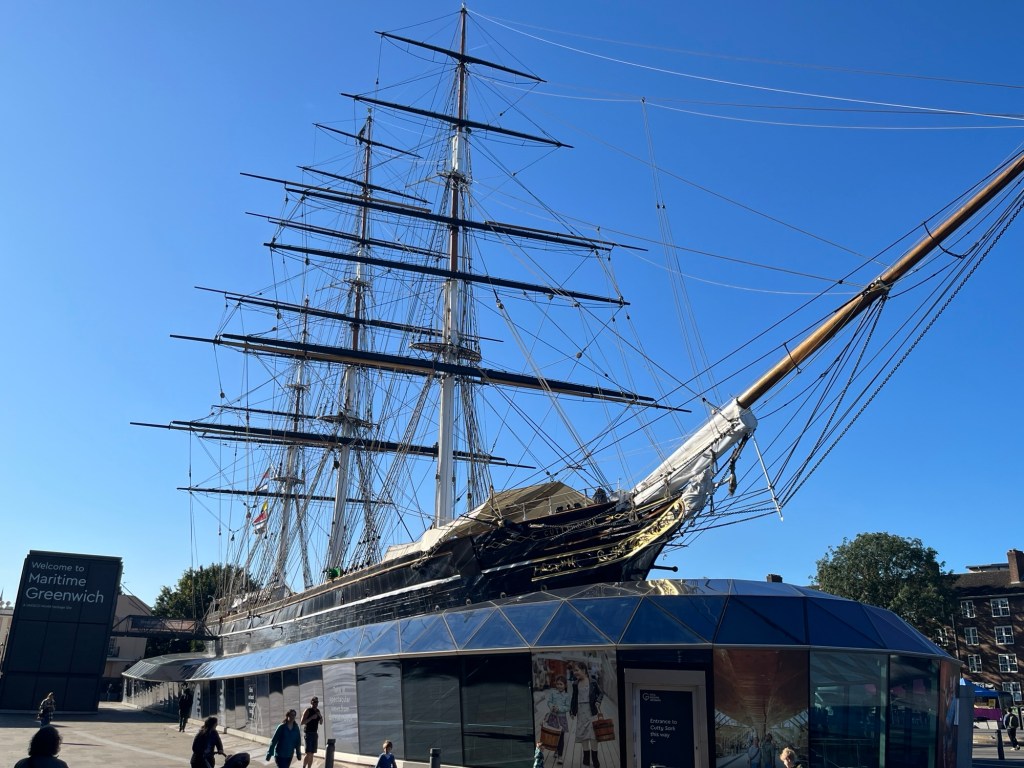
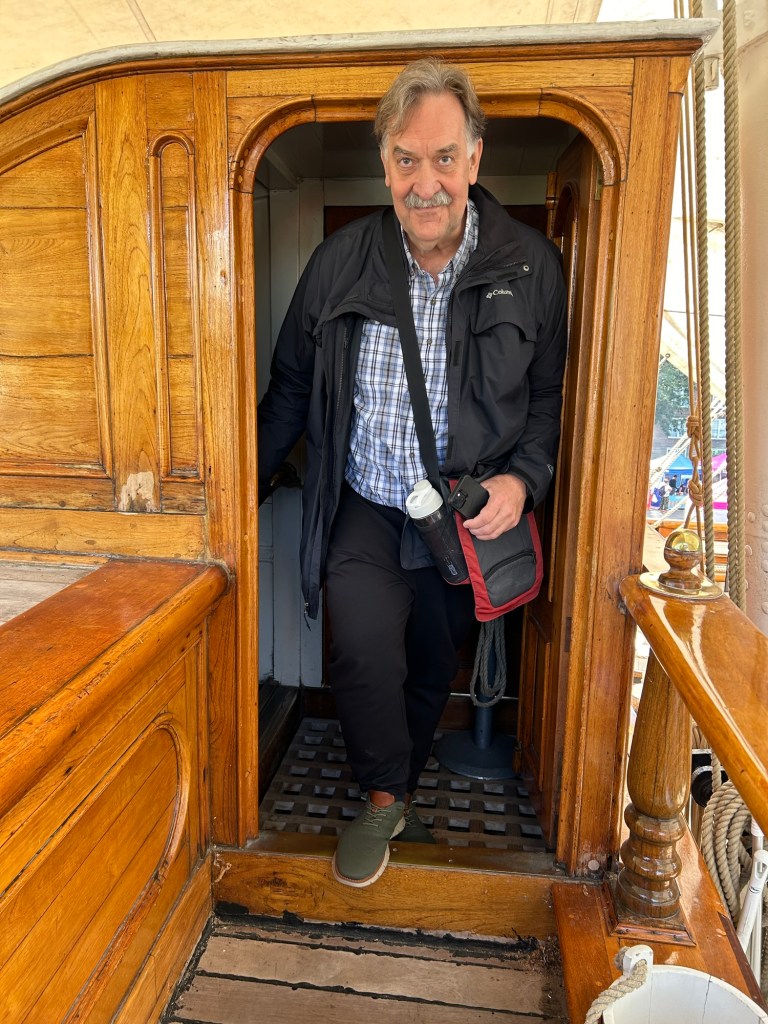
Finally, with feet that were complaining about overuse, we took the opportunity to view the Cutty Sark. In its day, this ship was the fastest ever on the seas. It was built for the tea trade and made a lot of people a lot of money. However, it was sold after the introduction of steam powered ships. It was shifted into service then to bring wool and other goods from Australia and other far away places. It was repurchased by British investors and was used to train sailors. It was eventually turned into the museum we explored today. We learned that Dale could never have been a sailor on this boat because, despite the ship itself being massive, the bunk beds were only 5’5” long and he had to duck in all the indoor spaces.
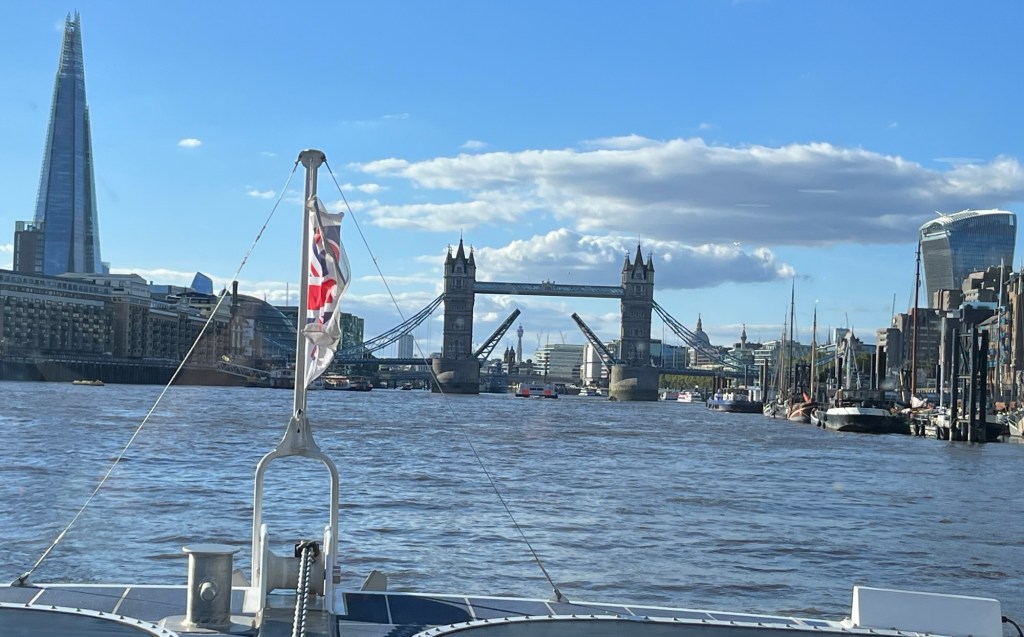
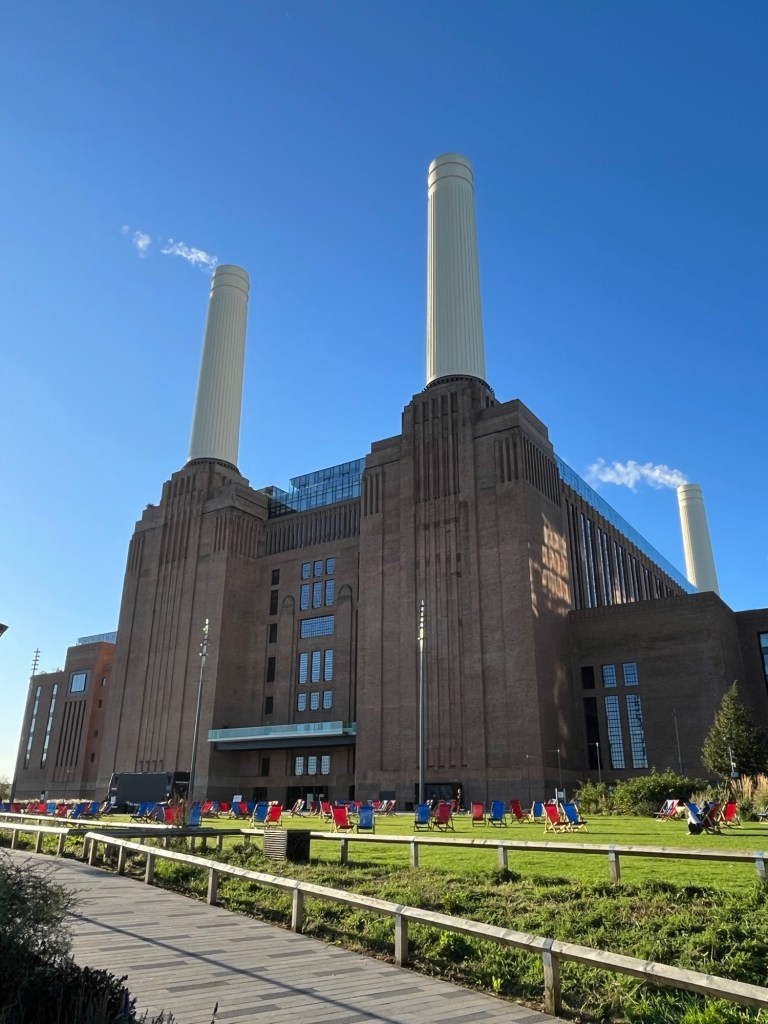
We had to stand in line for 30 minutes to get our Uber Boat back to Battersea Power Plant. We appreciated the long ride back. We also got to see the tower bridge open for a tall ship to sail through. Supper was at a quaint Mexican restaurant. We are now officially done our sightseeing as we start transitioning home. We are leaving our AirB&B tomorrow morning and heading to a hotel near the airport. We need to be at the airport at 6am Monday morning to start the journey home.
 travelswithannmarie
What a perfect way to start my mornlng, a cup of coffee and readlng about your and Dale’s travels ln London! Great plctures, you are seelng so much!
So glad you have enjoyed the blog. We’ve had a great time but all good things must end. We head home in the morning.
Loved the Painted Ceiling and Tulip Staircase. Stunning. What an interesting tour you had of London. Thanks for sharing.