CTV news recently did a story on the Monet exhibit we saw in London at the Courtauld Gallery. We saw the exhibit on the opening day. My Dad noticed the connection. The reporter did a good job with the story. https://winnipeg.ctvnews.ca/video/c3002550-ctv-national-news–thames-paintings-on-display . It is good to be home now after a long day of travel.
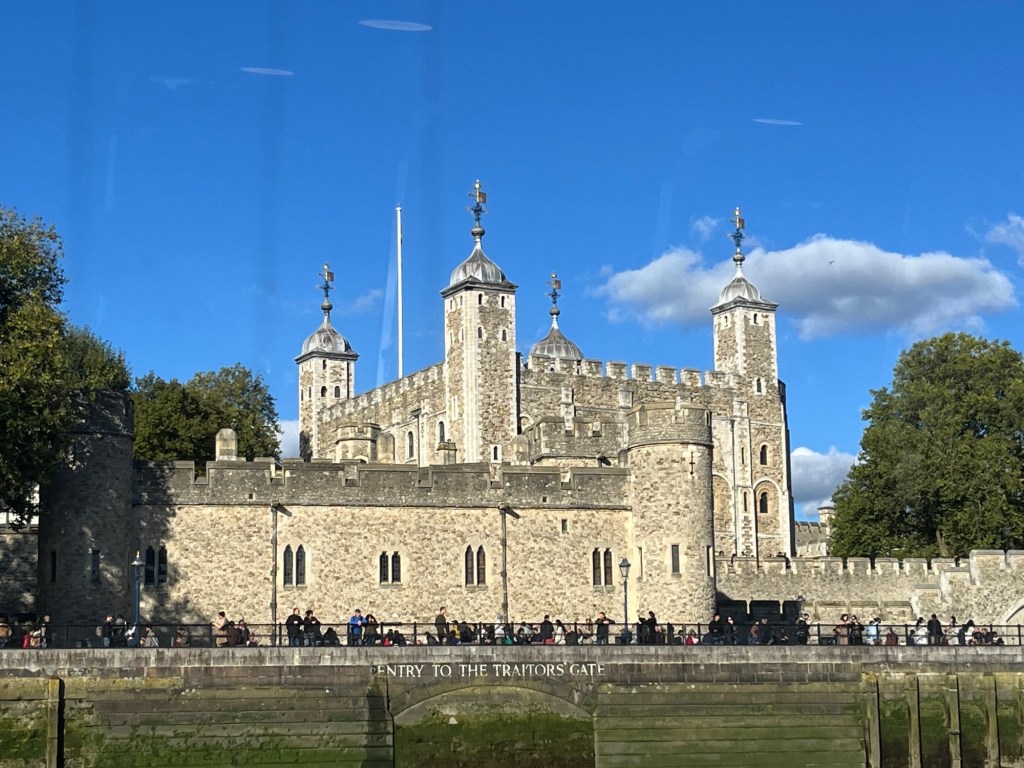
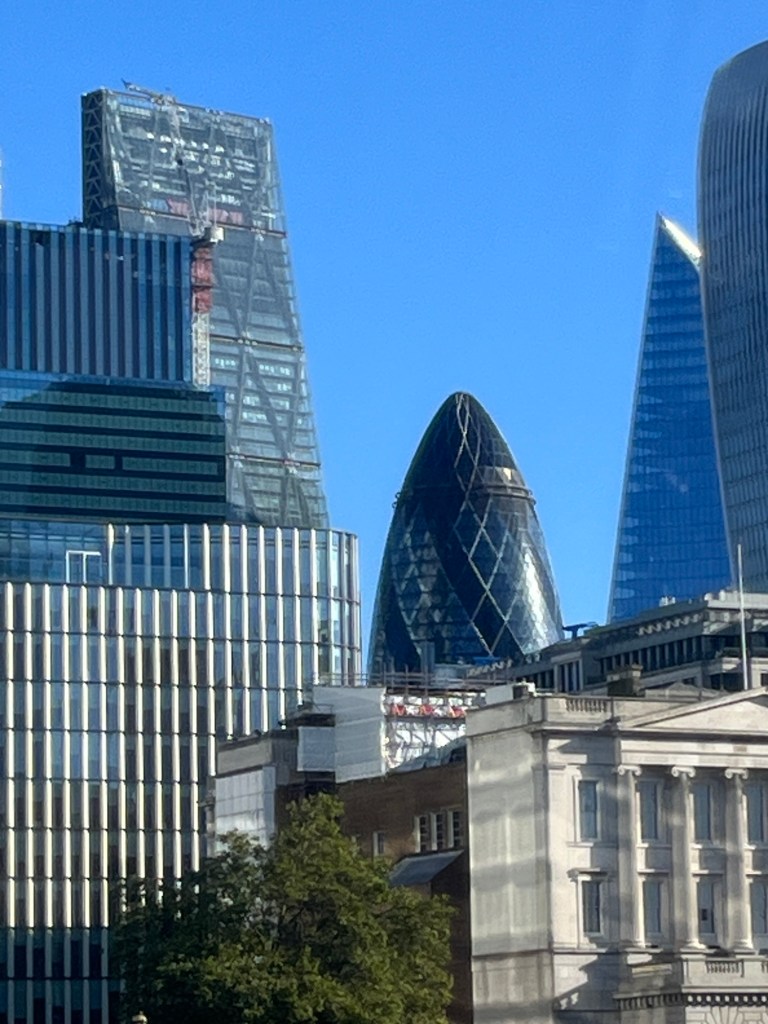
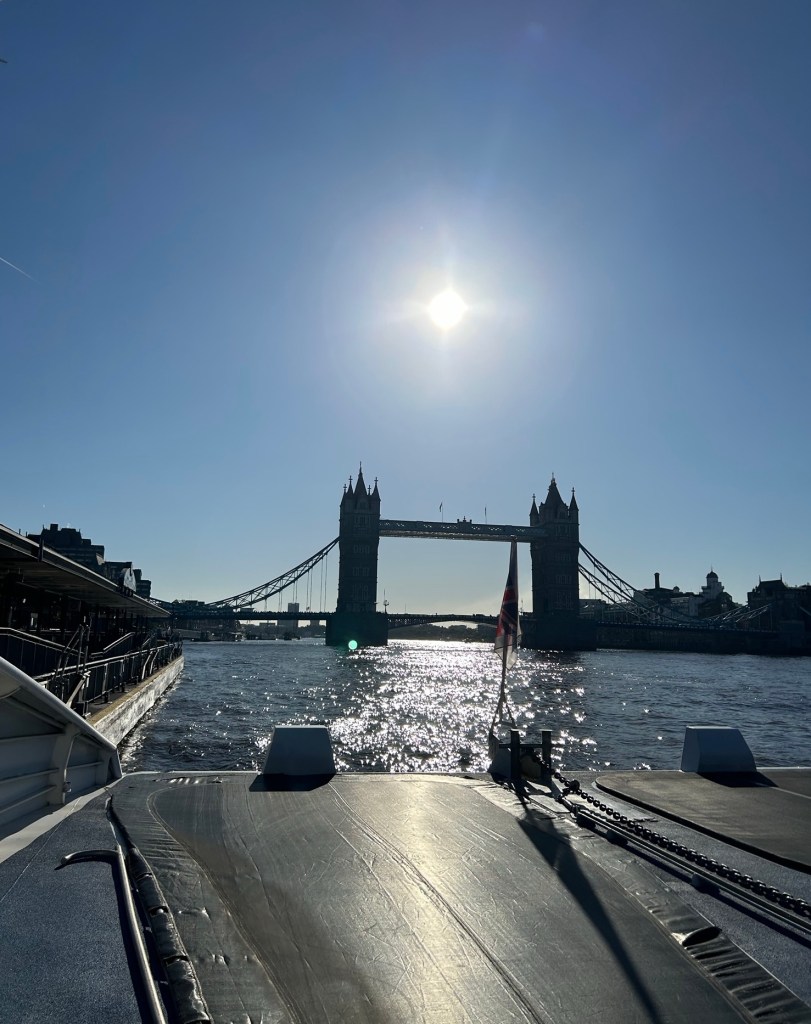
We got up early today to catch the Uber Boat to Greenwich. We have walked miles and miles through London and taken many tube rides. It was time for something different. The 45 minute float took us by all the famous sites along the Thames. This surprised us a bit which told us how disoriented we were about where we’ve been in London so far. We’ve been focusing our routes using google maps. As a result we never got a good sense of where we’ve been like we might have with an old school paper map.
Big BenThe Tower of LondonThe Gherkin (London Egg)The Tower Bridge
We got off at the Greenwich Pier and, after consulting with the information booth lady, started our uphill climb to the Royal Observatory. We realized it was the first hill we have actually seen in London. The observatory is in a large park that was rife with children and dogs. It was obviously a day for families to be out and about. The observatory was built in 1675 by Christopher Wren. John Flamstead was the first Royal Astronomer . He was instrumental in building the British/western world’s understanding time and space. He introduced the concept of meridians (aka, lines of longitude). As Britain was expanding its empire, the need for sailors to have a reliable sense of time became more important. A meridian (in case you have forgotten) occurs every 15 degrees around the globe (I.e., 360 degrees in a full rotation divided by 24 hours per day= 15) and represents one hour. George Airy, the 7th Astronomer Royal determined the prime meridian and because most ships were using navigation charts based on that line, it was declared the prime meridian by international convention in 1884. The prime meridian separates east and west in terms of time.
The Royal Observatory
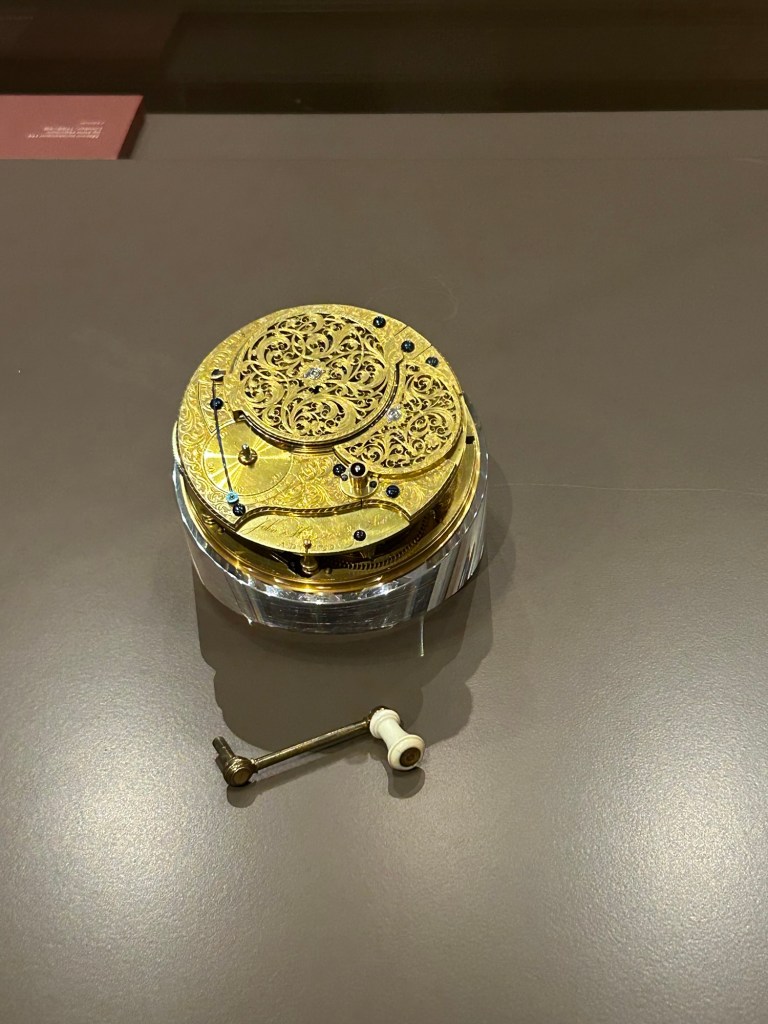
Getting the math right took a lot of work. For millennia, sailors navigated by the stars. But as ships got larger and sea trade routes got longer, it became more important to know not only where you were in the sea, but when you might arrive at your destination. In 1714 British Parliament passed a law stating that whomever created the most precise and reliable clock for determining longitude while sailing would win the equivalent today of 2 million £. Only 51 years and 4 meticulously crafted prototypes, John Harrison eventually won the contest and got some, but not all, the prize money.
The winning time keeper
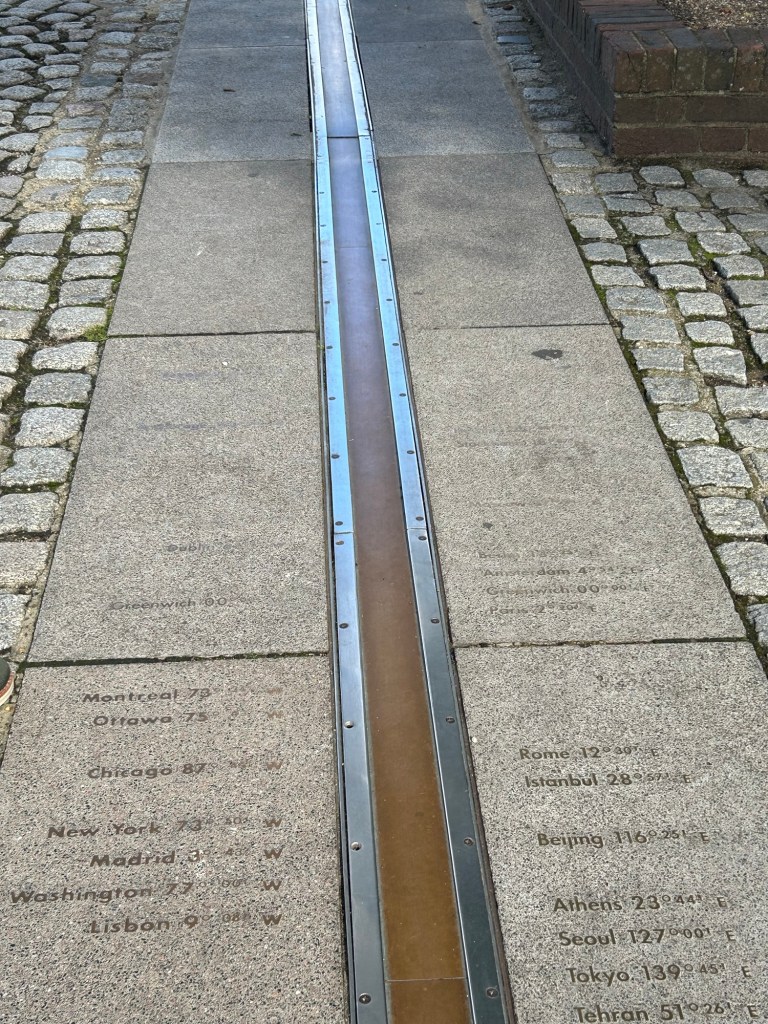
The Observatory displayed the development of keeping time until modern times. Apparently time is no longer based on Greenwich Mean Time (GMT), but by Coordinated Universal Time (UTC). However GMT still defines time zones. We finished our tour of the Observatory by taking this photo of the Prime Meridian. Only 2 Canadian cities made the engraving – Montreal and Ottawa.
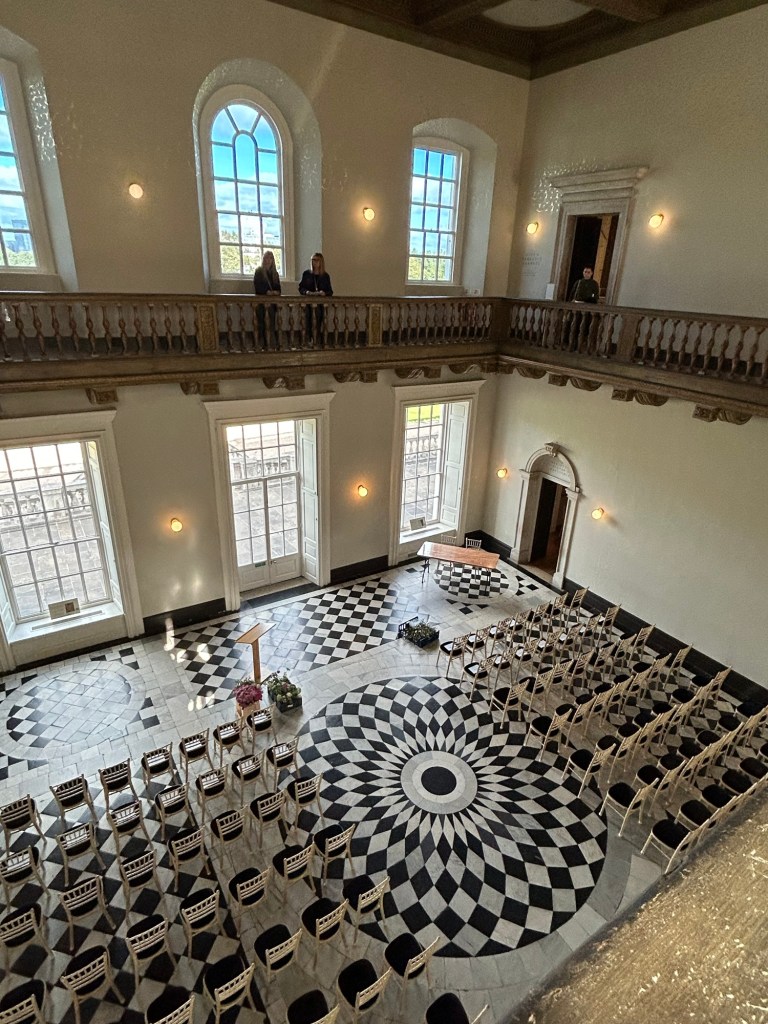
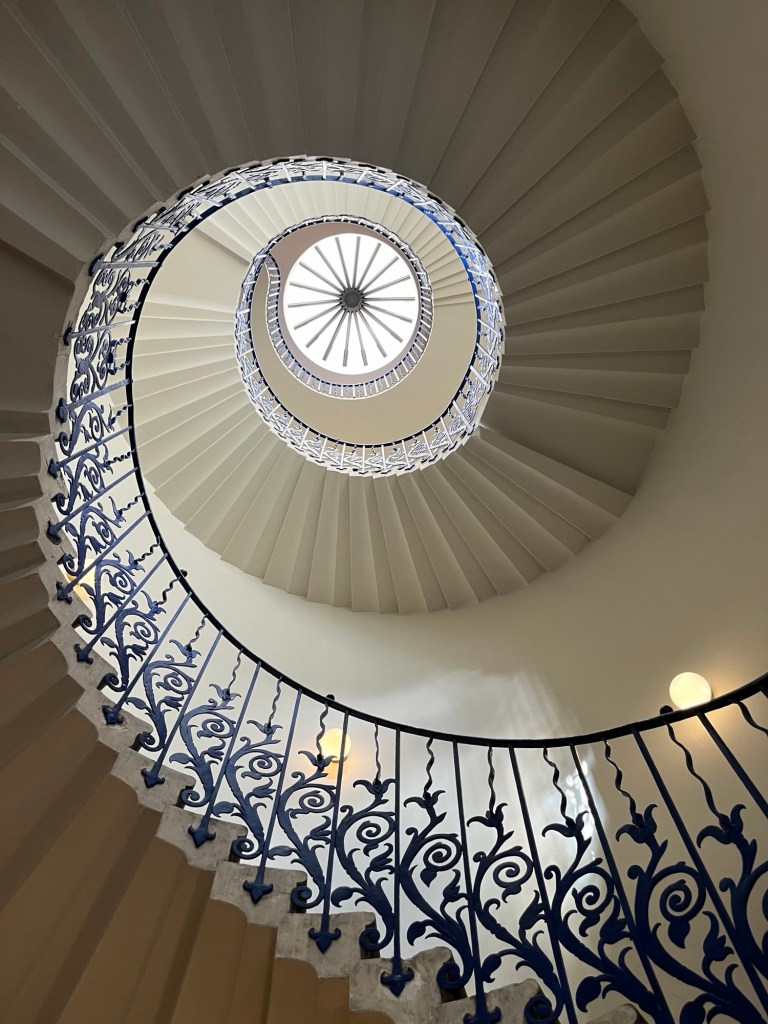
Our next stop was Queen’s House. King James I commissioned Inigo Jones to design and build a palace for his wife, Queen Anne. It was finished in 1635. The grand hall and the tulip staircase are the most notable features in the building. We weren’t allowed into the grand hall but could look into it from a balcony as it was being set up for a wedding. We had to think about what type of budget you would need to have to shut down a national monument for your wedding. Apparently booking the venue starts at £250/guest ($452cdn) not including beverages.
The Grand HallThe Tulip Stairs
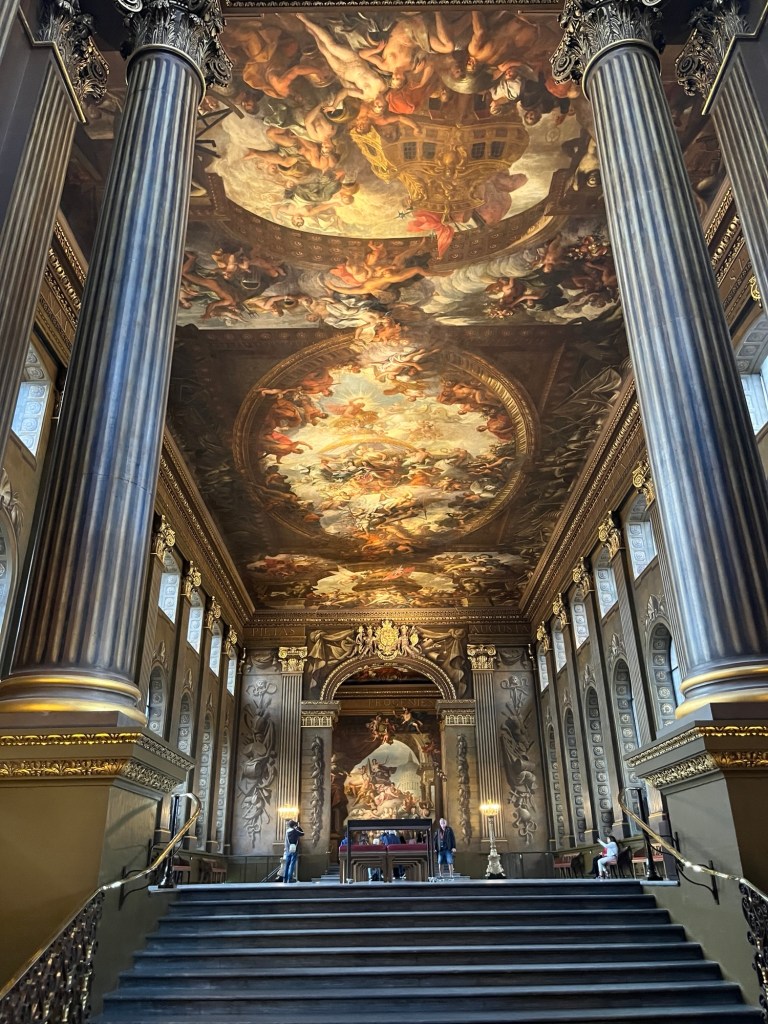
After a delicious lunch on a patio (despite it being only 15C), we were off to our next stop, The Painted Hall in the Royal Naval Academy. What started out as a blandly decorated dining hall for veterans of the British Navy, turned into what the guide called the British Sistine Chapel – minus all the religion. The building housing the hall was one of the four on this site built by Christopher Wren. Apparently he built everything in London after the fire.
The Painted Hall
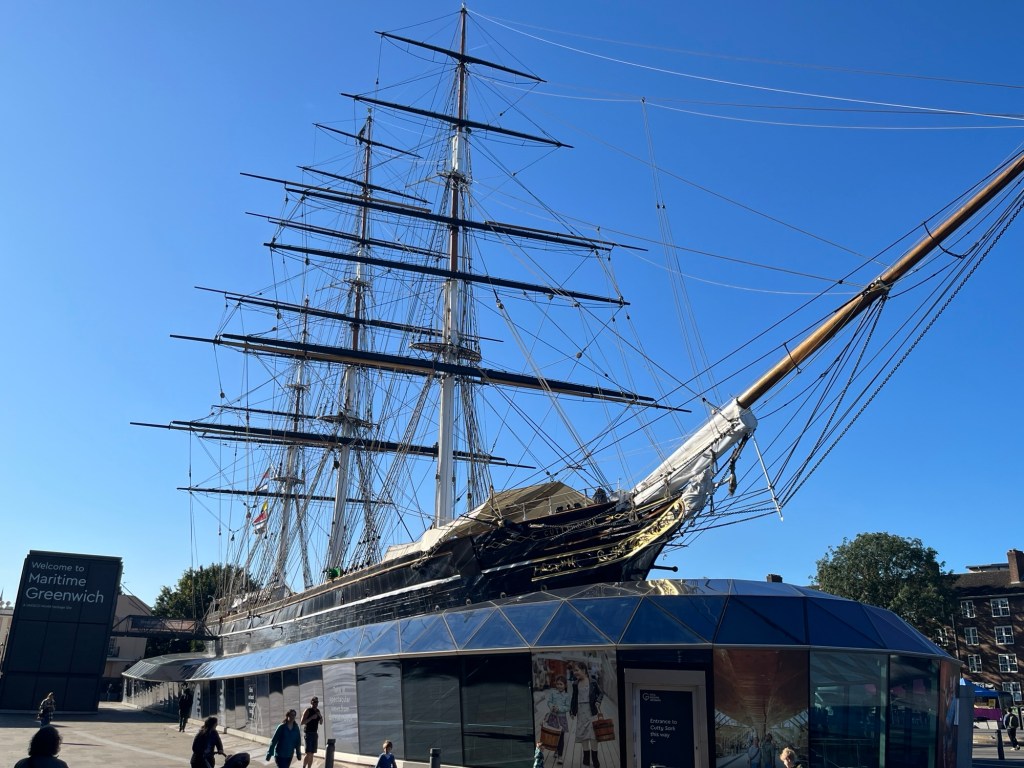
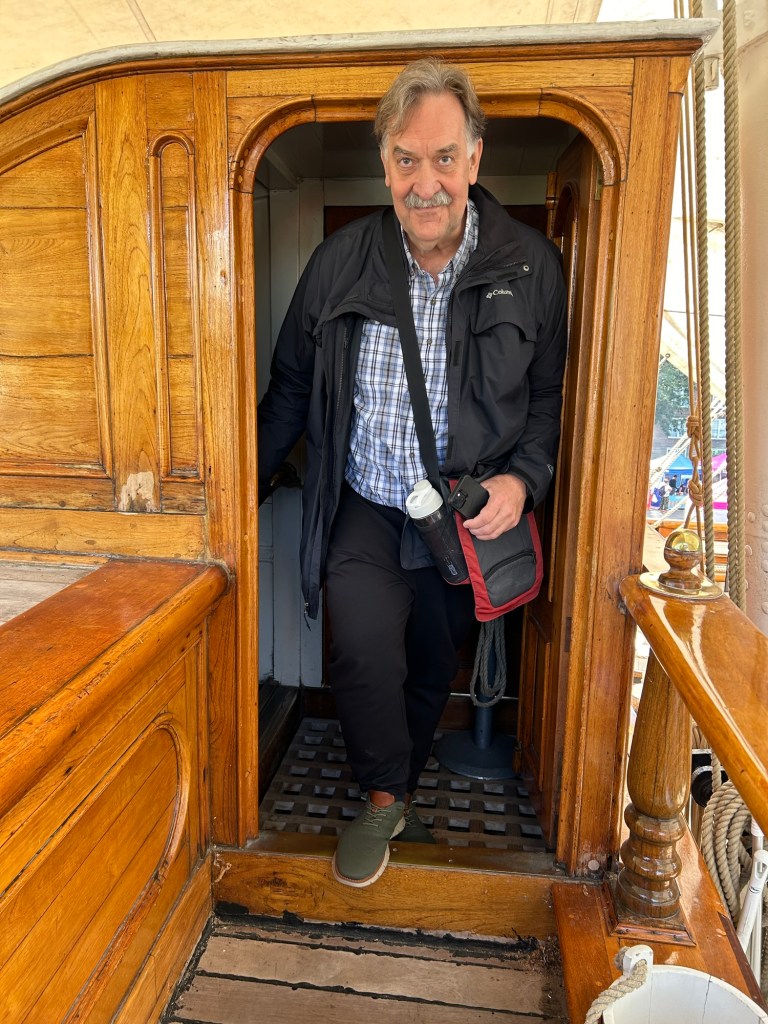
Finally, with feet that were complaining about overuse, we took the opportunity to view the Cutty Sark. In its day, this ship was the fastest ever on the seas. It was built for the tea trade and made a lot of people a lot of money. However, it was sold after the introduction of steam powered ships. It was shifted into service then to bring wool and other goods from Australia and other far away places. It was repurchased by British investors and was used to train sailors. It was eventually turned into the museum we explored today. We learned that Dale could never have been a sailor on this boat because, despite the ship itself being massive, the bunk beds were only 5’5” long and he had to duck in all the indoor spaces.
The Cutty Sark
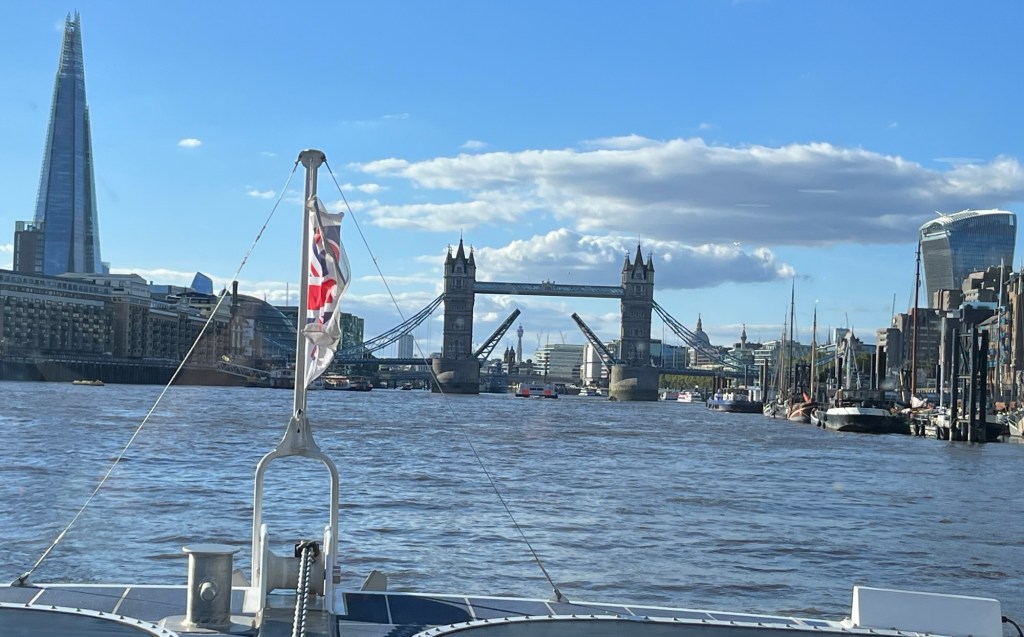
We had to stand in line for 30 minutes to get our Uber Boat back to Battersea Power Plant. We appreciated the long ride back. We also got to see the tower bridge open for a tall ship to sail through. Supper was at a quaint Mexican restaurant. We are now officially done our sightseeing as we start transitioning home. We are leaving our AirB&B tomorrow morning and heading to a hotel near the airport. We need to be at the airport at 6am Monday morning to start the journey home.
We had 4 goals today, visit the Courtauld Art Gallery, eat lunch in one of the oldest pubs in England, visit the Philip Mould Gallery and buy treats at Fortnum & Mason.
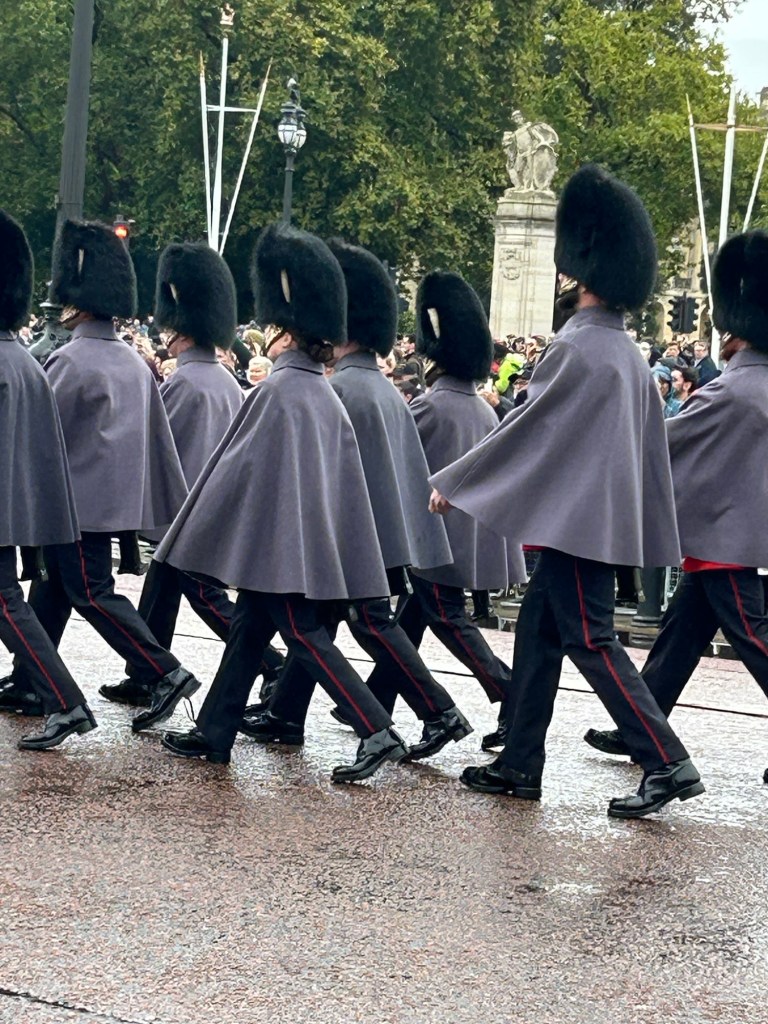
We set out to walk to our first stop and found ourselves at Buckingham Palace just at the time of the changing of the guard. We hadn’t planned to take this in, but who doesn’t love a good parade? The weather was cold and rainy so the guards were wearing their cloaks, so it was a fairly unimpressive parade.
Changing of the Guard
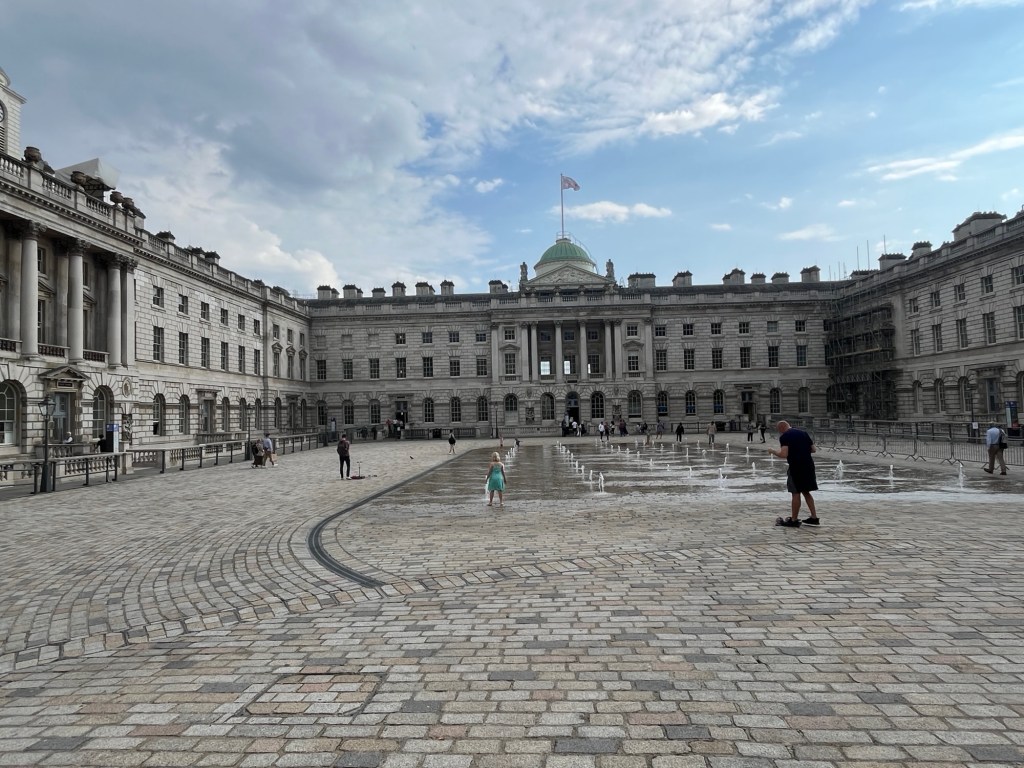
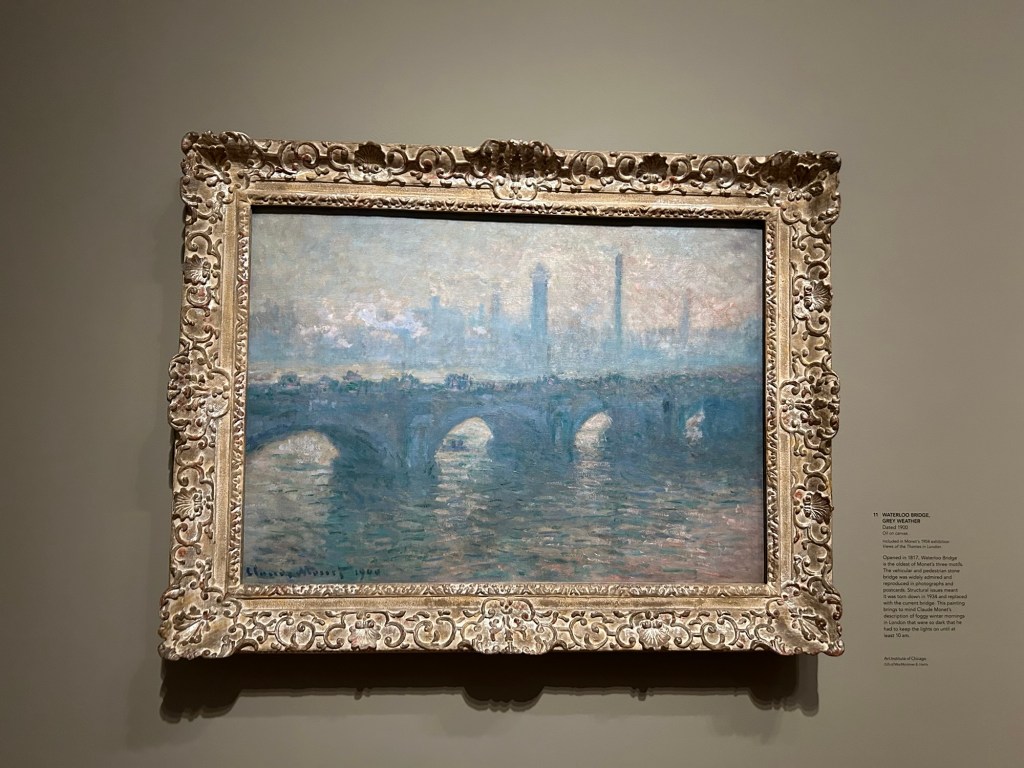
We have been avid fans of a British show called Fake or Fortune for a couple of years. On this show, Philip Mould (a high end art dealer) and journalist Fiona Bruce (who also hosts the British Antiques Roadshow) try to figure out whether a specific work of art is either real (and worth a fortune) or fake. They often enlist the efforts of art conservationists from the Courtauld Institute to help them. We decided it would be fine to check out both Galleries. The public gallery at the Courtauld is open to the public free of charge. However, we bought tickets to a special exhibit of Monet’s paintings of London that opened today. Monet visited London several times and seemed to love painting the bridges of London enveloped in fog. He started hundreds of canvases but only finished 37. He did a successful exhibition of them in Paris which resulted in many being sold, distributing them world wide. This was the first time 21 of these paintings have been gathered together to be shown in London in 125 years. One of the paintings was actually loaned for the exhibit from our National Gallery in Ottawa.
Somerset House home of the Courtauld Gallery
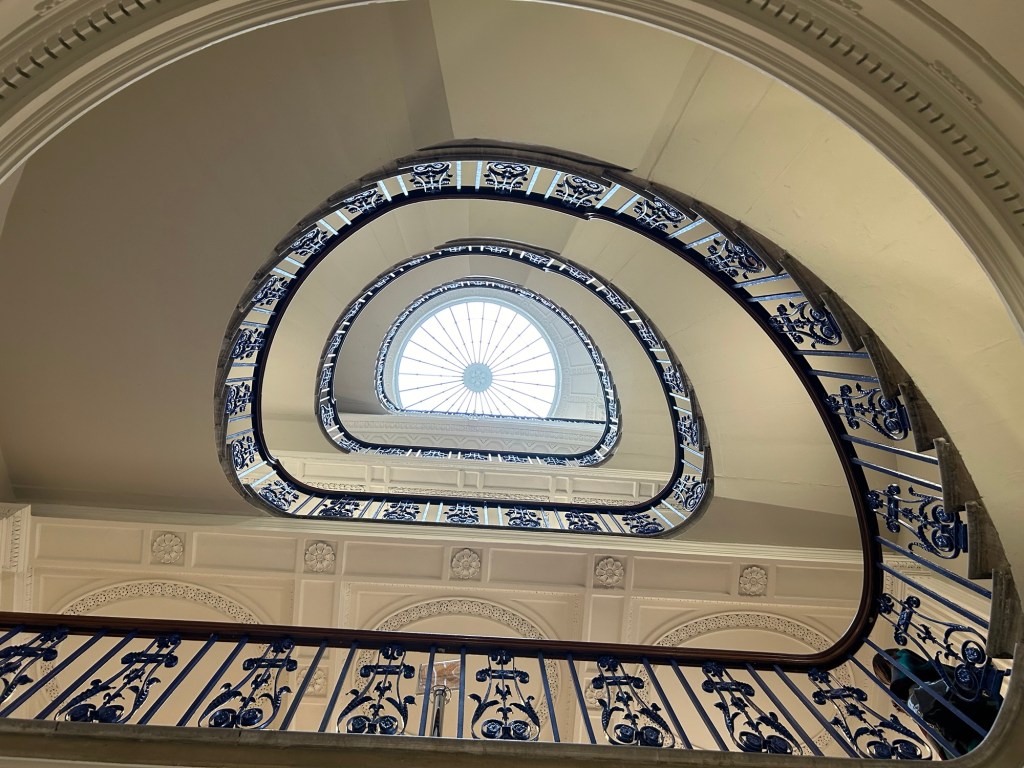
The architecture of gallery space was beautiful too. The stairs to the different floors were amazing.
Stair case at the Courtauld GalleryWaterloo Bridge, Grey Weather (Canadian National Gallery)
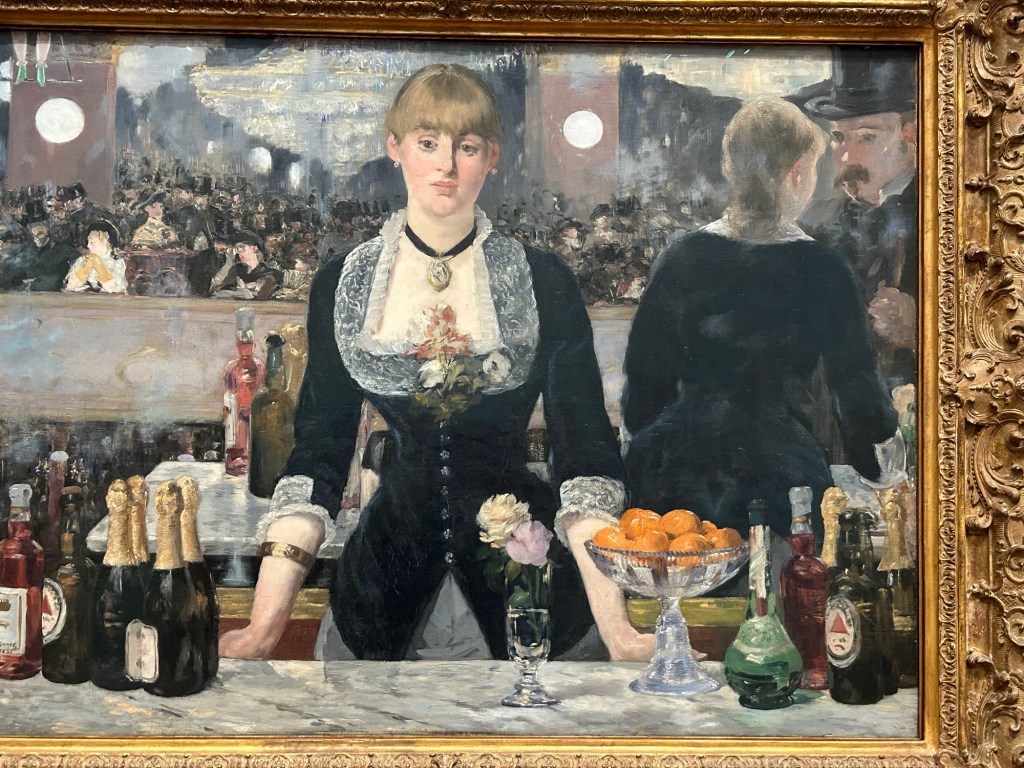
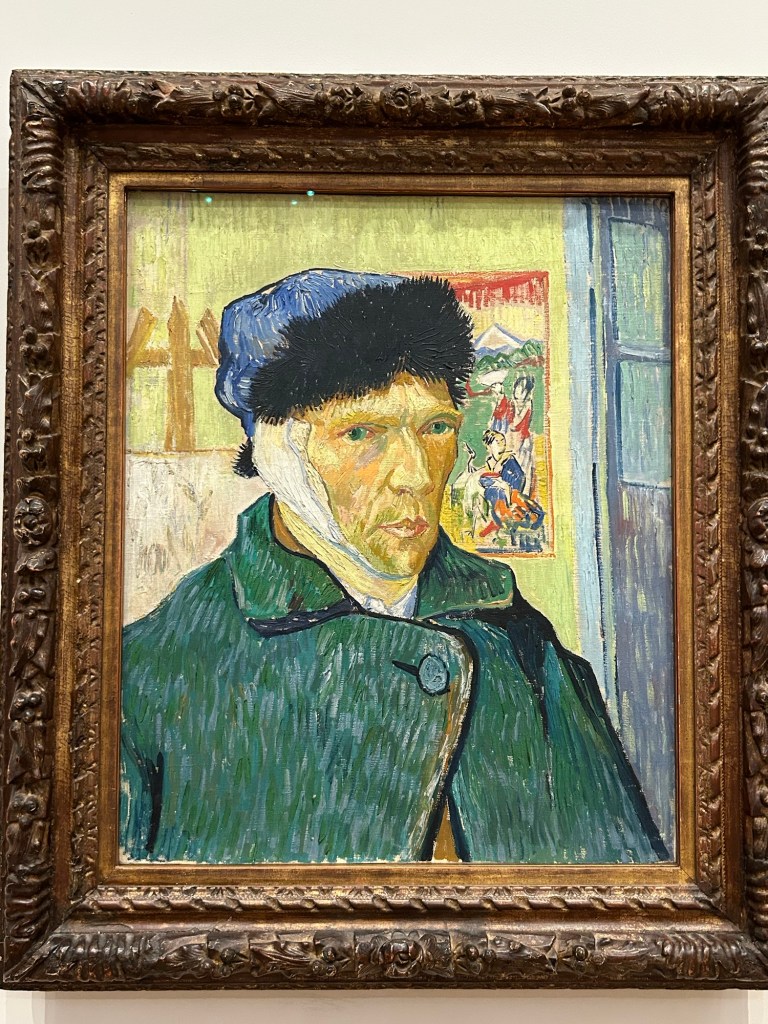
We got to Sommerset House, the home of the Courtauld Institute since 1989, in time to see the usual exhibits before it was time for the special exhibit. The art on display ranged from medieval art, to old world masters like Rubens and Van Dyke, to impressionists like Van Gogh, Manet and Modigliani. The institute was established in 1932 to study of art history.
A bar at Folies-Bergère by ManetSelf-portrait with bandaged ear by Van Gogh
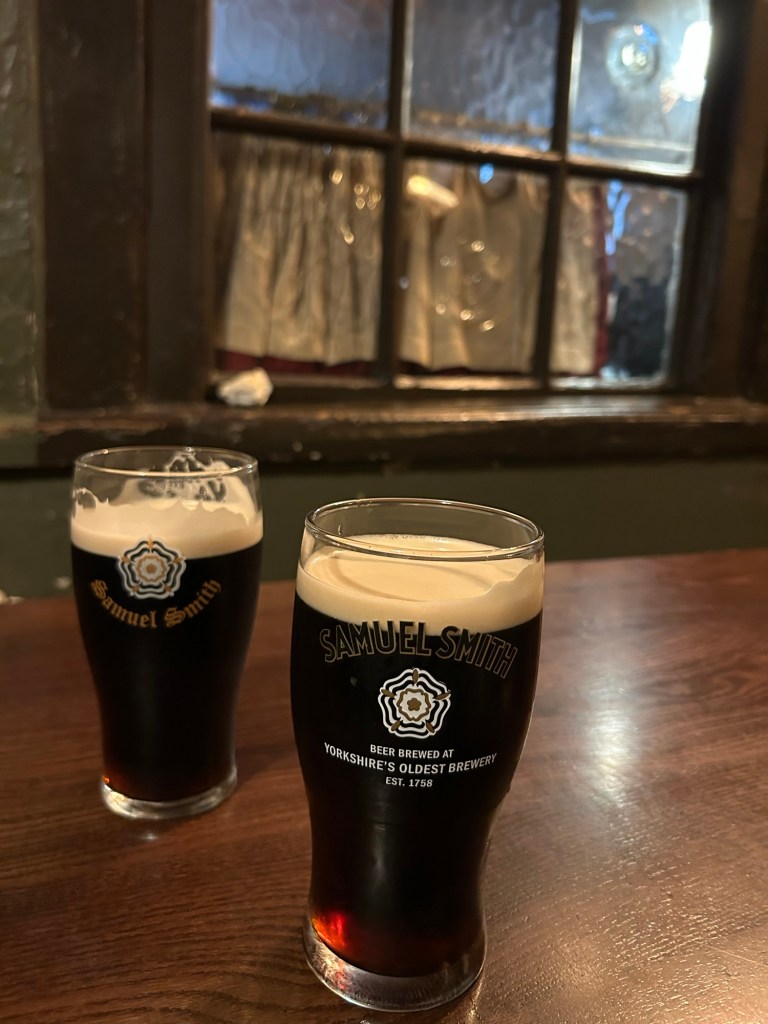
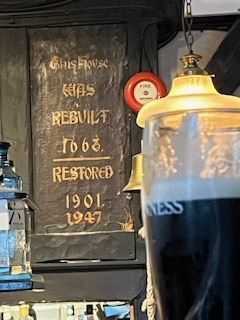
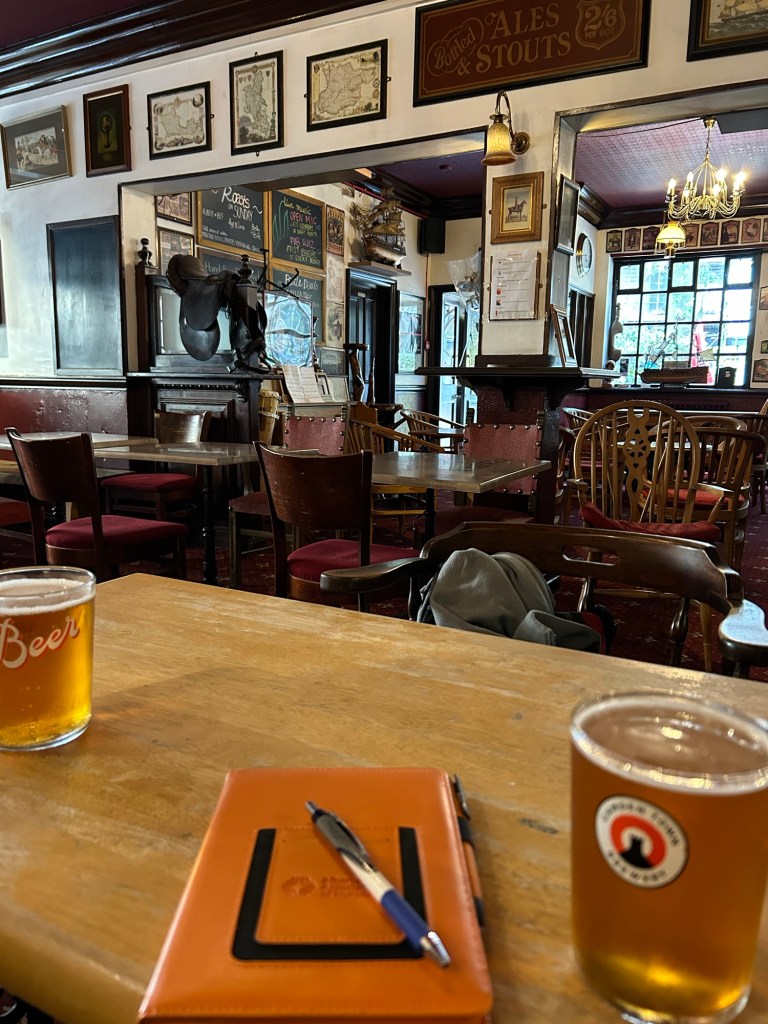
After viewing amazing art, it was time for beer. Our next stop was Ye Olde Cheshire Cheese Pub, one of the oldest in London. A pub has been on the site since 1538 but the original was burnt in the 1666 Great Fire of London. The pub was “rebuilt” in 1667 and has functioned since. Lot’s of famous people have been associated with the pub, for example Oscar Wilde, Sir Arthur Conan Doyle, Charles Dickens and Voltaire.
We then walked a bit before stopping at another old pub for lunch. The Ye Old Cock Tavern has been in operation since 1549 but moved across the street in the 1880’s to make way for a Bank of England to be built. The food was good but a fire in the 1990’s wiped out some of its authentic historical appeal.
Fortified by fish, chips and beer, we headed to the Philip Mould Gallery. We were buzzed into this gallery and were invited to wander the 3 floors of paintings at our leisure. The art was all for sale and included artists we had heard of before (e.g., Van Dyke, Constable & Gainsborough) and people we are familiar with (e.g., Princess Dianna and King Charles). The prices of the paintings were often listed. One portrait was being sold for £250,000. Some were worth more but we didn’t have the nerve to ask about the ones that simply said, price available upon request. Nothing in that gallery fit our budget.
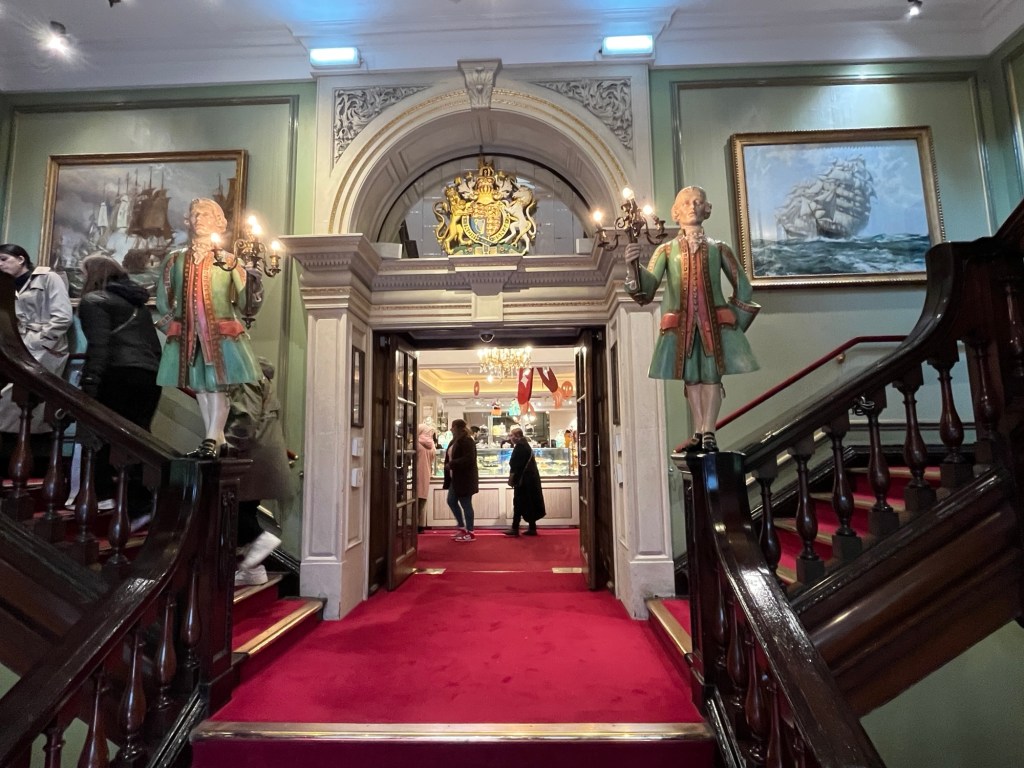
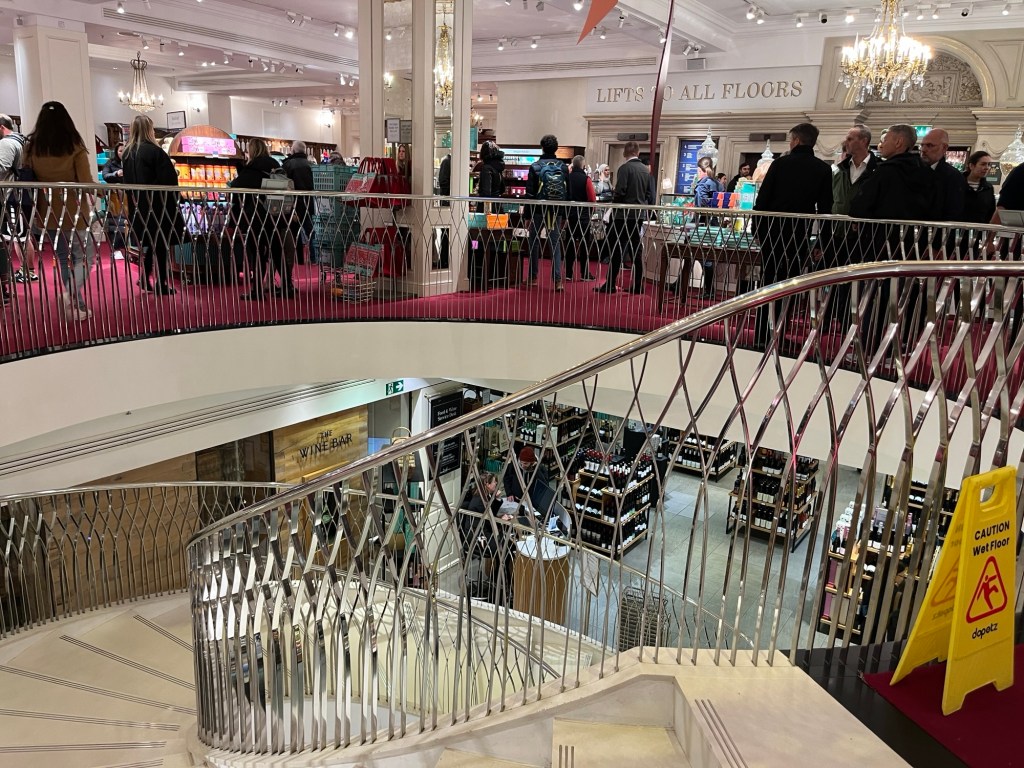
Our next stop was Fortum & Mason. I had seen a YouTube video about the store. It has been a fine food and luxury wares store for 317 years. They have been providing goods to the royal family since 1910, especially tea and food hampers for special occasions. the Weston family (the Superstore & Loblaw folks from Canada) currently own the store chain.
The entrance to Fortnum & Mason.The store crowds
We found the store beautiful and crowded, so we didn’t stay long. It was an experience. We took a short tube ride to rest our weary feet and got off at the Pimlico station to see a different 15 minute walk to our suite. We had shifted from the highly affluent community around Fortum & Mason to a very quaint working class neighborhood. We happened upon a tiny but lovely yarn shop just 10 minutes before it closed, sadly, not enough time to truly browse.
We finished off our day with weary feet from walking 7.4 miles over cobblestones, pavement and concrete. We find walking in museums delightful but harder on our feet than when we are walking outside.
Tomorrow is our last full day of sightseeing before we start our homeward journey. We are off to Greenwich to see the sights.
We had a lazy morning today, starting off with breakfast at The Local, a cafe beside our apartment. The food was excellent and Dale’s eggs benny were served in a unique way.
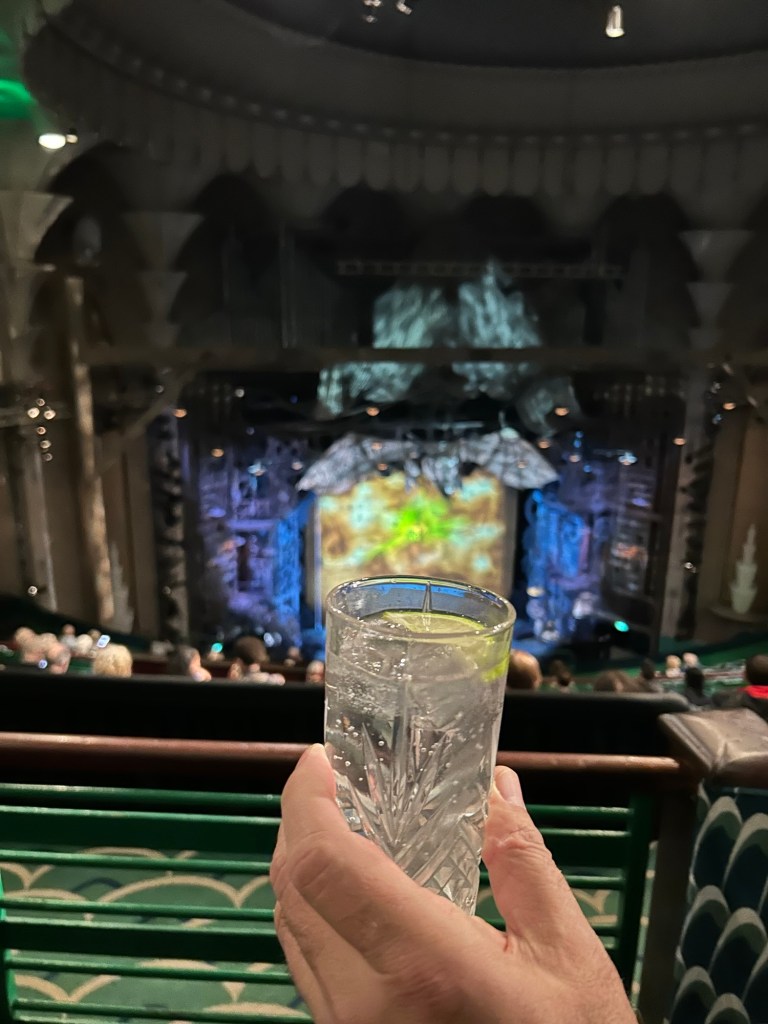
We walked to see Wicked at the Apollo Theatre near Victoria Station. We were impressed that they not only allowed us to bring our drinks to our seat, but they served us in cut glass glasses.
We sat in the cheap seats and still had an excellent view of the stage. Wicked was a great performance. We were somewhat disappointed with the sound quality as it was often hard to make out the words. However, that may also have been our being unfamiliar with the songs.
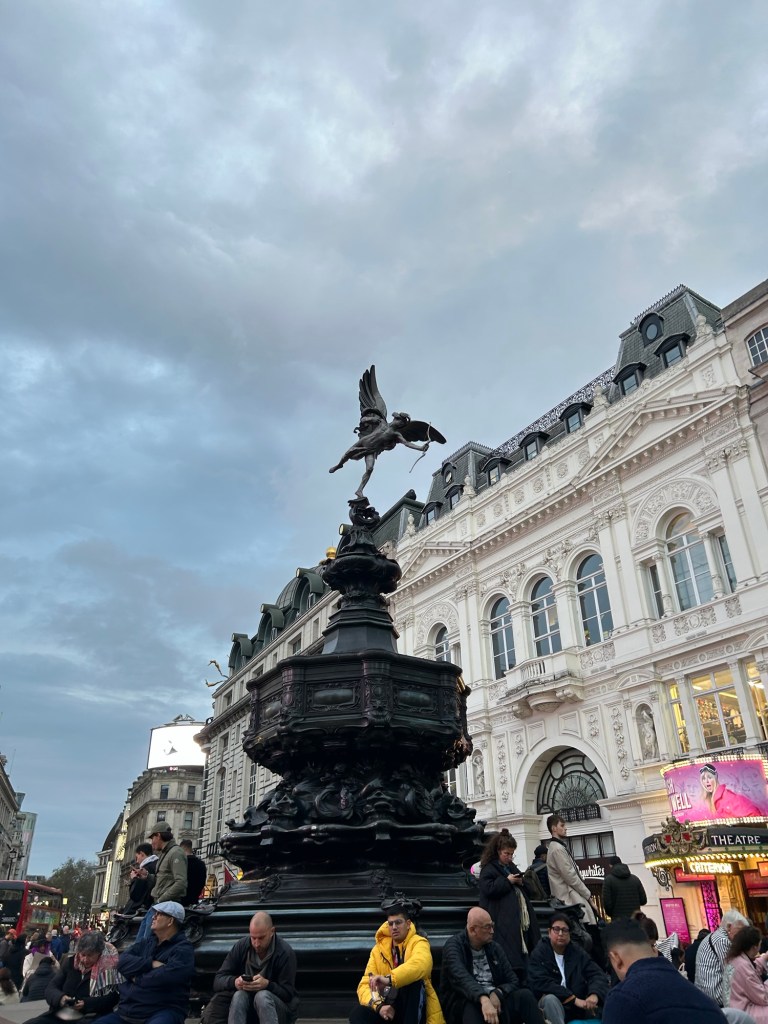
We then took a new train route and landed in Piccadilly Circus. This reminded us a lot of Times Square in New York.
Billboards in Piccadilly Circus
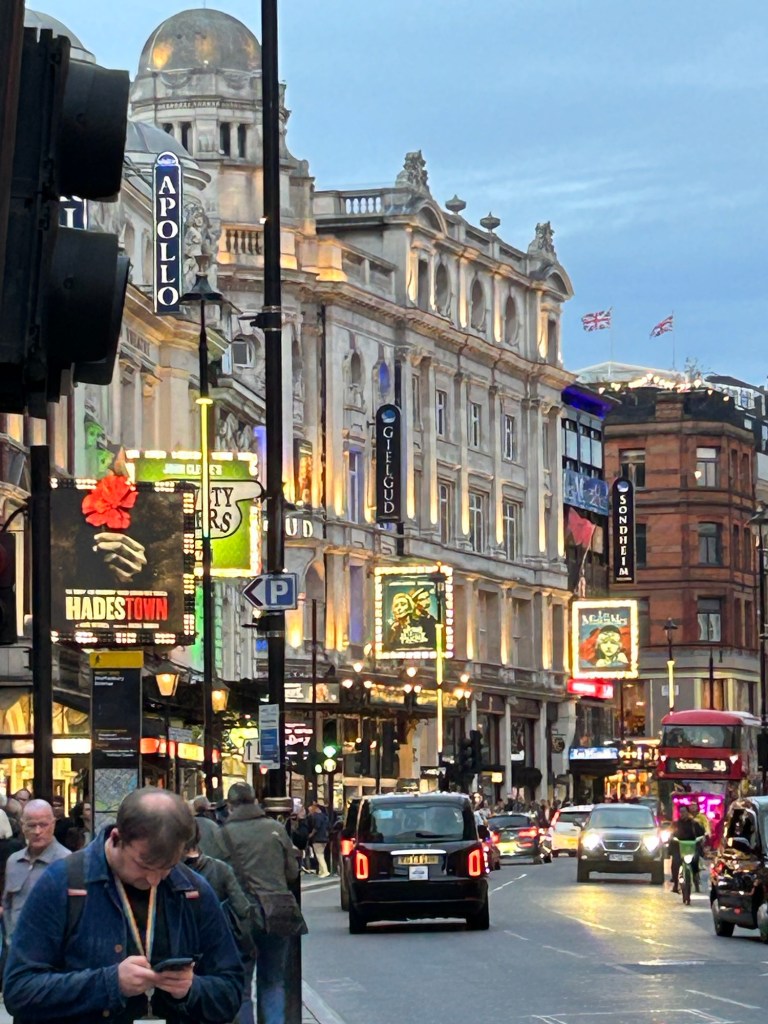
After a delicious Indian meal, we found our way to the Sondheim Theatre for Les Miserable. We just followed the signs.
The show was fantastic. We were fairly close to the stage and had great views. The performance was staggeringly brilliant and we left humming tunes. We figured out the same trains back to Victoria Station. I have been happily surprised by how safe it feels to walk in London, even later at night. We walked 15 minutes from Victoria Station to our suite at 11pm. There were lots of people around and people were pleasant and relaxed as we met them. What we weren’t expecting was to see a fox pop out from under a fence, look at us and run back in. Cool!
We have enjoyed walking here. I understand how impractical it would be to have a car if you lived in the areas we have been this week. We have also appreciated all the exercise. Today was the least distance we covered by foot and we still did 3.8 miles according to my watch.
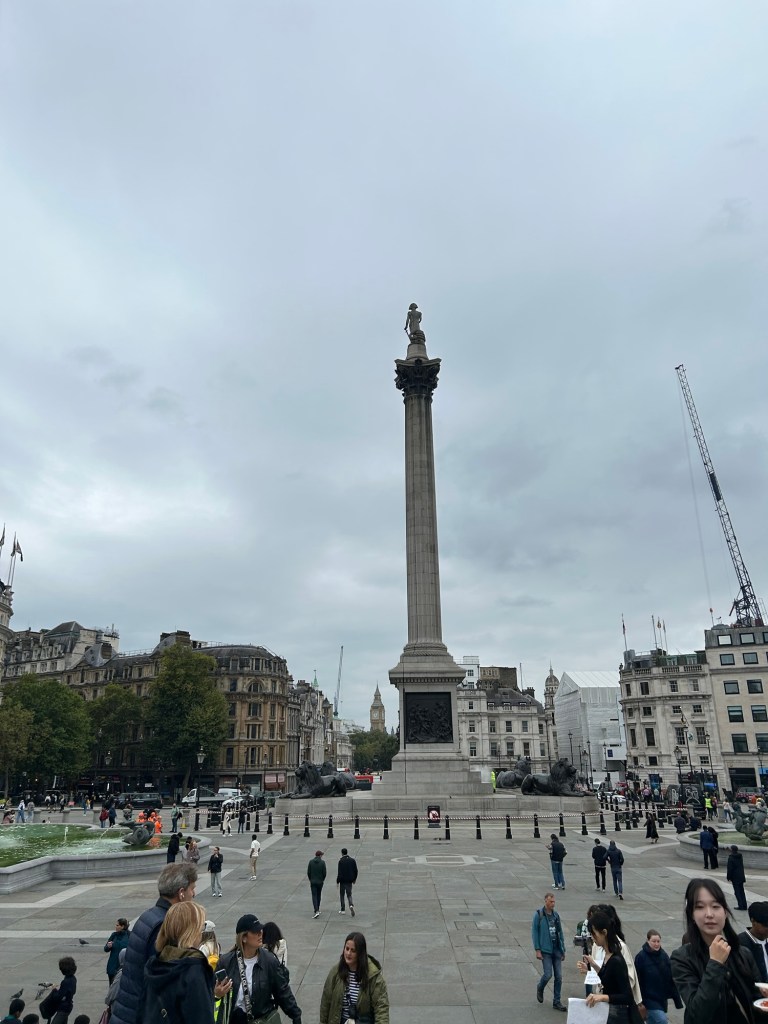
We started our day by crossing the Thames and taking the Northern Line to Charing Cross. This is considered the “centre of London” and it is from there that distances from London are measured. It was clearly a busy place and we easily moved off to Trafalgar Square, the home of a statue to Lord Nelson celebrating a win at the battle of Trafalgar in 1805.
Trafalgar Square
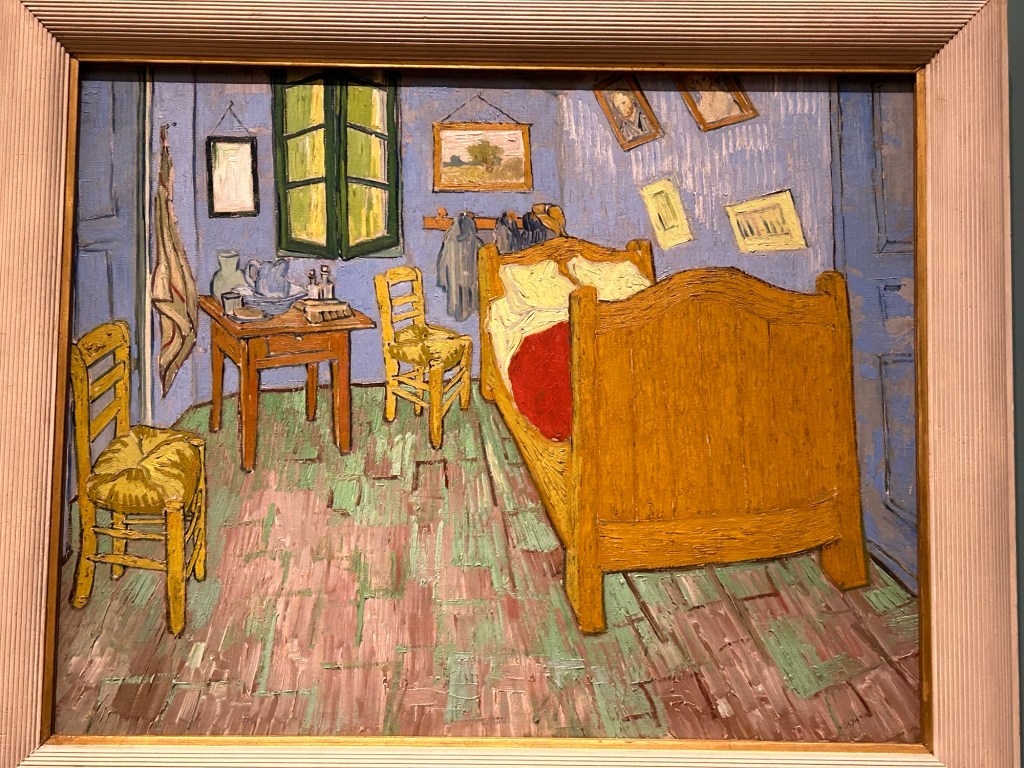
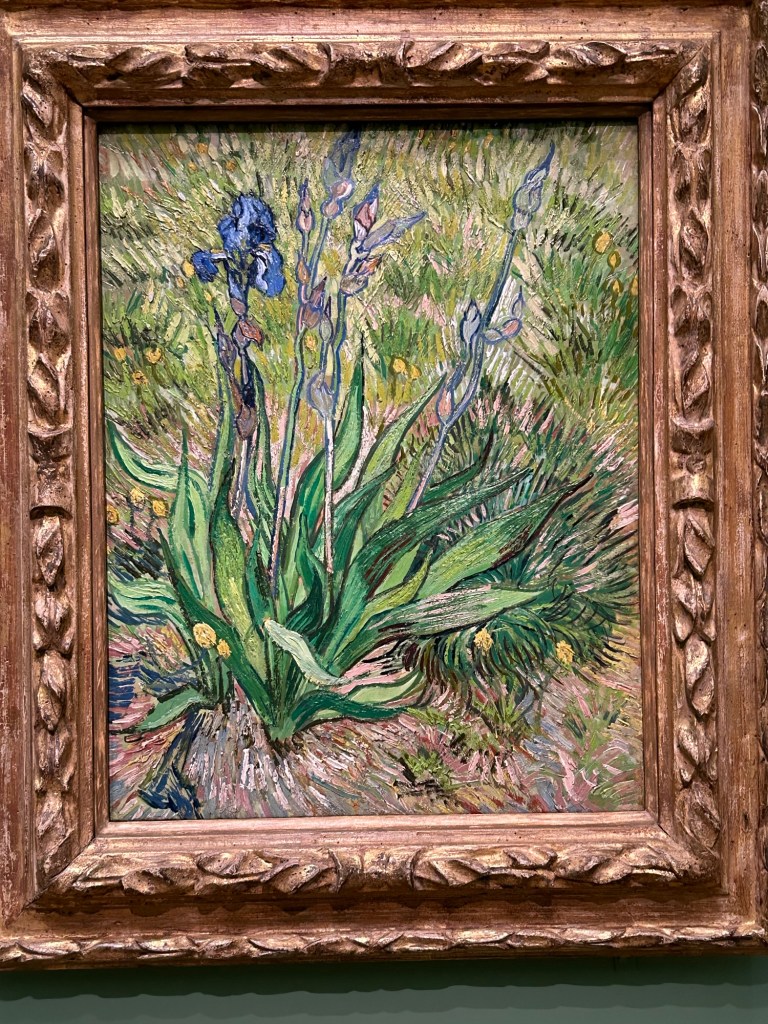
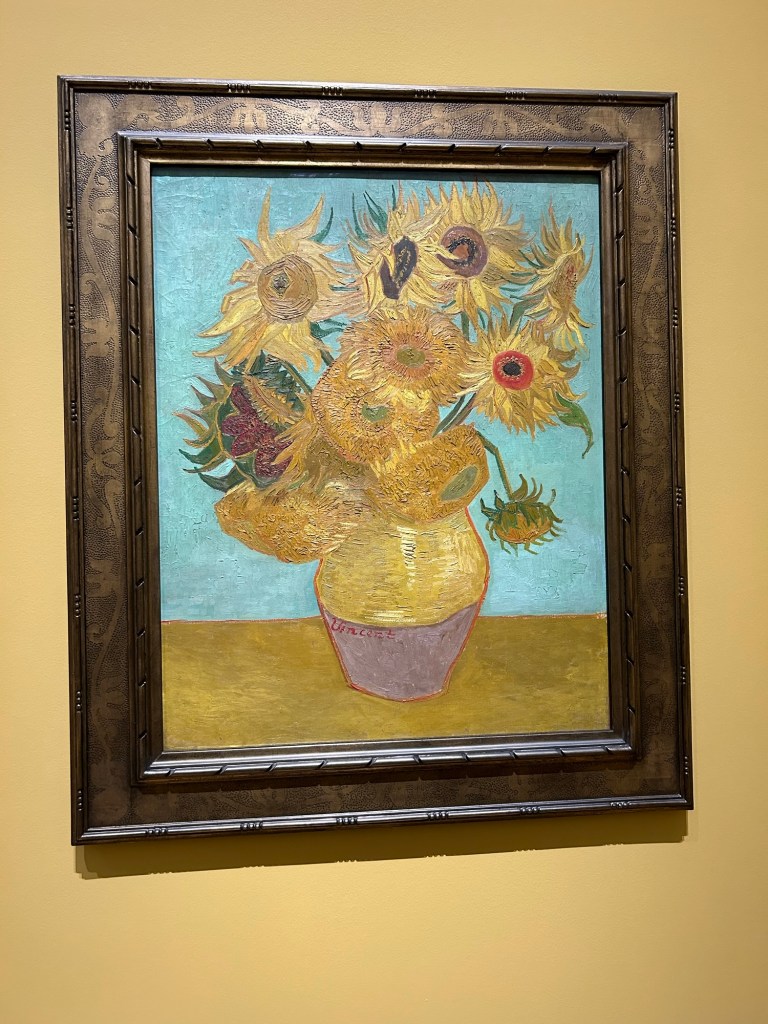
The National Gallery, our primary goal for today, also sits on the square. This year marks the 200th anniversary of the gallery. They celebrated by pulling together a large collection of Van Gogh’s paintings. Some were from the Gallery’s collection, but they also included paintings from other museums and private collections.
The National Gallery“The Bedroom” 1889, Van Gogh Irises“Starry Night Over the Rhone” “Sunflowers”
We enjoyed the special exhibit and appreciated that they controlled the number of people in the gallery at a time. We didn’t feel rushed and could take the time to sit and look at different paintings. After a brief coffee in the Gallery cafe, we continued to the rest of the gallery. There was much to see.
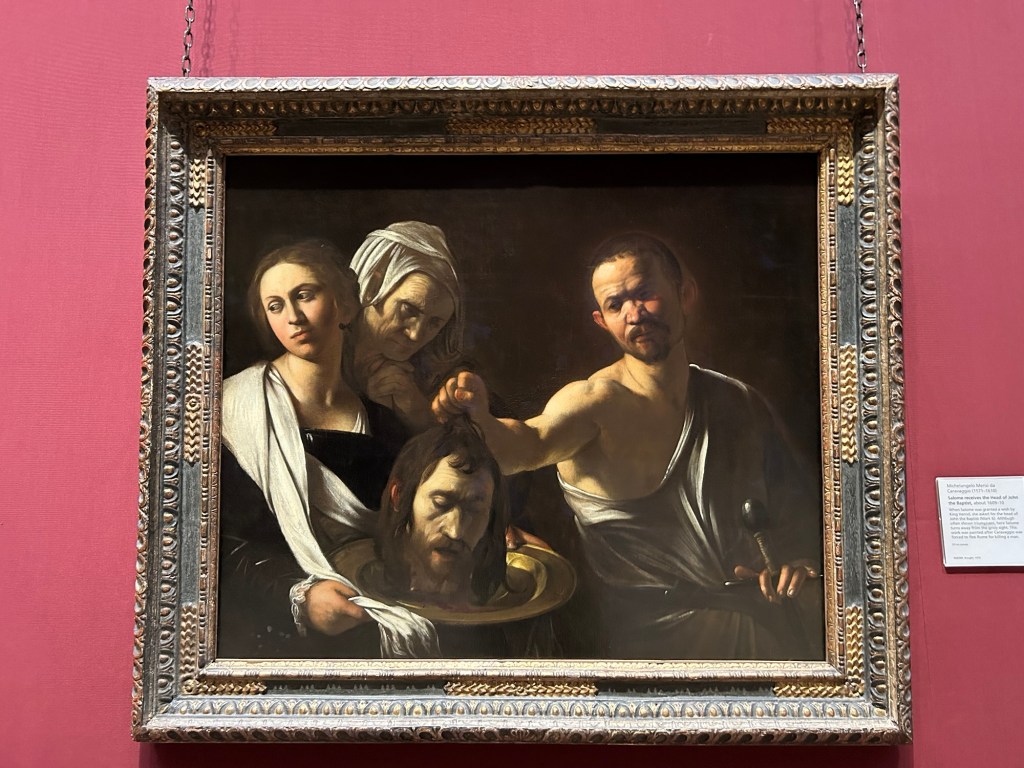
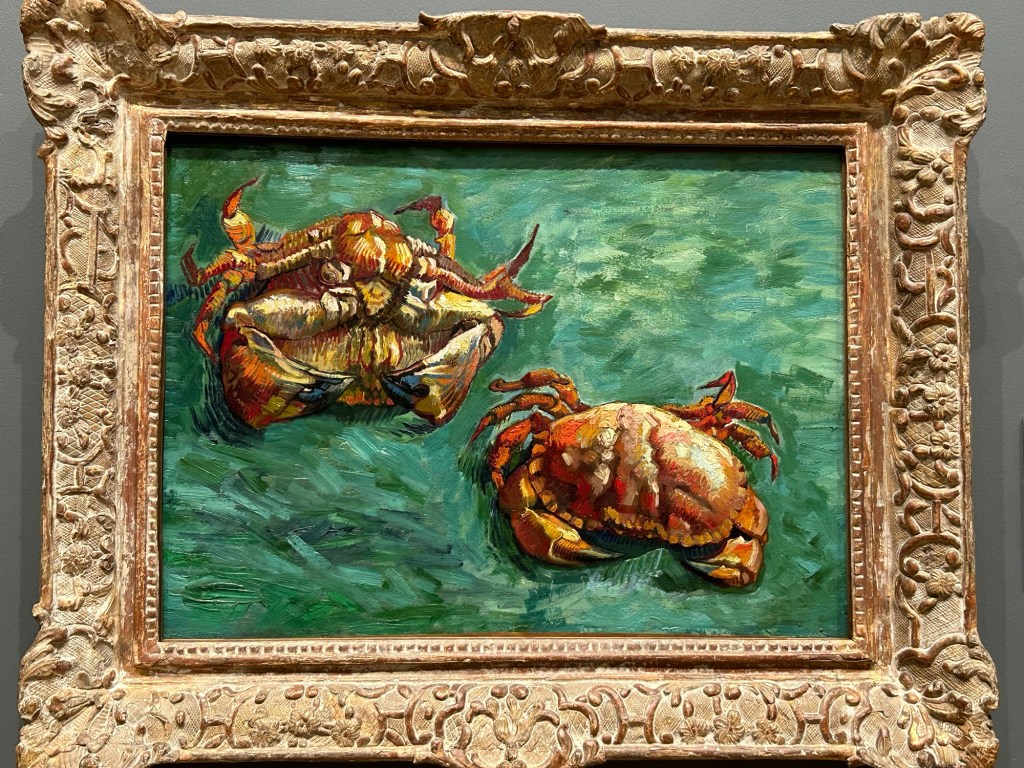
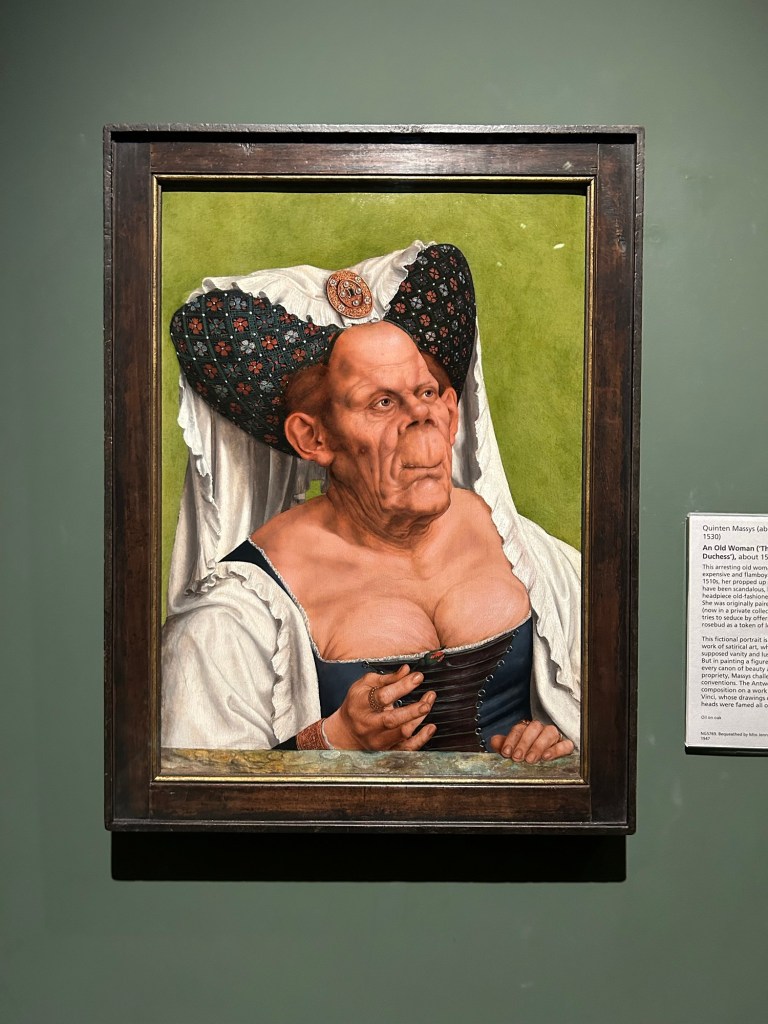
Caravaggio (1571-1610) Salome receives the head of John the Baptist, one of his last paintings. Caravaggio is one of my favourite artists, but a bit of a dark character.Van Gogh’s “Two Crabs“ in the main galleryMichelangelo (1475-1564) “the Manchester Madonna” You know you are important in art history when an unfinished work of art hangs in a prestigious gallery.Massys (1465/6-1530) “An old woman (The ugly duchess)” this one had us chuckling out loud. This is a satirical work designed to get us thinking about aging and beauty. Perhaps Massys was an early feminist?
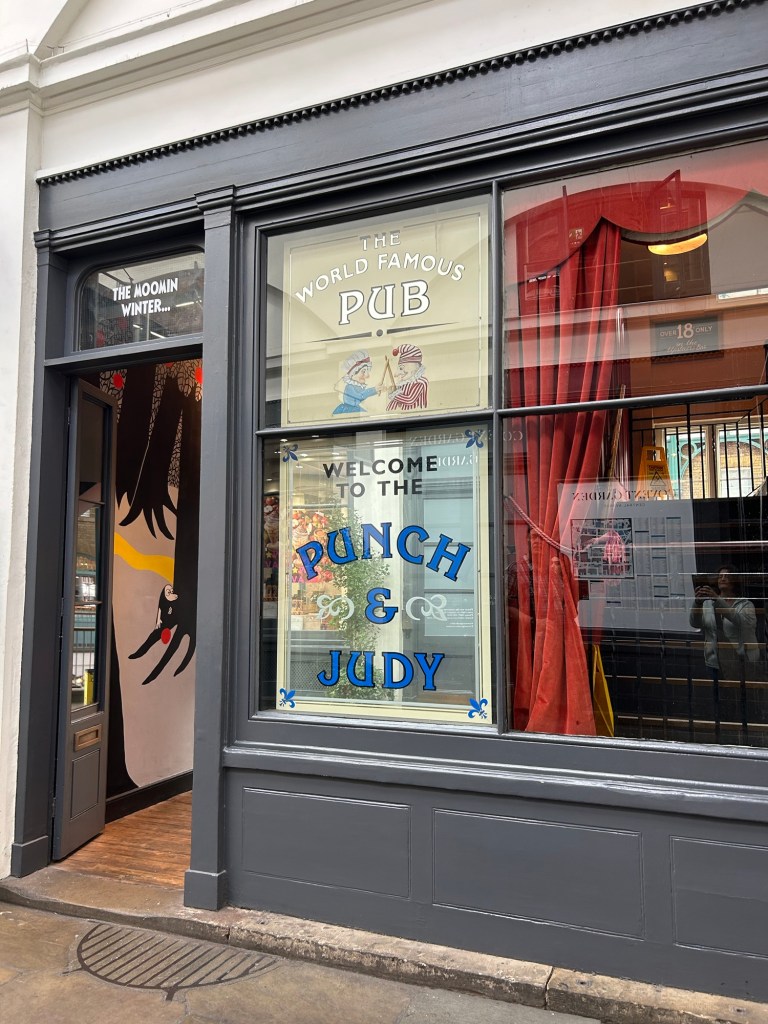
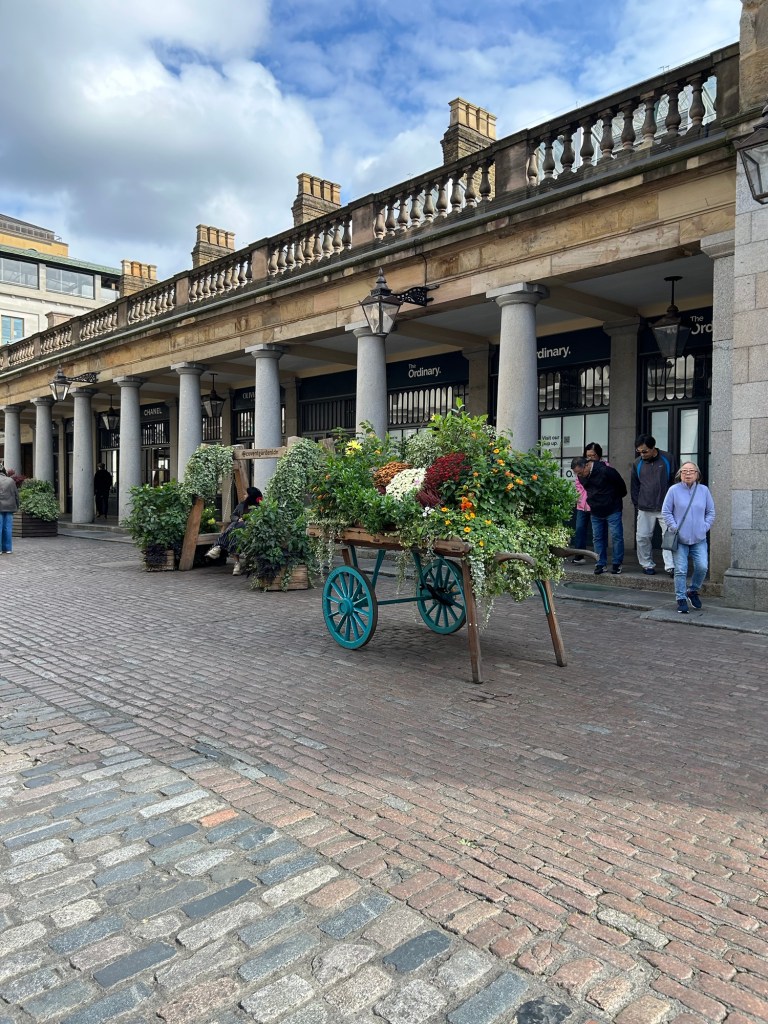
We left the gallery to head toward Covent Gardens. Covent Gardens was originally a garden for West Minster Abby, but after the dissolution of the monasteries, the land was given to Henry VIII’s advisor, the Earl of Bedford. He hired an architect to develop the land into homes and markets. By 1654 a small fruit and vegetable market was developed. As time went on, the market became seedy with lots of brothels. The clean-up began and by 1830, many of the buildings that we now see were built. Now it is a trendy group of small shops and restaurants. We stopped at the Punch & Judy Pub for lunch and continued to explore the market.
Covent Gardens
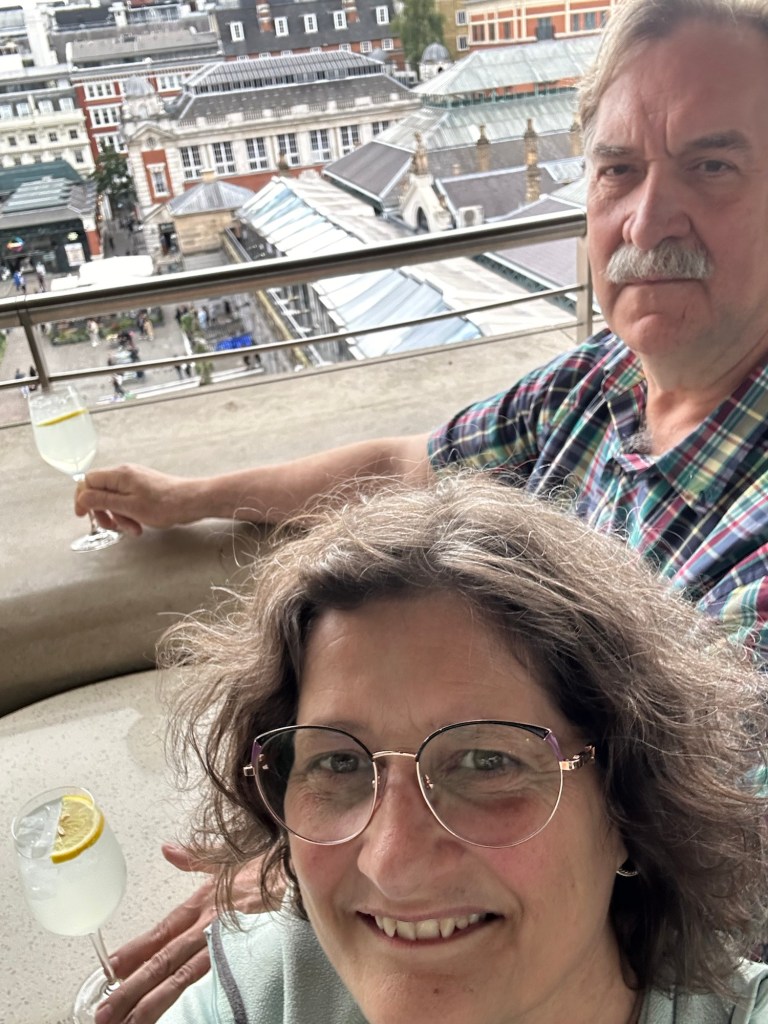
The ever so wise Facebook logarithm strongly recommended we check out the Royal Opera building, so we did. The building is relatively modern having been constructed in 1858. We looked around the common areas but couldn’t see the stage as they were getting set up for a performance tonight. We did find the 5th floor viewing area/bar and stopped for a beverage while overlooking Covent Gardens. A wonderful musician serenaded us from below singing jazz standards and playing them on his saxophone.
The Royal Opera House Lobby
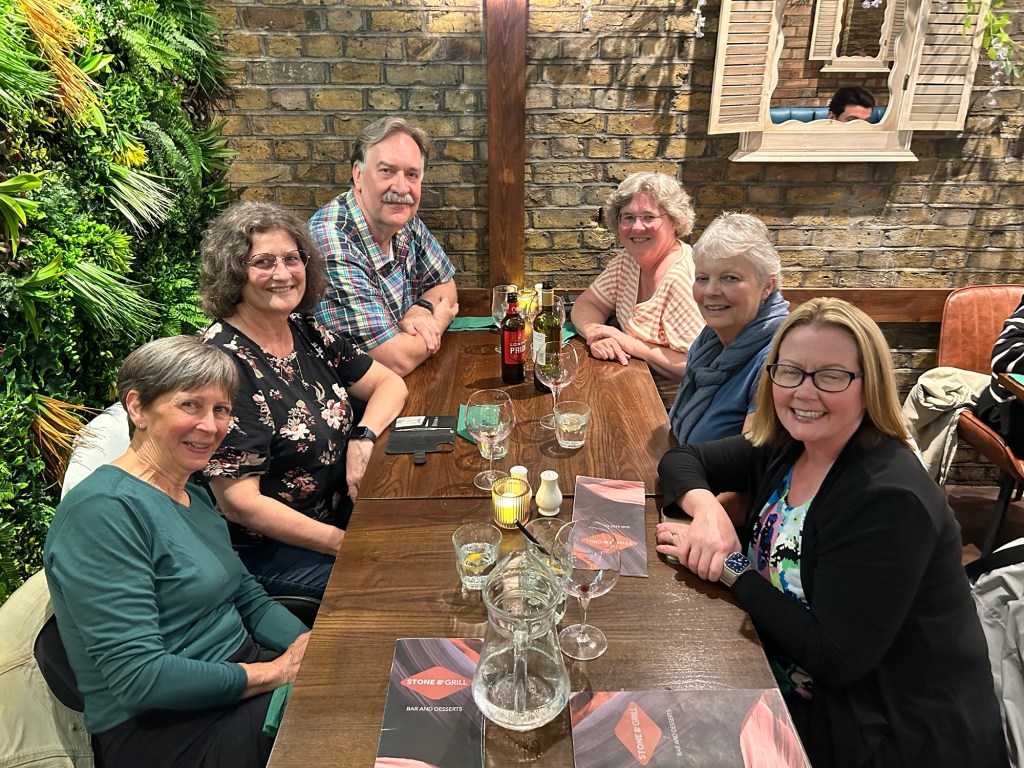
We headed back to our side of town to relax before dinner. We met up with our good friend Jane and her travel buddies who had just finished a week of hiking in the Yorkshire Dales. It was good to finally meet the women (Vicky, Susan & Susan) Jane adventures with when she’s not adventuring with us.
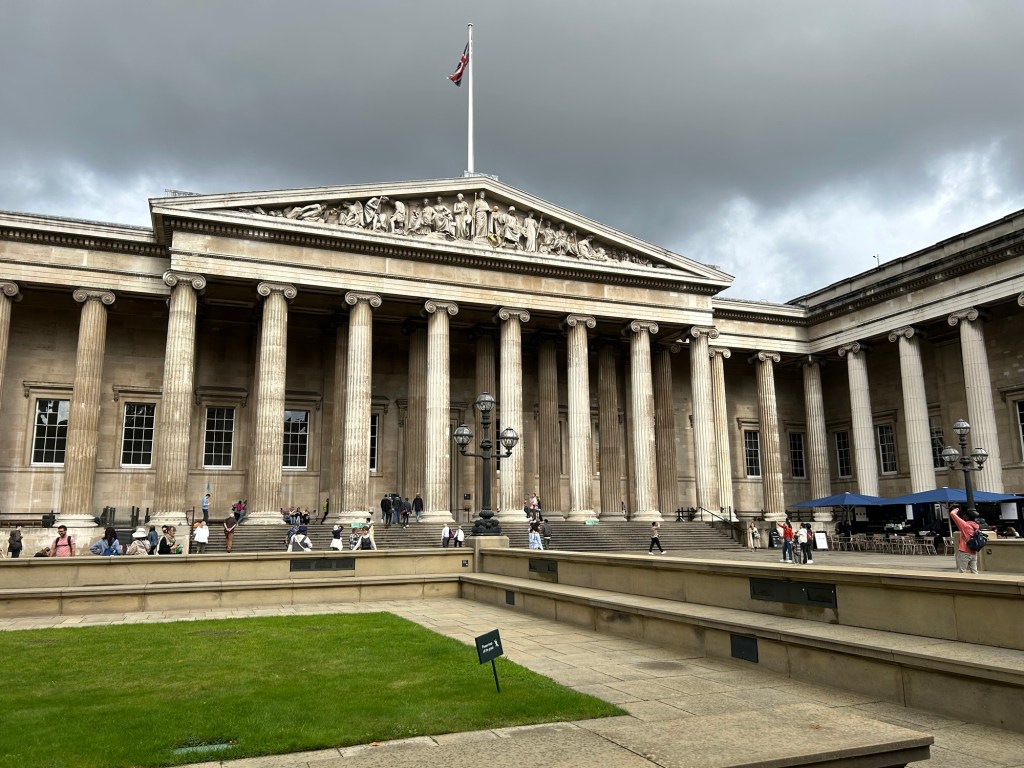
We were glad we planned ahead for entry to the Museum. It was crowded and the security took time to get through. Admission to the museum is free but donations are welcome. We realized that some of the money we had from a previous trip to the UK is outdated and vendors wouldn’t take it. We needed to change it at a bank; however, the museum gladly accepted it and saved us a trip to a bank.
The British Museum
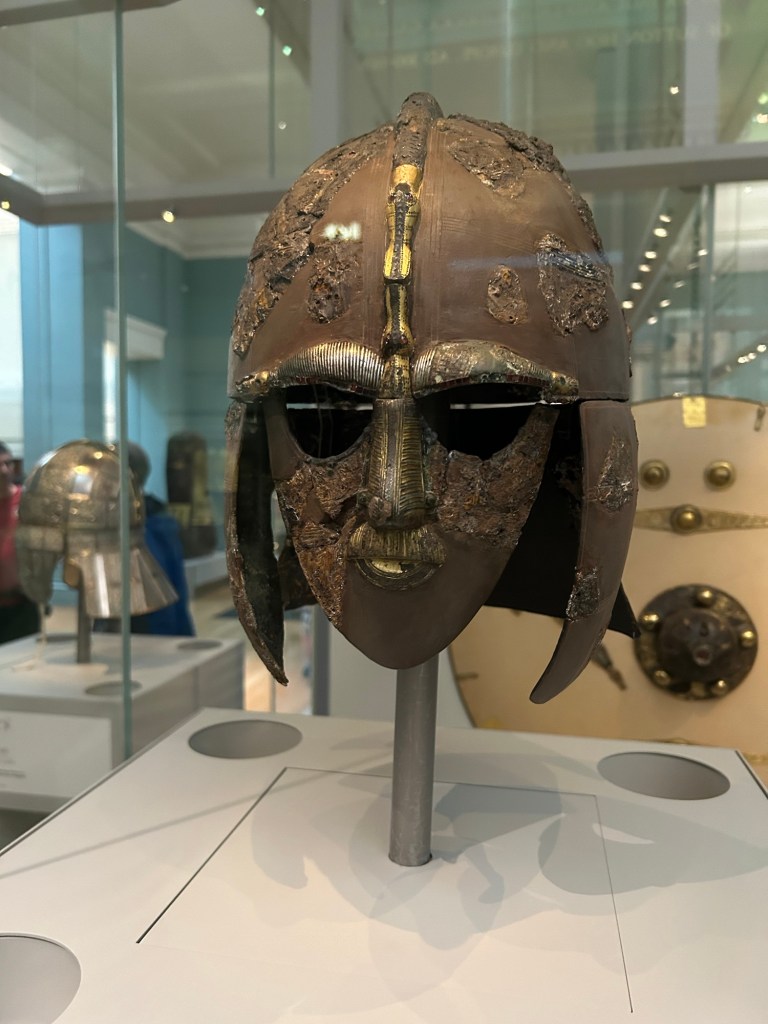
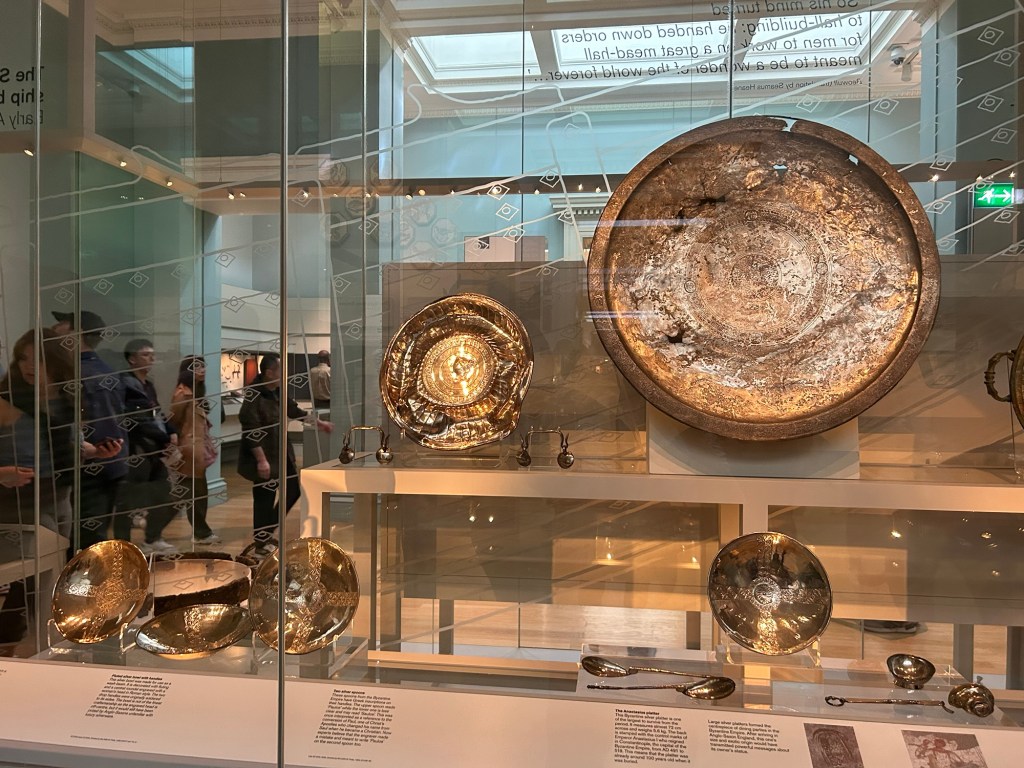
There is so much to see in this museum and after a couple of hours we know that sore feet and backs will kick in, so we decided to focus on specific collections. We had seen a movie a while back about the Sutton Hoo Hoard, so we thought we’d focus there. The Sutton Hoo Hoard was found just as WWII started. Basil Brown, an amateur archeologist was tasked by the land owner, Edith Pretty, to excavate a barrow on her land. They found an incredible and rare, intact Anglo-Saxon boat burial. Gold, gems, lyres, helmets and the remains of a large boat were under what looked like a small hill. The hoard is housed at the museum and it was amazing to see the goods they had buried sometime between 410-1000 AD. They had incredible metal and fine metal working skills.
A jewelled purse clasp
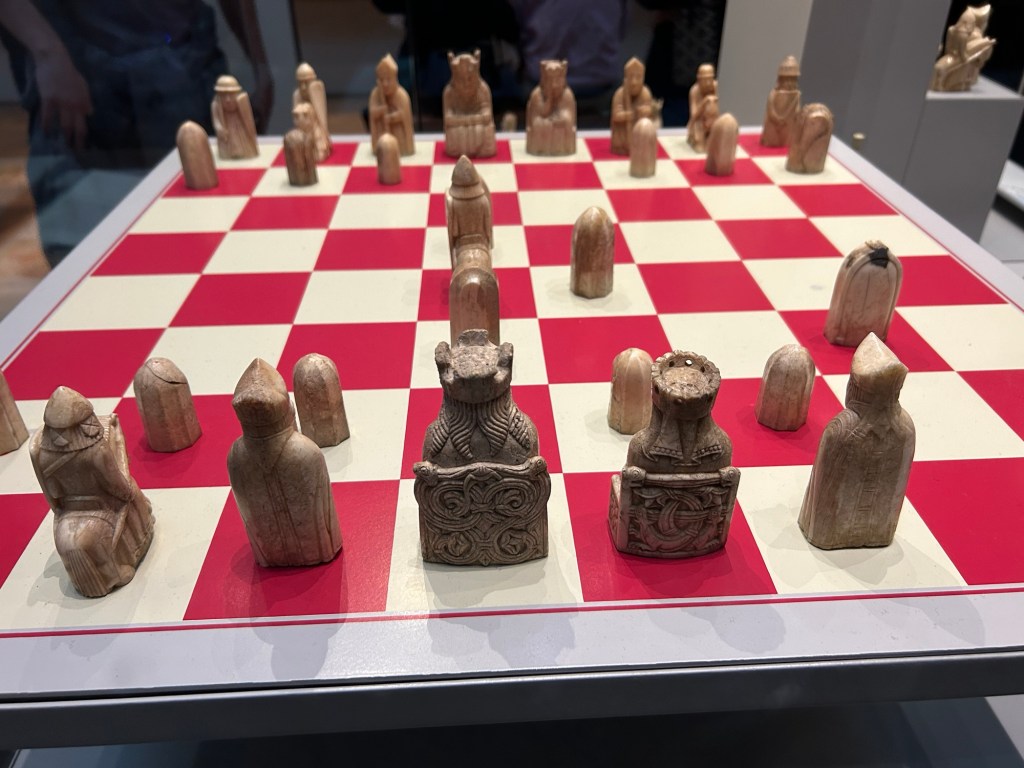
We were also interested in the Lewis Chess set found on Lewis Island in the Scottish Hebrides in 1831. They were carved from walrus ivory in the 1100’s. Most of the 94 pieces are in the museum, but there is some challenge to have more moved to the Lewis Island museum.
We had planned to see the Elgin Marbles, a controversial collection of sculpture from the Parthenon in Athens. However, that exhibit was closed for some reason. The controversy about the marbles is about whether to return them to Greece or not. The whole colonial practice of owning another culture’s important historical objects is a hot topic. We were disappointed with one exhibit’s explanation sign that basically said it was ok to have the artifacts in the museum because “they said we could take it”. There was no context provided about what might have influenced the “gift” giving.
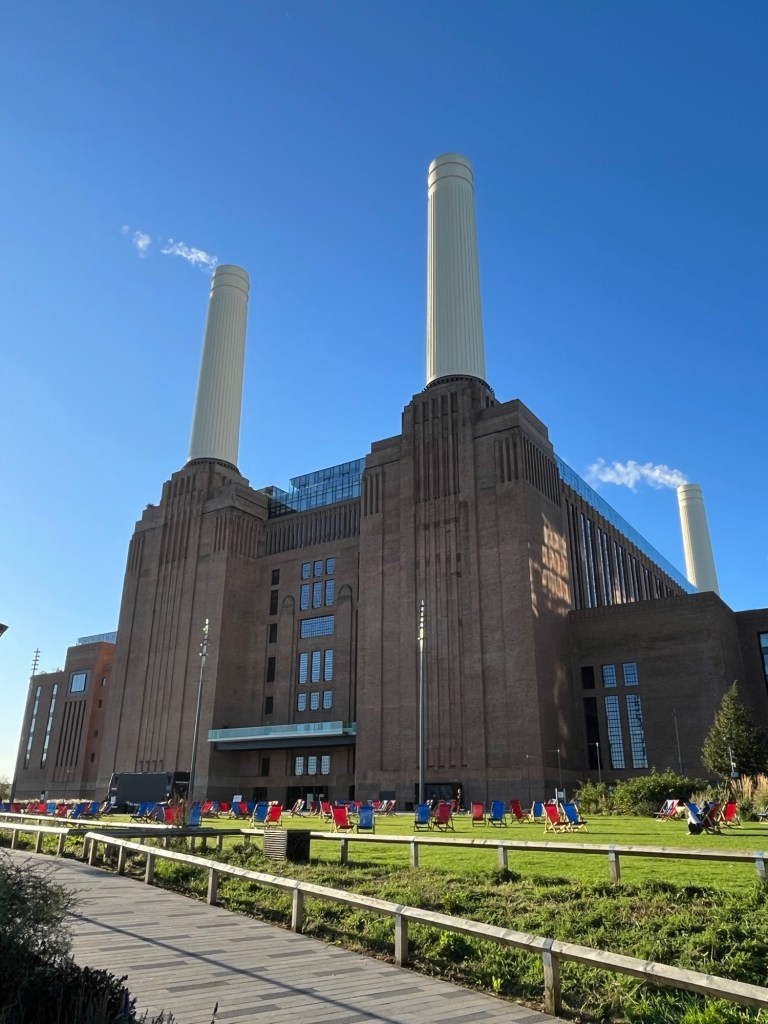
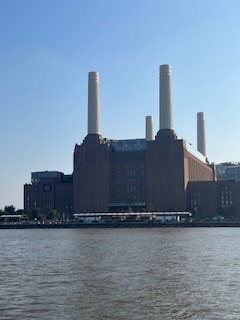
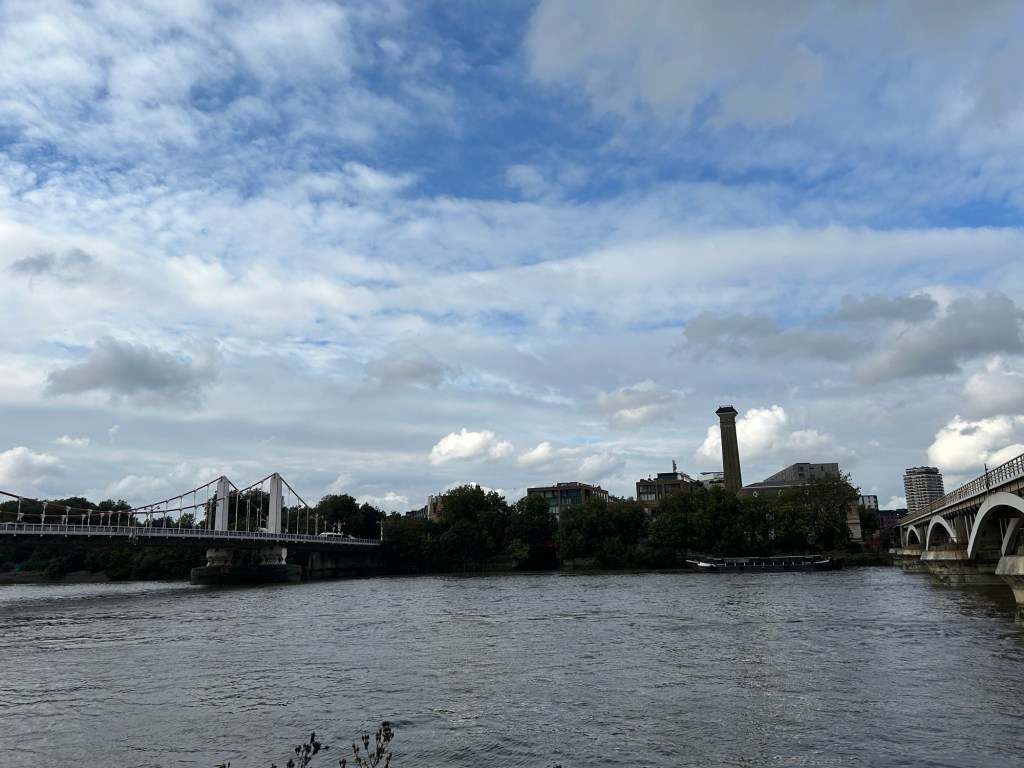
We left the museum and explored Oxford Street – mostly window shopping before heading to the Battersea Power Station. We have several tube stations around us, each taking about 15-20 minutes to walk to. We hadn’t tried the Battersea one yet so we were happy to learn that train from there would be the best way for us to take to the National Gallery tomorrow. We never thought about crossing the river before yesterday, despite having seen the Battersea Power Plant building the first day we were here. It seemed so far away but, only a 20 minute walk. They converted the decommissioned power station into an upscale residential and condo development with lots of shops and restaurants.
Battersea Power PlantThe Chelsea bridge over the Thames.
We had an early night, finally overcoming jet lag, as we have an early entry to the National Gallery tomorrow.
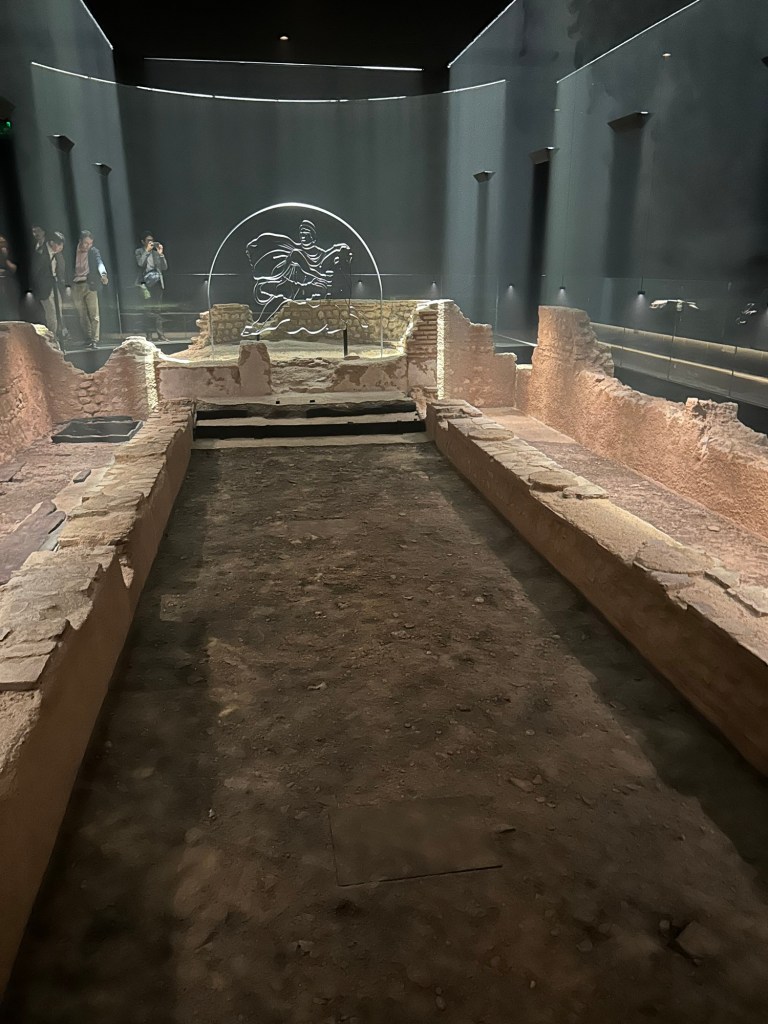
We started our day today at the London Mithraeum Museum. While we waited for our entry time at the museum we had to dodge yet another marathon race. It appears like they run a lot in London. Back to the museum, the 2,000 year old temple of Mithra was found when they were digging the foundations for a major building in the middle of London. The museum displayed some of the artifacts they found as well as the foundations of the temple.
Temple of Mithra
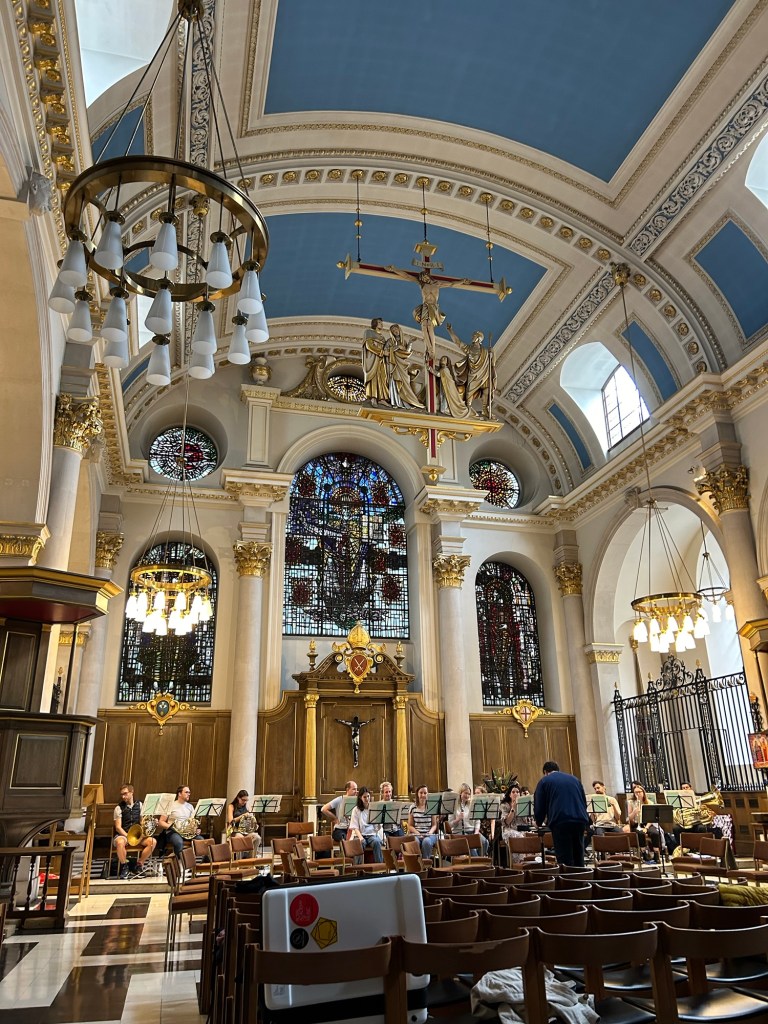
We then moved over to the Guildhall Gallery a few streets over. This brought us by the church we wanted to see yesterday. This time it was open. We stopped in to find a wind orchestra practicing. We listened a while and continued on our way.
Mary-Le-Bow church.
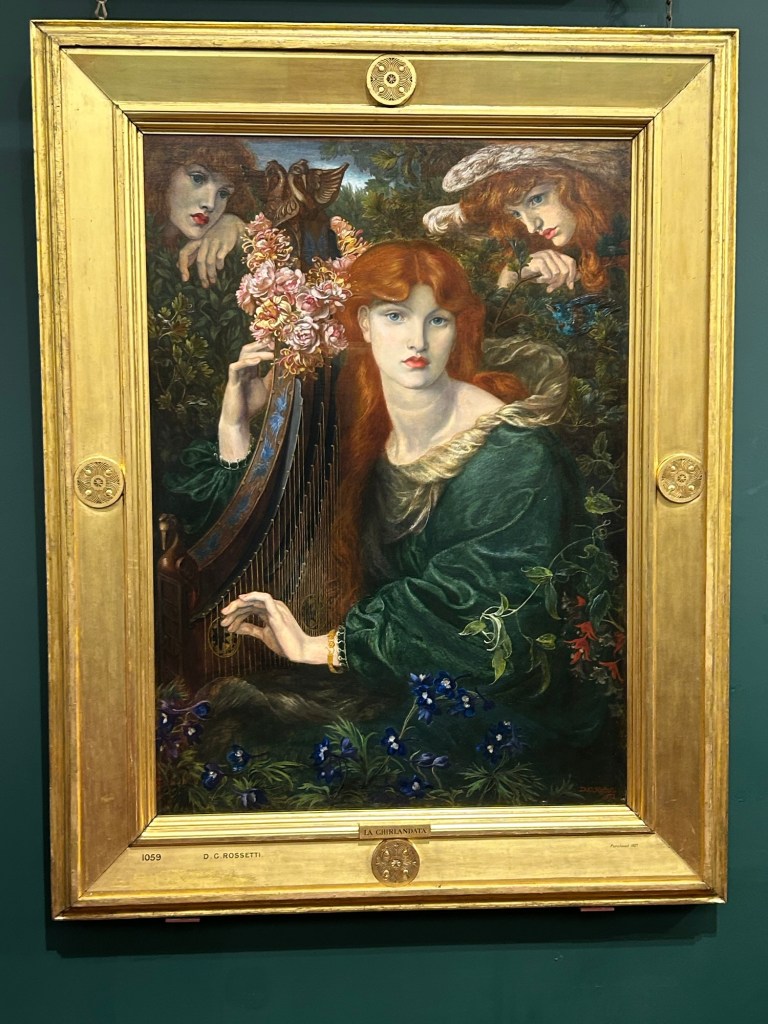
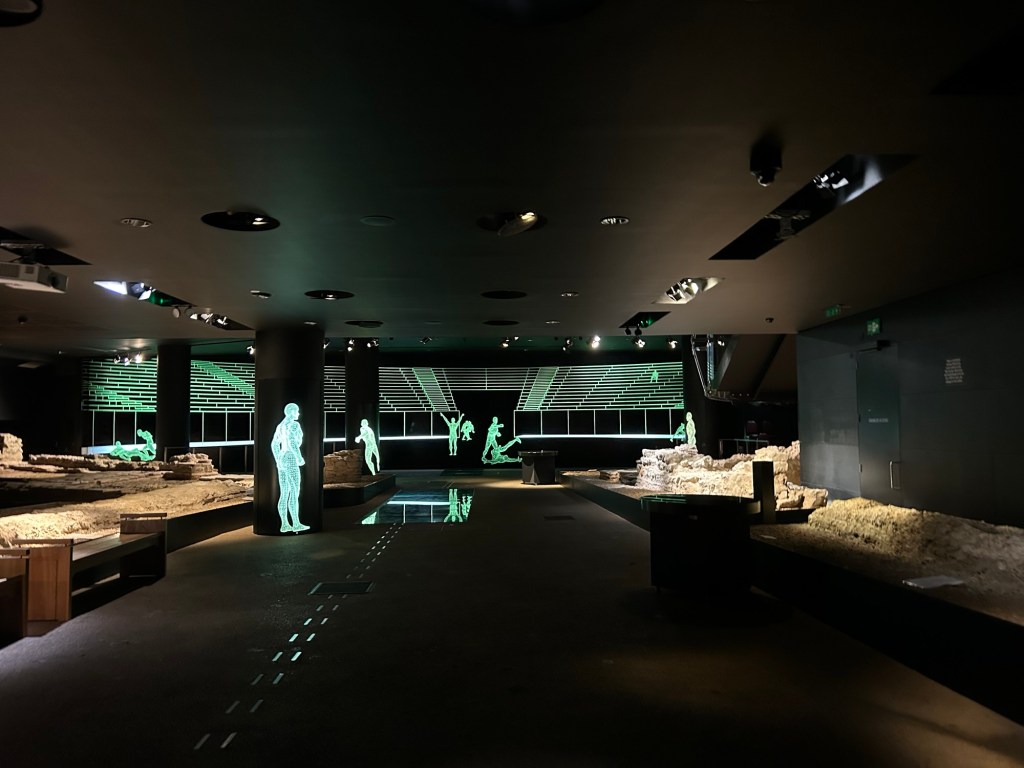
The Guildhall has been part of London’s administrative centre for hundreds of years. The part we saw today was built in the late 1880’s. the original design for the building had to change when they found the ruins of a Roman amphitheatre under the planned site. The current building was redeveloped in the 1980’s as the original building was damaged in WWII. We took a guided toured of the art gallery before heading down to the amphitheatre.
Rosetti’s La Chirlandata ( the most celebrated painting in the gallery)The remnants of the Roman Ampitheatre
The original amphitheatre was big enough to hold the same number of people as Roger’s Place in Edmonton (approx 16,000 people).
We headed back to our lodgings by tube and stopped for supper in Sloan Square. After a relaxing meal we wandered by St. Barnabus church, which was also open as a part of the Open London Festival. A lovely lady gave us a tour of the church.
St. Barnabus
We made it home before the rain started and made an early night watching TV. As we were relaxing, we noticed people climbing over a hedge and into the neighbour’s patio. After asking them what was up, we learned that their dog had gotten loose and was trapped on the patio. We had a good chat as they turned out to be neighbours and they gave us some good info on sites to see. Tomorrow we are off to the British Museum.
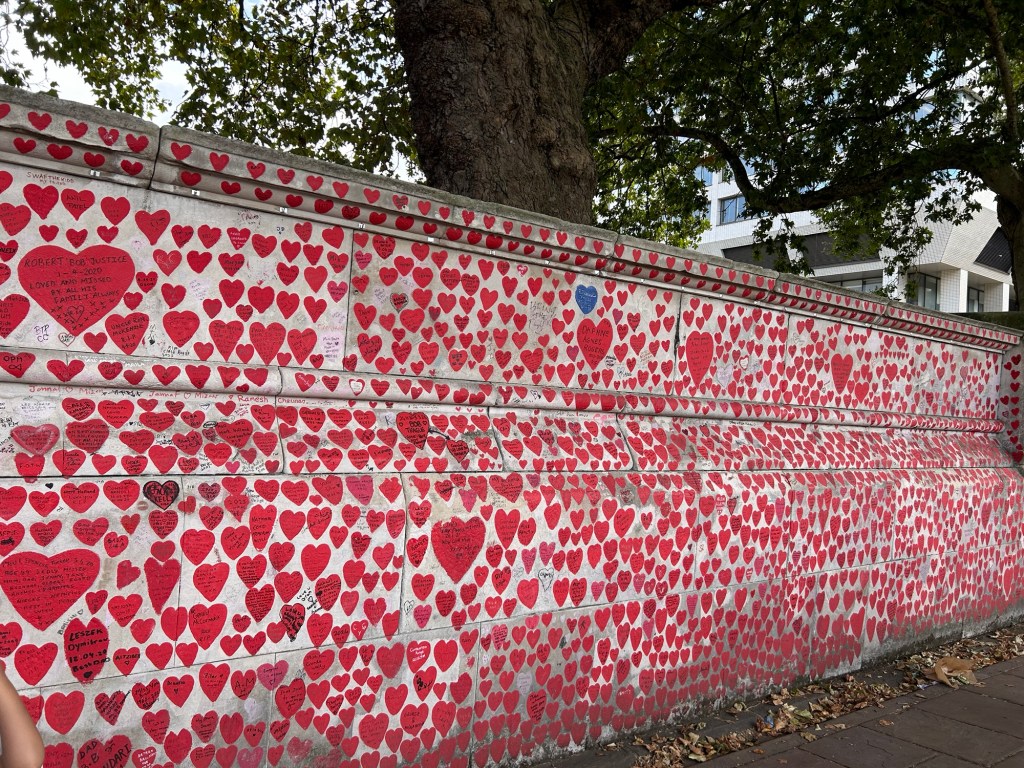
We set out this morning to check out some of the Open House London events. This annual event invites people to explore buildings that they might not otherwise see. We were on the hunt for St. Mary-le-Bow church. It is featured in the book I am currently reading. We walked around Buckingham Palace and on toward the parliament buildings. We walked (the wrong way) along the banks of the Thames before getting reoriented toward the west-end. Before we turned around however, we were struck by the memorial hearts painted on the wall beside the riverwalk. Each heart paid tribute to someone who died of COVID. It was a long wall.
The COVID Memorial by the Thames
The crowds were intense in Hyde Park as there was a day of kids running races around the park and things were getting set up for a nighttime marathon race. It was also a beautiful day for strolling.
We experienced a smattering of rain as we sat down for lunch but otherwise the weather was perfect. We walked by the London Eye, St. Paul’s Cathedral and finally stopped at St. Bride’s (aka St Bridgette) Church. It had been destroyed during the Fire of London in 1666, rebuilt and then destroyed again during a WWII bombing. It was rebuilt, but in the process they found remnants of buildings from Roman times to present. The display in the crypt showed remnants of all 2000 years of buildings on the site. We finally made it to our original goal only to find the church closed. We peaked inside anyway and went back to a nearby pub to quench our thirst. The pub was historic as well, having survived the fire and the war. The beer was good too.
The Watling Pub near St Mary-Le-BowSt Bride’s ChurchSt Paul’s Cathedral
We took the tube back to our suite and appreciated efficient public transport. No need to buy tickets. You tap your credit or debit card as you get on and off the train. Easy-peasy! Now to figure out where tomorrow’s expedition will take us…
We had a lovely trip across the pond and had no trouble navigating public transit to our residence in the Borough of Chelsea. we wandered along the bank of the Thames until we came to the Grosvenor Pub for our first pint. We were able to pick up some food at a local grocery store so we are all ready to set out for adventures tomorrow.
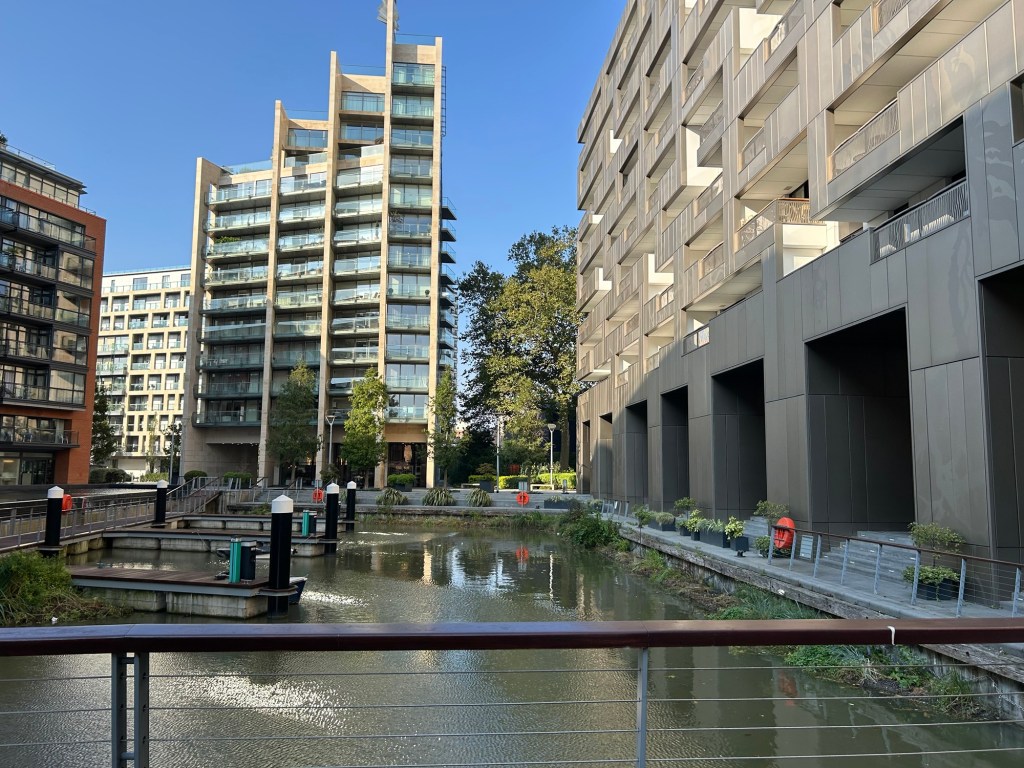
We found our way to our home for the next 10 days. It is a complete apartment in 250-300 sq. Ft. The whole apartment is smaller than many hotel rooms we’ve stayed in. It’s got all we need for a holiday but for most people in the building, this is their permanent home. The Grosvenor canal sits in front of Air B&B (building on the right). it is a lovely setting.














 travelswithannmarie