
Our last adventure of this amazing holiday was a guided tour to Sintra. We were picked up by our guide, Rui Martin. We left our hotel early and we made the 45 minute drive to Sintra while Rui provided us with an orientation to Portugal and Lisbon as he drove us to Sintra and the Pena Palace. We approached the palace through the park created by King Fernando II surrounding the palace. This garden was a labour of love built with his own money. Fernando was the consort of Queen Maria II of Portugal. He was a wealthy German man and a friend of Prince Albert, husband of Queen Victoria. He was 18 when he married the sixteen year old Queen. She died giving birth to her 11th child at the age of 34.
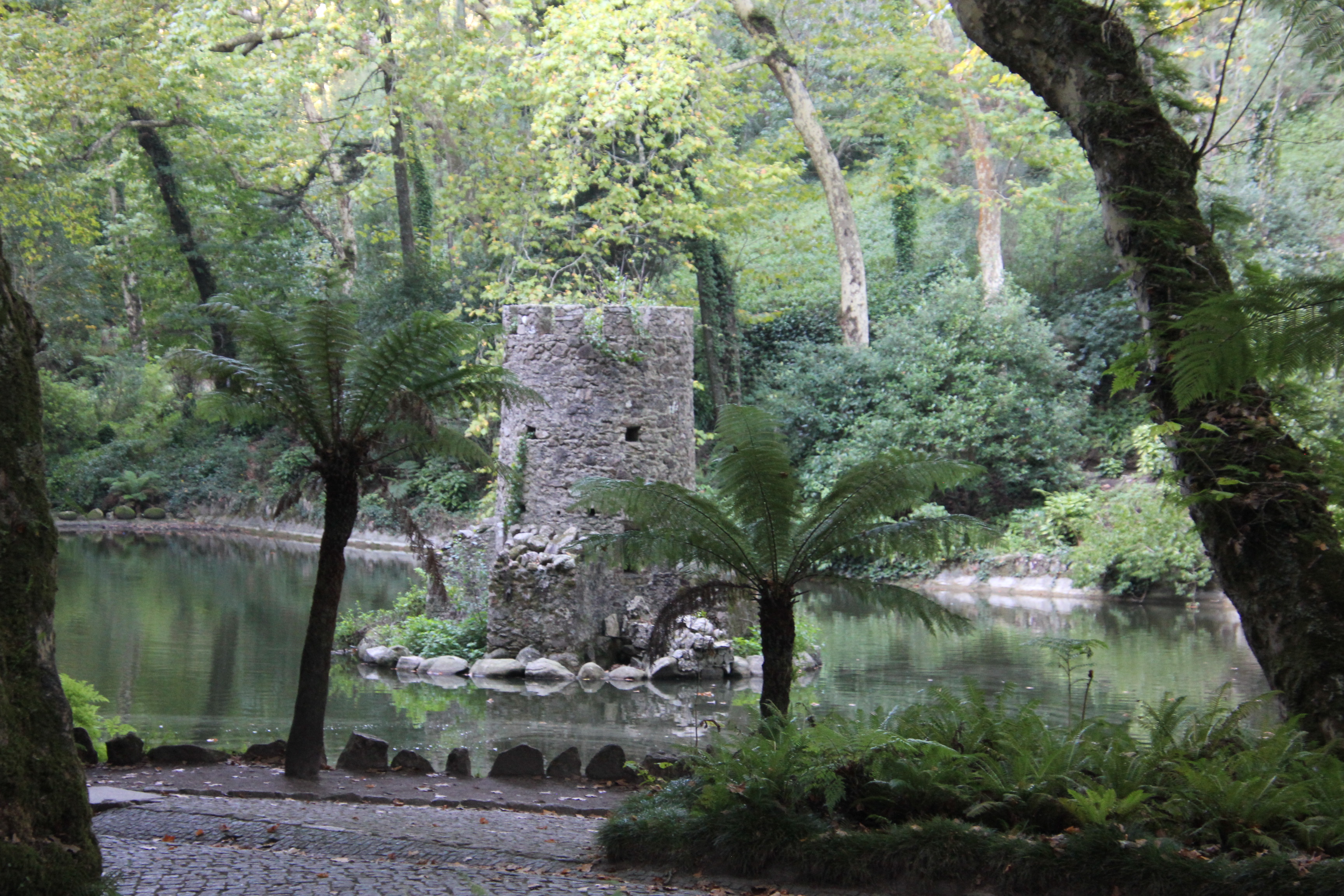
Fernando bought Sintra, a ruined monastery, and several of the surrounding properties, including the ruined Moorish castle on a nearby hillside. He then took to building a romantic garden. His vision was a response to the rationalism of the French enlightenment. What this meant was he created a garden that had none of the geometric lines of, for example, the French palace of Versailles or the other formal gardens of the previous era. Fernando created a garden of organic shapes with beautiful follies that reflected aspects of the ruined monastery he set out to restore.
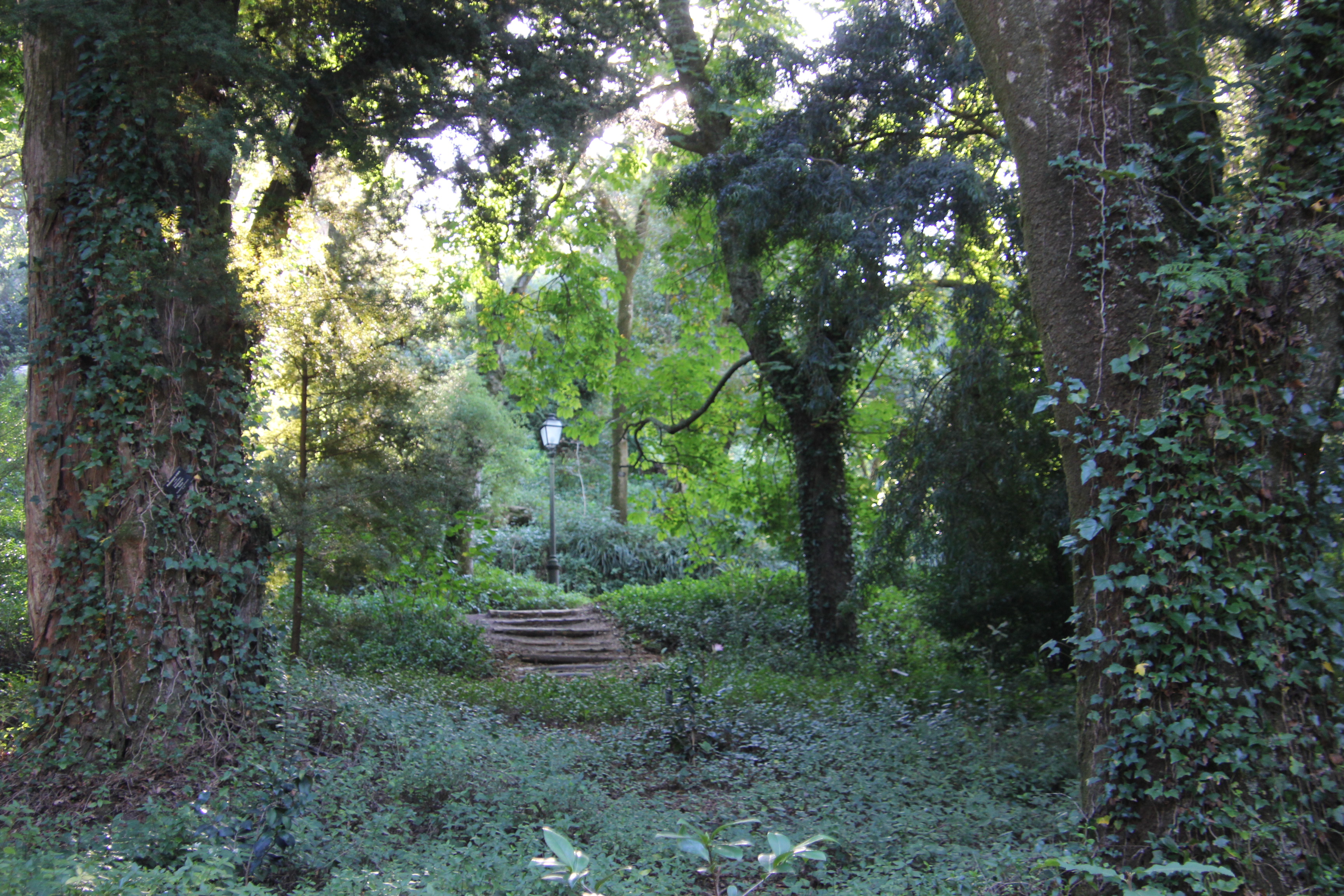
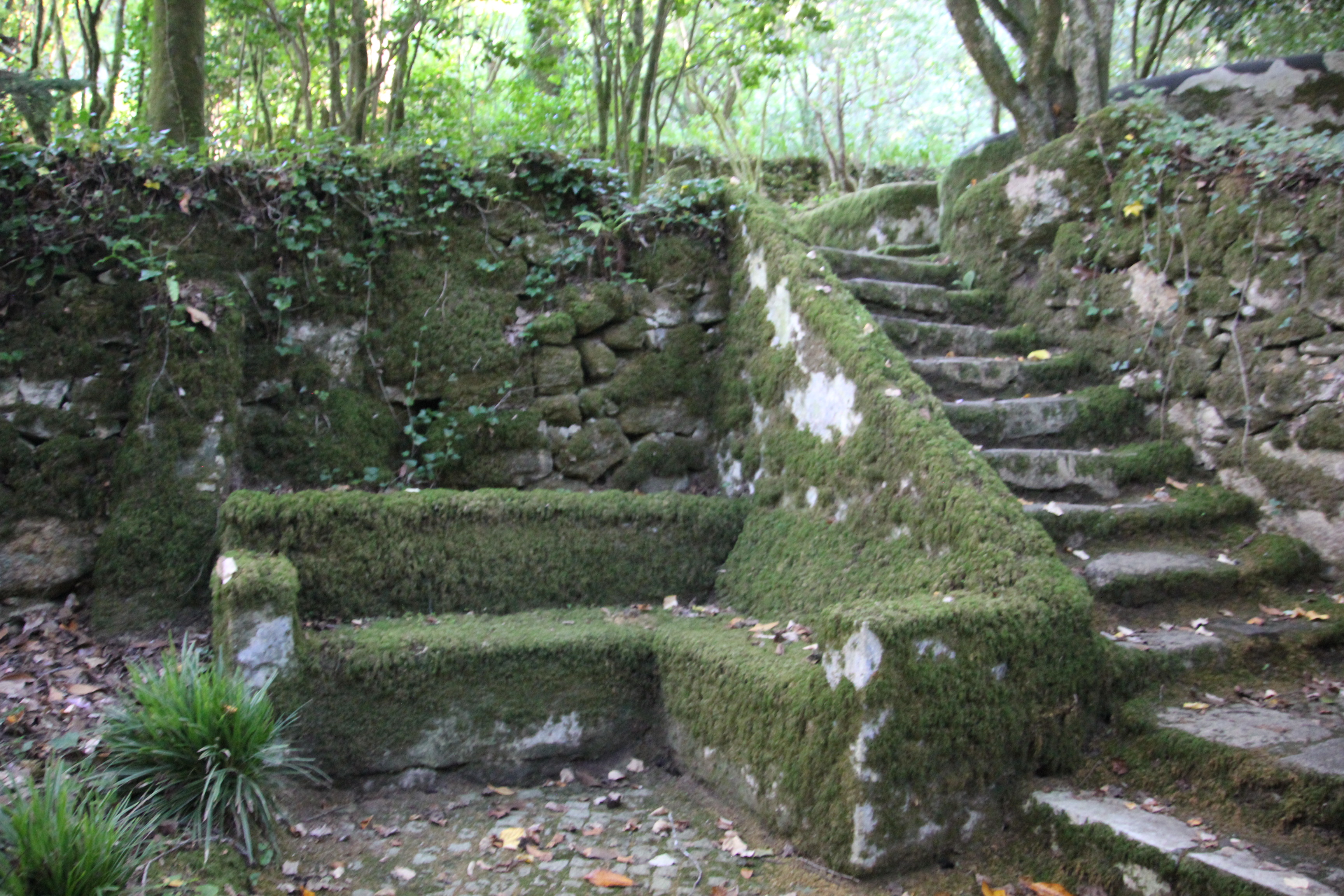
Maria died in 1853 at the age of 34 during the birth of their 11th child. Seven years later, Fernando fell in love with a British/Swiss opera singer. The Portuguese aristocracy were not happy that he was in a relationship with a commoner, so the king of Belgium made her a countess and they were married in 1869. Together they continued to develop the properties, including a private chalet outside the palace. All this development was paid for out of Fernando’s own funds.
The Pina Palace started life as a monastery founded by King Manuel I. Apparently Manuel was a monstrous king. He expelled the Moors and the Jews from Portugal and started the Portuguese inquisition. Rui was happy to see that Fernando was able to transform Manuel’s monastery, where wayward monks were sent as punishment for acting out. The yellow stuccoed buildings are Fernando’s, the red stucco is the original monastery.
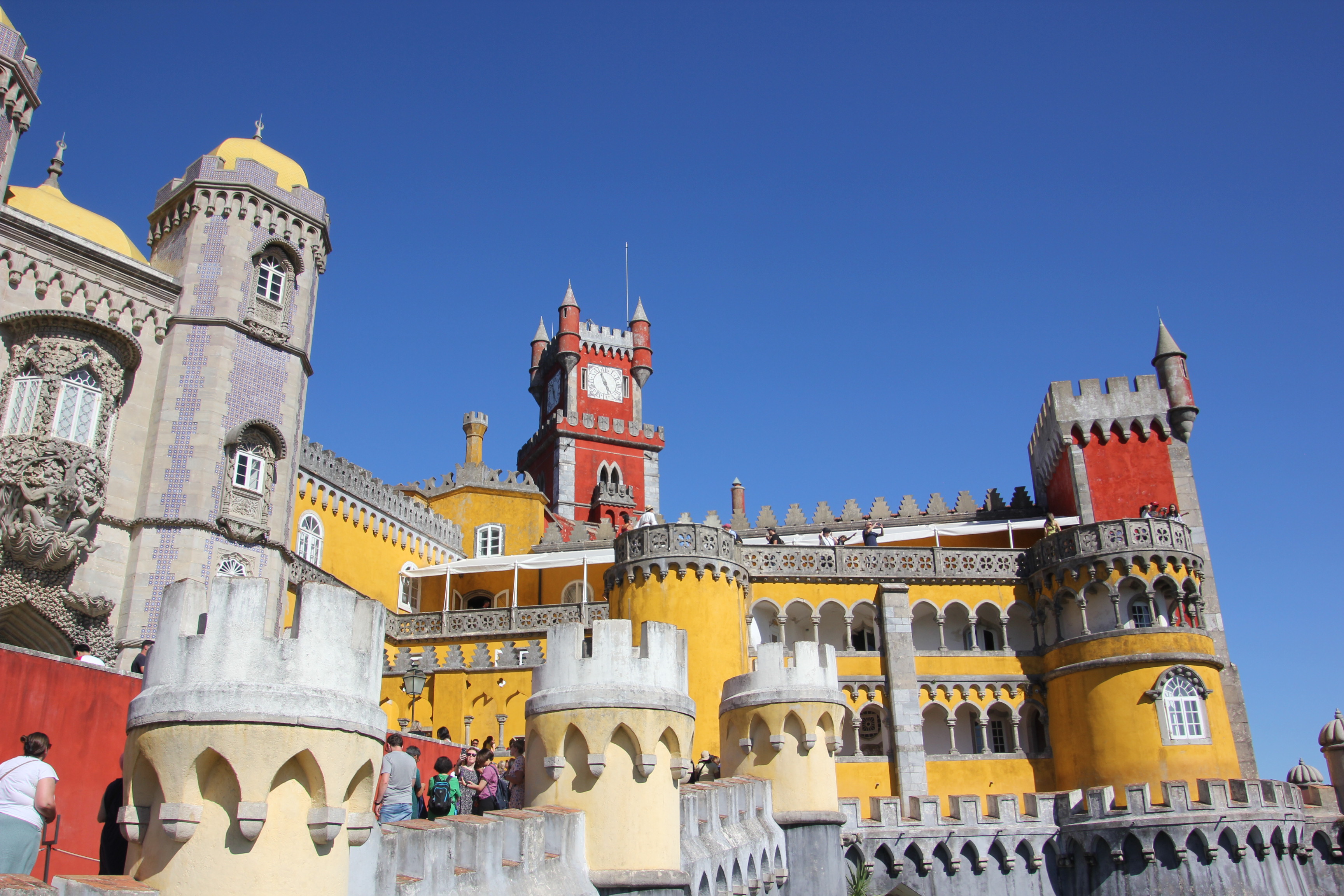
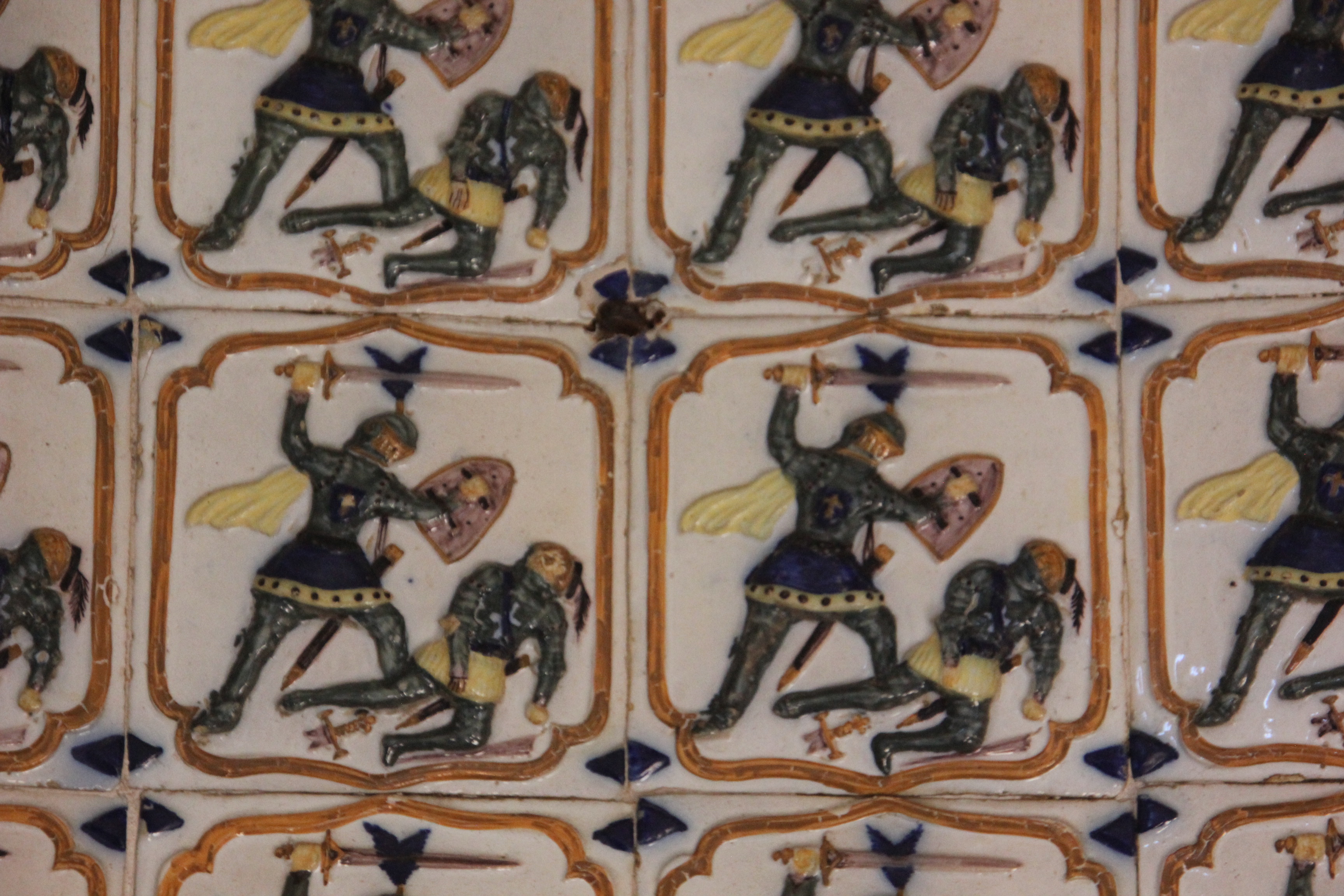
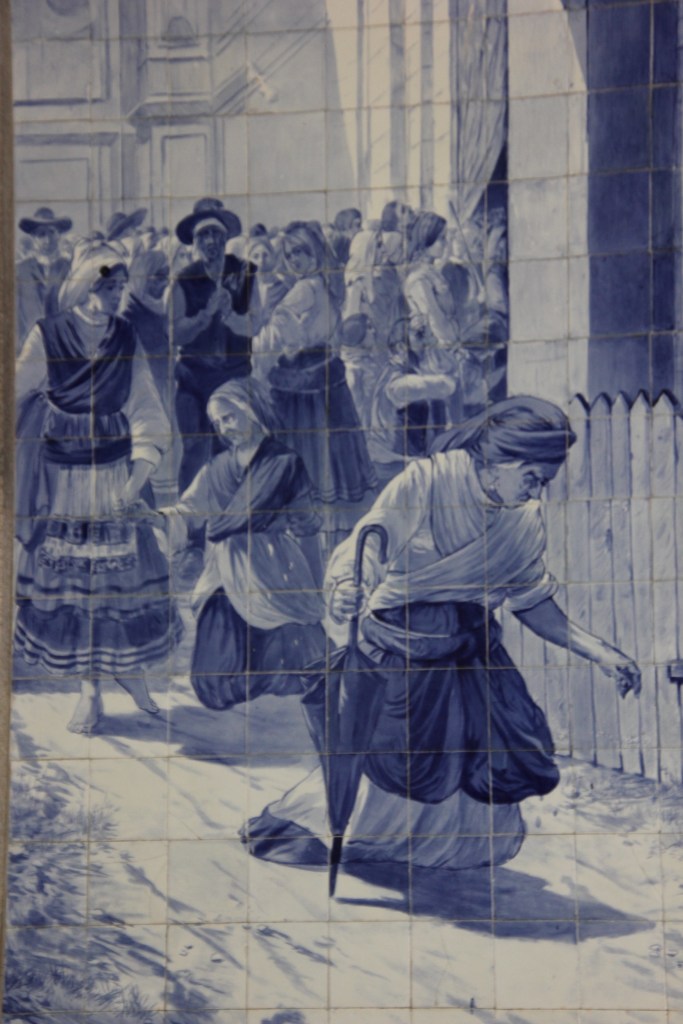
The main entrance to the inner palace was my favourite part of the castle. It was protected by Poseidon, God of the Sea and was filled with beautiful ceramic tiles.
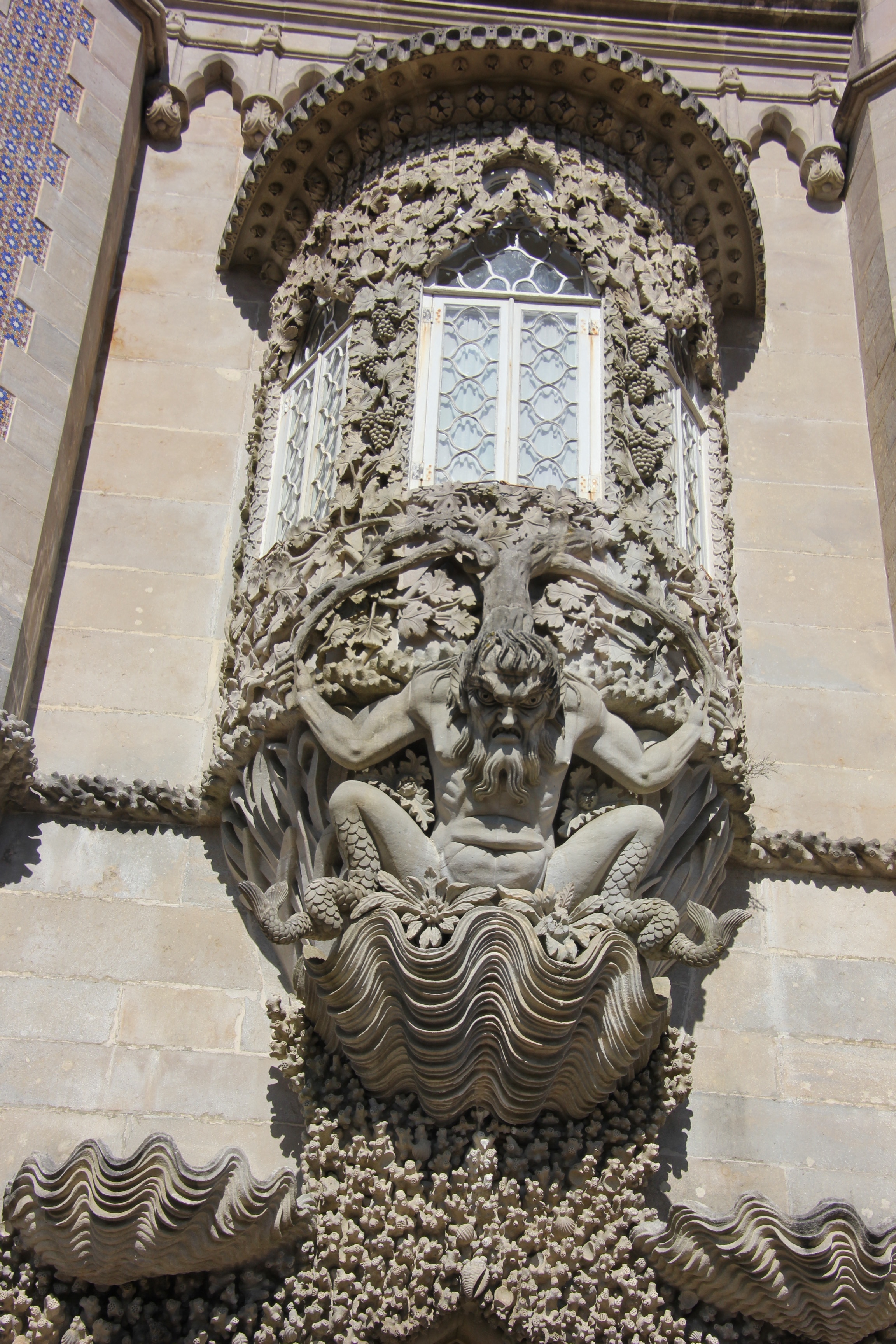
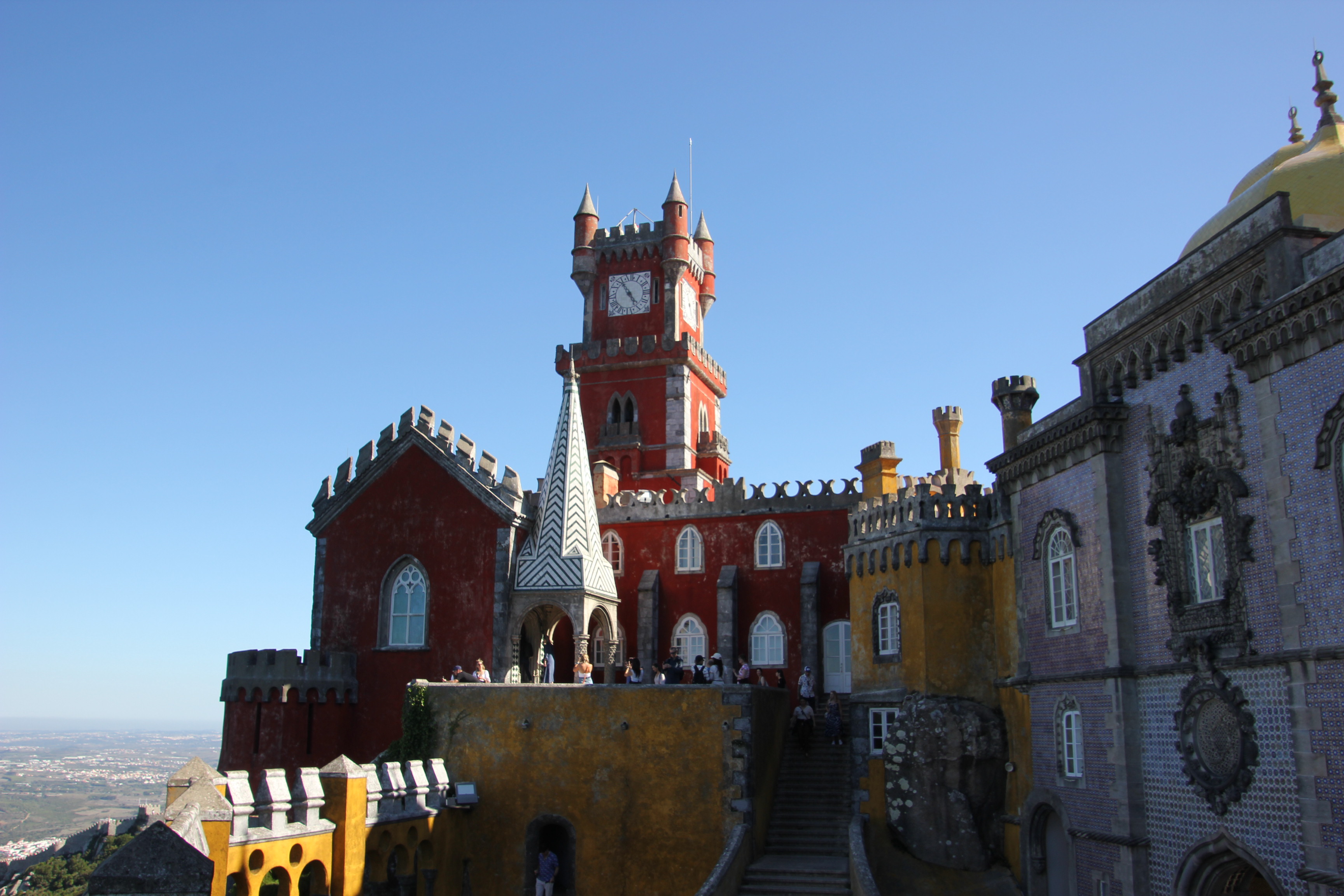
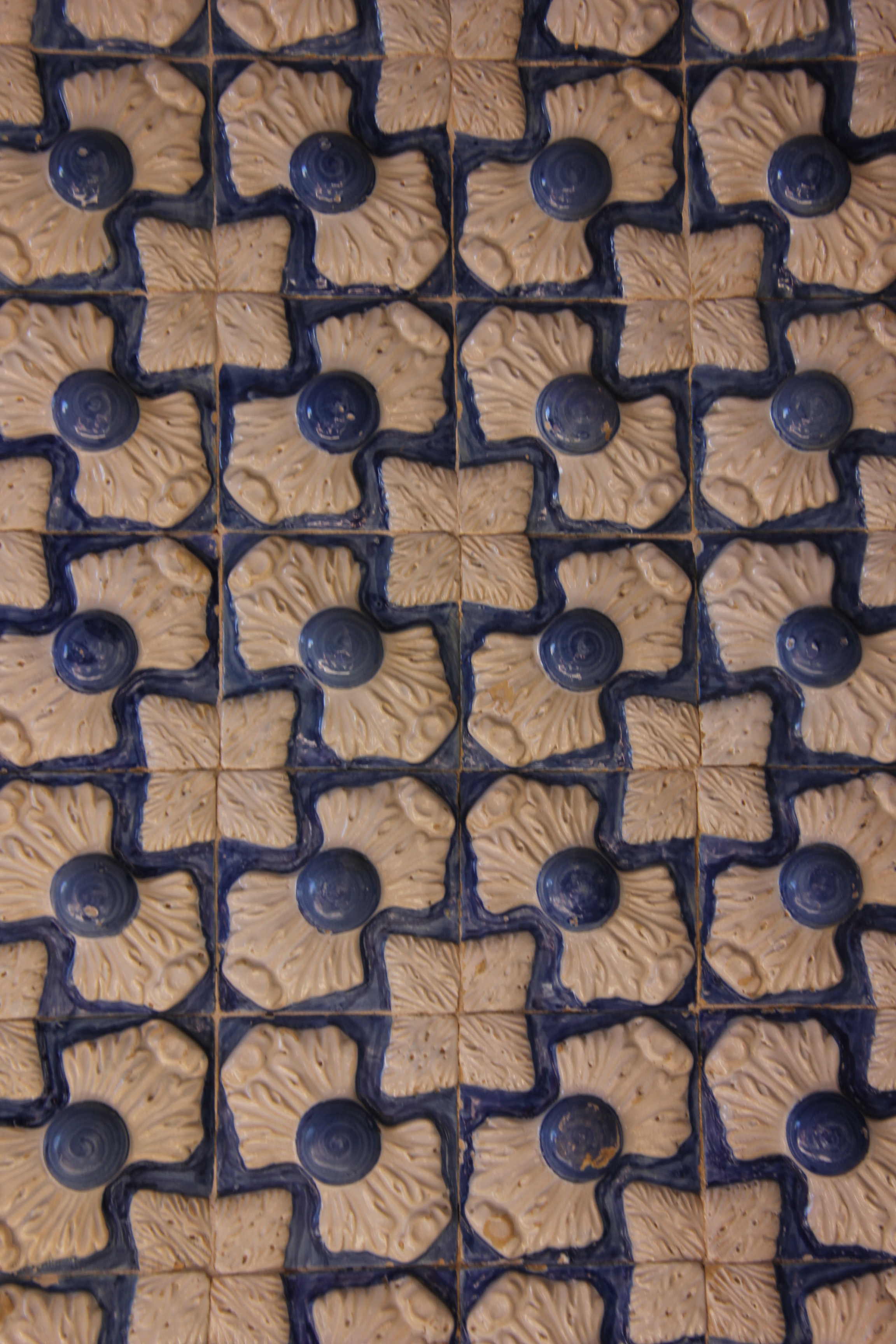
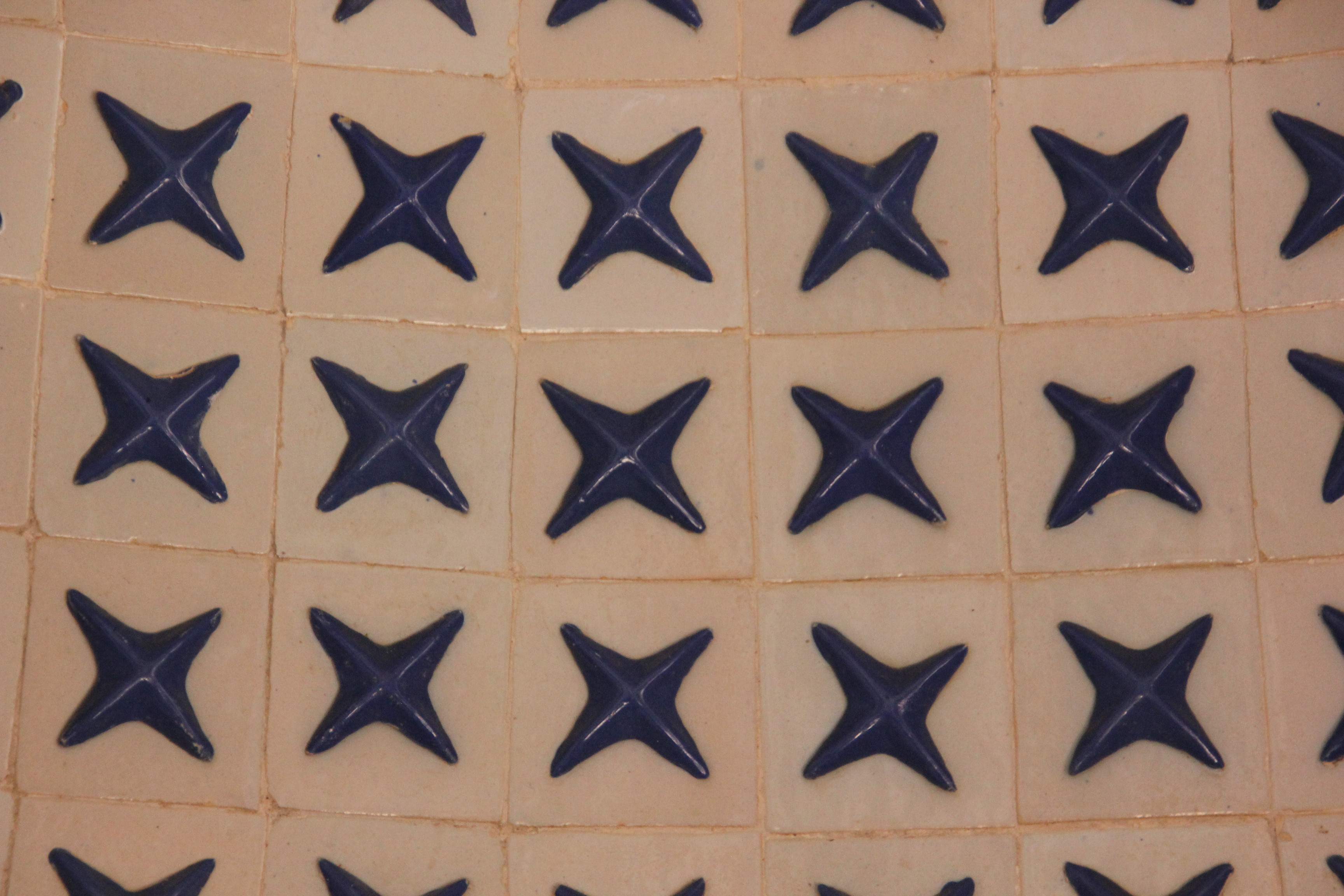
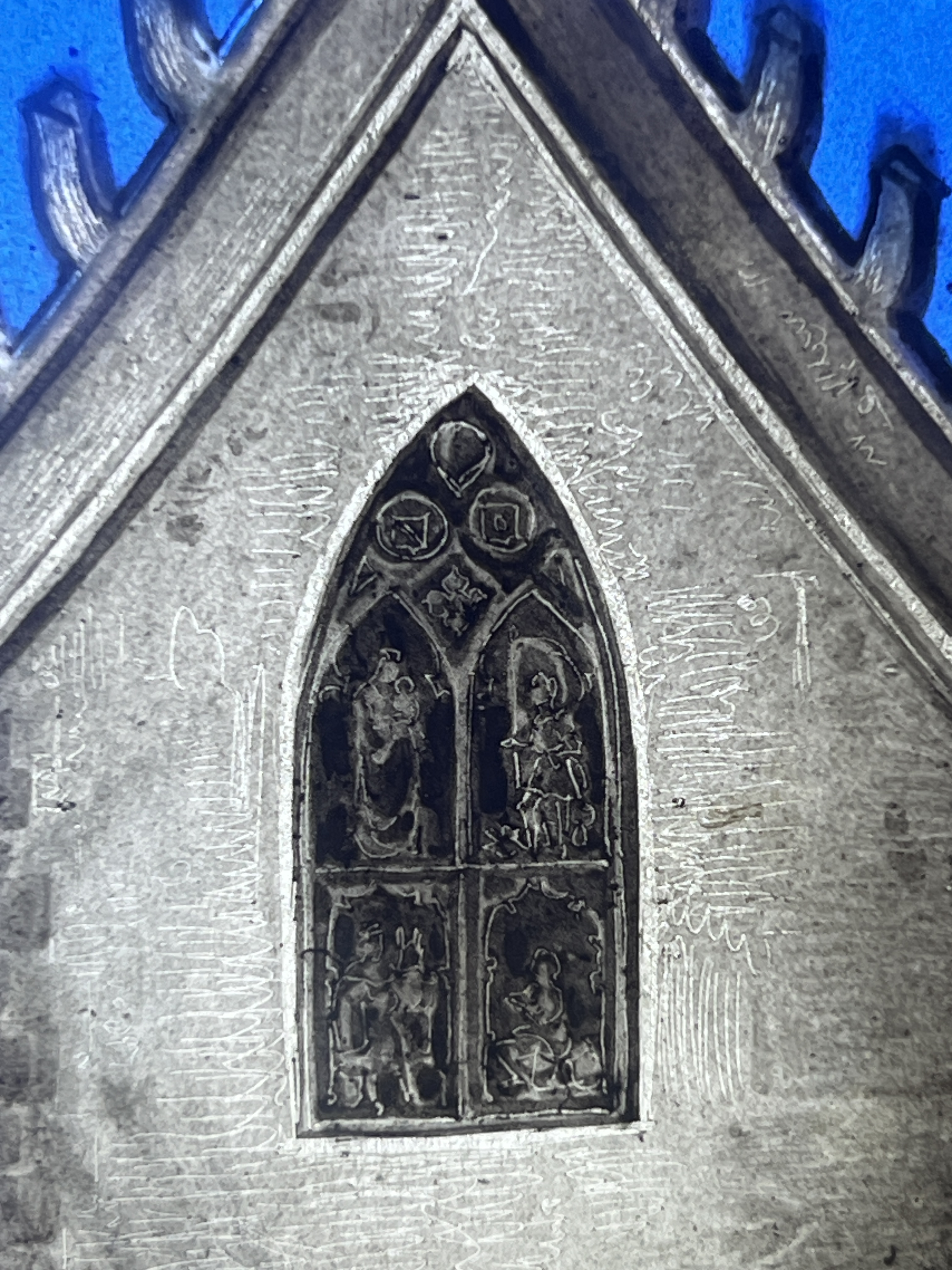
We appreciated learning the full story of the palace as we walked through the deliberately wild gardens. The calm of the gardens was a juxtaposition to the chaos of the crowds of the palace itself. Rui encouraged us to focus on the exterior and the story rather than the internal trappings of the Victorian era. The one interior we did explore was the chapel, original to Manuel’s time. It survived the earthquake of 1755 and remained as it was with the exception of the stained glass window. If you look closely at the chapel window in the pane with the king in front of the chapel , you will see the modern stained glass window in the chapel.

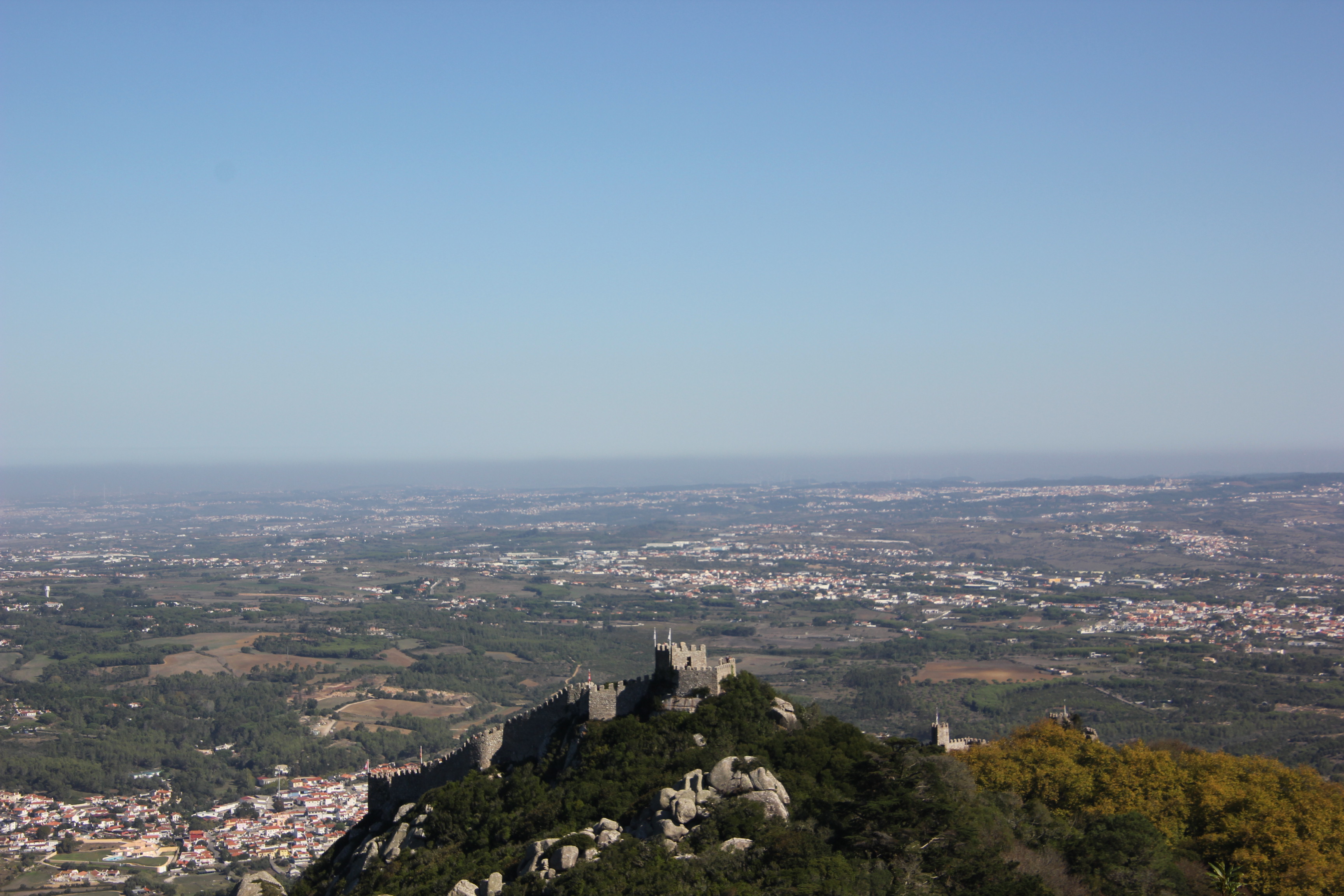
We loved the walk around the outer walls and the view out to the sea. We looked out over the thousand year old Moorish castle from the palace walls. Castelo dos Mouros was build in the 10th century when Portugal was under Islamic rule. The Moors lived in the castle until 1147 when Afonso, the first king of Portugal reclaimed Lisbon and surrounding area. The king gave the Knights Templar the charter to manage the area in 1154. We didn’t have time to look inside the castle, but it looked like a great place to explore next time we are near.
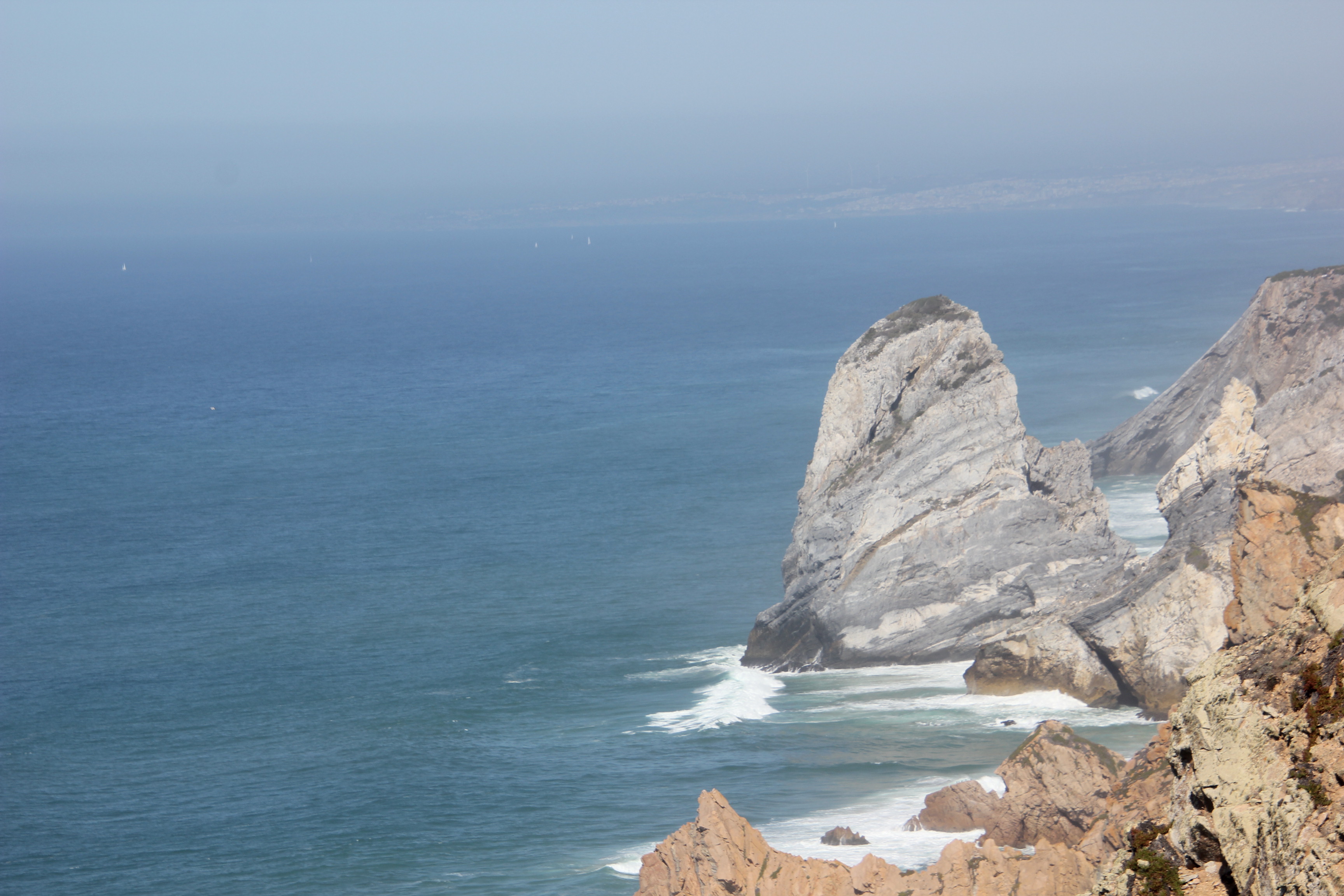
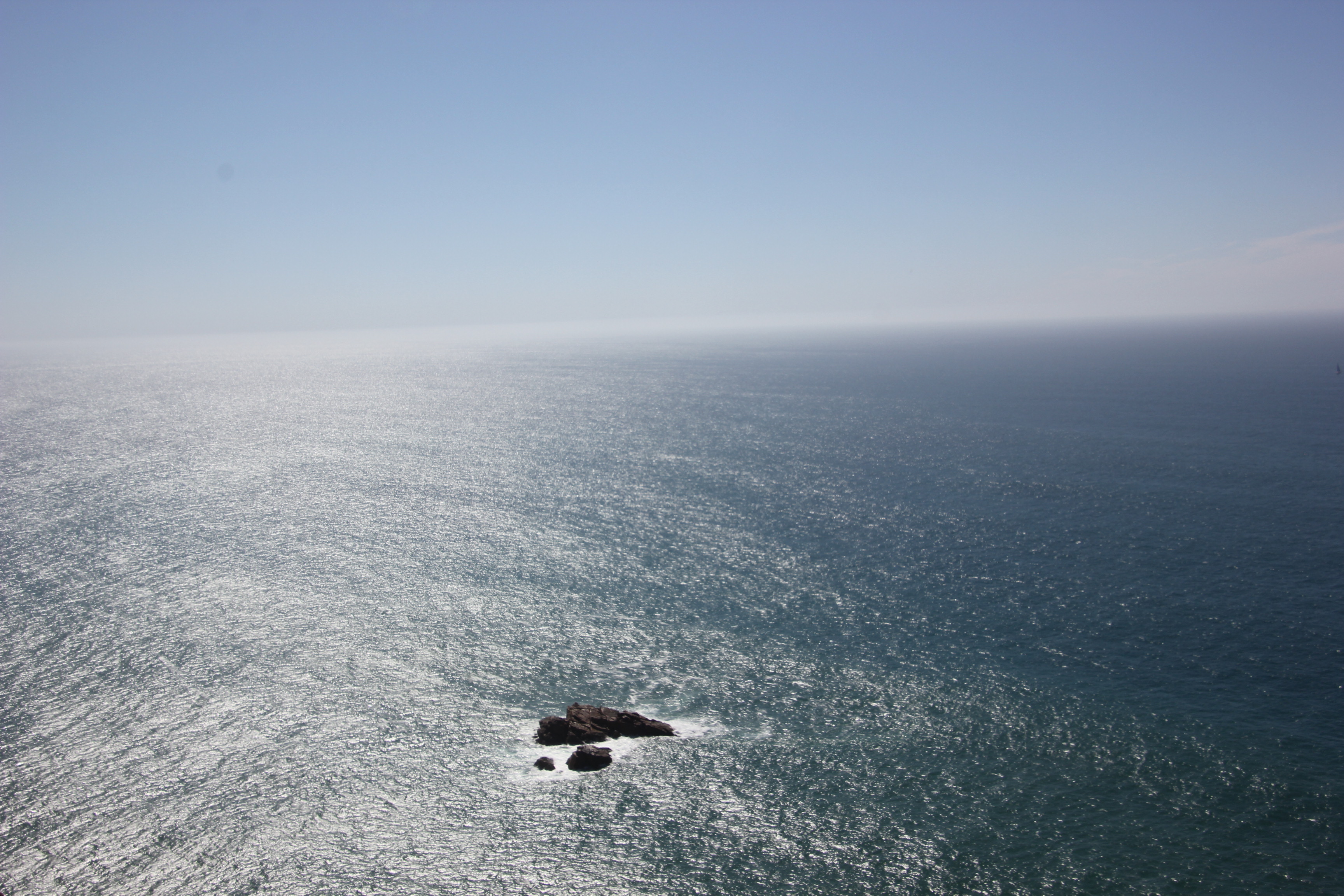
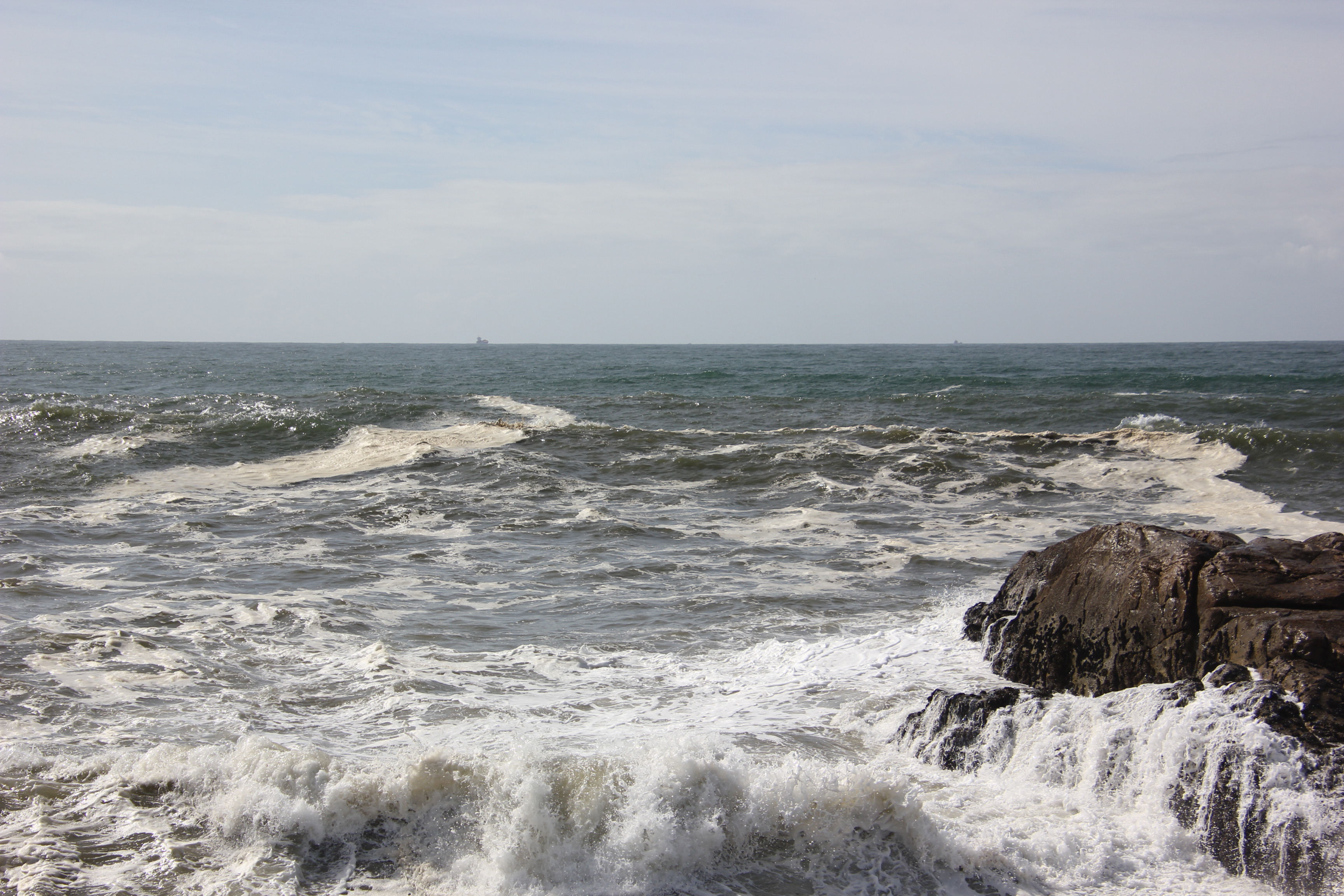
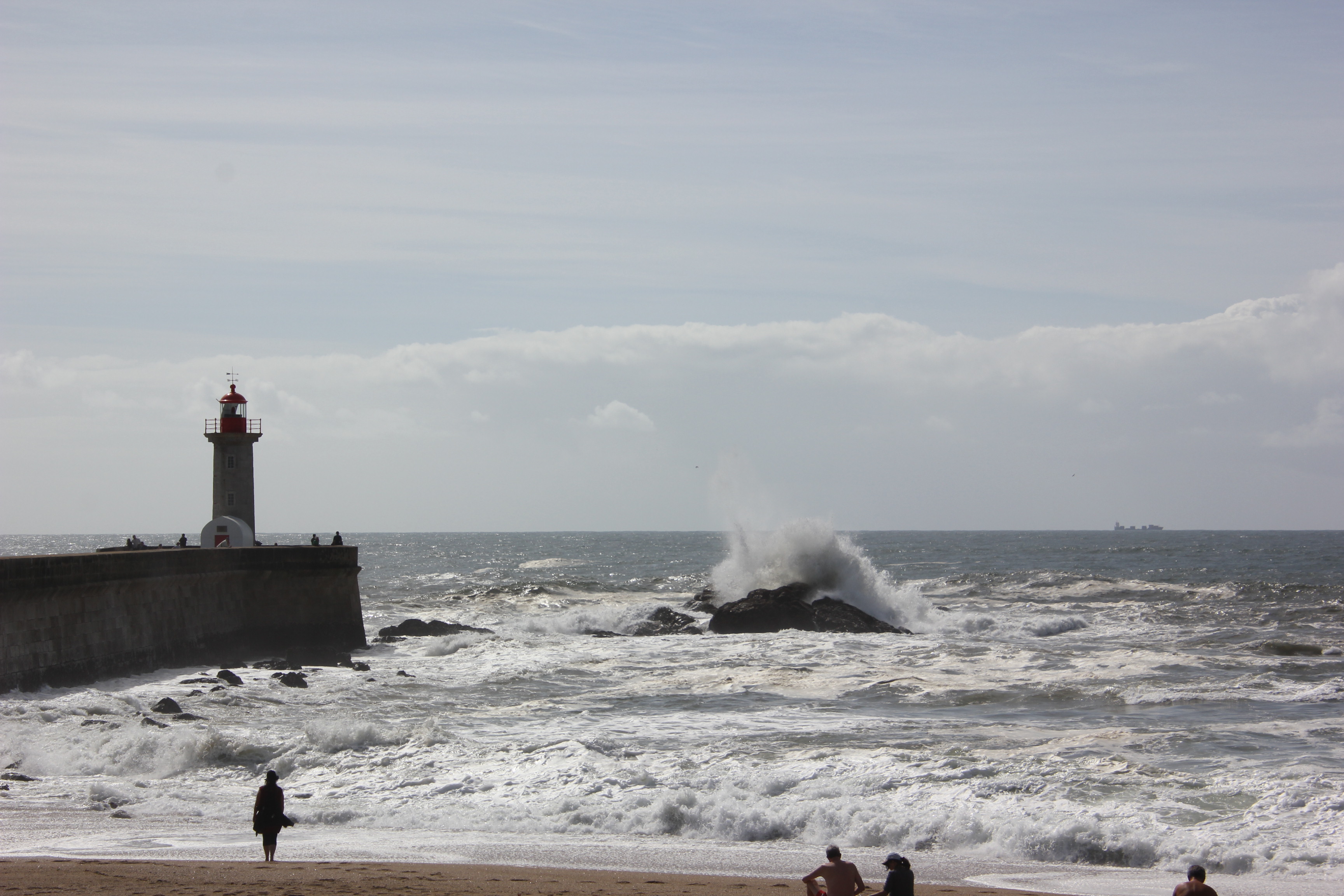
We then descended back into the lines of people, the chaos of cars and then back into the garden for a stroll back to the van. We had lunch in Sintra village before hitting the road to find the most westerly point of continental Europe. It was weird to look over the ocean and think that the next port is Washington DC. The seashore was windy but worth the need to hang onto our hats.

We drove back to Lisbon via the Portuguese Riviera. It was lovely to see the Portuguese version of Banff. Salazar, the Portuguese dictator until 1974, kept Portugal neutral during WWII. This allowed him to curry favour with both sides of the conflict. Portugal, and especially this seaside resort, became an ideal place for spies to gather. Ian Fleming is said to have been inspired to create James Bond from this activity in this community.
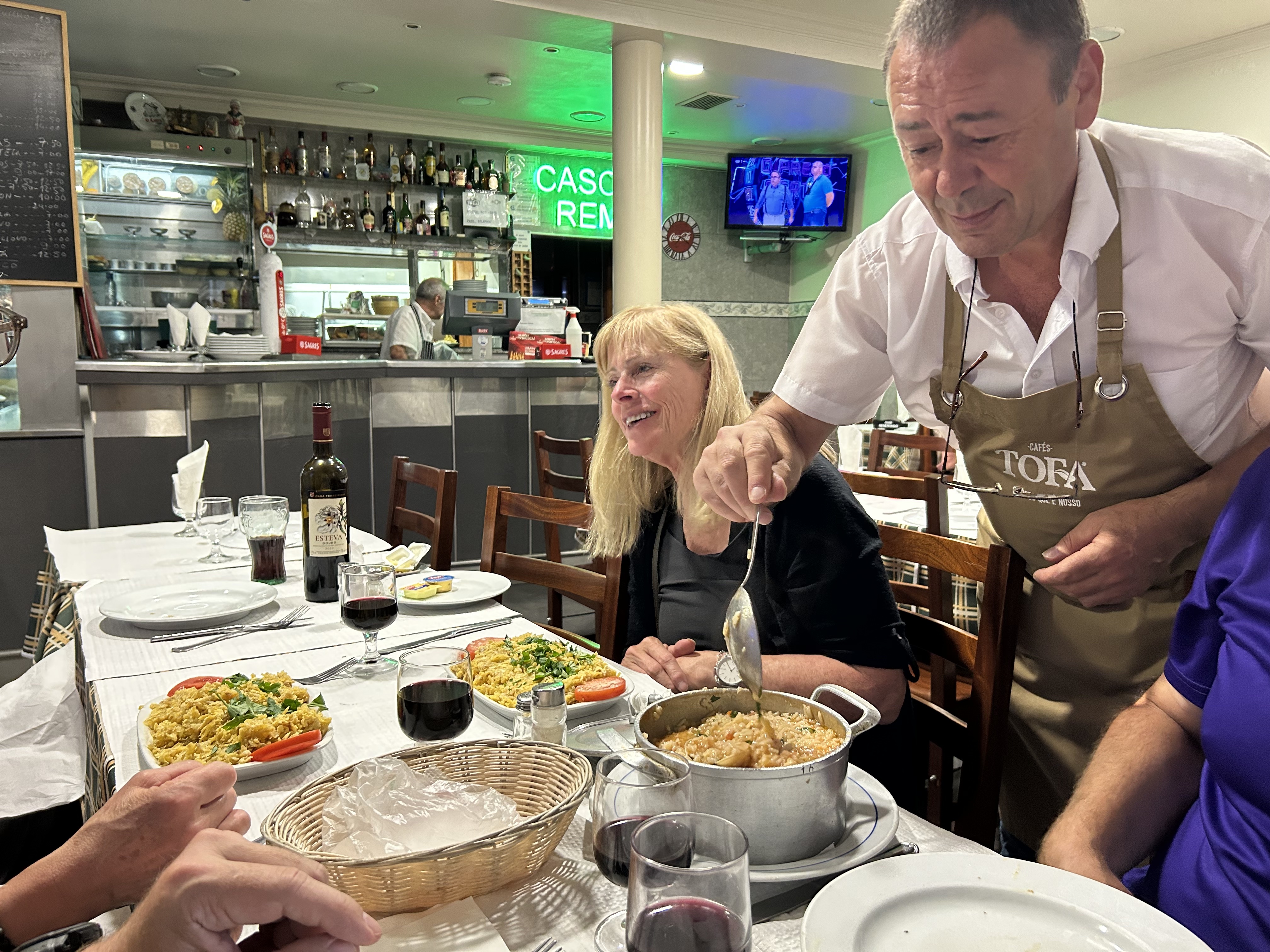
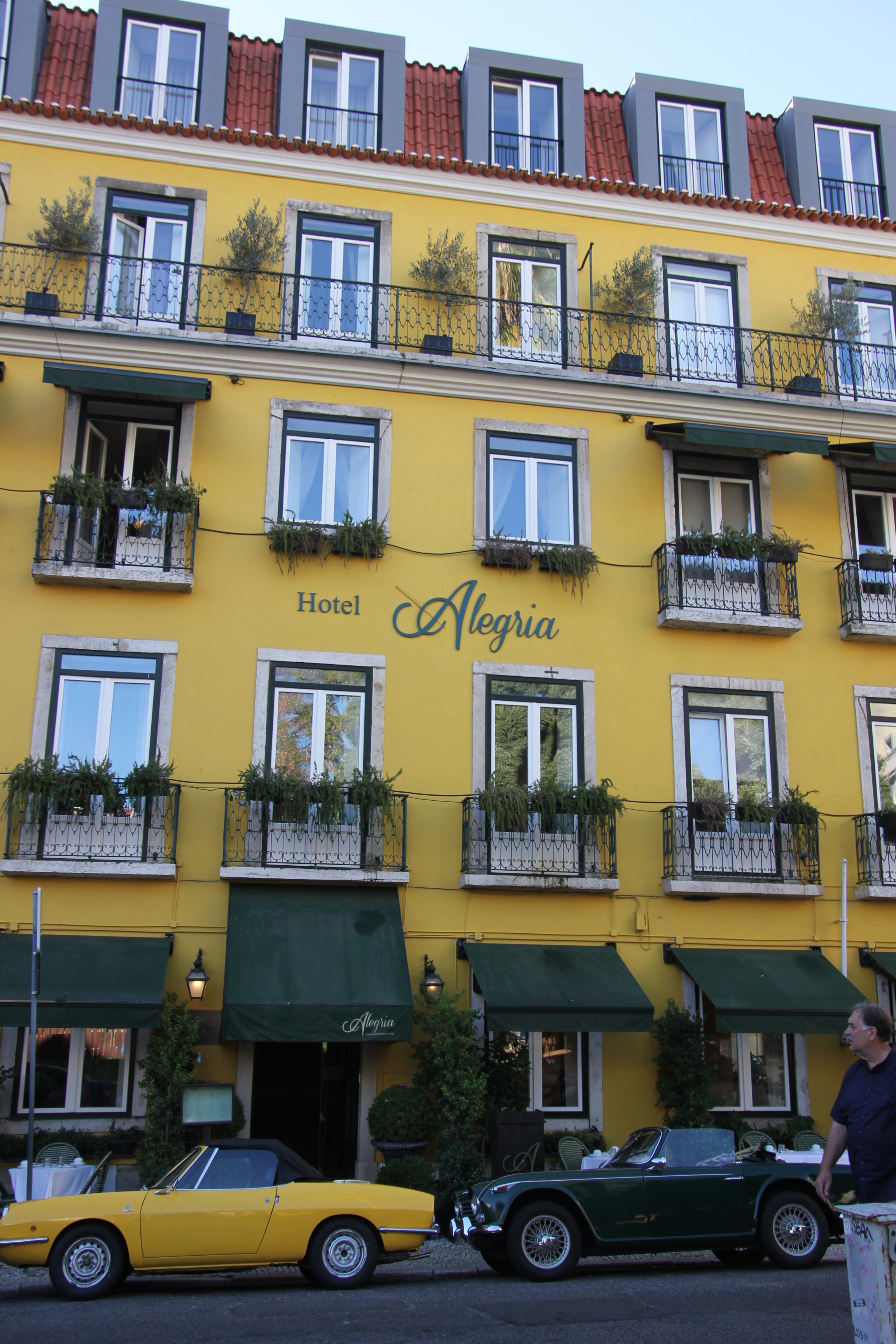
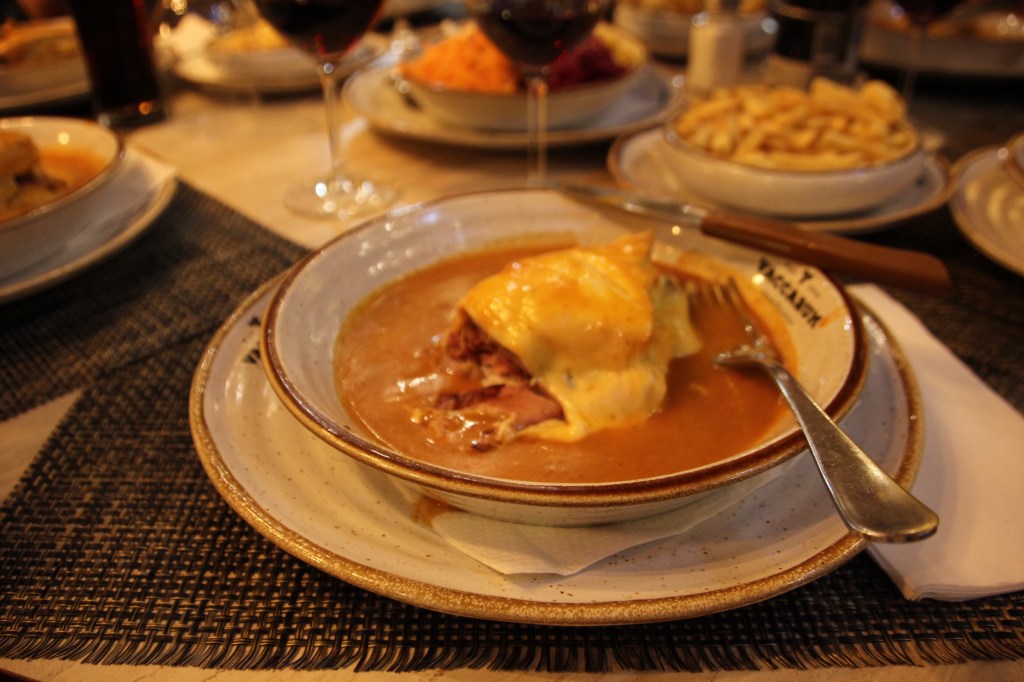
We spent our last evening at a local Portuguese restaurant across the street from our hotel. The host directed us to a reserved table as if he had been waiting for us. He spoke no English and, as we engaged in pointing and pantomime to express our choices, he was clear that we could only order the small sizes on the menu, no matter how hungry we felt. He was correct, the food was plentiful and authentically Portuguese. The wine was excellent as we happily brought our Portuguese adventure to an end.





 travelswithannmarie