
After our visit to the Valley of the Kings we had a delicious lunch at a local restaurant. I am now totally addicted to falafal and baba ganoush. We also moved off of our boat and into a beautiful hotel in Luxor. We had a great evening lecture about the ongoing restoration work happening in Luxor. Dr. Hany Hamroush was an engaging speaker and clarified a great deal about the restoration work going on. The lecture was at the Luxor Library. We had supper and then went with our guide to the local bazaar for a walkabout.
We spent our third day in Luxor exploring the temples of Karnak and Luxor. the Karnak Temple Complex was built over centuries starting during the reign of Senusret I (1971-1926 BCE) and construction continued over the centuries until 330 BCE. This part of Egypt was called Thebes to the Greeks but Waset to the Egyptians during the Middle Kingdom. Just to get geeky here for a moment – there are three Kingdoms of ancient Egypt – The old kingdom (2700-2160 BCE) saw the building of the Pyramids, the middle kingdom (2055-1650 BCE) saw the building of Karnak and other temples, and the New Kingdom (1550-1-69 BCE) saw the building of the “stone cut” tombs of the pharaohs.

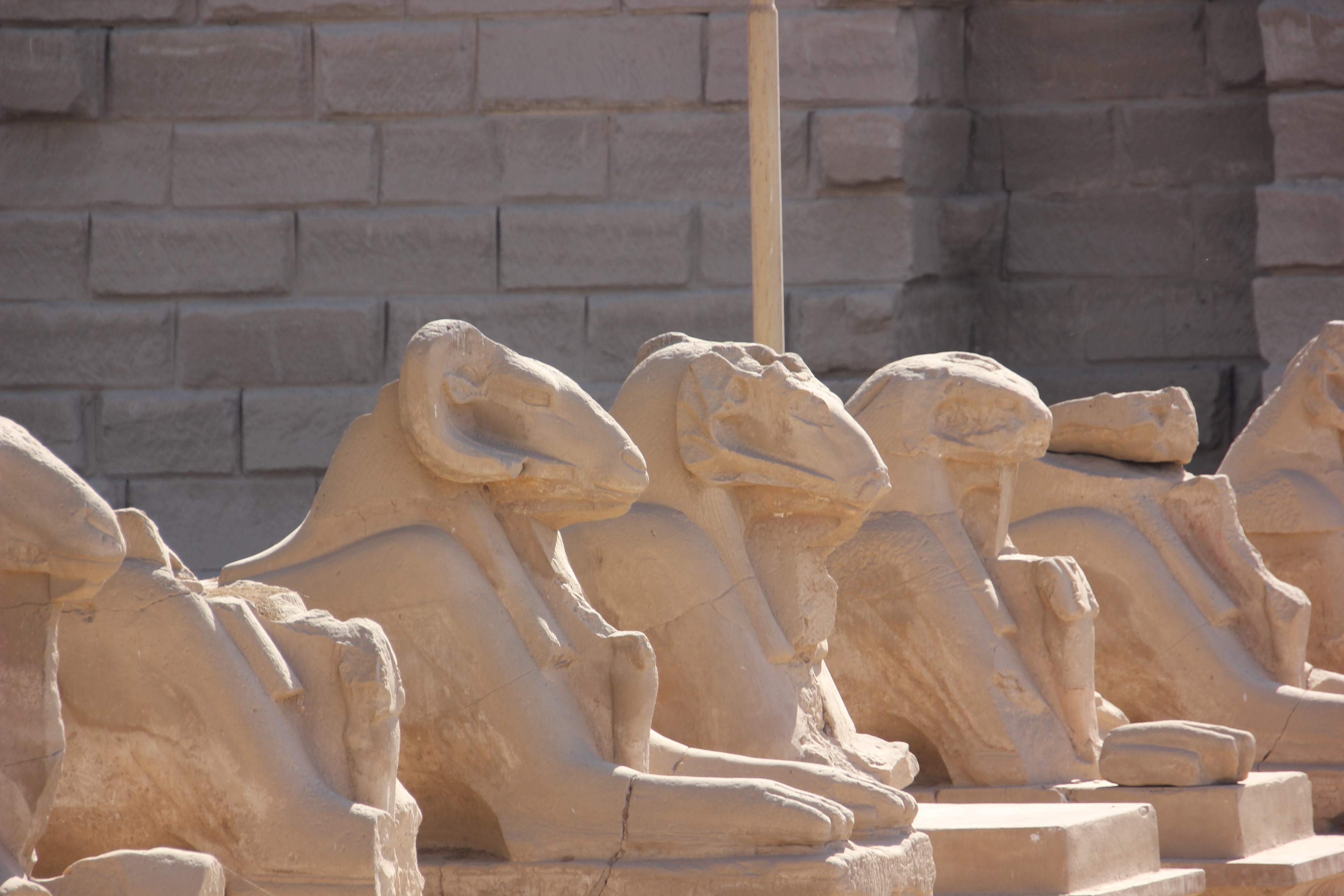
As we approached Karnak we noticed the end of the 2 km avenue of sphynx that connects Luxor temple to Karnak Temple. They are impressive. The Karnak Temple is a series of buildings and only one part is open to the public and it is still a huge site to wander through. The Hypostyle Hall is 50,000 sq ft. with 134 columns arranged in 16 rows. The columns are 33 ft tall and almost 10 ft around. The size of the columns and statues was overwhelming. we were very aware of the huge labour and craftsmanship to build structures like these that have withstood the test of time and weather for so many centuries.
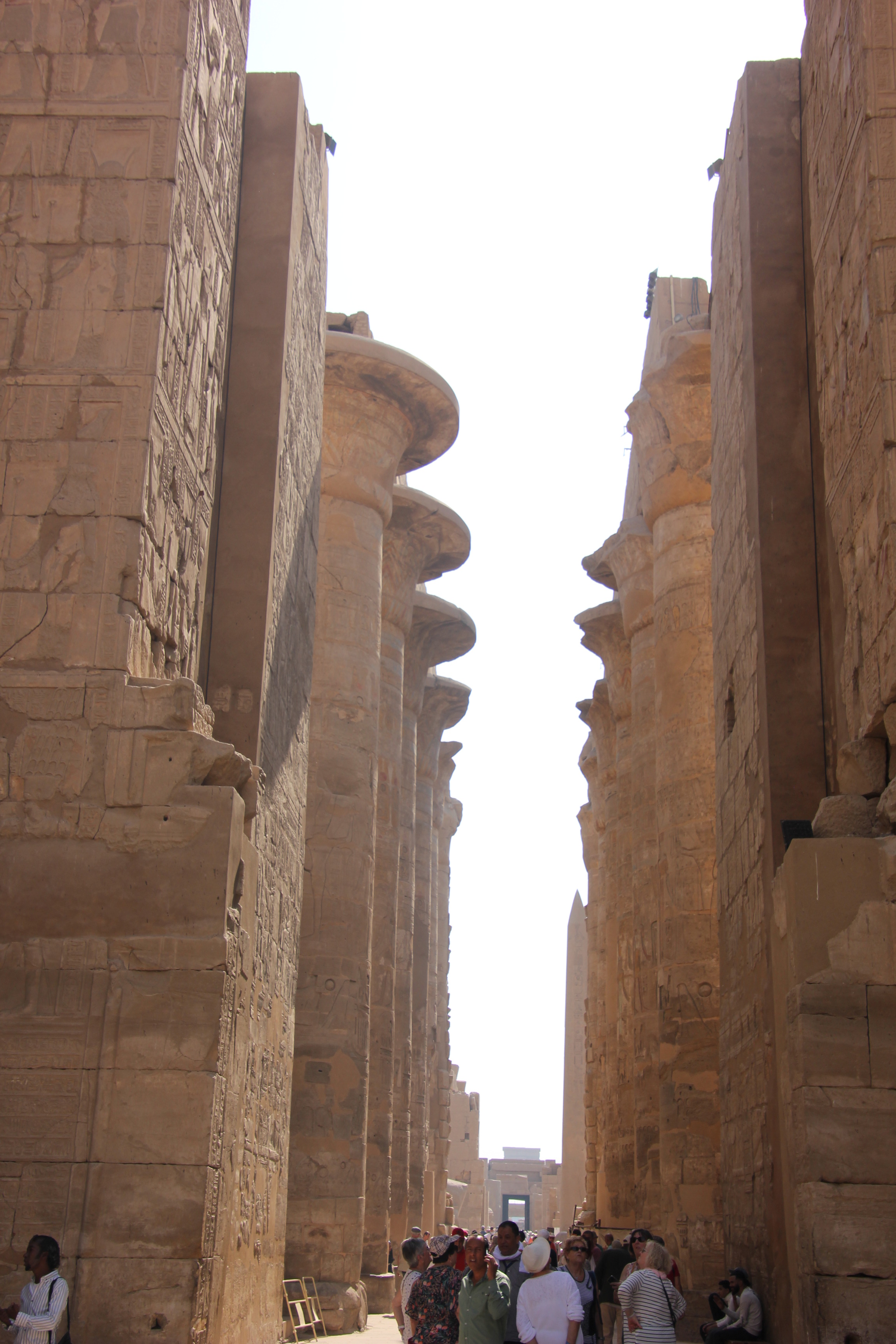
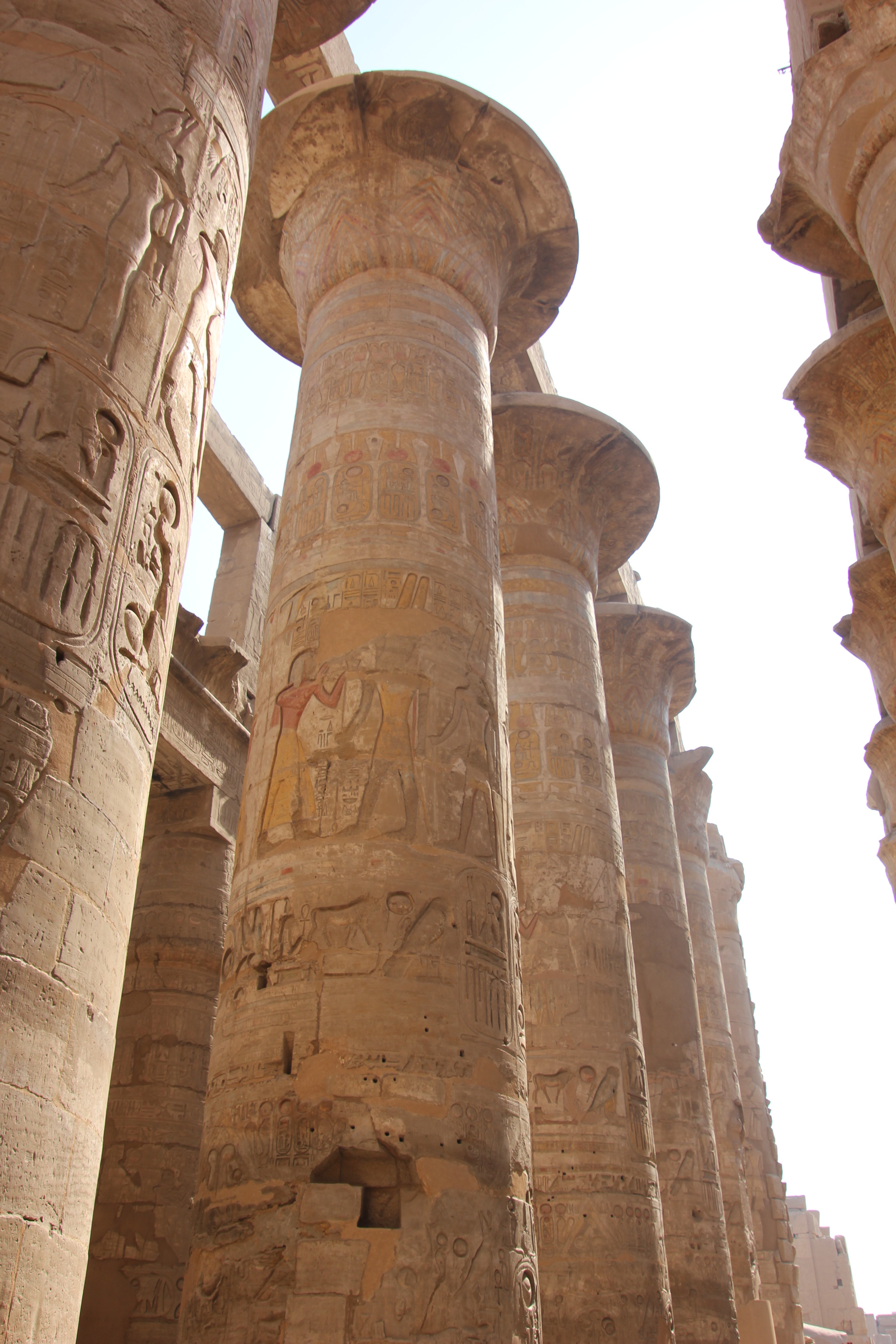
The restoration work is ongoing at this site. Despite its age, the colours remain vivid and the carvings are amazing. The site is quite easy to walk around today, but for centuries it was covered in sand and debris. This allowed it to be preserved. The whole area was covered up to the capitols when Napoleon showed up. People lived on site and the impact of their stay is noted in graffiti carved high up into the pillars and holes in the stones where people tied their animals.
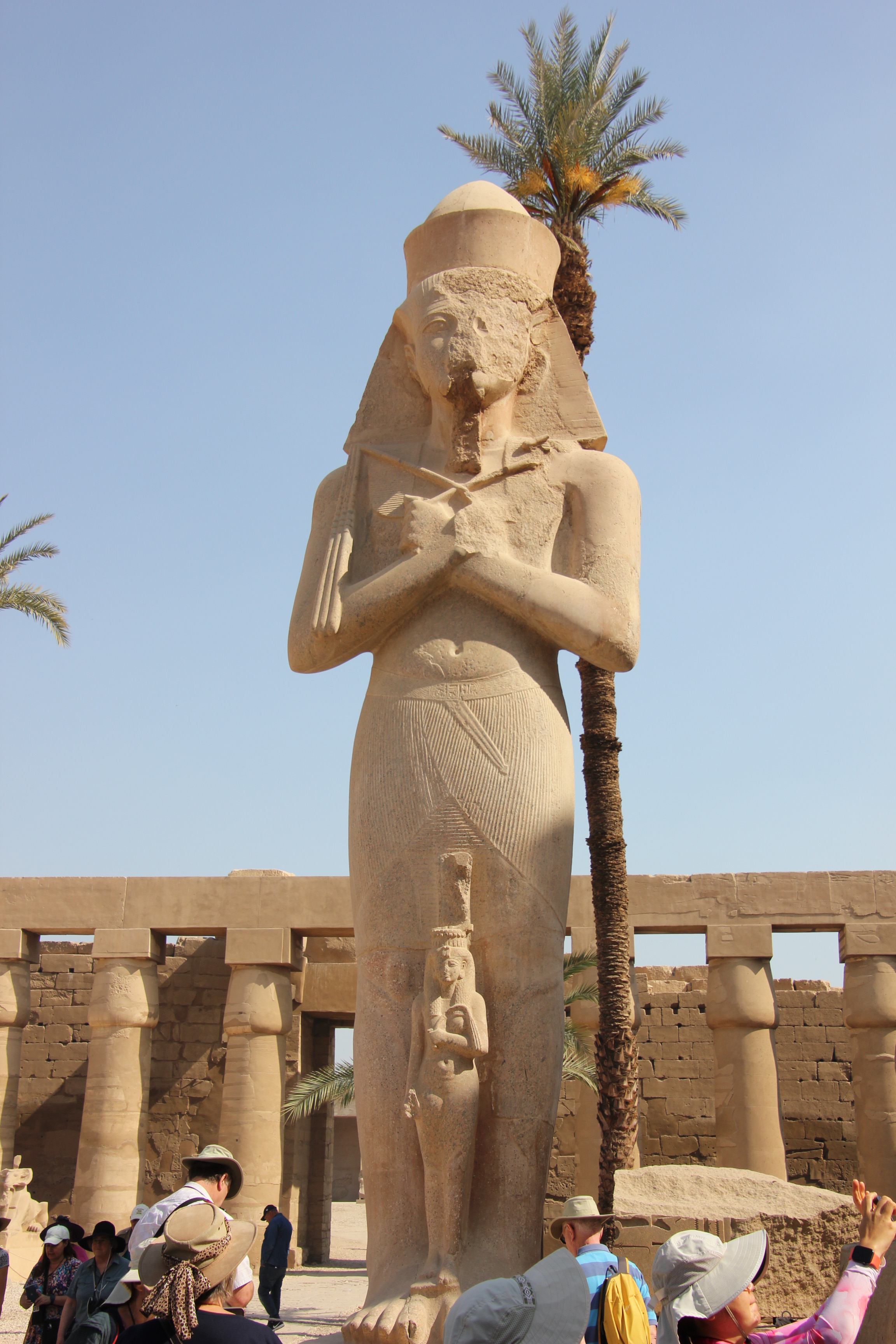
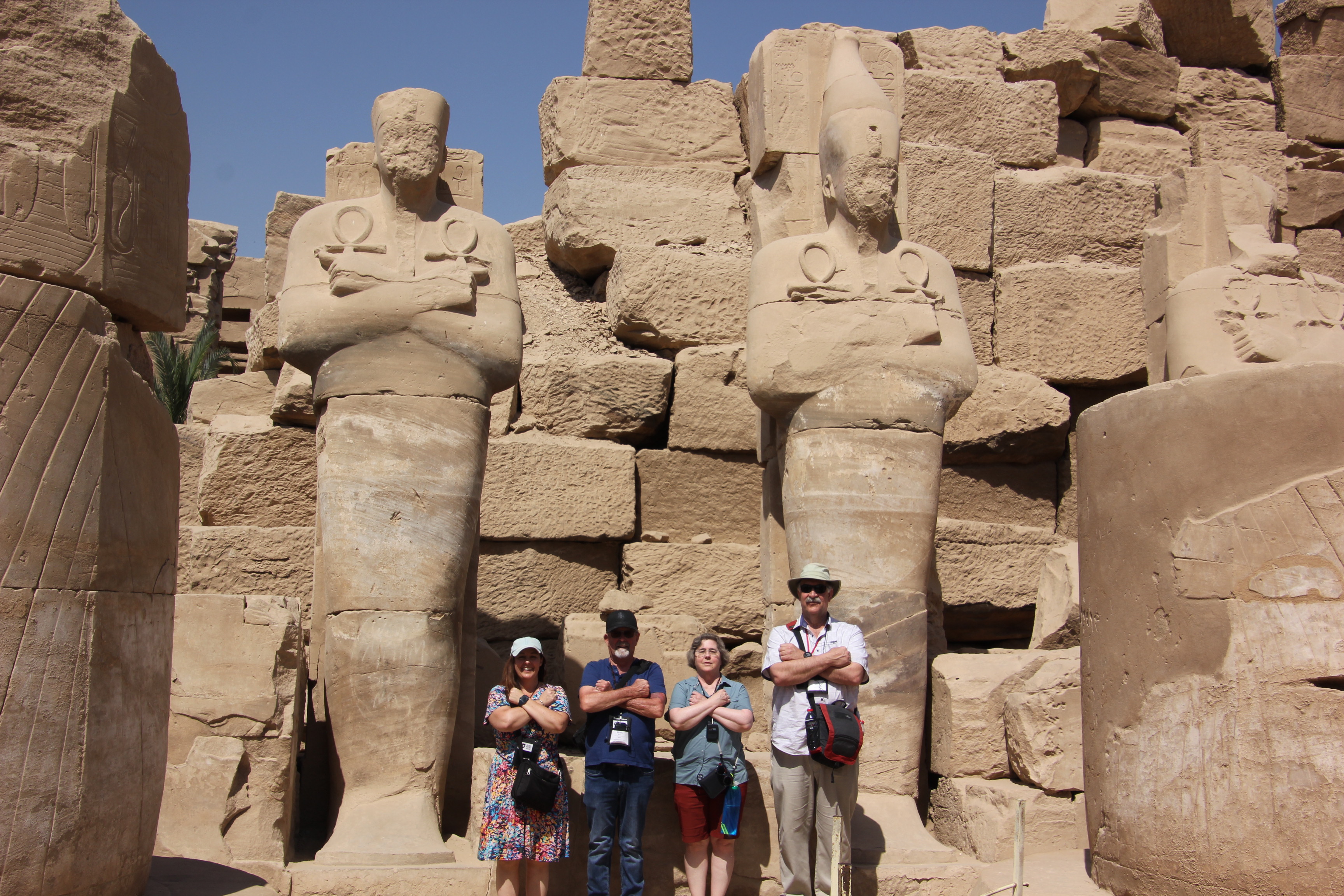
This is a statues of Rameses II with his wife Naferatari at his feet. It was defaced deliberately in ancient times. It depicts him with his flail and sceptre. When he is depicted with his feet together, he is in God mode (if he had one foot in front of the other as if walking, he was in human mode). The defacing was to destroy the symbols of power for example, the cobra head from his forhead and beard were broken off – both signs of power.
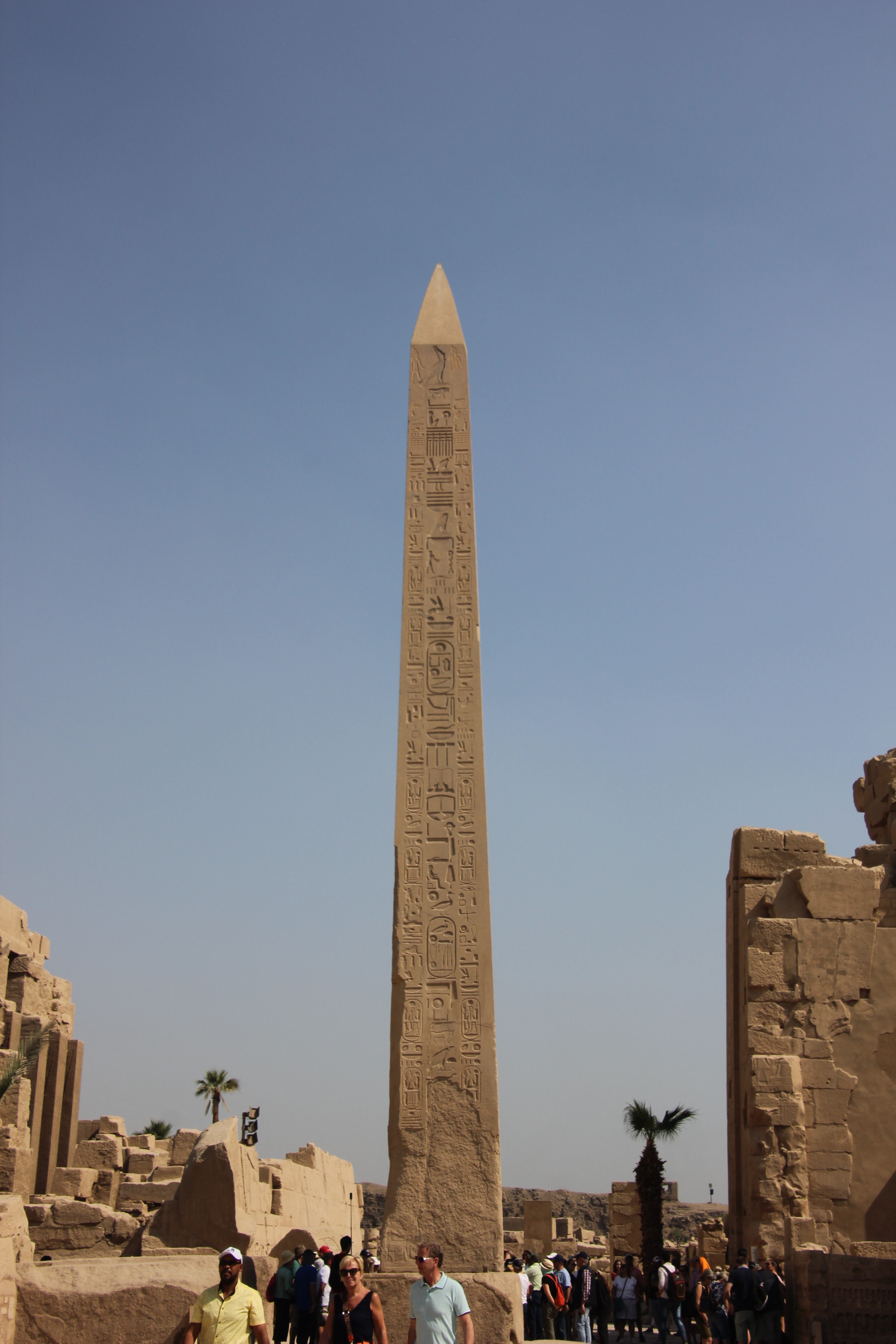
The Obelisk is a symbol of monotheisism (one stone/one god). This one was built by King Tutmoses I. A matching obelisk was taken from this site and moved to Rome. Rome has at least 74 Obelisks from Egypt, while Egypt has only a few remaining.

We left Karnak and returned to Luxor. The temple was only a few blocks from our hotel, adjacent to the Nile.

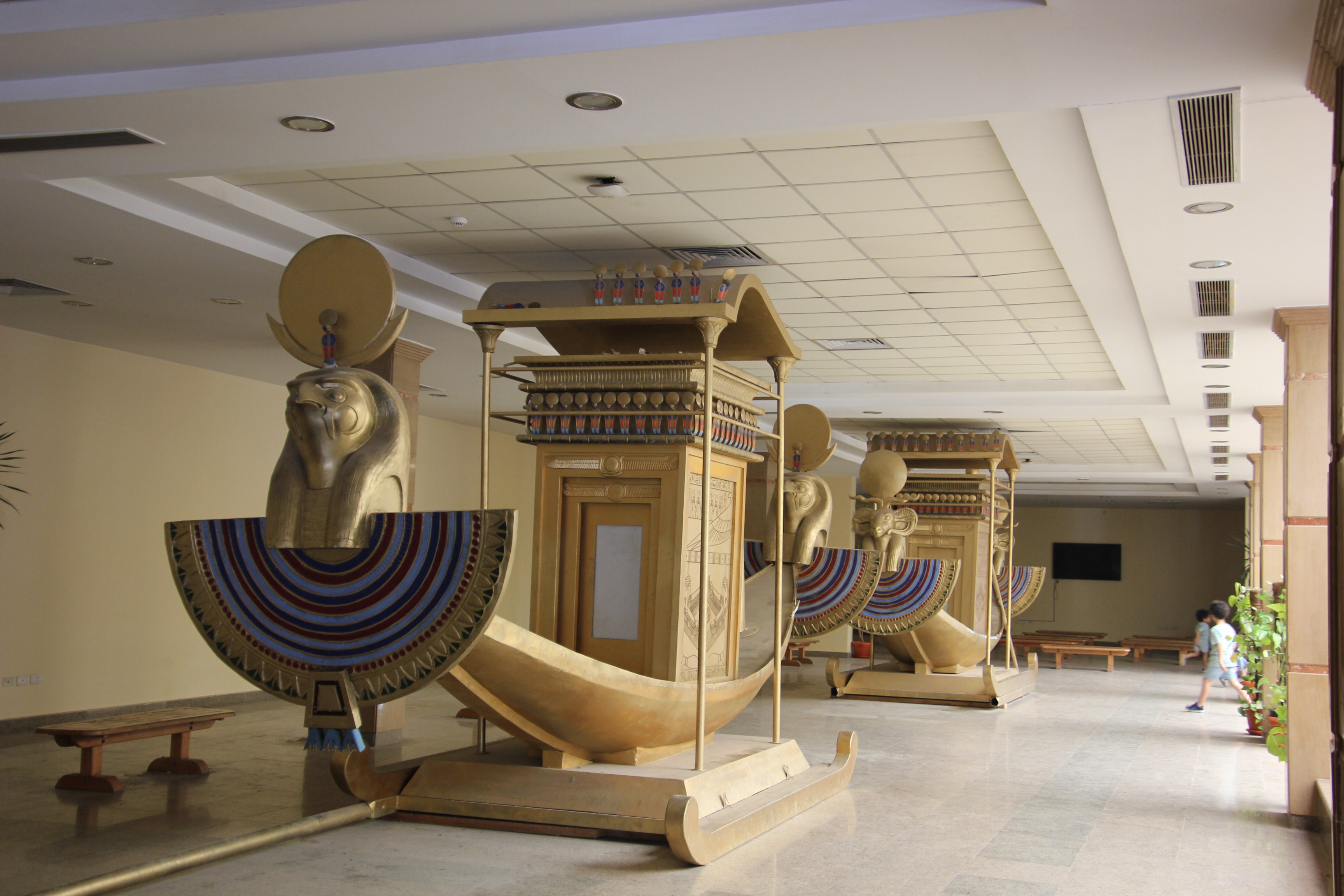
This temple was important as a part of religious celebrations honouring Amun, his wife Mut and their son, the lunar god Khonsu. Each year during the five festival days, processional boats would travel between Karnak and Luxor through the avenue of sphinxes.
 travelswithannmarie
What a fascinating trip this has been for you Ann Marie and I have so enjoyed being able to “share” your travels. I only know a tiny amount of Egyptian history so it has been wonderful to learn more through your wonderful writing and pictures. Doesn’t Canada’s documented history seem so brief in comparison!
Jean.
How majestic! 🙌🏿
You certainly had a once in a lifetime trip to Egypt. Thanks for sharing your experiences.