
We left our lake cruise ship to move to our river cruise ship. In doing so we learned a lot about the dams on the Nile. The old dam was built in the early 1900’s and was upgraded a few times before the new dam was built. The new dam was built at a point of rapids. The Nile was historically divided into sections defined by “cataracts” or rapids. These dams caused a lot of challenge to the Nubians and many were displaced in the construction of both dams.
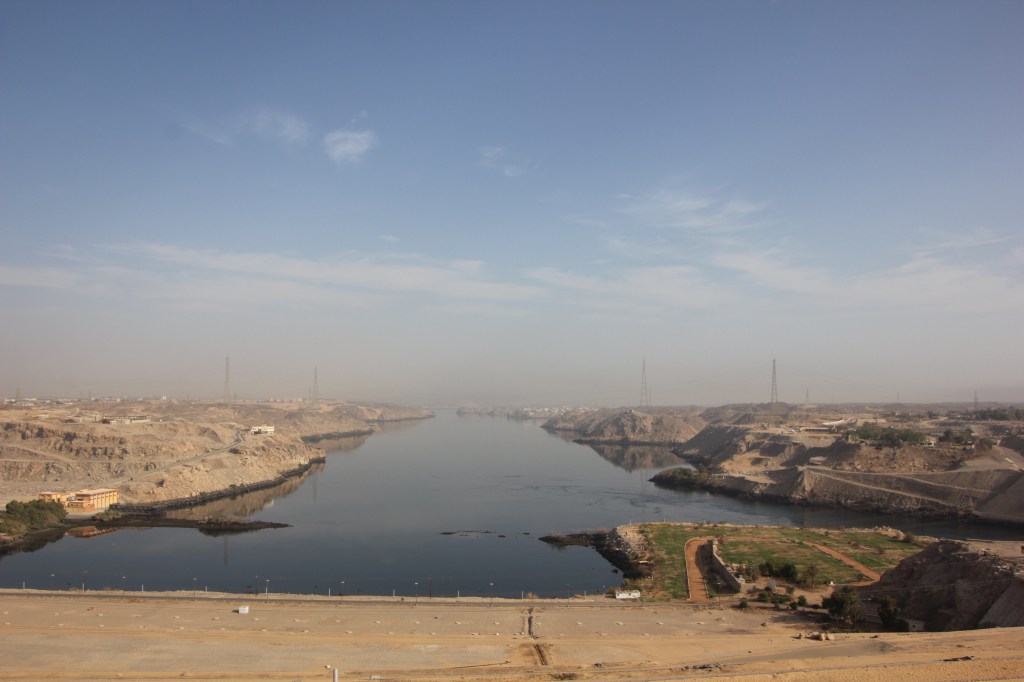

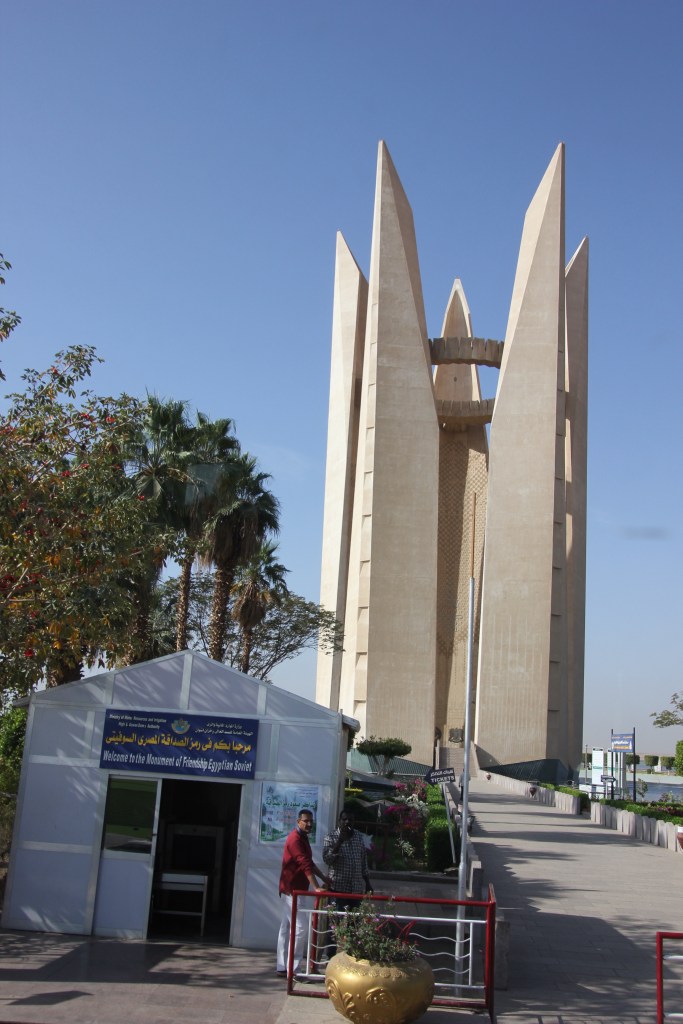
The building of the dam was a complex political process. The Suez Canal became a pawn in the process. Eventually the Russians came through with the needed loans. The Egyptians built a monument of friendship to honour the deal. The dams are considered military sites and we noticed the armed presence (soldiers, guns and tanks). As we drove past a guard post I noticed a sign with the name of a temple on it that I was happy to be reminded about. I took a picture of it. Our bus was then pulled over and our guide asked for my camera to show that I hadn’t taken a picture of anything military. I was happy my camera was safely returned.
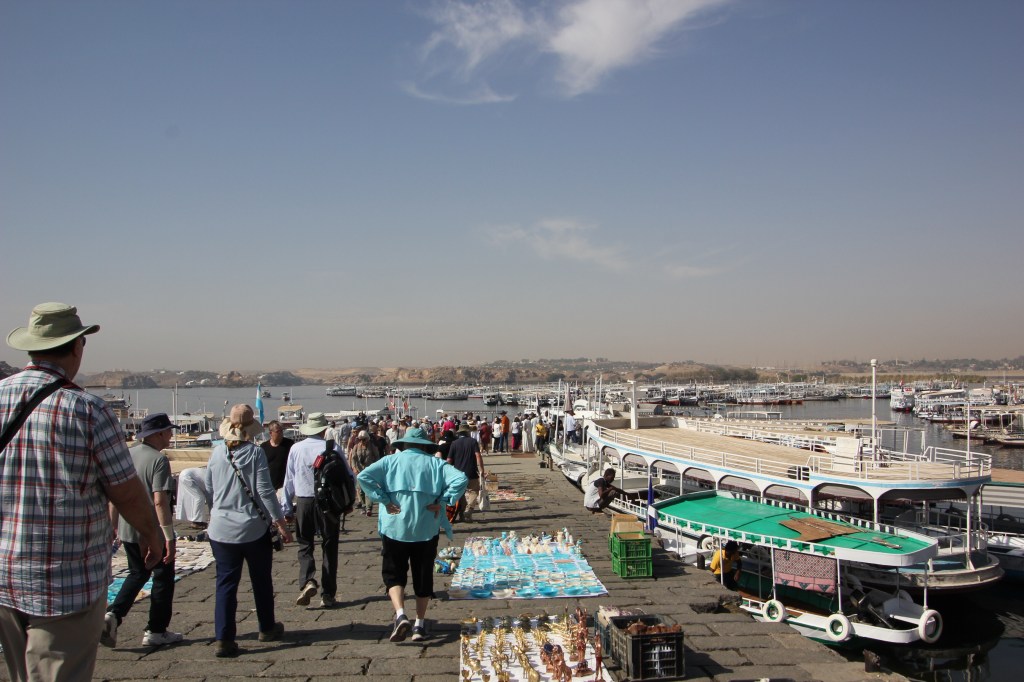
Our second stop of the day was the vibrant Temple of Philae. It was relocated a few metres from it’s original site as the water from the dams flooded it. The rescue required a huge set of retaining walls to be built around the site and the cavity between them filled with sand.the water around the temple was then pumped out. They then got rid of the built up silt by hand and dismantled the temple stone by stone. Then the stones were moved onto a natural island where it stands today and reassembled. We arrived to a bustling dock, alive with vendors and the small boats that take people to the temple site.
The Temple of Philae was the centre of the cult to the Goddess Isis and her connection to Osiris, Horus and the king during the Potolemaic period (300 BCEish). This is considered the last temple of the classical Egyptian style. It’s construction was interrupted the Romans. The site transitioned to a Coptic church and was held by Napoleanic troops at one point. A highlight were the temple cats.
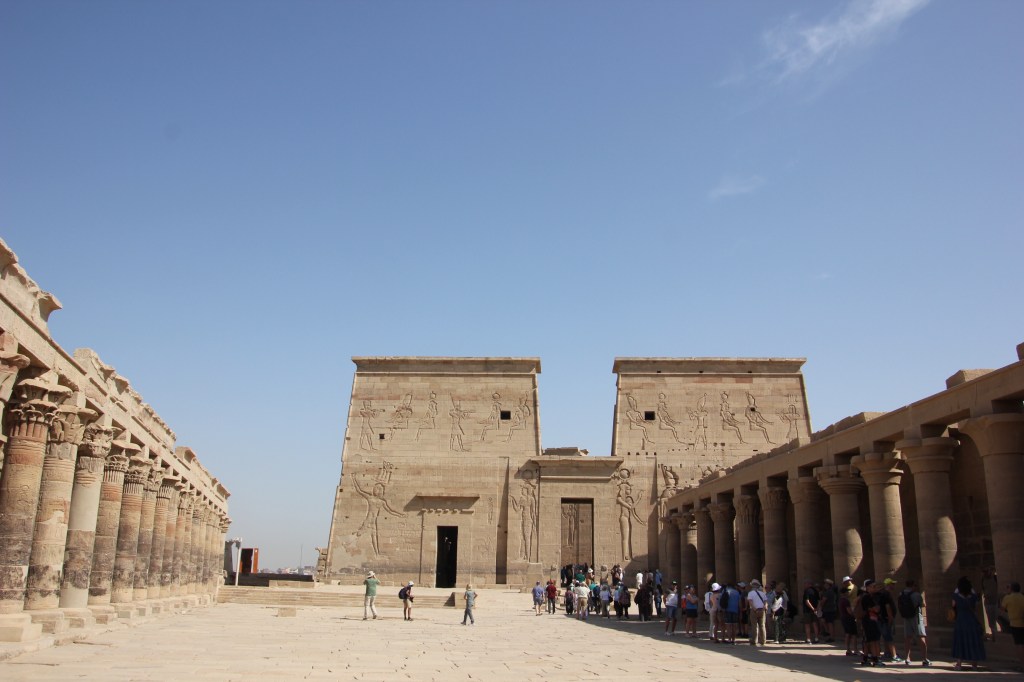
Isis is depicted in many carvings most importantly in the Egyptian trinity – Isis (mother), son (Horus) and Osiris (father). there is a large granite boulder as part of the temple foundation that is seen as the place where her tears over the loss of her husband. These tears are said to be the cause of the Nile flooding.

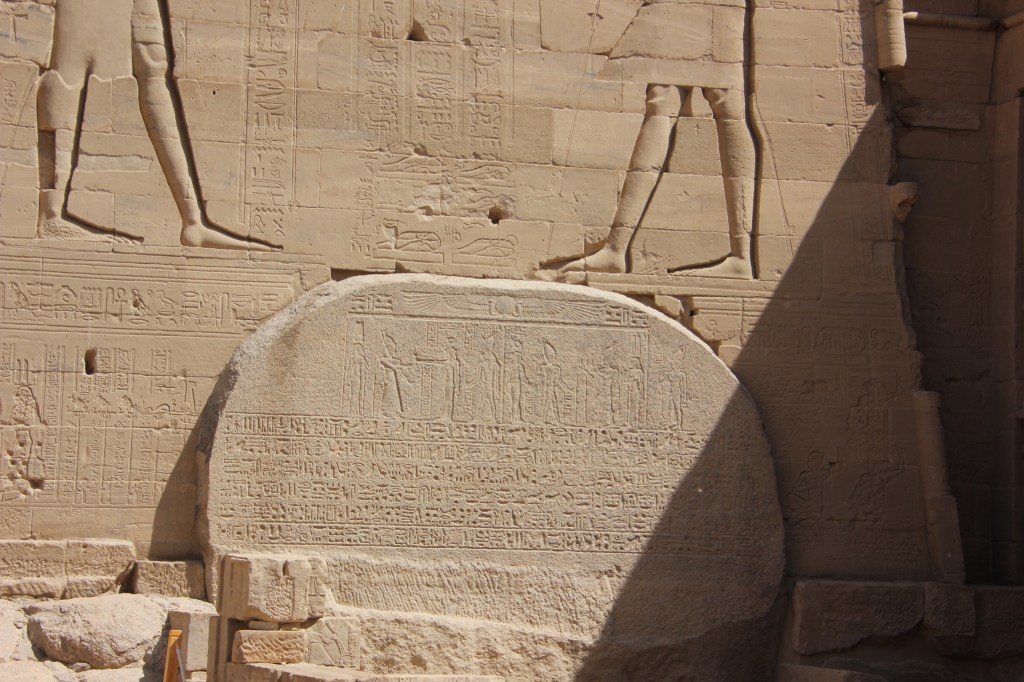
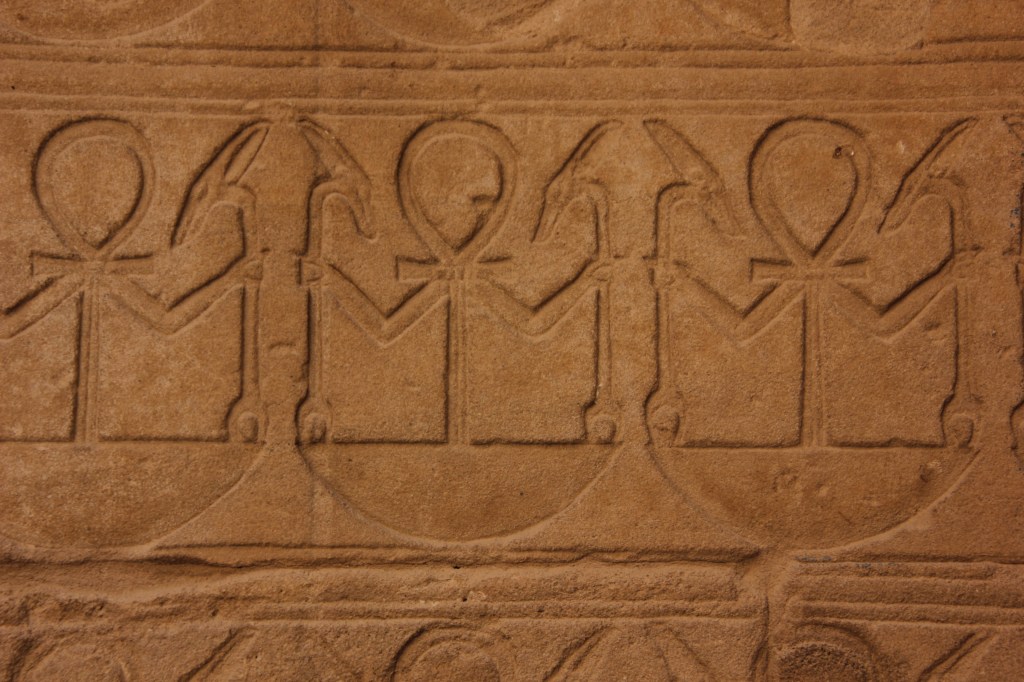
We are starting to recognize Hieroglyphics and their meanings. For example, the ankh symbolizes life and resurrection. The sceptre represents stability, the curve is Neb/god.
There is still more from this day and I’m a bit behind in keeping up. It’s been hot and exciting, so fatigue is real.so I am off to sleep for now. As we learned in New York, tomorrow is a latter day.
 travelswithannmarie