
We arrived in Siena in time to check into our hotel and set out for a morning of wandering. We started with the home of the Dominicans. It was a lovely church that housed the head of St. Catherine, a patron saint of Italy (along with St Francis of Assisi). She looked peaceful, in a leering, I am a skeleton, way.
Our next goal was the shell -shaped Il Campo square in the centre of town. 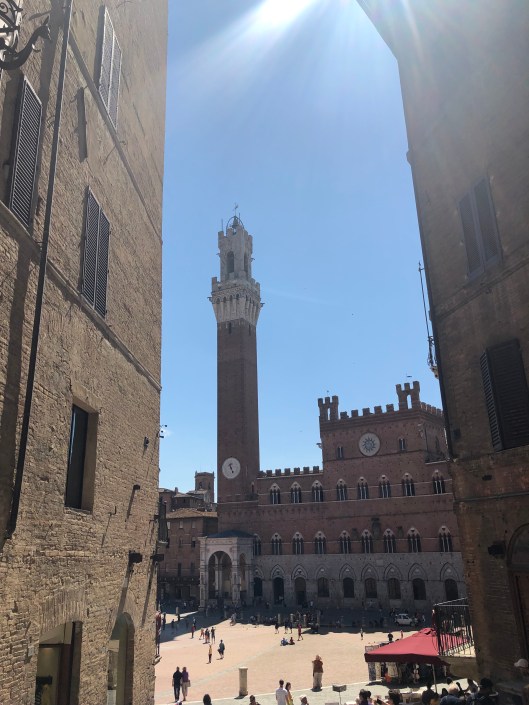 We started our walking tour here. Alice, our guide, told us that Siena is divided into 17 communities (Contrade) who compete in the Palio. This is a madcap horse race held twice every summer. It occurs in the square. They put down a sandy clay surface and let the bareback riders run the race. The horses matter more than the riders as it is the first horse across the finish line, without without rider. https://www.italyscapes.com/events/tuscany/siena/historical-reenactments/palio-di-siena-palio-di-provenzano-2019/
Each Contrade has an official colour and animal. We noticed plaques as we walked that told us which Contrade we were in. 
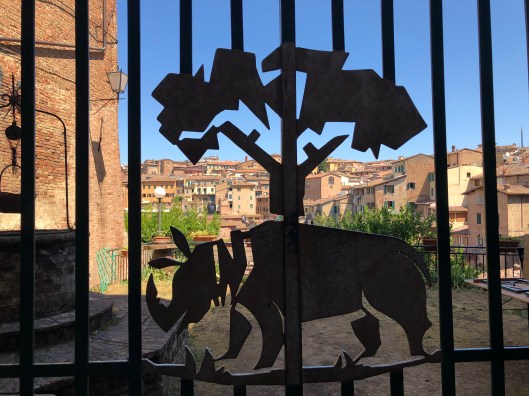
This is the symbol of the forest Contrade. They changed their animal symbol from the wild boar to the Rhino in 1512 when the first drawings of this mighty beast started arriving in Siena. The horses come into town three days before the race to practice and our houses in these tiny stables hidden down what used to be totally covered alleys. 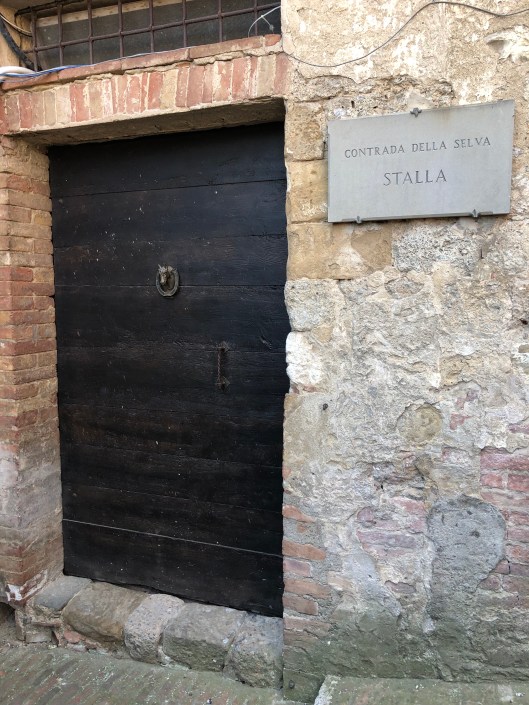
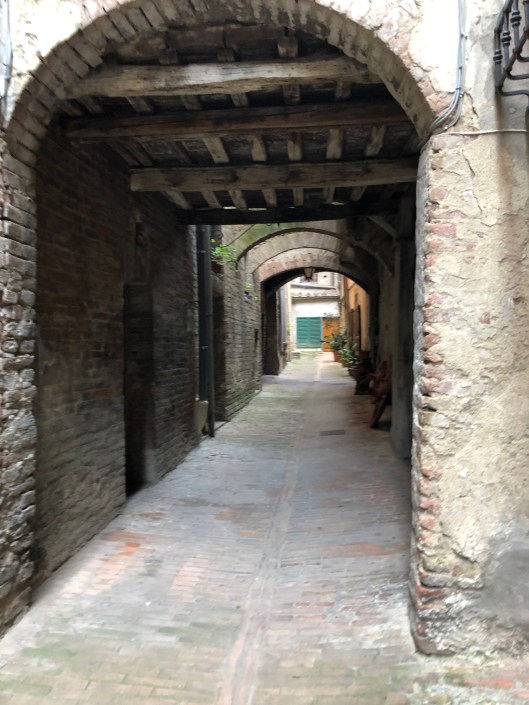
We continued past all sorts of touristic stores and restaurants as we walked through this old city. Siena was important in the Middle Ages as the stopping point from Rome north. The plague stopped in its tracks in 1348. It took several generations to recover and that showed in its loss of political/economic status and in its buildings. Recovery was seen by the time of the renascence.
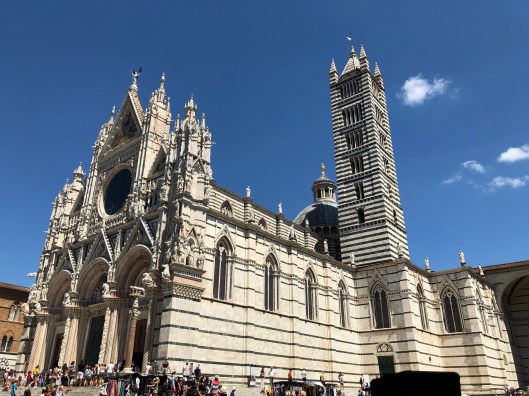
We toured the Duomo and were impressed by both the internal and external decor. 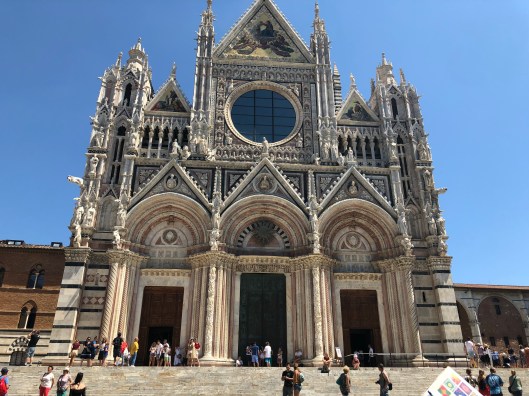
One chapel was designed by Bernini, one of our favourite sculptors. 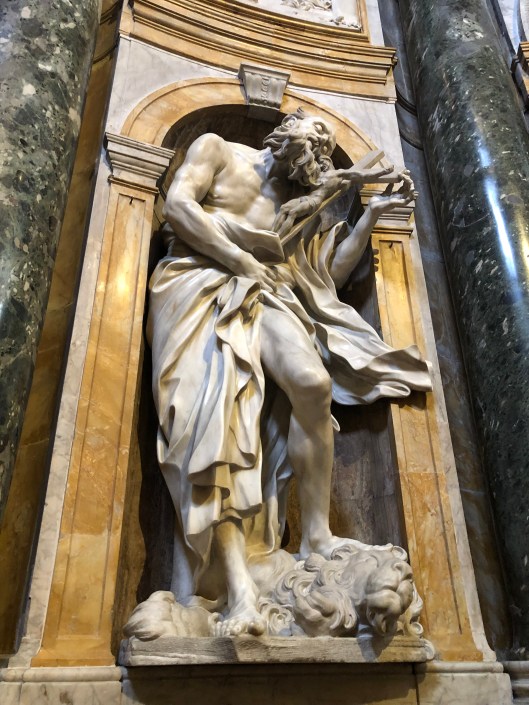 Another altar was designed and started by Michelangelo. He carved 4 panels before ditching the project for the more lucrative commission to sculpt the David in Florence. The statue he did of St Paul is believed to be his first self-portrait. If you stripped away the beard you might also see the face of the David.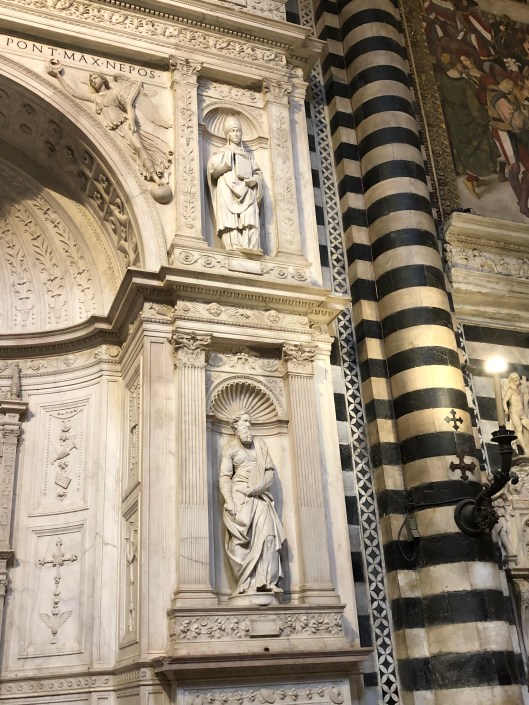
There was a fascinating library full of illuminated sacred music. The Dominican with us on our tour told us they were Gregorian chants she has sung. The colours of everything in the room were vibrant because the library was private until the 1970s. 

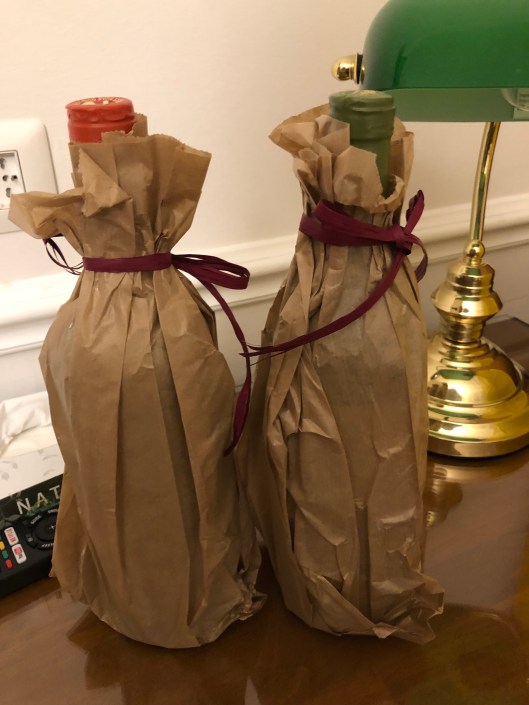
After our tour we found food, wine and the need for a rest. We headed back to the hotel and had a lovely glass of “old style” chianti. One rule change in recent times is that no chianti Classico can include white wine. The old style wine was nice sipping on our patio and had a slight fizz to it. 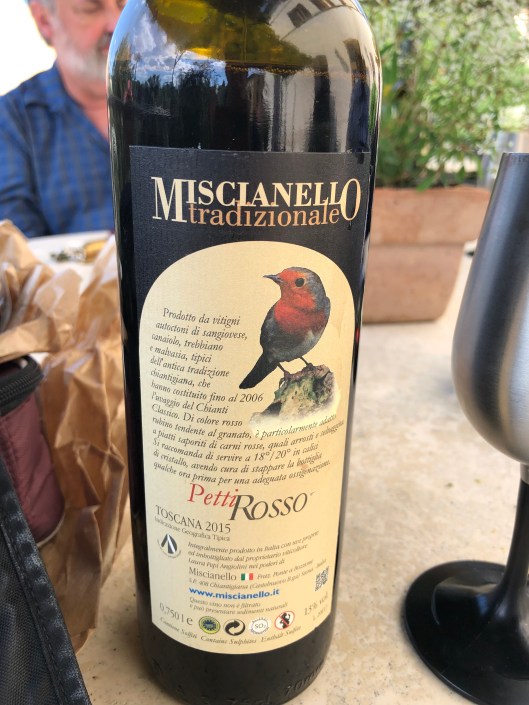 Superstore Liquor store never wraps our wine this well.
  Our next stop was the bus station to explore how to get back to Florence. Then off to Via del Capitan for dinner. This restaurant was in the Eagle Contrada a
 nd our pre-dinner entertainment was a display of flag waving.
Next stop Florence!
 travelswithannmarie