
Today’s outing was a trip into the local community. We went into the Mukuni village. 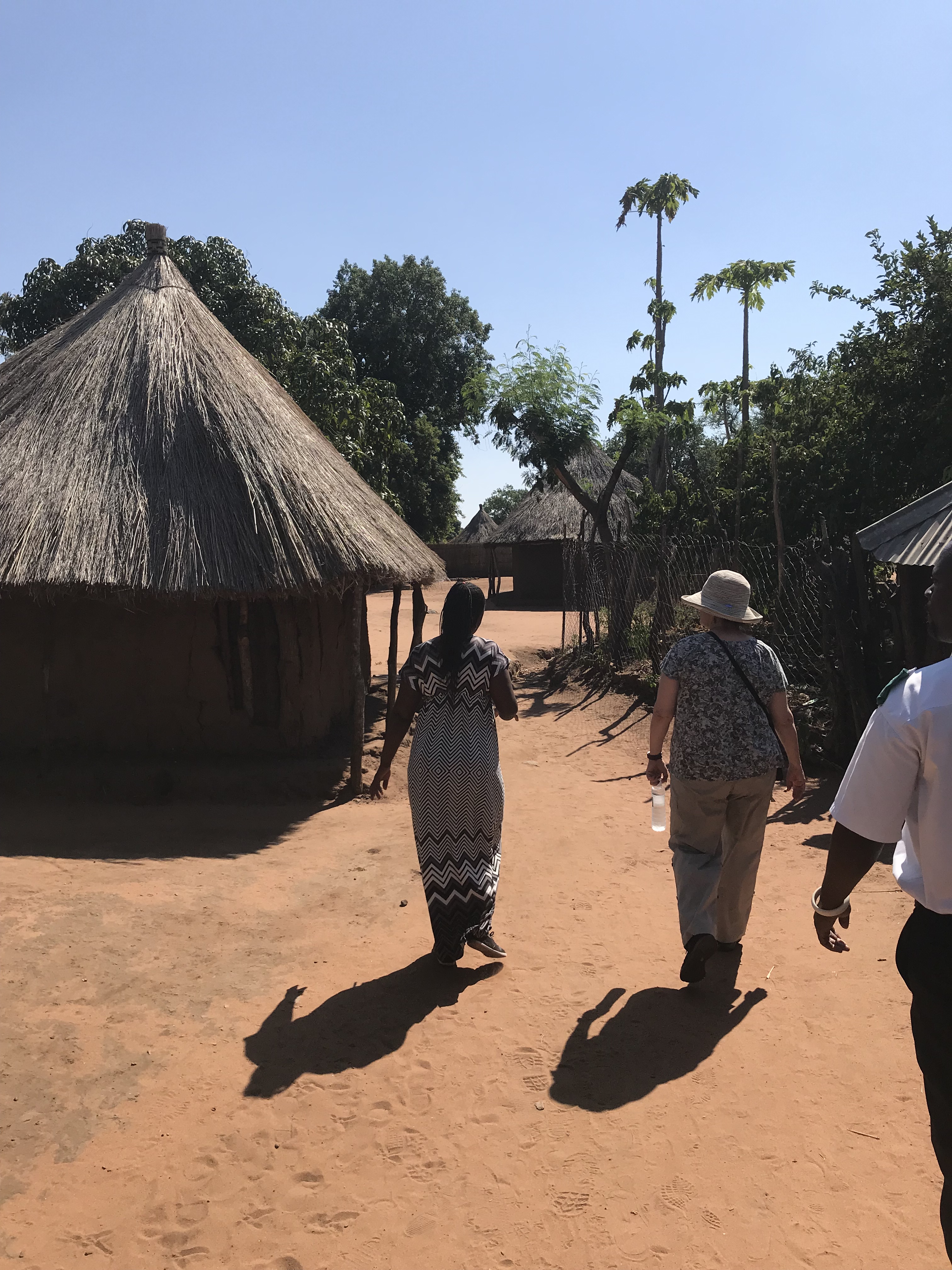 This community of 7,000 people is about 15 KM from our resort. We were again the only people on our tour. This time I wasn’t so keen on being on our own (more on that later). This is a normal village and the Bushtracks’ driver was clear that we weren’t going to see something touristic, we would be going into people’s homes. There is a part of me that wants to understand authentic living conditions, and this requires going into the community. I am also very conscious here of my “white” and “western” privileges. Our guide started to lead us around the community and once the driver was out of earshot, she told us quite frankly that she makes her living by tips and would be expecting something for this tour. This made me curious about how much of what we paid Bushtracks for the tour pays to the community for us to take the tour.
Our tour started by our guide telling us about the political aspects of the village. She showed us the Chief’s “palace” compound surrounded by a sturdy grass fence. There were three rows of decoration. The top row represented the Chief, appointed for life. The second row represented the women’s Chief, she is typically the Chief’s cousin and has the responsibility of ensuring that the Chief does his job well. She is entitled to poison him if she finds he is a slacker or corrupt. The third row represented the second or sub-chief who was the Chief’s go to guy and second in command. 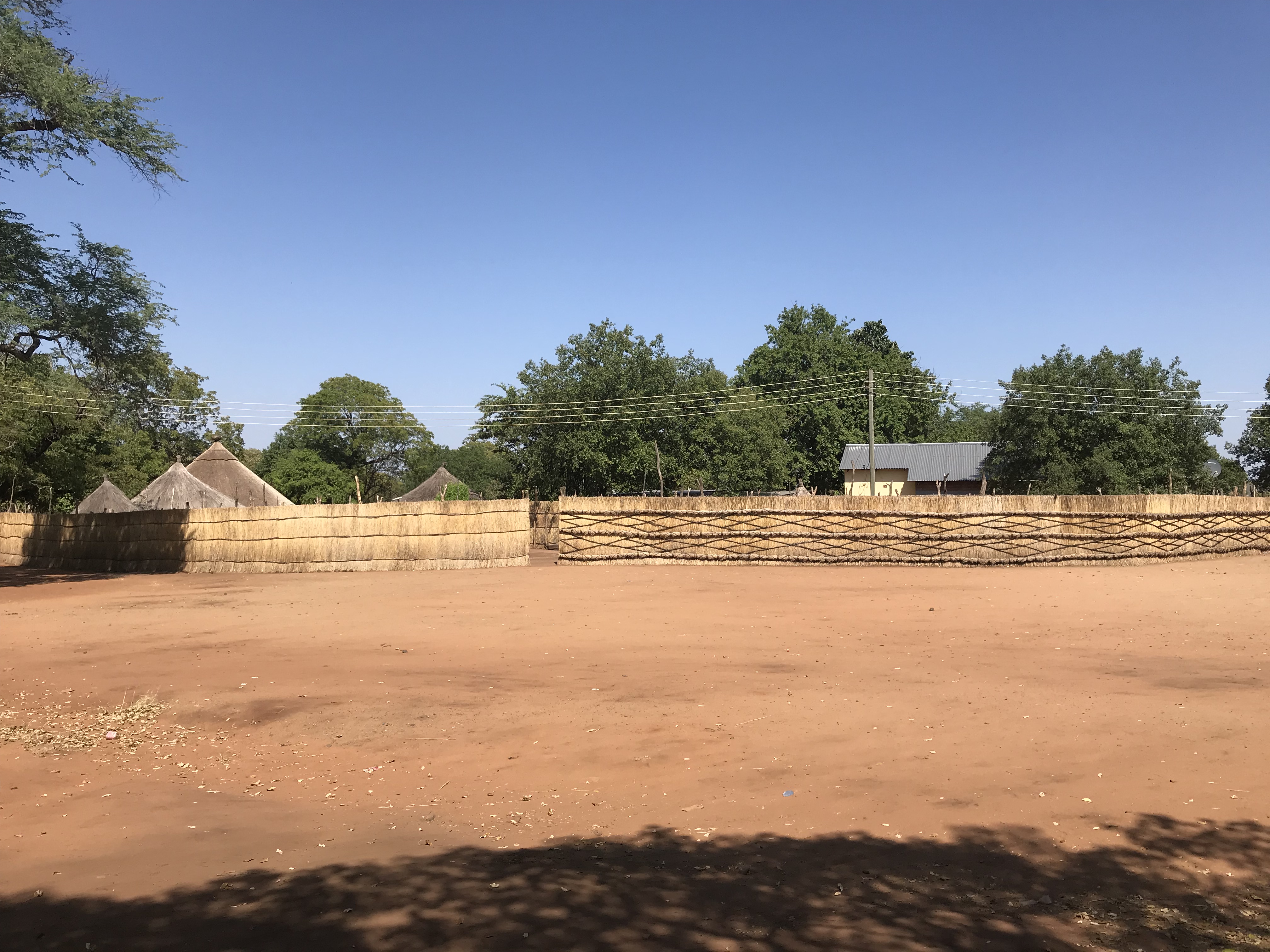 Our guide pointed to the thatched roofs of several buildings within the compound and told us their function, but she did not take us anywhere near where we could see what the inside looked like. She did show us the community jail. This small, two room building had a dirt floor and a barred door on one side where the people who get too drunk or who have behaviour problems are housed for a day or two until they get back to being themselves. This drunk tank looked like something you definitely wanted to avoid.
We then wandered around the village. Each family had several small buildings that were either for sleeping or cooking. The wood frames of the structures are erected by the men, while women do all the clay/mudding work. The children had a hut of their own and parents slept nearby. The buildings are round to facilitate snakes getting out. The have no internal lighting in the buildings so it is helpful to to know that, in a round room, the snakes who come in can keep going right on out. In a building with corners, they can get turned around and stuck more easily. The family compounds were surrounded by grass fences that looked sturdy. Its unusual for animals to come into the village because there are so many people and fires, however, the biggest concerns are with elephants who want to come through.
There were five artesian wells within the community. Girls are trained from a young age (i.e., at 2 years) to carry water on their heads. 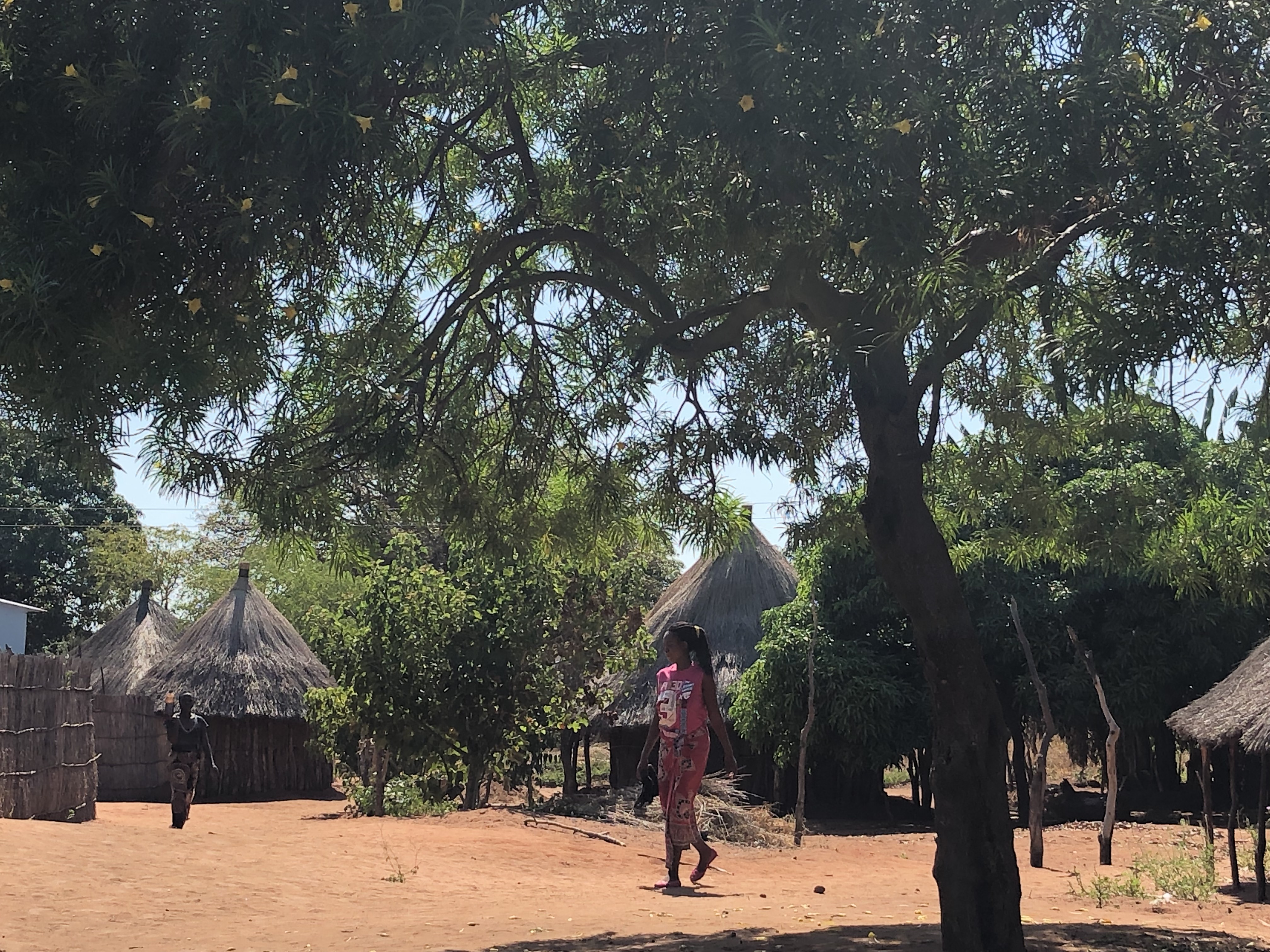
 Our guide stated that the amount they carry is appropriate for their age/size. Even though the families had fences around their compounds, everything was still open. People seemed to have few belongings, but we did hear radios and there are some televisions in the community. There were no cars to be seen. Everyone either rides a bike or walks to get where they need to be. One of the issues that they are working on now are toilets. Most villagers still go into the bush for their toilet. This is very stressful for people because the village is large and that means that there is a bit of a distance to travel. Additionally, it also puts the girls at risk of harassment. Some families are now experimenting with dry composting toilets, but they aren’t the norm yet.
We ended where we expected, at the market. 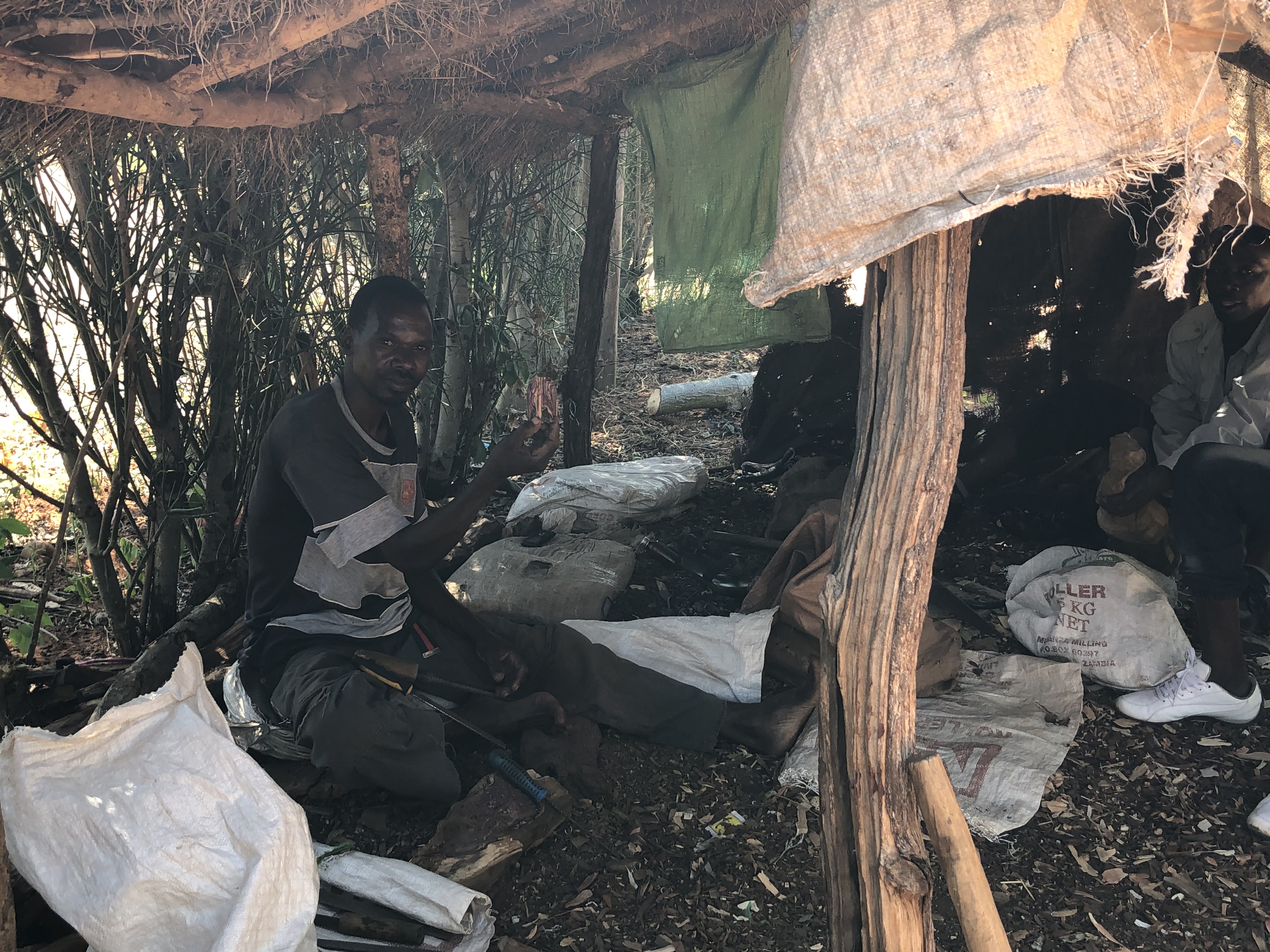 We were somewhat dismayed to see we were the only tourists present because all the merchants were focused on us. Our guide explained that there were 6 sections in the market, where several families had the booths that sold their handiwork. Her job was to bring tourists to the appropriate gate to ensure fair access to tourist dollars. We had seen the men making the carvings in the village “factory” and their wares were on sale. The bargaining began in full force. We had decided to spend our souvenir budget here because we felt sure that the objects were authentically produced by the local community and because we knew that there would be some significant pressure to buy. One fellow asked to barter a bit. He wanted the carabiner from Dale’s backpack in exchange for giving him a good deal on some statues. Believe it or not all the items cost either 100 Kwacha or 300 Kwacha. We now have some nice souvenirs.
We left the village and drove into the city of Livingstone. 200,000 people live in the metropolitan area and it is spread out along the main road. Our next stop was the historical museum. The local guide took us through the five galleries: David Livingstone, political, natural history, anthropology, and cultural. The Livingstone gallery was a history of his life and travels in Africa. He was a missionary and explorer. He came to convert the bushpeople to Christianity and find the source of the first the Zambezi river and later, on his third expedition, the source of the Nile. Another goal of his third expedition was to stop the slave trade. In those days’ slavery was handled by the Zulu, Portuguese and Arabs. He survived the first two journeys but died before finishing the third quest. I am not sure what it was that made sense to the locals to take on Christianity, but Zambia is officially Christian now. One of the Chiefs Livingstone converted had six wives and had to give up five of them to be a good Christian. Our guide informed us that what really happened is that he continued to care for all these women as per his traditions but only had one wife sleep in his quarters with him. As in North America, there was no way that the white Europeans could survive for any significant length of time without the support of the local people. Livingstone bought two slaves as he infiltrated the slave markets in Zanzibar. These two men guided him throughout Africa and are celebrated as important figures in Zambian history. When Livingstone died, they took out his internal organs (to prevent the body rotting) and buried them in Zambia. The rest of the body was packed in salt and taken to the coast where a ship carried it back to be buried in West Minster Abbey. The journey took 11 months on foot!
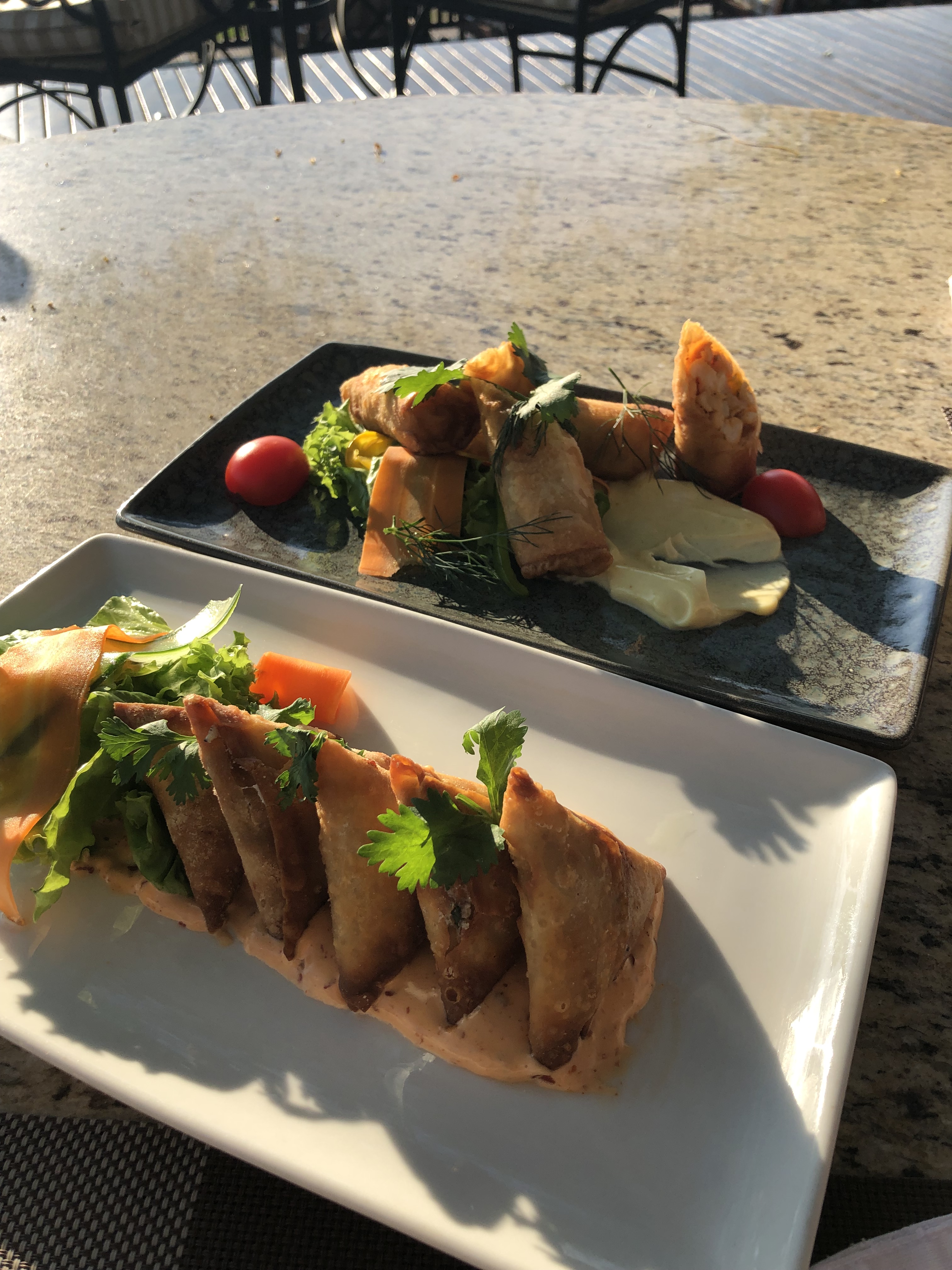
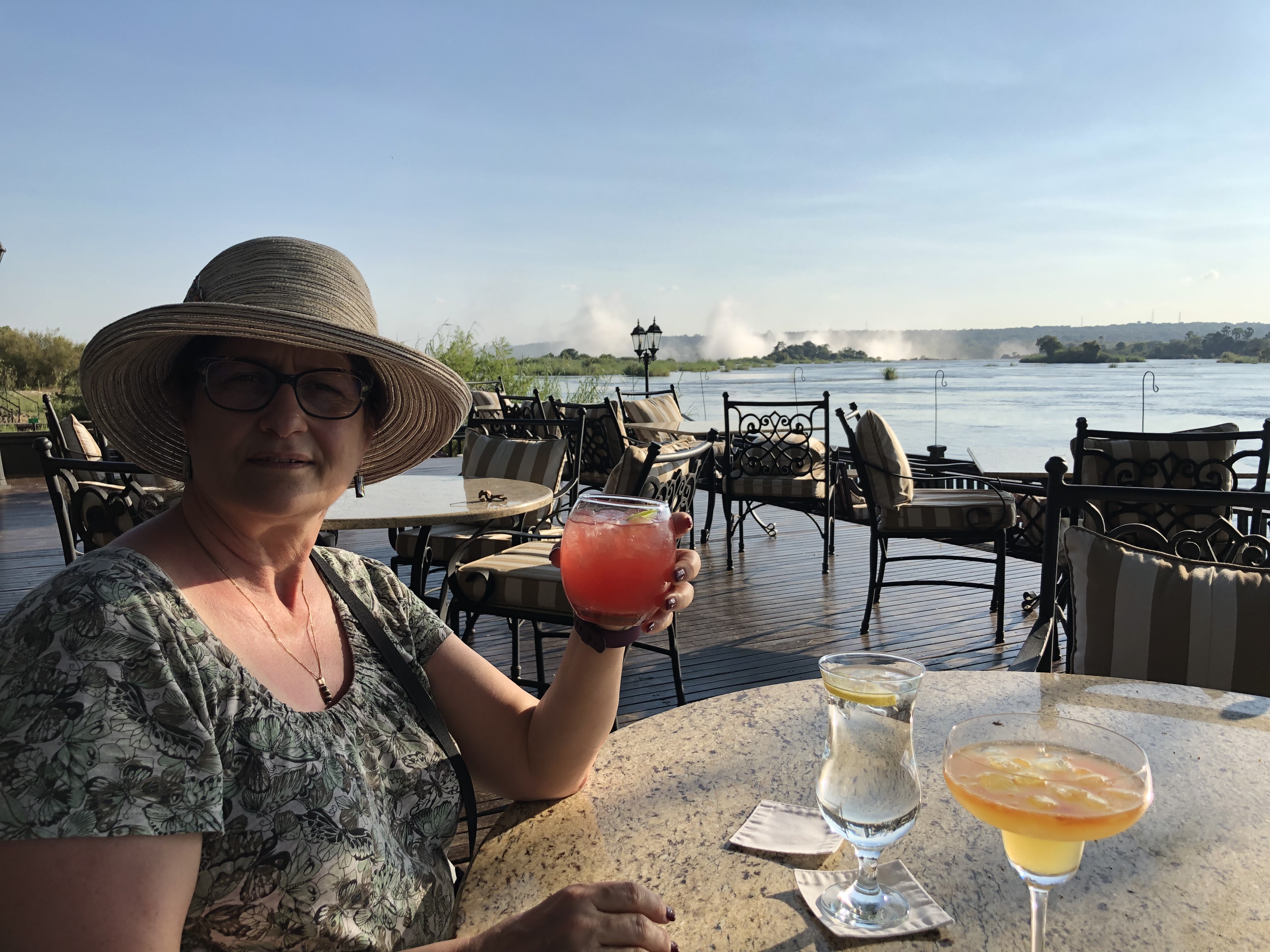
By the time we got back to the hotel we were in the mood for a relaxing beverage. We found a sunny spot on the bank of the Zambezi and watched the water go by while eating samosas and crocodile spring rolls (chewy critters, but delicious) and sipping cocktails. Mine was a delicious watermelon based gin drink and Dale’s was a passion fruit one. We came back to the hotel and noticed many of the people from Dale’s conference were starting to arrive. The tide has started to turn on this holiday. We are not planning anymore big adventures for the rest of our stay. The main goal now is for Dale to work and me to relax by the pool in the shade and read books.
 travelswithannmarie