
Our outing of the day sounded rather tame based on the descriptions in the brochures. We would go to a rhino conservation park and see rhinos (somehow, I had envisioned them hanging out in larges pens) and then off to a lion enclosure where we could see the lions up close. The film of these activities on the wall at the airport immigration line may have been suggestive. What we got was wonderful but different than our original understanding. We were picked up by our guide who informed us that once again, we were the only people who had signed up for the trip that day. This pleased my geeky, got to-ask-questions self to no end. We started with a game drive in one of the smallest parts of the Mosi-as-Tunya National park. We saw several zebras, deery-looking beasts (e.g., antelopes, gazelles, waterbucks, kudos, wildebeests),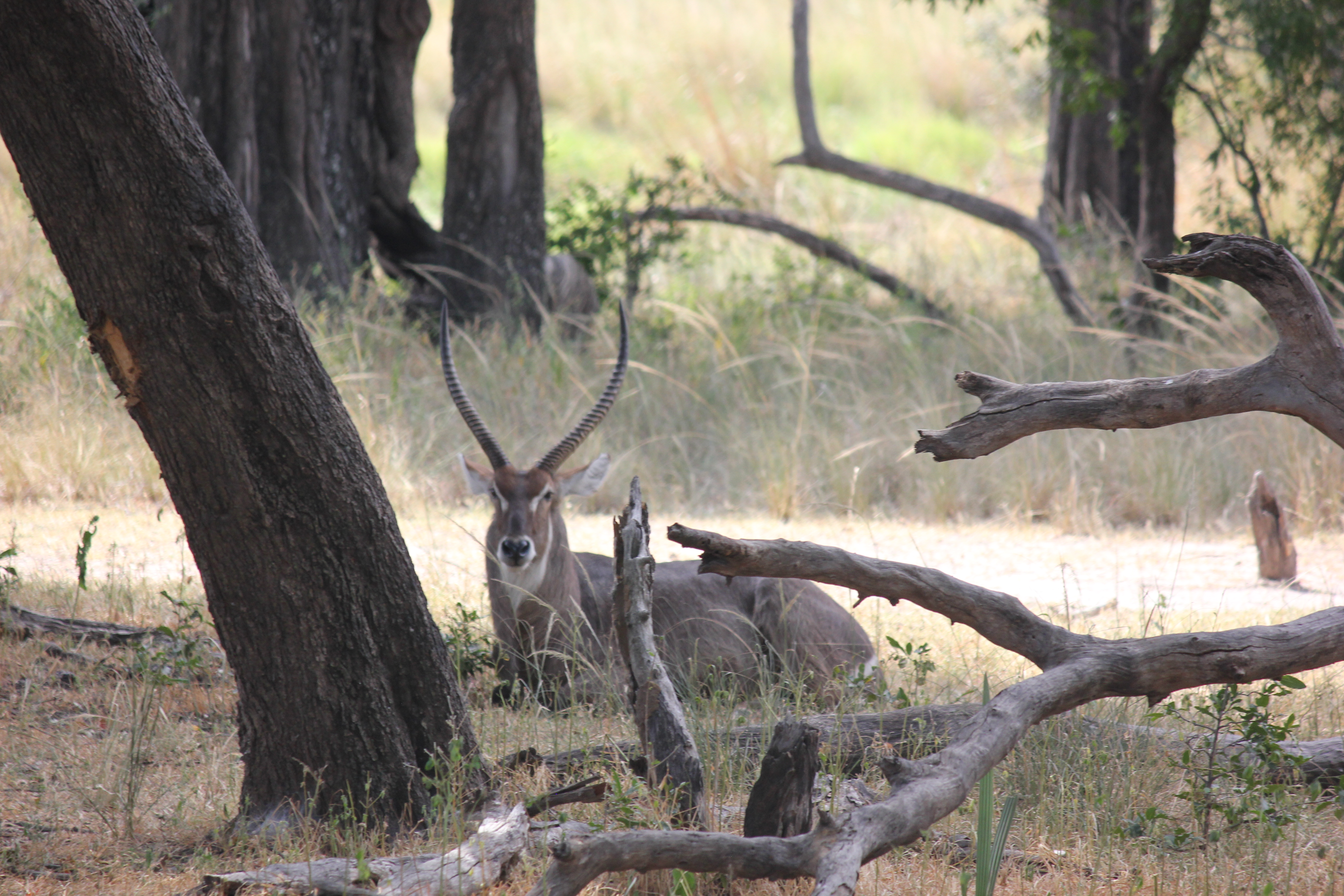
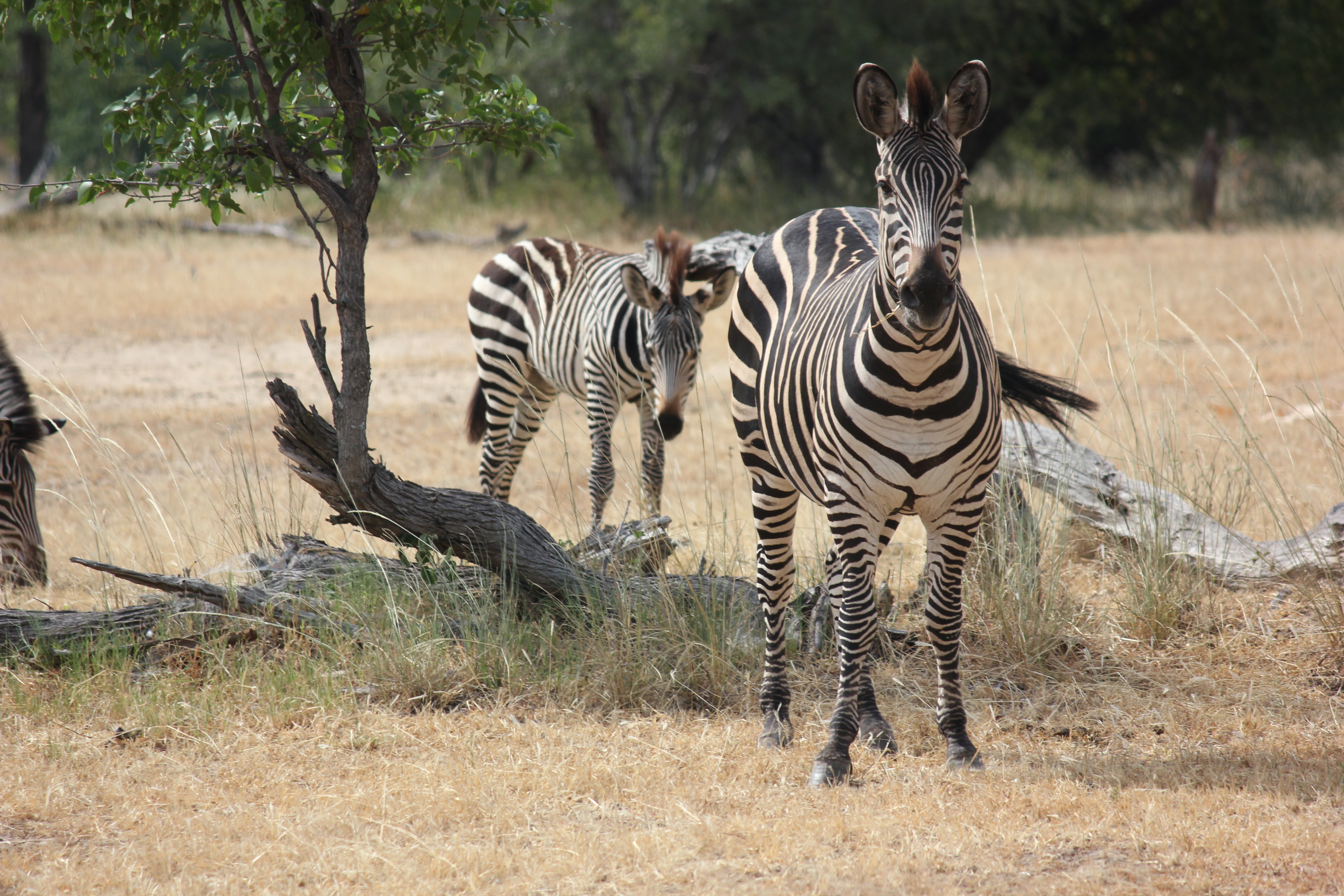
a family of warthogs and many birds. One of the most beautiful was the Bee Eater bird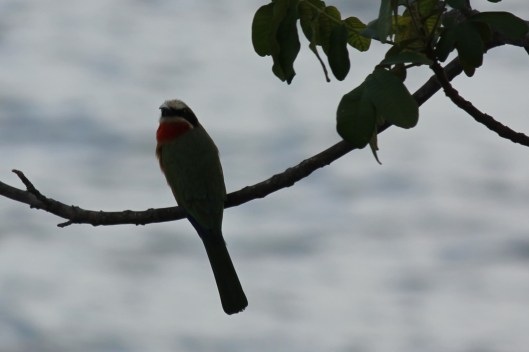 who lives in tunnels in the river bank. The warthogs were interesting. We noticed that some of them kneel to eat, a unique way of getting down to earth. The drive was interesting and unexpected. It wasn’t described in the brochure at all.
Our driver came to a stop at a small building in the middle of nowhere. He stated that we were now going to wait while the rangers got ready. Then a man and a woman methodically changed into walking gear, put their guns, i.e. Short automatic rifles, on their shoulders and climbed into the jeep. These were the rangers who were going to take us to the rhinos. Our instructions were to follow their instructions and walk slowly and quietly in a single file (to be less of a threat). We set off on foot into the trees following our guide (no pens in sight, we were in the wilderness). He took us to where he thought the rhinos were and there they were gone. He left us briefly and then waved to us to come quickly. We turned the corner and he waived me forward to take pictures. There were three rhinos, a mom and two of her calves, one from last year, one this year. The “little one” started moving quickly towards us and we were encouraged to back up and get out of the way.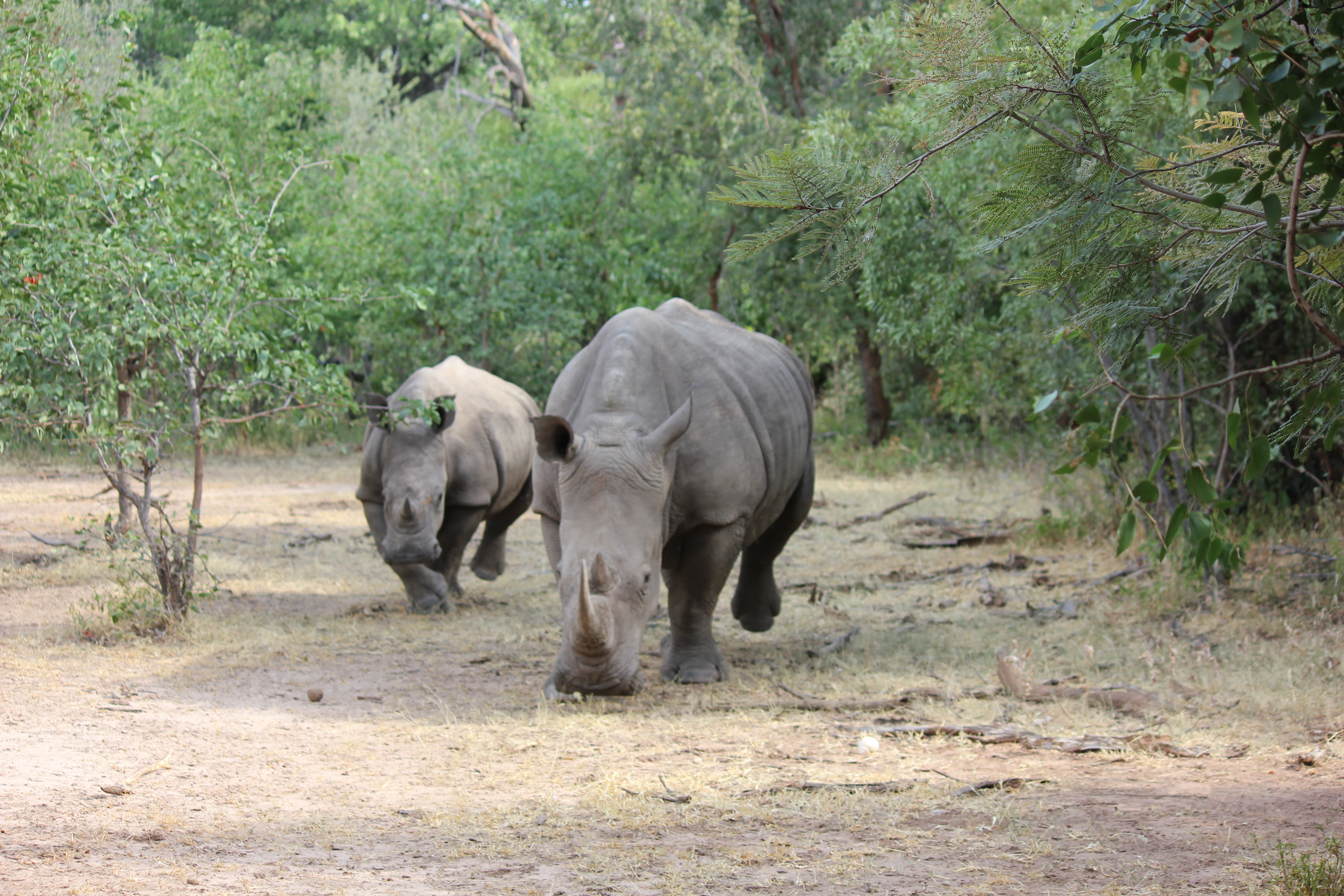 We did as we were told. What we learned was that people who wore white clothes (like me that day) tend to bring grass during the dry season, so the little one was a bit hopeful and confused. S/He got over it. Dale said that it makes your heart beat in a certain kind of way when a rhino starts to move quickly toward you. We were able to get very close to these magnificent, huge creatures.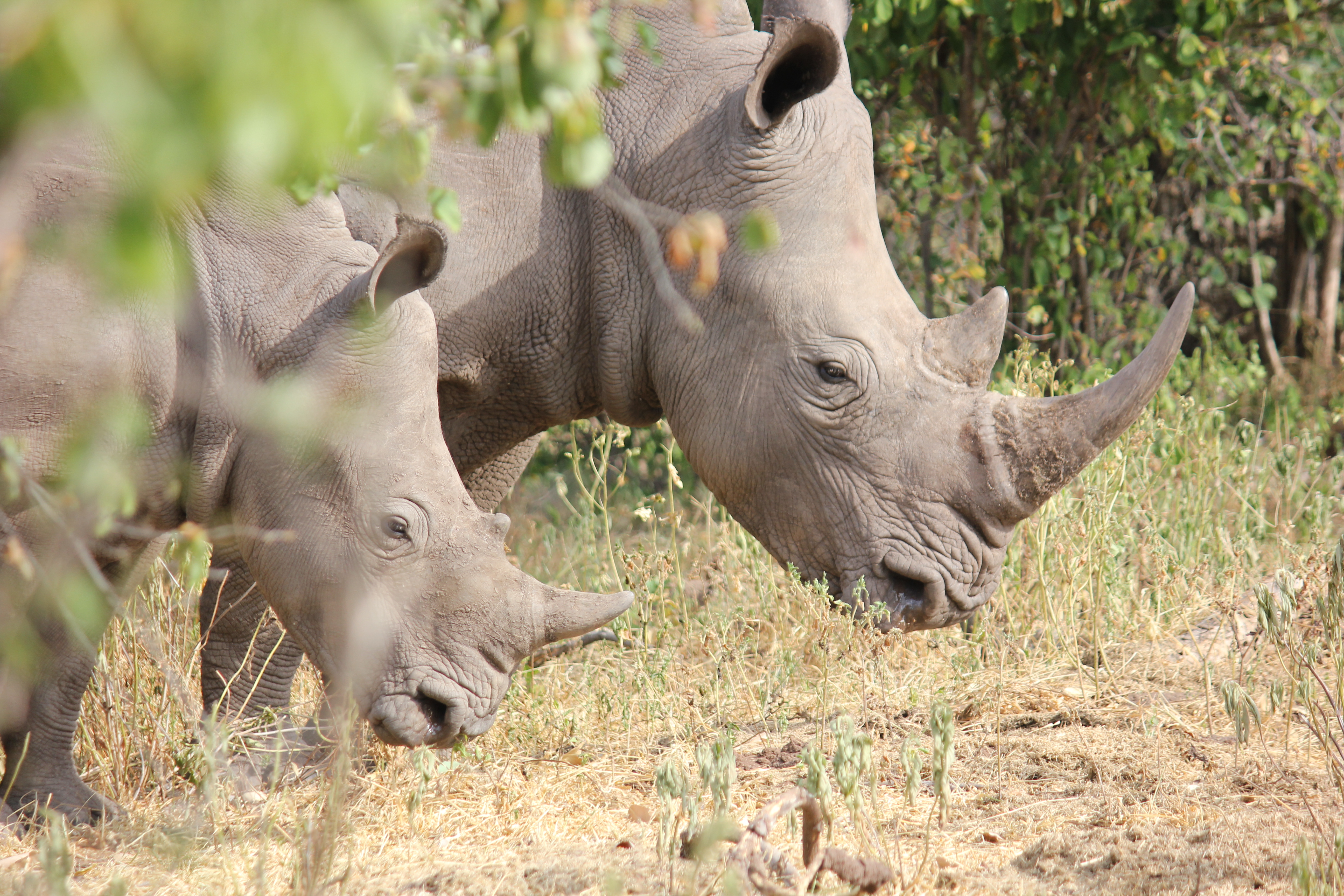
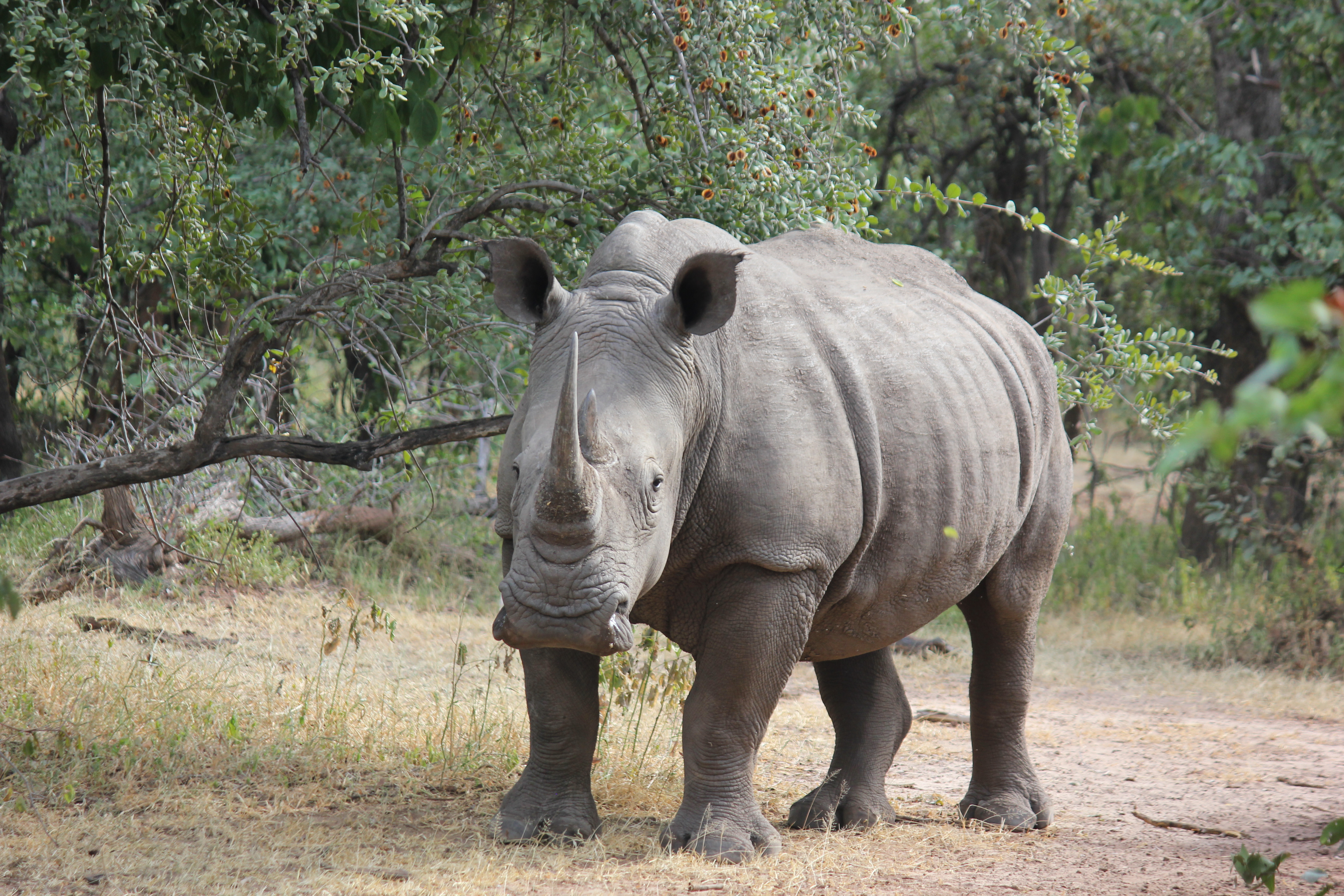
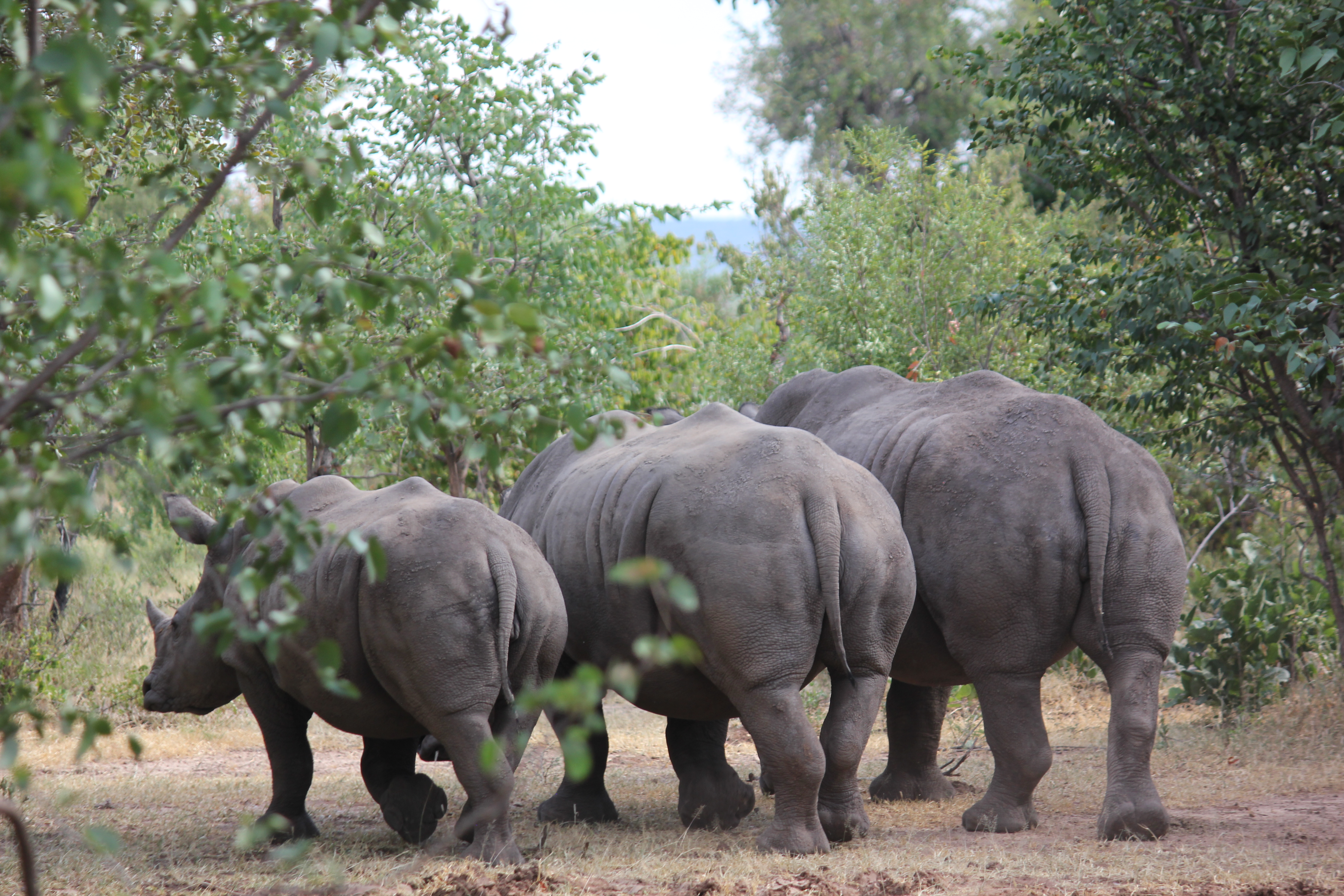 They still had their horns. The guide indicated that in some areas, the horns are removed to discourage poaching. This park is trying to keep them as natural as possible. There are nine rhinos in this park. It was a bit exhilarating to be that close to the animals (like less than 30 feet).
We returned to our jeep and driver and moved onto the next part of the adventure, a visit with lions. We went over the bumpiest roads imaginable, basically hard packed red sandy dirt that looked like it was not actually ever constructed, just a trail that became a road because vehicles kept following the path. My Fitbit recorded 2500 steps while we drove the 20-minute drive. There was, for one stretch of the road, electric fencing that looked to be in bad shape. The driver said that the elephants don’t like the fences and throw logs at the fences so that they can continue on their way.
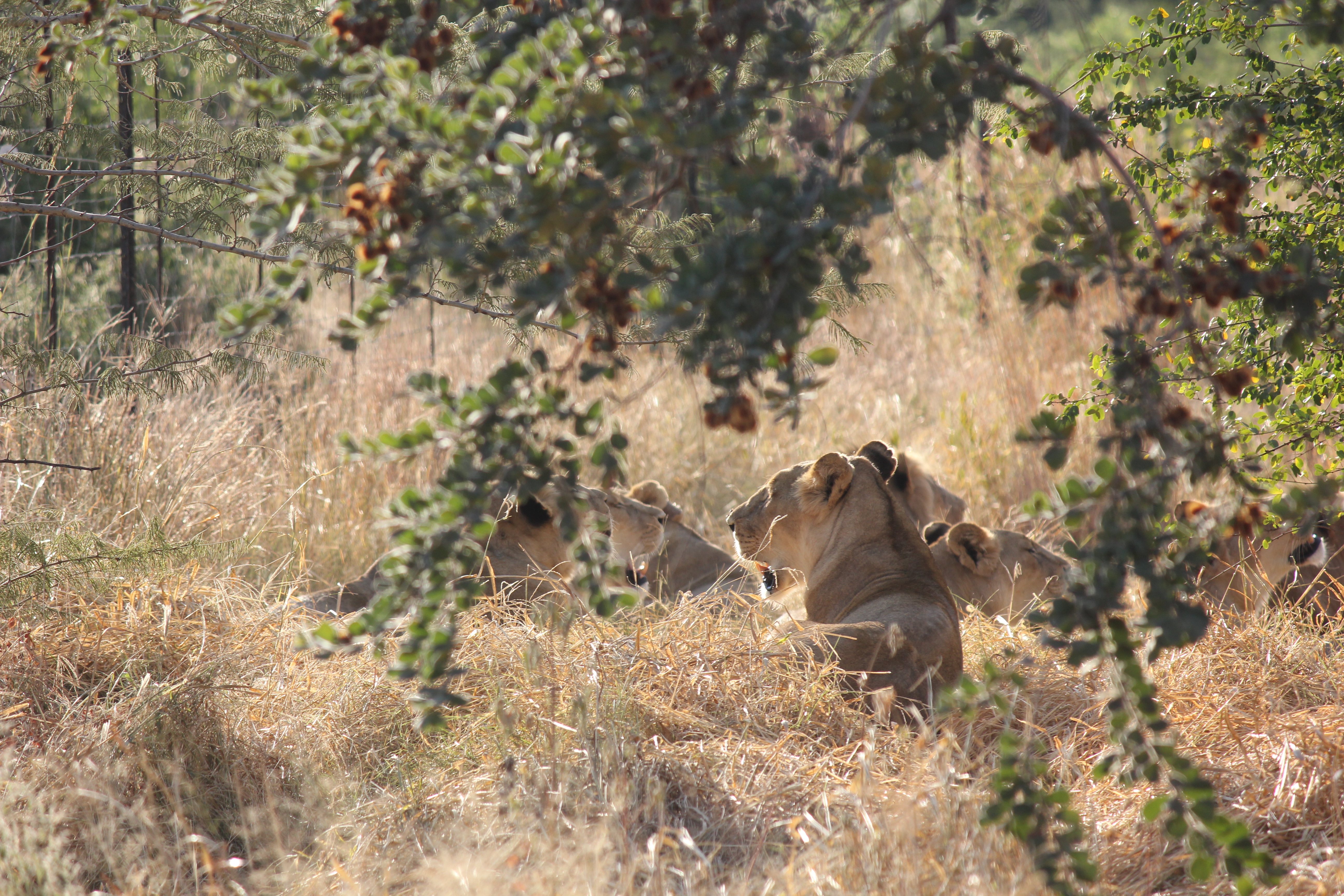
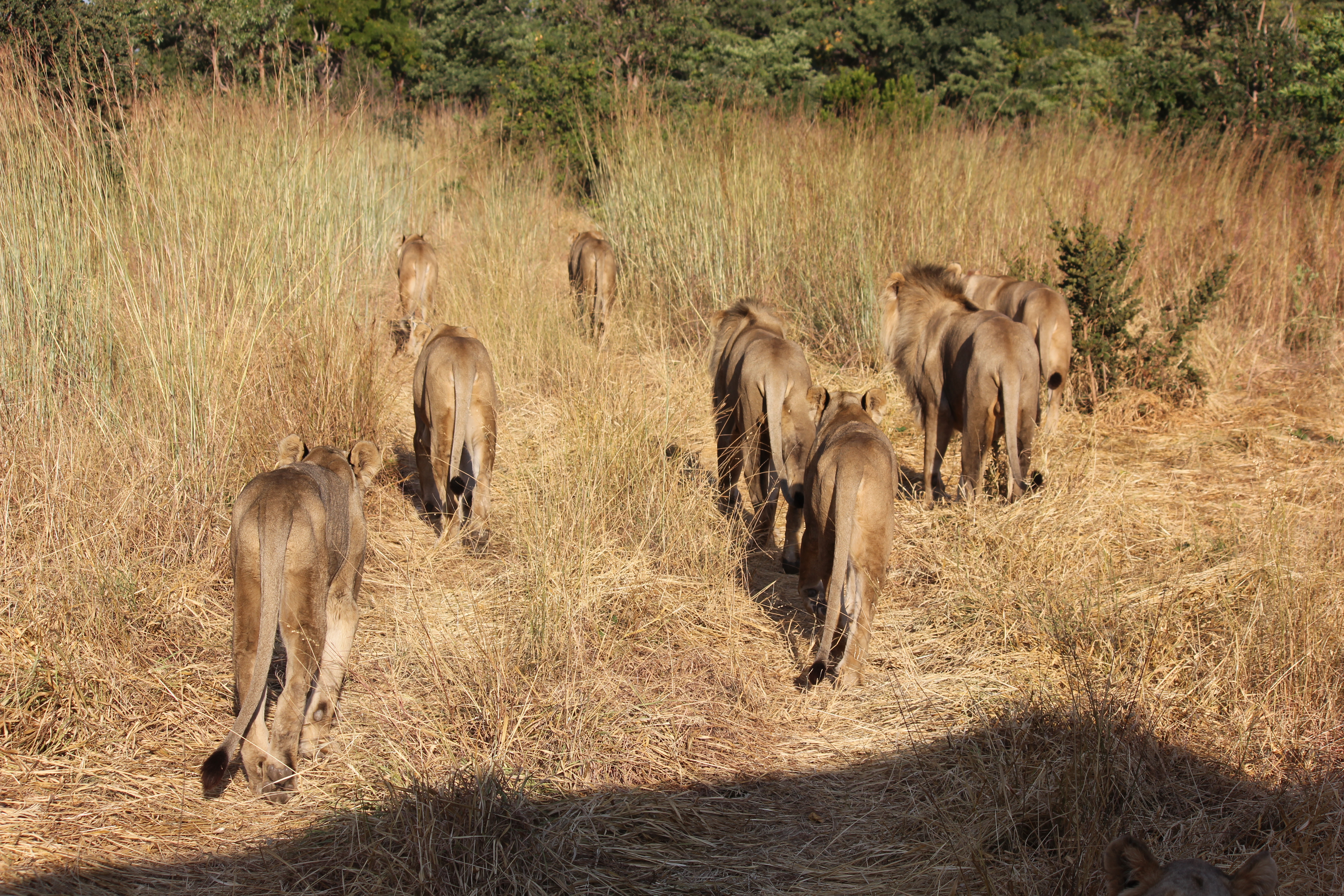
We arrived at a hut in the trees and a man emerged inviting us in for a drink and a cookie. It was a great idea. Following our break, this man explained that he would be taking us into an area where there were ten lions. These lions were part of a multi-step lion conservation program in Zambia http://lionalert.org/alert/project-detail/african-lion-rehabilitation–release-into-the-wild-program. The lion population in Africa has been declining for many reasons, all human related. We saw one group of lions in large enclosures as we entered the protected area. These lions were bred in captivity and hand raised by people taking them on walks into their natural habitat. We didn’t stop to see these animals, just said hello as we drove to the next gate, where the guide carefully checked the bush before opening the gate to let us into the second phase of the project, wild lions. These lions were released as a pride into a natural area (large enough for the lions to range naturally but fenced to keep them in. These lions had cubs that were then raised naturally without human interference. When old enough the younger of these lions are released into national parks that are trying to build their lion populations. It was fascinating to see what was going on. While they warned us that we might not actually see lions on the drive through this area, we needed to be alert. The guide also warned us to stay seated in the Jeep at all times and, no matter how close the lions come to the Jeep, do not panic. Well, needless to say, we found the pride and they came close to the Jeep. It was not scary at all. They don’t recognize the Jeep as a threat, and if we don’t bring attention to ourselves, we were pretty safe.

That was an amazing, yet exhausting day. We had enough energy for a beer and appetizer by the pool and then realized that we were ready to crash. It was a good day.
 travelswithannmarie