
Despite arriving late last night, we were up bright and early this morning for a tour of Cape Town. We had a private guide booked and he took us first to the District Six Museum. 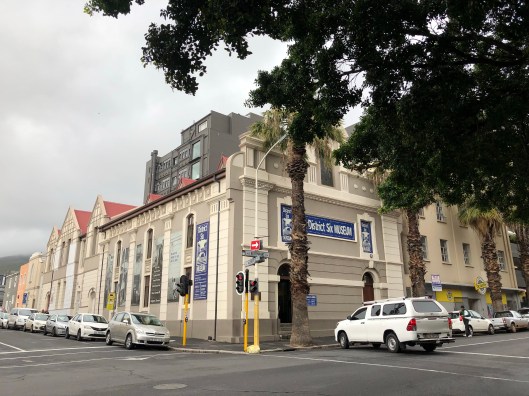 This museum detailed the forced eviction of the Black and Coloured people from District Six, a part of Cape Town. The local government forced the evacuation of thousands of people, declared the land they lived on as “white only” and then bulldozed their homes. It stuck me that this occurred in 1966, when I was 5. The parallels with what happened in Canada with Indigenous people were striking. It was a brutal but powerful museum. It told the story of the forced resettlement from the perspective of the resettled people and focused on how their lives changed with the stroke of a white man’s pen. They made this sculpture out of the street signs from the demolished areas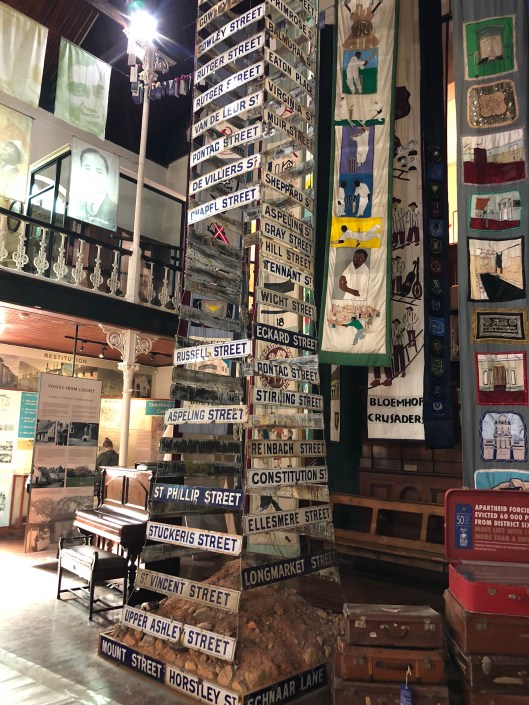
We were then toured through a township outside of Cape Town. It was a cold look at reality. The people living in the township fell into two categories, people with permanent housing built primarily of cinder blocks and people “squatting” while waiting for housing. Those people cobbled together whatever shelter they could find, often corrugated sheet metal. The poverty of the township is staggering. 50% of people living there are unemployed and have little to no hope of change. It is a rough existence. Our guide was clear that we were able to drive through the township with a “local” but that we would not likely find our way out on our own. The reality of the environment was clear as we left the township and noticed that immediately adjacent to it was an American school in a fenced area where only privileged white youth can attend. The reality was black and white. Our guide and others have described that because some of the people who implemented Apartheid are still alive and attitudes and resentments don’t change quickly, it will take a few generations for true healing to begin.
We then drove through a colourful district of Cape Town where all the houses are painted bright colours that celebrate the owner’s freedom.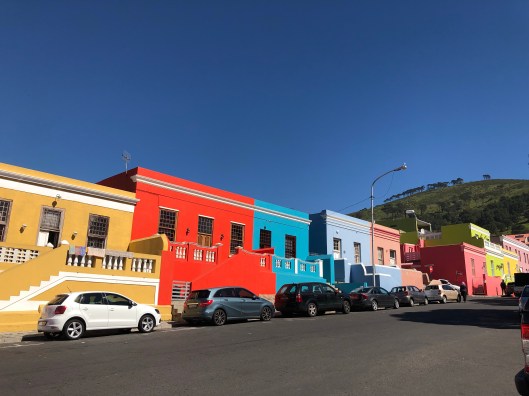
Our tour continued to Signal Hill where we got to witness the daily firing of the canon that signals it is noon. The view from the hill was wonderful and the canon firing was authentic (but updated with a modern firing mechanism). It was much louder than we expected.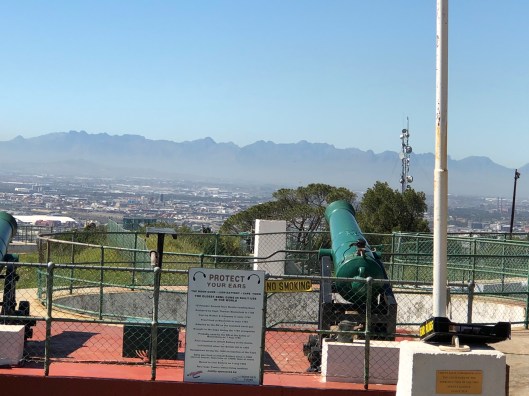
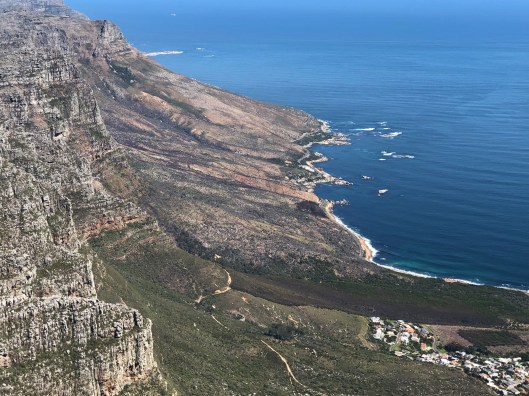
Our final stop for the day was Table Mountain. We took a cable car up to the top of this nature reserve and had a perfect day to take in the view.
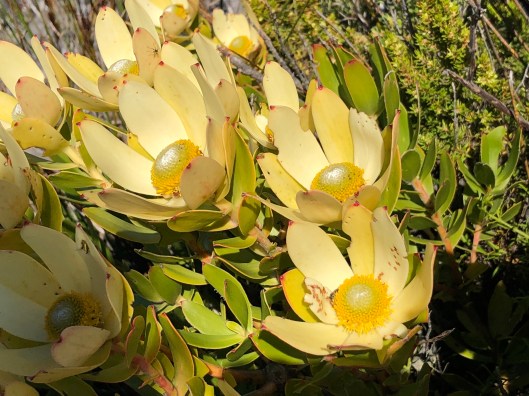
The flowers were fantastic. Table mountain is a unique region in the world and has vegetation that is only found in the area.
We ended our day with a fantastic meal and an early night.
 travelswithannmarie