
The first stop on today’s adventure was a Maasai village. They welcomed us with song and dance
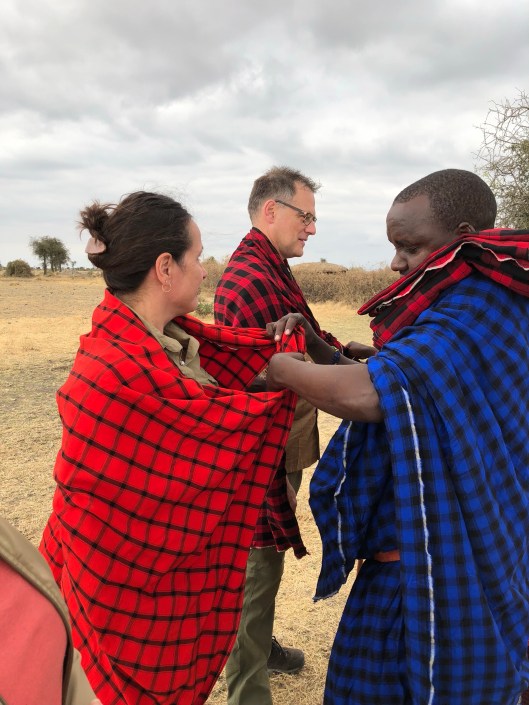
After ensuring we were properly dressed. They demonstrated their way to make fire and took us on a house tour. 
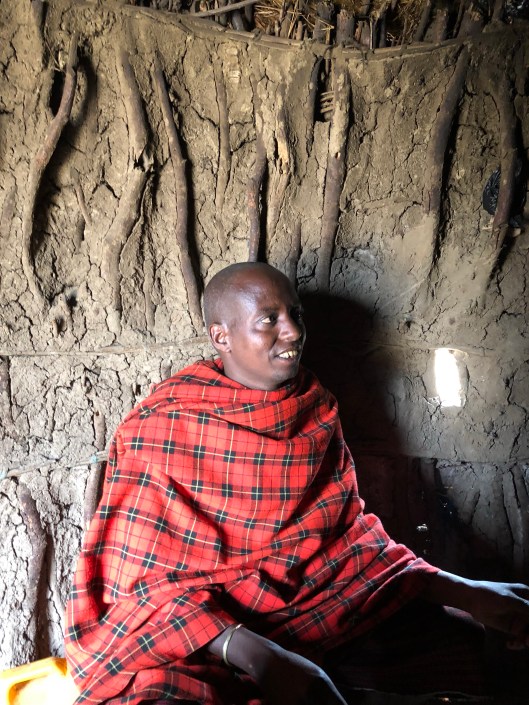
The huts are made of wattle and daub. They are waterproofed with dry cow dung. They move every six months according to the grazing needs of their cows and either build new or repair previous huts. The stop allowed a great opportunity to speak with people living traditionally while adapting to modern life. Our guide was also a vet, while another had a degree in anthropology and tourism.
We then got a wonderful “African massage” on our way to the crater. Our guide used the term to describe the drive on the washboard-like red clay road up the mountainside to the crater. The road was so bumpy that my Fitbit counted 4000 steps on the journey.
We checked into our next hotel, had lunch and got back into the Jeep for our afternoon safari. The view on the drive down to the crater floor was amazing. We saw an amazing variety of birds and animals including: ibis, spoonbills, Egyptian geese, crowned crane, herons, storks and Kori bustards, hyenas, Thompson gazelles, golden and black back jackals, a hippo, lions AND… TWO BLACK RHINOCEROS!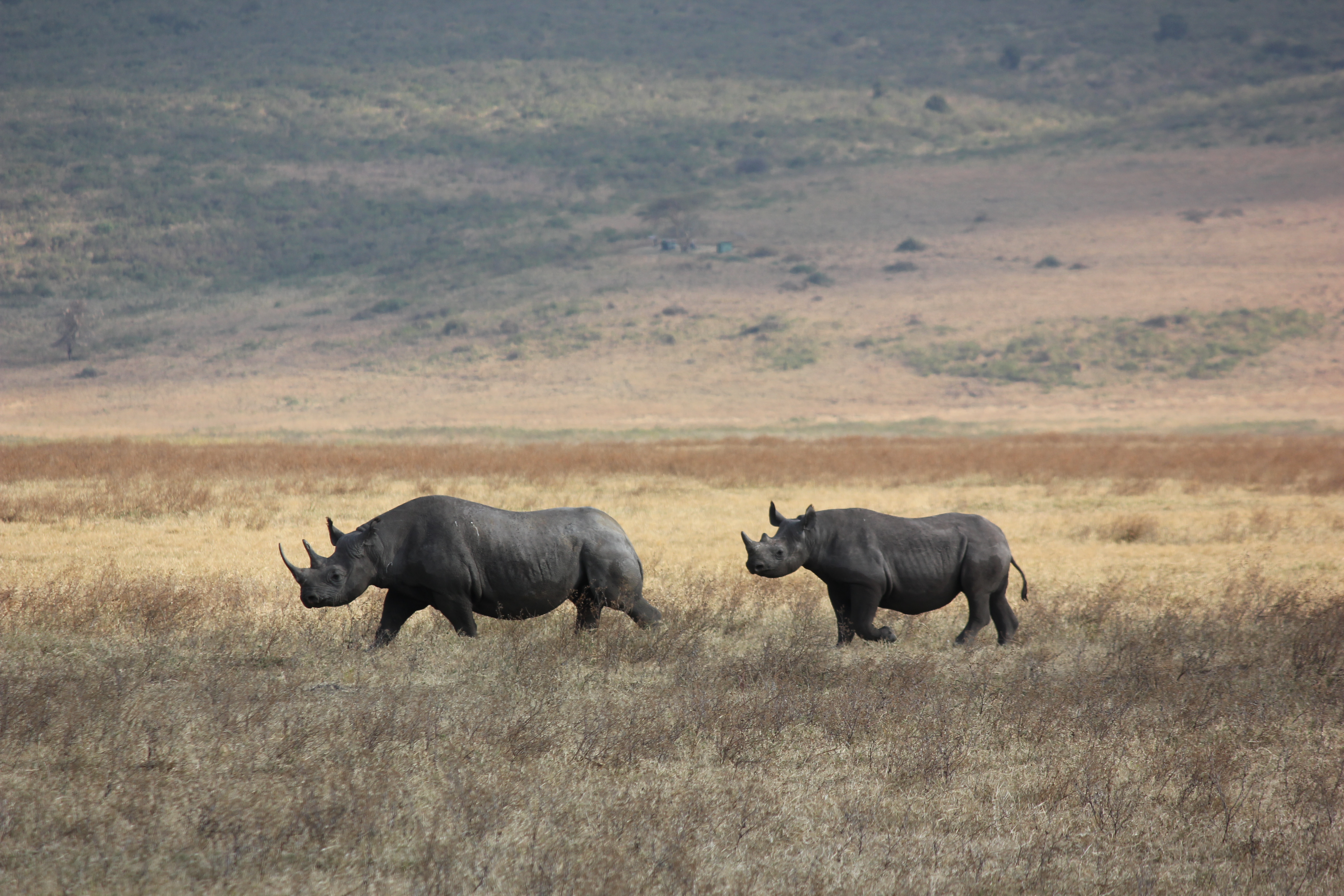
First the lion story. We weren’t sure what we would see because it seemed the grass in the crater was shorter than what we had seen in other places. We realized it was tall enough to hide lions. We initially noticed two male lions sunning themselves out in plain view. After moving on we saw what looked like a female lion in the grass. It turned out to be seven lions!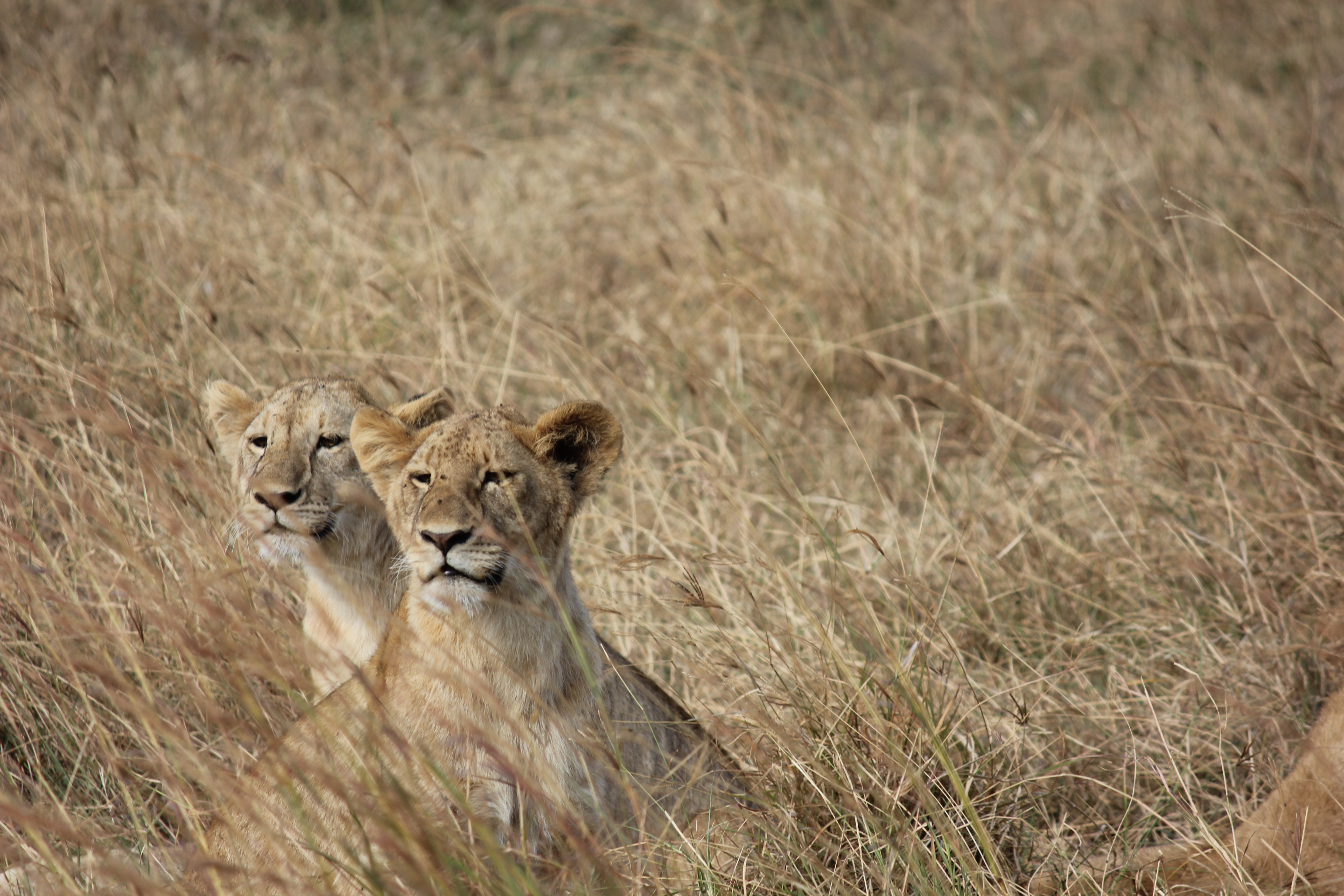
As we continued through the crater, the radio started to pick up. A black rhino had been spotted. Despite being up to 2.5 tones of moving muscle, they are notoriously hard to see. They hide in herds of wildebeests and are otherwise sneaky enough to avoid detection. Our guide couldn’t tell us how many rhinos there are in the crater because the conservationists don’t say as part of preventing poaching. The drive to the sighting spot was madcap. You could see the dust trails of every Jeep in the crater converging on the same spot. Wakara drove at breakneck speed dodging wildebeests and gazelles who decided now was a good time to cross the road.
We got close enough to see the rhinos as dots on the horizon and then we noticed they were moving towards us. We got a great view of a mother and her calf. We took a few million photos. The animals move gracefully and fast. We wanted to stay on their good sides.
 travelswithannmarie