
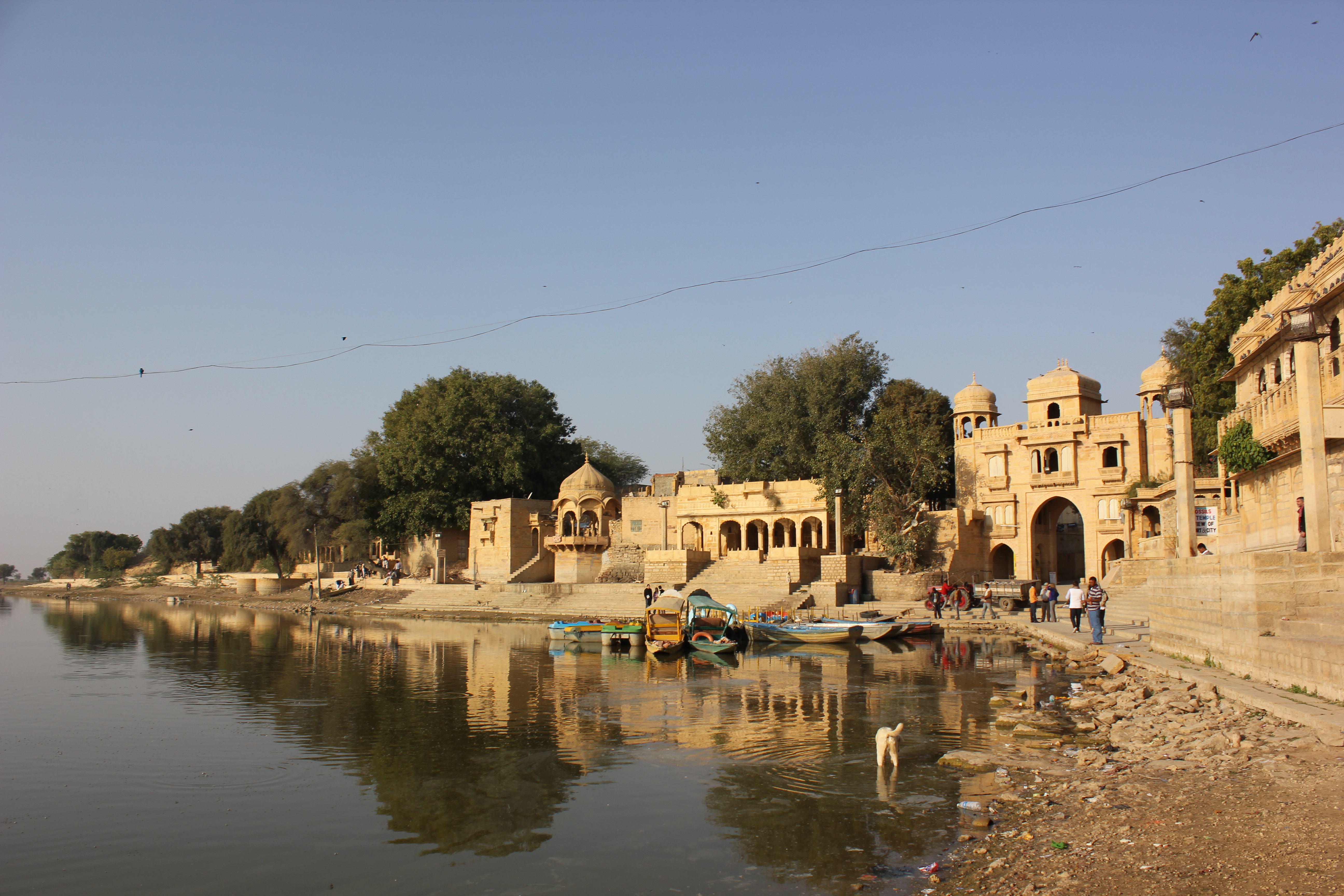
The golden fort was our destination today. We left our hotel and went down to the manmade lake that caught rainwater during the monsoon and was the source of Jaisalmer’s drinking water until the late 20th century. It was also where the people of Jaisalmer cremated their dead royals and wealthy. It was also of interest because one of the King’s concubines was wealthy and she decided to build a gate at the main entrance to the lake area. The king allowed it but then people started to suggest to him that it was actually embarrassing for him to allow a woman/concubine to have a gate at such an important place. He was going to pull it down, but the woman caught wind of this and, after consulting with a sage, she built a temple on the top of the gate and then the king had to leave it alone because it was not appropriate to pull down temples.
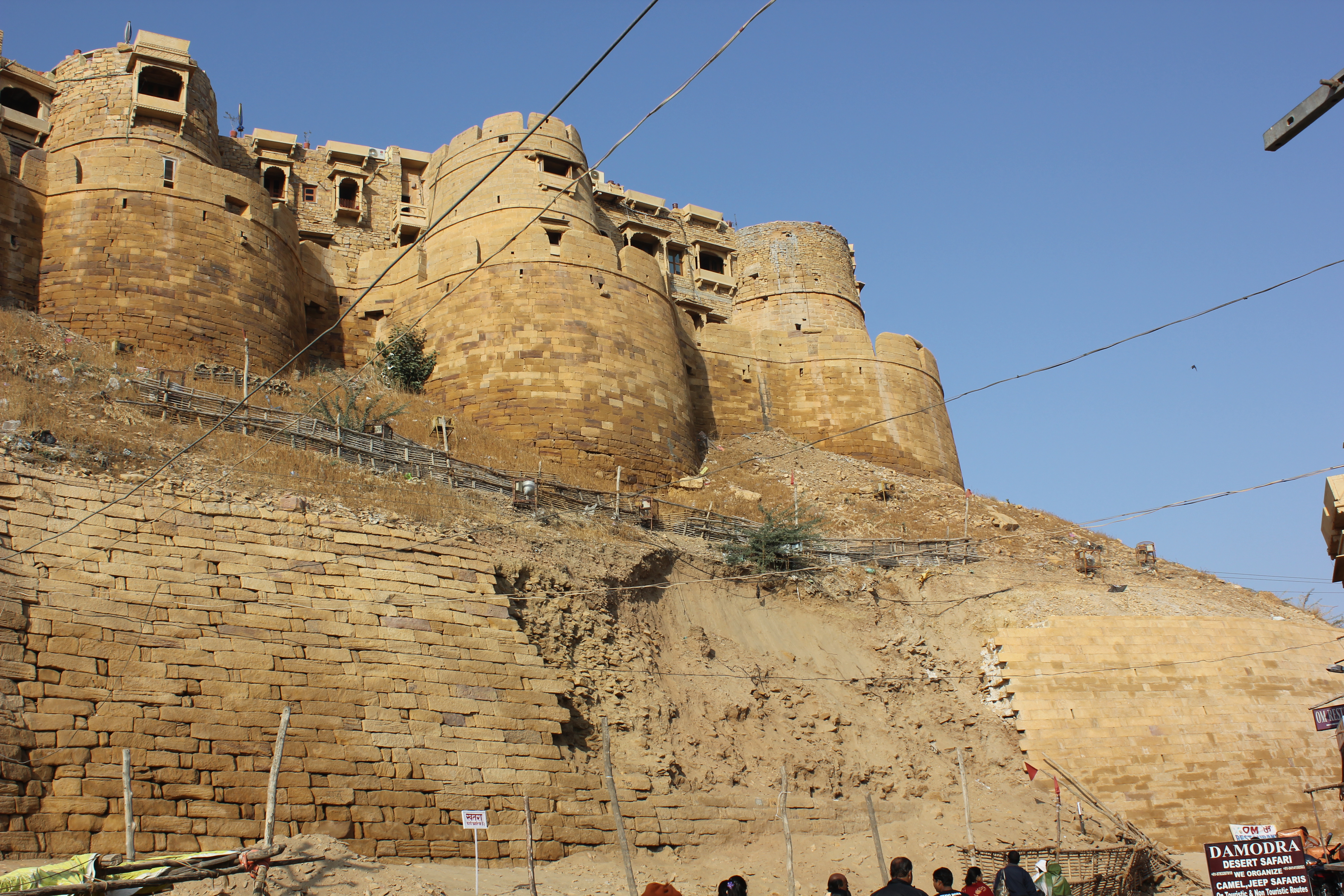
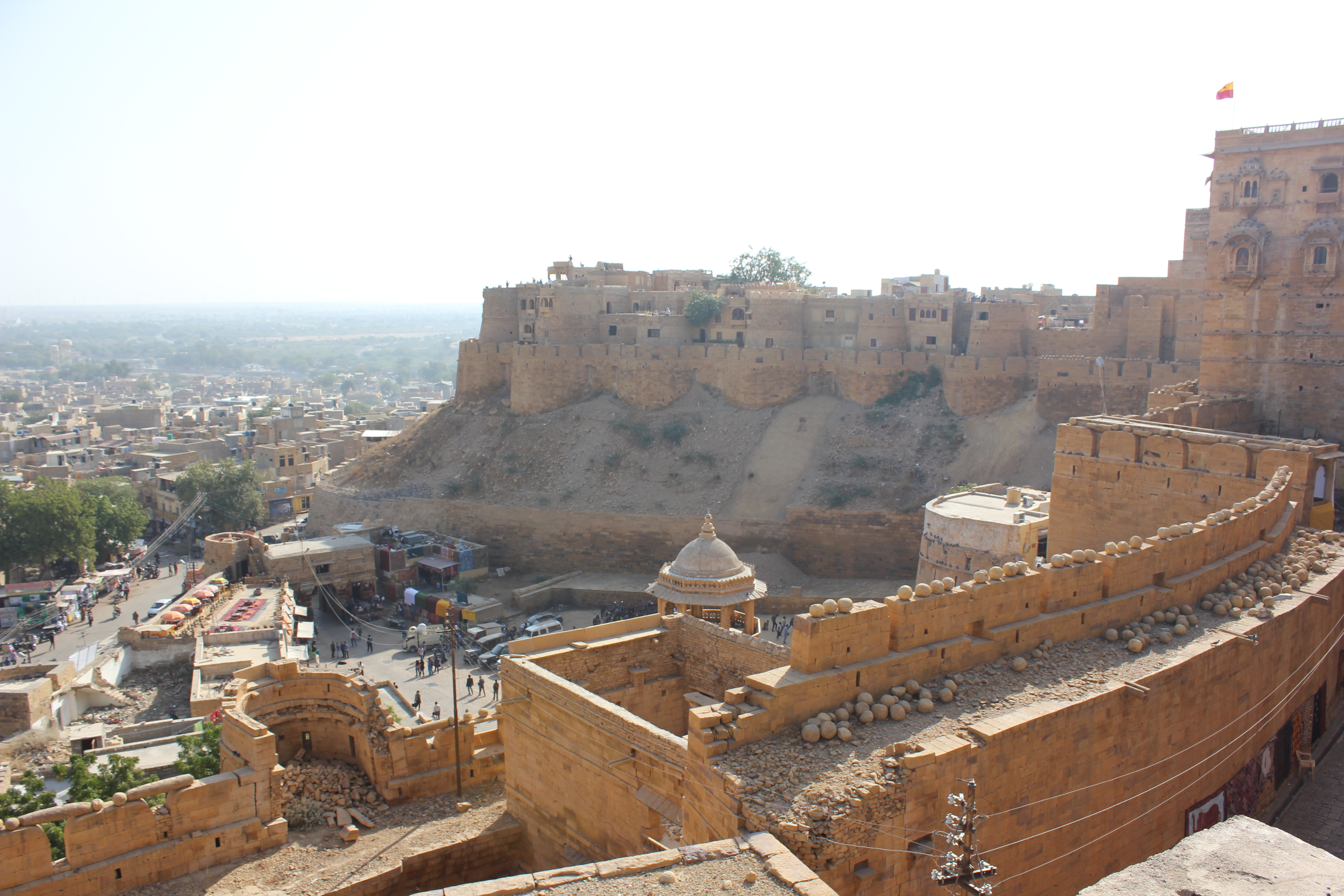
The Golden Fort is so named because it is made of yellow sandstone. It is situated at the top of a significant hill and commands an impressive view of the surrounding countryside. This fort is another of the “only Rajput that was never conquered by the Moghuls” that we have seen. The fort was never actually taken in battle or by siege, however, we were told that the men of the community had been killed in battle, the women committed suicide rather than be captured, and the children had been sent away from the community before things got too bad. Before abandoning the fort, they poisoned the well and secreted away anything of value. The Moghuls got an empty shell. After some negotiations the Rajput king returned and his people have been here since. The actual royals don’t live in the fort any more. They gave people their homes within the castle and there are still people living in those suites. They are deeded to the next generation. Some of the nicer suites have been turned into hotels. However, the guidebooks caution people about staying in them because the increased use of water is eroding the sandstone base of the castle and there is concern that the castle may start to move.
We walked through the residential streets of the old city. The houses were basically converted from 15th century buildings or recreations of old buildings. We found that it was hard to tell the difference between new and old buildings because the same materials and building techniques are used. The exception was the Hawali we visited. Hawali are basically mansions built by the wealthy merchants. The ones we looked at belonged to an opium merchant. He built five connecting 4-story townhouses for his family. Then the bottom fell out of the silk route. The port at Mumbai opened and almost all international trade started going by sea rather than by land. Traders shifted away from Jaisalmer.
The shopping was good! We went to an antique dealer’s shop who specialized in old and antique textiles, windows & doors and other artifacts from the area. The fabrics were 50-100 years old and were heavily embroidered. They were very beautiful and it was tempting to buy, but … we had already spotted the hand carved, hand painted camel bone window screen that had been retrieved from a Hawali near Bikiner. We are now the proud owners after engaging in some serious negotiating and actually walking out of the store – they ran after us! The deal was good I think. He started high, I countered low, we met in the middle, 40% lower than his original price. It is hard to do the bartering when a) you aren’t used to doing it and b) you really want the item. All were happy. Our second stop was a, you guessed it, a pashmina shop! We had been to several but Jane hadn’t so we did more looking. The scarves and stoles were absolutely magnificent. Since I had spent so much minutes before, I didn’t buy anything but helped negotiate for Karen & Jane. I must say it is easier to bid when it is someone else’s money!
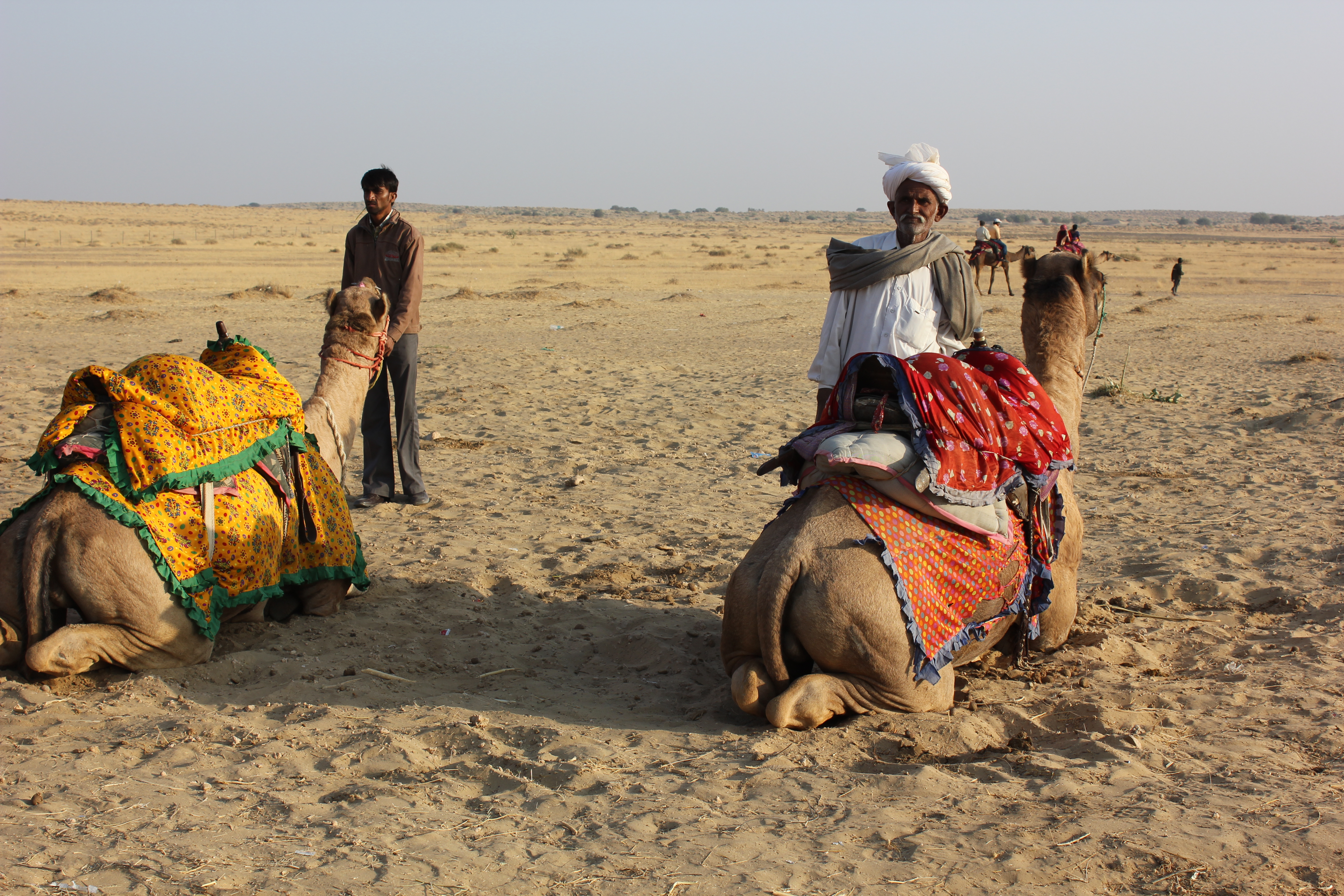
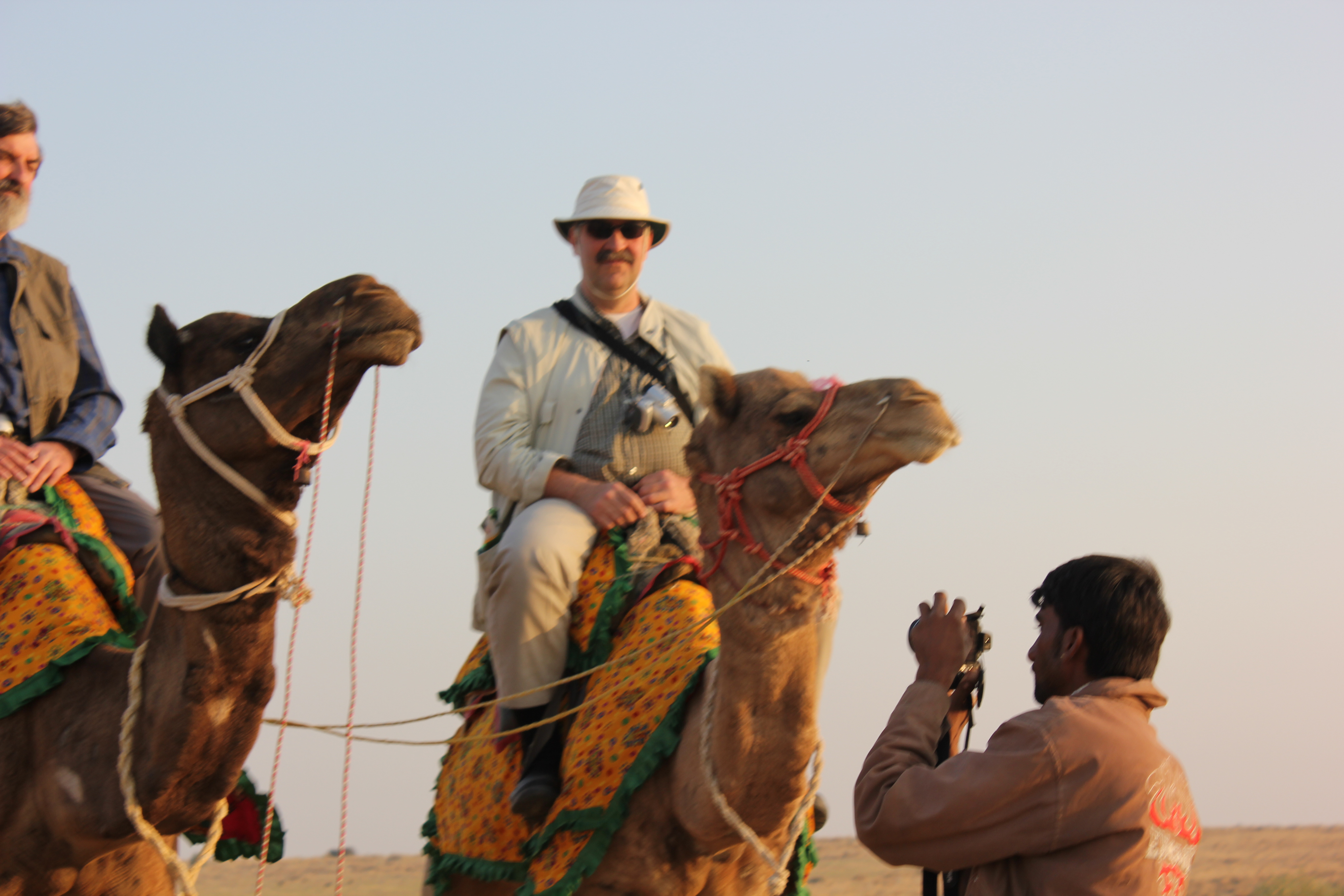
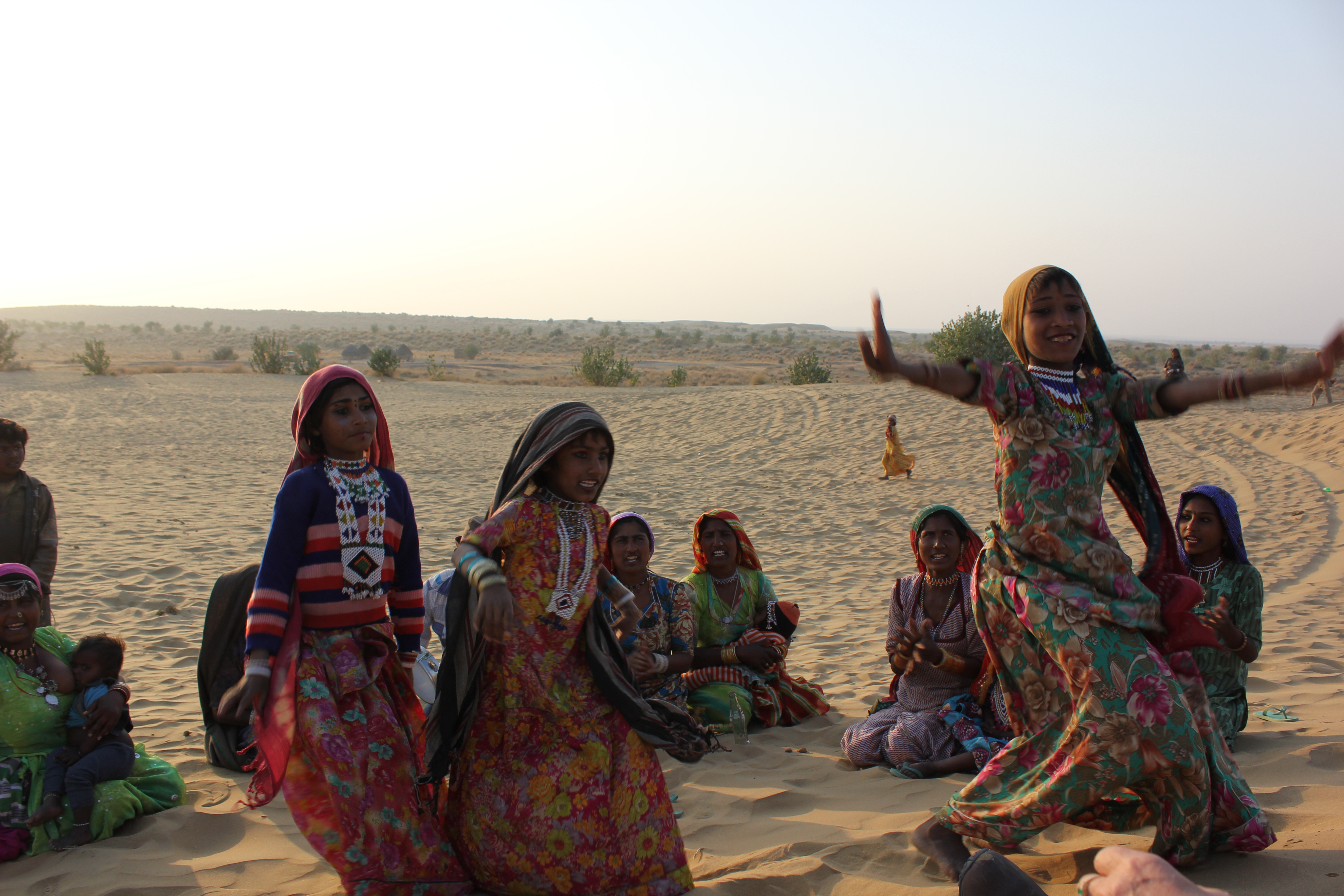
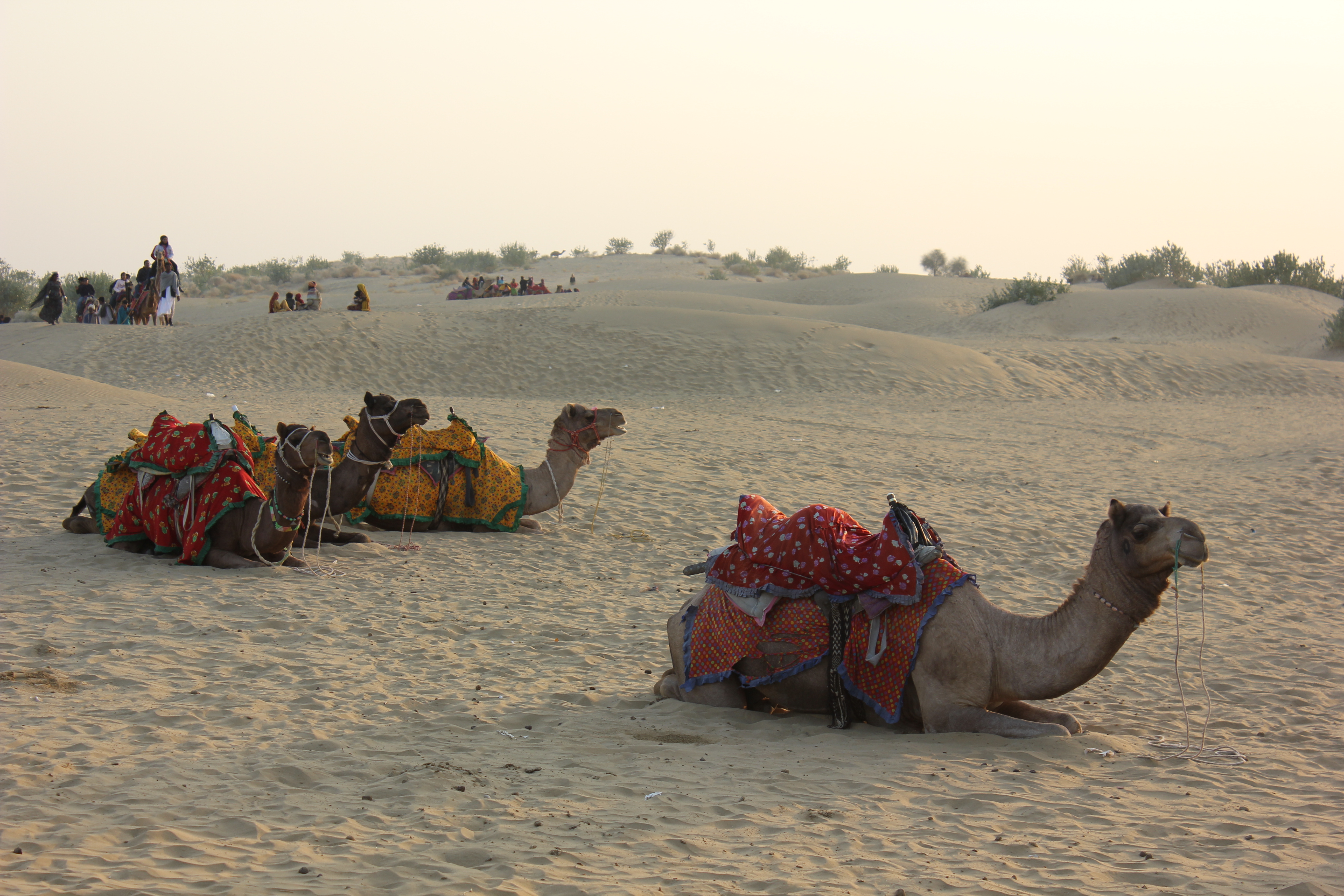
Our last activity of the day was to drive 46 km into the desert (toward Pakistan) to meet our camels and drivers. Wow! Camels are big beasts. Getting on a camel is relatively easy. It kneels down until it’s belly is on the ground. You put a foot in the stirrup and swing your leg over, just like a horse. Then you lean backwards in the front part of the two person saddle and the driver cues the camel to stand. And stand it does. First it raises itself onto it’s forelegs and then it stands all the way up! The backs of our camels were higher than the roof of our van! The driver walked in front of the camel off into the deser on a sandy road. It was much easier to be up there once I got over being terrified of falling off. We stopped on a sand dune to watch the sun set. There was a group of gypsies there to entertain us by singing and dancing. Then it was time to go back. The drivers got onto the camels with us and the pace got a bit quicker. Camels have a smooth canter and it was actually more comfortable than the walking pace. Our adventure lasted two hours! It was a good time.
Off to Bikiner tomorrow (1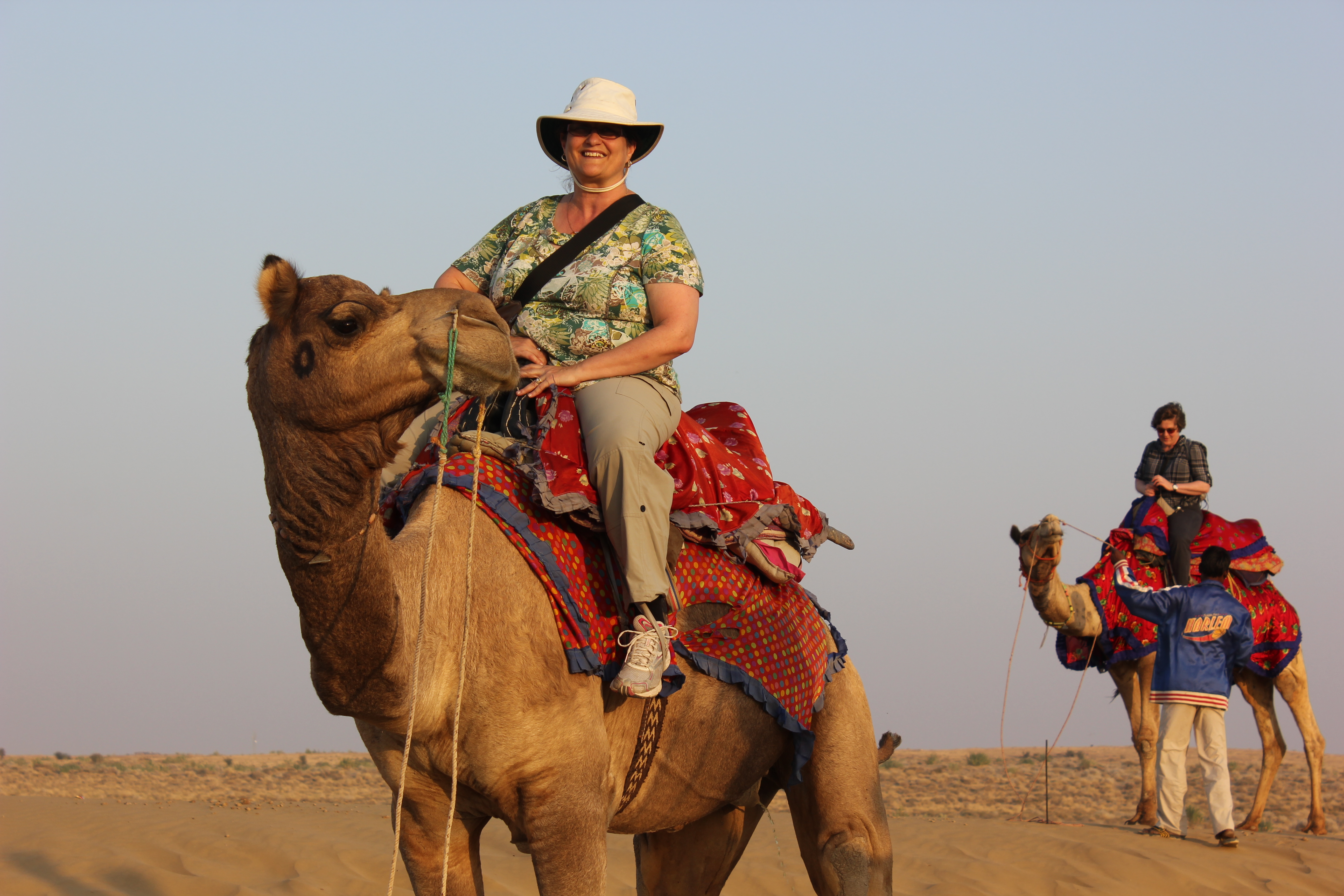 3th), Jaipur on Sunday (14th) and back to Delhi Thursday (17th). We fly out to London on January 18th and back to Canada. I can’t believe we have been gone over a month. We have a lot more to see and do in our last week! It has all been good.

 travelswithannmarie