
Tags
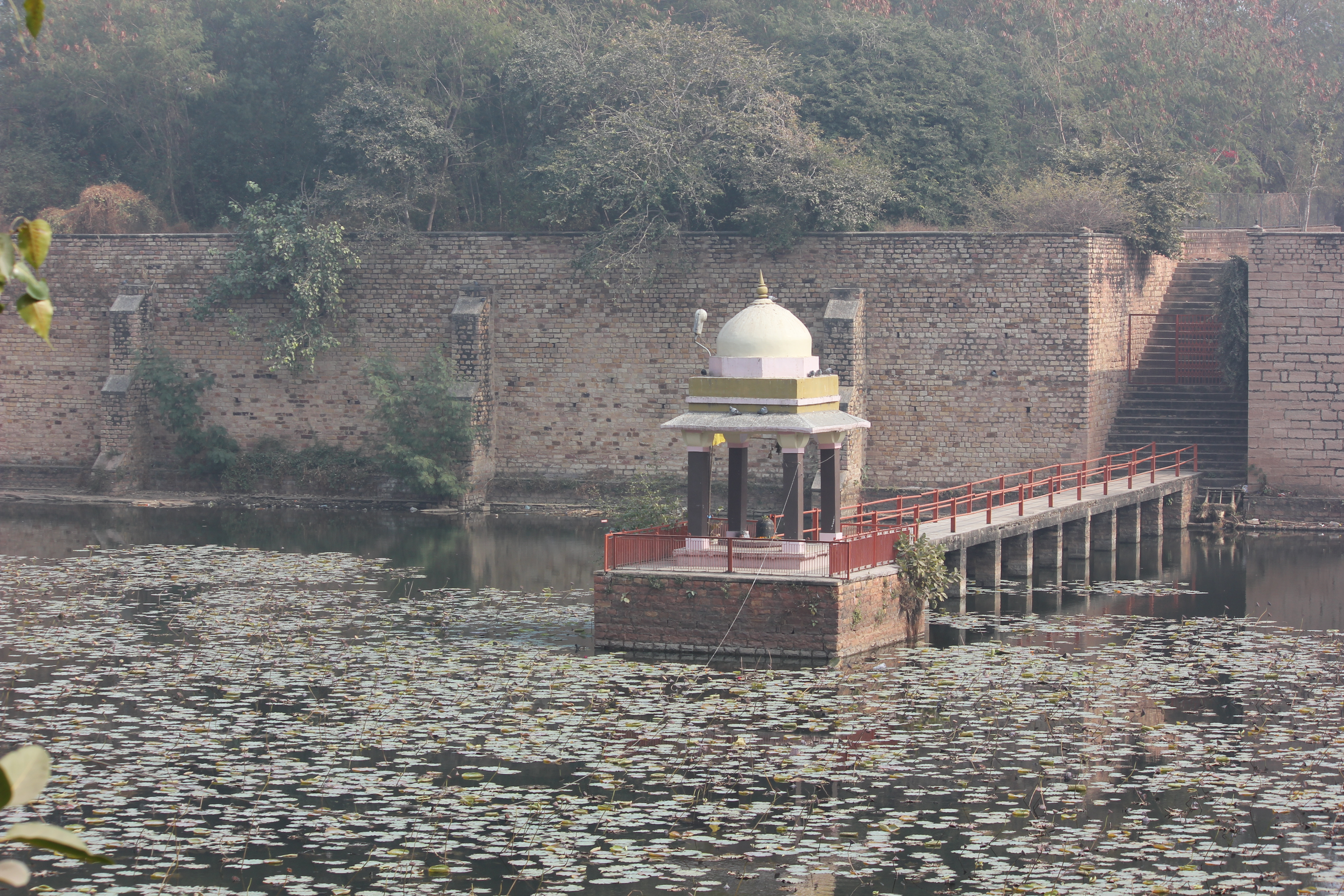
What an experience today. We went to the Gwalior Fort. Legend has it that the King was hunting in the forest and needed water. He had a hard time finding some and was getting concerned when he came upon a wise man. The man had water from a spring and encouraged the king to drink from it. The king happened to have leprosy, a common disease. After drinking the water, he was completely cured of his leprosy. The king went on to build a basin for the water and built a palace nearby. To this day, people come to the basin, pray, cleanse themselves in the water, and the story goes, continue to be healed from leprosy.
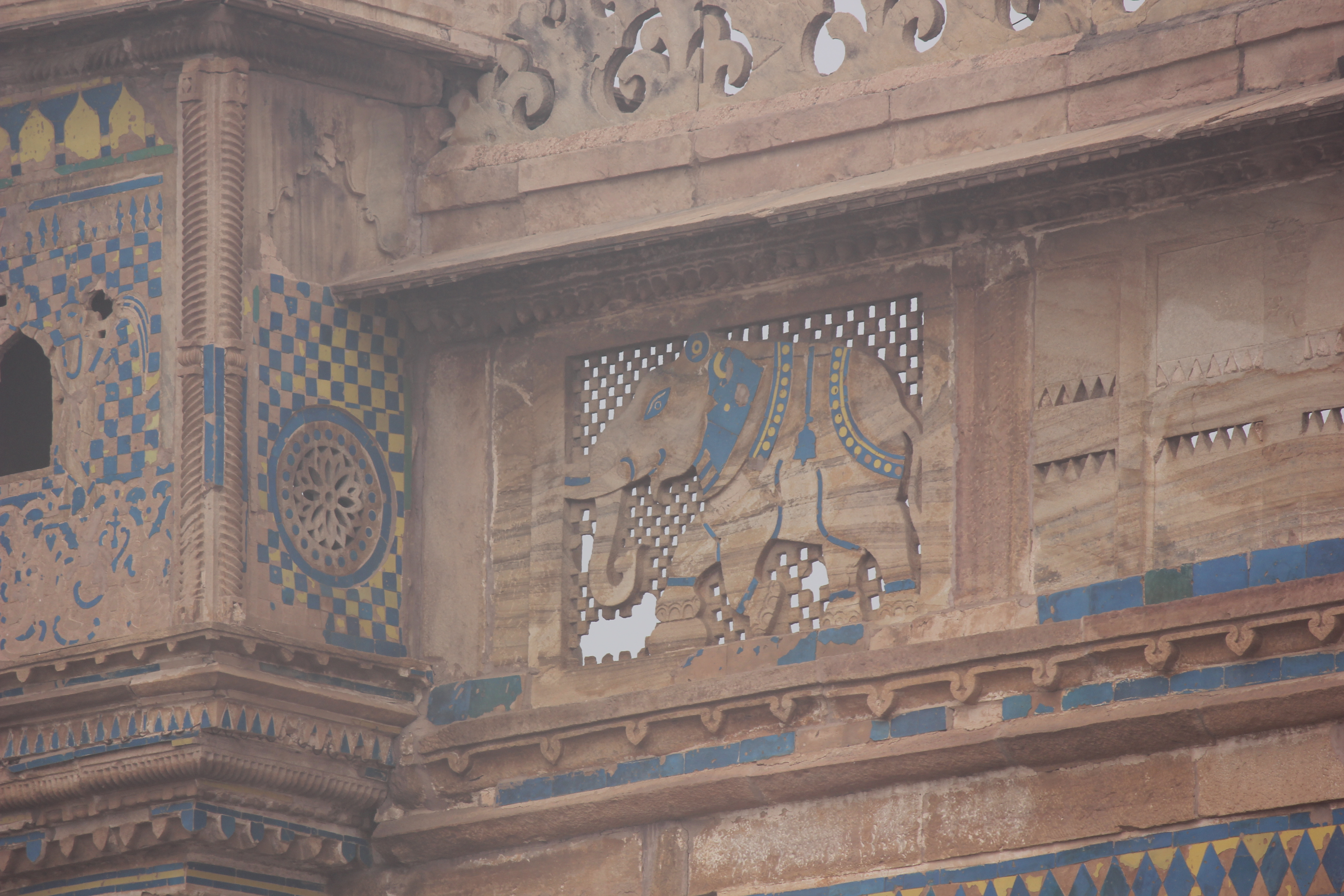
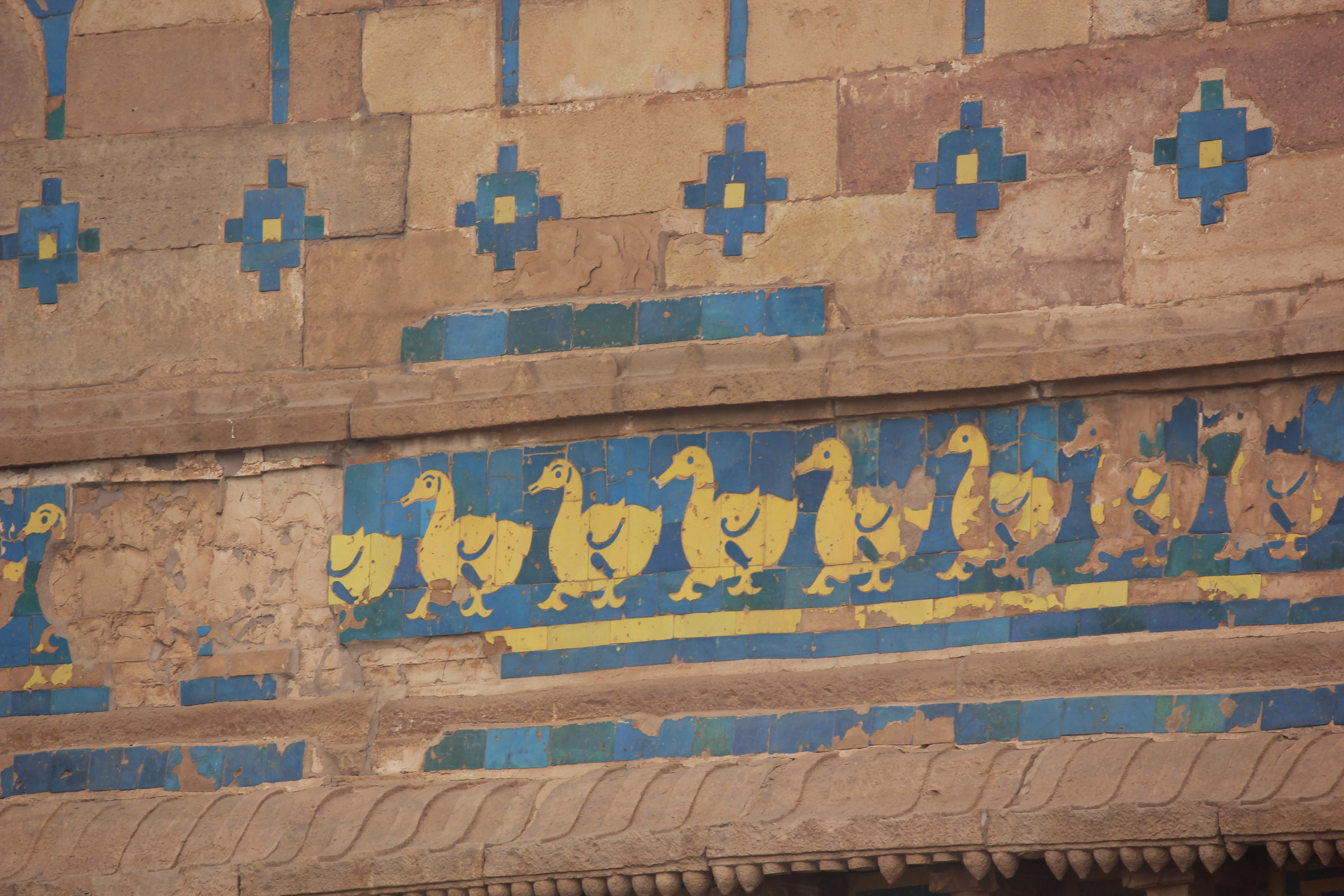
 the fog makes it hard to see the panels at the top, here are close ups of the elephant (lapis Lazuli) and the ducks (Jasper).
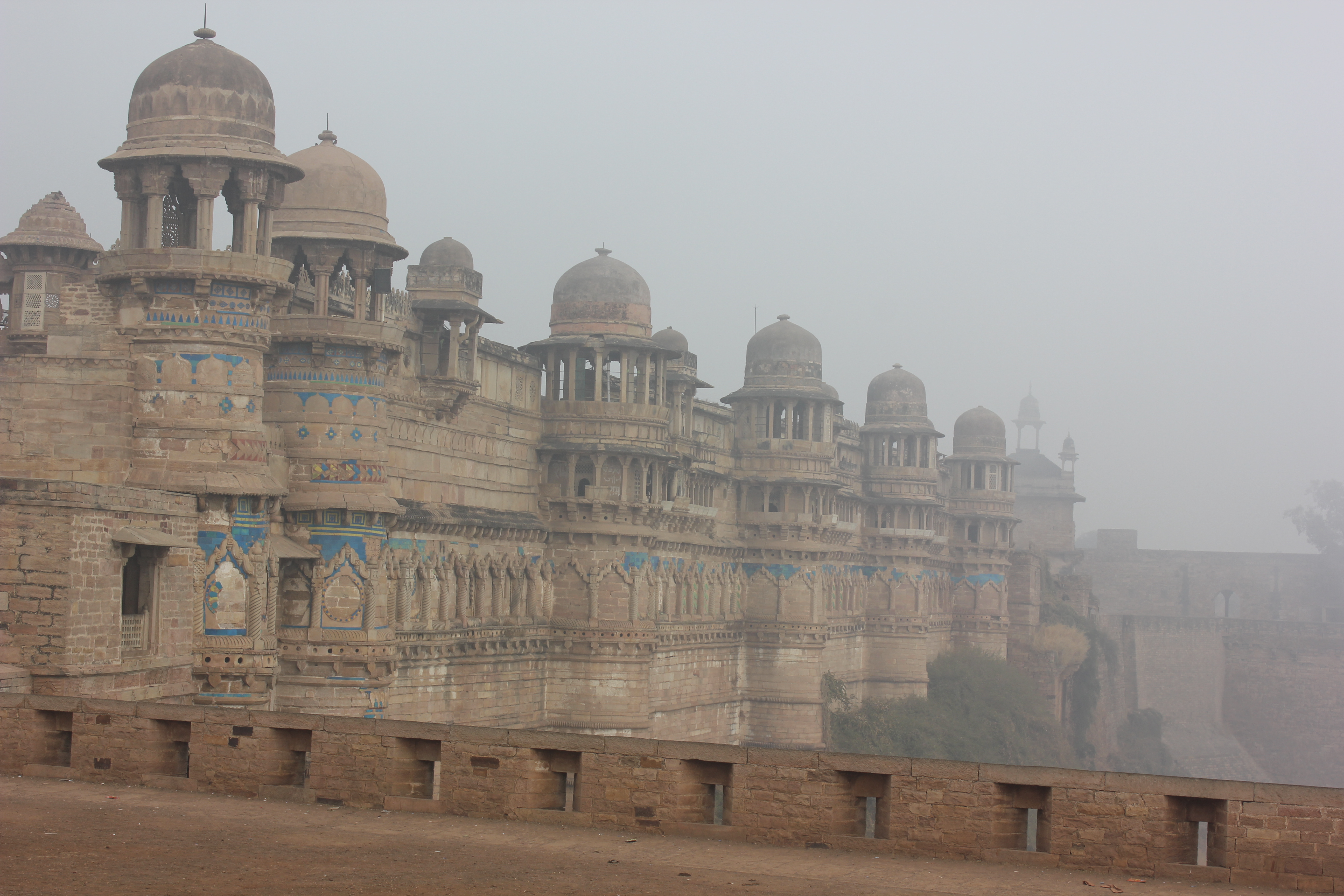
Gwalior was a busy place after the king discovered the water. There were a number of dynasties that ruled the area. The Moghuls took over for a while and of course, didn’t like the statuary showing people or animals. They went around breaking much of what they could reach. In the 1500’s one of the rulers built a palace to house his 8 wives. The problem was that despite the number of wives, he had no children. The story we have heard several times is that the king was out hunting and came upon a village where there was an uproar occurring. A girl was wrestling with two bulls who were butting heads. She separated them. The king was so intrigued that he proposed to this woman on the spot. She decided to accept the proposal under 3 conditions: 1) that she be able to show her face (without being veiled) or be forced to live behind the screens in the palace like his other wives; 2) that she could go into battle with him and be an active, working person rather than pampered like his other wives; and, 3) that she continue to have access to the water from her home village because that was, in her belief, the source of her strength. He agreed to the conditions. He built a water transportation system to get water from her village well pumped to the castle. The king had one son with his 9th wife and all was right in the world.
The Palace we toured had originally been covered in Lapis Lazuli and Jasper. The blue or yellow stones were ground to dust and added to the paint. The domes of the palace were coated with gold originally. It must have been spectacular. There were several sacred animals depicted on the walls. The ducks represented peace and knowledge, Tigers represented power, the crocodiles represented the Ganges water, the elephant represents wealth and prosperity and the rest I don’t remember. Meenal may be able to add to this for me (or correct me). Regardless of the meanings – the walls were fantastic. This was a truly magnificent structure! I loved the guide’s ability to tell a good story too!
The spa at our hotel has a treatment where you get to soak in a tub filled with the water from this village. It also includes having a massage, a body wrap and, aromatherapy. It would take 3 hours and a live musician sitting behind a stone screen played music designed for the process. I was tempted. Image all that for 5000 Rupees (move the decimal over two places and double… $100/cdn)! Tomorrow we are going for a one hour long foot massage/reflexology treatment. It will cost us 1600 Rupees – well worth it after a long session of sightseeing at the Raj’s palace and while we wait to head back to Dehli, again, for the night.
An interesting tidbit of information from that highly reliable source, wikipidia, Gwalior temple has the very first occurrence of zero as a written number in the world.
 travelswithannmarie